
Bonn
Helmut-Kohl-Allee 4, 53113 Bonn, Deutschland
Bundeskunsthalle | Exhibitions & Opening Hours 2026
The Bundeskunsthalle in Bonn is much more than a classic exhibition hall. It is a cultural venue with a clear stance, international aspirations, and an architecture that is instantly recognizable. Those looking for the location will find a house that connects art, science, history, and societal debates, and in 2026 focuses particularly on social sustainability, participation, and dialogue under the guiding theme What We Have in Common. The Bundeskunsthalle is located on the Museum Mile, is easily accessible by train, bus, and car, and offers visitors a program that ranges from major special exhibitions to interactive outdoor formats, lectures, tours, and family-oriented offerings. This mix makes the venue highly relevant for inquiries about current exhibitions, opening hours, parking, and events. ([bundeskunsthalle.de](https://www.bundeskunsthalle.de/en/exhibitions/))
For SEO, the Bundeskunsthalle is an exciting location because the demand is closely linked to specific visitor intentions: people want to know what is currently being shown, when the house is open, how much the admission costs, where to park, and which exhibition is currently in focus. In 2026, this particularly applies to titles like Peter Hujar: Eyes Open in the Dark, Amazônia. Indigenous Worlds, Sex Work. A Cultural History, Interactions 2026, NEVER AGAIN! and Vanguardistas. Thus, the Bundeskunsthalle not only satisfies cultural curiosity but also practical travel and visiting questions. This results in a strong content structure with clear thematic blocks that directly address the information needs while simultaneously highlighting the unique characteristics of the house. ([bundeskunsthalle.de](https://www.bundeskunsthalle.de/en/exhibitions/))
Current Exhibitions 2026 and the Annual Motto What We Have in Common
The Bundeskunsthalle presents its program for 2026 under the motto What We Have in Common. Dimensions of Social Sustainability. This is not just a headline but a thematic framework that runs throughout the entire year. The institution focuses on social responsibility, cultural participation, and the question of what connects people in a multifaceted society. This is reflected in exhibitions and formats that bring together very different perspectives: indigenous communities in the Amazon, a formative figure of the New York downtown scene, the cultural history of sex work, the remembrance of Nazi crimes, and significant Latin American female artists. It becomes clear that the Bundeskunsthalle not only addresses classic art themes but also makes socially relevant questions visible. ([bundeskunsthalle.de](https://www.bundeskunsthalle.de/en/exhibitions/))
Particularly attention-grabbing is the current exhibition framework because several major themes are running in parallel. Peter Hujar: Eyes Open in the Dark runs from February 27 to August 23, 2026, and centers on a photographer who documented the New York scene of the 1970s and 1980s with great intimacy. Amazônia. Indigenous Worlds shows from March 13 to August 9, 2026, an exhibition from the perspective of indigenous peoples for the first time and works with more than 400 objects from various collections. Sex Work. A Cultural History runs from April 2 to October 25, 2026, and sheds light on the history of sex work from a cultural historical perspective together with a collective of researching sex workers. This thematic breadth is particularly valuable for inquiries about current exhibition, exhibitions 2026, and bundeskunsthalle today. ([bundeskunsthalle.de](https://www.bundeskunsthalle.de/en/exhibitions/))
Additionally, Interactions 2026 runs from May 1 to November 1, 2026, a freely accessible summer format in outdoor and public indoor areas. The program focuses on artworks and performances that actively involve visitors and strengthen the character of the house as an open cultural forum. Also important for the later half of the year is NEVER AGAIN! Against Forgetting the Crimes of the Nazi Era from October 11, 2026, to May 2, 2027, which is dedicated to the culture of remembrance. At the end of the year, Vanguardistas follows from December 4, 2026, to March 29, 2027, a major overview exhibition of Latin American female artists with more than 70 positions from over a century. For user intent around bundeskunsthalle exhibitions 2026, this means: There is not just a single highlight, but a real variety of programs with clear durations. ([bundeskunsthalle.de](https://www.bundeskunsthalle.de/en/exhibitions/))
Opening Hours, Tickets, and Free Admission in Bonn
Those who want to visit the Bundeskunsthalle should know the opening hours precisely, as they are very important for planning. The house is closed on Mondays, open on Tuesdays from 10 AM to 6 PM, on Wednesdays even until 9 PM, and from Thursday to Sunday as well as on public holidays from 10 AM to 6 PM; on public holidays, the opening also applies on Monday. It is also relevant for practice that the ticket office closes half an hour before the end of opening hours. So, if you want to buy a ticket on-site, you should not plan too tightly. These details are particularly relevant for inquiries such as bundeskunsthalle opening hours, bundeskunsthalle bonn opening hours, and bundeskunsthalle today. ([bundeskunsthalle.de](https://www.bundeskunsthalle.de/en/visit/plan-my-visit))
Regarding prices, the Bundeskunsthalle works with day tickets and discounts. The single ticket costs 14 euros, the reduced day ticket 7 euros, the group ticket 11.20 euros per person for 10 or more people, and the Happy Hour ticket 7 euros one hour before closing. Additionally, there are combined tickets for the Bundeskunsthalle and the Kunstmuseum Bonn as well as annual tickets like the ArtCard and the ELLAH-Card. For families, students, young guests, and regular visitors, this is an important advantage because admission can be very flexible depending on usage. The information that the exhibition tickets are valid for all exhibitions is also valuable for SEO relevance around tickets, prices, and booking. ([bundeskunsthalle.de](https://www.bundeskunsthalle.de/))
A particularly strong attraction is the free admission. All visitors up to and including 18 years have free admission to the exhibitions of the Bundeskunsthalle on all days. Additionally, there are free admission days in 2026 during the Museum Mile Festival on June 6 and 7, as well as on the Day of German Unity, October 3. This is an important argument for inquiries about free admission and bundeskunsthalle free admission, as it is not only about price advantages but also about low-threshold access to culture. Together with the public and free areas like the library and salon, the house shows that it understands itself as an open place where culture can not only be consumed but also co-created. ([bundeskunsthalle.de](https://www.bundeskunsthalle.de/))
Directions and Parking at the Bundeskunsthalle Bonn
The Bundeskunsthalle is located at Helmut-Kohl-Allee 4 in 53113 Bonn on the Museum Mile. This makes the location easy to locate for visitors from Bonn, Cologne, the Rhein-Sieg district, and the Rhineland. Those arriving by train can take the U-Bahn lines 16, 63, or 66 from Bonn Central Station towards Bad Godesberg or Königswinter, getting off at Heussallee/Museumsmeile in five stops. From Siegburg/Bonn station, line 66 also goes directly there. Additionally, there are stops for UN Campus as well as bus lines 610, 611, and 634 to UN Campus Bahnhof or Marie Kahle Allee. For inquiries about directions and bundeskunsthalle bonn, this direct public transport connection is one of the most important practical advantages of the location. ([bundeskunsthalle.de](https://www.bundeskunsthalle.de/en/visit/plan-my-visit))
Drivers also find clear routes to the location. From Cologne, the approach is via the A555 or A565 to the Bonn-Nord motorway junction, then towards Koblenz and over the exit Poppelsdorf/Bad Godesberg towards Museum Mile. Coming from the south, one uses the A3, the Siebengebirge or Bonn-Siegburg exit, the A59, and then the Bonn-Center exit towards Museum Mile. This is particularly important for large exhibitions and events because many visitors plan their route in advance. For searches like bundeskunsthalle parking or bundeskunsthalle bonn parking, it is also crucial that the parking garage is located directly next to the house, allowing for very short walking distances. ([bundeskunsthalle.de](https://www.bundeskunsthalle.de/en/visit/plan-my-visit))
The parking offer is remarkably comfortable for an exhibition house of this size. Directly at the Bundeskunsthalle, there is a parking garage with 535 car spaces located at Emil-Nolde-Straße 11. In front of the parking garage, there are bus parking spaces, and additional bus parking options are available in the Rheinaue. For guests with mobility impairments, there are also disabled parking spaces at the shared entrance of the Bundeskunsthalle and Kunstmuseum Bonn at Helmut-Kohl-Allee 2 to 4, as well as at the back of the museums and in the Museum Mile parking garage. This infrastructure supports not only the classic museum visit but also larger groups, tour buses, and barrier-free arrivals. So, for those looking for reliable parking information, there is a concrete and well-documented solution here. ([bundeskunsthalle.de](https://www.bundeskunsthalle.de/en/visit/plan-my-visit))
History, Architecture, and Spaces of the Bundeskunsthalle
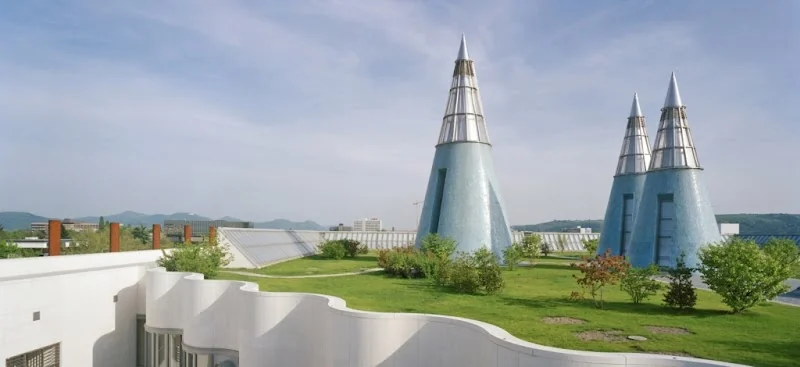
The Bundeskunsthalle is an architectural and cultural historical special case. Its idea is almost as old as the Federal Republic itself, and discussions about the capital question accompanied the project early on. The building was constructed according to the plans of the Viennese architect Gustav Peichl and opened in 1992. Particularly striking are the three pointed light cones, which, with their bright blue majolica cladding, have become a landmark of the house and the city of Bonn. This mix of political history, representative cultural institution, and distinctive form makes the Bundeskunsthalle highly relevant for content related to history, architecture, and special features. ([bundeskunsthalle.de](https://www.bundeskunsthalle.de/ueber-uns/die-bundeskunsthalle.html))
The spatial concept is also crucial for a Bundeskunsthalle. The building offers a differentiated and variable system of small, medium, and large rooms with a total of 5,600 square meters that can be illuminated with daylight or art light. This allows for very different types of exhibitions to be realized, from space-consuming large exhibitions to smaller cabinets. Additionally, there is the planted roof landscape, which the architect referred to as the fifth facade, expanding the exhibition area by 8,000 square meters. This roof is not only a visual stage but also a public space for sculpture and garden exhibitions. For visitors, this creates a versatile experience between indoor space, outdoor space, and skyline. ([bundeskunsthalle.de](https://www.bundeskunsthalle.de/ueber-uns/die-bundeskunsthalle.html))
The Bundeskunsthalle sees itself, according to its own representation, as a place of the arts and communication, international and cosmopolitan. Its program goes beyond art in the narrow sense and includes cultural historical, archaeological, scientific, and interdisciplinary themes. This explains why the location is interesting for both art-affine target groups and families, school groups, and culturally interested day guests. The house also develops and presents an independent program in the performing arts, such as theater, performance, dance, and music. This openness to different formats fits perfectly with the concept of an exhibition hall that not only shows individual works but also processes societal questions in changing perspectives. ([bundeskunsthalle.de](https://www.bundeskunsthalle.de/ueber-uns/die-bundeskunsthalle.html))
Roof, Bonn Slide, Library, and Salon: More than Just Exhibitions
Another reason why the Bundeskunsthalle in Bonn is perceived so strongly is its publicly accessible additional offerings. The roof is accessible during regular opening hours, and the Bonn Slide can be used on Saturdays from 12 PM and Sundays from 11 AM. Weather permitting, the area may be closed temporarily. This combination of architecture, view, and play makes the place attractive not only for art audiences but also for people seeking a special city experience. Inquiries focusing on highlights or special features benefit from such information because they emotionally charge the visit while also making it concrete. ([bundeskunsthalle.de](https://www.bundeskunsthalle.de/en/visit/plan-my-visit))
Internal services also demonstrate the open character of the house. The opening hours of the restaurant GUSTAV are aligned with those of the Bundeskunsthalle. The library is open from Tuesday to Friday between 10 AM and 5 PM and is publicly and freely accessible. The salon of the Bundeskunsthalle is open to the public and free on Tuesdays to Fridays and Sundays between 12 PM and 5 PM. Additionally, there is a museum shop in the foyer with a wide range of high-quality objects and books. For visitors, this means: a stay does not have to be limited to the exhibition but can develop into a whole cultural morning or evening. ([bundeskunsthalle.de](https://www.bundeskunsthalle.de/en/visit/plan-my-visit))
The Bundeskunsthalle also places great importance on accessibility and mediation. The website emphasizes that the stay and exhibitions should be designed to be as barrier-free as possible. In addition, there is a diverse program for children, young people, and families, as well as formats such as guided tours, workshops, and intercultural offerings. In the 2026 program, this understanding of mediation will become even clearer, as social participation, participatory elements, and public discussions are named as essential building blocks. So, those searching for bundeskunsthalle events or bundeskunsthalle bonn events will find not only classic openings and exhibitions but a cultural platform with educational, discourse, and meeting functions. ([bundeskunsthalle.de](https://www.bundeskunsthalle.de/en/visit/plan-my-visit))
Events, Program 2026, and Why the Bundeskunsthalle Ranks So Well in Bonn Searches
The Bundeskunsthalle is particularly strong for search engines because it fulfills several user intentions at once. People want to know not only what is being shown there but also when something is taking place, whether admission is free, how to get there, and what offerings exist beyond the main exhibition. The house provides an unusually good answer to this because the 2026 program sets a clear content framework while also presenting very different formats side by side. The program includes exhibitions, discussion events, interactive summer offerings, and accompanying mediation formats. This creates a location that remains relevant for both current topics and recurring visit occasions. ([bundeskunsthalle.de](https://www.bundeskunsthalle.de/en/exhibitions/))
An example of this is the discourse format Studio Bonn, which is described in the official annual program 2026 as a contribution to the democratic understanding of crises, social change, and cultural potential. It addresses questions about the world's oceans, social inequality, artificial intelligence, and culture of remembrance, among others. Particularly in connection with the exhibition Expedition World Oceans, which ran from October 2, 2025, to April 6, 2026, it becomes clear how closely exhibitions and accompanying discussions are intertwined. The Bundeskunsthalle thus operates not only as an exhibition venue but as a public thinking space. This is a strong argument for inquiries looking for bundeskunsthalle today, current exhibition, or events 2026. ([bundeskunsthalle.de](https://www.bundeskunsthalle.de/fileadmin/user_upload/Pressemeldungen/2025/Press_kit_Programme_2026_updated_Nov_2025.pdf))
The great thematic diversity is also an SEO advantage. AMAZÔNIA opens cultural and ecological perspectives on the Amazon, Peter Hujar brings photography and the New York downtown scene into focus, Sex Work addresses historical and societal questions, Interactions 2026 makes the outdoor space freely accessible and participatory, NEVER AGAIN! is dedicated to the culture of remembrance, and Vanguardistas highlights female art history in Latin America. This results in numerous semantic search fields ranging from current exhibition to bundeskunsthalle amazonia to bundeskunsthalle exhibitions 2026. For a content presence, this means that the Bundeskunsthalle not only occupies a single keyword but an entire cluster of culture-related search intentions. ([bundeskunsthalle.de](https://www.bundeskunsthalle.de/en/exhibitions/))
In the end, this combination makes the place so strong: a striking architecture, a well-accessible location, a broad, current program, clear opening hours, concrete parking information, and a diverse mediation offer. The Bundeskunsthalle is thus a museum, a stage, a discourse space, and a destination for day trips at the same time. Those visiting Bonn or specifically searching for a high-quality exhibition hall will find here an address with international appeal and very practical visiting conditions locally. The search terms related to bundeskunsthalle bonn, bundeskunsthalle opening hours, bundeskunsthalle parking, and bundeskunsthalle exhibitions therefore lead very directly to a place that convinces in both content and infrastructure. ([bundeskunsthalle.de](https://www.bundeskunsthalle.de/en/visit/plan-my-visit))
Sources:
Show moreShow less
Bundeskunsthalle | Exhibitions & Opening Hours 2026
The Bundeskunsthalle in Bonn is much more than a classic exhibition hall. It is a cultural venue with a clear stance, international aspirations, and an architecture that is instantly recognizable. Those looking for the location will find a house that connects art, science, history, and societal debates, and in 2026 focuses particularly on social sustainability, participation, and dialogue under the guiding theme What We Have in Common. The Bundeskunsthalle is located on the Museum Mile, is easily accessible by train, bus, and car, and offers visitors a program that ranges from major special exhibitions to interactive outdoor formats, lectures, tours, and family-oriented offerings. This mix makes the venue highly relevant for inquiries about current exhibitions, opening hours, parking, and events. ([bundeskunsthalle.de](https://www.bundeskunsthalle.de/en/exhibitions/))
For SEO, the Bundeskunsthalle is an exciting location because the demand is closely linked to specific visitor intentions: people want to know what is currently being shown, when the house is open, how much the admission costs, where to park, and which exhibition is currently in focus. In 2026, this particularly applies to titles like Peter Hujar: Eyes Open in the Dark, Amazônia. Indigenous Worlds, Sex Work. A Cultural History, Interactions 2026, NEVER AGAIN! and Vanguardistas. Thus, the Bundeskunsthalle not only satisfies cultural curiosity but also practical travel and visiting questions. This results in a strong content structure with clear thematic blocks that directly address the information needs while simultaneously highlighting the unique characteristics of the house. ([bundeskunsthalle.de](https://www.bundeskunsthalle.de/en/exhibitions/))
Current Exhibitions 2026 and the Annual Motto What We Have in Common
The Bundeskunsthalle presents its program for 2026 under the motto What We Have in Common. Dimensions of Social Sustainability. This is not just a headline but a thematic framework that runs throughout the entire year. The institution focuses on social responsibility, cultural participation, and the question of what connects people in a multifaceted society. This is reflected in exhibitions and formats that bring together very different perspectives: indigenous communities in the Amazon, a formative figure of the New York downtown scene, the cultural history of sex work, the remembrance of Nazi crimes, and significant Latin American female artists. It becomes clear that the Bundeskunsthalle not only addresses classic art themes but also makes socially relevant questions visible. ([bundeskunsthalle.de](https://www.bundeskunsthalle.de/en/exhibitions/))
Particularly attention-grabbing is the current exhibition framework because several major themes are running in parallel. Peter Hujar: Eyes Open in the Dark runs from February 27 to August 23, 2026, and centers on a photographer who documented the New York scene of the 1970s and 1980s with great intimacy. Amazônia. Indigenous Worlds shows from March 13 to August 9, 2026, an exhibition from the perspective of indigenous peoples for the first time and works with more than 400 objects from various collections. Sex Work. A Cultural History runs from April 2 to October 25, 2026, and sheds light on the history of sex work from a cultural historical perspective together with a collective of researching sex workers. This thematic breadth is particularly valuable for inquiries about current exhibition, exhibitions 2026, and bundeskunsthalle today. ([bundeskunsthalle.de](https://www.bundeskunsthalle.de/en/exhibitions/))
Additionally, Interactions 2026 runs from May 1 to November 1, 2026, a freely accessible summer format in outdoor and public indoor areas. The program focuses on artworks and performances that actively involve visitors and strengthen the character of the house as an open cultural forum. Also important for the later half of the year is NEVER AGAIN! Against Forgetting the Crimes of the Nazi Era from October 11, 2026, to May 2, 2027, which is dedicated to the culture of remembrance. At the end of the year, Vanguardistas follows from December 4, 2026, to March 29, 2027, a major overview exhibition of Latin American female artists with more than 70 positions from over a century. For user intent around bundeskunsthalle exhibitions 2026, this means: There is not just a single highlight, but a real variety of programs with clear durations. ([bundeskunsthalle.de](https://www.bundeskunsthalle.de/en/exhibitions/))
Opening Hours, Tickets, and Free Admission in Bonn
Those who want to visit the Bundeskunsthalle should know the opening hours precisely, as they are very important for planning. The house is closed on Mondays, open on Tuesdays from 10 AM to 6 PM, on Wednesdays even until 9 PM, and from Thursday to Sunday as well as on public holidays from 10 AM to 6 PM; on public holidays, the opening also applies on Monday. It is also relevant for practice that the ticket office closes half an hour before the end of opening hours. So, if you want to buy a ticket on-site, you should not plan too tightly. These details are particularly relevant for inquiries such as bundeskunsthalle opening hours, bundeskunsthalle bonn opening hours, and bundeskunsthalle today. ([bundeskunsthalle.de](https://www.bundeskunsthalle.de/en/visit/plan-my-visit))
Regarding prices, the Bundeskunsthalle works with day tickets and discounts. The single ticket costs 14 euros, the reduced day ticket 7 euros, the group ticket 11.20 euros per person for 10 or more people, and the Happy Hour ticket 7 euros one hour before closing. Additionally, there are combined tickets for the Bundeskunsthalle and the Kunstmuseum Bonn as well as annual tickets like the ArtCard and the ELLAH-Card. For families, students, young guests, and regular visitors, this is an important advantage because admission can be very flexible depending on usage. The information that the exhibition tickets are valid for all exhibitions is also valuable for SEO relevance around tickets, prices, and booking. ([bundeskunsthalle.de](https://www.bundeskunsthalle.de/))
A particularly strong attraction is the free admission. All visitors up to and including 18 years have free admission to the exhibitions of the Bundeskunsthalle on all days. Additionally, there are free admission days in 2026 during the Museum Mile Festival on June 6 and 7, as well as on the Day of German Unity, October 3. This is an important argument for inquiries about free admission and bundeskunsthalle free admission, as it is not only about price advantages but also about low-threshold access to culture. Together with the public and free areas like the library and salon, the house shows that it understands itself as an open place where culture can not only be consumed but also co-created. ([bundeskunsthalle.de](https://www.bundeskunsthalle.de/))
Directions and Parking at the Bundeskunsthalle Bonn
The Bundeskunsthalle is located at Helmut-Kohl-Allee 4 in 53113 Bonn on the Museum Mile. This makes the location easy to locate for visitors from Bonn, Cologne, the Rhein-Sieg district, and the Rhineland. Those arriving by train can take the U-Bahn lines 16, 63, or 66 from Bonn Central Station towards Bad Godesberg or Königswinter, getting off at Heussallee/Museumsmeile in five stops. From Siegburg/Bonn station, line 66 also goes directly there. Additionally, there are stops for UN Campus as well as bus lines 610, 611, and 634 to UN Campus Bahnhof or Marie Kahle Allee. For inquiries about directions and bundeskunsthalle bonn, this direct public transport connection is one of the most important practical advantages of the location. ([bundeskunsthalle.de](https://www.bundeskunsthalle.de/en/visit/plan-my-visit))
Drivers also find clear routes to the location. From Cologne, the approach is via the A555 or A565 to the Bonn-Nord motorway junction, then towards Koblenz and over the exit Poppelsdorf/Bad Godesberg towards Museum Mile. Coming from the south, one uses the A3, the Siebengebirge or Bonn-Siegburg exit, the A59, and then the Bonn-Center exit towards Museum Mile. This is particularly important for large exhibitions and events because many visitors plan their route in advance. For searches like bundeskunsthalle parking or bundeskunsthalle bonn parking, it is also crucial that the parking garage is located directly next to the house, allowing for very short walking distances. ([bundeskunsthalle.de](https://www.bundeskunsthalle.de/en/visit/plan-my-visit))
The parking offer is remarkably comfortable for an exhibition house of this size. Directly at the Bundeskunsthalle, there is a parking garage with 535 car spaces located at Emil-Nolde-Straße 11. In front of the parking garage, there are bus parking spaces, and additional bus parking options are available in the Rheinaue. For guests with mobility impairments, there are also disabled parking spaces at the shared entrance of the Bundeskunsthalle and Kunstmuseum Bonn at Helmut-Kohl-Allee 2 to 4, as well as at the back of the museums and in the Museum Mile parking garage. This infrastructure supports not only the classic museum visit but also larger groups, tour buses, and barrier-free arrivals. So, for those looking for reliable parking information, there is a concrete and well-documented solution here. ([bundeskunsthalle.de](https://www.bundeskunsthalle.de/en/visit/plan-my-visit))
History, Architecture, and Spaces of the Bundeskunsthalle
The Bundeskunsthalle is an architectural and cultural historical special case. Its idea is almost as old as the Federal Republic itself, and discussions about the capital question accompanied the project early on. The building was constructed according to the plans of the Viennese architect Gustav Peichl and opened in 1992. Particularly striking are the three pointed light cones, which, with their bright blue majolica cladding, have become a landmark of the house and the city of Bonn. This mix of political history, representative cultural institution, and distinctive form makes the Bundeskunsthalle highly relevant for content related to history, architecture, and special features. ([bundeskunsthalle.de](https://www.bundeskunsthalle.de/ueber-uns/die-bundeskunsthalle.html))
The spatial concept is also crucial for a Bundeskunsthalle. The building offers a differentiated and variable system of small, medium, and large rooms with a total of 5,600 square meters that can be illuminated with daylight or art light. This allows for very different types of exhibitions to be realized, from space-consuming large exhibitions to smaller cabinets. Additionally, there is the planted roof landscape, which the architect referred to as the fifth facade, expanding the exhibition area by 8,000 square meters. This roof is not only a visual stage but also a public space for sculpture and garden exhibitions. For visitors, this creates a versatile experience between indoor space, outdoor space, and skyline. ([bundeskunsthalle.de](https://www.bundeskunsthalle.de/ueber-uns/die-bundeskunsthalle.html))
The Bundeskunsthalle sees itself, according to its own representation, as a place of the arts and communication, international and cosmopolitan. Its program goes beyond art in the narrow sense and includes cultural historical, archaeological, scientific, and interdisciplinary themes. This explains why the location is interesting for both art-affine target groups and families, school groups, and culturally interested day guests. The house also develops and presents an independent program in the performing arts, such as theater, performance, dance, and music. This openness to different formats fits perfectly with the concept of an exhibition hall that not only shows individual works but also processes societal questions in changing perspectives. ([bundeskunsthalle.de](https://www.bundeskunsthalle.de/ueber-uns/die-bundeskunsthalle.html))
Roof, Bonn Slide, Library, and Salon: More than Just Exhibitions
Another reason why the Bundeskunsthalle in Bonn is perceived so strongly is its publicly accessible additional offerings. The roof is accessible during regular opening hours, and the Bonn Slide can be used on Saturdays from 12 PM and Sundays from 11 AM. Weather permitting, the area may be closed temporarily. This combination of architecture, view, and play makes the place attractive not only for art audiences but also for people seeking a special city experience. Inquiries focusing on highlights or special features benefit from such information because they emotionally charge the visit while also making it concrete. ([bundeskunsthalle.de](https://www.bundeskunsthalle.de/en/visit/plan-my-visit))
Internal services also demonstrate the open character of the house. The opening hours of the restaurant GUSTAV are aligned with those of the Bundeskunsthalle. The library is open from Tuesday to Friday between 10 AM and 5 PM and is publicly and freely accessible. The salon of the Bundeskunsthalle is open to the public and free on Tuesdays to Fridays and Sundays between 12 PM and 5 PM. Additionally, there is a museum shop in the foyer with a wide range of high-quality objects and books. For visitors, this means: a stay does not have to be limited to the exhibition but can develop into a whole cultural morning or evening. ([bundeskunsthalle.de](https://www.bundeskunsthalle.de/en/visit/plan-my-visit))
The Bundeskunsthalle also places great importance on accessibility and mediation. The website emphasizes that the stay and exhibitions should be designed to be as barrier-free as possible. In addition, there is a diverse program for children, young people, and families, as well as formats such as guided tours, workshops, and intercultural offerings. In the 2026 program, this understanding of mediation will become even clearer, as social participation, participatory elements, and public discussions are named as essential building blocks. So, those searching for bundeskunsthalle events or bundeskunsthalle bonn events will find not only classic openings and exhibitions but a cultural platform with educational, discourse, and meeting functions. ([bundeskunsthalle.de](https://www.bundeskunsthalle.de/en/visit/plan-my-visit))
Events, Program 2026, and Why the Bundeskunsthalle Ranks So Well in Bonn Searches
The Bundeskunsthalle is particularly strong for search engines because it fulfills several user intentions at once. People want to know not only what is being shown there but also when something is taking place, whether admission is free, how to get there, and what offerings exist beyond the main exhibition. The house provides an unusually good answer to this because the 2026 program sets a clear content framework while also presenting very different formats side by side. The program includes exhibitions, discussion events, interactive summer offerings, and accompanying mediation formats. This creates a location that remains relevant for both current topics and recurring visit occasions. ([bundeskunsthalle.de](https://www.bundeskunsthalle.de/en/exhibitions/))
An example of this is the discourse format Studio Bonn, which is described in the official annual program 2026 as a contribution to the democratic understanding of crises, social change, and cultural potential. It addresses questions about the world's oceans, social inequality, artificial intelligence, and culture of remembrance, among others. Particularly in connection with the exhibition Expedition World Oceans, which ran from October 2, 2025, to April 6, 2026, it becomes clear how closely exhibitions and accompanying discussions are intertwined. The Bundeskunsthalle thus operates not only as an exhibition venue but as a public thinking space. This is a strong argument for inquiries looking for bundeskunsthalle today, current exhibition, or events 2026. ([bundeskunsthalle.de](https://www.bundeskunsthalle.de/fileadmin/user_upload/Pressemeldungen/2025/Press_kit_Programme_2026_updated_Nov_2025.pdf))
The great thematic diversity is also an SEO advantage. AMAZÔNIA opens cultural and ecological perspectives on the Amazon, Peter Hujar brings photography and the New York downtown scene into focus, Sex Work addresses historical and societal questions, Interactions 2026 makes the outdoor space freely accessible and participatory, NEVER AGAIN! is dedicated to the culture of remembrance, and Vanguardistas highlights female art history in Latin America. This results in numerous semantic search fields ranging from current exhibition to bundeskunsthalle amazonia to bundeskunsthalle exhibitions 2026. For a content presence, this means that the Bundeskunsthalle not only occupies a single keyword but an entire cluster of culture-related search intentions. ([bundeskunsthalle.de](https://www.bundeskunsthalle.de/en/exhibitions/))
In the end, this combination makes the place so strong: a striking architecture, a well-accessible location, a broad, current program, clear opening hours, concrete parking information, and a diverse mediation offer. The Bundeskunsthalle is thus a museum, a stage, a discourse space, and a destination for day trips at the same time. Those visiting Bonn or specifically searching for a high-quality exhibition hall will find here an address with international appeal and very practical visiting conditions locally. The search terms related to bundeskunsthalle bonn, bundeskunsthalle opening hours, bundeskunsthalle parking, and bundeskunsthalle exhibitions therefore lead very directly to a place that convinces in both content and infrastructure. ([bundeskunsthalle.de](https://www.bundeskunsthalle.de/en/visit/plan-my-visit))
Sources:
Bundeskunsthalle | Exhibitions & Opening Hours 2026
The Bundeskunsthalle in Bonn is much more than a classic exhibition hall. It is a cultural venue with a clear stance, international aspirations, and an architecture that is instantly recognizable. Those looking for the location will find a house that connects art, science, history, and societal debates, and in 2026 focuses particularly on social sustainability, participation, and dialogue under the guiding theme What We Have in Common. The Bundeskunsthalle is located on the Museum Mile, is easily accessible by train, bus, and car, and offers visitors a program that ranges from major special exhibitions to interactive outdoor formats, lectures, tours, and family-oriented offerings. This mix makes the venue highly relevant for inquiries about current exhibitions, opening hours, parking, and events. ([bundeskunsthalle.de](https://www.bundeskunsthalle.de/en/exhibitions/))
For SEO, the Bundeskunsthalle is an exciting location because the demand is closely linked to specific visitor intentions: people want to know what is currently being shown, when the house is open, how much the admission costs, where to park, and which exhibition is currently in focus. In 2026, this particularly applies to titles like Peter Hujar: Eyes Open in the Dark, Amazônia. Indigenous Worlds, Sex Work. A Cultural History, Interactions 2026, NEVER AGAIN! and Vanguardistas. Thus, the Bundeskunsthalle not only satisfies cultural curiosity but also practical travel and visiting questions. This results in a strong content structure with clear thematic blocks that directly address the information needs while simultaneously highlighting the unique characteristics of the house. ([bundeskunsthalle.de](https://www.bundeskunsthalle.de/en/exhibitions/))
Current Exhibitions 2026 and the Annual Motto What We Have in Common
The Bundeskunsthalle presents its program for 2026 under the motto What We Have in Common. Dimensions of Social Sustainability. This is not just a headline but a thematic framework that runs throughout the entire year. The institution focuses on social responsibility, cultural participation, and the question of what connects people in a multifaceted society. This is reflected in exhibitions and formats that bring together very different perspectives: indigenous communities in the Amazon, a formative figure of the New York downtown scene, the cultural history of sex work, the remembrance of Nazi crimes, and significant Latin American female artists. It becomes clear that the Bundeskunsthalle not only addresses classic art themes but also makes socially relevant questions visible. ([bundeskunsthalle.de](https://www.bundeskunsthalle.de/en/exhibitions/))
Particularly attention-grabbing is the current exhibition framework because several major themes are running in parallel. Peter Hujar: Eyes Open in the Dark runs from February 27 to August 23, 2026, and centers on a photographer who documented the New York scene of the 1970s and 1980s with great intimacy. Amazônia. Indigenous Worlds shows from March 13 to August 9, 2026, an exhibition from the perspective of indigenous peoples for the first time and works with more than 400 objects from various collections. Sex Work. A Cultural History runs from April 2 to October 25, 2026, and sheds light on the history of sex work from a cultural historical perspective together with a collective of researching sex workers. This thematic breadth is particularly valuable for inquiries about current exhibition, exhibitions 2026, and bundeskunsthalle today. ([bundeskunsthalle.de](https://www.bundeskunsthalle.de/en/exhibitions/))
Additionally, Interactions 2026 runs from May 1 to November 1, 2026, a freely accessible summer format in outdoor and public indoor areas. The program focuses on artworks and performances that actively involve visitors and strengthen the character of the house as an open cultural forum. Also important for the later half of the year is NEVER AGAIN! Against Forgetting the Crimes of the Nazi Era from October 11, 2026, to May 2, 2027, which is dedicated to the culture of remembrance. At the end of the year, Vanguardistas follows from December 4, 2026, to March 29, 2027, a major overview exhibition of Latin American female artists with more than 70 positions from over a century. For user intent around bundeskunsthalle exhibitions 2026, this means: There is not just a single highlight, but a real variety of programs with clear durations. ([bundeskunsthalle.de](https://www.bundeskunsthalle.de/en/exhibitions/))
Opening Hours, Tickets, and Free Admission in Bonn
Those who want to visit the Bundeskunsthalle should know the opening hours precisely, as they are very important for planning. The house is closed on Mondays, open on Tuesdays from 10 AM to 6 PM, on Wednesdays even until 9 PM, and from Thursday to Sunday as well as on public holidays from 10 AM to 6 PM; on public holidays, the opening also applies on Monday. It is also relevant for practice that the ticket office closes half an hour before the end of opening hours. So, if you want to buy a ticket on-site, you should not plan too tightly. These details are particularly relevant for inquiries such as bundeskunsthalle opening hours, bundeskunsthalle bonn opening hours, and bundeskunsthalle today. ([bundeskunsthalle.de](https://www.bundeskunsthalle.de/en/visit/plan-my-visit))
Regarding prices, the Bundeskunsthalle works with day tickets and discounts. The single ticket costs 14 euros, the reduced day ticket 7 euros, the group ticket 11.20 euros per person for 10 or more people, and the Happy Hour ticket 7 euros one hour before closing. Additionally, there are combined tickets for the Bundeskunsthalle and the Kunstmuseum Bonn as well as annual tickets like the ArtCard and the ELLAH-Card. For families, students, young guests, and regular visitors, this is an important advantage because admission can be very flexible depending on usage. The information that the exhibition tickets are valid for all exhibitions is also valuable for SEO relevance around tickets, prices, and booking. ([bundeskunsthalle.de](https://www.bundeskunsthalle.de/))
A particularly strong attraction is the free admission. All visitors up to and including 18 years have free admission to the exhibitions of the Bundeskunsthalle on all days. Additionally, there are free admission days in 2026 during the Museum Mile Festival on June 6 and 7, as well as on the Day of German Unity, October 3. This is an important argument for inquiries about free admission and bundeskunsthalle free admission, as it is not only about price advantages but also about low-threshold access to culture. Together with the public and free areas like the library and salon, the house shows that it understands itself as an open place where culture can not only be consumed but also co-created. ([bundeskunsthalle.de](https://www.bundeskunsthalle.de/))
Directions and Parking at the Bundeskunsthalle Bonn
The Bundeskunsthalle is located at Helmut-Kohl-Allee 4 in 53113 Bonn on the Museum Mile. This makes the location easy to locate for visitors from Bonn, Cologne, the Rhein-Sieg district, and the Rhineland. Those arriving by train can take the U-Bahn lines 16, 63, or 66 from Bonn Central Station towards Bad Godesberg or Königswinter, getting off at Heussallee/Museumsmeile in five stops. From Siegburg/Bonn station, line 66 also goes directly there. Additionally, there are stops for UN Campus as well as bus lines 610, 611, and 634 to UN Campus Bahnhof or Marie Kahle Allee. For inquiries about directions and bundeskunsthalle bonn, this direct public transport connection is one of the most important practical advantages of the location. ([bundeskunsthalle.de](https://www.bundeskunsthalle.de/en/visit/plan-my-visit))
Drivers also find clear routes to the location. From Cologne, the approach is via the A555 or A565 to the Bonn-Nord motorway junction, then towards Koblenz and over the exit Poppelsdorf/Bad Godesberg towards Museum Mile. Coming from the south, one uses the A3, the Siebengebirge or Bonn-Siegburg exit, the A59, and then the Bonn-Center exit towards Museum Mile. This is particularly important for large exhibitions and events because many visitors plan their route in advance. For searches like bundeskunsthalle parking or bundeskunsthalle bonn parking, it is also crucial that the parking garage is located directly next to the house, allowing for very short walking distances. ([bundeskunsthalle.de](https://www.bundeskunsthalle.de/en/visit/plan-my-visit))
The parking offer is remarkably comfortable for an exhibition house of this size. Directly at the Bundeskunsthalle, there is a parking garage with 535 car spaces located at Emil-Nolde-Straße 11. In front of the parking garage, there are bus parking spaces, and additional bus parking options are available in the Rheinaue. For guests with mobility impairments, there are also disabled parking spaces at the shared entrance of the Bundeskunsthalle and Kunstmuseum Bonn at Helmut-Kohl-Allee 2 to 4, as well as at the back of the museums and in the Museum Mile parking garage. This infrastructure supports not only the classic museum visit but also larger groups, tour buses, and barrier-free arrivals. So, for those looking for reliable parking information, there is a concrete and well-documented solution here. ([bundeskunsthalle.de](https://www.bundeskunsthalle.de/en/visit/plan-my-visit))
History, Architecture, and Spaces of the Bundeskunsthalle
The Bundeskunsthalle is an architectural and cultural historical special case. Its idea is almost as old as the Federal Republic itself, and discussions about the capital question accompanied the project early on. The building was constructed according to the plans of the Viennese architect Gustav Peichl and opened in 1992. Particularly striking are the three pointed light cones, which, with their bright blue majolica cladding, have become a landmark of the house and the city of Bonn. This mix of political history, representative cultural institution, and distinctive form makes the Bundeskunsthalle highly relevant for content related to history, architecture, and special features. ([bundeskunsthalle.de](https://www.bundeskunsthalle.de/ueber-uns/die-bundeskunsthalle.html))
The spatial concept is also crucial for a Bundeskunsthalle. The building offers a differentiated and variable system of small, medium, and large rooms with a total of 5,600 square meters that can be illuminated with daylight or art light. This allows for very different types of exhibitions to be realized, from space-consuming large exhibitions to smaller cabinets. Additionally, there is the planted roof landscape, which the architect referred to as the fifth facade, expanding the exhibition area by 8,000 square meters. This roof is not only a visual stage but also a public space for sculpture and garden exhibitions. For visitors, this creates a versatile experience between indoor space, outdoor space, and skyline. ([bundeskunsthalle.de](https://www.bundeskunsthalle.de/ueber-uns/die-bundeskunsthalle.html))
The Bundeskunsthalle sees itself, according to its own representation, as a place of the arts and communication, international and cosmopolitan. Its program goes beyond art in the narrow sense and includes cultural historical, archaeological, scientific, and interdisciplinary themes. This explains why the location is interesting for both art-affine target groups and families, school groups, and culturally interested day guests. The house also develops and presents an independent program in the performing arts, such as theater, performance, dance, and music. This openness to different formats fits perfectly with the concept of an exhibition hall that not only shows individual works but also processes societal questions in changing perspectives. ([bundeskunsthalle.de](https://www.bundeskunsthalle.de/ueber-uns/die-bundeskunsthalle.html))
Roof, Bonn Slide, Library, and Salon: More than Just Exhibitions
Another reason why the Bundeskunsthalle in Bonn is perceived so strongly is its publicly accessible additional offerings. The roof is accessible during regular opening hours, and the Bonn Slide can be used on Saturdays from 12 PM and Sundays from 11 AM. Weather permitting, the area may be closed temporarily. This combination of architecture, view, and play makes the place attractive not only for art audiences but also for people seeking a special city experience. Inquiries focusing on highlights or special features benefit from such information because they emotionally charge the visit while also making it concrete. ([bundeskunsthalle.de](https://www.bundeskunsthalle.de/en/visit/plan-my-visit))
Internal services also demonstrate the open character of the house. The opening hours of the restaurant GUSTAV are aligned with those of the Bundeskunsthalle. The library is open from Tuesday to Friday between 10 AM and 5 PM and is publicly and freely accessible. The salon of the Bundeskunsthalle is open to the public and free on Tuesdays to Fridays and Sundays between 12 PM and 5 PM. Additionally, there is a museum shop in the foyer with a wide range of high-quality objects and books. For visitors, this means: a stay does not have to be limited to the exhibition but can develop into a whole cultural morning or evening. ([bundeskunsthalle.de](https://www.bundeskunsthalle.de/en/visit/plan-my-visit))
The Bundeskunsthalle also places great importance on accessibility and mediation. The website emphasizes that the stay and exhibitions should be designed to be as barrier-free as possible. In addition, there is a diverse program for children, young people, and families, as well as formats such as guided tours, workshops, and intercultural offerings. In the 2026 program, this understanding of mediation will become even clearer, as social participation, participatory elements, and public discussions are named as essential building blocks. So, those searching for bundeskunsthalle events or bundeskunsthalle bonn events will find not only classic openings and exhibitions but a cultural platform with educational, discourse, and meeting functions. ([bundeskunsthalle.de](https://www.bundeskunsthalle.de/en/visit/plan-my-visit))
Events, Program 2026, and Why the Bundeskunsthalle Ranks So Well in Bonn Searches
The Bundeskunsthalle is particularly strong for search engines because it fulfills several user intentions at once. People want to know not only what is being shown there but also when something is taking place, whether admission is free, how to get there, and what offerings exist beyond the main exhibition. The house provides an unusually good answer to this because the 2026 program sets a clear content framework while also presenting very different formats side by side. The program includes exhibitions, discussion events, interactive summer offerings, and accompanying mediation formats. This creates a location that remains relevant for both current topics and recurring visit occasions. ([bundeskunsthalle.de](https://www.bundeskunsthalle.de/en/exhibitions/))
An example of this is the discourse format Studio Bonn, which is described in the official annual program 2026 as a contribution to the democratic understanding of crises, social change, and cultural potential. It addresses questions about the world's oceans, social inequality, artificial intelligence, and culture of remembrance, among others. Particularly in connection with the exhibition Expedition World Oceans, which ran from October 2, 2025, to April 6, 2026, it becomes clear how closely exhibitions and accompanying discussions are intertwined. The Bundeskunsthalle thus operates not only as an exhibition venue but as a public thinking space. This is a strong argument for inquiries looking for bundeskunsthalle today, current exhibition, or events 2026. ([bundeskunsthalle.de](https://www.bundeskunsthalle.de/fileadmin/user_upload/Pressemeldungen/2025/Press_kit_Programme_2026_updated_Nov_2025.pdf))
The great thematic diversity is also an SEO advantage. AMAZÔNIA opens cultural and ecological perspectives on the Amazon, Peter Hujar brings photography and the New York downtown scene into focus, Sex Work addresses historical and societal questions, Interactions 2026 makes the outdoor space freely accessible and participatory, NEVER AGAIN! is dedicated to the culture of remembrance, and Vanguardistas highlights female art history in Latin America. This results in numerous semantic search fields ranging from current exhibition to bundeskunsthalle amazonia to bundeskunsthalle exhibitions 2026. For a content presence, this means that the Bundeskunsthalle not only occupies a single keyword but an entire cluster of culture-related search intentions. ([bundeskunsthalle.de](https://www.bundeskunsthalle.de/en/exhibitions/))
In the end, this combination makes the place so strong: a striking architecture, a well-accessible location, a broad, current program, clear opening hours, concrete parking information, and a diverse mediation offer. The Bundeskunsthalle is thus a museum, a stage, a discourse space, and a destination for day trips at the same time. Those visiting Bonn or specifically searching for a high-quality exhibition hall will find here an address with international appeal and very practical visiting conditions locally. The search terms related to bundeskunsthalle bonn, bundeskunsthalle opening hours, bundeskunsthalle parking, and bundeskunsthalle exhibitions therefore lead very directly to a place that convinces in both content and infrastructure. ([bundeskunsthalle.de](https://www.bundeskunsthalle.de/en/visit/plan-my-visit))
Sources:
Upcoming Events
Creative Workshop: Feather Flight in the Rainforest
Family workshop at the Bundeskunsthalle Bonn. Create colorful bird figures and discover the Amazônia exhibition.
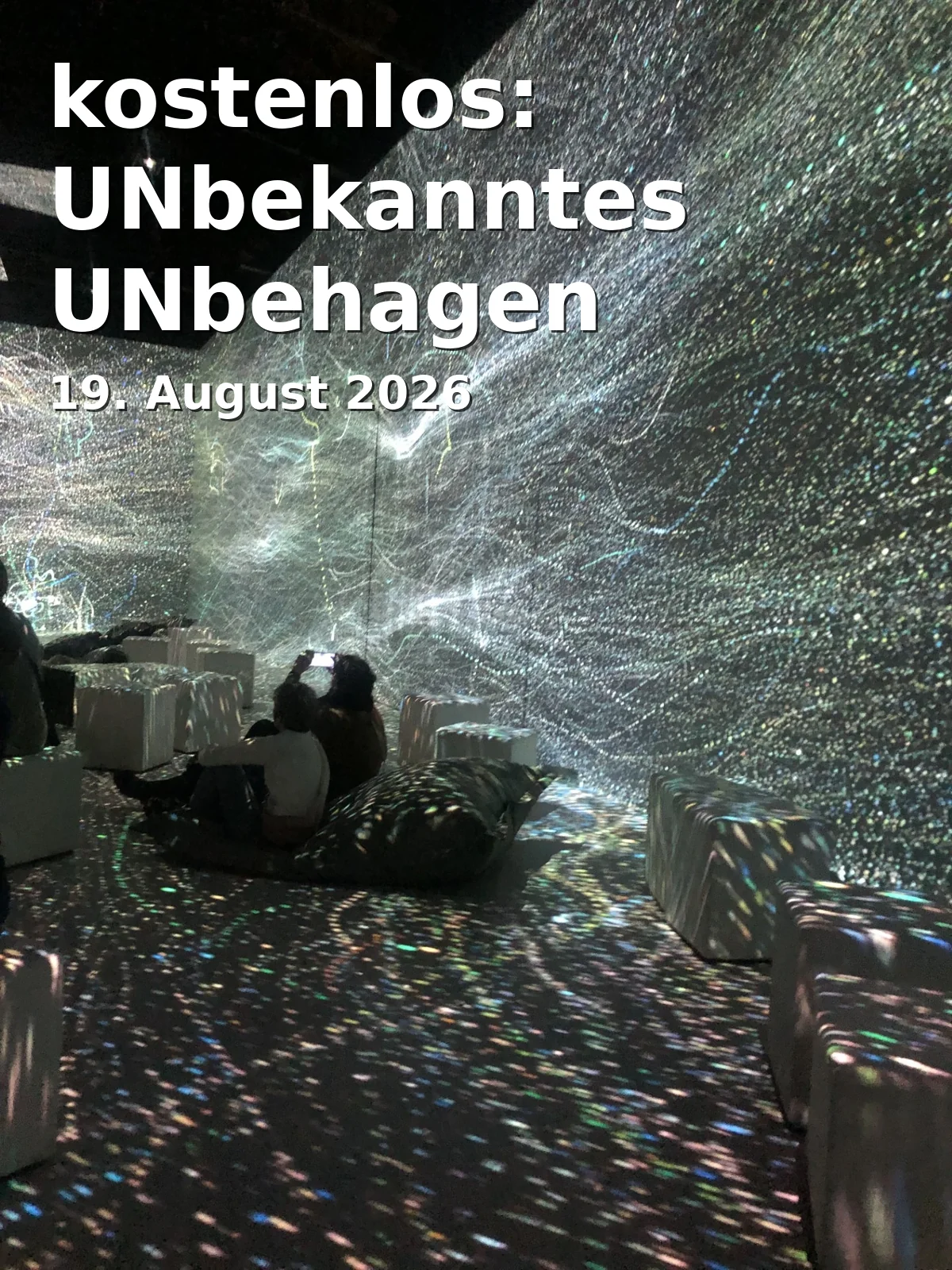
free: Unknown Discomfort
Experience free in Bonn: Unknown Discomfort at the Bundeskunsthalle combines puzzles, museum atmosphere, and perspective shifts. Register on 08/19/2026! #Bonn #Culture
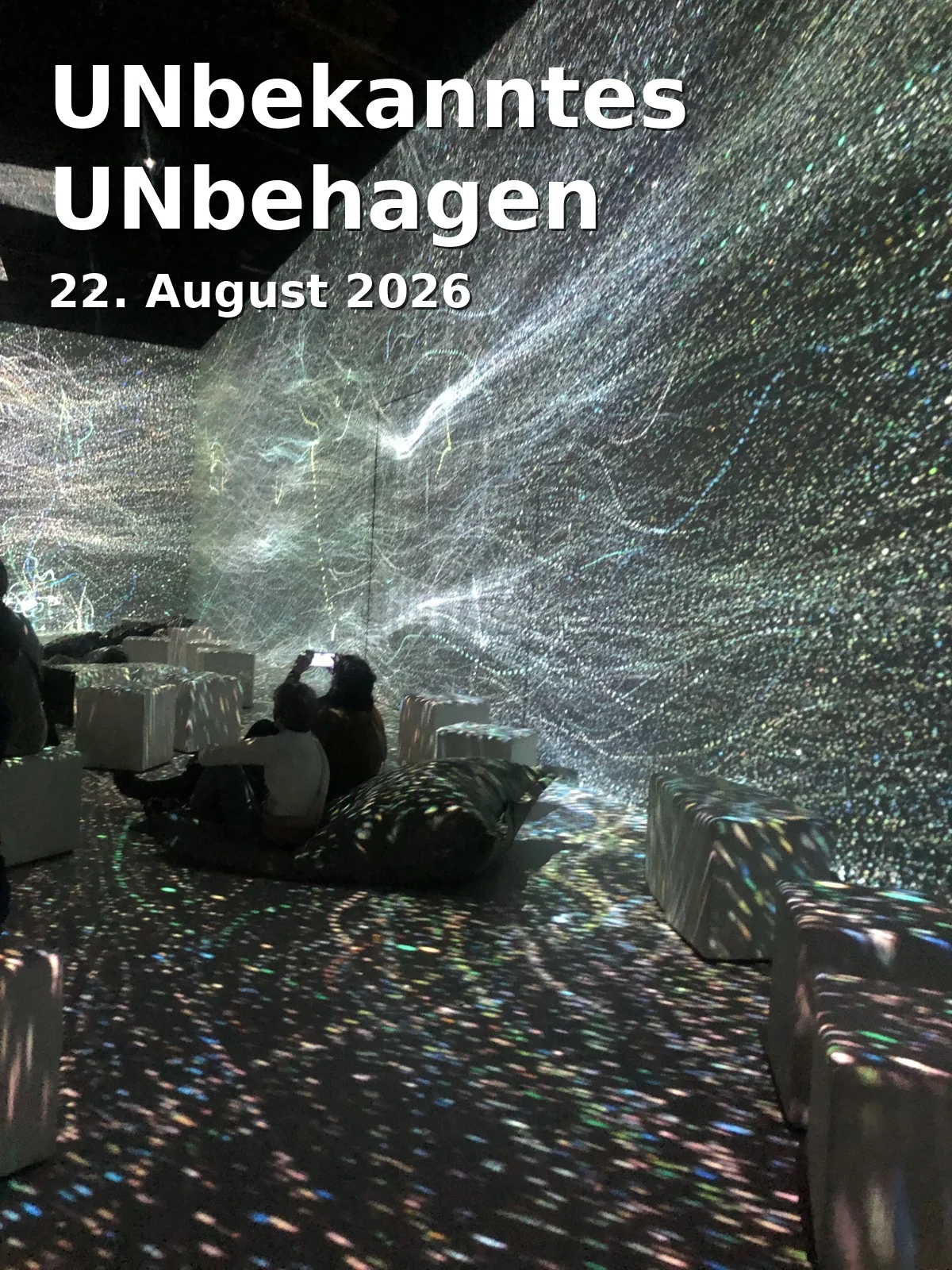
Unknown Discomfort
A free escape room experience with depth at the Bundeskunsthalle Bonn: puzzles, excitement, and perspective shift on 08/22/2026. Discover now! #Bonn #Bundeskunsthalle #EscapeRoom

Bonn Summit. European Forum on Culture and Politics
Experience three days of cultural politics, European debate, and international perspectives in Bonn. Bonn Summit 2026 at the Bundeskunsthalle: September 16–18, 2026, starting at €150. Be there now! #bonnsummit
Beethovenfest 2026: Michael Barenboim & Nasmé Ensemble
Ein besonderer Kammermusikabend in Bonn: Michael Barenboim & Nasmé Ensemble im Forum der Bundeskunsthalle. Intensive Live-Atmosphäre am 30.09.2026. #Beethovenfest

Telephone Tour: Sex Work
A quiet, powerful cultural format in Bonn: The Telephone Tour on Sex Work connects exhibition, knowledge, and perspectives. Free on 22.10.2026. #Bonn #Culture
Frequently Asked Questions
Reviews
Mortence
23. September 2025
A wonderful rooftop meeting place atop Bonn's Art Museum and vantage point for enjoying the sunset! No tickets... Just ride up, park your bike, and climb the stairs to the top!
Jeremy Leung
12. October 2025
Second best museum I've been to! The curators utilize the architectural framing well, exhibitions are well narrated, and Wim Wenders's Perfect Days is a masterpiece. The rooftop garden is filled with glee.
Zehra Nalci
12. July 2025
The collections were beautiful and the museum shop had a lot of different things inside. It took about 1.5 hours to visit. The roof has a park on it which is nice for the kids and also the adults.
Marilyn Glele
6. February 2022
Lovely Museum with interesting exhibitions. There is a bit of everything for everyone. Currently there is a nice exhibit about the brain. It's worth taking a combo ticket to see all the exhibits at once if you have enough time. The current Adam and Eve exhibition is not kid-friendly, but other than that I would recommend it for families as well 😊
Thomas Kessler
27. December 2023
The Kant exhibition is a unique experience that spurred very interesting discussions among us and close friends especially in the current political environment we face in Germany.