
Michel Corrette
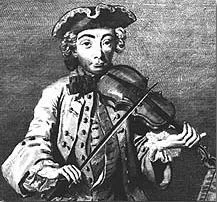
Image from Wikipedia
Image from Wikipedia
Michel Corrette – The Inventive Sound Architect Between Baroque, Pedagogy, and Musical Practice
Michel Corrette: A French Master of the Organ, Harpsichord, and Musical Didactics
Michel Corrette (* April 10, 1707 in Rouen; † January 21, 1795 in Paris) is among the most fascinating figures in 18th-century French music history. As a composer, organist, teacher, and author of music theoretical writings, he remarkably integrated practice and theory, shaping not only the performance culture of his time but also the music pedagogy of subsequent generations. His work encompasses organ compositions, harpsichord pieces, concertos comiques, and didactic standard works that are now considered essential to understanding historical playing techniques. ([de.wikipedia.org](https://de.wikipedia.org/wiki/Michel_Corrette))
Biographical Roots in Rouen and Early Rise in Paris
Corrette was born in Rouen and embarked on a professional career as a musician early on. According to Encyclopédie Universalis, he was already an organist at a prestigious Parisian tribune, Sainte-Marie-Magdeleine-en-la-Cité, at the age of seventeen. This early appointment demonstrates how quickly his talent permeated the ecclesiastical and urban musical life of the capital. ([universalis.fr](https://www.universalis.fr/encyclopedie/michel-corrette/))
His career unfolded almost entirely in Paris, where he held several significant positions throughout the decades: in 1737 with the Grand Prieur de France, in 1750 with the Jesuits on Rue Saint-Antoine, in 1759 with the Prince of Condé, and in 1780 with the Duke of Angoulême. These milestones firmly anchor him within the institutional musical life of the Ancien Régime and highlight how closely his work was tied to the representative and liturgical centers of the French upper class. ([universalis.fr](https://www.universalis.fr/encyclopedie/michel-corrette/))
Career Between Church Music, Court Culture, and Public Virtuosity
Corrette developed not only as an organist but also as a versatile composer, writing for various occasions and ensembles. His works for organ, harpsichord, flute, violin, and chamber music reflect a musical career that did not confine itself to a single genre but embraced stylistic adaptability. Sources describe him as a composer, arranger, and teacher whose long career spanned around 75 years, providing a broad overview of evolving musical conventions. ([music.apple.com](https://music.apple.com/us/artist/michel-corrette/4799415))
His role in the development of French organ music is particularly characteristic. Universalis emphasizes that Corrette, along with Jean-François Tapray, Claude Balbastre, and Nicolas Séjan, were musicians who oriented the organ towards a lighter, virtuosic, and sonically surprising style. This transformation partially distanced the repertoire from strict liturgical service, opening it up to a more expressive, almost concertante sound language. ([universalis.fr](https://www.universalis.fr/encyclopedie/michel-corrette/))
The Art of Didactics: Teaching Works as a Musical Overview
Among Michel Corrette's most significant achievements are his music pedagogy writings. The École d’Orphée for violin, published in 1738, is considered his central teaching work; here he compares the Italian and French styles and provides precise instructions on playing techniques of his time. L’Art de se perfectionner dans le violon from 1782 can be read as a continuation, while Le Parfait Maître à chanter opens up the field of singing. ([de.wikipedia.org](https://de.wikipedia.org/wiki/Michel_Corrette))
These treatises were more than mere instructional books. They are documents of a musical practice aimed at clarity, systematics, and immediate applicability. Musicologie.org notes additional methodological works, including Prototypes, Le Maître de Clavecin, Le Parfait Maistre à chanter, and Les dons d’Apollon, demonstrating an author who formulated didactic solutions for nearly every important instrument of the Baroque period. ([musicologie.org](https://www.musicologie.org/Biographies/c/corrette_michel.html))
Discography and Rediscovery in Recording History
Although Corrette lived in the 18th century, his presence in modern discography is surprisingly vibrant. MusicBrainz documents numerous recordings of his works, including Nouveau livre de Noëls, Concertos pour orgue et orchestre op. 26, Six Concertos for Organ, French Baroque Concertos, Les délices de la solitude, Noël 1788, Concertos pour violon, and Concerti op. 26. These recordings show that his music is particularly esteemed today in the field of Early Music and historically informed performance practice. ([musicbrainz.org](https://musicbrainz.org/artist/a8af98ec-7e27-4aa7-8395-537849340fc7))
Apple Music also points to a wide repertoire of modern releases featuring Corrette as a composer, including recordings from 2021 to 2025. This signals the continued relevance of his oeuvre: his works remain fertile ground for organists, harpsichordists, and Early Music ensembles, promising both historical substance and musical discovery. ([music.apple.com](https://music.apple.com/us/artist/michel-corrette/4799415))
Key Works: From Harpsichord to Concert
Central titles in his discography and body of work include the Premier Livre de Pièces de clavecin from 1734, the 25 Concertos comiques op. 8 for three violins and basso continuo, concertos for hurdy-gurdy and flute, the 6 Orgelkonzerte op. 26, and numerous Noëls and organ books. This diversity highlights Corrette's ability to navigate between courtly elegance, ecclesiastical function, and musical entertainment. ([de.wikipedia.org](https://de.wikipedia.org/wiki/Michel_Corrette))
Particularly, the Concertos comiques mark a unique point in his career: here, virtuosity combines with an immediately accessible melodic language. Corrette operates at the intersection of art music and audience-friendly effect, which continues to give his works their distinct allure today. ([de.wikipedia.org](https://de.wikipedia.org/wiki/Michel_Corrette))
Style, Composition, and Cultural Influence
Musically, Michel Corrette stands at a transitional point between late Baroque and early Classical. Universalis and Apple Music describe that his music documents both stylistic change and the practices of the 18th century. His compositions encompass motets, operas, ballets, concertos, symphonies, sonatas, as well as works for harpsichord and organ, resulting in an extremely broad spectrum of expressive forms. ([universalis.fr](https://www.universalis.fr/encyclopedie/michel-corrette/))
His cultural influence primarily lies in the connection between composition and communication. Corrette not only wrote music but also explained it. This dual authority as a practitioner and educator makes him particularly interesting for contemporary research and historical performance practice. His textbooks provide, as highlighted by Wikipedia and other expert sources, valuable insights into contemporary playing techniques and musical ideas. ([de.wikipedia.org](https://de.wikipedia.org/wiki/Michel_Corrette))
Reception, Impact, and Contemporary Significance
The critical reception particularly highlights his role as an innovator of organ style. Universalis describes his music as tending towards lighter virtuosity, while Musicologie.org and MusicBrainz provide evidence of the breadth of his oeuvre and the enduring presence of his works in modern recordings. This paints a picture of a composer who not only functioned in ecclesiastical quotidian life but also set aesthetic impulses for later generations. ([universalis.fr](https://www.universalis.fr/encyclopedie/michel-corrette/))
In today's Early Music scene, Corrette remains engaging because his works demand technical precision, stylistic sensitivity, and sonic imagination from interpreters. The modern performance tradition discovers in him an author who not only documented historical practice but actively developed it. ([music.apple.com](https://music.apple.com/us/artist/michel-corrette/4799415))
Conclusion: Why Michel Corrette Still Captivates Today
Michel Corrette is much more than a name in music history. He is a composer who forged a personal sound language from Baroque, pedagogy, and virtuosity, leaving behind a body of work that remains alive in Early Music today. Those interested in French music, historical performance practice, and the creative transition from Baroque to Classical will find in Corrette an exceptionally multifaceted artist. ([de.wikipedia.org](https://de.wikipedia.org/wiki/Michel_Corrette))
His music merits rediscovery in concert halls as well as in the studio. Particularly live, his organ works, Noëls, and Concertos comiques unfold that blend of sonic refinement, elegance, and inventiveness that makes Michel Corrette a lasting recommendation for music lovers. ([de.wikipedia.org](https://de.wikipedia.org/wiki/Michel_Corrette))
Official Channels of Michel Corrette:
- Instagram: No official profile found
- Facebook: No official profile found
- YouTube: No official profile found
- Spotify: No official profile found
- TikTok: No official profile found