
Markus (Evangelist)
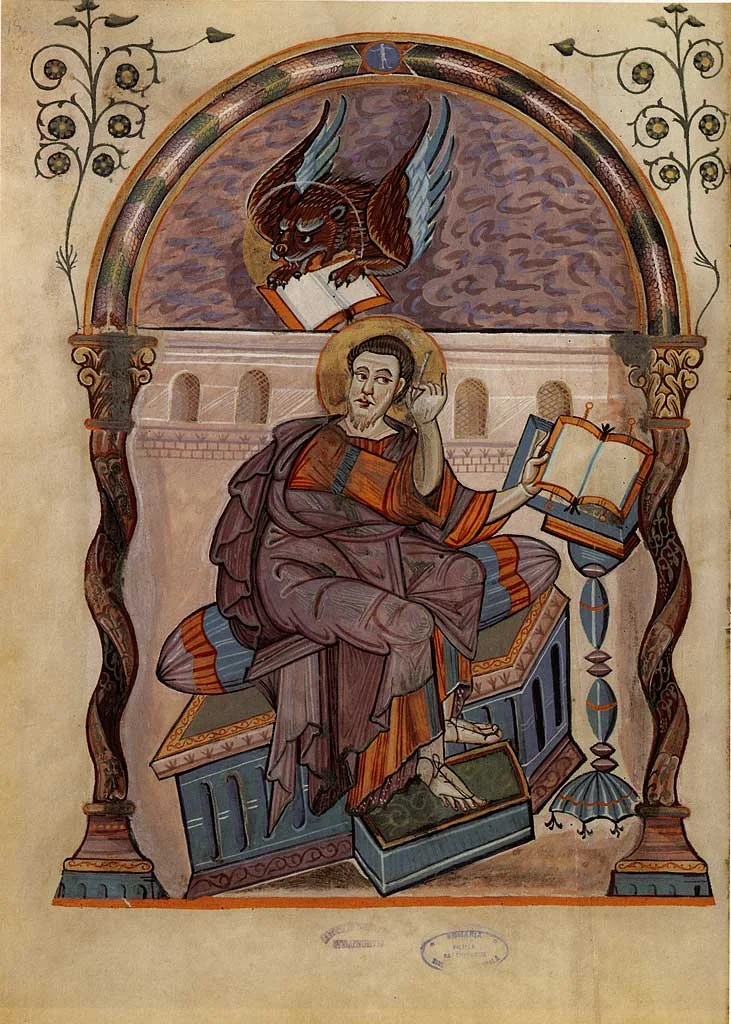
Image from Wikipedia
Image from Wikipedia
Markus (Evangelist): The Silent Narrator of the Oldest Gospel
Introduction: Between Tradition, Legacy, and Literary Power
Markus is not an artist in the modern sense, but the figure preserved in ancient church tradition behind the probably oldest gospel of the New Testament. The Evangelist does not mention his name in the text itself; the attribution "Markus" is a later tradition and a scholarly convention. This is precisely where the special fascination of this figure lies: Behind an anonymous work stands a narrative voice that has shaped theology, art, and culture for centuries. ([de.wikipedia.org](https://de.wikipedia.org/wiki/Markus_%28Evangelist%29?utm_source=openai))
Biographical Horizon: A Figure from Text, Tradition, and Interpretation
The ancient church biography of Markus emerges from the connection of various sources, mainly from the New Testament, the Acts of the Apostles, and the accounts of the Church Fathers Papias, Eusebius of Caesarea, Jerome, and Epiphanius. Research also points out that this tradition should not be read as a simple historical account of life, but rather as a traditional image with theological intent. Thus, Markus remains a figure between history and interpretation, between person and projection of early Christian memory. ([de.wikipedia.org](https://de.wikipedia.org/wiki/Markus_%28Evangelist%29?utm_source=openai))
In the New Testament tradition, Markus is frequently identified with John Mark, a companion of Paul and cousin of Barnabas, who was part of the Jerusalem first community at times. According to ancient tradition, he was also understood as the translator or interpreter of Peter and that he had recorded his teachings in writing. This attribution has shaped the image of the Evangelist up to the present, even though modern biblical scholarship critically and differentiating evaluates the authorship of the Gospel. ([de.wikipedia.org](https://de.wikipedia.org/wiki/Markus_%28Evangelist%29?utm_source=openai))
The Breakthrough of the Text: The Gospel of Mark as an Early Narrative Form
The Gospel of Mark is considered the oldest gospel according to the historically critical majority opinion. It was originally transmitted anonymously; the commonly used title "Gospel according to Mark" was added later. Its early composition, usually dated shortly after the First Jewish War, makes the text a key work in the early history of Christianity and a central source for Matthew and Luke within the framework of the Two-Source Hypothesis. ([de.wikipedia.org](https://de.wikipedia.org/wiki/Evangelium_nach_Markus?utm_source=openai))
Literarily, Markus operates at an exciting intersection: The text combines Semitic traditions with Hellenistic narrative forms and organizes Jesus' path into a chronological biography that resembles the lives of ancient rulers and heroes. This very form explains why the Gospel is regarded not only as a religious text but also as a culturally formative narrative composition. The concise, sharp dramaturgy imparts a unique rhythmic tension to the work that captivates readers to this day. ([de.wikipedia.org](https://de.wikipedia.org/wiki/Evangelium_nach_Markus?utm_source=openai))
Works and Impact: The Gospel as a Literary Legacy
The preserved works of Markus are not a discography, but a canon of texts with enormous historical impact. The Gospel of Mark narrates the journey of Jesus from baptism through public ministry to death, burial, and the empty tomb; thus, it sets a narrative framework that has profoundly shaped Christian memory. The earliest retained larger textual transmission, Papyrus Chester Beatty I, also shows how quickly this Gospel entered the literary culture of the early Church. ([de.wikipedia.org](https://de.wikipedia.org/wiki/Evangelium_nach_Markus?utm_source=openai))
In tradition, Markus has often been associated with the lion, the Lion of Mark, which still serves as his symbol. This iconographic association has made the Evangelist one of the most visible figures in the history of Christian art, especially in liturgy, book painting, and architecture. The text was not only read but also visually immortalized, which granted Markus as an author an extraordinary cultural reach. ([de.wikipedia.org](https://de.wikipedia.org/wiki/Markus_%28Evangelist%29?utm_source=openai))
Biographical Traditions: Rome, Alexandria, and the Church's Remembrance
The ancient church tradition connects Markus with Rome and Alexandria. In the tradition of Papias, he was considered the interpreter or mediator of Peter, while later sources regarded him as the founder of the community in Alexandria and the first bishop of that city. The martyr's death on April 25, 68, also belongs to this horizon of tradition, which has gained a strong, enduring presence in ecclesiastical memory to this day. ([de.wikipedia.org](https://de.wikipedia.org/wiki/Markus_%28Evangelist%29?utm_source=openai))
However, research does not consider this tradition historically secure in every detail. The tension between early church memory and later legend formation makes Markus so culturally interesting: He is a figure through which the emergence of authority, canon, and ecclesiastical identity can be exemplarily observed. Thus, he belongs to the shaping names of the Christian tradition, even if his person remains historically only indirectly accessible. ([de.wikipedia.org](https://de.wikipedia.org/wiki/Markus_%28Evangelist%29?utm_source=openai))
Style and Intellectual Signature: Conciseness Instead of Embellishment
The Gospel of Mark is characterized by condensation, rapid scene sequences, and a strong narrative focus. It relies on movement, conflict, and intensification, not on elaborate genealogical or childhood embellishments. It is precisely this conciseness that makes the text so interesting for exegetes: Markus does not narrate broadly but intensely, with a style that draws the reader directly into the inner conflict and dynamics of the story of Jesus. ([newadvent.org](https://www.newadvent.org/cathen/09674b.htm?utm_source=openai))
Its literary value also lies in the connection of history and theological interpretation. The text conveys that Jesus' path, work, and suffering belong in a divine context, using a narrative style that appears both simple and highly composed. From this perspective, Markus is less merely a transmitter than a master of dense, symbolically charged prose. ([de.wikipedia.org](https://de.wikipedia.org/wiki/Evangelium_nach_Markus?utm_source=openai))
Cultural Influence: From Liturgy to Imagery
Markus has shaped Christian culture in far more than just literary terms. His name is connected with festival traditions, church patronages, and iconographic symbols; particularly, the Lion of Mark stands for the visual presence of the Evangelist in art and architecture. The attribution of the Gospel to a specific church memory culture also demonstrates how deeply Markus has entered the religious imagination of the West. ([encyclopedia.com](https://www.encyclopedia.com/philosophy-and-religion/christianity/protestant-christianity/evangelist?utm_source=openai))
Moreover, the Gospel of Mark influenced the way early Christians read history as salvation history. Its narrative structure, early dating, and role as a template for later Gospels make it a foundational text of Christian literature. Thus, reading Markus means encountering not only a religious tradition but also a work that has significantly shaped the narrative grammar of Christianity. ([de.wikipedia.org](https://de.wikipedia.org/wiki/Evangelium_nach_Markus?utm_source=openai))
Conclusion: Why Markus Continues to Fascinate Today
Markus fascinates because he stands at the intersection of tradition, text, and impact history. As the attributed author of the oldest Gospel, he connects early Christian memory with literary power and cultural endurance. Anyone interested in Markus discovers not a classic artist biography but one of the most influential narrators and bearers of memory in Christianity. ([de.wikipedia.org](https://de.wikipedia.org/wiki/Markus_%28Evangelist%29?utm_source=openai))
This mixture of historical uncertainty and spiritual radiance makes him particularly intriguing. His work has shaped generations, his symbolism continues to live on in art and liturgy, and his narrative ranks among the great texts of world culture. Those who wish to understand Markus should read the Gospel of Mark itself and rediscover its impact within the cultural realm. ([de.wikipedia.org](https://de.wikipedia.org/wiki/Evangelium_nach_Markus?utm_source=openai))
Official Channels of Markus (Evangelist):
- Instagram: No official profile found
- Facebook: No official profile found
- YouTube: No official profile found
- Spotify: No official profile found
- TikTok: No official profile found
Sources:
- Wikipedia – Markus (Evangelist)
- Wikipedia – Gospel according to Mark
- New Advent – Catholic Encyclopedia: Saint Mark
- New Advent – Catholic Encyclopedia: Gospel of Mark
- Encyclopedia.com – Evangelist
- Encyclopedia.com – Gospel According To Mark
- Vatican – Benedict XVI, General Audience on Mark
- Wikidata – Mark the Evangelist
- Wikipedia: Image and text source