
John le Carré
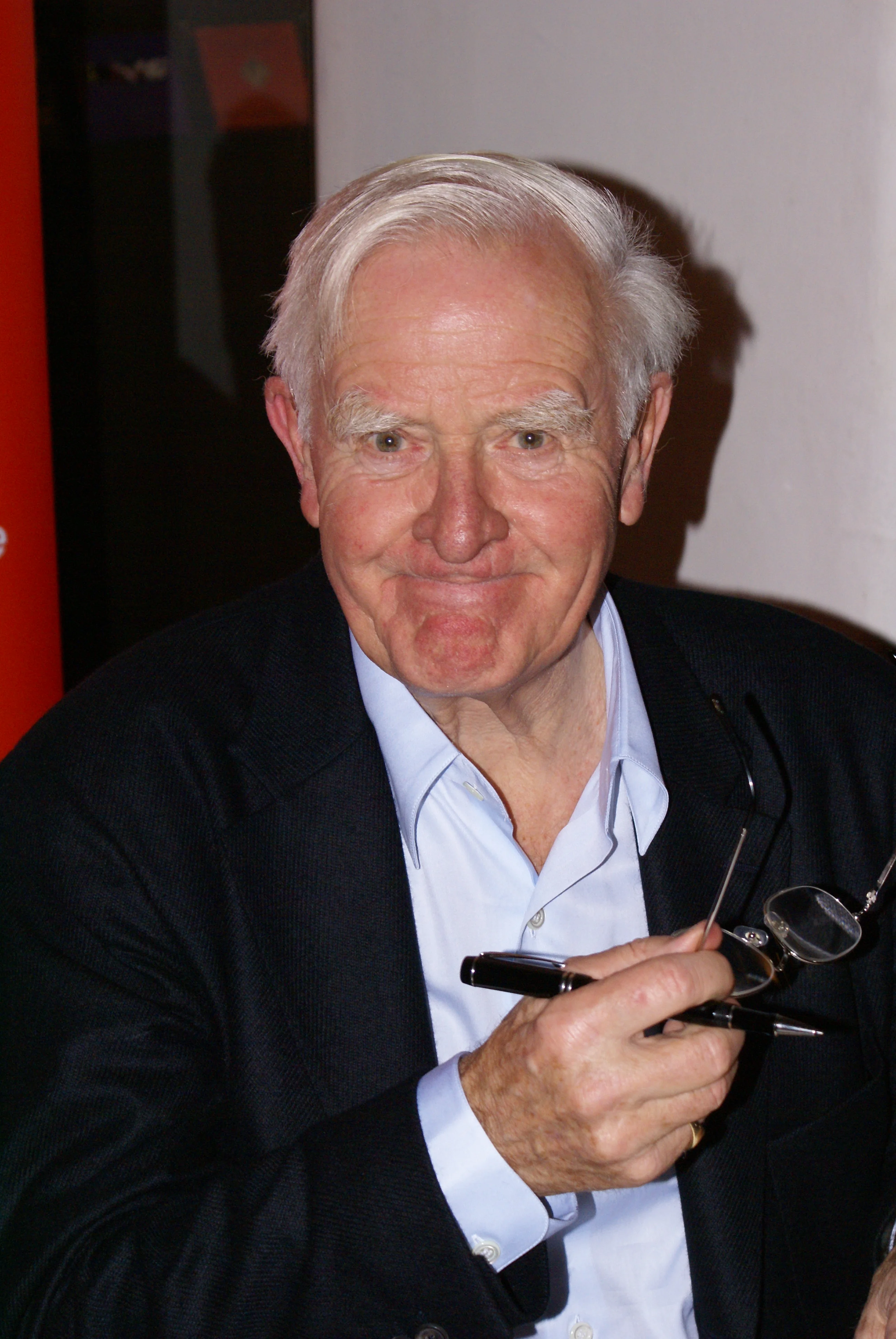
Image from Wikipedia
Image from Wikipedia
John le Carré – The Master of the Spy Novel Between Cold War, Morality, and Global Fame
An Author Who Made the Secret Life of Power Visible
John le Carré, whose real name was David John Moore Cornwell, is one of the defining British writers of the 20th and early 21st centuries. Born on October 19, 1931, in Poole, Dorset, and passed away on December 12, 2020, in Truro, Cornwall, he became famous primarily for his spy novels that emerged from the spirit of the Cold War, significantly changing the genre. His works sold millions worldwide and were adapted into numerous films. Shortly before his death, he took on Irish citizenship, which symbolically marked a late distance from his British origins.
Le Carré did not write music, but his prose possesses a distinctive rhythm, dramatic precision, and an atmosphere that resembles a carefully arranged composition. His novels are structured like tension-filled pieces with shifting motifs, lines of conflict, and a strong sense of timing. This is where his cultural resonance lies: he transformed the spy novel into a morally serious, literarily dense format.
Biographical Roots: From Poole to the World of Intelligence
David Cornwell grew up in England and later worked for the British intelligence services MI5 and MI6. This experience lent an unusual authenticity to his writing and allowed him to understand the world of surveillance, loyalties, and covert operations from the inside. His biography early on merged with the themes he later tackled in his literary work. The result was an oeuvre based not on mere sensationalism but on observed reality and psychological accuracy.
Throughout his career, le Carré also engaged in educational contexts and in the British Foreign Service. Such experiences sharpened his insight into language, hierarchy, and diplomatic masks. From this experience emerged the sober, often disillusioned tone that made his novels distinctive. He did not describe glamorous heroes but damaged individuals in systems where moral clarity is regularly obstructed.
The Breakthrough with George Smiley and the Cold Pulse of the Century
John le Carré achieved international breakthrough in the 1960s with his spy novels, particularly with The Spy Who Came in from the Cold. With this publication, he was recognized worldwide as a bestselling author. Central to many of his early works was the character George Smiley, a secret agent not depicted as a glamorous adventurer, but as a quiet, analytical, and deeply human counterpart to James Bond. This very shift marked his success.
Le Carré did not focus on spectacle but on the shadowy zones of political systems. His novels often took place in the climate of the Cold War and painted a picture of betrayal, paranoia, and institutional coldness. In doing so, he crafted a narrative style that combines tension with moral reflection. The allure of his books remains that they are both entertaining literature and political diagnosis.
Literary Development: From the Cold War to Global Entanglements
From the 1990s onward, le Carré significantly expanded his thematic horizon. His thrillers began to address issues of the intertwining of politics and economics, looking beyond the classic East-West confrontation. This reacted to a changed global landscape in which intelligence agencies, corporations, and governments were interconnected in new ways. The tension of his books remained intact, but the power architecture became more complex and global.
This development showcases an author who did not rely on a formula for success. Instead, he refined his literary method and made the spy story relevant to the present. His works became chronicles of a world where moral decisions are rarely clear-cut. This very ambiguity is one of his greatest strengths.
Discography? No – But an Impressive Bibliography with Cult Status
Although the term discography does not literally apply here, le Carré has a body of work with a similar density of milestones as an outstanding career in the music business. Key titles include the early Smiley novels as well as later works that redefined the political thriller. His books were received internationally and adapted many times, further solidifying his position in world literature. In popular culture, he became a brand for intelligent, sophisticated thrillers.
The figure of 60 million copies sold worldwide underscores the reach of his work. This dissemination is not only a commercial value but also an indication of cultural lasting impact. His novels became reference points for an audience that reads thrillers not as escapism but as a form of insight. This distinction sets le Carré apart from mere genre authors.
Style, Composition, and Narrative Production
Le Carré's language operates with restraint, precision, and psychological density. His sentences are often sober, yet highly effective because they do not inflate tension but control it. Like in a good production, every element counts for him: a glance, a silence, a seemingly trivial detail. From these elements, an atmosphere emerges that almost pulsates musically while reading.
His style thrives on contrasts. On one side are bureaucratic systems, internal codes, and operational routines; on the other side are vulnerable characters with questionable loyalties. This tension between structure and feeling gives depth to his books. Le Carré did not simply write about intelligence agencies; he wrote about the costs of belonging, the mechanics of power, and the loneliness of the individual.
Press Reviews, Reputation, and Critical Authority
The reception of John le Carré has been exceptionally strong for decades. German and international voices honored him as a bestselling author of significance and as a writer who elevated the spy genre to literary heights. The British obituary in The Guardian highlighted how closely his public biography remained connected to the world of intelligence, while other sources described his career as one of the most significant in the modern thriller genre. This consistency in perception is a sign of true authority for an author.
From a cultural-historical perspective, le Carré is also considered a chronicler of the 20th century. His novels reflect the uncertainties of the Cold War as well as later shifts in global power. Critically appreciated was particularly his ability to not only depict political systems but to make their moral consequences visible. This keeps him relevant for literary criticism, the feuilleton, and readership alike.
Cultural Influence: From the Spy Novel to Political Diagnosis
Le Carré shaped the image of the modern spy novel more than almost any other author of his generation. The character George Smiley became the antithesis of the invulnerable agent, thereby permanently influencing the perception of intelligence literature. His books showed that genre literature can carry societal complexity without losing readability. This very balance made him a global benchmark.
His influence extends far beyond the genre. Anyone today reading political thrillers where corporations, governments, and power elites intertwine operates in a field that le Carré has significantly shaped. His novels have refined the language for betrayal, institutional gray areas, and moral exhaustion. Thus, he remains an author whose work continually resonates in the present.
Conclusion: Why John le Carré Continues to Fascinate Today
John le Carré remains compelling because he made the invisible visible: the emotional and political mechanisms behind the scenes of power. His books combine literary elegance with intellectual sharpness and a deep understanding of human weaknesses. Reading him is not merely experiencing an agent story but a precisely composed drama about loyalty, deception, and responsibility. For this reason, his work continues to be essential reading for literature lovers and a window into the dark corners of the 20th century.
Those who truly want to understand le Carré’s world should not just read his novels but experience them as vibrant historical documents. His stories possess a stage presence fueled by psychological depth, political relevance, and linguistic discipline. John le Carré is an author who echoes to this day like a strong musical motif: once heard, never forgotten.
Official Channels of John le Carré:
- Instagram: No official profile found
- Facebook: No official profile found
- YouTube: No official profile found
- Spotify: No official profile found
- TikTok: No official profile found
Sources:
Upcoming Events
John le Carré Evening in Bonn: Spies & Writers