
Giuseppe Tomasi di Lampedusa
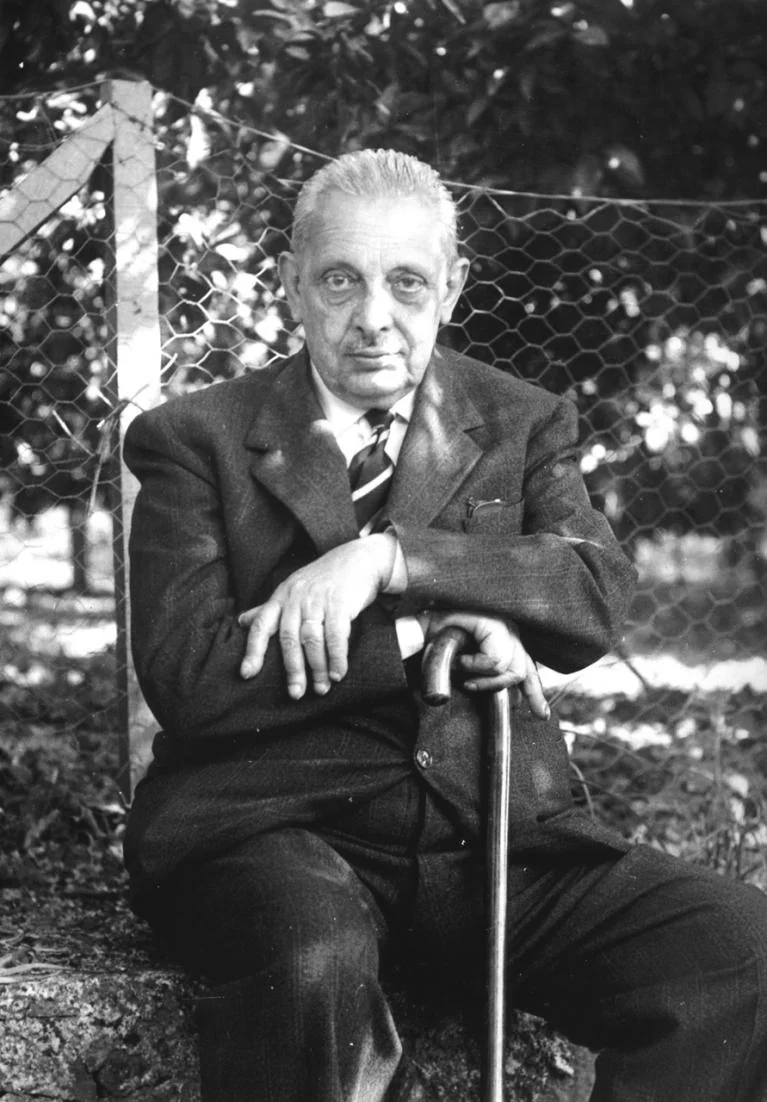
Image from Wikipedia
Image from Wikipedia
Giuseppe Tomasi di Lampedusa
The Great Chronicler of Decline: Giuseppe Tomasi di Lampedusa and the Magic of Il Gattopardo
Giuseppe Tomasi di Lampedusa is one of the most fascinating voices in 20th-century Italian literature. Born on December 23, 1896, in Palermo and died on July 23, 1957, in Rome, he became world-renowned through his novel Il Gattopardo (The Leopard). His work condenses aristocratic memory, historical upheavals, and psychological precision into literature of rare elegance. ([en.wikipedia.org](https://en.wikipedia.org/wiki/Giuseppe_Tomasi_di_Lampedusa?utm_source=openai))
Unlike many authors of his time, Lampedusa did not write from the hub of literary society, but from a quiet, almost secluded position. He came from an old Sicilian noble family that was closely linked to the political and cultural history of the island. This very background shaped his perspective on decay, tradition, and historical movement. ([en.wikipedia.org](https://en.wikipedia.org/wiki/Giuseppe_Tomasi_di_Lampedusa?utm_source=openai))
Biography: Nobility, Education, and a Life Between Palermo and Europe
Lampedusa grew up in Palermo and received an education shaped by languages, literature, and historical culture. He mastered Italian, French, and German at an early age; later, he learned additional languages, including English and Spanish. His reading interests ranged from literature to history and art to architecture, which later manifested clearly in the structural density of his novel. ([en.wikipedia.org](https://en.wikipedia.org/wiki/Giuseppe_Tomasi_di_Lampedusa?utm_source=openai))
During World War I, he served in the army and was captured by Hungarian forces in 1917. After the war, his journey led him back to Sicily, and later through various European cities such as Genoa, Turin, Bologna, and Munich. These movements sharpened his awareness of cultural differences and historical continuities, without ever losing his Sicilian roots. ([de.wikipedia.org](https://de.wikipedia.org/wiki/Giuseppe_Tomasi_di_Lampedusa?utm_source=openai))
In 1934, he inherited the title of Prince of Lampedusa, along with the symbolic burden of a declining world. During this period, his interest in the literary treatment of history, society, and familial memory intensified. From this tension arose the idea for Il Gattopardo, a novel that captures the soul of Sicily at a moment of political upheaval. ([en.wikipedia.org](https://en.wikipedia.org/wiki/Giuseppe_Tomasi_di_Lampedusa?utm_source=openai))
The Breakthrough: A Single Work That Made Literary History
The great literary breakthrough came only posthumously. Lampedusa wrote Il Gattopardo in 1954 and 1955, but the manuscript was not published during his lifetime. The novel was released in 1958 after his death and quickly became one of the most important literary events of the post-war period. ([en.wikipedia.org](https://en.wikipedia.org/wiki/Giuseppe_Tomasi_di_Lampedusa?utm_source=openai))
The story begins in the Sicily of the Risorgimento and observes the transformation of an aristocratic order with cool accuracy and melancholic grandeur. It is precisely this combination of historical breadth and psychological intricacy that made the book a classic. The novel was not only read as a family and societal narrative but also as a keen meditation on power, transformation, and transience. ([en.wikipedia.org](https://en.wikipedia.org/wiki/The_Leopard?utm_source=openai))
The initial reception was controversial yet extraordinarily successful. Il Gattopardo quickly became a literary phenomenon, sparking debates about history and ideology, and won the Premio Strega in 1959. Thus, Lampedusa, who did not live to see the fame of his work, became an essential figure in Italian literature. ([fondazionebo.uniurb.it](https://fondazionebo.uniurb.it/fondazione/interventi/il-caso-gattopardo/?utm_source=openai))
Literary Development: Style, Tone, and Structure of the Novel
Lampedusa's prose is characterized by controlled, highly musical sentence structure, detailed observation, and a masterful handling of historical perspective. His language combines aristocratic distance with emotional depth, making the narrative simultaneously elegant and stringent. This blend gives his only novel exceptional authority. ([britannica.com](https://www.britannica.com/biography/Giuseppe-Tomasi-di-Lampedusa?utm_source=openai))
The literary power of Il Gattopardo also lies in its composition: private scenes, political shifts, and symbolic images intertwine like precisely arranged motifs. Lampedusa observes the dismantling of old power not only with nostalgia but with the understanding that historical eras collapse under their internal contradictions. This is precisely where the modernity of his work lies. ([en.wikipedia.org](https://en.wikipedia.org/wiki/The_Leopard?utm_source=openai))
His character Don Fabrizio Salina became one of the most compelling figures in European post-war literature. The novel depicts a nobleman who recognizes the signs of the times without being able to fully detach from them. This tension creates a quiet tragedy that keeps the text so engaging to this day. ([en.wikipedia.org](https://en.wikipedia.org/wiki/The_Leopard?utm_source=openai))
Critical Reception: From Controversial Book to Canon
The reception of Lampedusa's work is closely linked to the concept of the "literary phenomenon." Il Gattopardo was initially not universally celebrated by critics but quickly gained an enormous readership and established itself as a canonical text of Italian modernity. It was precisely the mix of historical reflection and epic storytelling that made the novel relevant for generations of readers. ([fondazionebo.uniurb.it](https://fondazionebo.uniurb.it/fondazione/interventi/il-caso-gattopardo/?utm_source=openai))
The novel also had a significant cultural impact. Film adaptations, essays, documentaries, and new interpretations kept the work present for decades and made Lampedusa an author whose influence extends far beyond Italian literature. The landscape of Sicily, the courtly world, and the political upheaval of the Risorgimento became permanently recognizable literary images through him. ([raiplay.it](https://www.raiplay.it/raiplay/programmi/lasiciliadelgattopardo/?utm_source=openai))
It is especially remarkable that Lampedusa achieved an impact with just one completed novel that many prolific writers cannot reach. His authority rests not on quantity but on precision, density, and historical resonance. This makes him a remarkable figure in literary history. ([en.wikipedia.org](https://en.wikipedia.org/wiki/Giuseppe_Tomasi_di_Lampedusa?utm_source=openai))
Cultural Influence: Sicily as Europe’s Memory Space
Lampedusa's work continues to shape the image of Sicily as a place of beauty, power, and decay. Il Gattopardo reads as a family saga, a portrait of society, and a commentary on history all at once. This multifacetedness has made the novel a reference point for readers, historians, and cultural critics. ([en.wikipedia.org](https://en.wikipedia.org/wiki/The_Leopard?utm_source=openai))
The cultural memory surrounding the author also remains vibrant. Various institutions, exhibitions, and literary initiatives keep his legacy alive, including the International Giuseppe Tomasi di Lampedusa Literature Prize. The ongoing engagement with his life shows that his work is not only read but continually re-examined. ([visitsicily.info](https://www.visitsicily.info/es/evento-new/premio-literario-giuseppe-tomasi-di-lampedusa/?utm_source=openai))
His literary significance lies precisely in the connection between personal experience and historical reflection. Lampedusa did not write about Sicily as a folkloric place but as a condensed space of European history. This gave his novel the universal quality that characterizes great literature. ([britannica.com](https://www.britannica.com/biography/Giuseppe-Tomasi-di-Lampedusa?utm_source=openai))
Current Projects and Publications
Since Giuseppe Tomasi di Lampedusa died in 1957, there are no current projects, new albums, or contemporary publications from his own work. His presence in cultural life today arises from editions, reinterpretations, literary awards, and scholarly discussions. Thus, his work remains alive, even though his production is complete. ([en.wikipedia.org](https://en.wikipedia.org/wiki/Giuseppe_Tomasi_di_Lampedusa?utm_source=openai))
Discography and Musical Classification
There is no discography in the musical sense for Giuseppe Tomasi di Lampedusa, as he was not a musician but a writer. In a figurative sense, however, his work possesses a strikingly musical structure: rhythmic movements, thematic repetitions, and carefully balanced tension arcs. It is this literary musicality that contributes significantly to the lasting fascination of his novel. ([britannica.com](https://www.britannica.com/biography/Giuseppe-Tomasi-di-Lampedusa?utm_source=openai))
When one speaks of Lampedusa, one speaks of composition in the best literary sense. His only masterpiece acts like an artfully constructed sound image of memory, power, and decline. This formal discipline explains why Il Gattopardo is still regarded as a masterpiece of narrative art. ([fondazionebo.uniurb.it](https://www.fondazionebo.uniurb.it/fondazione/interventi/il-caso-gattopardo/?utm_source=openai))
Conclusion: Why Giuseppe Tomasi di Lampedusa Continues to Captivate
Giuseppe Tomasi di Lampedusa fascinates with the rare combination of aristocratic inner perspective, historical sensitivity, and literary precision. His name stands for a work that reflects on the transformation of history with quiet authority while unfolding enormous emotional depth. It is precisely this blend that makes him one of the indispensable authors of the 20th century. ([en.wikipedia.org](https://en.wikipedia.org/wiki/Giuseppe_Tomasi_di_Lampedusa?utm_source=openai))
Whoever reads Il Gattopardo encounters not only a novel but a whole cultural space in motion. The book remains a key to understanding Sicily, Italian history, and the art of elegant storytelling. Its literary luminosity continues to resonate today and invites readers to rediscover Lampedusa time and again. ([en.wikipedia.org](https://en.wikipedia.org/wiki/The_Leopard?utm_source=openai))
Official Channels of Giuseppe Tomasi di Lampedusa:
- Instagram: No official profile found
- Facebook: No official profile found
- YouTube: No official profile found
- Spotify: No official profile found
- TikTok: No official profile found
Sources:
- Wikipedia – Giuseppe Tomasi di Lampedusa
- Britannica – Giuseppe Tomasi di Lampedusa
- Wikipedia (EN) – Giuseppe Tomasi di Lampedusa
- Fondazione Carlo e Marise Bo – Il caso Gattopardo
- RaiPlay – La Sicilia del Gattopardo
- Visit Sicily – Premio Literario Giuseppe Tomasi di Lampedusa
- Fondazione Tommaso Dragotto – La storia