
Andy Warhol
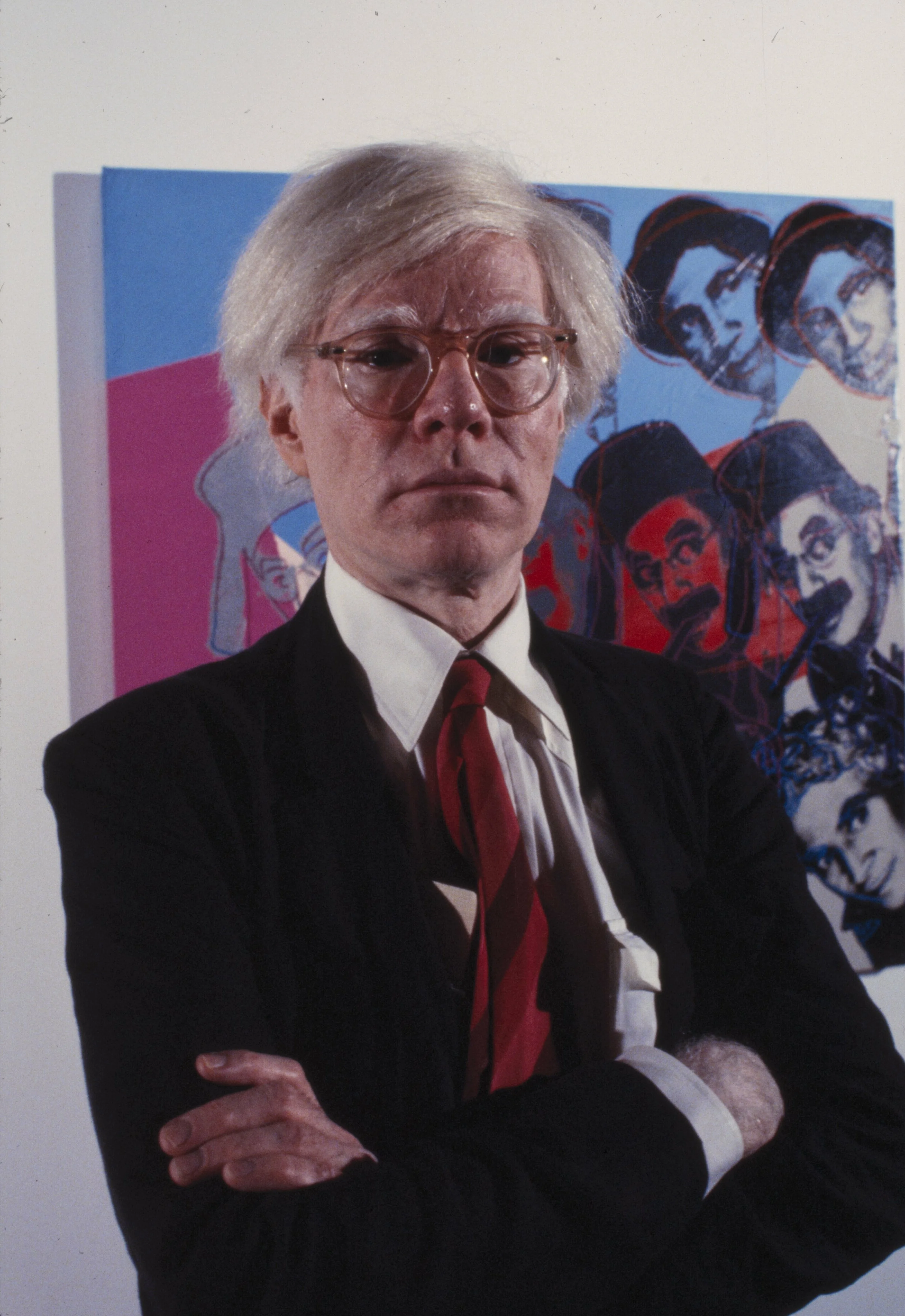
Image from Wikipedia
Image from Wikipedia
Andy Warhol – The Icon of Pop Art Who Redefined Art, Media, and Music
An Artist Who Turned Everyday Images into Cultural History
Andy Warhol is one of the defining figures in the art of the 20th century. As a co-founder and central representative of Pop Art, he merged advertising, mass media, consumer culture, and high art into a new visual language that continues to resonate today. His artistic development began in the 1950s as a graphic designer and illustrator, leading him from fashion and lifestyle magazines to the heart of the international avant-garde. The Andy Warhol Museum describes him as an artist who moved to New York after his studies in 1949 to make a name for himself as a commercial artist. (warhol.org)
Background, Education, and the Path to New York
Warhol was born on August 6, 1928, in Pittsburgh as Andrew Warhola, the son of Carpatho-Rusyn immigrants. His childhood was shaped by a Catholic iconography, familial discipline, and a strong visual memory that later fueled his art. At Carnegie Institute of Technology, now Carnegie Mellon University, he studied Pictorial Design, laying the foundation for a career that bridged illustration, photography, film, and object art. This early education explains his precise sensitivity to surface, composition, and reproducibility. (warhol.org)
The move to New York marked a decisive career step. There, Warhol initially worked in commercial image production and quickly evolved into a sought-after graphic designer for glossy magazines and lifestyle campaigns. It is precisely in this tension between market and art that the origin of his later radical image ideas lies. Warhol understood early on that the language of advertising was not outside of art but could become new material for it. (warhol.org)
The Breakthrough: Pop Art as a Reflection of Consumer Society
Warhol's international breakthrough came with works transforming everyday products into iconic art objects. The Campbell’s Soup Cans, consumer packaging, celebrity portraits, and serial image sequences made him synonymous with an aesthetic that centered on repetition, seriality, and media availability. The Andy Warhol Foundation emphasizes that he invented new forms of image production, thus greatly expanding what was considered art. (warholfoundation.org)
His works still seem remarkably modern today because they reveal the mechanics of media culture. Warhol transformed celebrity into a motif that appears both glamorous and eerie. The famous phrase about "15 minutes of worldwide fame" symbolically represents his analysis of a society that distributes attention in series. Museums and art institutions classify his work not only as Pop Art but also as a comprehensive investigation of celebrity, consumption, and image circulation. (facebook.com)
The Factory, Experiments, and the Total Artwork of Art and Life
With the Factory, Warhol created far more than just a studio. The place became a laboratory for art, film, performance, photography, music, and social staging. The Guggenheim describes his work during this phase as a fusion of performance, film, dance, and music under the title Exploding Plastic Inevitable, a multimedia event that dissolved the boundaries between stage, cinema, and visual art. (guggenheim.org)
Warhol consciously worked with surfaces, repetitions, and a mechanical quality. The Foundation succinctly summarizes this attitude: He treated painting, photography, film, writing, publishing, advertising, branding, and even his own persona as equally experimental fields. This is precisely where his authoritative position in cultural history lies: He was not only an artist but also a director of a new media reality. (warholfoundation.org)
Music, Velvet Underground, and the Role as Producer
Warhol's relationship with music was not a side note but a productive part of his music career in the broad sense. He began supporting The Velvet Underground in 1966, staging their performances as multimedia shows and producing their first album. The Warhol Museum documents that he organized studio sessions for the band and acted as a producer, while AllMusic describes his role as a surprisingly consistent mix of promotion, design, and artistic restraint. (press.warhol.org)
The discography surrounding Warhol shows that his influence on music history primarily acted as a creative catalyst. The 1967 debut The Velvet Underground & Nico bears his mark in the iconic banana cover and in the notion of an album as an art object. The Library of Congress emphasizes that, although Warhol did not direct the production in the classical sense, he acted as a decisive artistic authority; AllMusic lists him in connection with the album as producer, audio production, design, and cover painting. (loc.gov)
Discography, Films, and Media Expansion
Warhol's artistic oeuvre extends far beyond painting and includes films, books, objects, and publications. The Whitney Museum highlights that he worked across media including painting, drawing, printmaking, photography, film, video, and installation, and also founded Interview and published books such as The Philosophy of Andy Warhol and Popism. His filmography and publications demonstrate how consistently he transferred his idea of serial art into other formats. (whitney.org)
Especially in the 1970s and 1980s, Warhol expanded his practice into television, magazine culture, and performance. This later phase reveals an artist who did not stick to one medium but continually sought new spaces for image production. This makes his work not only historically significant but also methodologically pioneering for contemporary forms of art, branding, and social media aesthetics. (whitney.org)
Critical Reception and Cultural Impact
The critical reception of Warhol has been characterized for decades by admiration and debate alike. Museums and foundations classify him as a key figure of the second half of the 20th century, whose importance goes far beyond Pop Art. The Warhol Foundation emphasizes that his work blurred the boundary between art and life and early on made visible the logic of modern media culture. (warholfoundation.org)
His cultural influence is evident in music, film, fashion, and contemporary visual language. David Bowie dedicated a song to him, The Velvet Underground became legends under his guidance, and later generations of artists repeatedly draw on his strategies of repetition, irony, and staging. This makes Warhol a figure who not only wrote art history but also reorganized pop culture as a form of thought. (en.wikipedia.org)
Current Projects and Posthumous Presence from 2024 to 2026
Decades after his death, Warhol remains the subject of intensive exhibition practice and research. The Andy Warhol Museum will feature KAWS + Warhol, Holding Still, Holding On, and Andy Warhol: Vanitas in 2024 and 2025; the foundation also announced the exhibition Andy WarhoLA in Los Angeles for 2026. These projects show how alive his imagery continues to be in the present. (warhol.org)
Particularly exciting is that these exhibitions continue to interpret Warhol from new perspectives: as a pioneer of Pop Art, as a chronicler of ephemerality, and as an artist of the media society. The museum also highlights that it holds the largest collection of Warhol's art and archival material in the world, thus becoming a central authority for research and dissemination. Warhol remains not just a name from the past but an active point of reference for contemporary culture. (warhol.org)
Conclusion: Why Andy Warhol Continues to Fascinate Today
Andy Warhol fascinates because he made the great themes of modernity visible with cool precision and insatiable curiosity: fame, consumption, reproduction, surface, and identity. His music career as a producer, his work with The Velvet Underground, his series works, and his experimental films form the portrait of an artist who not only commented on the culture of the 20th century but actively reshaped it. Encountering Warhol means meeting not just a Pop Art icon but an architect of contemporary culture. (warholfoundation.org)
Anyone who experiences his works, films, or musical interconnections live in a museum context immediately understands why Warhol remains so compelling today: He conceived art as an event, as a brand, as an image machine, and as a cultural provocation all at once. This is where his lasting greatness lies. A visit to his exhibitions not only opens up art history but also offers a glimpse into the present itself. (warhol.org)
Official Channels of Andy Warhol:
- Instagram: No official profile found
- Facebook: No official profile found
- YouTube: No official profile found
- Spotify: No official profile found
- TikTok: No official profile found
Sources:
- The Andy Warhol Museum – Biography
- The Andy Warhol Foundation for the Visual Arts – Warhol
- The Andy Warhol Museum – Homepage
- The Andy Warhol Museum – KAWS + Warhol
- The Andy Warhol Museum – Andy Warhol: Vanitas
- The Andy Warhol Museum – Exhibition Archive
- The Andy Warhol Foundation – Andy WarhoLA
- Whitney Museum of American Art – Andy Warhol
- Guggenheim – Andy Warhol: A Factory
- AllMusic – Andy Warhol Biography / Discography
- Library of Congress – The Velvet Underground & Nico
- Wikipedia: Image and Text Source
Upcoming Events
Andy Warhol's Portrait of Society. at Beethoven-Haus Bonn
Experience Warhol's Beethoven anew: At Beethoven-Haus Bonn, pop art meets cultural history. Free admission on 09.09.2026 at 6 PM. #Bonn #Warhol
Beethoven by Warhol
Pop Art meets Beethoven in the historic Beethoven-Haus Bonn: over 100 works, family program, and strong visual worlds. 18.09.2026, 17 €. #Bonn #Warhol
Beethoven by Warhol - Family Afternoon at Beethoven House Bonn
A colorful family afternoon at Beethoven House Bonn: Warhol, Beethoven, and personal artworks. On 09/20/2026 from 20 €. #ExperienceArt