
Albert Ostermaier
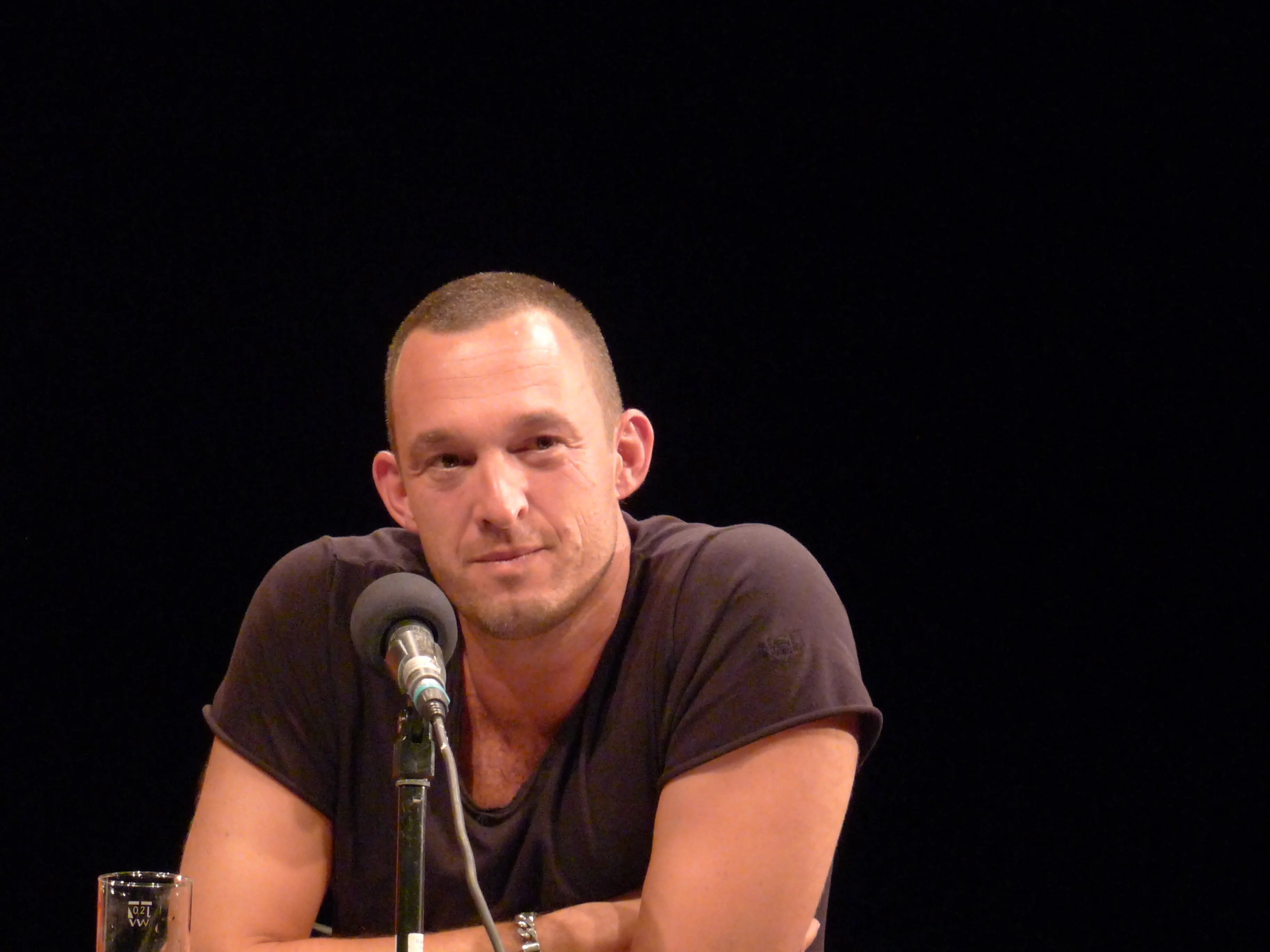
Image from Wikipedia
Image from Wikipedia
Albert Ostermaier: Linguistic Power, Stage Art, and Poetic Presence
A writer who thinks of literature as a score
Albert Ostermaier, born in Munich in 1967, is one of the most distinctive voices in contemporary German literature. He continues to live as a freelance writer in his hometown and has established himself as a poet, playwright, and novelist with a unique signature that closely intertwines linguistic music, rhythm, and dramatic emphasis. His work has been moving between stage, book, and cultural intervention for decades. ([albert-ostermaier.com](https://albert-ostermaier.com/biography))
Biography: From Munich to Literary Public Life
Ostermaier initially studied architecture and law before turning to Modern German Literature with minors in Medieval Studies and Folklore at Ludwig Maximilian University of Munich. In 1988, he published his first poetry collection Verweigerung der Himmelsrichtung; in 1990 he received a literature scholarship from Munich. This early phase showcases an author who works with a keen awareness of form and finds his own tonal quality early on. ([de.wikipedia.org](https://de.wikipedia.org/wiki/Albert_Ostermaier))
His breakthrough as a theater author came in 1995 with the premiere of Zwischen zwei Feuern. Tollertopographie at the Bavarian State Playhouse in Munich. In the following years, Ostermaier served as a resident author at the National Theater Mannheim, the Bavarian State Playhouse in Munich, and the Burgtheater Vienna. These stations not only mark a successful music career in the broader sense of linguistic art but also a consistent artistic development toward an author whose texts are preordained for major stages and strong directorial signatures. ([de.wikipedia.org](https://de.wikipedia.org/wiki/Albert_Ostermaier))
Career: Theater, Poetry, Prose, and Libretto
Ostermaier has primarily gained recognition as a poet and playwright, but his work extends far beyond that. Following his first novel Zephyr in 2008, he continued to produce prose works, while his poetry collections and plays have been translated into numerous languages and performed internationally, including in Los Angeles, New York, Athens, Santiago de Chile, Kyiv, Rome, and Tehran. This international presence underscores the authority of a writer whose themes resonate well beyond the German-speaking world. ([albert-ostermaier.com](https://albert-ostermaier.com/biography))
His profile also includes collaborations with composers and musicians. Ostermaier has written for Peter Eötvös and works with DJ Hell; his official biography also highlights recurring partnerships with Hans Platzgumer and Bert Wrede. It is particularly here that it becomes clear how strongly his writing thinks musically: as an arrangement, as tension between meter and break, as language with stage presence and acoustic energy. ([albert-ostermaier.com](https://albert-ostermaier.com/biography))
Current Projects: New Works and Cultural Presence
In recent years, Ostermaier has remained productive and publicly visible. The official website lists the theater project Stahltier. Ein Exorzismus, which was presented as a guest performance in nine German cities in 2025, and Munich Machine – Eine Utopie in memoriam Klaus Lemke, which had its premiere in February 2026 at the Residenztheater Munich. Additionally, there is the 2024 volume Rote Asche for EURO 2024 and the novel Die Liebe geht weiter, which will be published in August 2025. ([albert-ostermaier.com](https://albert-ostermaier.com/biography))
Alongside this, Ostermaier curated the flagship project Stadion der Träume for the UEFA European Championship 2024 in Germany. In doing so, he expands his artistic work to include a cultural-political dimension where literature, football, and public life intersect. This connection of high culture and popular culture is one of the most distinctive features of his career. ([albert-ostermaier.com](https://albert-ostermaier.com/biography))
Discography in a Broader Sense: Work, Sound, and Musical Collaborations
In the classical sense, Albert Ostermaier does not have a discography but an extensive bibliography with 15 poetry collections, 40 plays, 8 libretti, and 5 novels. For an artist's page with a musical focus, this is still highly relevant, as his libretti, performances, and collaborations with musicians form a kind of literary sound history. The closeness to composition, voice, and rhythm makes his work interesting for music lovers. ([albert-ostermaier.com](https://albert-ostermaier.com/biography))
The official website points to projects such as concert and stage works where language, music production, and staging interweave. These also include works in the realm of opera, drama, and musical performance, such as when Ostermaier writes for Peter Eötvös or collaborates with DJ Hell. His texts often function like scores: they rely on tempo, friction, repetition, and strong imagery. ([albert-ostermaier.com](https://albert-ostermaier.com/biography))
Style and Cultural Influence: Linguistic Fury with Urban Precision
Reception describes Ostermaier's writing as dense, sonorous, and often characterized by a notable linguistic flexibility. His style is characterized in the official press materials as a mix of irony, seriousness, poetry, pathos, linguistic baroque, and wordplay, while critics emphasize that his words listen to their own sound. The result is literature that not only wants to be read but also heard. ([albert-ostermaier.com](https://albert-ostermaier.com/press?utm_source=openai))
Content-wise, his work is broadly anchored: football, cultures of memory, urban myths, political breaks, and literary traditions shape his texts. The list of awards and institutions he is connected to ranges from the Kleist Prize to the Bertolt Brecht Prize to the Bavarian Order of Merit; he is also a member of significant academies and active in the PEN context. This combination of literary renown, institutional recognition, and public presence makes him an authority in contemporary literature. ([albert-ostermaier.com](https://albert-ostermaier.com/biography))
Voices of Reception: Recognition from Press and Institutions
The press regularly highlights his versatility. His official website describes him as one of the most performed German playwrights today; WELT and DIE ZEIT honor his literary significance and presence in cultural discourse. His theater texts and his work at the intersection of literature and music are particularly regarded as defining for his profile. ([albert-ostermaier.com](https://albert-ostermaier.com/biography))
Those who experience Ostermaier encounter not an author in quiet retreat but a linguistically powerful shaper of public spaces. His plays, poetry, and prose unfold a stage presence that can be compared to musical means of building tension. That is precisely where his strength lies: he shapes language so that it possesses attitude, tempo, and resonance simultaneously. ([albert-ostermaier.com](https://albert-ostermaier.com/biography))
Conclusion: Why Albert Ostermaier Continues to be Exciting
Albert Ostermaier connects literary excellence with cultural curiosity, dramatic power, and a pronounced affinity for music, voice, and rhythm. His career showcases an author who has never allowed himself to be confined to a genre and, by doing so, has created a body of work of great breadth. Those who wish to experience contemporary German literature in its most vibrant form find in him an artist whose texts resonate particularly intensely on stage. Experiencing him live means experiencing language as an event. ([albert-ostermaier.com](https://albert-ostermaier.com/biography))
Official Channels of Albert Ostermaier:
- Instagram: https://www.instagram.com/albertostermaier/
- Facebook: https://www.facebook.com/profile.php?id=61578965339725
- YouTube: No official profile found
- Spotify: No official profile found
- TikTok: No official profile found