
Maidenheadstraße 18, Bonn-Bad Godesberg
Maidenheadstraße 18, 53177 Bonn, Germany
Living in Pennenfeld | Renting an Apartment & Neighborhood Management
Living in Pennenfeld stands for a Bonn residential area that is much more than just an address or a search for an apartment. Those interested in the district encounter a part of Bad Godesberg that developed only after World War II and is now characterized by apartment buildings, row houses, school locations, central supply areas, and very active neighborhood work. It is precisely this mix of practicality, social infrastructure, and community organization that makes Pennenfeld attractive to people who want to live in the southern part of Bonn and value short distances, clear structures, and a vibrant environment. The neighborhood management, supported by VEBOWAG, AWO, and Caritas, and backed by the city of Bonn, is an important part of this identity. It connects living, counseling, encounters, and co-design in a district that consciously evolves without losing its character as a functional and social residential area. ([bonn.de](https://www.bonn.de/themen-entdecken/soziales-gesellschaft/quartiersmanagement-pennenfeld.php))
Renting an Apartment in Pennenfeld: Residential Location, Building Types, and Environment
Those looking for an apartment in Pennenfeld should understand the district as a developed residential area, not as a classic old town or villa milieu. In the urban analysis of the city of Bonn, Pennenfeld is described as a district dominated by apartment buildings, with only a few single-family homes with generous gardens. The row housing developments in the north and south, including the HICOG settlement, as well as other multi-story residential buildings and partially renovated houses in the town center, are particularly characteristic. The neighborhood emerged after the war and is primarily defined by buildings from the 1950s and 1960s; at the same time, modern or higher-quality apartment buildings are present in several locations, and significant construction changes are still ongoing in the town center. This is interesting for apartment seekers because different residential qualities are concentrated here in a clearly structured environment: from quiet residential areas to modernized properties to houses with social and functional orientation. The city of Bonn also emphasizes that Pennenfeld does not have a historical town center, but rather a clear supply area around Max-Planck-Straße and Albertus-Magnus-Straße. This clear structure facilitates orientation in everyday life and is attractive to people seeking practical routes, a manageable environment, and a solid residential setting. ([bonn.de](https://www.bonn.de/medien-global/amt-61/2020-ISEK_BadGodesberg_2020.pdf))
From a landlord's perspective, Pennenfeld is also an exciting location because various types of housing can be found here, and the district is actively involved in a development process. The official analysis of the city of Bonn points to ongoing construction projects, renovated apartments, and the conversion of existing row houses. This creates a dynamic environment rather than a rigid stock, resulting in a neighborhood that continuously changes with its houses, open spaces, and supply islands. For many search queries around “apartment pennenfeld” or “pennenfeld apartment for rent,” this is the crucial point: It is not just about a single property, but about whether the district fits as a long-term living location. In this sense, Pennenfeld offers a sober, well-organized framework with urban character, but without the hustle and bustle of a city center. Those who prefer to live functionally, neighborly, and with short accessibility will find an environment here that is defined not by spectacular architecture but by practicality, good basic structure, and a developed living atmosphere. ([bonn.de](https://www.bonn.de/medien-global/amt-61/2020-ISEK_BadGodesberg_2020.pdf))
Neighborhood Management Pennenfeld: Offers, Counseling, and Support
A key unique feature of Pennenfeld is the neighborhood management. It was established in 2010 and is a cooperation between VEBOWAG, AWO, and the Caritas Association for the Federal City of Bonn e. V.; the city of Bonn supports the project with the aim of permanently improving the quality of life in the neighborhood. This is not just a formal framework but directly shapes the district. The neighborhood management is aimed at residents, but also at companies, traders, social institutions, clubs, and initiatives in the area. This broad orientation is important because Pennenfeld is not an isolated residential area but a socially organized district where different generations, life situations, and cultural backgrounds come together. Official descriptions explicitly emphasize that stable social structures should be created, strengthened, and maintained. This includes the targeted involvement of seniors, families, and migrants. For search intentions around “living in pennenfeld,” this is a strong signal: It is not just about apartments, but about an environment that takes support and participation seriously. ([bonn.de](https://www.bonn.de/themen-entdecken/soziales-gesellschaft/quartiersmanagement-pennenfeld.php))
The neighborhood management is practically visible at Maidenheadstraße 18/20, where both the neighborhood office and the community center are located. It is here that counseling, encounters, and everyday organization come together. The current offers show how broad the spectrum is: There are German courses for women and men, a program for learning about smartphones in old age, Qi Gong, fitness and movement offers, an English Reading and Conversation Club, communal cooking, game afternoons, a Repair Café, an intercultural women's breakfast, a litter collection format, and regular counseling for seniors through SPOTS. The consumer advice center also offers open counseling on consumer and environmental issues. Additionally, there is the neighborhood fund, which allows resident ideas to be supported without bureaucracy. The maximum funding amount is 3,000 euros per project, and a jury of residents decides on the allocation of funds. This makes Pennenfeld a district where participation is explicitly encouraged and where neighborhood is not just a word but an organized part of everyday living. ([awo-badgodesberg.de](https://www.awo-badgodesberg.de/beratung/quartier-pennenfeld))
Local Supply, Schools, and Short Distances in Everyday Life
For many people interested in an apartment in Pennenfeld, one thing counts above all in everyday life: How well do the routes to school, shopping, counseling, and public life function? Here, the district scores with an unusually clear internal structure. The city of Bonn describes Pennenfeld as a district with a high density of schools that serve not only the district itself but also surrounding neighborhoods. There is also a central supply area around Max-Planck-Straße and Albertus-Magnus-Straße, as well as a smaller supply area on Röntgenstraße and Hans-Böckler-Allee. This is relevant for everyday life because living, supply, and social infrastructure are bundled here in a manageable framework. Therefore, those living in Pennenfeld do not reside in a purely residential area but in a neighborhood that is consciously designed as a functional space. This is a significant advantage, especially for families, older people, and those who appreciate short everyday distances. Additionally, the city views the district as a living and residential space with socially stable structures, and the neighborhood work is precisely focused where everyday life actually takes place. ([bonn.de](https://www.bonn.de/medien-global/amt-61/2020-ISEK_BadGodesberg_2020.pdf))
The current counseling situation reinforces this impression. The neighborhood management includes not only the organization team and offers for encounters but also SPOTS as free qualified social counseling for seniors aged 65 and older and their relatives. Topics include, for example, long-term care insurance, living in old age, advance directives, powers of attorney, housing benefits, Bonn ID, and other assistance. The consumer advice center complements the spectrum with information on contracts, phone bills, debt collection, electronic waste, or mold in the apartment. This makes Pennenfeld a residential location where practical questions are not left abstract but can be answered on-site. For search queries like “pennenfeld schools,” “pennenfeld local supply,” or “living in pennenfeld,” these structures are decisive: It is about a neighborhood that is viable in everyday life. Those looking for an apartment want not just four walls but reliable routes and contacts. Pennenfeld delivers exactly this interplay of local supply, educational infrastructure, and local support. ([awo-badgodesberg.de](https://www.awo-badgodesberg.de/beratung/beratung?utm_source=openai))
HICOG Settlement Pennenfeld: History and Architecture
The historical depth of Pennenfeld is particularly evident in the HICOG settlement Muffendorf/Pennenfeld. This residential complex was built after World War II in the vicinity of the new federal capital Bonn and was constructed for employees of the American High Commissioner of Germany. Baukunst NRW describes the ensemble as loosely structured, with various building types and a central twelve-story high-rise. The area includes over 400 residential units and was shaped by Sep Ruf, Otto Apel, and the landscape architects Hermann Mattern and Heinrich Raderschall. This is important for Pennenfeld because modern post-war history, functional planning, and architectural diversity can be directly read in the residential environment. The district is thus not only a place to live but also an example of how the Bonn urban landscape developed during the post-war period. The official urban analysis also states that Pennenfeld emerged only after World War II and is primarily defined by buildings from the 1950s and 1960s. This development explains why the district possesses a distinct identity despite its clear functionality. ([baukunst-nrw.de](https://www.baukunst-nrw.de/objekte/HICOG-Siedlung--243.htm?utm_source=openai))
Additionally, there is the heritage conservation value: The entire area of the HICOG settlement Muffendorf/Pennenfeld has been under monument protection since 1996. This is a strong signal for those interested in architecture, urban development, and Bonn's contemporary history. The settlement is not an accidental residential stock but a consciously designed ensemble that emphasizes loose development, different forms of housing, and generous open spaces. The central high-rise and the surrounding building types create an urban contrast typical of post-war planning. Anyone dealing with the question of whether Pennenfeld is only functionally or also architecturally interesting will find a clear answer here: The neighborhood is both. It combines living space with historical relevance, and the renovations of recent years show that this substance is not treated as a museum piece but is being developed as a living asset. Thus, the district is also suitable for people who do not only pay attention to the number of rooms and location when it comes to housing but also to the environment, urban quality, and the history of a place. ([baukunst-nrw.de](https://www.baukunst-nrw.de/objekte/HICOG-Siedlung--243.htm?utm_source=openai))
Green Spaces, Community, and Sustainable Projects
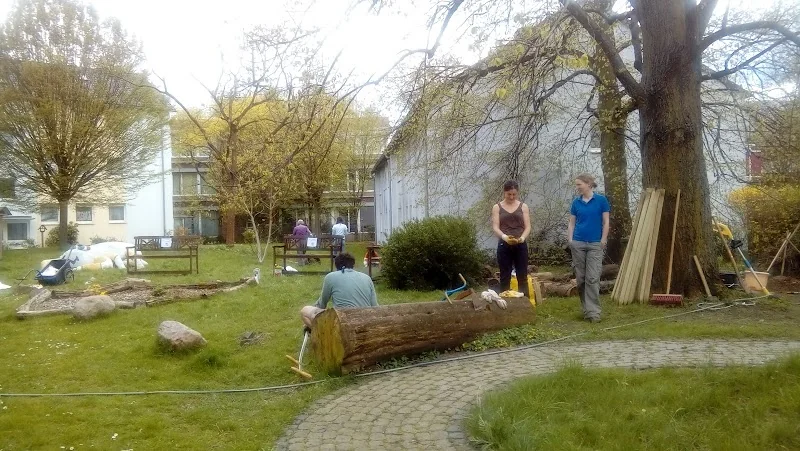
Pennenfeld is not only residential space but also a district with remarkable communal and green components. The urban analysis mentions generous private green spaces in the district and also refers to sports and recreational opportunities in the vicinity, such as the adjacent sports park in Lannesdorf and other leisure points like halfpipes and climbing forests. In the neighborhood itself, the open spaces are not spectacularly staged but are functionally and practically available. Particularly interesting are the two garden projects Nature Island Pennenfeld and PikoPark, which are anchored in neighborhood management. There, neighbors meet for communal gardening, and gardening becomes a social connection. AWO describes that in neighborhood management, young and old come together to sing, play, have breakfast together, do gymnastics, practice Qi Gong, or play boules. This creates spaces that focus not on consumption but on encounters. This is valuable for a residential area because quality of life in everyday life often arises where people can actually meet. ([awo-badgodesberg.de](https://www.awo-badgodesberg.de/beratung/quartier-pennenfeld))
Formats like the Day of Neighbors also show how strongly Pennenfeld relies on participation. The city of Bonn reported in 2024 that the neighborhood management invited people for coffee chats to the small square at the corner of Max-Planck-Straße and Albertus-Magnus-Straße. Such events make it clear that Pennenfeld is not just managed but actively enlivened. This is an important difference for all those searching for “pennenfeld apartment for rent” or “living in pennenfeld”: The district offers not only building substance but an organized culture of togetherness. It also fits that small projects can be supported with neighborhood funds and that local engagement is explicitly mentioned as a goal. Those living here move in an environment where neighborhood is not passive but is regularly generated anew through concrete offers, joint actions, and small funding. This makes the district particularly interesting for people who want a quiet residential environment but do not want to live in anonymity. Pennenfeld is thus a residential location for all those seeking a down-to-earth neighborhood with a social backbone. ([bonn.de](https://www.bonn.de/pressemitteilungen/mai-2024/gemeinsam-im-viertel-tag-der-nachbarn-am-31.mai-2024.php?utm_source=openai))
Who Benefits Most from Living in Pennenfeld
Living in Pennenfeld is particularly suitable for people looking for a well-organized residential area in Bonn-Bad Godesberg and valuing practicality, social structures, and reliable routes. The district is not a representative prestige location with historical old town romance but a functional, developed residential area with clear structures, schools, supply points, and ongoing neighborhood work. For this reason, it is interesting for families, older people, working professionals with a pragmatic view of living quality, and also for all who appreciate proximity to counseling, encounters, and community. Those living in Pennenfeld benefit from an environment where social offers are not on the periphery but at the center of neighborhood development. At the same time, the historical architecture of the HICOG settlement appeals to those interested in post-war planning, heritage conservation, and the development of Bonn as the federal capital. The district is thus both practically and historically relevant. In sum, a picture emerges of a neighborhood that is quiet, clearly structured, and socially activated. This mix makes Pennenfeld a meaningful answer to many search queries around apartment searches, neighborhood management, and living in southern Bonn. ([bonn.de](https://www.bonn.de/medien-global/amt-61/2020-ISEK_BadGodesberg_2020.pdf))
Sources:
- Federal City of Bonn – Neighborhood Management Pennenfeld ([bonn.de](https://www.bonn.de/themen-entdecken/soziales-gesellschaft/quartiersmanagement-pennenfeld.php))
- AWO Bad Godesberg – Neighborhood Management Pennenfeld ([awo-badgodesberg.de](https://www.awo-badgodesberg.de/beratung/quartier-pennenfeld?utm_source=openai))
- AWO Bad Godesberg – Program of the Neighborhood Meeting Pennenfeld, January 2026 ([awo-badgodesberg.de](https://www.awo-badgodesberg.de/sites/default/files/dateien/01-2026-programm-des-nachbarschaftstreffs-pennenfeld.pdf))
- baukunst-nrw – HICOG Settlement Muffendorf/Pennenfeld ([baukunst-nrw.de](https://www.baukunst-nrw.de/objekte/HICOG-Siedlung--243.htm?utm_source=openai))
- Federal City of Bonn – ISEK Bad Godesberg 2020 ([bonn.de](https://www.bonn.de/medien-global/amt-61/2020-ISEK_BadGodesberg_2020.pdf))
Show moreShow less
Living in Pennenfeld | Renting an Apartment & Neighborhood Management
Living in Pennenfeld stands for a Bonn residential area that is much more than just an address or a search for an apartment. Those interested in the district encounter a part of Bad Godesberg that developed only after World War II and is now characterized by apartment buildings, row houses, school locations, central supply areas, and very active neighborhood work. It is precisely this mix of practicality, social infrastructure, and community organization that makes Pennenfeld attractive to people who want to live in the southern part of Bonn and value short distances, clear structures, and a vibrant environment. The neighborhood management, supported by VEBOWAG, AWO, and Caritas, and backed by the city of Bonn, is an important part of this identity. It connects living, counseling, encounters, and co-design in a district that consciously evolves without losing its character as a functional and social residential area. ([bonn.de](https://www.bonn.de/themen-entdecken/soziales-gesellschaft/quartiersmanagement-pennenfeld.php))
Renting an Apartment in Pennenfeld: Residential Location, Building Types, and Environment
Those looking for an apartment in Pennenfeld should understand the district as a developed residential area, not as a classic old town or villa milieu. In the urban analysis of the city of Bonn, Pennenfeld is described as a district dominated by apartment buildings, with only a few single-family homes with generous gardens. The row housing developments in the north and south, including the HICOG settlement, as well as other multi-story residential buildings and partially renovated houses in the town center, are particularly characteristic. The neighborhood emerged after the war and is primarily defined by buildings from the 1950s and 1960s; at the same time, modern or higher-quality apartment buildings are present in several locations, and significant construction changes are still ongoing in the town center. This is interesting for apartment seekers because different residential qualities are concentrated here in a clearly structured environment: from quiet residential areas to modernized properties to houses with social and functional orientation. The city of Bonn also emphasizes that Pennenfeld does not have a historical town center, but rather a clear supply area around Max-Planck-Straße and Albertus-Magnus-Straße. This clear structure facilitates orientation in everyday life and is attractive to people seeking practical routes, a manageable environment, and a solid residential setting. ([bonn.de](https://www.bonn.de/medien-global/amt-61/2020-ISEK_BadGodesberg_2020.pdf))
From a landlord's perspective, Pennenfeld is also an exciting location because various types of housing can be found here, and the district is actively involved in a development process. The official analysis of the city of Bonn points to ongoing construction projects, renovated apartments, and the conversion of existing row houses. This creates a dynamic environment rather than a rigid stock, resulting in a neighborhood that continuously changes with its houses, open spaces, and supply islands. For many search queries around “apartment pennenfeld” or “pennenfeld apartment for rent,” this is the crucial point: It is not just about a single property, but about whether the district fits as a long-term living location. In this sense, Pennenfeld offers a sober, well-organized framework with urban character, but without the hustle and bustle of a city center. Those who prefer to live functionally, neighborly, and with short accessibility will find an environment here that is defined not by spectacular architecture but by practicality, good basic structure, and a developed living atmosphere. ([bonn.de](https://www.bonn.de/medien-global/amt-61/2020-ISEK_BadGodesberg_2020.pdf))
Neighborhood Management Pennenfeld: Offers, Counseling, and Support
A key unique feature of Pennenfeld is the neighborhood management. It was established in 2010 and is a cooperation between VEBOWAG, AWO, and the Caritas Association for the Federal City of Bonn e. V.; the city of Bonn supports the project with the aim of permanently improving the quality of life in the neighborhood. This is not just a formal framework but directly shapes the district. The neighborhood management is aimed at residents, but also at companies, traders, social institutions, clubs, and initiatives in the area. This broad orientation is important because Pennenfeld is not an isolated residential area but a socially organized district where different generations, life situations, and cultural backgrounds come together. Official descriptions explicitly emphasize that stable social structures should be created, strengthened, and maintained. This includes the targeted involvement of seniors, families, and migrants. For search intentions around “living in pennenfeld,” this is a strong signal: It is not just about apartments, but about an environment that takes support and participation seriously. ([bonn.de](https://www.bonn.de/themen-entdecken/soziales-gesellschaft/quartiersmanagement-pennenfeld.php))
The neighborhood management is practically visible at Maidenheadstraße 18/20, where both the neighborhood office and the community center are located. It is here that counseling, encounters, and everyday organization come together. The current offers show how broad the spectrum is: There are German courses for women and men, a program for learning about smartphones in old age, Qi Gong, fitness and movement offers, an English Reading and Conversation Club, communal cooking, game afternoons, a Repair Café, an intercultural women's breakfast, a litter collection format, and regular counseling for seniors through SPOTS. The consumer advice center also offers open counseling on consumer and environmental issues. Additionally, there is the neighborhood fund, which allows resident ideas to be supported without bureaucracy. The maximum funding amount is 3,000 euros per project, and a jury of residents decides on the allocation of funds. This makes Pennenfeld a district where participation is explicitly encouraged and where neighborhood is not just a word but an organized part of everyday living. ([awo-badgodesberg.de](https://www.awo-badgodesberg.de/beratung/quartier-pennenfeld))
Local Supply, Schools, and Short Distances in Everyday Life
For many people interested in an apartment in Pennenfeld, one thing counts above all in everyday life: How well do the routes to school, shopping, counseling, and public life function? Here, the district scores with an unusually clear internal structure. The city of Bonn describes Pennenfeld as a district with a high density of schools that serve not only the district itself but also surrounding neighborhoods. There is also a central supply area around Max-Planck-Straße and Albertus-Magnus-Straße, as well as a smaller supply area on Röntgenstraße and Hans-Böckler-Allee. This is relevant for everyday life because living, supply, and social infrastructure are bundled here in a manageable framework. Therefore, those living in Pennenfeld do not reside in a purely residential area but in a neighborhood that is consciously designed as a functional space. This is a significant advantage, especially for families, older people, and those who appreciate short everyday distances. Additionally, the city views the district as a living and residential space with socially stable structures, and the neighborhood work is precisely focused where everyday life actually takes place. ([bonn.de](https://www.bonn.de/medien-global/amt-61/2020-ISEK_BadGodesberg_2020.pdf))
The current counseling situation reinforces this impression. The neighborhood management includes not only the organization team and offers for encounters but also SPOTS as free qualified social counseling for seniors aged 65 and older and their relatives. Topics include, for example, long-term care insurance, living in old age, advance directives, powers of attorney, housing benefits, Bonn ID, and other assistance. The consumer advice center complements the spectrum with information on contracts, phone bills, debt collection, electronic waste, or mold in the apartment. This makes Pennenfeld a residential location where practical questions are not left abstract but can be answered on-site. For search queries like “pennenfeld schools,” “pennenfeld local supply,” or “living in pennenfeld,” these structures are decisive: It is about a neighborhood that is viable in everyday life. Those looking for an apartment want not just four walls but reliable routes and contacts. Pennenfeld delivers exactly this interplay of local supply, educational infrastructure, and local support. ([awo-badgodesberg.de](https://www.awo-badgodesberg.de/beratung/beratung?utm_source=openai))
HICOG Settlement Pennenfeld: History and Architecture
The historical depth of Pennenfeld is particularly evident in the HICOG settlement Muffendorf/Pennenfeld. This residential complex was built after World War II in the vicinity of the new federal capital Bonn and was constructed for employees of the American High Commissioner of Germany. Baukunst NRW describes the ensemble as loosely structured, with various building types and a central twelve-story high-rise. The area includes over 400 residential units and was shaped by Sep Ruf, Otto Apel, and the landscape architects Hermann Mattern and Heinrich Raderschall. This is important for Pennenfeld because modern post-war history, functional planning, and architectural diversity can be directly read in the residential environment. The district is thus not only a place to live but also an example of how the Bonn urban landscape developed during the post-war period. The official urban analysis also states that Pennenfeld emerged only after World War II and is primarily defined by buildings from the 1950s and 1960s. This development explains why the district possesses a distinct identity despite its clear functionality. ([baukunst-nrw.de](https://www.baukunst-nrw.de/objekte/HICOG-Siedlung--243.htm?utm_source=openai))
Additionally, there is the heritage conservation value: The entire area of the HICOG settlement Muffendorf/Pennenfeld has been under monument protection since 1996. This is a strong signal for those interested in architecture, urban development, and Bonn's contemporary history. The settlement is not an accidental residential stock but a consciously designed ensemble that emphasizes loose development, different forms of housing, and generous open spaces. The central high-rise and the surrounding building types create an urban contrast typical of post-war planning. Anyone dealing with the question of whether Pennenfeld is only functionally or also architecturally interesting will find a clear answer here: The neighborhood is both. It combines living space with historical relevance, and the renovations of recent years show that this substance is not treated as a museum piece but is being developed as a living asset. Thus, the district is also suitable for people who do not only pay attention to the number of rooms and location when it comes to housing but also to the environment, urban quality, and the history of a place. ([baukunst-nrw.de](https://www.baukunst-nrw.de/objekte/HICOG-Siedlung--243.htm?utm_source=openai))
Green Spaces, Community, and Sustainable Projects
Pennenfeld is not only residential space but also a district with remarkable communal and green components. The urban analysis mentions generous private green spaces in the district and also refers to sports and recreational opportunities in the vicinity, such as the adjacent sports park in Lannesdorf and other leisure points like halfpipes and climbing forests. In the neighborhood itself, the open spaces are not spectacularly staged but are functionally and practically available. Particularly interesting are the two garden projects Nature Island Pennenfeld and PikoPark, which are anchored in neighborhood management. There, neighbors meet for communal gardening, and gardening becomes a social connection. AWO describes that in neighborhood management, young and old come together to sing, play, have breakfast together, do gymnastics, practice Qi Gong, or play boules. This creates spaces that focus not on consumption but on encounters. This is valuable for a residential area because quality of life in everyday life often arises where people can actually meet. ([awo-badgodesberg.de](https://www.awo-badgodesberg.de/beratung/quartier-pennenfeld))
Formats like the Day of Neighbors also show how strongly Pennenfeld relies on participation. The city of Bonn reported in 2024 that the neighborhood management invited people for coffee chats to the small square at the corner of Max-Planck-Straße and Albertus-Magnus-Straße. Such events make it clear that Pennenfeld is not just managed but actively enlivened. This is an important difference for all those searching for “pennenfeld apartment for rent” or “living in pennenfeld”: The district offers not only building substance but an organized culture of togetherness. It also fits that small projects can be supported with neighborhood funds and that local engagement is explicitly mentioned as a goal. Those living here move in an environment where neighborhood is not passive but is regularly generated anew through concrete offers, joint actions, and small funding. This makes the district particularly interesting for people who want a quiet residential environment but do not want to live in anonymity. Pennenfeld is thus a residential location for all those seeking a down-to-earth neighborhood with a social backbone. ([bonn.de](https://www.bonn.de/pressemitteilungen/mai-2024/gemeinsam-im-viertel-tag-der-nachbarn-am-31.mai-2024.php?utm_source=openai))
Who Benefits Most from Living in Pennenfeld
Living in Pennenfeld is particularly suitable for people looking for a well-organized residential area in Bonn-Bad Godesberg and valuing practicality, social structures, and reliable routes. The district is not a representative prestige location with historical old town romance but a functional, developed residential area with clear structures, schools, supply points, and ongoing neighborhood work. For this reason, it is interesting for families, older people, working professionals with a pragmatic view of living quality, and also for all who appreciate proximity to counseling, encounters, and community. Those living in Pennenfeld benefit from an environment where social offers are not on the periphery but at the center of neighborhood development. At the same time, the historical architecture of the HICOG settlement appeals to those interested in post-war planning, heritage conservation, and the development of Bonn as the federal capital. The district is thus both practically and historically relevant. In sum, a picture emerges of a neighborhood that is quiet, clearly structured, and socially activated. This mix makes Pennenfeld a meaningful answer to many search queries around apartment searches, neighborhood management, and living in southern Bonn. ([bonn.de](https://www.bonn.de/medien-global/amt-61/2020-ISEK_BadGodesberg_2020.pdf))
Sources:
- Federal City of Bonn – Neighborhood Management Pennenfeld ([bonn.de](https://www.bonn.de/themen-entdecken/soziales-gesellschaft/quartiersmanagement-pennenfeld.php))
- AWO Bad Godesberg – Neighborhood Management Pennenfeld ([awo-badgodesberg.de](https://www.awo-badgodesberg.de/beratung/quartier-pennenfeld?utm_source=openai))
- AWO Bad Godesberg – Program of the Neighborhood Meeting Pennenfeld, January 2026 ([awo-badgodesberg.de](https://www.awo-badgodesberg.de/sites/default/files/dateien/01-2026-programm-des-nachbarschaftstreffs-pennenfeld.pdf))
- baukunst-nrw – HICOG Settlement Muffendorf/Pennenfeld ([baukunst-nrw.de](https://www.baukunst-nrw.de/objekte/HICOG-Siedlung--243.htm?utm_source=openai))
- Federal City of Bonn – ISEK Bad Godesberg 2020 ([bonn.de](https://www.bonn.de/medien-global/amt-61/2020-ISEK_BadGodesberg_2020.pdf))
Living in Pennenfeld | Renting an Apartment & Neighborhood Management
Living in Pennenfeld stands for a Bonn residential area that is much more than just an address or a search for an apartment. Those interested in the district encounter a part of Bad Godesberg that developed only after World War II and is now characterized by apartment buildings, row houses, school locations, central supply areas, and very active neighborhood work. It is precisely this mix of practicality, social infrastructure, and community organization that makes Pennenfeld attractive to people who want to live in the southern part of Bonn and value short distances, clear structures, and a vibrant environment. The neighborhood management, supported by VEBOWAG, AWO, and Caritas, and backed by the city of Bonn, is an important part of this identity. It connects living, counseling, encounters, and co-design in a district that consciously evolves without losing its character as a functional and social residential area. ([bonn.de](https://www.bonn.de/themen-entdecken/soziales-gesellschaft/quartiersmanagement-pennenfeld.php))
Renting an Apartment in Pennenfeld: Residential Location, Building Types, and Environment
Those looking for an apartment in Pennenfeld should understand the district as a developed residential area, not as a classic old town or villa milieu. In the urban analysis of the city of Bonn, Pennenfeld is described as a district dominated by apartment buildings, with only a few single-family homes with generous gardens. The row housing developments in the north and south, including the HICOG settlement, as well as other multi-story residential buildings and partially renovated houses in the town center, are particularly characteristic. The neighborhood emerged after the war and is primarily defined by buildings from the 1950s and 1960s; at the same time, modern or higher-quality apartment buildings are present in several locations, and significant construction changes are still ongoing in the town center. This is interesting for apartment seekers because different residential qualities are concentrated here in a clearly structured environment: from quiet residential areas to modernized properties to houses with social and functional orientation. The city of Bonn also emphasizes that Pennenfeld does not have a historical town center, but rather a clear supply area around Max-Planck-Straße and Albertus-Magnus-Straße. This clear structure facilitates orientation in everyday life and is attractive to people seeking practical routes, a manageable environment, and a solid residential setting. ([bonn.de](https://www.bonn.de/medien-global/amt-61/2020-ISEK_BadGodesberg_2020.pdf))
From a landlord's perspective, Pennenfeld is also an exciting location because various types of housing can be found here, and the district is actively involved in a development process. The official analysis of the city of Bonn points to ongoing construction projects, renovated apartments, and the conversion of existing row houses. This creates a dynamic environment rather than a rigid stock, resulting in a neighborhood that continuously changes with its houses, open spaces, and supply islands. For many search queries around “apartment pennenfeld” or “pennenfeld apartment for rent,” this is the crucial point: It is not just about a single property, but about whether the district fits as a long-term living location. In this sense, Pennenfeld offers a sober, well-organized framework with urban character, but without the hustle and bustle of a city center. Those who prefer to live functionally, neighborly, and with short accessibility will find an environment here that is defined not by spectacular architecture but by practicality, good basic structure, and a developed living atmosphere. ([bonn.de](https://www.bonn.de/medien-global/amt-61/2020-ISEK_BadGodesberg_2020.pdf))
Neighborhood Management Pennenfeld: Offers, Counseling, and Support
A key unique feature of Pennenfeld is the neighborhood management. It was established in 2010 and is a cooperation between VEBOWAG, AWO, and the Caritas Association for the Federal City of Bonn e. V.; the city of Bonn supports the project with the aim of permanently improving the quality of life in the neighborhood. This is not just a formal framework but directly shapes the district. The neighborhood management is aimed at residents, but also at companies, traders, social institutions, clubs, and initiatives in the area. This broad orientation is important because Pennenfeld is not an isolated residential area but a socially organized district where different generations, life situations, and cultural backgrounds come together. Official descriptions explicitly emphasize that stable social structures should be created, strengthened, and maintained. This includes the targeted involvement of seniors, families, and migrants. For search intentions around “living in pennenfeld,” this is a strong signal: It is not just about apartments, but about an environment that takes support and participation seriously. ([bonn.de](https://www.bonn.de/themen-entdecken/soziales-gesellschaft/quartiersmanagement-pennenfeld.php))
The neighborhood management is practically visible at Maidenheadstraße 18/20, where both the neighborhood office and the community center are located. It is here that counseling, encounters, and everyday organization come together. The current offers show how broad the spectrum is: There are German courses for women and men, a program for learning about smartphones in old age, Qi Gong, fitness and movement offers, an English Reading and Conversation Club, communal cooking, game afternoons, a Repair Café, an intercultural women's breakfast, a litter collection format, and regular counseling for seniors through SPOTS. The consumer advice center also offers open counseling on consumer and environmental issues. Additionally, there is the neighborhood fund, which allows resident ideas to be supported without bureaucracy. The maximum funding amount is 3,000 euros per project, and a jury of residents decides on the allocation of funds. This makes Pennenfeld a district where participation is explicitly encouraged and where neighborhood is not just a word but an organized part of everyday living. ([awo-badgodesberg.de](https://www.awo-badgodesberg.de/beratung/quartier-pennenfeld))
Local Supply, Schools, and Short Distances in Everyday Life
For many people interested in an apartment in Pennenfeld, one thing counts above all in everyday life: How well do the routes to school, shopping, counseling, and public life function? Here, the district scores with an unusually clear internal structure. The city of Bonn describes Pennenfeld as a district with a high density of schools that serve not only the district itself but also surrounding neighborhoods. There is also a central supply area around Max-Planck-Straße and Albertus-Magnus-Straße, as well as a smaller supply area on Röntgenstraße and Hans-Böckler-Allee. This is relevant for everyday life because living, supply, and social infrastructure are bundled here in a manageable framework. Therefore, those living in Pennenfeld do not reside in a purely residential area but in a neighborhood that is consciously designed as a functional space. This is a significant advantage, especially for families, older people, and those who appreciate short everyday distances. Additionally, the city views the district as a living and residential space with socially stable structures, and the neighborhood work is precisely focused where everyday life actually takes place. ([bonn.de](https://www.bonn.de/medien-global/amt-61/2020-ISEK_BadGodesberg_2020.pdf))
The current counseling situation reinforces this impression. The neighborhood management includes not only the organization team and offers for encounters but also SPOTS as free qualified social counseling for seniors aged 65 and older and their relatives. Topics include, for example, long-term care insurance, living in old age, advance directives, powers of attorney, housing benefits, Bonn ID, and other assistance. The consumer advice center complements the spectrum with information on contracts, phone bills, debt collection, electronic waste, or mold in the apartment. This makes Pennenfeld a residential location where practical questions are not left abstract but can be answered on-site. For search queries like “pennenfeld schools,” “pennenfeld local supply,” or “living in pennenfeld,” these structures are decisive: It is about a neighborhood that is viable in everyday life. Those looking for an apartment want not just four walls but reliable routes and contacts. Pennenfeld delivers exactly this interplay of local supply, educational infrastructure, and local support. ([awo-badgodesberg.de](https://www.awo-badgodesberg.de/beratung/beratung?utm_source=openai))
HICOG Settlement Pennenfeld: History and Architecture
The historical depth of Pennenfeld is particularly evident in the HICOG settlement Muffendorf/Pennenfeld. This residential complex was built after World War II in the vicinity of the new federal capital Bonn and was constructed for employees of the American High Commissioner of Germany. Baukunst NRW describes the ensemble as loosely structured, with various building types and a central twelve-story high-rise. The area includes over 400 residential units and was shaped by Sep Ruf, Otto Apel, and the landscape architects Hermann Mattern and Heinrich Raderschall. This is important for Pennenfeld because modern post-war history, functional planning, and architectural diversity can be directly read in the residential environment. The district is thus not only a place to live but also an example of how the Bonn urban landscape developed during the post-war period. The official urban analysis also states that Pennenfeld emerged only after World War II and is primarily defined by buildings from the 1950s and 1960s. This development explains why the district possesses a distinct identity despite its clear functionality. ([baukunst-nrw.de](https://www.baukunst-nrw.de/objekte/HICOG-Siedlung--243.htm?utm_source=openai))
Additionally, there is the heritage conservation value: The entire area of the HICOG settlement Muffendorf/Pennenfeld has been under monument protection since 1996. This is a strong signal for those interested in architecture, urban development, and Bonn's contemporary history. The settlement is not an accidental residential stock but a consciously designed ensemble that emphasizes loose development, different forms of housing, and generous open spaces. The central high-rise and the surrounding building types create an urban contrast typical of post-war planning. Anyone dealing with the question of whether Pennenfeld is only functionally or also architecturally interesting will find a clear answer here: The neighborhood is both. It combines living space with historical relevance, and the renovations of recent years show that this substance is not treated as a museum piece but is being developed as a living asset. Thus, the district is also suitable for people who do not only pay attention to the number of rooms and location when it comes to housing but also to the environment, urban quality, and the history of a place. ([baukunst-nrw.de](https://www.baukunst-nrw.de/objekte/HICOG-Siedlung--243.htm?utm_source=openai))
Green Spaces, Community, and Sustainable Projects
Pennenfeld is not only residential space but also a district with remarkable communal and green components. The urban analysis mentions generous private green spaces in the district and also refers to sports and recreational opportunities in the vicinity, such as the adjacent sports park in Lannesdorf and other leisure points like halfpipes and climbing forests. In the neighborhood itself, the open spaces are not spectacularly staged but are functionally and practically available. Particularly interesting are the two garden projects Nature Island Pennenfeld and PikoPark, which are anchored in neighborhood management. There, neighbors meet for communal gardening, and gardening becomes a social connection. AWO describes that in neighborhood management, young and old come together to sing, play, have breakfast together, do gymnastics, practice Qi Gong, or play boules. This creates spaces that focus not on consumption but on encounters. This is valuable for a residential area because quality of life in everyday life often arises where people can actually meet. ([awo-badgodesberg.de](https://www.awo-badgodesberg.de/beratung/quartier-pennenfeld))
Formats like the Day of Neighbors also show how strongly Pennenfeld relies on participation. The city of Bonn reported in 2024 that the neighborhood management invited people for coffee chats to the small square at the corner of Max-Planck-Straße and Albertus-Magnus-Straße. Such events make it clear that Pennenfeld is not just managed but actively enlivened. This is an important difference for all those searching for “pennenfeld apartment for rent” or “living in pennenfeld”: The district offers not only building substance but an organized culture of togetherness. It also fits that small projects can be supported with neighborhood funds and that local engagement is explicitly mentioned as a goal. Those living here move in an environment where neighborhood is not passive but is regularly generated anew through concrete offers, joint actions, and small funding. This makes the district particularly interesting for people who want a quiet residential environment but do not want to live in anonymity. Pennenfeld is thus a residential location for all those seeking a down-to-earth neighborhood with a social backbone. ([bonn.de](https://www.bonn.de/pressemitteilungen/mai-2024/gemeinsam-im-viertel-tag-der-nachbarn-am-31.mai-2024.php?utm_source=openai))
Who Benefits Most from Living in Pennenfeld
Living in Pennenfeld is particularly suitable for people looking for a well-organized residential area in Bonn-Bad Godesberg and valuing practicality, social structures, and reliable routes. The district is not a representative prestige location with historical old town romance but a functional, developed residential area with clear structures, schools, supply points, and ongoing neighborhood work. For this reason, it is interesting for families, older people, working professionals with a pragmatic view of living quality, and also for all who appreciate proximity to counseling, encounters, and community. Those living in Pennenfeld benefit from an environment where social offers are not on the periphery but at the center of neighborhood development. At the same time, the historical architecture of the HICOG settlement appeals to those interested in post-war planning, heritage conservation, and the development of Bonn as the federal capital. The district is thus both practically and historically relevant. In sum, a picture emerges of a neighborhood that is quiet, clearly structured, and socially activated. This mix makes Pennenfeld a meaningful answer to many search queries around apartment searches, neighborhood management, and living in southern Bonn. ([bonn.de](https://www.bonn.de/medien-global/amt-61/2020-ISEK_BadGodesberg_2020.pdf))
Sources:
- Federal City of Bonn – Neighborhood Management Pennenfeld ([bonn.de](https://www.bonn.de/themen-entdecken/soziales-gesellschaft/quartiersmanagement-pennenfeld.php))
- AWO Bad Godesberg – Neighborhood Management Pennenfeld ([awo-badgodesberg.de](https://www.awo-badgodesberg.de/beratung/quartier-pennenfeld?utm_source=openai))
- AWO Bad Godesberg – Program of the Neighborhood Meeting Pennenfeld, January 2026 ([awo-badgodesberg.de](https://www.awo-badgodesberg.de/sites/default/files/dateien/01-2026-programm-des-nachbarschaftstreffs-pennenfeld.pdf))
- baukunst-nrw – HICOG Settlement Muffendorf/Pennenfeld ([baukunst-nrw.de](https://www.baukunst-nrw.de/objekte/HICOG-Siedlung--243.htm?utm_source=openai))
- Federal City of Bonn – ISEK Bad Godesberg 2020 ([bonn.de](https://www.bonn.de/medien-global/amt-61/2020-ISEK_BadGodesberg_2020.pdf))
Upcoming Events
No events found
Frequently Asked Questions
Reviews
Joachim Krüger
3. October 2019
Very cheap multiculture - The supermarket is very close by
ralf metelmann
19. November 2023
A lovely, quiet residential area with good transport links. Netto, Aldi, DM and a bakery are nearby. There are also several doctors and a pharmacy. I'm very happy here and have lived here for several years!
Sami “Nazari” Nazari
19. July 2025
Azad Huseyinov
22. December 2024
Sascha Meurer
13. December 2021