
Bonn
Konviktstraße 9, 53113 Bonn, Deutschland
University Club Bonn e. V. | Events & Tickets
The University Club Bonn e. V. connects clubhouse, event center, and boarding house at an address that has stood for scientific encounters, professional formats, and personal occasions in Bonn for years. Those looking for events at the University Club Bonn will not find an interchangeable standard house, but a place with a clear identity: central location on Konviktstraße, four professionally usable rooms, in-house catering, and 22 apartments for guests and speakers. The house is located quietly yet right in the center of Bonn, near the university, opera, and Rhine, making it equally interesting for conferences, seminars, lectures, and receptions. Particularly important for visitors is the practical aspect: The arrival by bus and train is well described, but there are no parking spaces at the house itself, so downtown garages should be considered. The official website also shows that the Uniclub is not just an event address, but also a house with history: founding of the sponsoring association in 1986, laying of the foundation stone in 1988, inauguration in 1990, and a renovation in 2004 that made the building more contemporary and accessible.([uniclub-bonn.de](https://www.uniclub-bonn.de/))
Current Event Program, Registration, and Tickets
The event program of the University Club Bonn is primarily aimed at people looking for a well-organized framework for lectures, discussions, and professional encounters in Bonn. The official program page displays upcoming dates directly with room, date, time, and topic; currently, there are two events listed in the Wolfgang-Paul-Saal, namely a lecture by Prof. Dr. Matin Qaim on 21.05.2026 and a lecture by Prof. Dr. Jürgen Kusche on 16.06.2026. The page not only uses a classic ticket model but especially the formulation Info & Registration. This is particularly important for many users looking for tickets: At the Uniclub, this usually means registering for the event and then receiving a separate confirmation of participation via email. This makes the offer appear more like a scientifically or institutionally shaped event format rather than a pure sales calendar. For search intent, the combination of events, program, and registration is therefore particularly relevant. So, anyone looking for University Club Bonn tickets should expect a registration-based structure and check the program on the official website, as it consolidates the dates, the respective room, and the registration links. The club is particularly suitable for visitors who expect planable content, a representative framework, and a serious event process.([uniclub-bonn.de](https://www.uniclub-bonn.de/der-club/veranstaltungsprogramm/))
Additionally, the program page makes it clear that the Uniclub is closely networked with the University of Bonn and its departments. The events listed there are public or open and often have an academic focus, such as lectures followed by discussions. This fits very well with the orientation of the house as a communication center and venue for knowledge transfer, exchange, and encounters. For SEO and user intent, therefore, not only the keyword tickets is important, but also program, lecture, registration, and event dates. Those planning the location should also note that registration is often associated with a confirmation via email and that event planning relies more on information, capacity management, and serious pre-coordination. This creates a clear added value for guests who depend on reliable processes and orderly participation.([uniclub-bonn.de](https://www.uniclub-bonn.de/der-club/veranstaltungsprogramm/))
Directions to the University Club Bonn and Parking in the City Center
The journey to the University Club Bonn is generally convenient in the city center, but as with centrally located Bonn houses, good preparation is worthwhile. The club recommends public transport lines 16 and 63 towards Bad Godesberg and line 66 towards Bad Honnef; you get off at the stop Universität/Markt. From there, the official description leads you right along the university building, after about 50 meters left through the Koblenzer Tor, then over the Belderberg and into Konviktstraße. The club is then about 20 meters on the left side. There is also a specific route description for arrivals from Cologne/Bonn Airport via the SB60 to Bonn-Markt. For visitors, this means: The journey is not complicated, but the last stretch runs right through the Bonn city center and should be planned with a bit of buffer time. Particularly practical is that the site describes the location as very central and simultaneously refers to the proximity to the university, market, and inner-city stops. For guests coming from the train or subway network, the house is thus easily accessible and also makes sense to use without a car.([uniclub-bonn.de](https://www.uniclub-bonn.de/anfahrt.html))
By car, the location is also accessible, but the crucial note is clear: There are no parking spaces at the house. The club explicitly recommends public parking spaces and garages in the city center, especially the opera/theater garage, the market garage, and the university/market parking garage. Those coming from the direction of the highway will also find a precise route on the website via the A565 and the northern Bonn area, for example via Bonn Nord or Auerberg, Graurheindorfer Straße, Augustusring, Römerstraße, Theaterstraße, Erzberger Ufer, 1. Fährgasse, Adenauerallee, and finally through the Koblenzer Tor into Giergasse. For SEO, the search term University Club Bonn Parking is therefore highly relevant because the location is centrally located but does not have its own parking spaces. This is not a disadvantage if you know it early: Those planning an event can directly point guests to the recommended parking garages and realistically plan the downtown logistics. This avoids delays and makes the journey feel much more relaxed. The location is thus particularly well suited for visitors who arrive by public transport or can prepare for a central parking garage.([uniclub-bonn.de](https://www.uniclub-bonn.de/anfahrt.html))
Event Rooms and Capacities for 35 to 190 People
The heart of the house is the four event rooms, which are tailored to different group sizes and formats. The largest room is the Wolfgang-Paul-Saal with up to 190 people. It is described as a representative event space with a view of the Rhine, offering 212 square meters, high ceilings, and daylight from three sides, making it particularly suitable for conferences, seminars, product presentations, company anniversaries, and festive formats. It is complemented by a private terrace overlooking the Rhine, making the room particularly attractive for receptions and networking breaks. For visitors, this is a strong combination of academic atmosphere and event comfort. The name also refers to Wolfgang Paul, the Nobel Prize winner in Physics who worked at the University of Bonn. Thus, the hall connects representation, scientific reference, and size in an unusually clear way.([uniclub-bonn.de](https://www.uniclub-bonn.de/das-eventzentrum/veranstaltungsraeume/wolfgang-paul-saal.html))
The Schumpeter Room is the second largest room with 110 square meters and up to 70 people. It is described as a seminar room with wooden floors and a garden view, suitable for training, further education, conferences, and management training. The two large window fronts and the natural daylight create a pleasant, calm working atmosphere. The room is named after Joseph Schumpeter, which underscores the academic character of the house. The Curtius Room, with 50 square meters, is a compact conference room for up to 40 people; it offers a southern exposure, garden view, and complete blackout options, thus providing a good mix of brightness and presentation suitability. The Martini Room, with 42 square meters, is the smallest room and is suitable for up to 35 people. It is located on the gallery on the first floor, overlooks the foyer, and conveys a concentrated workshop atmosphere. Altogether, this results in a clearly tiered room offering for 35 to 190 people, suitable for small meetings as well as large conferences. So, anyone looking for University Club Bonn rooms or University Club Bonn hall will find a very differentiated structure instead of a single multipurpose hall.([uniclub-bonn.de](https://www.uniclub-bonn.de/das-eventzentrum/veranstaltungsraeume/schumpeter-sitzungsraum.html))
Flexibility in seating is also important. The Wolfgang-Paul-Saal can be used depending on the setup with conference tables, parliamentary seating, square, U-shape, or rows of chairs; thus, both workshops and lectures and receptions are possible. The Schumpeter Room also offers changing setups, while the Martini and Curtius Rooms are more intended for focused meetings, seminars, and workshops. This versatility is a real plus for organizers because they do not have to remain in a rigid format. The house is also accessible with minimal barriers and has an elevator, which further improves the usability of the rooms. In practice, this means: The University Club Bonn is not only beautiful but also functional. For the SEO search intent capacity, therefore, not only the number of people is important, but also the question of which format is sensible in which room. This is exactly where the house excels with a clear, professional room logic.([uniclub-bonn.de](https://www.uniclub-bonn.de/das-eventzentrum/veranstaltungsraeume/))
Technology, Catering, and Service in the Event Center
A key advantage of the University Club Bonn is the technical and organizational basic equipment provided in all rooms. According to the website, modern technical equipment, high-speed Wi-Fi, and barrier-free access are a matter of course. This includes, depending on the room, a touchscreen monitor or projector, a Windows laptop with Office package, microphone system, flipchart or pinboard, as well as blackout options and flexible seating. For organizers planning seminars, scientific lectures, interactive training, or hybrid formats, this is an important argument because one does not start with an empty room situation but relies on a functioning basis. The large Wolfgang-Paul-Saal additionally offers a stage for larger presentations and professional conference settings, while the smaller rooms are designed for concentrated working forms. This combination reduces organizational effort and increases reliability, which is particularly valuable for conferences and professional events. The barrier-free accessibility is also important because it supports not only comfort but also inclusion and planning security.([uniclub-bonn.de](https://www.uniclub-bonn.de/das-eventzentrum/veranstaltungsraeume/))
For catering, the Uniclub relies on an in-house offering that caters to the needs of conference guests. Mentioned are coffee breaks, lunch buffets, finger food, and various packages such as drinks-only, basic, and premium. The range includes coffee, pastries, and mineral water to lunch buffets and extended snack selections and coffee specialties. It is also important that vegetarian and vegan options are available. The gastronomy page also describes the foyer on the ground floor as a place for communal dining, lingering, and small breaks, complemented by a bistro and Niebuhrstube. For organizers, this means significantly easier planning because breaks, lunch, and informal conversations can take place in the same building. Particularly pleasant is the mention of coffee from a regional roastery and organic certified tea varieties, as it gives the house a conscious, high-quality profile. So, anyone wondering if the University Club Bonn is suitable for longer events can answer this question with yes: The technology is available, the catering is organized, and the service structure is prepared for day formats with multiple program blocks.([uniclub-bonn.de](https://www.uniclub-bonn.de/das-eventzentrum/gastronomie.html))
In practice, the interplay of technology and service is particularly relevant. A room with a good projector and stable Wi-Fi is of little use if breaks, catering, and process do not fit; exactly here, the Uniclub delivers a closed overall package. The event center explicitly speaks of professional catering and complete service support. This makes the place interesting not only for academic events but also for corporate meetings, training, internal retreats, or representative occasions. The character of the house remains stylish and understated, not loud or over-staged. This fits Bonn as a city of science and administration. At the same time, the in-house kitchen ensures that the food is not only functional but also becomes part of the event experience. So, anyone looking for University Club Bonn catering will find no side issue but an essential component of event planning.([uniclub-bonn.de](https://www.uniclub-bonn.de/das-eventzentrum/gastronomie.html))
History, Architecture, and Location of the Clubhouse
The history of the University Club Bonn does not begin by chance, but out of a concrete need. The official history page describes that in the early 1980s, the lack of accommodation and meeting opportunities for visiting scientists became evident. From this situation, the idea of a communication center at the University of Bonn developed. In 1986, the sponsoring association was founded, in 1988 the foundation stone was laid, in 1989 the topping-out ceremony took place, in 1990 the first guests moved in, and in the same year the house was inaugurated. In 2004, a comprehensive renovation took place, which made the clubhouse more contemporary and accessible. This historical framework is important because it explains why the building does not resemble a typical event center but rather a place of academic encounter with real function. It is designed for exchange, not just for rental. The history also shows that the project was developed in close connection with the University, the state of North Rhine-Westphalia, the Volkswagen Foundation, the Alexander von Humboldt Foundation, and the city of Bonn. This gives the house a serious, institutional character to this day.([uniclub-bonn.de](https://www.uniclub-bonn.de/der-club/die-geschichte.html))
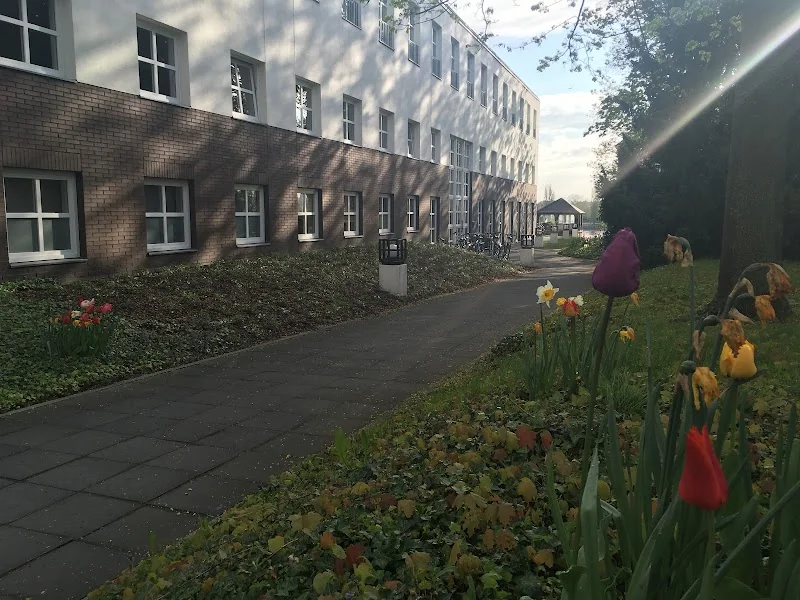
Architecturally, the development is also comprehensible. The website reports that the clubhouse is located on the site of the former Oberbergamt and was realized as part of a hereditary building right. During construction, Roman foundations were even discovered, adding an additional historical depth to the location. The renovation of 2004 brought, among other things, an elevator, new lighting, a barrier-free toilet, and a newly organized internal structure. This made the house not only more comfortable but also more practical for today's event requirements. For visitors, the location is also attractive: The University Club is quietly situated in a park-like garden and simultaneously right in the center of Bonn. Just a stone's throw away are the university, opera, and Rhine. This explains why the house is equally interesting for academic, cultural, and professional target groups. Those looking for a location in Bonn with tradition, central location, and good spatial feel will find a particularly dense combination here.([uniclub-bonn.de](https://www.uniclub-bonn.de/der-club/die-geschichte.html))
The location also supports the user experience on-site. The park-like garden creates distance from the city center without losing central accessibility. This is a rare advantage because events can thus take place both quietly and well-connected. This is particularly relevant for lectures, conferences, and workshops: guests arrive but are not trapped in the noise of a purely urban fair or hotel location. Instead, a framework is created that allows for concentrated work and informal exchange at the same time. Therefore, the University Club Bonn is not just an event venue but also a piece of Bonn's scientific and urban culture.([uniclub-bonn.de](https://www.uniclub-bonn.de/der-club/die-geschichte.html))
Ap apartments and Accommodation for Guests and Speakers
A often underestimated advantage of the University Club Bonn is the in-house apartments. The website describes the house as a boarding house with 22 studios and apartments, which is especially practical for speakers, visiting scientists, event staff, or guests of multi-day formats. The location is highlighted as particularly strong: quiet, green, and yet right in the center of Bonn, near the university, opera, and Rhine. The accommodation structure is clearly divided into 11 single studios with kitchenette and shower/WC, 3 double studios with kitchenette and bathtub/WC, 6 apartments with living room, double bedroom, kitchen, and bathroom, and 2 flats with living room, double bedroom, kitchen, and bathroom. All units are equipped with kitchen, bathroom, TV, CD-radio, and Wi-Fi. This makes the apartments interesting for guests not only as a sleeping option but as a functional base for longer stays. For event organizers, this means: Those bringing in speakers, accommodating, or wanting to house teams externally find a particularly simple solution in the same building.([uniclub-bonn.de](https://www.uniclub-bonn.de/die-apartments/apartments/))
The apartments also fit well with the character of the house because they continue the idea of a meeting point and hospitality. The University Club Bonn is indeed not just a hall building but a place where living and working come together. Especially for multi-day conferences, this can be very valuable because short distances between rooms, spaces, and catering reduce organizational effort. For visitors searching for the term University Club Bonn apartments, it is therefore important to know that the house is not a classic hotel facility but a boarding house with studio-based units. The result is a quiet, academically shaped place to stay with very functional amenities. Together with the central location, good public transport connections, and clear room offerings, this creates an overall picture that is particularly convincing for conferences, seminars, and meetings in Bonn.([uniclub-bonn.de](https://www.uniclub-bonn.de/die-apartments/apartments/))
Sources:
Show moreShow less
University Club Bonn e. V. | Events & Tickets
The University Club Bonn e. V. connects clubhouse, event center, and boarding house at an address that has stood for scientific encounters, professional formats, and personal occasions in Bonn for years. Those looking for events at the University Club Bonn will not find an interchangeable standard house, but a place with a clear identity: central location on Konviktstraße, four professionally usable rooms, in-house catering, and 22 apartments for guests and speakers. The house is located quietly yet right in the center of Bonn, near the university, opera, and Rhine, making it equally interesting for conferences, seminars, lectures, and receptions. Particularly important for visitors is the practical aspect: The arrival by bus and train is well described, but there are no parking spaces at the house itself, so downtown garages should be considered. The official website also shows that the Uniclub is not just an event address, but also a house with history: founding of the sponsoring association in 1986, laying of the foundation stone in 1988, inauguration in 1990, and a renovation in 2004 that made the building more contemporary and accessible.([uniclub-bonn.de](https://www.uniclub-bonn.de/))
Current Event Program, Registration, and Tickets
The event program of the University Club Bonn is primarily aimed at people looking for a well-organized framework for lectures, discussions, and professional encounters in Bonn. The official program page displays upcoming dates directly with room, date, time, and topic; currently, there are two events listed in the Wolfgang-Paul-Saal, namely a lecture by Prof. Dr. Matin Qaim on 21.05.2026 and a lecture by Prof. Dr. Jürgen Kusche on 16.06.2026. The page not only uses a classic ticket model but especially the formulation Info & Registration. This is particularly important for many users looking for tickets: At the Uniclub, this usually means registering for the event and then receiving a separate confirmation of participation via email. This makes the offer appear more like a scientifically or institutionally shaped event format rather than a pure sales calendar. For search intent, the combination of events, program, and registration is therefore particularly relevant. So, anyone looking for University Club Bonn tickets should expect a registration-based structure and check the program on the official website, as it consolidates the dates, the respective room, and the registration links. The club is particularly suitable for visitors who expect planable content, a representative framework, and a serious event process.([uniclub-bonn.de](https://www.uniclub-bonn.de/der-club/veranstaltungsprogramm/))
Additionally, the program page makes it clear that the Uniclub is closely networked with the University of Bonn and its departments. The events listed there are public or open and often have an academic focus, such as lectures followed by discussions. This fits very well with the orientation of the house as a communication center and venue for knowledge transfer, exchange, and encounters. For SEO and user intent, therefore, not only the keyword tickets is important, but also program, lecture, registration, and event dates. Those planning the location should also note that registration is often associated with a confirmation via email and that event planning relies more on information, capacity management, and serious pre-coordination. This creates a clear added value for guests who depend on reliable processes and orderly participation.([uniclub-bonn.de](https://www.uniclub-bonn.de/der-club/veranstaltungsprogramm/))
Directions to the University Club Bonn and Parking in the City Center
The journey to the University Club Bonn is generally convenient in the city center, but as with centrally located Bonn houses, good preparation is worthwhile. The club recommends public transport lines 16 and 63 towards Bad Godesberg and line 66 towards Bad Honnef; you get off at the stop Universität/Markt. From there, the official description leads you right along the university building, after about 50 meters left through the Koblenzer Tor, then over the Belderberg and into Konviktstraße. The club is then about 20 meters on the left side. There is also a specific route description for arrivals from Cologne/Bonn Airport via the SB60 to Bonn-Markt. For visitors, this means: The journey is not complicated, but the last stretch runs right through the Bonn city center and should be planned with a bit of buffer time. Particularly practical is that the site describes the location as very central and simultaneously refers to the proximity to the university, market, and inner-city stops. For guests coming from the train or subway network, the house is thus easily accessible and also makes sense to use without a car.([uniclub-bonn.de](https://www.uniclub-bonn.de/anfahrt.html))
By car, the location is also accessible, but the crucial note is clear: There are no parking spaces at the house. The club explicitly recommends public parking spaces and garages in the city center, especially the opera/theater garage, the market garage, and the university/market parking garage. Those coming from the direction of the highway will also find a precise route on the website via the A565 and the northern Bonn area, for example via Bonn Nord or Auerberg, Graurheindorfer Straße, Augustusring, Römerstraße, Theaterstraße, Erzberger Ufer, 1. Fährgasse, Adenauerallee, and finally through the Koblenzer Tor into Giergasse. For SEO, the search term University Club Bonn Parking is therefore highly relevant because the location is centrally located but does not have its own parking spaces. This is not a disadvantage if you know it early: Those planning an event can directly point guests to the recommended parking garages and realistically plan the downtown logistics. This avoids delays and makes the journey feel much more relaxed. The location is thus particularly well suited for visitors who arrive by public transport or can prepare for a central parking garage.([uniclub-bonn.de](https://www.uniclub-bonn.de/anfahrt.html))
Event Rooms and Capacities for 35 to 190 People
The heart of the house is the four event rooms, which are tailored to different group sizes and formats. The largest room is the Wolfgang-Paul-Saal with up to 190 people. It is described as a representative event space with a view of the Rhine, offering 212 square meters, high ceilings, and daylight from three sides, making it particularly suitable for conferences, seminars, product presentations, company anniversaries, and festive formats. It is complemented by a private terrace overlooking the Rhine, making the room particularly attractive for receptions and networking breaks. For visitors, this is a strong combination of academic atmosphere and event comfort. The name also refers to Wolfgang Paul, the Nobel Prize winner in Physics who worked at the University of Bonn. Thus, the hall connects representation, scientific reference, and size in an unusually clear way.([uniclub-bonn.de](https://www.uniclub-bonn.de/das-eventzentrum/veranstaltungsraeume/wolfgang-paul-saal.html))
The Schumpeter Room is the second largest room with 110 square meters and up to 70 people. It is described as a seminar room with wooden floors and a garden view, suitable for training, further education, conferences, and management training. The two large window fronts and the natural daylight create a pleasant, calm working atmosphere. The room is named after Joseph Schumpeter, which underscores the academic character of the house. The Curtius Room, with 50 square meters, is a compact conference room for up to 40 people; it offers a southern exposure, garden view, and complete blackout options, thus providing a good mix of brightness and presentation suitability. The Martini Room, with 42 square meters, is the smallest room and is suitable for up to 35 people. It is located on the gallery on the first floor, overlooks the foyer, and conveys a concentrated workshop atmosphere. Altogether, this results in a clearly tiered room offering for 35 to 190 people, suitable for small meetings as well as large conferences. So, anyone looking for University Club Bonn rooms or University Club Bonn hall will find a very differentiated structure instead of a single multipurpose hall.([uniclub-bonn.de](https://www.uniclub-bonn.de/das-eventzentrum/veranstaltungsraeume/schumpeter-sitzungsraum.html))
Flexibility in seating is also important. The Wolfgang-Paul-Saal can be used depending on the setup with conference tables, parliamentary seating, square, U-shape, or rows of chairs; thus, both workshops and lectures and receptions are possible. The Schumpeter Room also offers changing setups, while the Martini and Curtius Rooms are more intended for focused meetings, seminars, and workshops. This versatility is a real plus for organizers because they do not have to remain in a rigid format. The house is also accessible with minimal barriers and has an elevator, which further improves the usability of the rooms. In practice, this means: The University Club Bonn is not only beautiful but also functional. For the SEO search intent capacity, therefore, not only the number of people is important, but also the question of which format is sensible in which room. This is exactly where the house excels with a clear, professional room logic.([uniclub-bonn.de](https://www.uniclub-bonn.de/das-eventzentrum/veranstaltungsraeume/))
Technology, Catering, and Service in the Event Center
A key advantage of the University Club Bonn is the technical and organizational basic equipment provided in all rooms. According to the website, modern technical equipment, high-speed Wi-Fi, and barrier-free access are a matter of course. This includes, depending on the room, a touchscreen monitor or projector, a Windows laptop with Office package, microphone system, flipchart or pinboard, as well as blackout options and flexible seating. For organizers planning seminars, scientific lectures, interactive training, or hybrid formats, this is an important argument because one does not start with an empty room situation but relies on a functioning basis. The large Wolfgang-Paul-Saal additionally offers a stage for larger presentations and professional conference settings, while the smaller rooms are designed for concentrated working forms. This combination reduces organizational effort and increases reliability, which is particularly valuable for conferences and professional events. The barrier-free accessibility is also important because it supports not only comfort but also inclusion and planning security.([uniclub-bonn.de](https://www.uniclub-bonn.de/das-eventzentrum/veranstaltungsraeume/))
For catering, the Uniclub relies on an in-house offering that caters to the needs of conference guests. Mentioned are coffee breaks, lunch buffets, finger food, and various packages such as drinks-only, basic, and premium. The range includes coffee, pastries, and mineral water to lunch buffets and extended snack selections and coffee specialties. It is also important that vegetarian and vegan options are available. The gastronomy page also describes the foyer on the ground floor as a place for communal dining, lingering, and small breaks, complemented by a bistro and Niebuhrstube. For organizers, this means significantly easier planning because breaks, lunch, and informal conversations can take place in the same building. Particularly pleasant is the mention of coffee from a regional roastery and organic certified tea varieties, as it gives the house a conscious, high-quality profile. So, anyone wondering if the University Club Bonn is suitable for longer events can answer this question with yes: The technology is available, the catering is organized, and the service structure is prepared for day formats with multiple program blocks.([uniclub-bonn.de](https://www.uniclub-bonn.de/das-eventzentrum/gastronomie.html))
In practice, the interplay of technology and service is particularly relevant. A room with a good projector and stable Wi-Fi is of little use if breaks, catering, and process do not fit; exactly here, the Uniclub delivers a closed overall package. The event center explicitly speaks of professional catering and complete service support. This makes the place interesting not only for academic events but also for corporate meetings, training, internal retreats, or representative occasions. The character of the house remains stylish and understated, not loud or over-staged. This fits Bonn as a city of science and administration. At the same time, the in-house kitchen ensures that the food is not only functional but also becomes part of the event experience. So, anyone looking for University Club Bonn catering will find no side issue but an essential component of event planning.([uniclub-bonn.de](https://www.uniclub-bonn.de/das-eventzentrum/gastronomie.html))
History, Architecture, and Location of the Clubhouse
The history of the University Club Bonn does not begin by chance, but out of a concrete need. The official history page describes that in the early 1980s, the lack of accommodation and meeting opportunities for visiting scientists became evident. From this situation, the idea of a communication center at the University of Bonn developed. In 1986, the sponsoring association was founded, in 1988 the foundation stone was laid, in 1989 the topping-out ceremony took place, in 1990 the first guests moved in, and in the same year the house was inaugurated. In 2004, a comprehensive renovation took place, which made the clubhouse more contemporary and accessible. This historical framework is important because it explains why the building does not resemble a typical event center but rather a place of academic encounter with real function. It is designed for exchange, not just for rental. The history also shows that the project was developed in close connection with the University, the state of North Rhine-Westphalia, the Volkswagen Foundation, the Alexander von Humboldt Foundation, and the city of Bonn. This gives the house a serious, institutional character to this day.([uniclub-bonn.de](https://www.uniclub-bonn.de/der-club/die-geschichte.html))
Architecturally, the development is also comprehensible. The website reports that the clubhouse is located on the site of the former Oberbergamt and was realized as part of a hereditary building right. During construction, Roman foundations were even discovered, adding an additional historical depth to the location. The renovation of 2004 brought, among other things, an elevator, new lighting, a barrier-free toilet, and a newly organized internal structure. This made the house not only more comfortable but also more practical for today's event requirements. For visitors, the location is also attractive: The University Club is quietly situated in a park-like garden and simultaneously right in the center of Bonn. Just a stone's throw away are the university, opera, and Rhine. This explains why the house is equally interesting for academic, cultural, and professional target groups. Those looking for a location in Bonn with tradition, central location, and good spatial feel will find a particularly dense combination here.([uniclub-bonn.de](https://www.uniclub-bonn.de/der-club/die-geschichte.html))
The location also supports the user experience on-site. The park-like garden creates distance from the city center without losing central accessibility. This is a rare advantage because events can thus take place both quietly and well-connected. This is particularly relevant for lectures, conferences, and workshops: guests arrive but are not trapped in the noise of a purely urban fair or hotel location. Instead, a framework is created that allows for concentrated work and informal exchange at the same time. Therefore, the University Club Bonn is not just an event venue but also a piece of Bonn's scientific and urban culture.([uniclub-bonn.de](https://www.uniclub-bonn.de/der-club/die-geschichte.html))
Ap apartments and Accommodation for Guests and Speakers
A often underestimated advantage of the University Club Bonn is the in-house apartments. The website describes the house as a boarding house with 22 studios and apartments, which is especially practical for speakers, visiting scientists, event staff, or guests of multi-day formats. The location is highlighted as particularly strong: quiet, green, and yet right in the center of Bonn, near the university, opera, and Rhine. The accommodation structure is clearly divided into 11 single studios with kitchenette and shower/WC, 3 double studios with kitchenette and bathtub/WC, 6 apartments with living room, double bedroom, kitchen, and bathroom, and 2 flats with living room, double bedroom, kitchen, and bathroom. All units are equipped with kitchen, bathroom, TV, CD-radio, and Wi-Fi. This makes the apartments interesting for guests not only as a sleeping option but as a functional base for longer stays. For event organizers, this means: Those bringing in speakers, accommodating, or wanting to house teams externally find a particularly simple solution in the same building.([uniclub-bonn.de](https://www.uniclub-bonn.de/die-apartments/apartments/))
The apartments also fit well with the character of the house because they continue the idea of a meeting point and hospitality. The University Club Bonn is indeed not just a hall building but a place where living and working come together. Especially for multi-day conferences, this can be very valuable because short distances between rooms, spaces, and catering reduce organizational effort. For visitors searching for the term University Club Bonn apartments, it is therefore important to know that the house is not a classic hotel facility but a boarding house with studio-based units. The result is a quiet, academically shaped place to stay with very functional amenities. Together with the central location, good public transport connections, and clear room offerings, this creates an overall picture that is particularly convincing for conferences, seminars, and meetings in Bonn.([uniclub-bonn.de](https://www.uniclub-bonn.de/die-apartments/apartments/))
Sources:
University Club Bonn e. V. | Events & Tickets
The University Club Bonn e. V. connects clubhouse, event center, and boarding house at an address that has stood for scientific encounters, professional formats, and personal occasions in Bonn for years. Those looking for events at the University Club Bonn will not find an interchangeable standard house, but a place with a clear identity: central location on Konviktstraße, four professionally usable rooms, in-house catering, and 22 apartments for guests and speakers. The house is located quietly yet right in the center of Bonn, near the university, opera, and Rhine, making it equally interesting for conferences, seminars, lectures, and receptions. Particularly important for visitors is the practical aspect: The arrival by bus and train is well described, but there are no parking spaces at the house itself, so downtown garages should be considered. The official website also shows that the Uniclub is not just an event address, but also a house with history: founding of the sponsoring association in 1986, laying of the foundation stone in 1988, inauguration in 1990, and a renovation in 2004 that made the building more contemporary and accessible.([uniclub-bonn.de](https://www.uniclub-bonn.de/))
Current Event Program, Registration, and Tickets
The event program of the University Club Bonn is primarily aimed at people looking for a well-organized framework for lectures, discussions, and professional encounters in Bonn. The official program page displays upcoming dates directly with room, date, time, and topic; currently, there are two events listed in the Wolfgang-Paul-Saal, namely a lecture by Prof. Dr. Matin Qaim on 21.05.2026 and a lecture by Prof. Dr. Jürgen Kusche on 16.06.2026. The page not only uses a classic ticket model but especially the formulation Info & Registration. This is particularly important for many users looking for tickets: At the Uniclub, this usually means registering for the event and then receiving a separate confirmation of participation via email. This makes the offer appear more like a scientifically or institutionally shaped event format rather than a pure sales calendar. For search intent, the combination of events, program, and registration is therefore particularly relevant. So, anyone looking for University Club Bonn tickets should expect a registration-based structure and check the program on the official website, as it consolidates the dates, the respective room, and the registration links. The club is particularly suitable for visitors who expect planable content, a representative framework, and a serious event process.([uniclub-bonn.de](https://www.uniclub-bonn.de/der-club/veranstaltungsprogramm/))
Additionally, the program page makes it clear that the Uniclub is closely networked with the University of Bonn and its departments. The events listed there are public or open and often have an academic focus, such as lectures followed by discussions. This fits very well with the orientation of the house as a communication center and venue for knowledge transfer, exchange, and encounters. For SEO and user intent, therefore, not only the keyword tickets is important, but also program, lecture, registration, and event dates. Those planning the location should also note that registration is often associated with a confirmation via email and that event planning relies more on information, capacity management, and serious pre-coordination. This creates a clear added value for guests who depend on reliable processes and orderly participation.([uniclub-bonn.de](https://www.uniclub-bonn.de/der-club/veranstaltungsprogramm/))
Directions to the University Club Bonn and Parking in the City Center
The journey to the University Club Bonn is generally convenient in the city center, but as with centrally located Bonn houses, good preparation is worthwhile. The club recommends public transport lines 16 and 63 towards Bad Godesberg and line 66 towards Bad Honnef; you get off at the stop Universität/Markt. From there, the official description leads you right along the university building, after about 50 meters left through the Koblenzer Tor, then over the Belderberg and into Konviktstraße. The club is then about 20 meters on the left side. There is also a specific route description for arrivals from Cologne/Bonn Airport via the SB60 to Bonn-Markt. For visitors, this means: The journey is not complicated, but the last stretch runs right through the Bonn city center and should be planned with a bit of buffer time. Particularly practical is that the site describes the location as very central and simultaneously refers to the proximity to the university, market, and inner-city stops. For guests coming from the train or subway network, the house is thus easily accessible and also makes sense to use without a car.([uniclub-bonn.de](https://www.uniclub-bonn.de/anfahrt.html))
By car, the location is also accessible, but the crucial note is clear: There are no parking spaces at the house. The club explicitly recommends public parking spaces and garages in the city center, especially the opera/theater garage, the market garage, and the university/market parking garage. Those coming from the direction of the highway will also find a precise route on the website via the A565 and the northern Bonn area, for example via Bonn Nord or Auerberg, Graurheindorfer Straße, Augustusring, Römerstraße, Theaterstraße, Erzberger Ufer, 1. Fährgasse, Adenauerallee, and finally through the Koblenzer Tor into Giergasse. For SEO, the search term University Club Bonn Parking is therefore highly relevant because the location is centrally located but does not have its own parking spaces. This is not a disadvantage if you know it early: Those planning an event can directly point guests to the recommended parking garages and realistically plan the downtown logistics. This avoids delays and makes the journey feel much more relaxed. The location is thus particularly well suited for visitors who arrive by public transport or can prepare for a central parking garage.([uniclub-bonn.de](https://www.uniclub-bonn.de/anfahrt.html))
Event Rooms and Capacities for 35 to 190 People
The heart of the house is the four event rooms, which are tailored to different group sizes and formats. The largest room is the Wolfgang-Paul-Saal with up to 190 people. It is described as a representative event space with a view of the Rhine, offering 212 square meters, high ceilings, and daylight from three sides, making it particularly suitable for conferences, seminars, product presentations, company anniversaries, and festive formats. It is complemented by a private terrace overlooking the Rhine, making the room particularly attractive for receptions and networking breaks. For visitors, this is a strong combination of academic atmosphere and event comfort. The name also refers to Wolfgang Paul, the Nobel Prize winner in Physics who worked at the University of Bonn. Thus, the hall connects representation, scientific reference, and size in an unusually clear way.([uniclub-bonn.de](https://www.uniclub-bonn.de/das-eventzentrum/veranstaltungsraeume/wolfgang-paul-saal.html))
The Schumpeter Room is the second largest room with 110 square meters and up to 70 people. It is described as a seminar room with wooden floors and a garden view, suitable for training, further education, conferences, and management training. The two large window fronts and the natural daylight create a pleasant, calm working atmosphere. The room is named after Joseph Schumpeter, which underscores the academic character of the house. The Curtius Room, with 50 square meters, is a compact conference room for up to 40 people; it offers a southern exposure, garden view, and complete blackout options, thus providing a good mix of brightness and presentation suitability. The Martini Room, with 42 square meters, is the smallest room and is suitable for up to 35 people. It is located on the gallery on the first floor, overlooks the foyer, and conveys a concentrated workshop atmosphere. Altogether, this results in a clearly tiered room offering for 35 to 190 people, suitable for small meetings as well as large conferences. So, anyone looking for University Club Bonn rooms or University Club Bonn hall will find a very differentiated structure instead of a single multipurpose hall.([uniclub-bonn.de](https://www.uniclub-bonn.de/das-eventzentrum/veranstaltungsraeume/schumpeter-sitzungsraum.html))
Flexibility in seating is also important. The Wolfgang-Paul-Saal can be used depending on the setup with conference tables, parliamentary seating, square, U-shape, or rows of chairs; thus, both workshops and lectures and receptions are possible. The Schumpeter Room also offers changing setups, while the Martini and Curtius Rooms are more intended for focused meetings, seminars, and workshops. This versatility is a real plus for organizers because they do not have to remain in a rigid format. The house is also accessible with minimal barriers and has an elevator, which further improves the usability of the rooms. In practice, this means: The University Club Bonn is not only beautiful but also functional. For the SEO search intent capacity, therefore, not only the number of people is important, but also the question of which format is sensible in which room. This is exactly where the house excels with a clear, professional room logic.([uniclub-bonn.de](https://www.uniclub-bonn.de/das-eventzentrum/veranstaltungsraeume/))
Technology, Catering, and Service in the Event Center
A key advantage of the University Club Bonn is the technical and organizational basic equipment provided in all rooms. According to the website, modern technical equipment, high-speed Wi-Fi, and barrier-free access are a matter of course. This includes, depending on the room, a touchscreen monitor or projector, a Windows laptop with Office package, microphone system, flipchart or pinboard, as well as blackout options and flexible seating. For organizers planning seminars, scientific lectures, interactive training, or hybrid formats, this is an important argument because one does not start with an empty room situation but relies on a functioning basis. The large Wolfgang-Paul-Saal additionally offers a stage for larger presentations and professional conference settings, while the smaller rooms are designed for concentrated working forms. This combination reduces organizational effort and increases reliability, which is particularly valuable for conferences and professional events. The barrier-free accessibility is also important because it supports not only comfort but also inclusion and planning security.([uniclub-bonn.de](https://www.uniclub-bonn.de/das-eventzentrum/veranstaltungsraeume/))
For catering, the Uniclub relies on an in-house offering that caters to the needs of conference guests. Mentioned are coffee breaks, lunch buffets, finger food, and various packages such as drinks-only, basic, and premium. The range includes coffee, pastries, and mineral water to lunch buffets and extended snack selections and coffee specialties. It is also important that vegetarian and vegan options are available. The gastronomy page also describes the foyer on the ground floor as a place for communal dining, lingering, and small breaks, complemented by a bistro and Niebuhrstube. For organizers, this means significantly easier planning because breaks, lunch, and informal conversations can take place in the same building. Particularly pleasant is the mention of coffee from a regional roastery and organic certified tea varieties, as it gives the house a conscious, high-quality profile. So, anyone wondering if the University Club Bonn is suitable for longer events can answer this question with yes: The technology is available, the catering is organized, and the service structure is prepared for day formats with multiple program blocks.([uniclub-bonn.de](https://www.uniclub-bonn.de/das-eventzentrum/gastronomie.html))
In practice, the interplay of technology and service is particularly relevant. A room with a good projector and stable Wi-Fi is of little use if breaks, catering, and process do not fit; exactly here, the Uniclub delivers a closed overall package. The event center explicitly speaks of professional catering and complete service support. This makes the place interesting not only for academic events but also for corporate meetings, training, internal retreats, or representative occasions. The character of the house remains stylish and understated, not loud or over-staged. This fits Bonn as a city of science and administration. At the same time, the in-house kitchen ensures that the food is not only functional but also becomes part of the event experience. So, anyone looking for University Club Bonn catering will find no side issue but an essential component of event planning.([uniclub-bonn.de](https://www.uniclub-bonn.de/das-eventzentrum/gastronomie.html))
History, Architecture, and Location of the Clubhouse
The history of the University Club Bonn does not begin by chance, but out of a concrete need. The official history page describes that in the early 1980s, the lack of accommodation and meeting opportunities for visiting scientists became evident. From this situation, the idea of a communication center at the University of Bonn developed. In 1986, the sponsoring association was founded, in 1988 the foundation stone was laid, in 1989 the topping-out ceremony took place, in 1990 the first guests moved in, and in the same year the house was inaugurated. In 2004, a comprehensive renovation took place, which made the clubhouse more contemporary and accessible. This historical framework is important because it explains why the building does not resemble a typical event center but rather a place of academic encounter with real function. It is designed for exchange, not just for rental. The history also shows that the project was developed in close connection with the University, the state of North Rhine-Westphalia, the Volkswagen Foundation, the Alexander von Humboldt Foundation, and the city of Bonn. This gives the house a serious, institutional character to this day.([uniclub-bonn.de](https://www.uniclub-bonn.de/der-club/die-geschichte.html))
Architecturally, the development is also comprehensible. The website reports that the clubhouse is located on the site of the former Oberbergamt and was realized as part of a hereditary building right. During construction, Roman foundations were even discovered, adding an additional historical depth to the location. The renovation of 2004 brought, among other things, an elevator, new lighting, a barrier-free toilet, and a newly organized internal structure. This made the house not only more comfortable but also more practical for today's event requirements. For visitors, the location is also attractive: The University Club is quietly situated in a park-like garden and simultaneously right in the center of Bonn. Just a stone's throw away are the university, opera, and Rhine. This explains why the house is equally interesting for academic, cultural, and professional target groups. Those looking for a location in Bonn with tradition, central location, and good spatial feel will find a particularly dense combination here.([uniclub-bonn.de](https://www.uniclub-bonn.de/der-club/die-geschichte.html))
The location also supports the user experience on-site. The park-like garden creates distance from the city center without losing central accessibility. This is a rare advantage because events can thus take place both quietly and well-connected. This is particularly relevant for lectures, conferences, and workshops: guests arrive but are not trapped in the noise of a purely urban fair or hotel location. Instead, a framework is created that allows for concentrated work and informal exchange at the same time. Therefore, the University Club Bonn is not just an event venue but also a piece of Bonn's scientific and urban culture.([uniclub-bonn.de](https://www.uniclub-bonn.de/der-club/die-geschichte.html))
Ap apartments and Accommodation for Guests and Speakers
A often underestimated advantage of the University Club Bonn is the in-house apartments. The website describes the house as a boarding house with 22 studios and apartments, which is especially practical for speakers, visiting scientists, event staff, or guests of multi-day formats. The location is highlighted as particularly strong: quiet, green, and yet right in the center of Bonn, near the university, opera, and Rhine. The accommodation structure is clearly divided into 11 single studios with kitchenette and shower/WC, 3 double studios with kitchenette and bathtub/WC, 6 apartments with living room, double bedroom, kitchen, and bathroom, and 2 flats with living room, double bedroom, kitchen, and bathroom. All units are equipped with kitchen, bathroom, TV, CD-radio, and Wi-Fi. This makes the apartments interesting for guests not only as a sleeping option but as a functional base for longer stays. For event organizers, this means: Those bringing in speakers, accommodating, or wanting to house teams externally find a particularly simple solution in the same building.([uniclub-bonn.de](https://www.uniclub-bonn.de/die-apartments/apartments/))
The apartments also fit well with the character of the house because they continue the idea of a meeting point and hospitality. The University Club Bonn is indeed not just a hall building but a place where living and working come together. Especially for multi-day conferences, this can be very valuable because short distances between rooms, spaces, and catering reduce organizational effort. For visitors searching for the term University Club Bonn apartments, it is therefore important to know that the house is not a classic hotel facility but a boarding house with studio-based units. The result is a quiet, academically shaped place to stay with very functional amenities. Together with the central location, good public transport connections, and clear room offerings, this creates an overall picture that is particularly convincing for conferences, seminars, and meetings in Bonn.([uniclub-bonn.de](https://www.uniclub-bonn.de/die-apartments/apartments/))
Sources:
Frequently Asked Questions
Reviews
Alexander Heger
30. July 2024
Reasonable value for money, got lots of help from staff. No A/C and most windows do not have mosquito screens either. May not be habitable during warm Summer days. Having to walk through events is a bit weird. No protected bike parking. Good walking distance to downtown Bonn.
Oyewole Simon Oginni
12. November 2023
UniClub is situated at the heart of Bonn - two minutes walk to the Rhine. You can simply have a panoramic view of the city if you choose to stay at the University Club Bonn e.V. A few kilometres away from the UN building, DHL and BMZ headquarters. You can just have a walk for about 10mins to get to important buildings or offices in Bonn. It is really a good place for a long term stay.
Ivan Avramidi
23. November 2016
Nice facility. Great location.
Bruno Miguel Oliveira Peixoto Torres
2. January 2019
Top
Mike Burg
25. August 2018
Top