
Bonn
Meckenheimer Allee 171, 53115 Bonn, Deutschland
Poppelsdorfer Schloss | Botanical Garden & Opening Hours
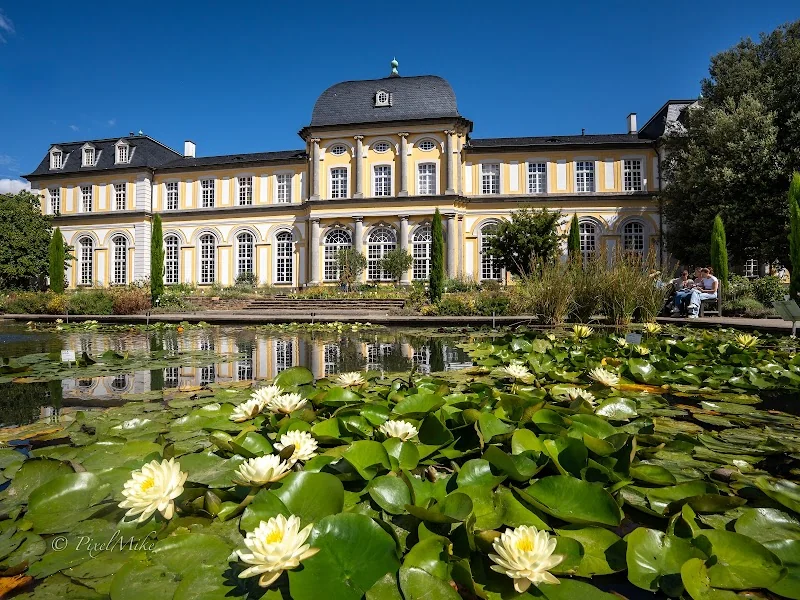
The Poppelsdorfer Schloss is one of the most prominent landmarks in Bonn and uniquely combines baroque architecture, university life, garden art, and natural research. Today, standing on Meckenheimer Allee, one sees not only a historic castle but an ensemble that has developed over decades and centuries into a vibrant part of Bonn's cityscape. Right next to the castle are the Botanical Gardens of the University of Bonn, including the castle garden and the useful plant garden; the Mineralogical Museum is located within the castle itself. This makes the site a destination for excursions, a research location, and a cultural address. It is particularly attractive for visitors that history, green space, and knowledge transfer meet in close proximity here. The location on Poppelsdorfer Allee also makes the castle easy to find, and the walk from the main train station is short enough for a spontaneous stroll. Those seeking a quiet moment in the city will find a place with a lot of atmosphere without having to leave the city center. At the same time, the Poppelsdorfer Schloss is not a static monument but a place that continues to be used, maintained, and developed. Recent renovations have once again brought the building into focus and demonstrate that this location in Bonn is still of great importance today. ([botgart.uni-bonn.de](https://www.botgart.uni-bonn.de/de/ihr-besuch?utm_source=openai))
Botanical Garden, Admission and Opening Hours at Poppelsdorfer Schloss
The Botanical Gardens of the University of Bonn are among the most traditional and beautiful gardens in Germany, with a history of around 500 years. The history of the area at Poppelsdorfer Schloss dates back to the 16th century when a garden complex already existed there. Around 1650, a Renaissance park with pleasure and utility gardens, pergolas, and orangery was created; the baroque garden from 1720 is still recognizable in its basic structure today. With the founding of the university in 1818, the park was redesigned into a scientific garden under the first director Christian Gottfried Daniel Nees von Esenbeck. Therefore, those who walk through the castle garden today experience not only flowers and old trees but a cultivated landscape where research, design, and recreation come together. Particularly characteristic is the rondel with the crane pond, the sight axis to the pond, and the close connection between the historical castle image and the botanical collection. The castle garden and the useful plant garden act like two adjacent sides of the same story: Here, it is about science, plant diversity, and the view of nature in an urban environment. ([botgart.uni-bonn.de](https://www.botgart.uni-bonn.de/de/ueber-uns/gartengeschichte?utm_source=openai))
For planning the visit, the opening hours are particularly important. In summer, from April to October, the castle garden is usually open daily from 10 AM to 6 PM, and on Thursdays even until 8 PM; the greenhouses close 30 minutes earlier, and at dusk, the actual closing time may be a bit earlier. In winter, from November to March, the castle garden is open Monday to Friday from 10 AM to 4 PM, and it is closed on weekends and holidays. Since April 1, 2026, there is an admission fee of 5 euros for visiting the Botanical Garden at Poppelsdorfer Schloss on Saturdays, Sundays, and holidays, reduced to 3 euros; from Monday to Friday, access is free. The useful plant garden on Katzenburgweg remains accessible free of charge. For many visitors, this mix is particularly attractive: During the week, the place can be experienced very relaxed and without an entrance fee, while the weekend brings a classic excursion feeling with a clearly regulated ticket model. Those planning a visit around spring bloom, summer green, or autumn ambiance will find a different face of the same garden depending on the season. ([botgart.uni-bonn.de](https://www.botgart.uni-bonn.de/de/ihr-besuch/oeffnungszeiten?utm_source=openai))
Thematic tours are also an important part of the offerings. The Botanical Gardens point out public tours, and from April to September, there are also English-language tours on the first Sunday of each month. This is particularly interesting for guests who want to experience the garden not just as a destination for a walk but as a place of learning. The castle garden is particularly suitable for this because it exemplarily illustrates the development from a historical garden to a scientific facility. Additionally, there are changing special events and seasonal offerings that make the place continually experienceable. Thus, the Botanical Garden at Poppelsdorfer Schloss is not simply a park but a place with curated nature experiences, scientific depth, and a clear visitor structure. Those who prepare for the visit benefit from fixed times, easily findable entrances, and a location that is also ideal for short stops in Bonn's urban daily life. ([botgart.uni-bonn.de](https://www.botgart.uni-bonn.de/en/your-visit?utm_source=openai))
Directions and Parking at Poppelsdorfer Schloss
Getting to Poppelsdorfer Schloss is straightforward as long as one knows the location in the Bonn urban area. From Bonn's main train station, Poppelsdorfer Allee leads directly to the castle garden in about a 15-minute walk. This footpath is for many visitors the most pleasant option because it passes through one of Bonn's most well-known axes and marks the transition from the city center to the historic Poppelsdorf area. The main entrance to the Botanical Garden is located on the castle forecourt at Meckenheimer Allee 169, and on weekdays, the side entrance at Meckenheimer Allee 171 is also usable. Those wanting to go to the useful plant garden cross Meckenheimer Allee from there and turn into Katzenburgweg. This routing makes the location not large but very structured: With a quick glance at the address, the correct entrance can be found quickly. For people exploring Bonn on foot, this is a clear advantage. ([botgart.uni-bonn.de](https://www.botgart.uni-bonn.de/de/ihr-besuch/so_finden_sie_uns?utm_source=openai))
The castle is also easily accessible by public transport. The Botanical Garden can be reached from the bus station in front of the main train station with lines 601, 602, and 603; additionally, line 631 is suitable. One can get off at the stops Botanical Garden or Beringstraße. This is a very practical solution, especially for guests who want to combine the castle with other destinations in Bonn. Although access by car is possible, the Botanical Gardens explicitly recommend arriving by public transport because there are hardly any parking options in the surrounding streets. Those who still drive should not rely on convenient parking spaces directly at the entrance but rather on an arrival with a buffer and possibly use parking garages in the city center. For search queries like Poppelsdorfer Schloss parking, this point is crucial: The location is central but not designed for car comfort. This is typical for inner-city historical sites and makes planning easier if one combines the visit with bus or train. ([botgart.uni-bonn.de](https://www.botgart.uni-bonn.de/de/ihr-besuch/so_finden_sie_uns?utm_source=openai))
The good accessibility also explains why the site works for very different target groups. Those who only want to visit the garden can come spontaneously. Those who want to see the museum also have short distances. And those who are in the area of the University of Bonn will almost automatically find the castle on their daily route between the old town and Poppelsdorf campus. This proximity to the main train station, the city center, and university facilities makes the location relevant for visitors, students, and researchers alike. Thus, the Poppelsdorfer Schloss is defined less by large parking lots than by the quality of its footpath, its stops, and its central location. For SEO inquiries regarding directions, parking, and opening hours, this is a clear advantage because practical orientation is more important here than a classic event hall with a large parking area. ([botgart.uni-bonn.de](https://www.botgart.uni-bonn.de/de/ihr-besuch/so_finden_sie_uns?utm_source=openai))
Mineralogical Museum, Exhibitions, and Visit to the Castle
Inside the Poppelsdorfer Schloss is the Mineralogical Museum of the University of Bonn, one of the oldest natural history museums in the Rhineland. It has been housed in the baroque castle since its founding and is located right next to the Botanical Gardens. The museum presents its treasures in four exhibition halls and showcases more than 6,000 exhibits; the total collection includes over 65,000 objects. This scale makes it clear that the castle is not only an architectural monument but also a serious place of knowledge. The topics range from minerals and meteorites to gemstones and other natural history pieces. For visitors, the museum is particularly interesting because it combines the classic castle atmosphere with scientific collection culture. Those who know the Poppelsdorfer Schloss only as a photo motif will discover the substantive depth of the place in the museum. ([ifgeo.uni-bonn.de](https://www.ifgeo.uni-bonn.de/de/museum/mineralogisches-museum?utm_source=openai))
The museum is currently accessible with fixed opening hours: Wednesdays from 3 PM to 6 PM, Fridays from 3 PM to 6 PM, and Sundays from 11 AM to 6 PM. It is closed on holidays. Admission costs 3 euros for adults, reduced to 2 euros; children and teenagers up to and including 18 years pay no admission. For many visitors to Bonn, this is a very attractive price-performance ratio because one sees not only a historical shell in the castle but also a well-filled exhibition with a long tradition. At the same time, the museum fits perfectly into a route that is combined with a walk through the Botanical Gardens. Especially since the castle and garden are located right next to each other, a visit package of architecture, nature, and collection emerges that is quite unique in Bonn. Therefore, when someone searches for Poppelsdorfer Schloss exhibition or Poppelsdorfer Schloss museum, it is not about an abstract sight but about a very concretely experienceable place with real opening hours, clear admission rules, and a substantial collection. ([ifgeo.uni-bonn.de](https://www.ifgeo.uni-bonn.de/de/museum/mineralogisches-museum?utm_source=openai))
The museum is also linked to the historical development of the castle itself. The building was completed in the 1750s under the Cologne Elector Clemens August; at the same time, it was already closely associated with scientific uses in its early phase. After the founding of the University of Bonn in 1818, the Natural History Museum moved into the vacant castle. This gradually transformed the former residence and pleasure palace into a place of science. The most recent renovation of the outer shell was completed in October 2025, and the castle was then officially handed over to the University of Bonn. This shows that the location is by no means finished or museum-like frozen but continues to function as part of university life. Therefore, those asking about interior views, visits, or exhibitions should not confuse the Poppelsdorfer Schloss with a typical tourist palace: It is a historic house with museum use, scientific background, and selectively opened representative rooms. This mixture explains the special charm of the place. ([ifgeo.uni-bonn.de](https://www.ifgeo.uni-bonn.de/de/museum/mineralogisches-museum/das-museum?utm_source=openai))
History and Architecture of the Baroque Landmark
The Poppelsdorfer Schloss was built as a baroque castle for the Cologne archbishops and electors. Construction began in 1715 under Elector Joseph Clemens, and his successor Clemens August completed and expanded the project. In Bonn's city history, the castle is thus closely linked to the electoral representation of the 18th century. It also stands in a special sight axis to the city center, formed by Poppelsdorfer Allee. This connection between city and country castle has shaped the place for centuries. Today, the building is part of an ensemble of castle, botanical garden, and Poppelsdorfer Allee, which is under monument protection. Thus, the castle is important not only as a standalone building but as part of an urban planning idea that remains visible in Bonn to this day. Therefore, when one stands in front of the facade, one sees not only architecture but a deliberately staged historical space. ([uni-bonn.de](https://www.uni-bonn.de/%40%40multilingual-selector/d171eefaa8a84076a31b889e343acb79/de?set_language=de&utm_source=openai))
After the transfer to the University of Bonn in 1818, the castle developed into a scientific location. Over time, institutes, collections, and university-used spaces moved in; the Mineralogical Museum is still the most well-known example of this. At the same time, the history of the castle is marked by destruction and reconstruction. During World War II, the castle, garden, and greenhouses were damaged, and the reconstruction or restoration took decades. The facade and roof renovation of the castle has also received significant attention recently. When the construction work was officially completed in 2025 and the building was returned to the university, this was not only a structural but also a symbolic step: The monument remains a lively place for research, teaching, and the public. This tension between historical dignity and modern use makes the Poppelsdorfer Schloss so interesting for visitors who seek not only beautiful photos but also real backgrounds. ([uni-bonn.de](https://www.uni-bonn.de/de/neues/die-sanierung-des-poppelsdorfer-schlosses-2013-eine-geduldsprobe-1?utm_source=openai))
Architecturally, the castle benefits from its location in green space and the restored outer areas. The generous effect of the building unfolds particularly when approaching along the avenue or viewing the terraces in front of the facade. The sources of the University of Bonn also emphasize that the castle shines again in new splendor and that the representative rooms are only accessible at selected times. This is important for SEO topics like interior, photos, and visits because the castle is not a continuously freely accessible round building but a protected historical site with selective openings. Those wanting to take good photos will find strong perspectives around the garden, the avenue, and the facade; those wanting to learn more about the architecture will quickly come across the baroque origin story, the university use, and the recent restoration. Thus, the Poppelsdorfer Schloss is an example of how monument preservation, science, and urban identity interact in Bonn. ([ifgeo.uni-bonn.de](https://www.ifgeo.uni-bonn.de/de/museum/mineralogisches-museum/das-museum?utm_source=openai))
Visiting, Tours, and Events Around the Castle
Those who want to specifically visit the Poppelsdorfer Schloss should distinguish between the different levels of use. The Botanical Garden is a freely accessible place to visit with clear opening hours and seasonal admission rules. The Mineralogical Museum has fixed opening hours and admission prices. The representative rooms of the castle itself, however, are only accessible at selected times, which are announced through press and online announcements. For visitors, this means: The place is not organized as a classic year-round castle museum but as an ensemble of garden, museum, and selectively opened historical rooms. This structure should be kept in mind for search queries like Poppelsdorfer Schloss interior or Poppelsdorfer Schloss visit. Those planning a spontaneous visit will find reliable offerings in the garden and museum; those wanting to enter the historical rooms must pay attention to appointment notices. This is somewhat less spontaneous but justifiable for the preservation of the monument and scientific use. ([ilr1.uni-bonn.de](https://www.ilr1.uni-bonn.de/eaaecongress2025/media-1/bonn_tourist-city-map.pdf/%40%40download/file/Bonn_tourist%20city%20map.pdf?utm_source=openai))
Tours are another important component of visitor orientation. The Botanical Gardens offer public tours, and especially in the garden, guests experience the seasonal development particularly intensely. From April to September, there are also English tours on the first Sunday of each month, making the offering attractive for international guests. Those wanting to dive deeper can thereby better understand the botanical and historical background of the place instead of just strolling by. These offerings are complemented by events such as thematic exhibitions or seasonal programs. This is one reason why the Poppelsdorfer Schloss functions not only as a photo motif but also as a cultural place. Search terms like Poppelsdorfer Schloss exhibition or Poppelsdorfer Schloss photos reflect this dual use: On one hand, the ensemble is photogenic; on the other hand, it offers enough substance for a longer visit. ([botgart.uni-bonn.de](https://www.botgart.uni-bonn.de/en/your-visit?utm_source=openai))
The Botanical Gardens themselves also regularly provide changing highlights. In the official announcements, special exhibitions and plant events are announced, such as offerings related to carnivorous plants. Such formats show that the location is more than a historical backdrop: It is a lively place with an audience, expertise, and recurring events. For visitors looking for a café, restaurant, or wedding venue, it is important to know that the focus of the place is clearly on garden, museum, science, and temporary events. Therefore, the more reliable and officially documented topics are opening hours, admission, directions, tours, and exhibitions. These practical information make the Poppelsdorfer Schloss a good day destination: One can first explore the garden quietly, then visit the museum, and round off the excursion with a walk along Poppelsdorfer Allee. Those wanting to understand Bonn get a lot of the city in compact form at this single location. ([botgart.uni-bonn.de](https://www.botgart.uni-bonn.de/de/ihr-besuch/aktuelles/fleischfressende-pflanzen-ausstellung-und-boerse-2026?utm_source=openai))
Sources:
- Botanical Gardens of the University of Bonn – Opening Hours and Admission ([botgart.uni-bonn.de](https://www.botgart.uni-bonn.de/de/ihr-besuch/oeffnungszeiten?utm_source=openai))
- Botanical Gardens of the University of Bonn – How to Find Us ([botgart.uni-bonn.de](https://www.botgart.uni-bonn.de/de/ihr-besuch/so_finden_sie_uns?utm_source=openai))
- Botanical Gardens of the University of Bonn – Garden History ([botgart.uni-bonn.de](https://www.botgart.uni-bonn.de/de/ueber-uns/gartengeschichte?utm_source=openai))
- Botanical Gardens of the University of Bonn – Your Visit ([botgart.uni-bonn.de](https://www.botgart.uni-bonn.de/de/ihr-besuch?utm_source=openai))
- Botanical Gardens of the University of Bonn – Public Tours ([botgart.uni-bonn.de](https://www.botgart.uni-bonn.de/en/your-visit?utm_source=openai))
- Mineralogical Museum of the University of Bonn – The Museum ([ifgeo.uni-bonn.de](https://www.ifgeo.uni-bonn.de/de/museum/mineralogisches-museum?utm_source=openai))
- University of Bonn and BLB NRW – Restoration and Transfer of the Poppelsdorfer Schloss ([blb.nrw.de](https://www.blb.nrw.de/presse/pressemeldungen/pressedetails/feierliche-uebergabe-des-poppelsdorfer-schlosses?utm_source=openai))
- University of Bonn – Renovation of the Poppelsdorfer Schloss and University Use ([uni-bonn.de](https://www.uni-bonn.de/de/neues/die-sanierung-des-poppelsdorfer-schlosses-2013-eine-geduldsprobe-1?utm_source=openai))
- Tourist City Map of the University of Bonn – Notes on the Representative Rooms ([ilr1.uni-bonn.de](https://www.ilr1.uni-bonn.de/eaaecongress2025/media-1/bonn_tourist-city-map.pdf/%40%40download/file/Bonn_tourist%20city%20map.pdf?utm_source=openai))
Show moreShow less
Poppelsdorfer Schloss | Botanical Garden & Opening Hours
The Poppelsdorfer Schloss is one of the most prominent landmarks in Bonn and uniquely combines baroque architecture, university life, garden art, and natural research. Today, standing on Meckenheimer Allee, one sees not only a historic castle but an ensemble that has developed over decades and centuries into a vibrant part of Bonn's cityscape. Right next to the castle are the Botanical Gardens of the University of Bonn, including the castle garden and the useful plant garden; the Mineralogical Museum is located within the castle itself. This makes the site a destination for excursions, a research location, and a cultural address. It is particularly attractive for visitors that history, green space, and knowledge transfer meet in close proximity here. The location on Poppelsdorfer Allee also makes the castle easy to find, and the walk from the main train station is short enough for a spontaneous stroll. Those seeking a quiet moment in the city will find a place with a lot of atmosphere without having to leave the city center. At the same time, the Poppelsdorfer Schloss is not a static monument but a place that continues to be used, maintained, and developed. Recent renovations have once again brought the building into focus and demonstrate that this location in Bonn is still of great importance today. ([botgart.uni-bonn.de](https://www.botgart.uni-bonn.de/de/ihr-besuch?utm_source=openai))
Botanical Garden, Admission and Opening Hours at Poppelsdorfer Schloss
The Botanical Gardens of the University of Bonn are among the most traditional and beautiful gardens in Germany, with a history of around 500 years. The history of the area at Poppelsdorfer Schloss dates back to the 16th century when a garden complex already existed there. Around 1650, a Renaissance park with pleasure and utility gardens, pergolas, and orangery was created; the baroque garden from 1720 is still recognizable in its basic structure today. With the founding of the university in 1818, the park was redesigned into a scientific garden under the first director Christian Gottfried Daniel Nees von Esenbeck. Therefore, those who walk through the castle garden today experience not only flowers and old trees but a cultivated landscape where research, design, and recreation come together. Particularly characteristic is the rondel with the crane pond, the sight axis to the pond, and the close connection between the historical castle image and the botanical collection. The castle garden and the useful plant garden act like two adjacent sides of the same story: Here, it is about science, plant diversity, and the view of nature in an urban environment. ([botgart.uni-bonn.de](https://www.botgart.uni-bonn.de/de/ueber-uns/gartengeschichte?utm_source=openai))
For planning the visit, the opening hours are particularly important. In summer, from April to October, the castle garden is usually open daily from 10 AM to 6 PM, and on Thursdays even until 8 PM; the greenhouses close 30 minutes earlier, and at dusk, the actual closing time may be a bit earlier. In winter, from November to March, the castle garden is open Monday to Friday from 10 AM to 4 PM, and it is closed on weekends and holidays. Since April 1, 2026, there is an admission fee of 5 euros for visiting the Botanical Garden at Poppelsdorfer Schloss on Saturdays, Sundays, and holidays, reduced to 3 euros; from Monday to Friday, access is free. The useful plant garden on Katzenburgweg remains accessible free of charge. For many visitors, this mix is particularly attractive: During the week, the place can be experienced very relaxed and without an entrance fee, while the weekend brings a classic excursion feeling with a clearly regulated ticket model. Those planning a visit around spring bloom, summer green, or autumn ambiance will find a different face of the same garden depending on the season. ([botgart.uni-bonn.de](https://www.botgart.uni-bonn.de/de/ihr-besuch/oeffnungszeiten?utm_source=openai))
Thematic tours are also an important part of the offerings. The Botanical Gardens point out public tours, and from April to September, there are also English-language tours on the first Sunday of each month. This is particularly interesting for guests who want to experience the garden not just as a destination for a walk but as a place of learning. The castle garden is particularly suitable for this because it exemplarily illustrates the development from a historical garden to a scientific facility. Additionally, there are changing special events and seasonal offerings that make the place continually experienceable. Thus, the Botanical Garden at Poppelsdorfer Schloss is not simply a park but a place with curated nature experiences, scientific depth, and a clear visitor structure. Those who prepare for the visit benefit from fixed times, easily findable entrances, and a location that is also ideal for short stops in Bonn's urban daily life. ([botgart.uni-bonn.de](https://www.botgart.uni-bonn.de/en/your-visit?utm_source=openai))
Directions and Parking at Poppelsdorfer Schloss
Getting to Poppelsdorfer Schloss is straightforward as long as one knows the location in the Bonn urban area. From Bonn's main train station, Poppelsdorfer Allee leads directly to the castle garden in about a 15-minute walk. This footpath is for many visitors the most pleasant option because it passes through one of Bonn's most well-known axes and marks the transition from the city center to the historic Poppelsdorf area. The main entrance to the Botanical Garden is located on the castle forecourt at Meckenheimer Allee 169, and on weekdays, the side entrance at Meckenheimer Allee 171 is also usable. Those wanting to go to the useful plant garden cross Meckenheimer Allee from there and turn into Katzenburgweg. This routing makes the location not large but very structured: With a quick glance at the address, the correct entrance can be found quickly. For people exploring Bonn on foot, this is a clear advantage. ([botgart.uni-bonn.de](https://www.botgart.uni-bonn.de/de/ihr-besuch/so_finden_sie_uns?utm_source=openai))
The castle is also easily accessible by public transport. The Botanical Garden can be reached from the bus station in front of the main train station with lines 601, 602, and 603; additionally, line 631 is suitable. One can get off at the stops Botanical Garden or Beringstraße. This is a very practical solution, especially for guests who want to combine the castle with other destinations in Bonn. Although access by car is possible, the Botanical Gardens explicitly recommend arriving by public transport because there are hardly any parking options in the surrounding streets. Those who still drive should not rely on convenient parking spaces directly at the entrance but rather on an arrival with a buffer and possibly use parking garages in the city center. For search queries like Poppelsdorfer Schloss parking, this point is crucial: The location is central but not designed for car comfort. This is typical for inner-city historical sites and makes planning easier if one combines the visit with bus or train. ([botgart.uni-bonn.de](https://www.botgart.uni-bonn.de/de/ihr-besuch/so_finden_sie_uns?utm_source=openai))
The good accessibility also explains why the site works for very different target groups. Those who only want to visit the garden can come spontaneously. Those who want to see the museum also have short distances. And those who are in the area of the University of Bonn will almost automatically find the castle on their daily route between the old town and Poppelsdorf campus. This proximity to the main train station, the city center, and university facilities makes the location relevant for visitors, students, and researchers alike. Thus, the Poppelsdorfer Schloss is defined less by large parking lots than by the quality of its footpath, its stops, and its central location. For SEO inquiries regarding directions, parking, and opening hours, this is a clear advantage because practical orientation is more important here than a classic event hall with a large parking area. ([botgart.uni-bonn.de](https://www.botgart.uni-bonn.de/de/ihr-besuch/so_finden_sie_uns?utm_source=openai))
Mineralogical Museum, Exhibitions, and Visit to the Castle
Inside the Poppelsdorfer Schloss is the Mineralogical Museum of the University of Bonn, one of the oldest natural history museums in the Rhineland. It has been housed in the baroque castle since its founding and is located right next to the Botanical Gardens. The museum presents its treasures in four exhibition halls and showcases more than 6,000 exhibits; the total collection includes over 65,000 objects. This scale makes it clear that the castle is not only an architectural monument but also a serious place of knowledge. The topics range from minerals and meteorites to gemstones and other natural history pieces. For visitors, the museum is particularly interesting because it combines the classic castle atmosphere with scientific collection culture. Those who know the Poppelsdorfer Schloss only as a photo motif will discover the substantive depth of the place in the museum. ([ifgeo.uni-bonn.de](https://www.ifgeo.uni-bonn.de/de/museum/mineralogisches-museum?utm_source=openai))
The museum is currently accessible with fixed opening hours: Wednesdays from 3 PM to 6 PM, Fridays from 3 PM to 6 PM, and Sundays from 11 AM to 6 PM. It is closed on holidays. Admission costs 3 euros for adults, reduced to 2 euros; children and teenagers up to and including 18 years pay no admission. For many visitors to Bonn, this is a very attractive price-performance ratio because one sees not only a historical shell in the castle but also a well-filled exhibition with a long tradition. At the same time, the museum fits perfectly into a route that is combined with a walk through the Botanical Gardens. Especially since the castle and garden are located right next to each other, a visit package of architecture, nature, and collection emerges that is quite unique in Bonn. Therefore, when someone searches for Poppelsdorfer Schloss exhibition or Poppelsdorfer Schloss museum, it is not about an abstract sight but about a very concretely experienceable place with real opening hours, clear admission rules, and a substantial collection. ([ifgeo.uni-bonn.de](https://www.ifgeo.uni-bonn.de/de/museum/mineralogisches-museum?utm_source=openai))
The museum is also linked to the historical development of the castle itself. The building was completed in the 1750s under the Cologne Elector Clemens August; at the same time, it was already closely associated with scientific uses in its early phase. After the founding of the University of Bonn in 1818, the Natural History Museum moved into the vacant castle. This gradually transformed the former residence and pleasure palace into a place of science. The most recent renovation of the outer shell was completed in October 2025, and the castle was then officially handed over to the University of Bonn. This shows that the location is by no means finished or museum-like frozen but continues to function as part of university life. Therefore, those asking about interior views, visits, or exhibitions should not confuse the Poppelsdorfer Schloss with a typical tourist palace: It is a historic house with museum use, scientific background, and selectively opened representative rooms. This mixture explains the special charm of the place. ([ifgeo.uni-bonn.de](https://www.ifgeo.uni-bonn.de/de/museum/mineralogisches-museum/das-museum?utm_source=openai))
History and Architecture of the Baroque Landmark
The Poppelsdorfer Schloss was built as a baroque castle for the Cologne archbishops and electors. Construction began in 1715 under Elector Joseph Clemens, and his successor Clemens August completed and expanded the project. In Bonn's city history, the castle is thus closely linked to the electoral representation of the 18th century. It also stands in a special sight axis to the city center, formed by Poppelsdorfer Allee. This connection between city and country castle has shaped the place for centuries. Today, the building is part of an ensemble of castle, botanical garden, and Poppelsdorfer Allee, which is under monument protection. Thus, the castle is important not only as a standalone building but as part of an urban planning idea that remains visible in Bonn to this day. Therefore, when one stands in front of the facade, one sees not only architecture but a deliberately staged historical space. ([uni-bonn.de](https://www.uni-bonn.de/%40%40multilingual-selector/d171eefaa8a84076a31b889e343acb79/de?set_language=de&utm_source=openai))
After the transfer to the University of Bonn in 1818, the castle developed into a scientific location. Over time, institutes, collections, and university-used spaces moved in; the Mineralogical Museum is still the most well-known example of this. At the same time, the history of the castle is marked by destruction and reconstruction. During World War II, the castle, garden, and greenhouses were damaged, and the reconstruction or restoration took decades. The facade and roof renovation of the castle has also received significant attention recently. When the construction work was officially completed in 2025 and the building was returned to the university, this was not only a structural but also a symbolic step: The monument remains a lively place for research, teaching, and the public. This tension between historical dignity and modern use makes the Poppelsdorfer Schloss so interesting for visitors who seek not only beautiful photos but also real backgrounds. ([uni-bonn.de](https://www.uni-bonn.de/de/neues/die-sanierung-des-poppelsdorfer-schlosses-2013-eine-geduldsprobe-1?utm_source=openai))
Architecturally, the castle benefits from its location in green space and the restored outer areas. The generous effect of the building unfolds particularly when approaching along the avenue or viewing the terraces in front of the facade. The sources of the University of Bonn also emphasize that the castle shines again in new splendor and that the representative rooms are only accessible at selected times. This is important for SEO topics like interior, photos, and visits because the castle is not a continuously freely accessible round building but a protected historical site with selective openings. Those wanting to take good photos will find strong perspectives around the garden, the avenue, and the facade; those wanting to learn more about the architecture will quickly come across the baroque origin story, the university use, and the recent restoration. Thus, the Poppelsdorfer Schloss is an example of how monument preservation, science, and urban identity interact in Bonn. ([ifgeo.uni-bonn.de](https://www.ifgeo.uni-bonn.de/de/museum/mineralogisches-museum/das-museum?utm_source=openai))
Visiting, Tours, and Events Around the Castle
Those who want to specifically visit the Poppelsdorfer Schloss should distinguish between the different levels of use. The Botanical Garden is a freely accessible place to visit with clear opening hours and seasonal admission rules. The Mineralogical Museum has fixed opening hours and admission prices. The representative rooms of the castle itself, however, are only accessible at selected times, which are announced through press and online announcements. For visitors, this means: The place is not organized as a classic year-round castle museum but as an ensemble of garden, museum, and selectively opened historical rooms. This structure should be kept in mind for search queries like Poppelsdorfer Schloss interior or Poppelsdorfer Schloss visit. Those planning a spontaneous visit will find reliable offerings in the garden and museum; those wanting to enter the historical rooms must pay attention to appointment notices. This is somewhat less spontaneous but justifiable for the preservation of the monument and scientific use. ([ilr1.uni-bonn.de](https://www.ilr1.uni-bonn.de/eaaecongress2025/media-1/bonn_tourist-city-map.pdf/%40%40download/file/Bonn_tourist%20city%20map.pdf?utm_source=openai))
Tours are another important component of visitor orientation. The Botanical Gardens offer public tours, and especially in the garden, guests experience the seasonal development particularly intensely. From April to September, there are also English tours on the first Sunday of each month, making the offering attractive for international guests. Those wanting to dive deeper can thereby better understand the botanical and historical background of the place instead of just strolling by. These offerings are complemented by events such as thematic exhibitions or seasonal programs. This is one reason why the Poppelsdorfer Schloss functions not only as a photo motif but also as a cultural place. Search terms like Poppelsdorfer Schloss exhibition or Poppelsdorfer Schloss photos reflect this dual use: On one hand, the ensemble is photogenic; on the other hand, it offers enough substance for a longer visit. ([botgart.uni-bonn.de](https://www.botgart.uni-bonn.de/en/your-visit?utm_source=openai))
The Botanical Gardens themselves also regularly provide changing highlights. In the official announcements, special exhibitions and plant events are announced, such as offerings related to carnivorous plants. Such formats show that the location is more than a historical backdrop: It is a lively place with an audience, expertise, and recurring events. For visitors looking for a café, restaurant, or wedding venue, it is important to know that the focus of the place is clearly on garden, museum, science, and temporary events. Therefore, the more reliable and officially documented topics are opening hours, admission, directions, tours, and exhibitions. These practical information make the Poppelsdorfer Schloss a good day destination: One can first explore the garden quietly, then visit the museum, and round off the excursion with a walk along Poppelsdorfer Allee. Those wanting to understand Bonn get a lot of the city in compact form at this single location. ([botgart.uni-bonn.de](https://www.botgart.uni-bonn.de/de/ihr-besuch/aktuelles/fleischfressende-pflanzen-ausstellung-und-boerse-2026?utm_source=openai))
Sources:
- Botanical Gardens of the University of Bonn – Opening Hours and Admission ([botgart.uni-bonn.de](https://www.botgart.uni-bonn.de/de/ihr-besuch/oeffnungszeiten?utm_source=openai))
- Botanical Gardens of the University of Bonn – How to Find Us ([botgart.uni-bonn.de](https://www.botgart.uni-bonn.de/de/ihr-besuch/so_finden_sie_uns?utm_source=openai))
- Botanical Gardens of the University of Bonn – Garden History ([botgart.uni-bonn.de](https://www.botgart.uni-bonn.de/de/ueber-uns/gartengeschichte?utm_source=openai))
- Botanical Gardens of the University of Bonn – Your Visit ([botgart.uni-bonn.de](https://www.botgart.uni-bonn.de/de/ihr-besuch?utm_source=openai))
- Botanical Gardens of the University of Bonn – Public Tours ([botgart.uni-bonn.de](https://www.botgart.uni-bonn.de/en/your-visit?utm_source=openai))
- Mineralogical Museum of the University of Bonn – The Museum ([ifgeo.uni-bonn.de](https://www.ifgeo.uni-bonn.de/de/museum/mineralogisches-museum?utm_source=openai))
- University of Bonn and BLB NRW – Restoration and Transfer of the Poppelsdorfer Schloss ([blb.nrw.de](https://www.blb.nrw.de/presse/pressemeldungen/pressedetails/feierliche-uebergabe-des-poppelsdorfer-schlosses?utm_source=openai))
- University of Bonn – Renovation of the Poppelsdorfer Schloss and University Use ([uni-bonn.de](https://www.uni-bonn.de/de/neues/die-sanierung-des-poppelsdorfer-schlosses-2013-eine-geduldsprobe-1?utm_source=openai))
- Tourist City Map of the University of Bonn – Notes on the Representative Rooms ([ilr1.uni-bonn.de](https://www.ilr1.uni-bonn.de/eaaecongress2025/media-1/bonn_tourist-city-map.pdf/%40%40download/file/Bonn_tourist%20city%20map.pdf?utm_source=openai))
Poppelsdorfer Schloss | Botanical Garden & Opening Hours
The Poppelsdorfer Schloss is one of the most prominent landmarks in Bonn and uniquely combines baroque architecture, university life, garden art, and natural research. Today, standing on Meckenheimer Allee, one sees not only a historic castle but an ensemble that has developed over decades and centuries into a vibrant part of Bonn's cityscape. Right next to the castle are the Botanical Gardens of the University of Bonn, including the castle garden and the useful plant garden; the Mineralogical Museum is located within the castle itself. This makes the site a destination for excursions, a research location, and a cultural address. It is particularly attractive for visitors that history, green space, and knowledge transfer meet in close proximity here. The location on Poppelsdorfer Allee also makes the castle easy to find, and the walk from the main train station is short enough for a spontaneous stroll. Those seeking a quiet moment in the city will find a place with a lot of atmosphere without having to leave the city center. At the same time, the Poppelsdorfer Schloss is not a static monument but a place that continues to be used, maintained, and developed. Recent renovations have once again brought the building into focus and demonstrate that this location in Bonn is still of great importance today. ([botgart.uni-bonn.de](https://www.botgart.uni-bonn.de/de/ihr-besuch?utm_source=openai))
Botanical Garden, Admission and Opening Hours at Poppelsdorfer Schloss
The Botanical Gardens of the University of Bonn are among the most traditional and beautiful gardens in Germany, with a history of around 500 years. The history of the area at Poppelsdorfer Schloss dates back to the 16th century when a garden complex already existed there. Around 1650, a Renaissance park with pleasure and utility gardens, pergolas, and orangery was created; the baroque garden from 1720 is still recognizable in its basic structure today. With the founding of the university in 1818, the park was redesigned into a scientific garden under the first director Christian Gottfried Daniel Nees von Esenbeck. Therefore, those who walk through the castle garden today experience not only flowers and old trees but a cultivated landscape where research, design, and recreation come together. Particularly characteristic is the rondel with the crane pond, the sight axis to the pond, and the close connection between the historical castle image and the botanical collection. The castle garden and the useful plant garden act like two adjacent sides of the same story: Here, it is about science, plant diversity, and the view of nature in an urban environment. ([botgart.uni-bonn.de](https://www.botgart.uni-bonn.de/de/ueber-uns/gartengeschichte?utm_source=openai))
For planning the visit, the opening hours are particularly important. In summer, from April to October, the castle garden is usually open daily from 10 AM to 6 PM, and on Thursdays even until 8 PM; the greenhouses close 30 minutes earlier, and at dusk, the actual closing time may be a bit earlier. In winter, from November to March, the castle garden is open Monday to Friday from 10 AM to 4 PM, and it is closed on weekends and holidays. Since April 1, 2026, there is an admission fee of 5 euros for visiting the Botanical Garden at Poppelsdorfer Schloss on Saturdays, Sundays, and holidays, reduced to 3 euros; from Monday to Friday, access is free. The useful plant garden on Katzenburgweg remains accessible free of charge. For many visitors, this mix is particularly attractive: During the week, the place can be experienced very relaxed and without an entrance fee, while the weekend brings a classic excursion feeling with a clearly regulated ticket model. Those planning a visit around spring bloom, summer green, or autumn ambiance will find a different face of the same garden depending on the season. ([botgart.uni-bonn.de](https://www.botgart.uni-bonn.de/de/ihr-besuch/oeffnungszeiten?utm_source=openai))
Thematic tours are also an important part of the offerings. The Botanical Gardens point out public tours, and from April to September, there are also English-language tours on the first Sunday of each month. This is particularly interesting for guests who want to experience the garden not just as a destination for a walk but as a place of learning. The castle garden is particularly suitable for this because it exemplarily illustrates the development from a historical garden to a scientific facility. Additionally, there are changing special events and seasonal offerings that make the place continually experienceable. Thus, the Botanical Garden at Poppelsdorfer Schloss is not simply a park but a place with curated nature experiences, scientific depth, and a clear visitor structure. Those who prepare for the visit benefit from fixed times, easily findable entrances, and a location that is also ideal for short stops in Bonn's urban daily life. ([botgart.uni-bonn.de](https://www.botgart.uni-bonn.de/en/your-visit?utm_source=openai))
Directions and Parking at Poppelsdorfer Schloss
Getting to Poppelsdorfer Schloss is straightforward as long as one knows the location in the Bonn urban area. From Bonn's main train station, Poppelsdorfer Allee leads directly to the castle garden in about a 15-minute walk. This footpath is for many visitors the most pleasant option because it passes through one of Bonn's most well-known axes and marks the transition from the city center to the historic Poppelsdorf area. The main entrance to the Botanical Garden is located on the castle forecourt at Meckenheimer Allee 169, and on weekdays, the side entrance at Meckenheimer Allee 171 is also usable. Those wanting to go to the useful plant garden cross Meckenheimer Allee from there and turn into Katzenburgweg. This routing makes the location not large but very structured: With a quick glance at the address, the correct entrance can be found quickly. For people exploring Bonn on foot, this is a clear advantage. ([botgart.uni-bonn.de](https://www.botgart.uni-bonn.de/de/ihr-besuch/so_finden_sie_uns?utm_source=openai))
The castle is also easily accessible by public transport. The Botanical Garden can be reached from the bus station in front of the main train station with lines 601, 602, and 603; additionally, line 631 is suitable. One can get off at the stops Botanical Garden or Beringstraße. This is a very practical solution, especially for guests who want to combine the castle with other destinations in Bonn. Although access by car is possible, the Botanical Gardens explicitly recommend arriving by public transport because there are hardly any parking options in the surrounding streets. Those who still drive should not rely on convenient parking spaces directly at the entrance but rather on an arrival with a buffer and possibly use parking garages in the city center. For search queries like Poppelsdorfer Schloss parking, this point is crucial: The location is central but not designed for car comfort. This is typical for inner-city historical sites and makes planning easier if one combines the visit with bus or train. ([botgart.uni-bonn.de](https://www.botgart.uni-bonn.de/de/ihr-besuch/so_finden_sie_uns?utm_source=openai))
The good accessibility also explains why the site works for very different target groups. Those who only want to visit the garden can come spontaneously. Those who want to see the museum also have short distances. And those who are in the area of the University of Bonn will almost automatically find the castle on their daily route between the old town and Poppelsdorf campus. This proximity to the main train station, the city center, and university facilities makes the location relevant for visitors, students, and researchers alike. Thus, the Poppelsdorfer Schloss is defined less by large parking lots than by the quality of its footpath, its stops, and its central location. For SEO inquiries regarding directions, parking, and opening hours, this is a clear advantage because practical orientation is more important here than a classic event hall with a large parking area. ([botgart.uni-bonn.de](https://www.botgart.uni-bonn.de/de/ihr-besuch/so_finden_sie_uns?utm_source=openai))
Mineralogical Museum, Exhibitions, and Visit to the Castle
Inside the Poppelsdorfer Schloss is the Mineralogical Museum of the University of Bonn, one of the oldest natural history museums in the Rhineland. It has been housed in the baroque castle since its founding and is located right next to the Botanical Gardens. The museum presents its treasures in four exhibition halls and showcases more than 6,000 exhibits; the total collection includes over 65,000 objects. This scale makes it clear that the castle is not only an architectural monument but also a serious place of knowledge. The topics range from minerals and meteorites to gemstones and other natural history pieces. For visitors, the museum is particularly interesting because it combines the classic castle atmosphere with scientific collection culture. Those who know the Poppelsdorfer Schloss only as a photo motif will discover the substantive depth of the place in the museum. ([ifgeo.uni-bonn.de](https://www.ifgeo.uni-bonn.de/de/museum/mineralogisches-museum?utm_source=openai))
The museum is currently accessible with fixed opening hours: Wednesdays from 3 PM to 6 PM, Fridays from 3 PM to 6 PM, and Sundays from 11 AM to 6 PM. It is closed on holidays. Admission costs 3 euros for adults, reduced to 2 euros; children and teenagers up to and including 18 years pay no admission. For many visitors to Bonn, this is a very attractive price-performance ratio because one sees not only a historical shell in the castle but also a well-filled exhibition with a long tradition. At the same time, the museum fits perfectly into a route that is combined with a walk through the Botanical Gardens. Especially since the castle and garden are located right next to each other, a visit package of architecture, nature, and collection emerges that is quite unique in Bonn. Therefore, when someone searches for Poppelsdorfer Schloss exhibition or Poppelsdorfer Schloss museum, it is not about an abstract sight but about a very concretely experienceable place with real opening hours, clear admission rules, and a substantial collection. ([ifgeo.uni-bonn.de](https://www.ifgeo.uni-bonn.de/de/museum/mineralogisches-museum?utm_source=openai))
The museum is also linked to the historical development of the castle itself. The building was completed in the 1750s under the Cologne Elector Clemens August; at the same time, it was already closely associated with scientific uses in its early phase. After the founding of the University of Bonn in 1818, the Natural History Museum moved into the vacant castle. This gradually transformed the former residence and pleasure palace into a place of science. The most recent renovation of the outer shell was completed in October 2025, and the castle was then officially handed over to the University of Bonn. This shows that the location is by no means finished or museum-like frozen but continues to function as part of university life. Therefore, those asking about interior views, visits, or exhibitions should not confuse the Poppelsdorfer Schloss with a typical tourist palace: It is a historic house with museum use, scientific background, and selectively opened representative rooms. This mixture explains the special charm of the place. ([ifgeo.uni-bonn.de](https://www.ifgeo.uni-bonn.de/de/museum/mineralogisches-museum/das-museum?utm_source=openai))
History and Architecture of the Baroque Landmark
The Poppelsdorfer Schloss was built as a baroque castle for the Cologne archbishops and electors. Construction began in 1715 under Elector Joseph Clemens, and his successor Clemens August completed and expanded the project. In Bonn's city history, the castle is thus closely linked to the electoral representation of the 18th century. It also stands in a special sight axis to the city center, formed by Poppelsdorfer Allee. This connection between city and country castle has shaped the place for centuries. Today, the building is part of an ensemble of castle, botanical garden, and Poppelsdorfer Allee, which is under monument protection. Thus, the castle is important not only as a standalone building but as part of an urban planning idea that remains visible in Bonn to this day. Therefore, when one stands in front of the facade, one sees not only architecture but a deliberately staged historical space. ([uni-bonn.de](https://www.uni-bonn.de/%40%40multilingual-selector/d171eefaa8a84076a31b889e343acb79/de?set_language=de&utm_source=openai))
After the transfer to the University of Bonn in 1818, the castle developed into a scientific location. Over time, institutes, collections, and university-used spaces moved in; the Mineralogical Museum is still the most well-known example of this. At the same time, the history of the castle is marked by destruction and reconstruction. During World War II, the castle, garden, and greenhouses were damaged, and the reconstruction or restoration took decades. The facade and roof renovation of the castle has also received significant attention recently. When the construction work was officially completed in 2025 and the building was returned to the university, this was not only a structural but also a symbolic step: The monument remains a lively place for research, teaching, and the public. This tension between historical dignity and modern use makes the Poppelsdorfer Schloss so interesting for visitors who seek not only beautiful photos but also real backgrounds. ([uni-bonn.de](https://www.uni-bonn.de/de/neues/die-sanierung-des-poppelsdorfer-schlosses-2013-eine-geduldsprobe-1?utm_source=openai))
Architecturally, the castle benefits from its location in green space and the restored outer areas. The generous effect of the building unfolds particularly when approaching along the avenue or viewing the terraces in front of the facade. The sources of the University of Bonn also emphasize that the castle shines again in new splendor and that the representative rooms are only accessible at selected times. This is important for SEO topics like interior, photos, and visits because the castle is not a continuously freely accessible round building but a protected historical site with selective openings. Those wanting to take good photos will find strong perspectives around the garden, the avenue, and the facade; those wanting to learn more about the architecture will quickly come across the baroque origin story, the university use, and the recent restoration. Thus, the Poppelsdorfer Schloss is an example of how monument preservation, science, and urban identity interact in Bonn. ([ifgeo.uni-bonn.de](https://www.ifgeo.uni-bonn.de/de/museum/mineralogisches-museum/das-museum?utm_source=openai))
Visiting, Tours, and Events Around the Castle
Those who want to specifically visit the Poppelsdorfer Schloss should distinguish between the different levels of use. The Botanical Garden is a freely accessible place to visit with clear opening hours and seasonal admission rules. The Mineralogical Museum has fixed opening hours and admission prices. The representative rooms of the castle itself, however, are only accessible at selected times, which are announced through press and online announcements. For visitors, this means: The place is not organized as a classic year-round castle museum but as an ensemble of garden, museum, and selectively opened historical rooms. This structure should be kept in mind for search queries like Poppelsdorfer Schloss interior or Poppelsdorfer Schloss visit. Those planning a spontaneous visit will find reliable offerings in the garden and museum; those wanting to enter the historical rooms must pay attention to appointment notices. This is somewhat less spontaneous but justifiable for the preservation of the monument and scientific use. ([ilr1.uni-bonn.de](https://www.ilr1.uni-bonn.de/eaaecongress2025/media-1/bonn_tourist-city-map.pdf/%40%40download/file/Bonn_tourist%20city%20map.pdf?utm_source=openai))
Tours are another important component of visitor orientation. The Botanical Gardens offer public tours, and especially in the garden, guests experience the seasonal development particularly intensely. From April to September, there are also English tours on the first Sunday of each month, making the offering attractive for international guests. Those wanting to dive deeper can thereby better understand the botanical and historical background of the place instead of just strolling by. These offerings are complemented by events such as thematic exhibitions or seasonal programs. This is one reason why the Poppelsdorfer Schloss functions not only as a photo motif but also as a cultural place. Search terms like Poppelsdorfer Schloss exhibition or Poppelsdorfer Schloss photos reflect this dual use: On one hand, the ensemble is photogenic; on the other hand, it offers enough substance for a longer visit. ([botgart.uni-bonn.de](https://www.botgart.uni-bonn.de/en/your-visit?utm_source=openai))
The Botanical Gardens themselves also regularly provide changing highlights. In the official announcements, special exhibitions and plant events are announced, such as offerings related to carnivorous plants. Such formats show that the location is more than a historical backdrop: It is a lively place with an audience, expertise, and recurring events. For visitors looking for a café, restaurant, or wedding venue, it is important to know that the focus of the place is clearly on garden, museum, science, and temporary events. Therefore, the more reliable and officially documented topics are opening hours, admission, directions, tours, and exhibitions. These practical information make the Poppelsdorfer Schloss a good day destination: One can first explore the garden quietly, then visit the museum, and round off the excursion with a walk along Poppelsdorfer Allee. Those wanting to understand Bonn get a lot of the city in compact form at this single location. ([botgart.uni-bonn.de](https://www.botgart.uni-bonn.de/de/ihr-besuch/aktuelles/fleischfressende-pflanzen-ausstellung-und-boerse-2026?utm_source=openai))
Sources:
- Botanical Gardens of the University of Bonn – Opening Hours and Admission ([botgart.uni-bonn.de](https://www.botgart.uni-bonn.de/de/ihr-besuch/oeffnungszeiten?utm_source=openai))
- Botanical Gardens of the University of Bonn – How to Find Us ([botgart.uni-bonn.de](https://www.botgart.uni-bonn.de/de/ihr-besuch/so_finden_sie_uns?utm_source=openai))
- Botanical Gardens of the University of Bonn – Garden History ([botgart.uni-bonn.de](https://www.botgart.uni-bonn.de/de/ueber-uns/gartengeschichte?utm_source=openai))
- Botanical Gardens of the University of Bonn – Your Visit ([botgart.uni-bonn.de](https://www.botgart.uni-bonn.de/de/ihr-besuch?utm_source=openai))
- Botanical Gardens of the University of Bonn – Public Tours ([botgart.uni-bonn.de](https://www.botgart.uni-bonn.de/en/your-visit?utm_source=openai))
- Mineralogical Museum of the University of Bonn – The Museum ([ifgeo.uni-bonn.de](https://www.ifgeo.uni-bonn.de/de/museum/mineralogisches-museum?utm_source=openai))
- University of Bonn and BLB NRW – Restoration and Transfer of the Poppelsdorfer Schloss ([blb.nrw.de](https://www.blb.nrw.de/presse/pressemeldungen/pressedetails/feierliche-uebergabe-des-poppelsdorfer-schlosses?utm_source=openai))
- University of Bonn – Renovation of the Poppelsdorfer Schloss and University Use ([uni-bonn.de](https://www.uni-bonn.de/de/neues/die-sanierung-des-poppelsdorfer-schlosses-2013-eine-geduldsprobe-1?utm_source=openai))
- Tourist City Map of the University of Bonn – Notes on the Representative Rooms ([ilr1.uni-bonn.de](https://www.ilr1.uni-bonn.de/eaaecongress2025/media-1/bonn_tourist-city-map.pdf/%40%40download/file/Bonn_tourist%20city%20map.pdf?utm_source=openai))

Frequently Asked Questions
Reviews
No reviews found