
Bonn
Siegburger Str. 75, 53229 Bonn, Deutschland
Pauluskirche Bonn | History & Events
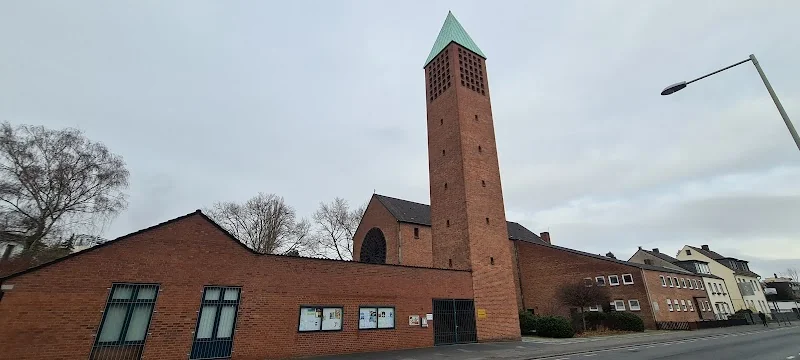
The Pauluskirche in Bonn-Beuel-Ost is a place where several levels overlap: it is a church, community space, place of prayer, stage for education and encounters, and at the same time a significant testimony of post-war architecture. Those passing by at Siegburger Straße 75 do not simply encounter a sacred building but a structure that is closely linked to the development of Beuel. The Catholic community of St. Josef and Paulus uses the church for services and devotions; the Forum Pauluskirche invites lectures and discussions; and the Anglican community of Bonn and Cologne names the same place as their Bonn worship location. Thus, the Pauluskirche is not only a local reference point for the district but also a space where different church traditions, cultural interests, and practical needs converge. Its history dates back to the phase when Beuel underwent significant changes due to industrialization and immigration. At the same time, it is a building that still deserves attention in today’s urban landscape because it combines historical memory, liturgical use, and architectural handwriting in a compact space. ([katholisch-an-rhein-und-sieg.de](https://www.katholisch-an-rhein-und-sieg.de/kirchen/paulus/))
History and Architecture of the Pauluskirche in Bonn-Beuel-Ost
The emergence of the Pauluskirche is closely linked to the growth of Beuel. When the Rhenish jute spinning mill began operations in 1868, the district expanded further east; in this environment, many people from abroad settled, especially Italians. Pastoral care was initially provided through St. Peter in Vilich and later through St. Josef in Beuel. The desire for a church of its own did not arise from nothing but from a concrete urban and social development. The Catholic community also points out that the church took over the patronage of Saint Paul from the former parish church in Vilich, which had already been destroyed in 1765. Thus, St. Paulus consciously connects to an older local tradition, even though the current building itself is a product of the post-war period. The first groundbreaking took place on March 19, 1957. The building was designed by Dominikus Böhm, one of the most renowned German church architects of the 20th century; the execution was taken over by his son Gottfried. The church was consecrated in 1958 and, according to the community, fits ideally into the suburban, former industrial landscape. The Monument and History Association of Bonn even describes St. Paulus as the last church building planned by Dominikus Böhm, emphasizing that the work was completed by Gottfried. This connection makes the Pauluskirche particularly exciting for architecture enthusiasts: it is not just any functional building but a concluding and transitional work within a significant church-building biography. At the same time, it spatially stands in an environment that can today be read between historical industry, church use, and changing urban development. This very mixture of past, post-war modernity, and local roots continues to shape the character of the place to this day. ([katholisch-an-rhein-und-sieg.de](https://www.katholisch-an-rhein-und-sieg.de/kirchen/paulus/))
Services and Community Life in St. Paulus
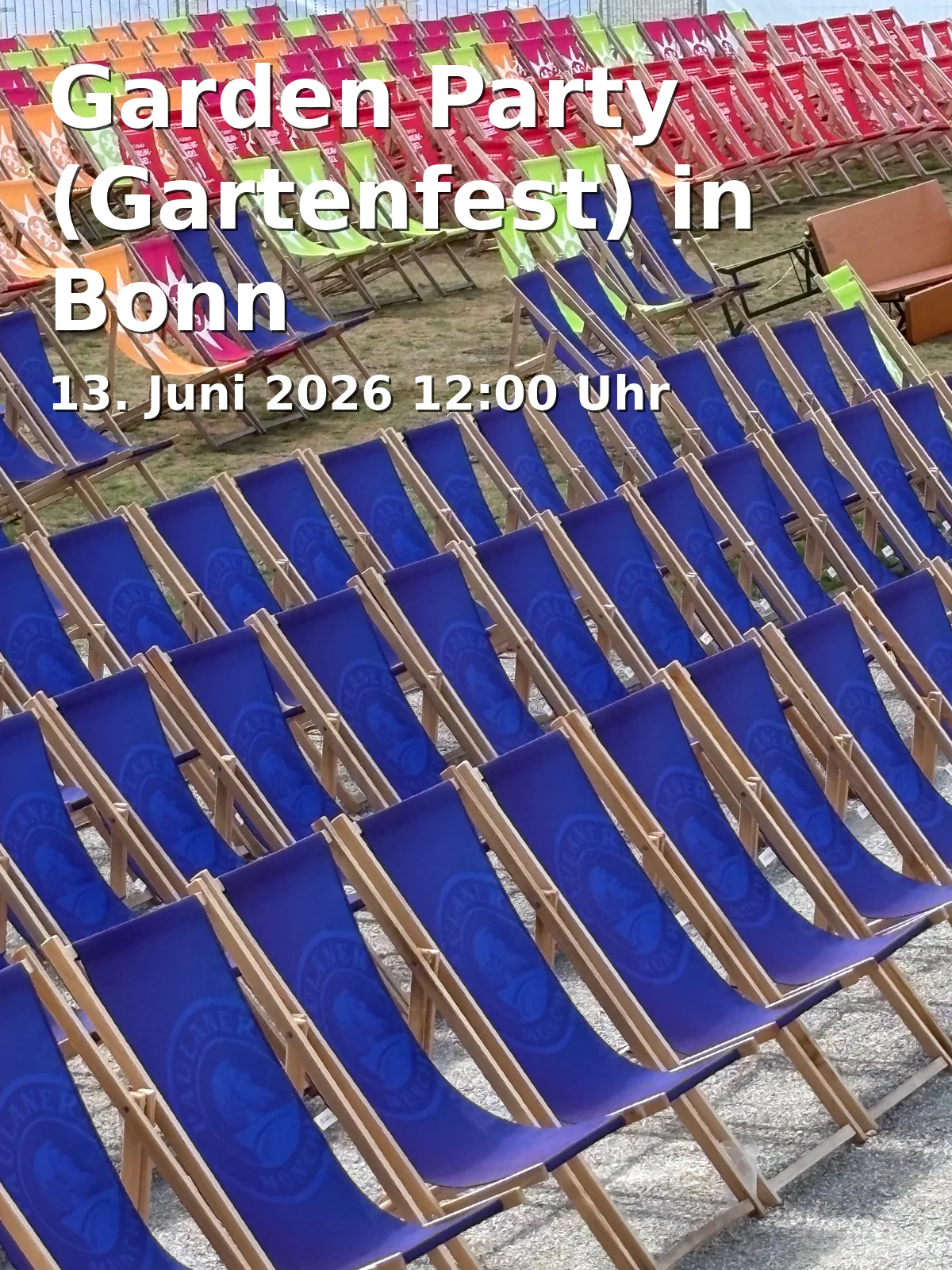
The Pauluskirche is not just a monument and a quiet architectural backdrop but a vibrant place of community life. The Catholic side describes St. Paulus as a place where services and devotions take place regularly. Since 2001, the St. Paulus community has merged with St. Josef to form the St. Josef and Paulus community, ensuring that the church in Beuel-Ost remains firmly integrated into the pastoral structure of the district. This means for visitors: it is not only about history but about lived present. Particularly interesting is the international and ecumenically shaped use of the space. The Anglican Chaplaincy of Bonn and Cologne explicitly names St. Paulus Church in Bonn-Beuel-Ost as their Bonn worship location and celebrates Eucharist there on Sundays. On their own website, they describe themselves as an inviting, safe, diverse, and open community that welcomes people regardless of origin, age, gender, and life path. This openness fits very well with the character of the Pauluskirche, which is not only open to the Catholic community context but also to guests seeking an English-speaking or international church framework. Additionally, the church building is also used for special community moments, such as during seasonal or communal offerings like the Anglican Garden Party. The Pauluskirche is thus a place where liturgy and everyday community come together. Those who experience the church do not encounter an isolated sight but a space that carries a wide spectrum of church life from Sunday services to community festivals. This makes it as interesting for people from Bonn as for guests looking for an authentic, open, and yet traditionally rich church location. ([katholisch-an-rhein-und-sieg.de](https://www.katholisch-an-rhein-und-sieg.de/kirchen/paulus/))
Forum Pauluskirche: Education, Encounter, and Discussion
A central profile feature of the Pauluskirche is the Forum Pauluskirche. In its self-presentation, it states that the church, as a place of prayer, education, and encounter, is open to all interested parties. The forum aims to keep the memory of the Second Vatican Council alive and to accompany developments in church engagement for the healing and well-being of people through lectures and discussions. Thus, the place presents itself not only as a liturgical space but also as a space for thought. This is particularly interesting for a location with an SEO focus because people today often search for programs, lectures, discussions, church series, and open educational formats. The forum meets exactly this need: it connects a specific place with content depth and the ambition to consider contemporary issues in the light of faith. It is also noteworthy that participation in the events is reported to be free of charge. This makes the series low-threshold and invites not only regular community members but also interested visitors, seekers, and neighbors from the district. The program presentation also makes it clear that the formats can be flexibly designed, such as an online event or a presence date in another Beuel environment. For the perception of the Pauluskirche, this is important because it shows the church as part of a larger network of encounter and reflection. So, those searching for keywords like program, lectures, forum, education, or encounter will find in St. Paulus a place where these terms are not just used decoratively but are lived out practically. This very mixture of theological openness, educational ambition, and local anchoring gives the Pauluskirche a profile that goes beyond mere sacred use and makes it a relevant cultural venue in Bonn-Beuel. ([katholisch-an-rhein-und-sieg.de](https://www.katholisch-an-rhein-und-sieg.de/export/sites/katholisch-an-rhein-und-sieg/.content/PDF-Dateien/Forum_pauluskirche_1_25.pdf))
Directions, Parking, and Practical Information for Visitors
Practically, the Pauluskirche is conveniently located: it stands at Siegburger Straße 75 in 53229 Bonn-Beuel-Ost. Those who wish to orient themselves will find a clear address in a district that is well connected via Siegburger Straße yet possesses its own, more neighborly profile. Particularly helpful is that the location page of the Anglican community not only provides the address but also offers useful visitor information. This includes toilets, materials in large print, parking spaces, a bicycle rack, the status as a listed building, and an organ. These details are particularly valuable for a church with events and services as they make real visits easier. The information suggests that the Pauluskirche is designed not only for liturgical use but also for various visitor groups: people arriving by bicycle, guests dependent on parking options, or individuals needing reading materials in larger print. The Catholic community page also contributes to the practical classification by listing the church as part of the St. Josef and Paulus community in Beuel and clearly naming the location. It is also important for visitors that this is not a remote special location but a church space in the midst of vibrant Beuel-Ost. Therefore, whether attending a service, a lecture from the forum, or a church meeting, one can expect a clearly defined place whose use is geared towards community and accessibility. Even though no detailed directions by car, bus, or train are necessary, the combination of address, parking information, and bicycle offerings is sufficient to categorize the Pauluskirche as a practical, well-utilized location. For SEO relevance, this is crucial: people are not only searching for history but often quite specifically for parking, directions, and practical usability on site. ([katholisch-an-rhein-und-sieg.de](https://www.katholisch-an-rhein-und-sieg.de/kirchen/paulus/))
Organ, Music, and Monument Value of the Pauluskirche
A special atmosphere of the Pauluskirche is contributed by its organ. The Catholic community page describes the current instrument as the second organ of the space: it is a Verschueren organ with 2 manuals, pedal, and 18 registers, which replaced the former Seifert organ from 1960 in 1998 at the initiative of the organist of St. Josef. Remarkable is also the origin of the instrument: the organ was originally built in 1966 for the parish church of St. Petrus Canisius in Düsseldorf and came to Beuel-Ost after the parish was dissolved. Thus, it carries a small migration history within itself and refers to the lively reuse of church furnishings. The Anglican location page also explicitly names an organ as an equipment element, indicating that music is not just an afterthought here but is part of the profile of the place. In parallel, a musical culture is formed in the further community life, for example, in the Schola St. Josef & Paulus, which accompanies the annual cycle with rehearsals and liturgical performances. This is relevant for the Pauluskirche because it functions not only as an architectural space but also as a sound space and as part of a larger church musical environment. The Monument and History Association of Bonn further emphasizes that St. Paulus is outstanding in art history and makes the interactions between architecture and spirituality visible. In the publication, the building is described as an important but comparatively little-known monument; at the same time, it is viewed as a potential central concert venue. This perspective underscores how much the church stands between liturgical use, music, and monument preservation. Therefore, those visiting the Pauluskirche experience not only a space for devotion but a building that uniquely combines sound, form, and history. This makes it attractive for culturally interested visitors, active community members, and those searching for special church locations in Bonn. ([katholisch-an-rhein-und-sieg.de](https://www.katholisch-an-rhein-und-sieg.de/kirchen/paulus/))
Sources:
- Catholic on the Rhine and Sieg – St. Paulus in Beuel-Ost
- Catholic on the Rhine and Sieg – Homepage and current information
- Forum Pauluskirche – Events 1st Half of 2025
- Diocese in Europe – St Boniface Bonn / St Paulus Church
- Anglican Chaplaincy of Bonn and Cologne – Home
- Monument and History Association Bonn-Right Bank – The Last Church Building by Dominikus Böhm
Show moreShow less
Pauluskirche Bonn | History & Events
The Pauluskirche in Bonn-Beuel-Ost is a place where several levels overlap: it is a church, community space, place of prayer, stage for education and encounters, and at the same time a significant testimony of post-war architecture. Those passing by at Siegburger Straße 75 do not simply encounter a sacred building but a structure that is closely linked to the development of Beuel. The Catholic community of St. Josef and Paulus uses the church for services and devotions; the Forum Pauluskirche invites lectures and discussions; and the Anglican community of Bonn and Cologne names the same place as their Bonn worship location. Thus, the Pauluskirche is not only a local reference point for the district but also a space where different church traditions, cultural interests, and practical needs converge. Its history dates back to the phase when Beuel underwent significant changes due to industrialization and immigration. At the same time, it is a building that still deserves attention in today’s urban landscape because it combines historical memory, liturgical use, and architectural handwriting in a compact space. ([katholisch-an-rhein-und-sieg.de](https://www.katholisch-an-rhein-und-sieg.de/kirchen/paulus/))
History and Architecture of the Pauluskirche in Bonn-Beuel-Ost
The emergence of the Pauluskirche is closely linked to the growth of Beuel. When the Rhenish jute spinning mill began operations in 1868, the district expanded further east; in this environment, many people from abroad settled, especially Italians. Pastoral care was initially provided through St. Peter in Vilich and later through St. Josef in Beuel. The desire for a church of its own did not arise from nothing but from a concrete urban and social development. The Catholic community also points out that the church took over the patronage of Saint Paul from the former parish church in Vilich, which had already been destroyed in 1765. Thus, St. Paulus consciously connects to an older local tradition, even though the current building itself is a product of the post-war period. The first groundbreaking took place on March 19, 1957. The building was designed by Dominikus Böhm, one of the most renowned German church architects of the 20th century; the execution was taken over by his son Gottfried. The church was consecrated in 1958 and, according to the community, fits ideally into the suburban, former industrial landscape. The Monument and History Association of Bonn even describes St. Paulus as the last church building planned by Dominikus Böhm, emphasizing that the work was completed by Gottfried. This connection makes the Pauluskirche particularly exciting for architecture enthusiasts: it is not just any functional building but a concluding and transitional work within a significant church-building biography. At the same time, it spatially stands in an environment that can today be read between historical industry, church use, and changing urban development. This very mixture of past, post-war modernity, and local roots continues to shape the character of the place to this day. ([katholisch-an-rhein-und-sieg.de](https://www.katholisch-an-rhein-und-sieg.de/kirchen/paulus/))
Services and Community Life in St. Paulus
The Pauluskirche is not just a monument and a quiet architectural backdrop but a vibrant place of community life. The Catholic side describes St. Paulus as a place where services and devotions take place regularly. Since 2001, the St. Paulus community has merged with St. Josef to form the St. Josef and Paulus community, ensuring that the church in Beuel-Ost remains firmly integrated into the pastoral structure of the district. This means for visitors: it is not only about history but about lived present. Particularly interesting is the international and ecumenically shaped use of the space. The Anglican Chaplaincy of Bonn and Cologne explicitly names St. Paulus Church in Bonn-Beuel-Ost as their Bonn worship location and celebrates Eucharist there on Sundays. On their own website, they describe themselves as an inviting, safe, diverse, and open community that welcomes people regardless of origin, age, gender, and life path. This openness fits very well with the character of the Pauluskirche, which is not only open to the Catholic community context but also to guests seeking an English-speaking or international church framework. Additionally, the church building is also used for special community moments, such as during seasonal or communal offerings like the Anglican Garden Party. The Pauluskirche is thus a place where liturgy and everyday community come together. Those who experience the church do not encounter an isolated sight but a space that carries a wide spectrum of church life from Sunday services to community festivals. This makes it as interesting for people from Bonn as for guests looking for an authentic, open, and yet traditionally rich church location. ([katholisch-an-rhein-und-sieg.de](https://www.katholisch-an-rhein-und-sieg.de/kirchen/paulus/))
Forum Pauluskirche: Education, Encounter, and Discussion
A central profile feature of the Pauluskirche is the Forum Pauluskirche. In its self-presentation, it states that the church, as a place of prayer, education, and encounter, is open to all interested parties. The forum aims to keep the memory of the Second Vatican Council alive and to accompany developments in church engagement for the healing and well-being of people through lectures and discussions. Thus, the place presents itself not only as a liturgical space but also as a space for thought. This is particularly interesting for a location with an SEO focus because people today often search for programs, lectures, discussions, church series, and open educational formats. The forum meets exactly this need: it connects a specific place with content depth and the ambition to consider contemporary issues in the light of faith. It is also noteworthy that participation in the events is reported to be free of charge. This makes the series low-threshold and invites not only regular community members but also interested visitors, seekers, and neighbors from the district. The program presentation also makes it clear that the formats can be flexibly designed, such as an online event or a presence date in another Beuel environment. For the perception of the Pauluskirche, this is important because it shows the church as part of a larger network of encounter and reflection. So, those searching for keywords like program, lectures, forum, education, or encounter will find in St. Paulus a place where these terms are not just used decoratively but are lived out practically. This very mixture of theological openness, educational ambition, and local anchoring gives the Pauluskirche a profile that goes beyond mere sacred use and makes it a relevant cultural venue in Bonn-Beuel. ([katholisch-an-rhein-und-sieg.de](https://www.katholisch-an-rhein-und-sieg.de/export/sites/katholisch-an-rhein-und-sieg/.content/PDF-Dateien/Forum_pauluskirche_1_25.pdf))
Directions, Parking, and Practical Information for Visitors
Practically, the Pauluskirche is conveniently located: it stands at Siegburger Straße 75 in 53229 Bonn-Beuel-Ost. Those who wish to orient themselves will find a clear address in a district that is well connected via Siegburger Straße yet possesses its own, more neighborly profile. Particularly helpful is that the location page of the Anglican community not only provides the address but also offers useful visitor information. This includes toilets, materials in large print, parking spaces, a bicycle rack, the status as a listed building, and an organ. These details are particularly valuable for a church with events and services as they make real visits easier. The information suggests that the Pauluskirche is designed not only for liturgical use but also for various visitor groups: people arriving by bicycle, guests dependent on parking options, or individuals needing reading materials in larger print. The Catholic community page also contributes to the practical classification by listing the church as part of the St. Josef and Paulus community in Beuel and clearly naming the location. It is also important for visitors that this is not a remote special location but a church space in the midst of vibrant Beuel-Ost. Therefore, whether attending a service, a lecture from the forum, or a church meeting, one can expect a clearly defined place whose use is geared towards community and accessibility. Even though no detailed directions by car, bus, or train are necessary, the combination of address, parking information, and bicycle offerings is sufficient to categorize the Pauluskirche as a practical, well-utilized location. For SEO relevance, this is crucial: people are not only searching for history but often quite specifically for parking, directions, and practical usability on site. ([katholisch-an-rhein-und-sieg.de](https://www.katholisch-an-rhein-und-sieg.de/kirchen/paulus/))
Organ, Music, and Monument Value of the Pauluskirche
A special atmosphere of the Pauluskirche is contributed by its organ. The Catholic community page describes the current instrument as the second organ of the space: it is a Verschueren organ with 2 manuals, pedal, and 18 registers, which replaced the former Seifert organ from 1960 in 1998 at the initiative of the organist of St. Josef. Remarkable is also the origin of the instrument: the organ was originally built in 1966 for the parish church of St. Petrus Canisius in Düsseldorf and came to Beuel-Ost after the parish was dissolved. Thus, it carries a small migration history within itself and refers to the lively reuse of church furnishings. The Anglican location page also explicitly names an organ as an equipment element, indicating that music is not just an afterthought here but is part of the profile of the place. In parallel, a musical culture is formed in the further community life, for example, in the Schola St. Josef & Paulus, which accompanies the annual cycle with rehearsals and liturgical performances. This is relevant for the Pauluskirche because it functions not only as an architectural space but also as a sound space and as part of a larger church musical environment. The Monument and History Association of Bonn further emphasizes that St. Paulus is outstanding in art history and makes the interactions between architecture and spirituality visible. In the publication, the building is described as an important but comparatively little-known monument; at the same time, it is viewed as a potential central concert venue. This perspective underscores how much the church stands between liturgical use, music, and monument preservation. Therefore, those visiting the Pauluskirche experience not only a space for devotion but a building that uniquely combines sound, form, and history. This makes it attractive for culturally interested visitors, active community members, and those searching for special church locations in Bonn. ([katholisch-an-rhein-und-sieg.de](https://www.katholisch-an-rhein-und-sieg.de/kirchen/paulus/))
Sources:
- Catholic on the Rhine and Sieg – St. Paulus in Beuel-Ost
- Catholic on the Rhine and Sieg – Homepage and current information
- Forum Pauluskirche – Events 1st Half of 2025
- Diocese in Europe – St Boniface Bonn / St Paulus Church
- Anglican Chaplaincy of Bonn and Cologne – Home
- Monument and History Association Bonn-Right Bank – The Last Church Building by Dominikus Böhm
Pauluskirche Bonn | History & Events
The Pauluskirche in Bonn-Beuel-Ost is a place where several levels overlap: it is a church, community space, place of prayer, stage for education and encounters, and at the same time a significant testimony of post-war architecture. Those passing by at Siegburger Straße 75 do not simply encounter a sacred building but a structure that is closely linked to the development of Beuel. The Catholic community of St. Josef and Paulus uses the church for services and devotions; the Forum Pauluskirche invites lectures and discussions; and the Anglican community of Bonn and Cologne names the same place as their Bonn worship location. Thus, the Pauluskirche is not only a local reference point for the district but also a space where different church traditions, cultural interests, and practical needs converge. Its history dates back to the phase when Beuel underwent significant changes due to industrialization and immigration. At the same time, it is a building that still deserves attention in today’s urban landscape because it combines historical memory, liturgical use, and architectural handwriting in a compact space. ([katholisch-an-rhein-und-sieg.de](https://www.katholisch-an-rhein-und-sieg.de/kirchen/paulus/))
History and Architecture of the Pauluskirche in Bonn-Beuel-Ost
The emergence of the Pauluskirche is closely linked to the growth of Beuel. When the Rhenish jute spinning mill began operations in 1868, the district expanded further east; in this environment, many people from abroad settled, especially Italians. Pastoral care was initially provided through St. Peter in Vilich and later through St. Josef in Beuel. The desire for a church of its own did not arise from nothing but from a concrete urban and social development. The Catholic community also points out that the church took over the patronage of Saint Paul from the former parish church in Vilich, which had already been destroyed in 1765. Thus, St. Paulus consciously connects to an older local tradition, even though the current building itself is a product of the post-war period. The first groundbreaking took place on March 19, 1957. The building was designed by Dominikus Böhm, one of the most renowned German church architects of the 20th century; the execution was taken over by his son Gottfried. The church was consecrated in 1958 and, according to the community, fits ideally into the suburban, former industrial landscape. The Monument and History Association of Bonn even describes St. Paulus as the last church building planned by Dominikus Böhm, emphasizing that the work was completed by Gottfried. This connection makes the Pauluskirche particularly exciting for architecture enthusiasts: it is not just any functional building but a concluding and transitional work within a significant church-building biography. At the same time, it spatially stands in an environment that can today be read between historical industry, church use, and changing urban development. This very mixture of past, post-war modernity, and local roots continues to shape the character of the place to this day. ([katholisch-an-rhein-und-sieg.de](https://www.katholisch-an-rhein-und-sieg.de/kirchen/paulus/))
Services and Community Life in St. Paulus
The Pauluskirche is not just a monument and a quiet architectural backdrop but a vibrant place of community life. The Catholic side describes St. Paulus as a place where services and devotions take place regularly. Since 2001, the St. Paulus community has merged with St. Josef to form the St. Josef and Paulus community, ensuring that the church in Beuel-Ost remains firmly integrated into the pastoral structure of the district. This means for visitors: it is not only about history but about lived present. Particularly interesting is the international and ecumenically shaped use of the space. The Anglican Chaplaincy of Bonn and Cologne explicitly names St. Paulus Church in Bonn-Beuel-Ost as their Bonn worship location and celebrates Eucharist there on Sundays. On their own website, they describe themselves as an inviting, safe, diverse, and open community that welcomes people regardless of origin, age, gender, and life path. This openness fits very well with the character of the Pauluskirche, which is not only open to the Catholic community context but also to guests seeking an English-speaking or international church framework. Additionally, the church building is also used for special community moments, such as during seasonal or communal offerings like the Anglican Garden Party. The Pauluskirche is thus a place where liturgy and everyday community come together. Those who experience the church do not encounter an isolated sight but a space that carries a wide spectrum of church life from Sunday services to community festivals. This makes it as interesting for people from Bonn as for guests looking for an authentic, open, and yet traditionally rich church location. ([katholisch-an-rhein-und-sieg.de](https://www.katholisch-an-rhein-und-sieg.de/kirchen/paulus/))
Forum Pauluskirche: Education, Encounter, and Discussion
A central profile feature of the Pauluskirche is the Forum Pauluskirche. In its self-presentation, it states that the church, as a place of prayer, education, and encounter, is open to all interested parties. The forum aims to keep the memory of the Second Vatican Council alive and to accompany developments in church engagement for the healing and well-being of people through lectures and discussions. Thus, the place presents itself not only as a liturgical space but also as a space for thought. This is particularly interesting for a location with an SEO focus because people today often search for programs, lectures, discussions, church series, and open educational formats. The forum meets exactly this need: it connects a specific place with content depth and the ambition to consider contemporary issues in the light of faith. It is also noteworthy that participation in the events is reported to be free of charge. This makes the series low-threshold and invites not only regular community members but also interested visitors, seekers, and neighbors from the district. The program presentation also makes it clear that the formats can be flexibly designed, such as an online event or a presence date in another Beuel environment. For the perception of the Pauluskirche, this is important because it shows the church as part of a larger network of encounter and reflection. So, those searching for keywords like program, lectures, forum, education, or encounter will find in St. Paulus a place where these terms are not just used decoratively but are lived out practically. This very mixture of theological openness, educational ambition, and local anchoring gives the Pauluskirche a profile that goes beyond mere sacred use and makes it a relevant cultural venue in Bonn-Beuel. ([katholisch-an-rhein-und-sieg.de](https://www.katholisch-an-rhein-und-sieg.de/export/sites/katholisch-an-rhein-und-sieg/.content/PDF-Dateien/Forum_pauluskirche_1_25.pdf))
Directions, Parking, and Practical Information for Visitors
Practically, the Pauluskirche is conveniently located: it stands at Siegburger Straße 75 in 53229 Bonn-Beuel-Ost. Those who wish to orient themselves will find a clear address in a district that is well connected via Siegburger Straße yet possesses its own, more neighborly profile. Particularly helpful is that the location page of the Anglican community not only provides the address but also offers useful visitor information. This includes toilets, materials in large print, parking spaces, a bicycle rack, the status as a listed building, and an organ. These details are particularly valuable for a church with events and services as they make real visits easier. The information suggests that the Pauluskirche is designed not only for liturgical use but also for various visitor groups: people arriving by bicycle, guests dependent on parking options, or individuals needing reading materials in larger print. The Catholic community page also contributes to the practical classification by listing the church as part of the St. Josef and Paulus community in Beuel and clearly naming the location. It is also important for visitors that this is not a remote special location but a church space in the midst of vibrant Beuel-Ost. Therefore, whether attending a service, a lecture from the forum, or a church meeting, one can expect a clearly defined place whose use is geared towards community and accessibility. Even though no detailed directions by car, bus, or train are necessary, the combination of address, parking information, and bicycle offerings is sufficient to categorize the Pauluskirche as a practical, well-utilized location. For SEO relevance, this is crucial: people are not only searching for history but often quite specifically for parking, directions, and practical usability on site. ([katholisch-an-rhein-und-sieg.de](https://www.katholisch-an-rhein-und-sieg.de/kirchen/paulus/))
Organ, Music, and Monument Value of the Pauluskirche
A special atmosphere of the Pauluskirche is contributed by its organ. The Catholic community page describes the current instrument as the second organ of the space: it is a Verschueren organ with 2 manuals, pedal, and 18 registers, which replaced the former Seifert organ from 1960 in 1998 at the initiative of the organist of St. Josef. Remarkable is also the origin of the instrument: the organ was originally built in 1966 for the parish church of St. Petrus Canisius in Düsseldorf and came to Beuel-Ost after the parish was dissolved. Thus, it carries a small migration history within itself and refers to the lively reuse of church furnishings. The Anglican location page also explicitly names an organ as an equipment element, indicating that music is not just an afterthought here but is part of the profile of the place. In parallel, a musical culture is formed in the further community life, for example, in the Schola St. Josef & Paulus, which accompanies the annual cycle with rehearsals and liturgical performances. This is relevant for the Pauluskirche because it functions not only as an architectural space but also as a sound space and as part of a larger church musical environment. The Monument and History Association of Bonn further emphasizes that St. Paulus is outstanding in art history and makes the interactions between architecture and spirituality visible. In the publication, the building is described as an important but comparatively little-known monument; at the same time, it is viewed as a potential central concert venue. This perspective underscores how much the church stands between liturgical use, music, and monument preservation. Therefore, those visiting the Pauluskirche experience not only a space for devotion but a building that uniquely combines sound, form, and history. This makes it attractive for culturally interested visitors, active community members, and those searching for special church locations in Bonn. ([katholisch-an-rhein-und-sieg.de](https://www.katholisch-an-rhein-und-sieg.de/kirchen/paulus/))
Sources:
- Catholic on the Rhine and Sieg – St. Paulus in Beuel-Ost
- Catholic on the Rhine and Sieg – Homepage and current information
- Forum Pauluskirche – Events 1st Half of 2025
- Diocese in Europe – St Boniface Bonn / St Paulus Church
- Anglican Chaplaincy of Bonn and Cologne – Home
- Monument and History Association Bonn-Right Bank – The Last Church Building by Dominikus Böhm
Frequently Asked Questions
Reviews
No reviews found