
Bonn
Immenburgstraße 22, 53121 Bonn, Deutschland
MVA Waste-to-Energy Plant Bonn GmbH | Address & Access
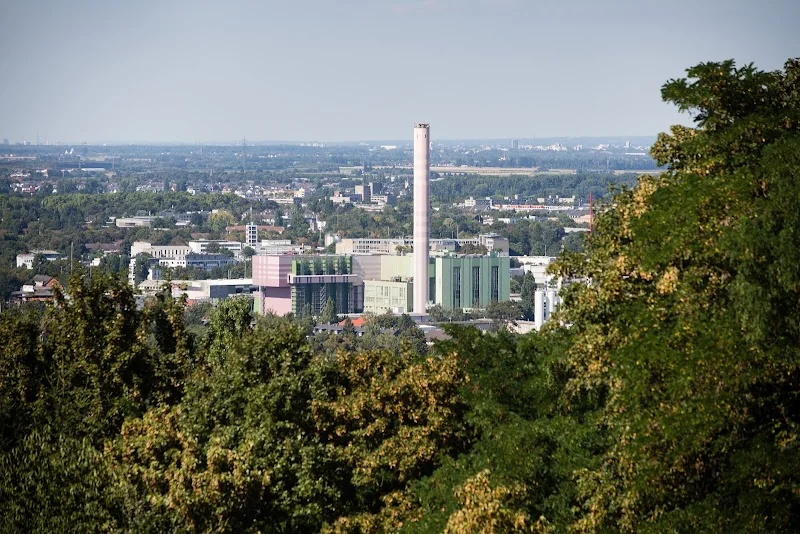
The MVA Waste-to-Energy Plant Bonn GmbH is much more than a technical facility on the outskirts of the city. For Bonn and the region, it is a central component of public services, as it reliably accepts non-recyclable waste, thermally utilizes it, and simultaneously provides energy. Those who see the facility from the outside quickly recognize its distinctive industrial character and the 98-meter-high chimney that is firmly anchored in the cityscape. In everyday operations, the MVA Bonn works around the clock, 365 days a year, to ensure that residual waste is safely treated and that waste disposal in Bonn and the surrounding area remains stable. Approximately 260,000 tons of waste are processed annually; from this process, more than 500,000 megawatt-hours of steam are generated, which are used for electricity and district heating. Thus, the site exemplifies a modern connection between waste disposal, energy generation, and climate protection. The facility is part of the municipal structure of Bonn's public utilities and is embedded in a public supply logic that places reliability and regional responsibility at its core. ([swb-verwertung.de](https://www.swb-verwertung.de/verwertung/?utm_source=openai))
Address, Access, and Connection at Immenburgstraße 22
When searching for the MVA Bonn, people usually mean not only the company address but also the specific access situation on the premises. Officially, the facility is located at Immenburgstraße 22 in 53121 Bonn. For deliveries of larger quantities of combustible residual waste, the MVA specifies the access point at Am Dickobskreuz, Gate 1. The recycling center on the premises is accessible via Gate 2, and the Repair Café uses the entrance at Gate 4. These different gates are important for visitors because the facility is not an ordinary event location but a safety-relevant industrial and supply operation with clearly separated access areas. It is also noted that the facility is connected to the bus stop Karlstraße and the light rail stop Propsthof-Nord for public tours; additionally, access by car and buses is possible. For orientation, it is also helpful to note that the external view of the facility has established itself in the Bonn cityscape and is considered a prominent landmark near the A565 motorway. Therefore, anyone searching for MVA Bonn address, MVA Bonn access, or MVA Bonn Gate 1 will find a location with very clear paths, but also with strict rules for access, safety, and different uses on the same premises. ([swb-verwertung.de](https://www.swb-verwertung.de/unternehmen/aktuelles/details/workshop-fuer-gruene-graffiti-an-der-mva/?utm_source=openai))
The practical connection is closely linked to the functional profile of the site. The MVA Bonn is not designed for spontaneous walk-in customers but for regulated processes, deliveries, and guided visits. For this reason, SWB Verwertung communicates on several pages that safety information must be observed before entering the premises and that visitor groups can generally only come by prior appointment. From an SEO perspective, this is important because search queries for address, access, and parking often do not target a classic leisure location but seek precise and reliable orientation: Where is the MVA Bonn? What access do you need? Is the recycling center directly at the site? How do you get there by train or bus? The official communication answers these questions quite clearly through the combination of location, gates, and public transport information. Those wishing to deliver larger quantities should also pay attention to the specific guidelines for waste acceptance, as not only access but also time slots and origin certificates are regulated there. ([swb-verwertung.de](https://www.swb-verwertung.de/verwertung/abfallannahme/?utm_source=openai))
What Happens at MVA Bonn: Thermal Utilization, Electricity, and District Heating
At the center of MVA Bonn is the thermal utilization of residual waste. This means that the non-recyclable part of the waste is not simply disposed of but is energetically utilized in a controlled process. The official description makes it clear that primarily residual waste from Bonn and the region, as well as similar municipal commercial waste, are processed. The facility operates 365 days a year, and according to SWB Verwertung, 89 employees ensure that the processes function safely, efficiently, and environmentally friendly. The energetic benefit is particularly important: More than 500,000 megawatt-hours of steam are generated from the waste each year, which is then used by the sister company SWB Energy and Water for electricity and district heating. Thus, a supposed waste stream becomes a valuable material and energy carrier that flows back into regional supply. For Bonn, this is not only ecologically relevant but also systemic, as it connects waste disposal security and energy production. ([swb-verwertung.de](https://www.swb-verwertung.de/verwertung/?utm_source=openai))
The facility does not operate with a simple incineration model but with a complex technical process. The official page on control technology describes that specialists monitor functionality in three shifts, 24 hours a day, 365 days a year, and control the entire combustion and flue gas cleaning process. This is supplemented by the information that the flue gas qualities of the three furnace lines are continuously measured, electronically evaluated, stored, and transmitted online to the Cologne district government. This is important for search queries related to MVA Bonn electricity, district heating, and thermal utilization because the facility thus appears not only as a disposal site but as a highly technical energy and environmental facility. Even the remaining slag is further processed: Metals are recovered from it and returned to the material cycle. This creates a cycle that literally fills the term utilization in the name of the facility with content. Those looking for special features will also find the note on cooperation with the neighboring power plant, which uses the generated steam to create additional supply security in the region. ([swb-verwertung.de](https://www.swb-verwertung.de/verwertung/?utm_source=openai))
For web positioning, this combination of waste treatment, energy generation, and raw material recovery is particularly strong because it goes beyond pure technical communication. MVA Bonn presents itself as part of a regional infrastructure that not only disposes of waste but also derives benefits from residual materials. For this reason, the facility is more than just an invisible operation in the background for the people of Bonn: it is an energy bundle, a supply partner, and an example of how municipal facilities are conceived today. The search intent behind terms like MVA Bonn thermal utilization, MVA Bonn district heating, or MVA Bonn electricity is therefore not merely informative but often explanatory: What happens to the residual waste? Why is the facility important? How is energy generated from it? The official sources provide a clear answer to these questions, which can be well represented in the content structure of a location page. ([swb-verwertung.de](https://www.swb-verwertung.de/verwertung/?utm_source=openai))
History of MVA Bonn: From the Beginnings in 1988 to the Future Vision bonNova
The history of MVA Bonn visibly begins in the late development of Bonn's infrastructure. The first groundbreaking for the new waste-to-energy plant at Immenburgstraße took place in 1988, and the facility was commissioned on May 5, 1992. In the 1990s, it was considered by SWB Verwertung to be the most modern facility in Europe, thus taking a pioneering role. This historical classification is important because it shows the site not only as a current supply facility but also as an example of municipal technical progress. The official presentation also emphasizes that since its commissioning, the facility initially processed Bonn's waste and today is co-responsible for the waste disposal security of more than one million people as part of the REK association. This has significantly expanded the impact of the site. For the reader of a location page, this is a strong trust factor: Those searching for MVA Bonn history or MVA Bonn GmbH want not only an address but also to understand context, development, and significance. ([swb-verwertung.de](https://www.swb-verwertung.de/unternehmen/aktuelles/details/ein-energiebuendel-wird-30-jahre-alt/?utm_source=openai))
The history also includes the question of technical and ecological development. SWB Verwertung highlights that since 1992, its own stricter limits have been in place, which are partly below the legal requirements. On the emissions side, it is explained that the facility, due to its location near Bonn's city center, meets particularly high demands for environmental and emission protection and has therefore voluntarily committed to stricter limits. Even in the early 2020s, work was done on further development, such as switching to more environmentally friendly operating materials in the context of flue gas cleaning and research collaborations around CO2 reduction and decarbonization. This shows that MVA Bonn is not a rigid facility but an operation that continuously evolves and responds to new environmental requirements. This aspect is crucial for search queries related to special features, history, and sustainability because it shapes the modern identity of the site. ([swb-verwertung.de](https://www.swb-verwertung.de/umweltschutz/emissionen/?utm_source=openai))
From this development, bonNova emerged as a future vision. The project describes the strategic transformation process of MVA Bonn into a company that actively wants to support the transition to a zero-waste society. The official communication makes it clear that not only technical questions but also societal changes are at the forefront. For an SEO text architecture, bonNova is therefore a valuable topic area because it expands the site beyond pure disposal towards the future, sustainability, and innovation. Those searching for MVA Bonn or MVA Bonn bonNova today receive not only an answer about the operation itself but also about the direction in which the site is developing. This is particularly relevant because MVA Bonn is traditionally associated with technical performance while simultaneously placing an increasing focus on resource protection, repair culture, and circular economy. ([bonnova.de](https://www.bonnova.de/?utm_source=openai))
Waste Acceptance, Recycling Center, and Disposal Permit at MVA Bonn
A particularly high-interest area around MVA Bonn is waste acceptance. The official page explains that waste from the gray bin of households in Bonn and the region is sustainably utilized and reaches the facility through disposal companies. Additionally, residents of Bonn can drop off combustible construction waste, bulky waste, or additional household waste at one of the two recycling centers operated by bonnorange. One of these recycling centers is located directly on the premises of MVA Bonn and is accessible via Gate 2. For household quantities, there is a maximum limit of two cubic meters, and delivery is generally only intended by car, at most with a trailer. This makes waste acceptance a very concrete search topic that is often directly associated with terms like MVA Bonn waste acceptance, recycling center, or Gate 2. ([swb-verwertung.de](https://www.swb-verwertung.de/verwertung/abfallannahme/?utm_source=openai))
For larger quantities, there is a separate procedure. Combustible residual waste that cannot be disposed of through the household waste bin or bulky waste must only be delivered with an origin certificate and through the access point at Am Dickobskreuz, Gate 1. The official page also specifies concrete acceptance times: Monday to Friday from 06:00 to 16:00, with the last incoming weighing to be completed by 15:30. This information is not only practical but also important for SEO and user expectations because it shows that the site is organized for regulated and professional delivery. Prices are determined by weighing and are based on the fee schedule of the city of Bonn. The entire procedure underscores that MVA Bonn is not simply a place for waste drop-off but a regulated part of the city's waste disposal structure. ([swb-verwertung.de](https://www.swb-verwertung.de/verwertung/abfallannahme/?utm_source=openai))
Especially in the interplay between waste acceptance and municipal recycling center, it becomes clear why MVA Bonn is relevant for the daily lives of many people. The facility processes not only industrial or municipal residual waste but also serves as a point of contact for citizens who need to drop off larger quantities or bulky waste. Therefore, anyone searching for MVA Bonn address, waste acceptance, Gate 1, or recycling center primarily needs reliable information on access, quantity, and time slots. The official waste acceptance page answers these questions very concretely. For a landing page, it is worthwhile to prominently expand this area because genuine user intent and local relevance come together here. MVA Bonn thus becomes visible not only as a technical facility but as a functional part of Bonn's everyday logistics. ([swb-verwertung.de](https://www.swb-verwertung.de/verwertung/abfallannahme/?utm_source=openai))
Visitation, Safety, and Current Note on Tours
MVA Bonn generally offers tours and is therefore an exciting learning location for groups, school classes, and interested adults. Normally, a tour begins with a background presentation, followed by insights into waste bunkers, cranes, fire, and other stations of the facility. The tours are free, last about one to two hours, and are limited to groups of a maximum of 25 people. At the same time, clear safety rules apply: flat, sturdy footwear is mandatory, and the facility is not barrier-free. The minimum age is six years, which corresponds to primary school age, and for certain groups like kindergartens, tours are not offered due to technical requirements. For searching users, these are precisely the details that make a visitation page useful, as they turn an abstract place into a concretely planable destination. ([swb-verwertung.de](https://www.swb-verwertung.de/unternehmen/besichtigung/?utm_source=openai))
However, the current status is important: The official visitation page states that due to a fire event on Friday, February 27, 2026, tours will not be possible until presumably autumn or winter 2026. This is a central note for all those currently searching for MVA Bonn visitation or MVA Bonn tour. At the same time, the facility emphasizes that waste disposal security for Bonn and the region is ensured. This keeps the role of the site stable, even if visitor programs are temporarily interrupted. This combination of transparency and safety communication is important for text production because it builds trust while formulating realistic expectations. Those wishing to visit the facility later should check the current development on the official page before making a group inquiry. ([swb-verwertung.de](https://www.swb-verwertung.de/unternehmen/besichtigung/))
For content classification, it is also relevant that MVA Bonn does not receive visitor groups as event audiences but as safety and technology enthusiasts. The official briefing emphasizes that anyone wishing to enter the premises must familiarize themselves with the applicable rules beforehand. External companies and private groups must also undergo or confirm safety briefings. This clear separation between productive operation and controlled visitor access is typical for a facility of this type and should be accurately reflected in a location description. Especially because the facility often appears in search engines with terms like visitation, tours, or admission, it is important not to create false event expectations. MVA Bonn is not a classic event venue but a technically managed operational site with optional educational offerings. ([swb-verwertung.de](https://www.swb-verwertung.de/sicherheitsunterweisung/?utm_source=openai))
Emissions, Flue Gas Cleaning, Climate Protection, and the Future of MVA Bonn
A central quality feature of MVA Bonn is its comprehensive emissions and flue gas management. The official emissions page describes that the flue gas qualities of the three furnace lines are continuously measured, electronically evaluated, stored, and transmitted to the Cologne district government. Among other things, nitrogen oxides, sulfur dioxide, carbon monoxide, hydrochloric acid, ammonia, dust, mercury, and total carbon are recorded. The flue gas cleaning itself is structured in multiple stages and begins above the fire with denitrification before further cleaning stages follow. In the final stage, dioxins, furans, and mercury are separated. This technical level is particularly important for search queries related to MVA Bonn emissions or flue gas cleaning because it describes the facility as a controlled and transparently monitored environmental operation. ([swb-verwertung.de](https://www.swb-verwertung.de/umweltschutz/emissionen/?utm_source=openai))
It is also noteworthy that MVA Bonn has been applying stricter limits than legally required since 1992. For nitrogen oxides and sulfur dioxide, SWB Verwertung specifies its own target values that are below regulatory requirements. Additionally, the facility refers to its immediate proximity to Bonn's city center as a reason for particularly ambitious environmental standards. Recent publications also emphasize that MVA Bonn aims to further reduce its CO2 footprint, among other things, through the use of more environmentally friendly operating materials and through research collaborations on decarbonization. This shows that the facility not only reduces pollutants but also strategically works on its climate impact. Especially in a municipal context, this is a strong signal, as the operation thus takes responsibility for the region and for the energy transition. ([swb-verwertung.de](https://www.swb-verwertung.de/umweltschutz/emissionen/?utm_source=openai))
The uniqueness of the site also includes its ecological side story. For years, birds of prey, including kestrels and peregrine falcons, have nested on the premises and the chimney. The official page describes that the animals apparently feel comfortable there and that more than 20 chicks have hatched on the premises. Such observations are a rather charming side aspect, but they are surprisingly important for the perception of the facility because they break the image of a purely gray industrial site. Additionally, the Repair Café on the operating premises has been showcasing a very concrete idea of circular economy since March 2023: Repairing instead of throwing away, extending lifecycles, conserving resources. Together with bonNova, this creates a thematic arc from thermal utilization to emissions reduction to repair culture. This interplay makes MVA Bonn interesting for Bonn and the region, even if it is not a classic leisure destination. ([swb-verwertung.de](https://www.swb-verwertung.de/unternehmen/aktuelles/details/es-piepst-in-luftiger-hoehe/?utm_source=openai))
Sources:
Show moreShow less
MVA Waste-to-Energy Plant Bonn GmbH | Address & Access
The MVA Waste-to-Energy Plant Bonn GmbH is much more than a technical facility on the outskirts of the city. For Bonn and the region, it is a central component of public services, as it reliably accepts non-recyclable waste, thermally utilizes it, and simultaneously provides energy. Those who see the facility from the outside quickly recognize its distinctive industrial character and the 98-meter-high chimney that is firmly anchored in the cityscape. In everyday operations, the MVA Bonn works around the clock, 365 days a year, to ensure that residual waste is safely treated and that waste disposal in Bonn and the surrounding area remains stable. Approximately 260,000 tons of waste are processed annually; from this process, more than 500,000 megawatt-hours of steam are generated, which are used for electricity and district heating. Thus, the site exemplifies a modern connection between waste disposal, energy generation, and climate protection. The facility is part of the municipal structure of Bonn's public utilities and is embedded in a public supply logic that places reliability and regional responsibility at its core. ([swb-verwertung.de](https://www.swb-verwertung.de/verwertung/?utm_source=openai))
Address, Access, and Connection at Immenburgstraße 22
When searching for the MVA Bonn, people usually mean not only the company address but also the specific access situation on the premises. Officially, the facility is located at Immenburgstraße 22 in 53121 Bonn. For deliveries of larger quantities of combustible residual waste, the MVA specifies the access point at Am Dickobskreuz, Gate 1. The recycling center on the premises is accessible via Gate 2, and the Repair Café uses the entrance at Gate 4. These different gates are important for visitors because the facility is not an ordinary event location but a safety-relevant industrial and supply operation with clearly separated access areas. It is also noted that the facility is connected to the bus stop Karlstraße and the light rail stop Propsthof-Nord for public tours; additionally, access by car and buses is possible. For orientation, it is also helpful to note that the external view of the facility has established itself in the Bonn cityscape and is considered a prominent landmark near the A565 motorway. Therefore, anyone searching for MVA Bonn address, MVA Bonn access, or MVA Bonn Gate 1 will find a location with very clear paths, but also with strict rules for access, safety, and different uses on the same premises. ([swb-verwertung.de](https://www.swb-verwertung.de/unternehmen/aktuelles/details/workshop-fuer-gruene-graffiti-an-der-mva/?utm_source=openai))
The practical connection is closely linked to the functional profile of the site. The MVA Bonn is not designed for spontaneous walk-in customers but for regulated processes, deliveries, and guided visits. For this reason, SWB Verwertung communicates on several pages that safety information must be observed before entering the premises and that visitor groups can generally only come by prior appointment. From an SEO perspective, this is important because search queries for address, access, and parking often do not target a classic leisure location but seek precise and reliable orientation: Where is the MVA Bonn? What access do you need? Is the recycling center directly at the site? How do you get there by train or bus? The official communication answers these questions quite clearly through the combination of location, gates, and public transport information. Those wishing to deliver larger quantities should also pay attention to the specific guidelines for waste acceptance, as not only access but also time slots and origin certificates are regulated there. ([swb-verwertung.de](https://www.swb-verwertung.de/verwertung/abfallannahme/?utm_source=openai))
What Happens at MVA Bonn: Thermal Utilization, Electricity, and District Heating
At the center of MVA Bonn is the thermal utilization of residual waste. This means that the non-recyclable part of the waste is not simply disposed of but is energetically utilized in a controlled process. The official description makes it clear that primarily residual waste from Bonn and the region, as well as similar municipal commercial waste, are processed. The facility operates 365 days a year, and according to SWB Verwertung, 89 employees ensure that the processes function safely, efficiently, and environmentally friendly. The energetic benefit is particularly important: More than 500,000 megawatt-hours of steam are generated from the waste each year, which is then used by the sister company SWB Energy and Water for electricity and district heating. Thus, a supposed waste stream becomes a valuable material and energy carrier that flows back into regional supply. For Bonn, this is not only ecologically relevant but also systemic, as it connects waste disposal security and energy production. ([swb-verwertung.de](https://www.swb-verwertung.de/verwertung/?utm_source=openai))
The facility does not operate with a simple incineration model but with a complex technical process. The official page on control technology describes that specialists monitor functionality in three shifts, 24 hours a day, 365 days a year, and control the entire combustion and flue gas cleaning process. This is supplemented by the information that the flue gas qualities of the three furnace lines are continuously measured, electronically evaluated, stored, and transmitted online to the Cologne district government. This is important for search queries related to MVA Bonn electricity, district heating, and thermal utilization because the facility thus appears not only as a disposal site but as a highly technical energy and environmental facility. Even the remaining slag is further processed: Metals are recovered from it and returned to the material cycle. This creates a cycle that literally fills the term utilization in the name of the facility with content. Those looking for special features will also find the note on cooperation with the neighboring power plant, which uses the generated steam to create additional supply security in the region. ([swb-verwertung.de](https://www.swb-verwertung.de/verwertung/?utm_source=openai))
For web positioning, this combination of waste treatment, energy generation, and raw material recovery is particularly strong because it goes beyond pure technical communication. MVA Bonn presents itself as part of a regional infrastructure that not only disposes of waste but also derives benefits from residual materials. For this reason, the facility is more than just an invisible operation in the background for the people of Bonn: it is an energy bundle, a supply partner, and an example of how municipal facilities are conceived today. The search intent behind terms like MVA Bonn thermal utilization, MVA Bonn district heating, or MVA Bonn electricity is therefore not merely informative but often explanatory: What happens to the residual waste? Why is the facility important? How is energy generated from it? The official sources provide a clear answer to these questions, which can be well represented in the content structure of a location page. ([swb-verwertung.de](https://www.swb-verwertung.de/verwertung/?utm_source=openai))
History of MVA Bonn: From the Beginnings in 1988 to the Future Vision bonNova
The history of MVA Bonn visibly begins in the late development of Bonn's infrastructure. The first groundbreaking for the new waste-to-energy plant at Immenburgstraße took place in 1988, and the facility was commissioned on May 5, 1992. In the 1990s, it was considered by SWB Verwertung to be the most modern facility in Europe, thus taking a pioneering role. This historical classification is important because it shows the site not only as a current supply facility but also as an example of municipal technical progress. The official presentation also emphasizes that since its commissioning, the facility initially processed Bonn's waste and today is co-responsible for the waste disposal security of more than one million people as part of the REK association. This has significantly expanded the impact of the site. For the reader of a location page, this is a strong trust factor: Those searching for MVA Bonn history or MVA Bonn GmbH want not only an address but also to understand context, development, and significance. ([swb-verwertung.de](https://www.swb-verwertung.de/unternehmen/aktuelles/details/ein-energiebuendel-wird-30-jahre-alt/?utm_source=openai))
The history also includes the question of technical and ecological development. SWB Verwertung highlights that since 1992, its own stricter limits have been in place, which are partly below the legal requirements. On the emissions side, it is explained that the facility, due to its location near Bonn's city center, meets particularly high demands for environmental and emission protection and has therefore voluntarily committed to stricter limits. Even in the early 2020s, work was done on further development, such as switching to more environmentally friendly operating materials in the context of flue gas cleaning and research collaborations around CO2 reduction and decarbonization. This shows that MVA Bonn is not a rigid facility but an operation that continuously evolves and responds to new environmental requirements. This aspect is crucial for search queries related to special features, history, and sustainability because it shapes the modern identity of the site. ([swb-verwertung.de](https://www.swb-verwertung.de/umweltschutz/emissionen/?utm_source=openai))
From this development, bonNova emerged as a future vision. The project describes the strategic transformation process of MVA Bonn into a company that actively wants to support the transition to a zero-waste society. The official communication makes it clear that not only technical questions but also societal changes are at the forefront. For an SEO text architecture, bonNova is therefore a valuable topic area because it expands the site beyond pure disposal towards the future, sustainability, and innovation. Those searching for MVA Bonn or MVA Bonn bonNova today receive not only an answer about the operation itself but also about the direction in which the site is developing. This is particularly relevant because MVA Bonn is traditionally associated with technical performance while simultaneously placing an increasing focus on resource protection, repair culture, and circular economy. ([bonnova.de](https://www.bonnova.de/?utm_source=openai))
Waste Acceptance, Recycling Center, and Disposal Permit at MVA Bonn
A particularly high-interest area around MVA Bonn is waste acceptance. The official page explains that waste from the gray bin of households in Bonn and the region is sustainably utilized and reaches the facility through disposal companies. Additionally, residents of Bonn can drop off combustible construction waste, bulky waste, or additional household waste at one of the two recycling centers operated by bonnorange. One of these recycling centers is located directly on the premises of MVA Bonn and is accessible via Gate 2. For household quantities, there is a maximum limit of two cubic meters, and delivery is generally only intended by car, at most with a trailer. This makes waste acceptance a very concrete search topic that is often directly associated with terms like MVA Bonn waste acceptance, recycling center, or Gate 2. ([swb-verwertung.de](https://www.swb-verwertung.de/verwertung/abfallannahme/?utm_source=openai))
For larger quantities, there is a separate procedure. Combustible residual waste that cannot be disposed of through the household waste bin or bulky waste must only be delivered with an origin certificate and through the access point at Am Dickobskreuz, Gate 1. The official page also specifies concrete acceptance times: Monday to Friday from 06:00 to 16:00, with the last incoming weighing to be completed by 15:30. This information is not only practical but also important for SEO and user expectations because it shows that the site is organized for regulated and professional delivery. Prices are determined by weighing and are based on the fee schedule of the city of Bonn. The entire procedure underscores that MVA Bonn is not simply a place for waste drop-off but a regulated part of the city's waste disposal structure. ([swb-verwertung.de](https://www.swb-verwertung.de/verwertung/abfallannahme/?utm_source=openai))
Especially in the interplay between waste acceptance and municipal recycling center, it becomes clear why MVA Bonn is relevant for the daily lives of many people. The facility processes not only industrial or municipal residual waste but also serves as a point of contact for citizens who need to drop off larger quantities or bulky waste. Therefore, anyone searching for MVA Bonn address, waste acceptance, Gate 1, or recycling center primarily needs reliable information on access, quantity, and time slots. The official waste acceptance page answers these questions very concretely. For a landing page, it is worthwhile to prominently expand this area because genuine user intent and local relevance come together here. MVA Bonn thus becomes visible not only as a technical facility but as a functional part of Bonn's everyday logistics. ([swb-verwertung.de](https://www.swb-verwertung.de/verwertung/abfallannahme/?utm_source=openai))
Visitation, Safety, and Current Note on Tours
MVA Bonn generally offers tours and is therefore an exciting learning location for groups, school classes, and interested adults. Normally, a tour begins with a background presentation, followed by insights into waste bunkers, cranes, fire, and other stations of the facility. The tours are free, last about one to two hours, and are limited to groups of a maximum of 25 people. At the same time, clear safety rules apply: flat, sturdy footwear is mandatory, and the facility is not barrier-free. The minimum age is six years, which corresponds to primary school age, and for certain groups like kindergartens, tours are not offered due to technical requirements. For searching users, these are precisely the details that make a visitation page useful, as they turn an abstract place into a concretely planable destination. ([swb-verwertung.de](https://www.swb-verwertung.de/unternehmen/besichtigung/?utm_source=openai))
However, the current status is important: The official visitation page states that due to a fire event on Friday, February 27, 2026, tours will not be possible until presumably autumn or winter 2026. This is a central note for all those currently searching for MVA Bonn visitation or MVA Bonn tour. At the same time, the facility emphasizes that waste disposal security for Bonn and the region is ensured. This keeps the role of the site stable, even if visitor programs are temporarily interrupted. This combination of transparency and safety communication is important for text production because it builds trust while formulating realistic expectations. Those wishing to visit the facility later should check the current development on the official page before making a group inquiry. ([swb-verwertung.de](https://www.swb-verwertung.de/unternehmen/besichtigung/))
For content classification, it is also relevant that MVA Bonn does not receive visitor groups as event audiences but as safety and technology enthusiasts. The official briefing emphasizes that anyone wishing to enter the premises must familiarize themselves with the applicable rules beforehand. External companies and private groups must also undergo or confirm safety briefings. This clear separation between productive operation and controlled visitor access is typical for a facility of this type and should be accurately reflected in a location description. Especially because the facility often appears in search engines with terms like visitation, tours, or admission, it is important not to create false event expectations. MVA Bonn is not a classic event venue but a technically managed operational site with optional educational offerings. ([swb-verwertung.de](https://www.swb-verwertung.de/sicherheitsunterweisung/?utm_source=openai))
Emissions, Flue Gas Cleaning, Climate Protection, and the Future of MVA Bonn
A central quality feature of MVA Bonn is its comprehensive emissions and flue gas management. The official emissions page describes that the flue gas qualities of the three furnace lines are continuously measured, electronically evaluated, stored, and transmitted to the Cologne district government. Among other things, nitrogen oxides, sulfur dioxide, carbon monoxide, hydrochloric acid, ammonia, dust, mercury, and total carbon are recorded. The flue gas cleaning itself is structured in multiple stages and begins above the fire with denitrification before further cleaning stages follow. In the final stage, dioxins, furans, and mercury are separated. This technical level is particularly important for search queries related to MVA Bonn emissions or flue gas cleaning because it describes the facility as a controlled and transparently monitored environmental operation. ([swb-verwertung.de](https://www.swb-verwertung.de/umweltschutz/emissionen/?utm_source=openai))
It is also noteworthy that MVA Bonn has been applying stricter limits than legally required since 1992. For nitrogen oxides and sulfur dioxide, SWB Verwertung specifies its own target values that are below regulatory requirements. Additionally, the facility refers to its immediate proximity to Bonn's city center as a reason for particularly ambitious environmental standards. Recent publications also emphasize that MVA Bonn aims to further reduce its CO2 footprint, among other things, through the use of more environmentally friendly operating materials and through research collaborations on decarbonization. This shows that the facility not only reduces pollutants but also strategically works on its climate impact. Especially in a municipal context, this is a strong signal, as the operation thus takes responsibility for the region and for the energy transition. ([swb-verwertung.de](https://www.swb-verwertung.de/umweltschutz/emissionen/?utm_source=openai))
The uniqueness of the site also includes its ecological side story. For years, birds of prey, including kestrels and peregrine falcons, have nested on the premises and the chimney. The official page describes that the animals apparently feel comfortable there and that more than 20 chicks have hatched on the premises. Such observations are a rather charming side aspect, but they are surprisingly important for the perception of the facility because they break the image of a purely gray industrial site. Additionally, the Repair Café on the operating premises has been showcasing a very concrete idea of circular economy since March 2023: Repairing instead of throwing away, extending lifecycles, conserving resources. Together with bonNova, this creates a thematic arc from thermal utilization to emissions reduction to repair culture. This interplay makes MVA Bonn interesting for Bonn and the region, even if it is not a classic leisure destination. ([swb-verwertung.de](https://www.swb-verwertung.de/unternehmen/aktuelles/details/es-piepst-in-luftiger-hoehe/?utm_source=openai))
Sources:
MVA Waste-to-Energy Plant Bonn GmbH | Address & Access
The MVA Waste-to-Energy Plant Bonn GmbH is much more than a technical facility on the outskirts of the city. For Bonn and the region, it is a central component of public services, as it reliably accepts non-recyclable waste, thermally utilizes it, and simultaneously provides energy. Those who see the facility from the outside quickly recognize its distinctive industrial character and the 98-meter-high chimney that is firmly anchored in the cityscape. In everyday operations, the MVA Bonn works around the clock, 365 days a year, to ensure that residual waste is safely treated and that waste disposal in Bonn and the surrounding area remains stable. Approximately 260,000 tons of waste are processed annually; from this process, more than 500,000 megawatt-hours of steam are generated, which are used for electricity and district heating. Thus, the site exemplifies a modern connection between waste disposal, energy generation, and climate protection. The facility is part of the municipal structure of Bonn's public utilities and is embedded in a public supply logic that places reliability and regional responsibility at its core. ([swb-verwertung.de](https://www.swb-verwertung.de/verwertung/?utm_source=openai))
Address, Access, and Connection at Immenburgstraße 22
When searching for the MVA Bonn, people usually mean not only the company address but also the specific access situation on the premises. Officially, the facility is located at Immenburgstraße 22 in 53121 Bonn. For deliveries of larger quantities of combustible residual waste, the MVA specifies the access point at Am Dickobskreuz, Gate 1. The recycling center on the premises is accessible via Gate 2, and the Repair Café uses the entrance at Gate 4. These different gates are important for visitors because the facility is not an ordinary event location but a safety-relevant industrial and supply operation with clearly separated access areas. It is also noted that the facility is connected to the bus stop Karlstraße and the light rail stop Propsthof-Nord for public tours; additionally, access by car and buses is possible. For orientation, it is also helpful to note that the external view of the facility has established itself in the Bonn cityscape and is considered a prominent landmark near the A565 motorway. Therefore, anyone searching for MVA Bonn address, MVA Bonn access, or MVA Bonn Gate 1 will find a location with very clear paths, but also with strict rules for access, safety, and different uses on the same premises. ([swb-verwertung.de](https://www.swb-verwertung.de/unternehmen/aktuelles/details/workshop-fuer-gruene-graffiti-an-der-mva/?utm_source=openai))
The practical connection is closely linked to the functional profile of the site. The MVA Bonn is not designed for spontaneous walk-in customers but for regulated processes, deliveries, and guided visits. For this reason, SWB Verwertung communicates on several pages that safety information must be observed before entering the premises and that visitor groups can generally only come by prior appointment. From an SEO perspective, this is important because search queries for address, access, and parking often do not target a classic leisure location but seek precise and reliable orientation: Where is the MVA Bonn? What access do you need? Is the recycling center directly at the site? How do you get there by train or bus? The official communication answers these questions quite clearly through the combination of location, gates, and public transport information. Those wishing to deliver larger quantities should also pay attention to the specific guidelines for waste acceptance, as not only access but also time slots and origin certificates are regulated there. ([swb-verwertung.de](https://www.swb-verwertung.de/verwertung/abfallannahme/?utm_source=openai))
What Happens at MVA Bonn: Thermal Utilization, Electricity, and District Heating
At the center of MVA Bonn is the thermal utilization of residual waste. This means that the non-recyclable part of the waste is not simply disposed of but is energetically utilized in a controlled process. The official description makes it clear that primarily residual waste from Bonn and the region, as well as similar municipal commercial waste, are processed. The facility operates 365 days a year, and according to SWB Verwertung, 89 employees ensure that the processes function safely, efficiently, and environmentally friendly. The energetic benefit is particularly important: More than 500,000 megawatt-hours of steam are generated from the waste each year, which is then used by the sister company SWB Energy and Water for electricity and district heating. Thus, a supposed waste stream becomes a valuable material and energy carrier that flows back into regional supply. For Bonn, this is not only ecologically relevant but also systemic, as it connects waste disposal security and energy production. ([swb-verwertung.de](https://www.swb-verwertung.de/verwertung/?utm_source=openai))
The facility does not operate with a simple incineration model but with a complex technical process. The official page on control technology describes that specialists monitor functionality in three shifts, 24 hours a day, 365 days a year, and control the entire combustion and flue gas cleaning process. This is supplemented by the information that the flue gas qualities of the three furnace lines are continuously measured, electronically evaluated, stored, and transmitted online to the Cologne district government. This is important for search queries related to MVA Bonn electricity, district heating, and thermal utilization because the facility thus appears not only as a disposal site but as a highly technical energy and environmental facility. Even the remaining slag is further processed: Metals are recovered from it and returned to the material cycle. This creates a cycle that literally fills the term utilization in the name of the facility with content. Those looking for special features will also find the note on cooperation with the neighboring power plant, which uses the generated steam to create additional supply security in the region. ([swb-verwertung.de](https://www.swb-verwertung.de/verwertung/?utm_source=openai))
For web positioning, this combination of waste treatment, energy generation, and raw material recovery is particularly strong because it goes beyond pure technical communication. MVA Bonn presents itself as part of a regional infrastructure that not only disposes of waste but also derives benefits from residual materials. For this reason, the facility is more than just an invisible operation in the background for the people of Bonn: it is an energy bundle, a supply partner, and an example of how municipal facilities are conceived today. The search intent behind terms like MVA Bonn thermal utilization, MVA Bonn district heating, or MVA Bonn electricity is therefore not merely informative but often explanatory: What happens to the residual waste? Why is the facility important? How is energy generated from it? The official sources provide a clear answer to these questions, which can be well represented in the content structure of a location page. ([swb-verwertung.de](https://www.swb-verwertung.de/verwertung/?utm_source=openai))
History of MVA Bonn: From the Beginnings in 1988 to the Future Vision bonNova
The history of MVA Bonn visibly begins in the late development of Bonn's infrastructure. The first groundbreaking for the new waste-to-energy plant at Immenburgstraße took place in 1988, and the facility was commissioned on May 5, 1992. In the 1990s, it was considered by SWB Verwertung to be the most modern facility in Europe, thus taking a pioneering role. This historical classification is important because it shows the site not only as a current supply facility but also as an example of municipal technical progress. The official presentation also emphasizes that since its commissioning, the facility initially processed Bonn's waste and today is co-responsible for the waste disposal security of more than one million people as part of the REK association. This has significantly expanded the impact of the site. For the reader of a location page, this is a strong trust factor: Those searching for MVA Bonn history or MVA Bonn GmbH want not only an address but also to understand context, development, and significance. ([swb-verwertung.de](https://www.swb-verwertung.de/unternehmen/aktuelles/details/ein-energiebuendel-wird-30-jahre-alt/?utm_source=openai))
The history also includes the question of technical and ecological development. SWB Verwertung highlights that since 1992, its own stricter limits have been in place, which are partly below the legal requirements. On the emissions side, it is explained that the facility, due to its location near Bonn's city center, meets particularly high demands for environmental and emission protection and has therefore voluntarily committed to stricter limits. Even in the early 2020s, work was done on further development, such as switching to more environmentally friendly operating materials in the context of flue gas cleaning and research collaborations around CO2 reduction and decarbonization. This shows that MVA Bonn is not a rigid facility but an operation that continuously evolves and responds to new environmental requirements. This aspect is crucial for search queries related to special features, history, and sustainability because it shapes the modern identity of the site. ([swb-verwertung.de](https://www.swb-verwertung.de/umweltschutz/emissionen/?utm_source=openai))
From this development, bonNova emerged as a future vision. The project describes the strategic transformation process of MVA Bonn into a company that actively wants to support the transition to a zero-waste society. The official communication makes it clear that not only technical questions but also societal changes are at the forefront. For an SEO text architecture, bonNova is therefore a valuable topic area because it expands the site beyond pure disposal towards the future, sustainability, and innovation. Those searching for MVA Bonn or MVA Bonn bonNova today receive not only an answer about the operation itself but also about the direction in which the site is developing. This is particularly relevant because MVA Bonn is traditionally associated with technical performance while simultaneously placing an increasing focus on resource protection, repair culture, and circular economy. ([bonnova.de](https://www.bonnova.de/?utm_source=openai))
Waste Acceptance, Recycling Center, and Disposal Permit at MVA Bonn
A particularly high-interest area around MVA Bonn is waste acceptance. The official page explains that waste from the gray bin of households in Bonn and the region is sustainably utilized and reaches the facility through disposal companies. Additionally, residents of Bonn can drop off combustible construction waste, bulky waste, or additional household waste at one of the two recycling centers operated by bonnorange. One of these recycling centers is located directly on the premises of MVA Bonn and is accessible via Gate 2. For household quantities, there is a maximum limit of two cubic meters, and delivery is generally only intended by car, at most with a trailer. This makes waste acceptance a very concrete search topic that is often directly associated with terms like MVA Bonn waste acceptance, recycling center, or Gate 2. ([swb-verwertung.de](https://www.swb-verwertung.de/verwertung/abfallannahme/?utm_source=openai))
For larger quantities, there is a separate procedure. Combustible residual waste that cannot be disposed of through the household waste bin or bulky waste must only be delivered with an origin certificate and through the access point at Am Dickobskreuz, Gate 1. The official page also specifies concrete acceptance times: Monday to Friday from 06:00 to 16:00, with the last incoming weighing to be completed by 15:30. This information is not only practical but also important for SEO and user expectations because it shows that the site is organized for regulated and professional delivery. Prices are determined by weighing and are based on the fee schedule of the city of Bonn. The entire procedure underscores that MVA Bonn is not simply a place for waste drop-off but a regulated part of the city's waste disposal structure. ([swb-verwertung.de](https://www.swb-verwertung.de/verwertung/abfallannahme/?utm_source=openai))
Especially in the interplay between waste acceptance and municipal recycling center, it becomes clear why MVA Bonn is relevant for the daily lives of many people. The facility processes not only industrial or municipal residual waste but also serves as a point of contact for citizens who need to drop off larger quantities or bulky waste. Therefore, anyone searching for MVA Bonn address, waste acceptance, Gate 1, or recycling center primarily needs reliable information on access, quantity, and time slots. The official waste acceptance page answers these questions very concretely. For a landing page, it is worthwhile to prominently expand this area because genuine user intent and local relevance come together here. MVA Bonn thus becomes visible not only as a technical facility but as a functional part of Bonn's everyday logistics. ([swb-verwertung.de](https://www.swb-verwertung.de/verwertung/abfallannahme/?utm_source=openai))
Visitation, Safety, and Current Note on Tours
MVA Bonn generally offers tours and is therefore an exciting learning location for groups, school classes, and interested adults. Normally, a tour begins with a background presentation, followed by insights into waste bunkers, cranes, fire, and other stations of the facility. The tours are free, last about one to two hours, and are limited to groups of a maximum of 25 people. At the same time, clear safety rules apply: flat, sturdy footwear is mandatory, and the facility is not barrier-free. The minimum age is six years, which corresponds to primary school age, and for certain groups like kindergartens, tours are not offered due to technical requirements. For searching users, these are precisely the details that make a visitation page useful, as they turn an abstract place into a concretely planable destination. ([swb-verwertung.de](https://www.swb-verwertung.de/unternehmen/besichtigung/?utm_source=openai))
However, the current status is important: The official visitation page states that due to a fire event on Friday, February 27, 2026, tours will not be possible until presumably autumn or winter 2026. This is a central note for all those currently searching for MVA Bonn visitation or MVA Bonn tour. At the same time, the facility emphasizes that waste disposal security for Bonn and the region is ensured. This keeps the role of the site stable, even if visitor programs are temporarily interrupted. This combination of transparency and safety communication is important for text production because it builds trust while formulating realistic expectations. Those wishing to visit the facility later should check the current development on the official page before making a group inquiry. ([swb-verwertung.de](https://www.swb-verwertung.de/unternehmen/besichtigung/))
For content classification, it is also relevant that MVA Bonn does not receive visitor groups as event audiences but as safety and technology enthusiasts. The official briefing emphasizes that anyone wishing to enter the premises must familiarize themselves with the applicable rules beforehand. External companies and private groups must also undergo or confirm safety briefings. This clear separation between productive operation and controlled visitor access is typical for a facility of this type and should be accurately reflected in a location description. Especially because the facility often appears in search engines with terms like visitation, tours, or admission, it is important not to create false event expectations. MVA Bonn is not a classic event venue but a technically managed operational site with optional educational offerings. ([swb-verwertung.de](https://www.swb-verwertung.de/sicherheitsunterweisung/?utm_source=openai))
Emissions, Flue Gas Cleaning, Climate Protection, and the Future of MVA Bonn
A central quality feature of MVA Bonn is its comprehensive emissions and flue gas management. The official emissions page describes that the flue gas qualities of the three furnace lines are continuously measured, electronically evaluated, stored, and transmitted to the Cologne district government. Among other things, nitrogen oxides, sulfur dioxide, carbon monoxide, hydrochloric acid, ammonia, dust, mercury, and total carbon are recorded. The flue gas cleaning itself is structured in multiple stages and begins above the fire with denitrification before further cleaning stages follow. In the final stage, dioxins, furans, and mercury are separated. This technical level is particularly important for search queries related to MVA Bonn emissions or flue gas cleaning because it describes the facility as a controlled and transparently monitored environmental operation. ([swb-verwertung.de](https://www.swb-verwertung.de/umweltschutz/emissionen/?utm_source=openai))
It is also noteworthy that MVA Bonn has been applying stricter limits than legally required since 1992. For nitrogen oxides and sulfur dioxide, SWB Verwertung specifies its own target values that are below regulatory requirements. Additionally, the facility refers to its immediate proximity to Bonn's city center as a reason for particularly ambitious environmental standards. Recent publications also emphasize that MVA Bonn aims to further reduce its CO2 footprint, among other things, through the use of more environmentally friendly operating materials and through research collaborations on decarbonization. This shows that the facility not only reduces pollutants but also strategically works on its climate impact. Especially in a municipal context, this is a strong signal, as the operation thus takes responsibility for the region and for the energy transition. ([swb-verwertung.de](https://www.swb-verwertung.de/umweltschutz/emissionen/?utm_source=openai))
The uniqueness of the site also includes its ecological side story. For years, birds of prey, including kestrels and peregrine falcons, have nested on the premises and the chimney. The official page describes that the animals apparently feel comfortable there and that more than 20 chicks have hatched on the premises. Such observations are a rather charming side aspect, but they are surprisingly important for the perception of the facility because they break the image of a purely gray industrial site. Additionally, the Repair Café on the operating premises has been showcasing a very concrete idea of circular economy since March 2023: Repairing instead of throwing away, extending lifecycles, conserving resources. Together with bonNova, this creates a thematic arc from thermal utilization to emissions reduction to repair culture. This interplay makes MVA Bonn interesting for Bonn and the region, even if it is not a classic leisure destination. ([swb-verwertung.de](https://www.swb-verwertung.de/unternehmen/aktuelles/details/es-piepst-in-luftiger-hoehe/?utm_source=openai))
Sources:
Frequently Asked Questions
Reviews
Joe Blow
10. November 2019
We were also there for the Night of Technology. I think it's great how openly the facility is presented and how problems that arise from burning are discussed, like the toxic ash from about 4 truckloads per day. A problem for which no one currently has a solution. Therefore, a big shoutout for raising awareness about waste reduction and recycling here. However, I would strongly recommend participating in the recycling at the facility itself; the argument "we're only 87 employees, it's not worth it" doesn't really sit well - and as you mentioned, the colleagues from the Green Dot are direct neighbors. Still, thank you for the fascinating insights and the really good presentation.
Olaf Boecker
9. November 2019
We were there for the Night of Technology. Very nice team. There was a good and educational introduction to the topic of waste cycle, waste separation, and waste utilization in the MVA. Afterwards, we went into the facility. Overall, a very interesting trip.
Alice Albrecht
9. July 2019
Our group was received very warmly. The presentation was very well prepared, informative, and engaging. The tour of the facility was highly interesting. Highly recommended.
Andrei Maak
23. September 2025
Staff is super helpful, quick unloading.
Melanie Schieck
8. October 2019
The entire team is always competent and is 100% dedicated! There should be many more teams like this that work hand in hand. Keep it up!