
Bonn
Reuterstraße 11, 53115 Bonn, Deutschland
Lutherkirche Bonn | Directions & Service
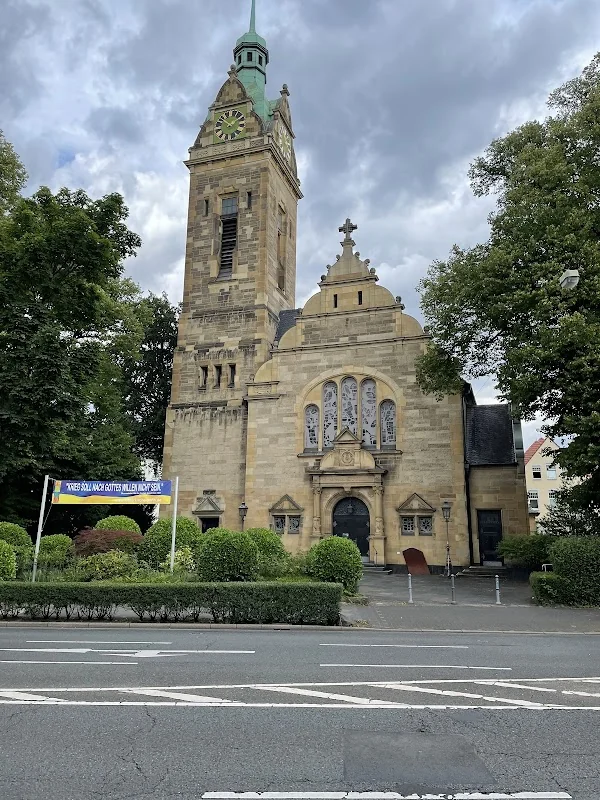
The Lutherkirche Bonn at Reuterstraße 11 is not only a place of worship but also a growing center of the Protestant community in Südstadt and Poppelsdorf. The community describes the Lutherkirche as one of the oldest and most beautiful Protestant churches in Bonn; it turned 100 years old in 2003. Today, it stands for church music, art, open doors, and short distances, as it is located on the edge of Südstadt and Poppelsdorf, close to the Botanical Garden. Those looking for address, directions, parking, photos, or reviews usually want to know quickly whether the church is practically accessible, what atmosphere it has, and whether more takes place here than just the classic Sunday service. The Lutherkirche is a good example of this, as it combines historical significance, community life, and cultural use in a compact space. ([bonn-evangelisch.de](https://bonn-evangelisch.de/inhalt/luther))
Directions, Address, and Parking at Lutherkirche Bonn
According to the community, the Lutherkirche is located at the border between Bonn's Südstadt and Bonn-Poppelsdorf. The official address is Reuterstraße 11, 53115 Bonn. For driving directions, access via Kurfürstenstraße 20 is recommended; there are also dedicated parking spaces for the church community behind the church. This is particularly convenient for visitors, as the church is centrally located but not in the middle of a purely commercial area. Those looking for clear directions can find them very directly and without detours on the official directions page. For people coming with a GPS, the address is clear, and for all who prefer to navigate by landmarks, the proximity to Südstadt, the Botanical Garden, and Poppelsdorfer Allee helps. ([lutherkirche-bonn.ekir.de](https://lutherkirche-bonn.ekir.de/inhalt/anfahrt/))
The Lutherkirche is also easily accessible by public transport. The community mentions the bus stop Wilhelm-Levison-Platz with line 600 as well as the stop Botanischer Garten with lines 601, 602, and 603. Those arriving by train can take tram lines 61 or 62 from Bonn Central Station to the Weberstraße stop in about five minutes and then walk about five minutes. Alternatively, it is approximately a 15-minute walk from the main station along Poppelsdorfer Allee. The community office also points out a barrier-free access to the office on site, which is an important practical note for many visitors. Overall, the accessibility seems to be intentionally designed for good reachability without losing its church character. ([lutherkirche-bonn.ekir.de](https://lutherkirche-bonn.ekir.de/inhalt/anfahrt/))
Service, Baptisms, and Weddings in Bonn-Südstadt
When people search for the Lutherkirche Bonn today, it often revolves first around the service. According to the community, the Sunday service usually takes place every Sunday at 10:30 AM in the Lutherkirche. In terms of liturgical order, the place is clearly focused on community: Communion is usually celebrated on the first Sunday of the month and on major holidays. For families, it is also important that there is a children's service in the community center every third Sunday of the month parallel to the main service. So, anyone planning to attend a service will find a reliable and well-structured form of community life here that appeals to both regular visitors and guests. ([lutherkirche-bonn.ekir.de](https://lutherkirche-bonn.ekir.de/inhalt/gottesdienste/))
Furthermore, the Lutherkirche Bonn is a place for important life events. Baptisms are celebrated on Sundays during the main service because the inclusion in the Christian community is particularly visible there. Baptisms and weddings are naturally free for community members; for weddings of people who do not belong to the community, a small fee may apply for heating, sexton services, and music. Funeral services and burials are also possible in the church in cooperation with a funeral service. This mix of solemn liturgy and human closeness makes the Lutherkirche an important place for many families, couples, and relatives, where not just an appointment takes place, but a life phase is consciously celebrated. ([lutherkirche-bonn.ekir.de](https://lutherkirche-bonn.ekir.de/inhalt/gottesdienste/))
Open Church in Bonn-Südstadt and Poppelsdorf
Another strong search topic is the open church. The Lutherkirche community invites people on weekdays to experience the church as a place of rest, devotion, and prayer. According to the official site, the church is usually open from Tuesday to Friday from 3:00 PM to 6:00 PM. This is not a random additional service but part of the community's self-understanding: God's house has an open door, and that is exactly what the Lutherkirche is meant to show in everyday life. For visitors who are looking for not just a service but a quiet moment, a short stop, or a personal place to pause, this is a real added value. ([lutherkirche-bonn.ekir.de](https://lutherkirche-bonn.ekir.de/inhalt/offene-kirche/))
The Open Church is explicitly supported by volunteers who serve quietly during opening hours or provide information if needed. This is more than mere presence, as it shows a community that not only manages its church but actively keeps it open. Those interested in the atmosphere of the Lutherkirche can thus get a real impression of how the space is used outside of appointments. Especially in a city like Bonn, where many people are on the move, this open form of the church can be very attractive: one can briefly enter, find peace, experience architecture, and feel the special mix of historical church and vibrant community life. That is exactly why the search term open church fits this location so well. ([lutherkirche-bonn.ekir.de](https://lutherkirche-bonn.ekir.de/inhalt/offene-kirche/))
History of Lutherkirche Bonn and its Architectural Profile
The history of Lutherkirche begins long before the construction of the current building. The Protestant community in Bonn was founded in 1816 and referred to itself as a diaspora community with only 211 members at that time. However, during the 19th century, it grew significantly; by 1905, there were already 14,543 members. This created a clear need for space in the area around Poppelsdorf, as worshippers were crowded into very cramped conditions. The official historical account even reports more than 200, sometimes even 300 people in just 96 square meters in the Poppelsdorfer kindergarten. At the same time, 350 families with 1500 relatives were waiting for a church. These numbers make it understandable why the Lutherkirche did not simply emerge as a beautiful building but arose from a real community need. ([lutherkirche-bonn.ekir.de](https://lutherkirche-bonn.ekir.de/inhalt/geschichte-der-lutherkirche/))
The construction history itself is exciting and unusually well documented. Four community members had already purchased a plot of land between Reuterweg and Schloßstraße behind the palace garden at their own expense in 1897 and offered it to the community. The subsequent competition yielded 110 designs that clearly showed the desire for a Protestant preaching church: no strict separation between the nave and chancel, unobstructed views of the pulpit from all seats, and a closeness of the pastor to the congregation. On November 17, 1899, the judges chose the design under the code name Single-Nave by the Berlin architects Johannes Vollmer and Heinrich Jassoy. The foundation stone was laid on April 29, 1901. Today, the Lutherkirche is considered the second oldest Protestant parish church in the Bonn church district and a place where art, culture, and special services have come together for many years. ([lutherkirche-bonn.ekir.de](https://lutherkirche-bonn.ekir.de/inhalt/geschichte-der-lutherkirche/))
In addition to its historical significance, there is a political and social dimension. The Lutherkirche was the site of the festive service before the opening of the first German Bundestag session in Bonn in 1949. The sermon was delivered by Bishop Otto Dibelius. Furthermore, the Bonn office of the Federal President is still located in the area of the Lutherkirche community, and Theodor Heuss and his wife Elly Heuss-Knapp were regular attendees of the service. A small plaque in the second pew commemorates their fixed place. Such references make it clear that the Lutherkirche is not just a local house of worship but also a part of Bonn's post-war history. Therefore, those looking for history, background, and special features will find much more here than just a beautiful church from the early 20th century. ([lutherkirche-bonn.ekir.de](https://lutherkirche-bonn.ekir.de/inhalt/geschichte-der-lutherkirche/))
Music, Concerts, and the Church Program
The Lutherkirche Bonn has also been a musical place for years. The community describes itself as known for its church and brass music and as a meeting place for art and church. This shapes the perception of the location far beyond the Sunday service. For many search queries regarding events, programs, or today's dates, this aspect is crucial, as the Lutherkirche is not only used liturgically but is also regularly open for special musical formats. This creates several levels of use within the community: classical services, choral music, brass work, organ sound, special theme evenings, and concerts with guest ensembles. The official self-presentation clearly shows that music is not an accessory here but a central profile feature. ([bonn-evangelisch.de](https://bonn-evangelisch.de/inhalt/luther))
The music flyer of the community shows the breadth of this work particularly well. Mentioned are the choir, children's choir, youth choir, project choir, and brass choir. The choir rehearses on Mondays, the children's choir also on Mondays, the youth choir on Thursdays, and the large brass choir on Tuesdays. Additionally, there is a project choir for seniors. The flyer also refers to the organ building project of Lutherkirche Bonn e.V.: The organ from 1968 has numerous technical and tonal deficiencies, a repair is no longer worthwhile, and the planned new construction must be financed by the community itself. The total amount is stated to be around 1,100,000 euros. All of this shows how strongly music and church engagement are interconnected. Therefore, those searching for events or programs will find not only individual dates here but a whole musical infrastructure. ([lutherkirche-bonn.ekir.de](https://lutherkirche-bonn.ekir.de/wp-content/uploads/2024/08/Flyer-Musik-2024-2.pdf))
Current and recent programs also emphasize this diversity. The community newsletter announces concerts, benefit formats, and musical services, including choral music for Lent, a benefit concert for a social project, and further evenings with well-known soloists, choirs, and ensemble formations. The community explicitly points out in its materials that more current information on church musical events, special services, and other activities can be found on the website. This is important for visitors because the Lutherkirche thus remains not only a historical building but a place with an ongoing calendar. For those looking for a location in Bonn with a real cultural and musical profile, this is a church that has grown historically and simultaneously appears very lively programmatically. ([lutherkirche-bonn.ekir.de](https://lutherkirche-bonn.ekir.de/wp-content/uploads/2024/08/Flyer-Musik-2024-2.pdf))
Photos, Impressions, and Why Lutherkirche Bonn is So Often Searched
The search terms photos and reviews usually show that people want to get an impression of the atmosphere, space, and effect before a visit. That is exactly why the Lutherkirche Bonn is interesting. The community features a section in the menu Snapshot – Photo impressions, and the official pages show the church as a bright, open space with a historical baptismal font and sunlit nave. Such references are important for visual perception because they immediately convey that this is not an anonymous multipurpose hall but a place with visible history and clear spiritual function. Especially those preparing for a service, a baptism, a wedding, or a concert want to know how the space feels. The Lutherkirche offers a credible combination of historical substance, well-maintained use, and open community life. ([lutherkirche-bonn.ekir.de](https://lutherkirche-bonn.ekir.de/inhalt/auf-einen-blick/))
The general perception also explains why the church is searched for so often. The community itself calls it one of the oldest and most beautiful Protestant churches in Bonn. Added to this are its location in Südstadt and Poppelsdorf, the proximity to the Botanical Garden, regular services, the open church, musical use, and historical references all the way to the first Bundestag in Bonn. Those searching for reviews usually want to read not just stars but understand whether a place is authentic, friendly, and easily accessible. This is where the Lutherkirche scores: it connects orientation in everyday life with cultural depth and spiritual openness. For Bonn visitors, community members, and concert audiences, it is therefore not just a place to look at but one to return to. ([bonn-evangelisch.de](https://bonn-evangelisch.de/inhalt/luther))
Sources:
- Lutherkirche Community Bonn - History of Lutherkirche ([lutherkirche-bonn.ekir.de](https://lutherkirche-bonn.ekir.de/inhalt/geschichte-der-lutherkirche/))
- Lutherkirche Community Bonn - Directions ([lutherkirche-bonn.ekir.de](https://lutherkirche-bonn.ekir.de/inhalt/anfahrt/))
- Lutherkirche Community Bonn - Open Church ([lutherkirche-bonn.ekir.de](https://lutherkirche-bonn.ekir.de/inhalt/offene-kirche/))
- Lutherkirche Community Bonn - Service, Baptisms, and Weddings ([lutherkirche-bonn.ekir.de](https://lutherkirche-bonn.ekir.de/inhalt/gottesdienste/))
- Evangelical Church District Bonn - Evangelical Lutherkirche Community Bonn ([bonn-evangelisch.de](https://bonn-evangelisch.de/inhalt/luther))
- Lutherkirche Bonn - Music Flyer and Organ Project ([lutherkirche-bonn.ekir.de](https://lutherkirche-bonn.ekir.de/wp-content/uploads/2024/08/Flyer-Musik-2024-2.pdf))
- Lutherkirche Bonn - Community Newsletter and Music Program ([lutherkirche-bonn.ekir.de](https://lutherkirche-bonn.ekir.de/wp-content/uploads/2022/08/GB_12_2025_Webversion_Advent-2025_klein.pdf))
Show moreShow less
Lutherkirche Bonn | Directions & Service
The Lutherkirche Bonn at Reuterstraße 11 is not only a place of worship but also a growing center of the Protestant community in Südstadt and Poppelsdorf. The community describes the Lutherkirche as one of the oldest and most beautiful Protestant churches in Bonn; it turned 100 years old in 2003. Today, it stands for church music, art, open doors, and short distances, as it is located on the edge of Südstadt and Poppelsdorf, close to the Botanical Garden. Those looking for address, directions, parking, photos, or reviews usually want to know quickly whether the church is practically accessible, what atmosphere it has, and whether more takes place here than just the classic Sunday service. The Lutherkirche is a good example of this, as it combines historical significance, community life, and cultural use in a compact space. ([bonn-evangelisch.de](https://bonn-evangelisch.de/inhalt/luther))
Directions, Address, and Parking at Lutherkirche Bonn
According to the community, the Lutherkirche is located at the border between Bonn's Südstadt and Bonn-Poppelsdorf. The official address is Reuterstraße 11, 53115 Bonn. For driving directions, access via Kurfürstenstraße 20 is recommended; there are also dedicated parking spaces for the church community behind the church. This is particularly convenient for visitors, as the church is centrally located but not in the middle of a purely commercial area. Those looking for clear directions can find them very directly and without detours on the official directions page. For people coming with a GPS, the address is clear, and for all who prefer to navigate by landmarks, the proximity to Südstadt, the Botanical Garden, and Poppelsdorfer Allee helps. ([lutherkirche-bonn.ekir.de](https://lutherkirche-bonn.ekir.de/inhalt/anfahrt/))
The Lutherkirche is also easily accessible by public transport. The community mentions the bus stop Wilhelm-Levison-Platz with line 600 as well as the stop Botanischer Garten with lines 601, 602, and 603. Those arriving by train can take tram lines 61 or 62 from Bonn Central Station to the Weberstraße stop in about five minutes and then walk about five minutes. Alternatively, it is approximately a 15-minute walk from the main station along Poppelsdorfer Allee. The community office also points out a barrier-free access to the office on site, which is an important practical note for many visitors. Overall, the accessibility seems to be intentionally designed for good reachability without losing its church character. ([lutherkirche-bonn.ekir.de](https://lutherkirche-bonn.ekir.de/inhalt/anfahrt/))
Service, Baptisms, and Weddings in Bonn-Südstadt
When people search for the Lutherkirche Bonn today, it often revolves first around the service. According to the community, the Sunday service usually takes place every Sunday at 10:30 AM in the Lutherkirche. In terms of liturgical order, the place is clearly focused on community: Communion is usually celebrated on the first Sunday of the month and on major holidays. For families, it is also important that there is a children's service in the community center every third Sunday of the month parallel to the main service. So, anyone planning to attend a service will find a reliable and well-structured form of community life here that appeals to both regular visitors and guests. ([lutherkirche-bonn.ekir.de](https://lutherkirche-bonn.ekir.de/inhalt/gottesdienste/))
Furthermore, the Lutherkirche Bonn is a place for important life events. Baptisms are celebrated on Sundays during the main service because the inclusion in the Christian community is particularly visible there. Baptisms and weddings are naturally free for community members; for weddings of people who do not belong to the community, a small fee may apply for heating, sexton services, and music. Funeral services and burials are also possible in the church in cooperation with a funeral service. This mix of solemn liturgy and human closeness makes the Lutherkirche an important place for many families, couples, and relatives, where not just an appointment takes place, but a life phase is consciously celebrated. ([lutherkirche-bonn.ekir.de](https://lutherkirche-bonn.ekir.de/inhalt/gottesdienste/))
Open Church in Bonn-Südstadt and Poppelsdorf
Another strong search topic is the open church. The Lutherkirche community invites people on weekdays to experience the church as a place of rest, devotion, and prayer. According to the official site, the church is usually open from Tuesday to Friday from 3:00 PM to 6:00 PM. This is not a random additional service but part of the community's self-understanding: God's house has an open door, and that is exactly what the Lutherkirche is meant to show in everyday life. For visitors who are looking for not just a service but a quiet moment, a short stop, or a personal place to pause, this is a real added value. ([lutherkirche-bonn.ekir.de](https://lutherkirche-bonn.ekir.de/inhalt/offene-kirche/))
The Open Church is explicitly supported by volunteers who serve quietly during opening hours or provide information if needed. This is more than mere presence, as it shows a community that not only manages its church but actively keeps it open. Those interested in the atmosphere of the Lutherkirche can thus get a real impression of how the space is used outside of appointments. Especially in a city like Bonn, where many people are on the move, this open form of the church can be very attractive: one can briefly enter, find peace, experience architecture, and feel the special mix of historical church and vibrant community life. That is exactly why the search term open church fits this location so well. ([lutherkirche-bonn.ekir.de](https://lutherkirche-bonn.ekir.de/inhalt/offene-kirche/))
History of Lutherkirche Bonn and its Architectural Profile
The history of Lutherkirche begins long before the construction of the current building. The Protestant community in Bonn was founded in 1816 and referred to itself as a diaspora community with only 211 members at that time. However, during the 19th century, it grew significantly; by 1905, there were already 14,543 members. This created a clear need for space in the area around Poppelsdorf, as worshippers were crowded into very cramped conditions. The official historical account even reports more than 200, sometimes even 300 people in just 96 square meters in the Poppelsdorfer kindergarten. At the same time, 350 families with 1500 relatives were waiting for a church. These numbers make it understandable why the Lutherkirche did not simply emerge as a beautiful building but arose from a real community need. ([lutherkirche-bonn.ekir.de](https://lutherkirche-bonn.ekir.de/inhalt/geschichte-der-lutherkirche/))
The construction history itself is exciting and unusually well documented. Four community members had already purchased a plot of land between Reuterweg and Schloßstraße behind the palace garden at their own expense in 1897 and offered it to the community. The subsequent competition yielded 110 designs that clearly showed the desire for a Protestant preaching church: no strict separation between the nave and chancel, unobstructed views of the pulpit from all seats, and a closeness of the pastor to the congregation. On November 17, 1899, the judges chose the design under the code name Single-Nave by the Berlin architects Johannes Vollmer and Heinrich Jassoy. The foundation stone was laid on April 29, 1901. Today, the Lutherkirche is considered the second oldest Protestant parish church in the Bonn church district and a place where art, culture, and special services have come together for many years. ([lutherkirche-bonn.ekir.de](https://lutherkirche-bonn.ekir.de/inhalt/geschichte-der-lutherkirche/))
In addition to its historical significance, there is a political and social dimension. The Lutherkirche was the site of the festive service before the opening of the first German Bundestag session in Bonn in 1949. The sermon was delivered by Bishop Otto Dibelius. Furthermore, the Bonn office of the Federal President is still located in the area of the Lutherkirche community, and Theodor Heuss and his wife Elly Heuss-Knapp were regular attendees of the service. A small plaque in the second pew commemorates their fixed place. Such references make it clear that the Lutherkirche is not just a local house of worship but also a part of Bonn's post-war history. Therefore, those looking for history, background, and special features will find much more here than just a beautiful church from the early 20th century. ([lutherkirche-bonn.ekir.de](https://lutherkirche-bonn.ekir.de/inhalt/geschichte-der-lutherkirche/))
Music, Concerts, and the Church Program
The Lutherkirche Bonn has also been a musical place for years. The community describes itself as known for its church and brass music and as a meeting place for art and church. This shapes the perception of the location far beyond the Sunday service. For many search queries regarding events, programs, or today's dates, this aspect is crucial, as the Lutherkirche is not only used liturgically but is also regularly open for special musical formats. This creates several levels of use within the community: classical services, choral music, brass work, organ sound, special theme evenings, and concerts with guest ensembles. The official self-presentation clearly shows that music is not an accessory here but a central profile feature. ([bonn-evangelisch.de](https://bonn-evangelisch.de/inhalt/luther))
The music flyer of the community shows the breadth of this work particularly well. Mentioned are the choir, children's choir, youth choir, project choir, and brass choir. The choir rehearses on Mondays, the children's choir also on Mondays, the youth choir on Thursdays, and the large brass choir on Tuesdays. Additionally, there is a project choir for seniors. The flyer also refers to the organ building project of Lutherkirche Bonn e.V.: The organ from 1968 has numerous technical and tonal deficiencies, a repair is no longer worthwhile, and the planned new construction must be financed by the community itself. The total amount is stated to be around 1,100,000 euros. All of this shows how strongly music and church engagement are interconnected. Therefore, those searching for events or programs will find not only individual dates here but a whole musical infrastructure. ([lutherkirche-bonn.ekir.de](https://lutherkirche-bonn.ekir.de/wp-content/uploads/2024/08/Flyer-Musik-2024-2.pdf))
Current and recent programs also emphasize this diversity. The community newsletter announces concerts, benefit formats, and musical services, including choral music for Lent, a benefit concert for a social project, and further evenings with well-known soloists, choirs, and ensemble formations. The community explicitly points out in its materials that more current information on church musical events, special services, and other activities can be found on the website. This is important for visitors because the Lutherkirche thus remains not only a historical building but a place with an ongoing calendar. For those looking for a location in Bonn with a real cultural and musical profile, this is a church that has grown historically and simultaneously appears very lively programmatically. ([lutherkirche-bonn.ekir.de](https://lutherkirche-bonn.ekir.de/wp-content/uploads/2024/08/Flyer-Musik-2024-2.pdf))
Photos, Impressions, and Why Lutherkirche Bonn is So Often Searched
The search terms photos and reviews usually show that people want to get an impression of the atmosphere, space, and effect before a visit. That is exactly why the Lutherkirche Bonn is interesting. The community features a section in the menu Snapshot – Photo impressions, and the official pages show the church as a bright, open space with a historical baptismal font and sunlit nave. Such references are important for visual perception because they immediately convey that this is not an anonymous multipurpose hall but a place with visible history and clear spiritual function. Especially those preparing for a service, a baptism, a wedding, or a concert want to know how the space feels. The Lutherkirche offers a credible combination of historical substance, well-maintained use, and open community life. ([lutherkirche-bonn.ekir.de](https://lutherkirche-bonn.ekir.de/inhalt/auf-einen-blick/))
The general perception also explains why the church is searched for so often. The community itself calls it one of the oldest and most beautiful Protestant churches in Bonn. Added to this are its location in Südstadt and Poppelsdorf, the proximity to the Botanical Garden, regular services, the open church, musical use, and historical references all the way to the first Bundestag in Bonn. Those searching for reviews usually want to read not just stars but understand whether a place is authentic, friendly, and easily accessible. This is where the Lutherkirche scores: it connects orientation in everyday life with cultural depth and spiritual openness. For Bonn visitors, community members, and concert audiences, it is therefore not just a place to look at but one to return to. ([bonn-evangelisch.de](https://bonn-evangelisch.de/inhalt/luther))
Sources:
- Lutherkirche Community Bonn - History of Lutherkirche ([lutherkirche-bonn.ekir.de](https://lutherkirche-bonn.ekir.de/inhalt/geschichte-der-lutherkirche/))
- Lutherkirche Community Bonn - Directions ([lutherkirche-bonn.ekir.de](https://lutherkirche-bonn.ekir.de/inhalt/anfahrt/))
- Lutherkirche Community Bonn - Open Church ([lutherkirche-bonn.ekir.de](https://lutherkirche-bonn.ekir.de/inhalt/offene-kirche/))
- Lutherkirche Community Bonn - Service, Baptisms, and Weddings ([lutherkirche-bonn.ekir.de](https://lutherkirche-bonn.ekir.de/inhalt/gottesdienste/))
- Evangelical Church District Bonn - Evangelical Lutherkirche Community Bonn ([bonn-evangelisch.de](https://bonn-evangelisch.de/inhalt/luther))
- Lutherkirche Bonn - Music Flyer and Organ Project ([lutherkirche-bonn.ekir.de](https://lutherkirche-bonn.ekir.de/wp-content/uploads/2024/08/Flyer-Musik-2024-2.pdf))
- Lutherkirche Bonn - Community Newsletter and Music Program ([lutherkirche-bonn.ekir.de](https://lutherkirche-bonn.ekir.de/wp-content/uploads/2022/08/GB_12_2025_Webversion_Advent-2025_klein.pdf))
Lutherkirche Bonn | Directions & Service
The Lutherkirche Bonn at Reuterstraße 11 is not only a place of worship but also a growing center of the Protestant community in Südstadt and Poppelsdorf. The community describes the Lutherkirche as one of the oldest and most beautiful Protestant churches in Bonn; it turned 100 years old in 2003. Today, it stands for church music, art, open doors, and short distances, as it is located on the edge of Südstadt and Poppelsdorf, close to the Botanical Garden. Those looking for address, directions, parking, photos, or reviews usually want to know quickly whether the church is practically accessible, what atmosphere it has, and whether more takes place here than just the classic Sunday service. The Lutherkirche is a good example of this, as it combines historical significance, community life, and cultural use in a compact space. ([bonn-evangelisch.de](https://bonn-evangelisch.de/inhalt/luther))
Directions, Address, and Parking at Lutherkirche Bonn
According to the community, the Lutherkirche is located at the border between Bonn's Südstadt and Bonn-Poppelsdorf. The official address is Reuterstraße 11, 53115 Bonn. For driving directions, access via Kurfürstenstraße 20 is recommended; there are also dedicated parking spaces for the church community behind the church. This is particularly convenient for visitors, as the church is centrally located but not in the middle of a purely commercial area. Those looking for clear directions can find them very directly and without detours on the official directions page. For people coming with a GPS, the address is clear, and for all who prefer to navigate by landmarks, the proximity to Südstadt, the Botanical Garden, and Poppelsdorfer Allee helps. ([lutherkirche-bonn.ekir.de](https://lutherkirche-bonn.ekir.de/inhalt/anfahrt/))
The Lutherkirche is also easily accessible by public transport. The community mentions the bus stop Wilhelm-Levison-Platz with line 600 as well as the stop Botanischer Garten with lines 601, 602, and 603. Those arriving by train can take tram lines 61 or 62 from Bonn Central Station to the Weberstraße stop in about five minutes and then walk about five minutes. Alternatively, it is approximately a 15-minute walk from the main station along Poppelsdorfer Allee. The community office also points out a barrier-free access to the office on site, which is an important practical note for many visitors. Overall, the accessibility seems to be intentionally designed for good reachability without losing its church character. ([lutherkirche-bonn.ekir.de](https://lutherkirche-bonn.ekir.de/inhalt/anfahrt/))
Service, Baptisms, and Weddings in Bonn-Südstadt
When people search for the Lutherkirche Bonn today, it often revolves first around the service. According to the community, the Sunday service usually takes place every Sunday at 10:30 AM in the Lutherkirche. In terms of liturgical order, the place is clearly focused on community: Communion is usually celebrated on the first Sunday of the month and on major holidays. For families, it is also important that there is a children's service in the community center every third Sunday of the month parallel to the main service. So, anyone planning to attend a service will find a reliable and well-structured form of community life here that appeals to both regular visitors and guests. ([lutherkirche-bonn.ekir.de](https://lutherkirche-bonn.ekir.de/inhalt/gottesdienste/))
Furthermore, the Lutherkirche Bonn is a place for important life events. Baptisms are celebrated on Sundays during the main service because the inclusion in the Christian community is particularly visible there. Baptisms and weddings are naturally free for community members; for weddings of people who do not belong to the community, a small fee may apply for heating, sexton services, and music. Funeral services and burials are also possible in the church in cooperation with a funeral service. This mix of solemn liturgy and human closeness makes the Lutherkirche an important place for many families, couples, and relatives, where not just an appointment takes place, but a life phase is consciously celebrated. ([lutherkirche-bonn.ekir.de](https://lutherkirche-bonn.ekir.de/inhalt/gottesdienste/))
Open Church in Bonn-Südstadt and Poppelsdorf
Another strong search topic is the open church. The Lutherkirche community invites people on weekdays to experience the church as a place of rest, devotion, and prayer. According to the official site, the church is usually open from Tuesday to Friday from 3:00 PM to 6:00 PM. This is not a random additional service but part of the community's self-understanding: God's house has an open door, and that is exactly what the Lutherkirche is meant to show in everyday life. For visitors who are looking for not just a service but a quiet moment, a short stop, or a personal place to pause, this is a real added value. ([lutherkirche-bonn.ekir.de](https://lutherkirche-bonn.ekir.de/inhalt/offene-kirche/))
The Open Church is explicitly supported by volunteers who serve quietly during opening hours or provide information if needed. This is more than mere presence, as it shows a community that not only manages its church but actively keeps it open. Those interested in the atmosphere of the Lutherkirche can thus get a real impression of how the space is used outside of appointments. Especially in a city like Bonn, where many people are on the move, this open form of the church can be very attractive: one can briefly enter, find peace, experience architecture, and feel the special mix of historical church and vibrant community life. That is exactly why the search term open church fits this location so well. ([lutherkirche-bonn.ekir.de](https://lutherkirche-bonn.ekir.de/inhalt/offene-kirche/))
History of Lutherkirche Bonn and its Architectural Profile
The history of Lutherkirche begins long before the construction of the current building. The Protestant community in Bonn was founded in 1816 and referred to itself as a diaspora community with only 211 members at that time. However, during the 19th century, it grew significantly; by 1905, there were already 14,543 members. This created a clear need for space in the area around Poppelsdorf, as worshippers were crowded into very cramped conditions. The official historical account even reports more than 200, sometimes even 300 people in just 96 square meters in the Poppelsdorfer kindergarten. At the same time, 350 families with 1500 relatives were waiting for a church. These numbers make it understandable why the Lutherkirche did not simply emerge as a beautiful building but arose from a real community need. ([lutherkirche-bonn.ekir.de](https://lutherkirche-bonn.ekir.de/inhalt/geschichte-der-lutherkirche/))
The construction history itself is exciting and unusually well documented. Four community members had already purchased a plot of land between Reuterweg and Schloßstraße behind the palace garden at their own expense in 1897 and offered it to the community. The subsequent competition yielded 110 designs that clearly showed the desire for a Protestant preaching church: no strict separation between the nave and chancel, unobstructed views of the pulpit from all seats, and a closeness of the pastor to the congregation. On November 17, 1899, the judges chose the design under the code name Single-Nave by the Berlin architects Johannes Vollmer and Heinrich Jassoy. The foundation stone was laid on April 29, 1901. Today, the Lutherkirche is considered the second oldest Protestant parish church in the Bonn church district and a place where art, culture, and special services have come together for many years. ([lutherkirche-bonn.ekir.de](https://lutherkirche-bonn.ekir.de/inhalt/geschichte-der-lutherkirche/))
In addition to its historical significance, there is a political and social dimension. The Lutherkirche was the site of the festive service before the opening of the first German Bundestag session in Bonn in 1949. The sermon was delivered by Bishop Otto Dibelius. Furthermore, the Bonn office of the Federal President is still located in the area of the Lutherkirche community, and Theodor Heuss and his wife Elly Heuss-Knapp were regular attendees of the service. A small plaque in the second pew commemorates their fixed place. Such references make it clear that the Lutherkirche is not just a local house of worship but also a part of Bonn's post-war history. Therefore, those looking for history, background, and special features will find much more here than just a beautiful church from the early 20th century. ([lutherkirche-bonn.ekir.de](https://lutherkirche-bonn.ekir.de/inhalt/geschichte-der-lutherkirche/))
Music, Concerts, and the Church Program
The Lutherkirche Bonn has also been a musical place for years. The community describes itself as known for its church and brass music and as a meeting place for art and church. This shapes the perception of the location far beyond the Sunday service. For many search queries regarding events, programs, or today's dates, this aspect is crucial, as the Lutherkirche is not only used liturgically but is also regularly open for special musical formats. This creates several levels of use within the community: classical services, choral music, brass work, organ sound, special theme evenings, and concerts with guest ensembles. The official self-presentation clearly shows that music is not an accessory here but a central profile feature. ([bonn-evangelisch.de](https://bonn-evangelisch.de/inhalt/luther))
The music flyer of the community shows the breadth of this work particularly well. Mentioned are the choir, children's choir, youth choir, project choir, and brass choir. The choir rehearses on Mondays, the children's choir also on Mondays, the youth choir on Thursdays, and the large brass choir on Tuesdays. Additionally, there is a project choir for seniors. The flyer also refers to the organ building project of Lutherkirche Bonn e.V.: The organ from 1968 has numerous technical and tonal deficiencies, a repair is no longer worthwhile, and the planned new construction must be financed by the community itself. The total amount is stated to be around 1,100,000 euros. All of this shows how strongly music and church engagement are interconnected. Therefore, those searching for events or programs will find not only individual dates here but a whole musical infrastructure. ([lutherkirche-bonn.ekir.de](https://lutherkirche-bonn.ekir.de/wp-content/uploads/2024/08/Flyer-Musik-2024-2.pdf))
Current and recent programs also emphasize this diversity. The community newsletter announces concerts, benefit formats, and musical services, including choral music for Lent, a benefit concert for a social project, and further evenings with well-known soloists, choirs, and ensemble formations. The community explicitly points out in its materials that more current information on church musical events, special services, and other activities can be found on the website. This is important for visitors because the Lutherkirche thus remains not only a historical building but a place with an ongoing calendar. For those looking for a location in Bonn with a real cultural and musical profile, this is a church that has grown historically and simultaneously appears very lively programmatically. ([lutherkirche-bonn.ekir.de](https://lutherkirche-bonn.ekir.de/wp-content/uploads/2024/08/Flyer-Musik-2024-2.pdf))
Photos, Impressions, and Why Lutherkirche Bonn is So Often Searched
The search terms photos and reviews usually show that people want to get an impression of the atmosphere, space, and effect before a visit. That is exactly why the Lutherkirche Bonn is interesting. The community features a section in the menu Snapshot – Photo impressions, and the official pages show the church as a bright, open space with a historical baptismal font and sunlit nave. Such references are important for visual perception because they immediately convey that this is not an anonymous multipurpose hall but a place with visible history and clear spiritual function. Especially those preparing for a service, a baptism, a wedding, or a concert want to know how the space feels. The Lutherkirche offers a credible combination of historical substance, well-maintained use, and open community life. ([lutherkirche-bonn.ekir.de](https://lutherkirche-bonn.ekir.de/inhalt/auf-einen-blick/))
The general perception also explains why the church is searched for so often. The community itself calls it one of the oldest and most beautiful Protestant churches in Bonn. Added to this are its location in Südstadt and Poppelsdorf, the proximity to the Botanical Garden, regular services, the open church, musical use, and historical references all the way to the first Bundestag in Bonn. Those searching for reviews usually want to read not just stars but understand whether a place is authentic, friendly, and easily accessible. This is where the Lutherkirche scores: it connects orientation in everyday life with cultural depth and spiritual openness. For Bonn visitors, community members, and concert audiences, it is therefore not just a place to look at but one to return to. ([bonn-evangelisch.de](https://bonn-evangelisch.de/inhalt/luther))
Sources:
- Lutherkirche Community Bonn - History of Lutherkirche ([lutherkirche-bonn.ekir.de](https://lutherkirche-bonn.ekir.de/inhalt/geschichte-der-lutherkirche/))
- Lutherkirche Community Bonn - Directions ([lutherkirche-bonn.ekir.de](https://lutherkirche-bonn.ekir.de/inhalt/anfahrt/))
- Lutherkirche Community Bonn - Open Church ([lutherkirche-bonn.ekir.de](https://lutherkirche-bonn.ekir.de/inhalt/offene-kirche/))
- Lutherkirche Community Bonn - Service, Baptisms, and Weddings ([lutherkirche-bonn.ekir.de](https://lutherkirche-bonn.ekir.de/inhalt/gottesdienste/))
- Evangelical Church District Bonn - Evangelical Lutherkirche Community Bonn ([bonn-evangelisch.de](https://bonn-evangelisch.de/inhalt/luther))
- Lutherkirche Bonn - Music Flyer and Organ Project ([lutherkirche-bonn.ekir.de](https://lutherkirche-bonn.ekir.de/wp-content/uploads/2024/08/Flyer-Musik-2024-2.pdf))
- Lutherkirche Bonn - Community Newsletter and Music Program ([lutherkirche-bonn.ekir.de](https://lutherkirche-bonn.ekir.de/wp-content/uploads/2022/08/GB_12_2025_Webversion_Advent-2025_klein.pdf))
Upcoming Events
No events found
Frequently Asked Questions
Reviews
Bernd Pelz
13. November 2020
Consecrated in 1903, the Lutherkirche was the only Protestant church in Bonn that wasn't damaged in World War II. However, we were wrong to believe that during a pandemic, the Lutherkirche would be open for prayer.
E K
26. July 2020
A beautiful church building
Gertrud Kummerfeldt
30. June 2025
Beautiful
Rasmus Krigström
12. December 2021
Magical acoustics!
Michael Giering
31. July 2024
Nice little church. We were there for a child's baptism. Very long service that sometimes veered into political topics. The baptism only took place at the end of the service, and the child became increasingly restless.