
Trierer Str. 24, Bonn
Trierer Str. 24, 53115 Bonn, Germany
KULTURBUNKER Bonn | Exhibition & Tickets
The KULTURBUNKER Bonn is not an ordinary exhibition venue, but a building with a double identity: a historical air raid shelter and today's cultural space in Bonn-Poppelsdorf. At Trierer Straße 24, the massive architecture from World War II meets a program that connects young art, mediation, and an open view of the present and history. The official website describes the place as a space for engagement, accessible to everyone. Since its reopening in May 2025, the bunker has been regularly accessible with exhibitions, guided tours, and scheduled events, and from February 1, 2026, fixed weekend opening hours will apply. Those looking for an unusual destination with depth in Bonn will find a place here where the past does not become museum-like but enters into a lively dialogue with contemporary art. ([kulturbunker-bonn.de](https://kulturbunker-bonn.de/))
Exhibition, Program, and Current Visits
At the center of the KULTURBUNKER is currently the exhibition, which is announced on the homepage of the official website as a new chapter featuring young artistic positions. Works by art students and emerging artists are presented, addressing very different perspectives on the present, identity, and perception. The website emphasizes not only the works themselves but also the idea behind them: art should not be shown in isolation but enter into a dialogue with the historical site. This is precisely where the special effect of the house arises. The bunker’s rooms are used as an exhibition space, allowing visitors to experience firsthand how a former shelter transforms into a space for observation, discussion, and reflection. The project is supported by the student art market and the Dr. Hans Riegel Foundation, which aims to provide visibility for young artists. ([kulturbunker-bonn.de](https://kulturbunker-bonn.de/))
For visitor planning, it is important to note that the KULTURBUNKER does not function as a classic permanent museum with continuous daily operations but as a curated cultural venue with clear visiting windows. The homepage explains that the KULTURBUNKER will be open from February 1, 2026, on Saturdays from 2:00 PM to 5:00 PM and Sundays from 12:00 PM to 6:00 PM; guided tours take place on the hour. This creates a visiting format that stages the place not only as a display area but also as a guided experiential space. Visitors therefore gain access not only to individual works but also to the stories of the house, the significance of bunker architecture, and the current mediation work. This is particularly important for anyone searching for “kulturbunker bonn program,” “kulturbunker bonn exhibition,” or “kulturbunker bonn events”: the program is closely linked to the exhibition and accompanying dates and is communicated in a bundled manner through the official website. ([kulturbunker-bonn.de](https://kulturbunker-bonn.de/))
The art exhibition page adds that the new show features works by young artists addressing questions around self-image, comparison, juxtaposition, and new living spaces. This makes it clear that the program is not only aesthetic but also content-driven, focusing on the present and discussion. Those visiting the KULTURBUNKER experience not a random collection of images but a consciously curated selection that takes the historical space seriously as a participant. This mix of student perspective, public accessibility, and historical environment makes the place an unusually dense cultural address in Bonn. At the same time, it explains why search terms related to “exhibition,” “program,” and “tours” are so strongly associated with this venue: visitor interest is directed not only at the building but also at the context in which the art is presented here. ([kulturbunker-bonn.de](https://kulturbunker-bonn.de/kunstausstellung))
Address, Trierer Straße, and Directions to Bonn-Poppelsdorf
The exact address is Trierer Straße 24, 53115 Bonn, in the district of Poppelsdorf. This places the KULTURBUNKER in an area that is easily found by Bonn residents and stands out due to its historical building substance. The venue page of the Beethovenfest confirms the address and adds specific travel tips: by car, one approaches from the A565 via the Bonn Poppelsdorf exit. By public transport, the stop Bonn im Wingert is mentioned, accessible via bus lines 601 and 632. This information is particularly useful for visitors specifically searching for “kulturbunker bonn address” or “kulturbunker bonn trierer straße,” as it shows that the location is clearly anchored in the district and can be easily integrated into a visit to Bonn. The official site itself emphasizes the accessibility of the building, and the venue page of the Beethovenfest also points out that the location is barrier-free for wheelchair users. ([beethovenfest.de](https://www.beethovenfest.de/en/locations/kulturbunker/93))
Regarding parking, it is worth taking a closer look at the sources: the venue page precisely states the route by car and the public transport alternative, but does not highlight any dedicated parking spaces. For practical planning, this means: those arriving by car should not rely on a specifically designated parking space at the house but should plan the surrounding area in Bonn-Poppelsdorf in advance and check the current traffic situation before visiting. For search queries like “kulturbunker bonn parking,” the most sensible, fact-based answer is that the location is primarily accessed via the A565 and the bus stop Bonn im Wingert. Especially because the KULTURBUNKER is a historical building in a developed district, traveling by bus or train is often the more relaxing option. Those who wish to combine the exhibition with a walk through Poppelsdorf benefit additionally from the fact that the location is compactly reachable and can be easily combined with other destinations in Bonn. ([beethovenfest.de](https://www.beethovenfest.de/en/locations/kulturbunker/93))
For the question of the location in relation to Bonn itself, the address is an important anchor. The term “Poppelsdorf” stands not only for a district but also for the history of the building, which has been visibly present in the urban space for decades. When someone searches for “kulturbunker bonn poppelsdorf,” it usually concerns this combination of district, history, and current cultural offerings. The official information is sufficient to clearly place the location: those arriving by bus or car find clear orientation, and those traveling by train or on foot can plan their visit as part of a day in Bonn. The address itself is therefore more than just a line in a direction; it is the starting point for the entire visitor experience. ([beethovenfest.de](https://www.beethovenfest.de/en/locations/kulturbunker/93))
Book Tickets, Opening Hours, and Tours
The website clearly points to a dedicated ticket area, and the booking platform ticket.io lists the KULTURBUNKER Bonn as an event and ticket venue. This is particularly important for the search intent “kulturbunker bonn tickets,” as visitors can plan their participation directly online. The official site also makes it clear that the visit is not random but intended as an orderly access to the exhibition and mediation space. The guided tour on the hour creates structure and makes it easy to connect the visit with travel, breaks, and further programs. For a place like the KULTURBUNKER, this is particularly sensible: the rooms themselves are part of the experience, and the mediation helps to better understand the context of the historical site, the artworks, and the current projects. The current exhibition is also explicitly described on the art exhibition page as part of an open, student art concept. So for those looking for a place where one does not just visit an exhibition but thinks about history, architecture, and the present together, this is exactly what they get. ([kulturbunker-bonn.de](https://kulturbunker-bonn.de/))
Particularly helpful is the clear weekend structure: on Saturdays, the KULTURBUNKER is open in the afternoon, on Sundays in the midday and afternoon, and tours are offered on the hour. This planning makes the place calculable for families, culture enthusiasts, and spontaneous visitors to Bonn alike. At the same time, it fits the character of the house, as the KULTURBUNKER does not want to be visited en masse at once but rather function as an intense place with time for perception and conversation. Booking through the ticket area supports exactly this model. Those searching for “kulturbunker bonn opening hours” therefore receive a concrete, reliable answer and can directly connect the visit with their own daily planning. Practically, this means: first choose a time slot, then coordinate travel, and leave enough space for the tour. ([kulturbunker-bonn.de](https://kulturbunker-bonn.de/))
The art exhibition page also shows that the place is more than just a temporary showcase. The presentation is understood as a mediation space where young artists can make their themes and perspectives visible. This means for guests: a visit to the KULTURBUNKER is not just an appointment but a curated experience with a content focus. Those who want to seriously engage with the exhibition should therefore pay attention not only to the ticket but also to the guidance information. The combination of hourly tours and regular opening hours is ideal for all who prefer a clear structure while also opting for an extraordinary location. In SEO terms, this information covers exactly the search terms related to “tickets,” “opening hours,” “tours,” and “program.” ([kulturbunker-bonn.de](https://kulturbunker-bonn.de/kunstausstellung))
History of the Air Raid Shelter in Bonn-Poppelsdorf
The historical dimension of the KULTURBUNKER is at least as impressive as its current cultural purpose. The bunker was built during World War II as an air raid shelter and was intended to provide protection for hundreds of people at that time. According to official history, construction of the high bunker at Trierer Straße 24 began in 1941, after Bonn had already been included in the list of first-class air raid shelters in 1940. The building was designed as a three-story high bunker with a total area of 850 square meters and once had 105 sleeping places and 724 seats. These numbers illustrate that it is not a small annex but a large, urbanly relevant protective facility. The massive form is still visible today and makes the memory of wartime life in the urban space immediately tangible. At the same time, it is precisely this architectural presence that is the reason why the place has such a strong impact today: one can see the building's history before even entering the first room. ([kulturbunker-bonn.de](https://kulturbunker-bonn.de/geschichte-bunker))
The architectural details make the historical logic of the house even more tangible. The walls of the shelter are up to 4.50 meters thick, and the concrete ceilings are up to 1.40 meters thick. Thus, the bunker belongs to the particularly massive testimonies of its kind. Additionally, the building features two underground tunnel rooms at the back, which lie about 20 meters deep and extend 44 meters into the hillside of Kreuzberg. Strictly speaking, it is therefore a mixed form of high and tunnel bunker, which makes the building particularly distinctive in Bonn. After the war, the bunker lost its original function and was used for many years as a student dormitory. This subsequent use is crucial for the history of the house, as it shows how a place of threat gradually transformed into a space for everyday life and residence before later regaining a cultural role. From the perspective of urban history, the KULTURBUNKER is thus not only an exhibition venue but a monument to change, adaptation, and reclamation. ([kulturbunker-bonn.de](https://kulturbunker-bonn.de/geschichte-bunker))
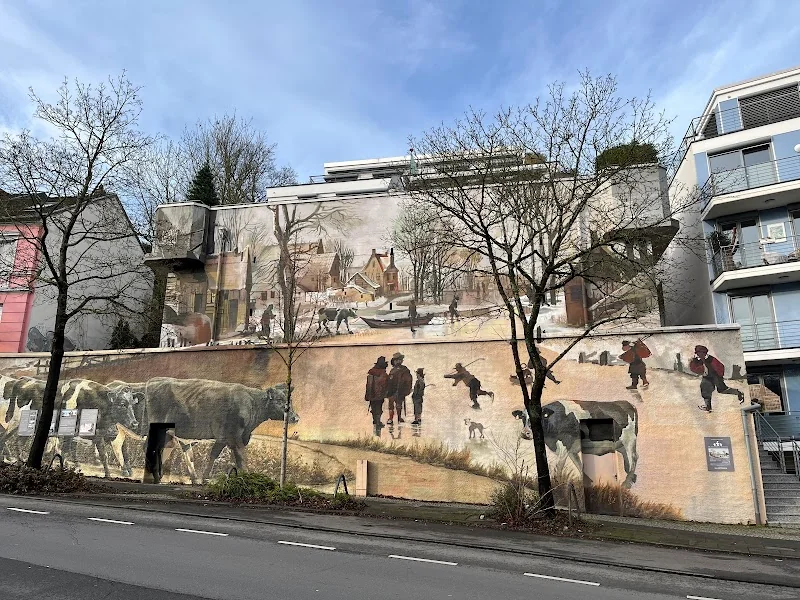
After the end of student use, the bunker stood empty for a long time. According to official history, several attempts at use failed during the conception or approval phase before the initiative of the Dr. Hans Riegel Foundation finally reopened the site. The foundation wanted to bring the high bunker back into the public eye as an art and cultural space for students, and this is precisely how the current concept developed. The website also describes the conceptual idea of WALLS OF VISION, a project series that transfers historical art into the present and makes it freely accessible. For the KULTURBUNKER Bonn, this connection is particularly fitting: a massive war building is not suppressed but consciously revalued by bringing together young art, mediation, and public accessibility. This makes the place an example of how urban history can not only be remembered but also productively rethought. Therefore, those searching for “kulturbunker bonn high bunker poppelsdorf” do not encounter a mere building designation but a story of repurposing, public engagement, and cultural reinterpretation. ([kulturbunker-bonn.de](https://kulturbunker-bonn.de/))
This historical depth makes the place attractive for visitors interested in monument preservation, urban history, and memory culture. The official website emphasizes that the KULTURBUNKER should be a space for engagement, where history is not concluded but continues to be negotiated. This aligns with the many search queries that target not only “exhibition” or “tickets” but also “history,” “high bunker,” and “poppelsdorf.” Because at its core, the place answers all these questions simultaneously: What kind of building was it, why was it built, how was it used, and why is it relevant today? This multifaceted nature makes it a special place in the Bonn cultural offering. ([kulturbunker-bonn.de](https://kulturbunker-bonn.de/))
Art, Architecture, and Accessibility in the Cultural Space
The special charm of the KULTURBUNKER lies in the connection between hard architecture and sensitive art presentation. The thick concrete structure, the low sight lines, and the historical character create an atmosphere that clearly differs from neutral white cube spaces. This is precisely why the place works so well for exhibitions with student positions: the art does not have to assert itself against the space but enters into a dialogue with it. The official texts repeatedly emphasize that past and present meet here. Additionally, the art exhibition page refers to drawings of anatomy on the interior walls of the bunker, which make the current use seem particularly fitting. This shows that even the interior spaces carry historical traces and do not merely serve as a bare shell. Thus, those visiting the KULTURBUNKER experience not only art but also materiality, weight, texture, and memory as part of the overall impression. ([kulturbunker-bonn.de](https://kulturbunker-bonn.de/))
Accessibility is also ensured: the venue page of the Beethovenfest designates the KULTURBUNKER as barrier-free for wheelchair users. This is remarkable for a historical building and a significant plus for many visitors. At the same time, the clear scheduling with weekend opening hours and guided tours on the hour supports easy planning. Those preparing for the visit should check the current dates in advance, plan a suitable time slot booking, and allow enough time for the tour. Especially at a place with so much historical and architectural density, it is worthwhile not just to rush through but to let the atmosphere take effect. The KULTURBUNKER Bonn is thus suitable for art-interested guests as well as for people looking for an extraordinary memorial site in Bonn. And because the house is located in the vicinity of Poppelsdorf, the visit can be easily combined with a city walk, a café visit, or other cultural stations in Bonn. ([beethovenfest.de](https://www.beethovenfest.de/en/locations/kulturbunker/93))
The official project idea behind the place is also part of its uniqueness. The Dr. Hans Riegel Foundation describes that art and culture should not be reserved for a small circle but conveyed to many people. This thought also shapes the work at the KULTURBUNKER, where young perspectives, public accessibility, and mediation come together. For visitors, this means: the place is not elitist but inviting; not distant but discursive. This is precisely why it feels modern, even though it is historical. ([kulturbunker-bonn.de](https://kulturbunker-bonn.de/))
What Makes KULTURBUNKER Bonn Special
The KULTURBUNKER Bonn is interesting because it serves multiple levels simultaneously: memory culture, exhibition, mediation, and urban history. The official website states that the place invites engagement and that past and present meet. This makes it so exciting for visitors: one does not just go to an exhibition but enters a historical building that has completely changed its function without denying its origins. For cultural work, this is particularly valuable because young art does not hang in a neutral space but meets architecture that tells its own history. The Dr. Hans Riegel Foundation also aims to make art publicly accessible and inspire people for visual arts; in the WALLS OF VISION project, this idea is transferred to the space. Thus, a place is created that not only shows images but also poses questions: How do we remember, how do we tell history, and how can a seemingly heavy building become open and inviting? ([kulturbunker-bonn.de](https://kulturbunker-bonn.de/))
From an SEO perspective, this profile fits excellently with typical search queries around “exhibition,” “program,” “history,” and “address.” Those searching for KULTURBUNKER Bonn usually do not want to find a generic event hall but a specific destination with character, clear opening hours, and real background. The official pages deliver exactly that: a comprehensible visiting window on weekends, an hourly tour, a clearly named location, and a well-told history. This makes the place suitable for both culture-interested first-time visitors and for people specifically looking for an unusual exhibition venue in Bonn. The KULTURBUNKER thus combines multiple user expectations in a single location and is precisely why it is a strong topic for local search engine optimization. ([kulturbunker-bonn.de](https://kulturbunker-bonn.de/))
Practical Tips for the Visit and the Best Search Terms
Those who want to visit the KULTURBUNKER Bonn meaningfully should think separately about the search intentions behind terms like “address,” “opening hours,” “tickets,” “exhibition,” and “directions.” The address is clear, and the travel directions are well described, but the opening hours are intentionally concentrated on weekends, and the tours take place hourly. This makes it sensible not to plan the visit spontaneously but to connect it with a quick look at the official site. Even if no dedicated parking spaces are highlighted on the venue page, the approach via the A565 or the bus stop Bonn im Wingert is easy to understand. Those relying on public transport do not have to worry about the historical building and its surroundings but can go directly to the actual experience: art, history, and spatial effect. This is particularly helpful for seekers entering “kulturbunker bonn directions” or “kulturbunker bonn parking,” as the official facts provide clear, sober orientation. ([beethovenfest.de](https://www.beethovenfest.de/en/locations/kulturbunker/93))
In the end, the KULTURBUNKER Bonn is more than just an address in Poppelsdorf. It is a place where a former military building is charged with cultural significance without downplaying its history. This contrast makes it so interesting: the severity of the architecture, the openness of the cultural program, the historical burden, and the lightness of young art. For visitors, this means a rare mix of information and atmosphere, urban history, and current exhibition practice. Those wondering if the trip is worth it receive a clear answer from the sources: Yes, especially if one is looking for places that do not just show but tell. The KULTURBUNKER Bonn tells of protection and war, of student life, of vacancy and revitalization, and of a present that does not abandon historical spaces but reuses them. This is precisely why it is a strong destination for all who want to not only see Bonn but understand it. ([kulturbunker-bonn.de](https://kulturbunker-bonn.de/))
Sources:
- Kulturbunker Bonn - Official Website ([kulturbunker-bonn.de](https://kulturbunker-bonn.de/))
- Kulturbunker Bonn - History Bunker ([kulturbunker-bonn.de](https://kulturbunker-bonn.de/geschichte-bunker))
- Kulturbunker Bonn - Art Exhibition ([kulturbunker-bonn.de](https://kulturbunker-bonn.de/kunstausstellung))
- Beethovenfest - Kulturbunker Venue Page ([beethovenfest.de](https://www.beethovenfest.de/en/locations/kulturbunker/93))
- Kulturbunker Bonn - Ticket Portal ([kulturbunker-bonn.ticket.io](https://kulturbunker-bonn.ticket.io/?lang=de&utm_source=openai))
Show moreShow less
KULTURBUNKER Bonn | Exhibition & Tickets
The KULTURBUNKER Bonn is not an ordinary exhibition venue, but a building with a double identity: a historical air raid shelter and today's cultural space in Bonn-Poppelsdorf. At Trierer Straße 24, the massive architecture from World War II meets a program that connects young art, mediation, and an open view of the present and history. The official website describes the place as a space for engagement, accessible to everyone. Since its reopening in May 2025, the bunker has been regularly accessible with exhibitions, guided tours, and scheduled events, and from February 1, 2026, fixed weekend opening hours will apply. Those looking for an unusual destination with depth in Bonn will find a place here where the past does not become museum-like but enters into a lively dialogue with contemporary art. ([kulturbunker-bonn.de](https://kulturbunker-bonn.de/))
Exhibition, Program, and Current Visits
At the center of the KULTURBUNKER is currently the exhibition, which is announced on the homepage of the official website as a new chapter featuring young artistic positions. Works by art students and emerging artists are presented, addressing very different perspectives on the present, identity, and perception. The website emphasizes not only the works themselves but also the idea behind them: art should not be shown in isolation but enter into a dialogue with the historical site. This is precisely where the special effect of the house arises. The bunker’s rooms are used as an exhibition space, allowing visitors to experience firsthand how a former shelter transforms into a space for observation, discussion, and reflection. The project is supported by the student art market and the Dr. Hans Riegel Foundation, which aims to provide visibility for young artists. ([kulturbunker-bonn.de](https://kulturbunker-bonn.de/))
For visitor planning, it is important to note that the KULTURBUNKER does not function as a classic permanent museum with continuous daily operations but as a curated cultural venue with clear visiting windows. The homepage explains that the KULTURBUNKER will be open from February 1, 2026, on Saturdays from 2:00 PM to 5:00 PM and Sundays from 12:00 PM to 6:00 PM; guided tours take place on the hour. This creates a visiting format that stages the place not only as a display area but also as a guided experiential space. Visitors therefore gain access not only to individual works but also to the stories of the house, the significance of bunker architecture, and the current mediation work. This is particularly important for anyone searching for “kulturbunker bonn program,” “kulturbunker bonn exhibition,” or “kulturbunker bonn events”: the program is closely linked to the exhibition and accompanying dates and is communicated in a bundled manner through the official website. ([kulturbunker-bonn.de](https://kulturbunker-bonn.de/))
The art exhibition page adds that the new show features works by young artists addressing questions around self-image, comparison, juxtaposition, and new living spaces. This makes it clear that the program is not only aesthetic but also content-driven, focusing on the present and discussion. Those visiting the KULTURBUNKER experience not a random collection of images but a consciously curated selection that takes the historical space seriously as a participant. This mix of student perspective, public accessibility, and historical environment makes the place an unusually dense cultural address in Bonn. At the same time, it explains why search terms related to “exhibition,” “program,” and “tours” are so strongly associated with this venue: visitor interest is directed not only at the building but also at the context in which the art is presented here. ([kulturbunker-bonn.de](https://kulturbunker-bonn.de/kunstausstellung))
Address, Trierer Straße, and Directions to Bonn-Poppelsdorf
The exact address is Trierer Straße 24, 53115 Bonn, in the district of Poppelsdorf. This places the KULTURBUNKER in an area that is easily found by Bonn residents and stands out due to its historical building substance. The venue page of the Beethovenfest confirms the address and adds specific travel tips: by car, one approaches from the A565 via the Bonn Poppelsdorf exit. By public transport, the stop Bonn im Wingert is mentioned, accessible via bus lines 601 and 632. This information is particularly useful for visitors specifically searching for “kulturbunker bonn address” or “kulturbunker bonn trierer straße,” as it shows that the location is clearly anchored in the district and can be easily integrated into a visit to Bonn. The official site itself emphasizes the accessibility of the building, and the venue page of the Beethovenfest also points out that the location is barrier-free for wheelchair users. ([beethovenfest.de](https://www.beethovenfest.de/en/locations/kulturbunker/93))
Regarding parking, it is worth taking a closer look at the sources: the venue page precisely states the route by car and the public transport alternative, but does not highlight any dedicated parking spaces. For practical planning, this means: those arriving by car should not rely on a specifically designated parking space at the house but should plan the surrounding area in Bonn-Poppelsdorf in advance and check the current traffic situation before visiting. For search queries like “kulturbunker bonn parking,” the most sensible, fact-based answer is that the location is primarily accessed via the A565 and the bus stop Bonn im Wingert. Especially because the KULTURBUNKER is a historical building in a developed district, traveling by bus or train is often the more relaxing option. Those who wish to combine the exhibition with a walk through Poppelsdorf benefit additionally from the fact that the location is compactly reachable and can be easily combined with other destinations in Bonn. ([beethovenfest.de](https://www.beethovenfest.de/en/locations/kulturbunker/93))
For the question of the location in relation to Bonn itself, the address is an important anchor. The term “Poppelsdorf” stands not only for a district but also for the history of the building, which has been visibly present in the urban space for decades. When someone searches for “kulturbunker bonn poppelsdorf,” it usually concerns this combination of district, history, and current cultural offerings. The official information is sufficient to clearly place the location: those arriving by bus or car find clear orientation, and those traveling by train or on foot can plan their visit as part of a day in Bonn. The address itself is therefore more than just a line in a direction; it is the starting point for the entire visitor experience. ([beethovenfest.de](https://www.beethovenfest.de/en/locations/kulturbunker/93))
Book Tickets, Opening Hours, and Tours
The website clearly points to a dedicated ticket area, and the booking platform ticket.io lists the KULTURBUNKER Bonn as an event and ticket venue. This is particularly important for the search intent “kulturbunker bonn tickets,” as visitors can plan their participation directly online. The official site also makes it clear that the visit is not random but intended as an orderly access to the exhibition and mediation space. The guided tour on the hour creates structure and makes it easy to connect the visit with travel, breaks, and further programs. For a place like the KULTURBUNKER, this is particularly sensible: the rooms themselves are part of the experience, and the mediation helps to better understand the context of the historical site, the artworks, and the current projects. The current exhibition is also explicitly described on the art exhibition page as part of an open, student art concept. So for those looking for a place where one does not just visit an exhibition but thinks about history, architecture, and the present together, this is exactly what they get. ([kulturbunker-bonn.de](https://kulturbunker-bonn.de/))
Particularly helpful is the clear weekend structure: on Saturdays, the KULTURBUNKER is open in the afternoon, on Sundays in the midday and afternoon, and tours are offered on the hour. This planning makes the place calculable for families, culture enthusiasts, and spontaneous visitors to Bonn alike. At the same time, it fits the character of the house, as the KULTURBUNKER does not want to be visited en masse at once but rather function as an intense place with time for perception and conversation. Booking through the ticket area supports exactly this model. Those searching for “kulturbunker bonn opening hours” therefore receive a concrete, reliable answer and can directly connect the visit with their own daily planning. Practically, this means: first choose a time slot, then coordinate travel, and leave enough space for the tour. ([kulturbunker-bonn.de](https://kulturbunker-bonn.de/))
The art exhibition page also shows that the place is more than just a temporary showcase. The presentation is understood as a mediation space where young artists can make their themes and perspectives visible. This means for guests: a visit to the KULTURBUNKER is not just an appointment but a curated experience with a content focus. Those who want to seriously engage with the exhibition should therefore pay attention not only to the ticket but also to the guidance information. The combination of hourly tours and regular opening hours is ideal for all who prefer a clear structure while also opting for an extraordinary location. In SEO terms, this information covers exactly the search terms related to “tickets,” “opening hours,” “tours,” and “program.” ([kulturbunker-bonn.de](https://kulturbunker-bonn.de/kunstausstellung))
History of the Air Raid Shelter in Bonn-Poppelsdorf
The historical dimension of the KULTURBUNKER is at least as impressive as its current cultural purpose. The bunker was built during World War II as an air raid shelter and was intended to provide protection for hundreds of people at that time. According to official history, construction of the high bunker at Trierer Straße 24 began in 1941, after Bonn had already been included in the list of first-class air raid shelters in 1940. The building was designed as a three-story high bunker with a total area of 850 square meters and once had 105 sleeping places and 724 seats. These numbers illustrate that it is not a small annex but a large, urbanly relevant protective facility. The massive form is still visible today and makes the memory of wartime life in the urban space immediately tangible. At the same time, it is precisely this architectural presence that is the reason why the place has such a strong impact today: one can see the building's history before even entering the first room. ([kulturbunker-bonn.de](https://kulturbunker-bonn.de/geschichte-bunker))
The architectural details make the historical logic of the house even more tangible. The walls of the shelter are up to 4.50 meters thick, and the concrete ceilings are up to 1.40 meters thick. Thus, the bunker belongs to the particularly massive testimonies of its kind. Additionally, the building features two underground tunnel rooms at the back, which lie about 20 meters deep and extend 44 meters into the hillside of Kreuzberg. Strictly speaking, it is therefore a mixed form of high and tunnel bunker, which makes the building particularly distinctive in Bonn. After the war, the bunker lost its original function and was used for many years as a student dormitory. This subsequent use is crucial for the history of the house, as it shows how a place of threat gradually transformed into a space for everyday life and residence before later regaining a cultural role. From the perspective of urban history, the KULTURBUNKER is thus not only an exhibition venue but a monument to change, adaptation, and reclamation. ([kulturbunker-bonn.de](https://kulturbunker-bonn.de/geschichte-bunker))
After the end of student use, the bunker stood empty for a long time. According to official history, several attempts at use failed during the conception or approval phase before the initiative of the Dr. Hans Riegel Foundation finally reopened the site. The foundation wanted to bring the high bunker back into the public eye as an art and cultural space for students, and this is precisely how the current concept developed. The website also describes the conceptual idea of WALLS OF VISION, a project series that transfers historical art into the present and makes it freely accessible. For the KULTURBUNKER Bonn, this connection is particularly fitting: a massive war building is not suppressed but consciously revalued by bringing together young art, mediation, and public accessibility. This makes the place an example of how urban history can not only be remembered but also productively rethought. Therefore, those searching for “kulturbunker bonn high bunker poppelsdorf” do not encounter a mere building designation but a story of repurposing, public engagement, and cultural reinterpretation. ([kulturbunker-bonn.de](https://kulturbunker-bonn.de/))
This historical depth makes the place attractive for visitors interested in monument preservation, urban history, and memory culture. The official website emphasizes that the KULTURBUNKER should be a space for engagement, where history is not concluded but continues to be negotiated. This aligns with the many search queries that target not only “exhibition” or “tickets” but also “history,” “high bunker,” and “poppelsdorf.” Because at its core, the place answers all these questions simultaneously: What kind of building was it, why was it built, how was it used, and why is it relevant today? This multifaceted nature makes it a special place in the Bonn cultural offering. ([kulturbunker-bonn.de](https://kulturbunker-bonn.de/))
Art, Architecture, and Accessibility in the Cultural Space
The special charm of the KULTURBUNKER lies in the connection between hard architecture and sensitive art presentation. The thick concrete structure, the low sight lines, and the historical character create an atmosphere that clearly differs from neutral white cube spaces. This is precisely why the place works so well for exhibitions with student positions: the art does not have to assert itself against the space but enters into a dialogue with it. The official texts repeatedly emphasize that past and present meet here. Additionally, the art exhibition page refers to drawings of anatomy on the interior walls of the bunker, which make the current use seem particularly fitting. This shows that even the interior spaces carry historical traces and do not merely serve as a bare shell. Thus, those visiting the KULTURBUNKER experience not only art but also materiality, weight, texture, and memory as part of the overall impression. ([kulturbunker-bonn.de](https://kulturbunker-bonn.de/))
Accessibility is also ensured: the venue page of the Beethovenfest designates the KULTURBUNKER as barrier-free for wheelchair users. This is remarkable for a historical building and a significant plus for many visitors. At the same time, the clear scheduling with weekend opening hours and guided tours on the hour supports easy planning. Those preparing for the visit should check the current dates in advance, plan a suitable time slot booking, and allow enough time for the tour. Especially at a place with so much historical and architectural density, it is worthwhile not just to rush through but to let the atmosphere take effect. The KULTURBUNKER Bonn is thus suitable for art-interested guests as well as for people looking for an extraordinary memorial site in Bonn. And because the house is located in the vicinity of Poppelsdorf, the visit can be easily combined with a city walk, a café visit, or other cultural stations in Bonn. ([beethovenfest.de](https://www.beethovenfest.de/en/locations/kulturbunker/93))
The official project idea behind the place is also part of its uniqueness. The Dr. Hans Riegel Foundation describes that art and culture should not be reserved for a small circle but conveyed to many people. This thought also shapes the work at the KULTURBUNKER, where young perspectives, public accessibility, and mediation come together. For visitors, this means: the place is not elitist but inviting; not distant but discursive. This is precisely why it feels modern, even though it is historical. ([kulturbunker-bonn.de](https://kulturbunker-bonn.de/))
What Makes KULTURBUNKER Bonn Special
The KULTURBUNKER Bonn is interesting because it serves multiple levels simultaneously: memory culture, exhibition, mediation, and urban history. The official website states that the place invites engagement and that past and present meet. This makes it so exciting for visitors: one does not just go to an exhibition but enters a historical building that has completely changed its function without denying its origins. For cultural work, this is particularly valuable because young art does not hang in a neutral space but meets architecture that tells its own history. The Dr. Hans Riegel Foundation also aims to make art publicly accessible and inspire people for visual arts; in the WALLS OF VISION project, this idea is transferred to the space. Thus, a place is created that not only shows images but also poses questions: How do we remember, how do we tell history, and how can a seemingly heavy building become open and inviting? ([kulturbunker-bonn.de](https://kulturbunker-bonn.de/))
From an SEO perspective, this profile fits excellently with typical search queries around “exhibition,” “program,” “history,” and “address.” Those searching for KULTURBUNKER Bonn usually do not want to find a generic event hall but a specific destination with character, clear opening hours, and real background. The official pages deliver exactly that: a comprehensible visiting window on weekends, an hourly tour, a clearly named location, and a well-told history. This makes the place suitable for both culture-interested first-time visitors and for people specifically looking for an unusual exhibition venue in Bonn. The KULTURBUNKER thus combines multiple user expectations in a single location and is precisely why it is a strong topic for local search engine optimization. ([kulturbunker-bonn.de](https://kulturbunker-bonn.de/))
Practical Tips for the Visit and the Best Search Terms
Those who want to visit the KULTURBUNKER Bonn meaningfully should think separately about the search intentions behind terms like “address,” “opening hours,” “tickets,” “exhibition,” and “directions.” The address is clear, and the travel directions are well described, but the opening hours are intentionally concentrated on weekends, and the tours take place hourly. This makes it sensible not to plan the visit spontaneously but to connect it with a quick look at the official site. Even if no dedicated parking spaces are highlighted on the venue page, the approach via the A565 or the bus stop Bonn im Wingert is easy to understand. Those relying on public transport do not have to worry about the historical building and its surroundings but can go directly to the actual experience: art, history, and spatial effect. This is particularly helpful for seekers entering “kulturbunker bonn directions” or “kulturbunker bonn parking,” as the official facts provide clear, sober orientation. ([beethovenfest.de](https://www.beethovenfest.de/en/locations/kulturbunker/93))
In the end, the KULTURBUNKER Bonn is more than just an address in Poppelsdorf. It is a place where a former military building is charged with cultural significance without downplaying its history. This contrast makes it so interesting: the severity of the architecture, the openness of the cultural program, the historical burden, and the lightness of young art. For visitors, this means a rare mix of information and atmosphere, urban history, and current exhibition practice. Those wondering if the trip is worth it receive a clear answer from the sources: Yes, especially if one is looking for places that do not just show but tell. The KULTURBUNKER Bonn tells of protection and war, of student life, of vacancy and revitalization, and of a present that does not abandon historical spaces but reuses them. This is precisely why it is a strong destination for all who want to not only see Bonn but understand it. ([kulturbunker-bonn.de](https://kulturbunker-bonn.de/))
Sources:
- Kulturbunker Bonn - Official Website ([kulturbunker-bonn.de](https://kulturbunker-bonn.de/))
- Kulturbunker Bonn - History Bunker ([kulturbunker-bonn.de](https://kulturbunker-bonn.de/geschichte-bunker))
- Kulturbunker Bonn - Art Exhibition ([kulturbunker-bonn.de](https://kulturbunker-bonn.de/kunstausstellung))
- Beethovenfest - Kulturbunker Venue Page ([beethovenfest.de](https://www.beethovenfest.de/en/locations/kulturbunker/93))
- Kulturbunker Bonn - Ticket Portal ([kulturbunker-bonn.ticket.io](https://kulturbunker-bonn.ticket.io/?lang=de&utm_source=openai))
KULTURBUNKER Bonn | Exhibition & Tickets
The KULTURBUNKER Bonn is not an ordinary exhibition venue, but a building with a double identity: a historical air raid shelter and today's cultural space in Bonn-Poppelsdorf. At Trierer Straße 24, the massive architecture from World War II meets a program that connects young art, mediation, and an open view of the present and history. The official website describes the place as a space for engagement, accessible to everyone. Since its reopening in May 2025, the bunker has been regularly accessible with exhibitions, guided tours, and scheduled events, and from February 1, 2026, fixed weekend opening hours will apply. Those looking for an unusual destination with depth in Bonn will find a place here where the past does not become museum-like but enters into a lively dialogue with contemporary art. ([kulturbunker-bonn.de](https://kulturbunker-bonn.de/))
Exhibition, Program, and Current Visits
At the center of the KULTURBUNKER is currently the exhibition, which is announced on the homepage of the official website as a new chapter featuring young artistic positions. Works by art students and emerging artists are presented, addressing very different perspectives on the present, identity, and perception. The website emphasizes not only the works themselves but also the idea behind them: art should not be shown in isolation but enter into a dialogue with the historical site. This is precisely where the special effect of the house arises. The bunker’s rooms are used as an exhibition space, allowing visitors to experience firsthand how a former shelter transforms into a space for observation, discussion, and reflection. The project is supported by the student art market and the Dr. Hans Riegel Foundation, which aims to provide visibility for young artists. ([kulturbunker-bonn.de](https://kulturbunker-bonn.de/))
For visitor planning, it is important to note that the KULTURBUNKER does not function as a classic permanent museum with continuous daily operations but as a curated cultural venue with clear visiting windows. The homepage explains that the KULTURBUNKER will be open from February 1, 2026, on Saturdays from 2:00 PM to 5:00 PM and Sundays from 12:00 PM to 6:00 PM; guided tours take place on the hour. This creates a visiting format that stages the place not only as a display area but also as a guided experiential space. Visitors therefore gain access not only to individual works but also to the stories of the house, the significance of bunker architecture, and the current mediation work. This is particularly important for anyone searching for “kulturbunker bonn program,” “kulturbunker bonn exhibition,” or “kulturbunker bonn events”: the program is closely linked to the exhibition and accompanying dates and is communicated in a bundled manner through the official website. ([kulturbunker-bonn.de](https://kulturbunker-bonn.de/))
The art exhibition page adds that the new show features works by young artists addressing questions around self-image, comparison, juxtaposition, and new living spaces. This makes it clear that the program is not only aesthetic but also content-driven, focusing on the present and discussion. Those visiting the KULTURBUNKER experience not a random collection of images but a consciously curated selection that takes the historical space seriously as a participant. This mix of student perspective, public accessibility, and historical environment makes the place an unusually dense cultural address in Bonn. At the same time, it explains why search terms related to “exhibition,” “program,” and “tours” are so strongly associated with this venue: visitor interest is directed not only at the building but also at the context in which the art is presented here. ([kulturbunker-bonn.de](https://kulturbunker-bonn.de/kunstausstellung))
Address, Trierer Straße, and Directions to Bonn-Poppelsdorf
The exact address is Trierer Straße 24, 53115 Bonn, in the district of Poppelsdorf. This places the KULTURBUNKER in an area that is easily found by Bonn residents and stands out due to its historical building substance. The venue page of the Beethovenfest confirms the address and adds specific travel tips: by car, one approaches from the A565 via the Bonn Poppelsdorf exit. By public transport, the stop Bonn im Wingert is mentioned, accessible via bus lines 601 and 632. This information is particularly useful for visitors specifically searching for “kulturbunker bonn address” or “kulturbunker bonn trierer straße,” as it shows that the location is clearly anchored in the district and can be easily integrated into a visit to Bonn. The official site itself emphasizes the accessibility of the building, and the venue page of the Beethovenfest also points out that the location is barrier-free for wheelchair users. ([beethovenfest.de](https://www.beethovenfest.de/en/locations/kulturbunker/93))
Regarding parking, it is worth taking a closer look at the sources: the venue page precisely states the route by car and the public transport alternative, but does not highlight any dedicated parking spaces. For practical planning, this means: those arriving by car should not rely on a specifically designated parking space at the house but should plan the surrounding area in Bonn-Poppelsdorf in advance and check the current traffic situation before visiting. For search queries like “kulturbunker bonn parking,” the most sensible, fact-based answer is that the location is primarily accessed via the A565 and the bus stop Bonn im Wingert. Especially because the KULTURBUNKER is a historical building in a developed district, traveling by bus or train is often the more relaxing option. Those who wish to combine the exhibition with a walk through Poppelsdorf benefit additionally from the fact that the location is compactly reachable and can be easily combined with other destinations in Bonn. ([beethovenfest.de](https://www.beethovenfest.de/en/locations/kulturbunker/93))
For the question of the location in relation to Bonn itself, the address is an important anchor. The term “Poppelsdorf” stands not only for a district but also for the history of the building, which has been visibly present in the urban space for decades. When someone searches for “kulturbunker bonn poppelsdorf,” it usually concerns this combination of district, history, and current cultural offerings. The official information is sufficient to clearly place the location: those arriving by bus or car find clear orientation, and those traveling by train or on foot can plan their visit as part of a day in Bonn. The address itself is therefore more than just a line in a direction; it is the starting point for the entire visitor experience. ([beethovenfest.de](https://www.beethovenfest.de/en/locations/kulturbunker/93))
Book Tickets, Opening Hours, and Tours
The website clearly points to a dedicated ticket area, and the booking platform ticket.io lists the KULTURBUNKER Bonn as an event and ticket venue. This is particularly important for the search intent “kulturbunker bonn tickets,” as visitors can plan their participation directly online. The official site also makes it clear that the visit is not random but intended as an orderly access to the exhibition and mediation space. The guided tour on the hour creates structure and makes it easy to connect the visit with travel, breaks, and further programs. For a place like the KULTURBUNKER, this is particularly sensible: the rooms themselves are part of the experience, and the mediation helps to better understand the context of the historical site, the artworks, and the current projects. The current exhibition is also explicitly described on the art exhibition page as part of an open, student art concept. So for those looking for a place where one does not just visit an exhibition but thinks about history, architecture, and the present together, this is exactly what they get. ([kulturbunker-bonn.de](https://kulturbunker-bonn.de/))
Particularly helpful is the clear weekend structure: on Saturdays, the KULTURBUNKER is open in the afternoon, on Sundays in the midday and afternoon, and tours are offered on the hour. This planning makes the place calculable for families, culture enthusiasts, and spontaneous visitors to Bonn alike. At the same time, it fits the character of the house, as the KULTURBUNKER does not want to be visited en masse at once but rather function as an intense place with time for perception and conversation. Booking through the ticket area supports exactly this model. Those searching for “kulturbunker bonn opening hours” therefore receive a concrete, reliable answer and can directly connect the visit with their own daily planning. Practically, this means: first choose a time slot, then coordinate travel, and leave enough space for the tour. ([kulturbunker-bonn.de](https://kulturbunker-bonn.de/))
The art exhibition page also shows that the place is more than just a temporary showcase. The presentation is understood as a mediation space where young artists can make their themes and perspectives visible. This means for guests: a visit to the KULTURBUNKER is not just an appointment but a curated experience with a content focus. Those who want to seriously engage with the exhibition should therefore pay attention not only to the ticket but also to the guidance information. The combination of hourly tours and regular opening hours is ideal for all who prefer a clear structure while also opting for an extraordinary location. In SEO terms, this information covers exactly the search terms related to “tickets,” “opening hours,” “tours,” and “program.” ([kulturbunker-bonn.de](https://kulturbunker-bonn.de/kunstausstellung))
History of the Air Raid Shelter in Bonn-Poppelsdorf
The historical dimension of the KULTURBUNKER is at least as impressive as its current cultural purpose. The bunker was built during World War II as an air raid shelter and was intended to provide protection for hundreds of people at that time. According to official history, construction of the high bunker at Trierer Straße 24 began in 1941, after Bonn had already been included in the list of first-class air raid shelters in 1940. The building was designed as a three-story high bunker with a total area of 850 square meters and once had 105 sleeping places and 724 seats. These numbers illustrate that it is not a small annex but a large, urbanly relevant protective facility. The massive form is still visible today and makes the memory of wartime life in the urban space immediately tangible. At the same time, it is precisely this architectural presence that is the reason why the place has such a strong impact today: one can see the building's history before even entering the first room. ([kulturbunker-bonn.de](https://kulturbunker-bonn.de/geschichte-bunker))
The architectural details make the historical logic of the house even more tangible. The walls of the shelter are up to 4.50 meters thick, and the concrete ceilings are up to 1.40 meters thick. Thus, the bunker belongs to the particularly massive testimonies of its kind. Additionally, the building features two underground tunnel rooms at the back, which lie about 20 meters deep and extend 44 meters into the hillside of Kreuzberg. Strictly speaking, it is therefore a mixed form of high and tunnel bunker, which makes the building particularly distinctive in Bonn. After the war, the bunker lost its original function and was used for many years as a student dormitory. This subsequent use is crucial for the history of the house, as it shows how a place of threat gradually transformed into a space for everyday life and residence before later regaining a cultural role. From the perspective of urban history, the KULTURBUNKER is thus not only an exhibition venue but a monument to change, adaptation, and reclamation. ([kulturbunker-bonn.de](https://kulturbunker-bonn.de/geschichte-bunker))
After the end of student use, the bunker stood empty for a long time. According to official history, several attempts at use failed during the conception or approval phase before the initiative of the Dr. Hans Riegel Foundation finally reopened the site. The foundation wanted to bring the high bunker back into the public eye as an art and cultural space for students, and this is precisely how the current concept developed. The website also describes the conceptual idea of WALLS OF VISION, a project series that transfers historical art into the present and makes it freely accessible. For the KULTURBUNKER Bonn, this connection is particularly fitting: a massive war building is not suppressed but consciously revalued by bringing together young art, mediation, and public accessibility. This makes the place an example of how urban history can not only be remembered but also productively rethought. Therefore, those searching for “kulturbunker bonn high bunker poppelsdorf” do not encounter a mere building designation but a story of repurposing, public engagement, and cultural reinterpretation. ([kulturbunker-bonn.de](https://kulturbunker-bonn.de/))
This historical depth makes the place attractive for visitors interested in monument preservation, urban history, and memory culture. The official website emphasizes that the KULTURBUNKER should be a space for engagement, where history is not concluded but continues to be negotiated. This aligns with the many search queries that target not only “exhibition” or “tickets” but also “history,” “high bunker,” and “poppelsdorf.” Because at its core, the place answers all these questions simultaneously: What kind of building was it, why was it built, how was it used, and why is it relevant today? This multifaceted nature makes it a special place in the Bonn cultural offering. ([kulturbunker-bonn.de](https://kulturbunker-bonn.de/))
Art, Architecture, and Accessibility in the Cultural Space
The special charm of the KULTURBUNKER lies in the connection between hard architecture and sensitive art presentation. The thick concrete structure, the low sight lines, and the historical character create an atmosphere that clearly differs from neutral white cube spaces. This is precisely why the place works so well for exhibitions with student positions: the art does not have to assert itself against the space but enters into a dialogue with it. The official texts repeatedly emphasize that past and present meet here. Additionally, the art exhibition page refers to drawings of anatomy on the interior walls of the bunker, which make the current use seem particularly fitting. This shows that even the interior spaces carry historical traces and do not merely serve as a bare shell. Thus, those visiting the KULTURBUNKER experience not only art but also materiality, weight, texture, and memory as part of the overall impression. ([kulturbunker-bonn.de](https://kulturbunker-bonn.de/))
Accessibility is also ensured: the venue page of the Beethovenfest designates the KULTURBUNKER as barrier-free for wheelchair users. This is remarkable for a historical building and a significant plus for many visitors. At the same time, the clear scheduling with weekend opening hours and guided tours on the hour supports easy planning. Those preparing for the visit should check the current dates in advance, plan a suitable time slot booking, and allow enough time for the tour. Especially at a place with so much historical and architectural density, it is worthwhile not just to rush through but to let the atmosphere take effect. The KULTURBUNKER Bonn is thus suitable for art-interested guests as well as for people looking for an extraordinary memorial site in Bonn. And because the house is located in the vicinity of Poppelsdorf, the visit can be easily combined with a city walk, a café visit, or other cultural stations in Bonn. ([beethovenfest.de](https://www.beethovenfest.de/en/locations/kulturbunker/93))
The official project idea behind the place is also part of its uniqueness. The Dr. Hans Riegel Foundation describes that art and culture should not be reserved for a small circle but conveyed to many people. This thought also shapes the work at the KULTURBUNKER, where young perspectives, public accessibility, and mediation come together. For visitors, this means: the place is not elitist but inviting; not distant but discursive. This is precisely why it feels modern, even though it is historical. ([kulturbunker-bonn.de](https://kulturbunker-bonn.de/))
What Makes KULTURBUNKER Bonn Special
The KULTURBUNKER Bonn is interesting because it serves multiple levels simultaneously: memory culture, exhibition, mediation, and urban history. The official website states that the place invites engagement and that past and present meet. This makes it so exciting for visitors: one does not just go to an exhibition but enters a historical building that has completely changed its function without denying its origins. For cultural work, this is particularly valuable because young art does not hang in a neutral space but meets architecture that tells its own history. The Dr. Hans Riegel Foundation also aims to make art publicly accessible and inspire people for visual arts; in the WALLS OF VISION project, this idea is transferred to the space. Thus, a place is created that not only shows images but also poses questions: How do we remember, how do we tell history, and how can a seemingly heavy building become open and inviting? ([kulturbunker-bonn.de](https://kulturbunker-bonn.de/))
From an SEO perspective, this profile fits excellently with typical search queries around “exhibition,” “program,” “history,” and “address.” Those searching for KULTURBUNKER Bonn usually do not want to find a generic event hall but a specific destination with character, clear opening hours, and real background. The official pages deliver exactly that: a comprehensible visiting window on weekends, an hourly tour, a clearly named location, and a well-told history. This makes the place suitable for both culture-interested first-time visitors and for people specifically looking for an unusual exhibition venue in Bonn. The KULTURBUNKER thus combines multiple user expectations in a single location and is precisely why it is a strong topic for local search engine optimization. ([kulturbunker-bonn.de](https://kulturbunker-bonn.de/))
Practical Tips for the Visit and the Best Search Terms
Those who want to visit the KULTURBUNKER Bonn meaningfully should think separately about the search intentions behind terms like “address,” “opening hours,” “tickets,” “exhibition,” and “directions.” The address is clear, and the travel directions are well described, but the opening hours are intentionally concentrated on weekends, and the tours take place hourly. This makes it sensible not to plan the visit spontaneously but to connect it with a quick look at the official site. Even if no dedicated parking spaces are highlighted on the venue page, the approach via the A565 or the bus stop Bonn im Wingert is easy to understand. Those relying on public transport do not have to worry about the historical building and its surroundings but can go directly to the actual experience: art, history, and spatial effect. This is particularly helpful for seekers entering “kulturbunker bonn directions” or “kulturbunker bonn parking,” as the official facts provide clear, sober orientation. ([beethovenfest.de](https://www.beethovenfest.de/en/locations/kulturbunker/93))
In the end, the KULTURBUNKER Bonn is more than just an address in Poppelsdorf. It is a place where a former military building is charged with cultural significance without downplaying its history. This contrast makes it so interesting: the severity of the architecture, the openness of the cultural program, the historical burden, and the lightness of young art. For visitors, this means a rare mix of information and atmosphere, urban history, and current exhibition practice. Those wondering if the trip is worth it receive a clear answer from the sources: Yes, especially if one is looking for places that do not just show but tell. The KULTURBUNKER Bonn tells of protection and war, of student life, of vacancy and revitalization, and of a present that does not abandon historical spaces but reuses them. This is precisely why it is a strong destination for all who want to not only see Bonn but understand it. ([kulturbunker-bonn.de](https://kulturbunker-bonn.de/))
Sources:
- Kulturbunker Bonn - Official Website ([kulturbunker-bonn.de](https://kulturbunker-bonn.de/))
- Kulturbunker Bonn - History Bunker ([kulturbunker-bonn.de](https://kulturbunker-bonn.de/geschichte-bunker))
- Kulturbunker Bonn - Art Exhibition ([kulturbunker-bonn.de](https://kulturbunker-bonn.de/kunstausstellung))
- Beethovenfest - Kulturbunker Venue Page ([beethovenfest.de](https://www.beethovenfest.de/en/locations/kulturbunker/93))
- Kulturbunker Bonn - Ticket Portal ([kulturbunker-bonn.ticket.io](https://kulturbunker-bonn.ticket.io/?lang=de&utm_source=openai))
Upcoming Events
No events found
Frequently Asked Questions
Reviews
David Gab
29. March 2026
Amazing place to visit if you have time.
Michael Gansel
15. September 2025
This is how beautiful a bunker can look.
Wigge
15. June 2025
Great idea, very nice exhibition in a super interesting location. Highly recommended.
Georg Strömer
14. November 2025
Exciting exhibition, young artist in an old air-raid shelter, highly recommended!
Juan Felipe Holgado Perez
11. July 2023
After World War II, the bunker became a housing solution for students due to the housing shortage. It has also been used as a data center. Recently, it has undergone consolidation and expansion work. Its walls have served as a canvas. It is a listed building, like the rest of the city's bunkers.