
Bonn
Hermannstraße 35, 53225 Bonn-Beuel, Deutschland
Catholic Church St. Joseph | Services & History
The Catholic Church St. Joseph in Bonn-Beuel is much more than just a sacred building at Hermannstraße 35. It is a vibrant place of prayer, music, history, and community in the heart of Beuel-Mitte. Those looking for photos, reviews, services, parking, or historical context will find a church with a clear identity and a surprisingly active community life. The public rating of 4.7 stars from 35 reviews shows that many visitors perceive the church not just as a building but as a significant address in the neighborhood. At the same time, St. Joseph tells a long story: from the desire of the growing Beuel population for their own church to the laying of the foundation stone in 1880 and the solemn consecration in 1904. Today, St. Joseph combines historical substance, liturgical continuity, organ sound, carillon music, and concrete offerings for families, engaged individuals, and anyone seeking an open church space.
Services, Confession, and Current Times at St. Joseph Beuel
Those seeking the church primarily for services will find a clear and reliable schedule at St. Joseph Beuel. On Saturdays, the liturgical evening begins with confession at 5:30 PM and the Holy Mass at 6:30 PM. On Sundays, the Holy Mass is celebrated at 11:15 AM. During the week, community life continues with the evening mass on Monday at 7:15 PM and the Holy Mass on Wednesday at 9:00 AM; every second Wednesday, a women's mass complements the offerings. These times make it clear that St. Joseph is not only present for Sunday but also remains visible in the rhythm of the week. This is particularly important for people searching for terms like services, address, or parish office, as the church in Bonn-Beuel can be perceived as a concrete point of contact for regular Eucharistic celebrations and spiritual guidance.
The current service schedule is also an indication of how strongly the community is anchored in everyday life. The church does not offer an anonymous, interchangeable framework but a reliable place with a fixed liturgical rhythm. This is particularly attractive for many visitors because one can visit the church both spontaneously and purposefully. For example, those out in Beuel on Saturday evening will find confession and the Saturday evening mass a well-planned liturgical appointment. Those wishing to start or conclude their Sunday with a church visit also have a clear reference point. And those seeking a quieter moment during the week can mark the morning mass on Wednesday or attend the evening mass on Monday.
Practical orientation also includes the parish office. It is located at An St. Josef 8 in 53225 Bonn. This places it just a few steps from the church and adds a direct point of contact for organizational and pastoral questions to the sacred space. For people looking not only for the church itself but also for accessibility, contact options, or the structure of the community, this is an important part of the overall perception. St. Joseph is thus not just a building for worship but a functioning church hub in the neighborhood.
The atmosphere around the church is also relevant for many visitors. The address in Beuel-Mitte, the proximity to Josefplatz, and the visible integration into the everyday life of the neighborhood ensure that St. Joseph neither appears isolated nor museum-like. The church is part of a vibrant community space where liturgy, encounters, and neighborhood come together. This connection makes it interesting for people who are not only looking for a place of worship but for a church where they can also arrive, linger, and return.
History of the Church St. Joseph in Bonn-Beuel
The history of St. Joseph is closely linked to the development of Beuel. The district, which gave its name to the present Bonn district, did not have its own place of worship for a long time. Until then, Beuel belonged to the parish of Vilich, to the parish church of St. Paul, and, after it collapsed in 1765, to the collegiate and parish church of St. Peter. The journey to church was long, and with the growth of the place, the desire for a church of its own arose. It was precisely from this need that the idea of a flood-safe church location developed. In 1875, a member of the St. Joseph building association acquired the current property. The fact that the location is described as flood-safe is a significant indication of the planning at that time for a neighborhood close to the Rhine.
However, the path to the start of construction was not without obstacles. The plans were delayed both due to political tensions between church and state during the Kulturkampf and due to the construction concept. Ultimately, the designs of the then-Rome-studying chaplain Joseph Prill, a native of Beuel, were approved. On August 15, 1880, the foundation stone for the first construction phase could be laid. Just two years later, the first service took place in the new church. This shows how quickly the project became liturgically alive after the laying of the foundation stone. With the second construction phase, the three-nave church building was completed before the solemn consecration of the parish church of St. Joseph took place in 1904.
This development reflects the transformation of Beuel from a place with a long history of external church affiliation to a district with its own identity. St. Joseph thus became not only a parish church but also a symbol of independence and local awareness. Today, anyone walking through Beuel encounters not just any church but a building that embodies the memory of the growing population, communal and ecclesiastical negotiation processes, and the history of the district itself. This is precisely why the interest in history, photos, and reviews is so understandable: the church tells a genuine neighborhood story through its appearance and its chronicle.
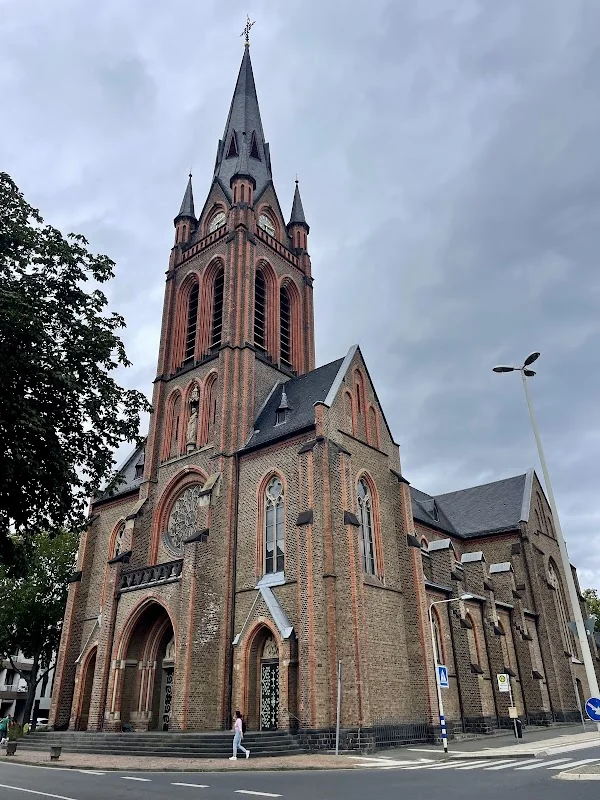
The architectural form is also historically interesting. The Archdiocese of Cologne describes St. Joseph as a neo-Gothic building in which the sculptor Nikolaus Steinbach left several groups of works between 1901 and 1909. Particularly striking are the three stone tympana at the entrance portals of the west facade. The main portal depicts the Transfiguration of Christ on Mount Tabor, while the side portals feature representations of the Holy Family. In the entrance area, there is also a Pietà from 1904 and an Ecce Homo from 1909. Additionally, there is a statue of Jesus in the right side choir and a wooden relief on the exterior, which likely dates from around 1918. For visitors looking for photos, this density of sculpture and symbolism is particularly appealing. St. Joseph is thus a building that does not tell history abstractly but makes it tangible through stone, space, and image.
Organ, Carillon, and Church Music as the Heart of the Church
One of the strongest aspects of St. Joseph is undoubtedly the church music. In 1981, the church received a new large organ with three manuals, pedal, and 61 registers. It was built by the Oberlinger workshop in Windesheim, with disposition and technical advice provided by Hans-Peter Reiners. The organ can be played from the central console in the nave together with the choir organ. This configuration alone shows how seriously St. Joseph takes the musical space. The organ here is not just an accompanying instrument but a defining element of the spatial effect. Upon entering the church, one experiences not only architecture but also an acoustic dimension that enhances the interior far beyond the mere service.
In addition, there is the carillon in the tower. Regular concerts are played on 62 bells, and the parish invites international professional carillonneurs to Bonn-Beuel for this purpose. Several concerts are scheduled for 2026, including performances by musicians from Belgium, the Netherlands, and the USA. Particularly noteworthy is not only the number of bells but also the public accessibility: the parish designates specific listening spots at the Table of Diversity on Josefplatz and at the parking lot at the corner of Gottfried-Claren-Straße and An St. Josef. This transforms a bell tower into a genuine urban experience. The carillon connects music, public space, and cityscape in a way that creates a special aura in Bonn-Beuel.
The church choir is also part of this sound culture. It looks back on more than 125 years of history and was founded in 1898. The singers usually rehearse in the parish hall of St. Joseph at the corner of An St. Josef and Johann-Link-Straße and sing in the church's masses. Their focus is on Viennese classical music, supplemented by romantic music and music from the late 19th and early 20th centuries. Additionally, the choir is supported by the Collegium Instrumentale at St. Joseph. A Gregorian chant schola also maintains the Gregorian chant during high masses throughout the church year. This creates a musical profile that consciously mediates between tradition, liturgical depth, and concert quality.
For users looking for organ, church music, or special events, St. Joseph is thus a clear address. The church is not only a place for silent devotion but also for resonant culture. The fact that top organists regularly perform and that the community publishes its own dates for organ concerts underscores the significance of this music venue. Those looking at photos or impressions of St. Joseph will quickly notice that space and sound belong together here. The organ, the carillon, and the choir make the church a place where music is not an accessory but an essential feature of identity.
Directions, Parking, and Practical Information on Site
Practically speaking, St. Joseph is very well located in the center of Beuel. The church is located at Hermannstraße 35 in 53225 Bonn-Beuel. The parish office is just a few steps away at An St. Josef 8. Those coming not only for mass but also for advice, registration, or a visit as part of community events will find clear orientation in the immediate vicinity. The Catholic public library St. Joseph and Paul, the KÖB St. Joseph, is also located in the same parish core at An St. Josef 19b. This makes it clear that a small church campus has developed around the church, consisting of the church, parish hall, office, and other offerings.
Parking is particularly important. For events, the parish mentions a parking lot at the corner of Gottfried-Claren-Straße and An St. Josef. So for those coming to a carillon concert, a larger celebration, or a special community day, there is concrete orientation. This is especially helpful for musical formats, as the parish itself points out that specific listening spots are planned outside. Those who arrive early can not only secure a spot but also enjoy the atmosphere of Josefplatz. This is a real advantage, especially for open events.
On the practical side, the proximity to the central routes in Beuel-Mitte is also important. The church is embedded in the neighborhood and not hidden on the outskirts. This makes it particularly accessible for pedestrians, for people with short distances in the neighborhood, and for guests who want to combine a visit with a walk. The fact that the location was chosen to be flood-safe was historically important; for today's visitors, the central location is particularly relevant. Those looking for address, parking, or parish office will find a manageable and well-ordered structure at St. Joseph.
If one plans to use the church as a venue or as a space for a quiet visit, the size of the building should also be considered. An officially published capacity number is not available, but the three-nave layout, the organ, the choir organ, and the carillon indicate that the church is designed for both liturgical celebrations and musical formats. Visitors should plan some time for arrival, orientation, and a calm entry during concerts or special events. This way, a simple visit quickly becomes a harmonious church experience in the neighborhood.
Community Life, Children's Church, and Events Around St. Joseph
St. Joseph is not only a church for services but a lively community center. A good example of this is KiKi & Jo, the children's church at St. Joseph. It is aimed at children up to eight years old and their families and takes place on Sundays at 10 AM in the Catholic parish hall St. Joseph, An St. Josef 8, 1st floor. There, they sing, pray, and celebrate in a child-friendly manner. This form of family pastoral care shows that the community consciously addresses the youngest and provides them with their own access to faith. For search queries like children's church or parish hall, this is a clear and very concrete anchor.
Another defining format is the Table of Diversity at Josefplatz. Usually on the last Saturday of the month, there is a warm meal and an opportunity for encounters at 12:30 PM. The community explicitly invites everyone to join without registration and as long as supplies last. In bad weather, the distribution is moved to the church under the tower. This offering makes it visible how much St. Joseph also thinks socially and neighborly. It is not just about liturgy but also about a lived togetherness in the neighborhood. For many visitors, this is the decisive impression: here, the church is not only solemn but also approachable and practical.
Additional initiatives include the Repair Café Beuel, the intercultural reading circle Women Read Women, cemetery café offerings, and various dates throughout the year. For 2026, the community lists, among other things, Easter vigil with agape celebration, Corpus Christi, parish evening, harvest thanksgiving service with Joseph café, St. Martin's parade, St. Martin's service, and the Beuel Advent singing. Such formats show that St. Joseph does not maintain the liturgical calendar in isolation but connects it with social, cultural, and communal elements. Those looking for events will find a surprisingly broad spectrum here.
The pastoral unit Bonn-Beuel also plays a role now. The community regularly informs about the next steps towards closer cooperation among the parishes. This is important for the future because St. Joseph remains part of a larger church network while retaining its own character. This mixture of tradition and movement makes the church interesting: it has grown historically, is musically strong, socially open, and well anchored organizationally. Those looking for a place where community becomes visible in everyday life will find a convincing example in St. Joseph.
Photos, Reviews, and Special Impressions on Site
Those searching for photos of St. Joseph Beuel will primarily be captivated by the west facade and the artistic portals. The three stone tympana, the neo-Gothic forms, the representations of the Transfiguration of Christ and the Holy Family, as well as the sculptural works of Nikolaus Steinbach shape the first impression. Additionally, there are the Pietà, the Ecce Homo, the statue of Jesus in the side choir, and the small wooden relief with a war memorial character on the exterior. This mixture of piety, art, and memory ensures that the church is perceived not only as a house of worship but also as a visually rich place. For photo enthusiasts, it offers many striking motifs, especially on the facade side and around the tower.
The interior also appears distinctive. The three-nave layout, the choir area, the large organ, and the choir organ make it clear that not only a historical shell has been preserved here but that a living liturgical space is still maintained today. In conjunction with the carillon in the tower, a church emerges that one can not only see but also hear. This is a significant part of its effect. Those reading reviews or giving their own ratings often describe a church particularly positively when architecture, music, and community life harmonize. St. Joseph meets this expectation very clearly.
The location in the neighborhood also contributes to the impression. Beuel-Mitte is not a remote destination but a densely populated town center with Josefplatz, parish hall, library, and other offerings. Therefore, a visit to St. Joseph is rarely just a short stop. One can combine the church visit with a walk, a music visit, or an appointment in the parish environment. This openness makes the church appealing to guests and natural for locals. It is a place where one arrives, lingers briefly, and ideally returns.
In the end, St. Joseph remains primarily remembered as a church with personality. The public rating, the long history, the clear service schedule, the strong musical tradition, and the open community life create an overall picture that stands out positively from many other churches. So, for those looking for photos, reviews, organ, carillon, history, or simply a reliable Catholic church in Bonn-Beuel, this is a place with depth, sound, and presence. St. Joseph is not a decorative background but an active center of the neighborhood.
Sources:
Show moreShow less
Catholic Church St. Joseph | Services & History
The Catholic Church St. Joseph in Bonn-Beuel is much more than just a sacred building at Hermannstraße 35. It is a vibrant place of prayer, music, history, and community in the heart of Beuel-Mitte. Those looking for photos, reviews, services, parking, or historical context will find a church with a clear identity and a surprisingly active community life. The public rating of 4.7 stars from 35 reviews shows that many visitors perceive the church not just as a building but as a significant address in the neighborhood. At the same time, St. Joseph tells a long story: from the desire of the growing Beuel population for their own church to the laying of the foundation stone in 1880 and the solemn consecration in 1904. Today, St. Joseph combines historical substance, liturgical continuity, organ sound, carillon music, and concrete offerings for families, engaged individuals, and anyone seeking an open church space.
Services, Confession, and Current Times at St. Joseph Beuel
Those seeking the church primarily for services will find a clear and reliable schedule at St. Joseph Beuel. On Saturdays, the liturgical evening begins with confession at 5:30 PM and the Holy Mass at 6:30 PM. On Sundays, the Holy Mass is celebrated at 11:15 AM. During the week, community life continues with the evening mass on Monday at 7:15 PM and the Holy Mass on Wednesday at 9:00 AM; every second Wednesday, a women's mass complements the offerings. These times make it clear that St. Joseph is not only present for Sunday but also remains visible in the rhythm of the week. This is particularly important for people searching for terms like services, address, or parish office, as the church in Bonn-Beuel can be perceived as a concrete point of contact for regular Eucharistic celebrations and spiritual guidance.
The current service schedule is also an indication of how strongly the community is anchored in everyday life. The church does not offer an anonymous, interchangeable framework but a reliable place with a fixed liturgical rhythm. This is particularly attractive for many visitors because one can visit the church both spontaneously and purposefully. For example, those out in Beuel on Saturday evening will find confession and the Saturday evening mass a well-planned liturgical appointment. Those wishing to start or conclude their Sunday with a church visit also have a clear reference point. And those seeking a quieter moment during the week can mark the morning mass on Wednesday or attend the evening mass on Monday.
Practical orientation also includes the parish office. It is located at An St. Josef 8 in 53225 Bonn. This places it just a few steps from the church and adds a direct point of contact for organizational and pastoral questions to the sacred space. For people looking not only for the church itself but also for accessibility, contact options, or the structure of the community, this is an important part of the overall perception. St. Joseph is thus not just a building for worship but a functioning church hub in the neighborhood.
The atmosphere around the church is also relevant for many visitors. The address in Beuel-Mitte, the proximity to Josefplatz, and the visible integration into the everyday life of the neighborhood ensure that St. Joseph neither appears isolated nor museum-like. The church is part of a vibrant community space where liturgy, encounters, and neighborhood come together. This connection makes it interesting for people who are not only looking for a place of worship but for a church where they can also arrive, linger, and return.
History of the Church St. Joseph in Bonn-Beuel
The history of St. Joseph is closely linked to the development of Beuel. The district, which gave its name to the present Bonn district, did not have its own place of worship for a long time. Until then, Beuel belonged to the parish of Vilich, to the parish church of St. Paul, and, after it collapsed in 1765, to the collegiate and parish church of St. Peter. The journey to church was long, and with the growth of the place, the desire for a church of its own arose. It was precisely from this need that the idea of a flood-safe church location developed. In 1875, a member of the St. Joseph building association acquired the current property. The fact that the location is described as flood-safe is a significant indication of the planning at that time for a neighborhood close to the Rhine.
However, the path to the start of construction was not without obstacles. The plans were delayed both due to political tensions between church and state during the Kulturkampf and due to the construction concept. Ultimately, the designs of the then-Rome-studying chaplain Joseph Prill, a native of Beuel, were approved. On August 15, 1880, the foundation stone for the first construction phase could be laid. Just two years later, the first service took place in the new church. This shows how quickly the project became liturgically alive after the laying of the foundation stone. With the second construction phase, the three-nave church building was completed before the solemn consecration of the parish church of St. Joseph took place in 1904.
This development reflects the transformation of Beuel from a place with a long history of external church affiliation to a district with its own identity. St. Joseph thus became not only a parish church but also a symbol of independence and local awareness. Today, anyone walking through Beuel encounters not just any church but a building that embodies the memory of the growing population, communal and ecclesiastical negotiation processes, and the history of the district itself. This is precisely why the interest in history, photos, and reviews is so understandable: the church tells a genuine neighborhood story through its appearance and its chronicle.
The architectural form is also historically interesting. The Archdiocese of Cologne describes St. Joseph as a neo-Gothic building in which the sculptor Nikolaus Steinbach left several groups of works between 1901 and 1909. Particularly striking are the three stone tympana at the entrance portals of the west facade. The main portal depicts the Transfiguration of Christ on Mount Tabor, while the side portals feature representations of the Holy Family. In the entrance area, there is also a Pietà from 1904 and an Ecce Homo from 1909. Additionally, there is a statue of Jesus in the right side choir and a wooden relief on the exterior, which likely dates from around 1918. For visitors looking for photos, this density of sculpture and symbolism is particularly appealing. St. Joseph is thus a building that does not tell history abstractly but makes it tangible through stone, space, and image.
Organ, Carillon, and Church Music as the Heart of the Church
One of the strongest aspects of St. Joseph is undoubtedly the church music. In 1981, the church received a new large organ with three manuals, pedal, and 61 registers. It was built by the Oberlinger workshop in Windesheim, with disposition and technical advice provided by Hans-Peter Reiners. The organ can be played from the central console in the nave together with the choir organ. This configuration alone shows how seriously St. Joseph takes the musical space. The organ here is not just an accompanying instrument but a defining element of the spatial effect. Upon entering the church, one experiences not only architecture but also an acoustic dimension that enhances the interior far beyond the mere service.
In addition, there is the carillon in the tower. Regular concerts are played on 62 bells, and the parish invites international professional carillonneurs to Bonn-Beuel for this purpose. Several concerts are scheduled for 2026, including performances by musicians from Belgium, the Netherlands, and the USA. Particularly noteworthy is not only the number of bells but also the public accessibility: the parish designates specific listening spots at the Table of Diversity on Josefplatz and at the parking lot at the corner of Gottfried-Claren-Straße and An St. Josef. This transforms a bell tower into a genuine urban experience. The carillon connects music, public space, and cityscape in a way that creates a special aura in Bonn-Beuel.
The church choir is also part of this sound culture. It looks back on more than 125 years of history and was founded in 1898. The singers usually rehearse in the parish hall of St. Joseph at the corner of An St. Josef and Johann-Link-Straße and sing in the church's masses. Their focus is on Viennese classical music, supplemented by romantic music and music from the late 19th and early 20th centuries. Additionally, the choir is supported by the Collegium Instrumentale at St. Joseph. A Gregorian chant schola also maintains the Gregorian chant during high masses throughout the church year. This creates a musical profile that consciously mediates between tradition, liturgical depth, and concert quality.
For users looking for organ, church music, or special events, St. Joseph is thus a clear address. The church is not only a place for silent devotion but also for resonant culture. The fact that top organists regularly perform and that the community publishes its own dates for organ concerts underscores the significance of this music venue. Those looking at photos or impressions of St. Joseph will quickly notice that space and sound belong together here. The organ, the carillon, and the choir make the church a place where music is not an accessory but an essential feature of identity.
Directions, Parking, and Practical Information on Site
Practically speaking, St. Joseph is very well located in the center of Beuel. The church is located at Hermannstraße 35 in 53225 Bonn-Beuel. The parish office is just a few steps away at An St. Josef 8. Those coming not only for mass but also for advice, registration, or a visit as part of community events will find clear orientation in the immediate vicinity. The Catholic public library St. Joseph and Paul, the KÖB St. Joseph, is also located in the same parish core at An St. Josef 19b. This makes it clear that a small church campus has developed around the church, consisting of the church, parish hall, office, and other offerings.
Parking is particularly important. For events, the parish mentions a parking lot at the corner of Gottfried-Claren-Straße and An St. Josef. So for those coming to a carillon concert, a larger celebration, or a special community day, there is concrete orientation. This is especially helpful for musical formats, as the parish itself points out that specific listening spots are planned outside. Those who arrive early can not only secure a spot but also enjoy the atmosphere of Josefplatz. This is a real advantage, especially for open events.
On the practical side, the proximity to the central routes in Beuel-Mitte is also important. The church is embedded in the neighborhood and not hidden on the outskirts. This makes it particularly accessible for pedestrians, for people with short distances in the neighborhood, and for guests who want to combine a visit with a walk. The fact that the location was chosen to be flood-safe was historically important; for today's visitors, the central location is particularly relevant. Those looking for address, parking, or parish office will find a manageable and well-ordered structure at St. Joseph.
If one plans to use the church as a venue or as a space for a quiet visit, the size of the building should also be considered. An officially published capacity number is not available, but the three-nave layout, the organ, the choir organ, and the carillon indicate that the church is designed for both liturgical celebrations and musical formats. Visitors should plan some time for arrival, orientation, and a calm entry during concerts or special events. This way, a simple visit quickly becomes a harmonious church experience in the neighborhood.
Community Life, Children's Church, and Events Around St. Joseph
St. Joseph is not only a church for services but a lively community center. A good example of this is KiKi & Jo, the children's church at St. Joseph. It is aimed at children up to eight years old and their families and takes place on Sundays at 10 AM in the Catholic parish hall St. Joseph, An St. Josef 8, 1st floor. There, they sing, pray, and celebrate in a child-friendly manner. This form of family pastoral care shows that the community consciously addresses the youngest and provides them with their own access to faith. For search queries like children's church or parish hall, this is a clear and very concrete anchor.
Another defining format is the Table of Diversity at Josefplatz. Usually on the last Saturday of the month, there is a warm meal and an opportunity for encounters at 12:30 PM. The community explicitly invites everyone to join without registration and as long as supplies last. In bad weather, the distribution is moved to the church under the tower. This offering makes it visible how much St. Joseph also thinks socially and neighborly. It is not just about liturgy but also about a lived togetherness in the neighborhood. For many visitors, this is the decisive impression: here, the church is not only solemn but also approachable and practical.
Additional initiatives include the Repair Café Beuel, the intercultural reading circle Women Read Women, cemetery café offerings, and various dates throughout the year. For 2026, the community lists, among other things, Easter vigil with agape celebration, Corpus Christi, parish evening, harvest thanksgiving service with Joseph café, St. Martin's parade, St. Martin's service, and the Beuel Advent singing. Such formats show that St. Joseph does not maintain the liturgical calendar in isolation but connects it with social, cultural, and communal elements. Those looking for events will find a surprisingly broad spectrum here.
The pastoral unit Bonn-Beuel also plays a role now. The community regularly informs about the next steps towards closer cooperation among the parishes. This is important for the future because St. Joseph remains part of a larger church network while retaining its own character. This mixture of tradition and movement makes the church interesting: it has grown historically, is musically strong, socially open, and well anchored organizationally. Those looking for a place where community becomes visible in everyday life will find a convincing example in St. Joseph.
Photos, Reviews, and Special Impressions on Site
Those searching for photos of St. Joseph Beuel will primarily be captivated by the west facade and the artistic portals. The three stone tympana, the neo-Gothic forms, the representations of the Transfiguration of Christ and the Holy Family, as well as the sculptural works of Nikolaus Steinbach shape the first impression. Additionally, there are the Pietà, the Ecce Homo, the statue of Jesus in the side choir, and the small wooden relief with a war memorial character on the exterior. This mixture of piety, art, and memory ensures that the church is perceived not only as a house of worship but also as a visually rich place. For photo enthusiasts, it offers many striking motifs, especially on the facade side and around the tower.
The interior also appears distinctive. The three-nave layout, the choir area, the large organ, and the choir organ make it clear that not only a historical shell has been preserved here but that a living liturgical space is still maintained today. In conjunction with the carillon in the tower, a church emerges that one can not only see but also hear. This is a significant part of its effect. Those reading reviews or giving their own ratings often describe a church particularly positively when architecture, music, and community life harmonize. St. Joseph meets this expectation very clearly.
The location in the neighborhood also contributes to the impression. Beuel-Mitte is not a remote destination but a densely populated town center with Josefplatz, parish hall, library, and other offerings. Therefore, a visit to St. Joseph is rarely just a short stop. One can combine the church visit with a walk, a music visit, or an appointment in the parish environment. This openness makes the church appealing to guests and natural for locals. It is a place where one arrives, lingers briefly, and ideally returns.
In the end, St. Joseph remains primarily remembered as a church with personality. The public rating, the long history, the clear service schedule, the strong musical tradition, and the open community life create an overall picture that stands out positively from many other churches. So, for those looking for photos, reviews, organ, carillon, history, or simply a reliable Catholic church in Bonn-Beuel, this is a place with depth, sound, and presence. St. Joseph is not a decorative background but an active center of the neighborhood.
Sources:
Catholic Church St. Joseph | Services & History
The Catholic Church St. Joseph in Bonn-Beuel is much more than just a sacred building at Hermannstraße 35. It is a vibrant place of prayer, music, history, and community in the heart of Beuel-Mitte. Those looking for photos, reviews, services, parking, or historical context will find a church with a clear identity and a surprisingly active community life. The public rating of 4.7 stars from 35 reviews shows that many visitors perceive the church not just as a building but as a significant address in the neighborhood. At the same time, St. Joseph tells a long story: from the desire of the growing Beuel population for their own church to the laying of the foundation stone in 1880 and the solemn consecration in 1904. Today, St. Joseph combines historical substance, liturgical continuity, organ sound, carillon music, and concrete offerings for families, engaged individuals, and anyone seeking an open church space.
Services, Confession, and Current Times at St. Joseph Beuel
Those seeking the church primarily for services will find a clear and reliable schedule at St. Joseph Beuel. On Saturdays, the liturgical evening begins with confession at 5:30 PM and the Holy Mass at 6:30 PM. On Sundays, the Holy Mass is celebrated at 11:15 AM. During the week, community life continues with the evening mass on Monday at 7:15 PM and the Holy Mass on Wednesday at 9:00 AM; every second Wednesday, a women's mass complements the offerings. These times make it clear that St. Joseph is not only present for Sunday but also remains visible in the rhythm of the week. This is particularly important for people searching for terms like services, address, or parish office, as the church in Bonn-Beuel can be perceived as a concrete point of contact for regular Eucharistic celebrations and spiritual guidance.
The current service schedule is also an indication of how strongly the community is anchored in everyday life. The church does not offer an anonymous, interchangeable framework but a reliable place with a fixed liturgical rhythm. This is particularly attractive for many visitors because one can visit the church both spontaneously and purposefully. For example, those out in Beuel on Saturday evening will find confession and the Saturday evening mass a well-planned liturgical appointment. Those wishing to start or conclude their Sunday with a church visit also have a clear reference point. And those seeking a quieter moment during the week can mark the morning mass on Wednesday or attend the evening mass on Monday.
Practical orientation also includes the parish office. It is located at An St. Josef 8 in 53225 Bonn. This places it just a few steps from the church and adds a direct point of contact for organizational and pastoral questions to the sacred space. For people looking not only for the church itself but also for accessibility, contact options, or the structure of the community, this is an important part of the overall perception. St. Joseph is thus not just a building for worship but a functioning church hub in the neighborhood.
The atmosphere around the church is also relevant for many visitors. The address in Beuel-Mitte, the proximity to Josefplatz, and the visible integration into the everyday life of the neighborhood ensure that St. Joseph neither appears isolated nor museum-like. The church is part of a vibrant community space where liturgy, encounters, and neighborhood come together. This connection makes it interesting for people who are not only looking for a place of worship but for a church where they can also arrive, linger, and return.
History of the Church St. Joseph in Bonn-Beuel
The history of St. Joseph is closely linked to the development of Beuel. The district, which gave its name to the present Bonn district, did not have its own place of worship for a long time. Until then, Beuel belonged to the parish of Vilich, to the parish church of St. Paul, and, after it collapsed in 1765, to the collegiate and parish church of St. Peter. The journey to church was long, and with the growth of the place, the desire for a church of its own arose. It was precisely from this need that the idea of a flood-safe church location developed. In 1875, a member of the St. Joseph building association acquired the current property. The fact that the location is described as flood-safe is a significant indication of the planning at that time for a neighborhood close to the Rhine.
However, the path to the start of construction was not without obstacles. The plans were delayed both due to political tensions between church and state during the Kulturkampf and due to the construction concept. Ultimately, the designs of the then-Rome-studying chaplain Joseph Prill, a native of Beuel, were approved. On August 15, 1880, the foundation stone for the first construction phase could be laid. Just two years later, the first service took place in the new church. This shows how quickly the project became liturgically alive after the laying of the foundation stone. With the second construction phase, the three-nave church building was completed before the solemn consecration of the parish church of St. Joseph took place in 1904.
This development reflects the transformation of Beuel from a place with a long history of external church affiliation to a district with its own identity. St. Joseph thus became not only a parish church but also a symbol of independence and local awareness. Today, anyone walking through Beuel encounters not just any church but a building that embodies the memory of the growing population, communal and ecclesiastical negotiation processes, and the history of the district itself. This is precisely why the interest in history, photos, and reviews is so understandable: the church tells a genuine neighborhood story through its appearance and its chronicle.
The architectural form is also historically interesting. The Archdiocese of Cologne describes St. Joseph as a neo-Gothic building in which the sculptor Nikolaus Steinbach left several groups of works between 1901 and 1909. Particularly striking are the three stone tympana at the entrance portals of the west facade. The main portal depicts the Transfiguration of Christ on Mount Tabor, while the side portals feature representations of the Holy Family. In the entrance area, there is also a Pietà from 1904 and an Ecce Homo from 1909. Additionally, there is a statue of Jesus in the right side choir and a wooden relief on the exterior, which likely dates from around 1918. For visitors looking for photos, this density of sculpture and symbolism is particularly appealing. St. Joseph is thus a building that does not tell history abstractly but makes it tangible through stone, space, and image.
Organ, Carillon, and Church Music as the Heart of the Church
One of the strongest aspects of St. Joseph is undoubtedly the church music. In 1981, the church received a new large organ with three manuals, pedal, and 61 registers. It was built by the Oberlinger workshop in Windesheim, with disposition and technical advice provided by Hans-Peter Reiners. The organ can be played from the central console in the nave together with the choir organ. This configuration alone shows how seriously St. Joseph takes the musical space. The organ here is not just an accompanying instrument but a defining element of the spatial effect. Upon entering the church, one experiences not only architecture but also an acoustic dimension that enhances the interior far beyond the mere service.
In addition, there is the carillon in the tower. Regular concerts are played on 62 bells, and the parish invites international professional carillonneurs to Bonn-Beuel for this purpose. Several concerts are scheduled for 2026, including performances by musicians from Belgium, the Netherlands, and the USA. Particularly noteworthy is not only the number of bells but also the public accessibility: the parish designates specific listening spots at the Table of Diversity on Josefplatz and at the parking lot at the corner of Gottfried-Claren-Straße and An St. Josef. This transforms a bell tower into a genuine urban experience. The carillon connects music, public space, and cityscape in a way that creates a special aura in Bonn-Beuel.
The church choir is also part of this sound culture. It looks back on more than 125 years of history and was founded in 1898. The singers usually rehearse in the parish hall of St. Joseph at the corner of An St. Josef and Johann-Link-Straße and sing in the church's masses. Their focus is on Viennese classical music, supplemented by romantic music and music from the late 19th and early 20th centuries. Additionally, the choir is supported by the Collegium Instrumentale at St. Joseph. A Gregorian chant schola also maintains the Gregorian chant during high masses throughout the church year. This creates a musical profile that consciously mediates between tradition, liturgical depth, and concert quality.
For users looking for organ, church music, or special events, St. Joseph is thus a clear address. The church is not only a place for silent devotion but also for resonant culture. The fact that top organists regularly perform and that the community publishes its own dates for organ concerts underscores the significance of this music venue. Those looking at photos or impressions of St. Joseph will quickly notice that space and sound belong together here. The organ, the carillon, and the choir make the church a place where music is not an accessory but an essential feature of identity.
Directions, Parking, and Practical Information on Site
Practically speaking, St. Joseph is very well located in the center of Beuel. The church is located at Hermannstraße 35 in 53225 Bonn-Beuel. The parish office is just a few steps away at An St. Josef 8. Those coming not only for mass but also for advice, registration, or a visit as part of community events will find clear orientation in the immediate vicinity. The Catholic public library St. Joseph and Paul, the KÖB St. Joseph, is also located in the same parish core at An St. Josef 19b. This makes it clear that a small church campus has developed around the church, consisting of the church, parish hall, office, and other offerings.
Parking is particularly important. For events, the parish mentions a parking lot at the corner of Gottfried-Claren-Straße and An St. Josef. So for those coming to a carillon concert, a larger celebration, or a special community day, there is concrete orientation. This is especially helpful for musical formats, as the parish itself points out that specific listening spots are planned outside. Those who arrive early can not only secure a spot but also enjoy the atmosphere of Josefplatz. This is a real advantage, especially for open events.
On the practical side, the proximity to the central routes in Beuel-Mitte is also important. The church is embedded in the neighborhood and not hidden on the outskirts. This makes it particularly accessible for pedestrians, for people with short distances in the neighborhood, and for guests who want to combine a visit with a walk. The fact that the location was chosen to be flood-safe was historically important; for today's visitors, the central location is particularly relevant. Those looking for address, parking, or parish office will find a manageable and well-ordered structure at St. Joseph.
If one plans to use the church as a venue or as a space for a quiet visit, the size of the building should also be considered. An officially published capacity number is not available, but the three-nave layout, the organ, the choir organ, and the carillon indicate that the church is designed for both liturgical celebrations and musical formats. Visitors should plan some time for arrival, orientation, and a calm entry during concerts or special events. This way, a simple visit quickly becomes a harmonious church experience in the neighborhood.
Community Life, Children's Church, and Events Around St. Joseph
St. Joseph is not only a church for services but a lively community center. A good example of this is KiKi & Jo, the children's church at St. Joseph. It is aimed at children up to eight years old and their families and takes place on Sundays at 10 AM in the Catholic parish hall St. Joseph, An St. Josef 8, 1st floor. There, they sing, pray, and celebrate in a child-friendly manner. This form of family pastoral care shows that the community consciously addresses the youngest and provides them with their own access to faith. For search queries like children's church or parish hall, this is a clear and very concrete anchor.
Another defining format is the Table of Diversity at Josefplatz. Usually on the last Saturday of the month, there is a warm meal and an opportunity for encounters at 12:30 PM. The community explicitly invites everyone to join without registration and as long as supplies last. In bad weather, the distribution is moved to the church under the tower. This offering makes it visible how much St. Joseph also thinks socially and neighborly. It is not just about liturgy but also about a lived togetherness in the neighborhood. For many visitors, this is the decisive impression: here, the church is not only solemn but also approachable and practical.
Additional initiatives include the Repair Café Beuel, the intercultural reading circle Women Read Women, cemetery café offerings, and various dates throughout the year. For 2026, the community lists, among other things, Easter vigil with agape celebration, Corpus Christi, parish evening, harvest thanksgiving service with Joseph café, St. Martin's parade, St. Martin's service, and the Beuel Advent singing. Such formats show that St. Joseph does not maintain the liturgical calendar in isolation but connects it with social, cultural, and communal elements. Those looking for events will find a surprisingly broad spectrum here.
The pastoral unit Bonn-Beuel also plays a role now. The community regularly informs about the next steps towards closer cooperation among the parishes. This is important for the future because St. Joseph remains part of a larger church network while retaining its own character. This mixture of tradition and movement makes the church interesting: it has grown historically, is musically strong, socially open, and well anchored organizationally. Those looking for a place where community becomes visible in everyday life will find a convincing example in St. Joseph.
Photos, Reviews, and Special Impressions on Site
Those searching for photos of St. Joseph Beuel will primarily be captivated by the west facade and the artistic portals. The three stone tympana, the neo-Gothic forms, the representations of the Transfiguration of Christ and the Holy Family, as well as the sculptural works of Nikolaus Steinbach shape the first impression. Additionally, there are the Pietà, the Ecce Homo, the statue of Jesus in the side choir, and the small wooden relief with a war memorial character on the exterior. This mixture of piety, art, and memory ensures that the church is perceived not only as a house of worship but also as a visually rich place. For photo enthusiasts, it offers many striking motifs, especially on the facade side and around the tower.
The interior also appears distinctive. The three-nave layout, the choir area, the large organ, and the choir organ make it clear that not only a historical shell has been preserved here but that a living liturgical space is still maintained today. In conjunction with the carillon in the tower, a church emerges that one can not only see but also hear. This is a significant part of its effect. Those reading reviews or giving their own ratings often describe a church particularly positively when architecture, music, and community life harmonize. St. Joseph meets this expectation very clearly.
The location in the neighborhood also contributes to the impression. Beuel-Mitte is not a remote destination but a densely populated town center with Josefplatz, parish hall, library, and other offerings. Therefore, a visit to St. Joseph is rarely just a short stop. One can combine the church visit with a walk, a music visit, or an appointment in the parish environment. This openness makes the church appealing to guests and natural for locals. It is a place where one arrives, lingers briefly, and ideally returns.
In the end, St. Joseph remains primarily remembered as a church with personality. The public rating, the long history, the clear service schedule, the strong musical tradition, and the open community life create an overall picture that stands out positively from many other churches. So, for those looking for photos, reviews, organ, carillon, history, or simply a reliable Catholic church in Bonn-Beuel, this is a place with depth, sound, and presence. St. Joseph is not a decorative background but an active center of the neighborhood.
Sources:
Upcoming Events
Choral Concert in St. Josef Church Beuel
An evening full of choral sounds in Bonn-Beuel: St. Josef Church becomes a stage for great emotions, fine voices, and special acoustics. Free entry. #Bonn #ChoralConcert
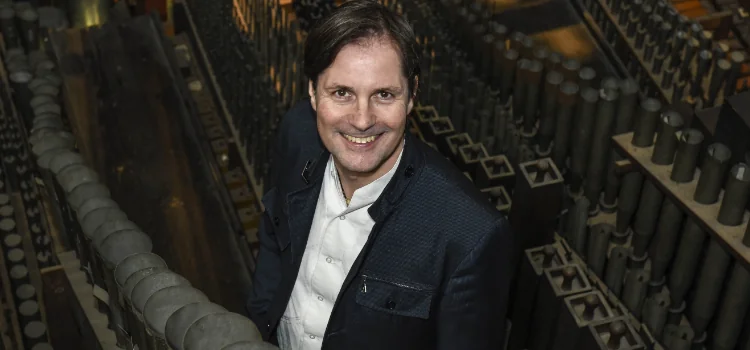
Elmar Lehnen live in Bonn: International Organ Concerts St. Joseph Beuel
Elmar Lehnen makes the Oberlinger organ in St. Joseph Beuel shine: an evening full of sound colors, tension, and goosebumps. July 5, 2026, 7 PM, 12 Euro at the box office. #Bonn #OrganConcert
Frequently Asked Questions
Reviews
No reviews found