
Bonn
Stockholmer Str. 23, 53117 Bonn, Deutschland
Youth Center Auerberg | Events & Tickets
The Youth Center Auerberg - Neighborhood Center Auerberg is much more than just a meeting point for young people in Bonn. It is a place where open child and youth work, neighborhood work, education, and local events converge. Official and semi-official sources show that the location at Stockholmer Straße 23 in 53117 Bonn is understood not only as a youth address but also as a neighborhood address. The neighborhood management Auerberg describes itself as an interface between the district and administration, promoting coexistence through events, activities, and participation formats. This role makes the location particularly interesting for inquiries about events, tickets, programs, or practical topics such as access and barrier-free options. Therefore, those searching for the Youth Center Auerberg are looking not just for a space but for an entire network of offerings, projects, and encounters. The development of the place is typical for Auerberg: Initially, container solutions were used on the grounds of Bernhardschule, and later the neighborhood and youth center was established at the current location as a more permanent infrastructure for the neighborhood. ([bonn.de](https://www.bonn.de/themen-entdecken/soziales-gesellschaft/quartiersmanagement-auerberg.php))
Events and Programs at the Youth Center Auerberg
If you primarily think of events when searching for the Youth Center Auerberg, you are thematically correct but should understand the format differently than in a classic concert or event hall. The sources found show a program consisting of open offers, educational formats, movement offerings, and cooperative events. This is particularly evident in the free movement offering BonnKids on the open space at the youth and neighborhood center in Auerberg: It is aimed at children and young people, takes place on Fridays, is free of charge, and explicitly invites people to just drop by and participate. The homework support provided by the Child Protection Association, offered at the Youth Center Auerberg from Monday to Thursday, is also clearly intended as a free, low-threshold support service. Additionally, there are language and math courses from the International Meeting Center, which also take place at the Youth Center Auerberg and strengthen the location as an educational site in the district. On the cultural side, the inclusive nightfrequenz format shows that the house is also used for dance workshops, graffiti, and disco. The program logic is thus less about ticket events and more about neighborhood practice: children, young people, families, and young adults use the same place depending on the time of day and project for very different needs. This is important from an SEO perspective because searchers often expect current programs, open dates, or participatory offers with the keyword events - and that is indeed found here, just in the form of educational and neighborhood events instead. ([guterstart.nrw.de](https://www.guterstart.nrw.de/fhiangebot/details/id/69242))
Tickets, Registration, and Free Offers
When it comes to the keyword tickets, the Youth Center Auerberg is a special case, as no classic box office, no fixed evening box, and no typical ticket shop are mentioned in the verified sources. For the search intent, this means: Those looking for tickets usually do not mean reserved seats or admission tickets in the sense of a theater, but rather the question of whether they need to register, come by, or pay for individual courses. The sources provide a very clear answer to this. Several offers are free, such as BonnKids or homework support. Other offers are freely accessible but organizationally tied to a provider, such as the inclusive nightfrequenz event with free admission. Still, other formats have a small participation fee: In the 2026 offering of the International Meeting Center, a course fee of 10 euros is mentioned, with siblings paying 5 euros. This is a typical neighborhood center pattern: no ticket sales, but registration for courses, participation in open formats, and contact with the respective provider. Practically, this also means that seekers should orient themselves more towards terms like registration, participation, free, open, or course rather than the term tickets. For SEO, this translation is important because it aligns the real expectations of users with the actual offerings. Thus, the Youth Center Auerberg is not a place for rigid admission logic but a low-threshold neighborhood meeting point where many formats operate without admission, and individual educational offerings only require a small, socially acceptable contribution. Therefore, when someone enters tickets, the contentually correct answer is usually: Offers are rather booked, registered, or visited spontaneously here, rather than being sold in the classic sense. ([guterstart.nrw.de](https://www.guterstart.nrw.de/fhiangebot/details/id/69242))
Address, Access, and Parking in Bonn-Auerberg
The most important hard information for access is clear: The Youth Center Auerberg - Neighborhood Center Auerberg is located at Stockholmer Straße 23, 53117 Bonn. This address is mentioned multiple times in the found offering pages and serves as a fixed orientation for events, courses, and open offers. This is particularly helpful for seekers because the location is thus clearly anchored in the Bonn district of Auerberg. The development of the neighborhood also plays a role: The city of Bonn describes Auerberg as one of the densely populated districts that has structurally developed significantly in recent years and now primarily needs to ensure social balance and neighborhood quality. It is in this context that the youth and neighborhood center was created. Those looking for access should therefore expect a neighborhood address rather than a classic tourist event location. An important point is parking: The verified sources do not mention any specific parking spaces, no parking garage, and no official parking guidance system. This is not a weakness of the place but simply an indication that the available information is more focused on social and educational use than on visitor logistics. For the search intent, this means that access and address are well documented, but parking is not specifically described in the reliable sources. Therefore, the cleanest statement is: The address is clearly documented, but no official parking description has been provided on the found pages. Anyone wishing to attend a specific event should check the respective offering page or the organizing provider, as individual formats may take place in the open space or in the building, and the exact use may vary depending on the project. ([guterstart.nrw.de](https://www.guterstart.nrw.de/fhiangebot/details/id/69242))
Rooms, Open Space, and Capacity of the Neighborhood Center
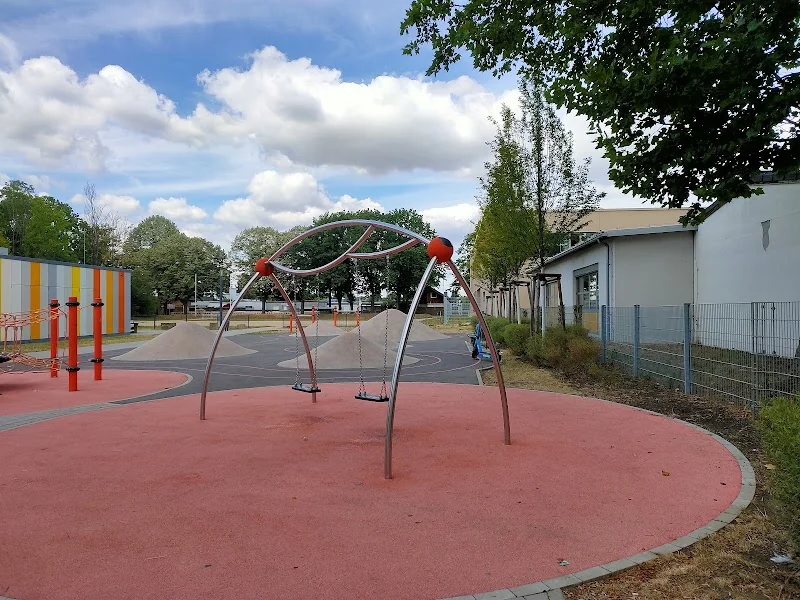
The spatial development of the Youth Center Auerberg is one of the most exciting points at the location. The official planning documents describe that fixed premises in container form were initially established on the grounds of Bernhardschule. These containers included two group rooms, a room for counseling conversations that was also used as an office, as well as toilets. This clearly shows why the Youth Center in Auerberg was conceived from the beginning as a functional, socially effective infrastructure: It was not about a representative event architecture but about quickly available, solid spaces for open youth work. Later documents from the feasibility and space planning describe the neighborhood and youth center at Stockholmer Straße 23 with a neighborhood office that is staffed several times a week, with one to two events per month, and with the prospect of an opening in May 2019. Particularly important for the question of capacity is the multifunctional room mentioned there: It is about 80 square meters and offers space for up to 70 people. Additionally, a neighborhood café of about 30 square meters with space for up to 15 people is listed. Thus, the house is well dimensioned for a neighborhood meeting: large enough for workshops, meetings, and small events, but consciously not designed for mass operation. The outdoor area is also part of the usage concept. The playground needs planning of the city of Bonn describes the play area in front of the youth center as redesigned, with a parcours area, swing, climbing net, horizontal bar, and hills for skill games. The public play facility is explicitly also part of the outdoor area of the youth center. This creates a picture of a compact but versatile neighborhood address that sensibly connects indoor spaces and open areas. ([stadtplan.bonn.de](https://stadtplan.bonn.de/mapbender/daten/images/Bebauungsplaene/begruendung_internet/7525-1.pdf))
History, Neighborhood Management, and Open Youth Work
The location Auerberg can hardly be understood without its history. The municipal documents make it clear that the necessity of a youth center in the district has been known for years and has been confirmed by youth welfare planning. Before the current location was established, a pragmatic model was used: containers on the grounds of Bernhardschule, operated under municipal responsibility and in close cooperation with the association Kleiner Muck, the Protestant Youth Welfare Center, and the Protestant Lukaskirchengemeinde. This model was explicitly intended as a quick solution for a fixed facility that at least somewhat meets the needs of open child and youth work. Later, a more permanent structure was added with the neighborhood and youth center at Stockholmer Straße 23. At the same time, the city of Bonn strengthened the neighborhood management Auerberg as a point of contact for local ideas, exchange, criticism, and suggestions. Officially, the goal is to encourage residents to come up with their own ideas, promote neighborhood interaction, and enliven coexistence through events and activities. This is also logically sound from an urban development perspective, as Auerberg is, according to the city, a densely populated settlement that has structurally grown in recent years with a new center on Pariser Straße. In such a neighborhood, a youth and neighborhood center is not just a recreational place but a social hub. Inquiries about events or tickets therefore touch on something larger: a space where neighborhood, prevention, education, engagement, and youth leisure come together. The sources also show that the center is repeatedly used as a location for collaborations, whether in movement work, language promotion, or cultural projects. The real value of the house lies precisely in this: It stabilizes the neighborhood by not only reacting but actively organizing encounters. ([bonn.de](https://www.bonn.de/themen-entdecken/soziales-gesellschaft/quartiersmanagement-auerberg.php))
Accessibility and Inclusive Offers
Accessibility and inclusion are not just marginal topics at the Youth Center Auerberg but are directly recognizable in several sources. The inclusive nightfrequenz format explicitly names the location as barrier-free and is aimed at young people aged 14 and older, as well as young adults with and without disabilities. Another Guterstart offering from the year 2026 describes the premises of the Youth Center Auerberg as fully accessible for wheelchair users or with support and additionally mentions offers in easy language. This is particularly valuable for the search intent because it shows that the place not only reaches young people but very consciously considers different access requirements. The range of offers also supports this: movement formats for children from six years old, free group offers, homework help for school children, language promotion, and cultural projects are bundled at this location. Thus, the neighborhood center does not only address a narrow age group but, depending on the project, children, young people, and young adults in different life situations. The inclusive character is also evident in that some offers are directly aimed at families or children with support needs and often function without complicated admission or booking systems. For visitors, this means: If a project requires accessibility or easy language, it is worth checking the respective offering page closely, as accessibility is not stated generally but is sometimes project-specific. Overall, the impression arises of a consciously open, socially oriented house that does not understand its spaces as exclusive but as a place for as many people as possible in the neighborhood. This openness is a strong signal for a modern neighborhood location in Bonn-Auerberg. ([nachtfrequenz.de](https://www.nachtfrequenz.de/bonn/jugendzentrum-auerberg/))
Sources:
- Federal City Bonn - Neighborhood Management Auerberg
- Federal City Bonn - Development Plan Justification 7525-1
- Federal City Bonn - Playground Needs Planning 2022
- Guterstart NRW - BonnKids Auerberg
- Child Protection Association Bonn - Silentien
- nachtfrequenz - Youth Center Auerberg
- Guterstart NRW - German Course Primary School 1 (Auerberg)
Show moreShow less
Youth Center Auerberg | Events & Tickets
The Youth Center Auerberg - Neighborhood Center Auerberg is much more than just a meeting point for young people in Bonn. It is a place where open child and youth work, neighborhood work, education, and local events converge. Official and semi-official sources show that the location at Stockholmer Straße 23 in 53117 Bonn is understood not only as a youth address but also as a neighborhood address. The neighborhood management Auerberg describes itself as an interface between the district and administration, promoting coexistence through events, activities, and participation formats. This role makes the location particularly interesting for inquiries about events, tickets, programs, or practical topics such as access and barrier-free options. Therefore, those searching for the Youth Center Auerberg are looking not just for a space but for an entire network of offerings, projects, and encounters. The development of the place is typical for Auerberg: Initially, container solutions were used on the grounds of Bernhardschule, and later the neighborhood and youth center was established at the current location as a more permanent infrastructure for the neighborhood. ([bonn.de](https://www.bonn.de/themen-entdecken/soziales-gesellschaft/quartiersmanagement-auerberg.php))
Events and Programs at the Youth Center Auerberg
If you primarily think of events when searching for the Youth Center Auerberg, you are thematically correct but should understand the format differently than in a classic concert or event hall. The sources found show a program consisting of open offers, educational formats, movement offerings, and cooperative events. This is particularly evident in the free movement offering BonnKids on the open space at the youth and neighborhood center in Auerberg: It is aimed at children and young people, takes place on Fridays, is free of charge, and explicitly invites people to just drop by and participate. The homework support provided by the Child Protection Association, offered at the Youth Center Auerberg from Monday to Thursday, is also clearly intended as a free, low-threshold support service. Additionally, there are language and math courses from the International Meeting Center, which also take place at the Youth Center Auerberg and strengthen the location as an educational site in the district. On the cultural side, the inclusive nightfrequenz format shows that the house is also used for dance workshops, graffiti, and disco. The program logic is thus less about ticket events and more about neighborhood practice: children, young people, families, and young adults use the same place depending on the time of day and project for very different needs. This is important from an SEO perspective because searchers often expect current programs, open dates, or participatory offers with the keyword events - and that is indeed found here, just in the form of educational and neighborhood events instead. ([guterstart.nrw.de](https://www.guterstart.nrw.de/fhiangebot/details/id/69242))
Tickets, Registration, and Free Offers
When it comes to the keyword tickets, the Youth Center Auerberg is a special case, as no classic box office, no fixed evening box, and no typical ticket shop are mentioned in the verified sources. For the search intent, this means: Those looking for tickets usually do not mean reserved seats or admission tickets in the sense of a theater, but rather the question of whether they need to register, come by, or pay for individual courses. The sources provide a very clear answer to this. Several offers are free, such as BonnKids or homework support. Other offers are freely accessible but organizationally tied to a provider, such as the inclusive nightfrequenz event with free admission. Still, other formats have a small participation fee: In the 2026 offering of the International Meeting Center, a course fee of 10 euros is mentioned, with siblings paying 5 euros. This is a typical neighborhood center pattern: no ticket sales, but registration for courses, participation in open formats, and contact with the respective provider. Practically, this also means that seekers should orient themselves more towards terms like registration, participation, free, open, or course rather than the term tickets. For SEO, this translation is important because it aligns the real expectations of users with the actual offerings. Thus, the Youth Center Auerberg is not a place for rigid admission logic but a low-threshold neighborhood meeting point where many formats operate without admission, and individual educational offerings only require a small, socially acceptable contribution. Therefore, when someone enters tickets, the contentually correct answer is usually: Offers are rather booked, registered, or visited spontaneously here, rather than being sold in the classic sense. ([guterstart.nrw.de](https://www.guterstart.nrw.de/fhiangebot/details/id/69242))
Address, Access, and Parking in Bonn-Auerberg
The most important hard information for access is clear: The Youth Center Auerberg - Neighborhood Center Auerberg is located at Stockholmer Straße 23, 53117 Bonn. This address is mentioned multiple times in the found offering pages and serves as a fixed orientation for events, courses, and open offers. This is particularly helpful for seekers because the location is thus clearly anchored in the Bonn district of Auerberg. The development of the neighborhood also plays a role: The city of Bonn describes Auerberg as one of the densely populated districts that has structurally developed significantly in recent years and now primarily needs to ensure social balance and neighborhood quality. It is in this context that the youth and neighborhood center was created. Those looking for access should therefore expect a neighborhood address rather than a classic tourist event location. An important point is parking: The verified sources do not mention any specific parking spaces, no parking garage, and no official parking guidance system. This is not a weakness of the place but simply an indication that the available information is more focused on social and educational use than on visitor logistics. For the search intent, this means that access and address are well documented, but parking is not specifically described in the reliable sources. Therefore, the cleanest statement is: The address is clearly documented, but no official parking description has been provided on the found pages. Anyone wishing to attend a specific event should check the respective offering page or the organizing provider, as individual formats may take place in the open space or in the building, and the exact use may vary depending on the project. ([guterstart.nrw.de](https://www.guterstart.nrw.de/fhiangebot/details/id/69242))
Rooms, Open Space, and Capacity of the Neighborhood Center
The spatial development of the Youth Center Auerberg is one of the most exciting points at the location. The official planning documents describe that fixed premises in container form were initially established on the grounds of Bernhardschule. These containers included two group rooms, a room for counseling conversations that was also used as an office, as well as toilets. This clearly shows why the Youth Center in Auerberg was conceived from the beginning as a functional, socially effective infrastructure: It was not about a representative event architecture but about quickly available, solid spaces for open youth work. Later documents from the feasibility and space planning describe the neighborhood and youth center at Stockholmer Straße 23 with a neighborhood office that is staffed several times a week, with one to two events per month, and with the prospect of an opening in May 2019. Particularly important for the question of capacity is the multifunctional room mentioned there: It is about 80 square meters and offers space for up to 70 people. Additionally, a neighborhood café of about 30 square meters with space for up to 15 people is listed. Thus, the house is well dimensioned for a neighborhood meeting: large enough for workshops, meetings, and small events, but consciously not designed for mass operation. The outdoor area is also part of the usage concept. The playground needs planning of the city of Bonn describes the play area in front of the youth center as redesigned, with a parcours area, swing, climbing net, horizontal bar, and hills for skill games. The public play facility is explicitly also part of the outdoor area of the youth center. This creates a picture of a compact but versatile neighborhood address that sensibly connects indoor spaces and open areas. ([stadtplan.bonn.de](https://stadtplan.bonn.de/mapbender/daten/images/Bebauungsplaene/begruendung_internet/7525-1.pdf))
History, Neighborhood Management, and Open Youth Work
The location Auerberg can hardly be understood without its history. The municipal documents make it clear that the necessity of a youth center in the district has been known for years and has been confirmed by youth welfare planning. Before the current location was established, a pragmatic model was used: containers on the grounds of Bernhardschule, operated under municipal responsibility and in close cooperation with the association Kleiner Muck, the Protestant Youth Welfare Center, and the Protestant Lukaskirchengemeinde. This model was explicitly intended as a quick solution for a fixed facility that at least somewhat meets the needs of open child and youth work. Later, a more permanent structure was added with the neighborhood and youth center at Stockholmer Straße 23. At the same time, the city of Bonn strengthened the neighborhood management Auerberg as a point of contact for local ideas, exchange, criticism, and suggestions. Officially, the goal is to encourage residents to come up with their own ideas, promote neighborhood interaction, and enliven coexistence through events and activities. This is also logically sound from an urban development perspective, as Auerberg is, according to the city, a densely populated settlement that has structurally grown in recent years with a new center on Pariser Straße. In such a neighborhood, a youth and neighborhood center is not just a recreational place but a social hub. Inquiries about events or tickets therefore touch on something larger: a space where neighborhood, prevention, education, engagement, and youth leisure come together. The sources also show that the center is repeatedly used as a location for collaborations, whether in movement work, language promotion, or cultural projects. The real value of the house lies precisely in this: It stabilizes the neighborhood by not only reacting but actively organizing encounters. ([bonn.de](https://www.bonn.de/themen-entdecken/soziales-gesellschaft/quartiersmanagement-auerberg.php))
Accessibility and Inclusive Offers
Accessibility and inclusion are not just marginal topics at the Youth Center Auerberg but are directly recognizable in several sources. The inclusive nightfrequenz format explicitly names the location as barrier-free and is aimed at young people aged 14 and older, as well as young adults with and without disabilities. Another Guterstart offering from the year 2026 describes the premises of the Youth Center Auerberg as fully accessible for wheelchair users or with support and additionally mentions offers in easy language. This is particularly valuable for the search intent because it shows that the place not only reaches young people but very consciously considers different access requirements. The range of offers also supports this: movement formats for children from six years old, free group offers, homework help for school children, language promotion, and cultural projects are bundled at this location. Thus, the neighborhood center does not only address a narrow age group but, depending on the project, children, young people, and young adults in different life situations. The inclusive character is also evident in that some offers are directly aimed at families or children with support needs and often function without complicated admission or booking systems. For visitors, this means: If a project requires accessibility or easy language, it is worth checking the respective offering page closely, as accessibility is not stated generally but is sometimes project-specific. Overall, the impression arises of a consciously open, socially oriented house that does not understand its spaces as exclusive but as a place for as many people as possible in the neighborhood. This openness is a strong signal for a modern neighborhood location in Bonn-Auerberg. ([nachtfrequenz.de](https://www.nachtfrequenz.de/bonn/jugendzentrum-auerberg/))
Sources:
- Federal City Bonn - Neighborhood Management Auerberg
- Federal City Bonn - Development Plan Justification 7525-1
- Federal City Bonn - Playground Needs Planning 2022
- Guterstart NRW - BonnKids Auerberg
- Child Protection Association Bonn - Silentien
- nachtfrequenz - Youth Center Auerberg
- Guterstart NRW - German Course Primary School 1 (Auerberg)
Youth Center Auerberg | Events & Tickets
The Youth Center Auerberg - Neighborhood Center Auerberg is much more than just a meeting point for young people in Bonn. It is a place where open child and youth work, neighborhood work, education, and local events converge. Official and semi-official sources show that the location at Stockholmer Straße 23 in 53117 Bonn is understood not only as a youth address but also as a neighborhood address. The neighborhood management Auerberg describes itself as an interface between the district and administration, promoting coexistence through events, activities, and participation formats. This role makes the location particularly interesting for inquiries about events, tickets, programs, or practical topics such as access and barrier-free options. Therefore, those searching for the Youth Center Auerberg are looking not just for a space but for an entire network of offerings, projects, and encounters. The development of the place is typical for Auerberg: Initially, container solutions were used on the grounds of Bernhardschule, and later the neighborhood and youth center was established at the current location as a more permanent infrastructure for the neighborhood. ([bonn.de](https://www.bonn.de/themen-entdecken/soziales-gesellschaft/quartiersmanagement-auerberg.php))
Events and Programs at the Youth Center Auerberg
If you primarily think of events when searching for the Youth Center Auerberg, you are thematically correct but should understand the format differently than in a classic concert or event hall. The sources found show a program consisting of open offers, educational formats, movement offerings, and cooperative events. This is particularly evident in the free movement offering BonnKids on the open space at the youth and neighborhood center in Auerberg: It is aimed at children and young people, takes place on Fridays, is free of charge, and explicitly invites people to just drop by and participate. The homework support provided by the Child Protection Association, offered at the Youth Center Auerberg from Monday to Thursday, is also clearly intended as a free, low-threshold support service. Additionally, there are language and math courses from the International Meeting Center, which also take place at the Youth Center Auerberg and strengthen the location as an educational site in the district. On the cultural side, the inclusive nightfrequenz format shows that the house is also used for dance workshops, graffiti, and disco. The program logic is thus less about ticket events and more about neighborhood practice: children, young people, families, and young adults use the same place depending on the time of day and project for very different needs. This is important from an SEO perspective because searchers often expect current programs, open dates, or participatory offers with the keyword events - and that is indeed found here, just in the form of educational and neighborhood events instead. ([guterstart.nrw.de](https://www.guterstart.nrw.de/fhiangebot/details/id/69242))
Tickets, Registration, and Free Offers
When it comes to the keyword tickets, the Youth Center Auerberg is a special case, as no classic box office, no fixed evening box, and no typical ticket shop are mentioned in the verified sources. For the search intent, this means: Those looking for tickets usually do not mean reserved seats or admission tickets in the sense of a theater, but rather the question of whether they need to register, come by, or pay for individual courses. The sources provide a very clear answer to this. Several offers are free, such as BonnKids or homework support. Other offers are freely accessible but organizationally tied to a provider, such as the inclusive nightfrequenz event with free admission. Still, other formats have a small participation fee: In the 2026 offering of the International Meeting Center, a course fee of 10 euros is mentioned, with siblings paying 5 euros. This is a typical neighborhood center pattern: no ticket sales, but registration for courses, participation in open formats, and contact with the respective provider. Practically, this also means that seekers should orient themselves more towards terms like registration, participation, free, open, or course rather than the term tickets. For SEO, this translation is important because it aligns the real expectations of users with the actual offerings. Thus, the Youth Center Auerberg is not a place for rigid admission logic but a low-threshold neighborhood meeting point where many formats operate without admission, and individual educational offerings only require a small, socially acceptable contribution. Therefore, when someone enters tickets, the contentually correct answer is usually: Offers are rather booked, registered, or visited spontaneously here, rather than being sold in the classic sense. ([guterstart.nrw.de](https://www.guterstart.nrw.de/fhiangebot/details/id/69242))
Address, Access, and Parking in Bonn-Auerberg
The most important hard information for access is clear: The Youth Center Auerberg - Neighborhood Center Auerberg is located at Stockholmer Straße 23, 53117 Bonn. This address is mentioned multiple times in the found offering pages and serves as a fixed orientation for events, courses, and open offers. This is particularly helpful for seekers because the location is thus clearly anchored in the Bonn district of Auerberg. The development of the neighborhood also plays a role: The city of Bonn describes Auerberg as one of the densely populated districts that has structurally developed significantly in recent years and now primarily needs to ensure social balance and neighborhood quality. It is in this context that the youth and neighborhood center was created. Those looking for access should therefore expect a neighborhood address rather than a classic tourist event location. An important point is parking: The verified sources do not mention any specific parking spaces, no parking garage, and no official parking guidance system. This is not a weakness of the place but simply an indication that the available information is more focused on social and educational use than on visitor logistics. For the search intent, this means that access and address are well documented, but parking is not specifically described in the reliable sources. Therefore, the cleanest statement is: The address is clearly documented, but no official parking description has been provided on the found pages. Anyone wishing to attend a specific event should check the respective offering page or the organizing provider, as individual formats may take place in the open space or in the building, and the exact use may vary depending on the project. ([guterstart.nrw.de](https://www.guterstart.nrw.de/fhiangebot/details/id/69242))
Rooms, Open Space, and Capacity of the Neighborhood Center
The spatial development of the Youth Center Auerberg is one of the most exciting points at the location. The official planning documents describe that fixed premises in container form were initially established on the grounds of Bernhardschule. These containers included two group rooms, a room for counseling conversations that was also used as an office, as well as toilets. This clearly shows why the Youth Center in Auerberg was conceived from the beginning as a functional, socially effective infrastructure: It was not about a representative event architecture but about quickly available, solid spaces for open youth work. Later documents from the feasibility and space planning describe the neighborhood and youth center at Stockholmer Straße 23 with a neighborhood office that is staffed several times a week, with one to two events per month, and with the prospect of an opening in May 2019. Particularly important for the question of capacity is the multifunctional room mentioned there: It is about 80 square meters and offers space for up to 70 people. Additionally, a neighborhood café of about 30 square meters with space for up to 15 people is listed. Thus, the house is well dimensioned for a neighborhood meeting: large enough for workshops, meetings, and small events, but consciously not designed for mass operation. The outdoor area is also part of the usage concept. The playground needs planning of the city of Bonn describes the play area in front of the youth center as redesigned, with a parcours area, swing, climbing net, horizontal bar, and hills for skill games. The public play facility is explicitly also part of the outdoor area of the youth center. This creates a picture of a compact but versatile neighborhood address that sensibly connects indoor spaces and open areas. ([stadtplan.bonn.de](https://stadtplan.bonn.de/mapbender/daten/images/Bebauungsplaene/begruendung_internet/7525-1.pdf))
History, Neighborhood Management, and Open Youth Work
The location Auerberg can hardly be understood without its history. The municipal documents make it clear that the necessity of a youth center in the district has been known for years and has been confirmed by youth welfare planning. Before the current location was established, a pragmatic model was used: containers on the grounds of Bernhardschule, operated under municipal responsibility and in close cooperation with the association Kleiner Muck, the Protestant Youth Welfare Center, and the Protestant Lukaskirchengemeinde. This model was explicitly intended as a quick solution for a fixed facility that at least somewhat meets the needs of open child and youth work. Later, a more permanent structure was added with the neighborhood and youth center at Stockholmer Straße 23. At the same time, the city of Bonn strengthened the neighborhood management Auerberg as a point of contact for local ideas, exchange, criticism, and suggestions. Officially, the goal is to encourage residents to come up with their own ideas, promote neighborhood interaction, and enliven coexistence through events and activities. This is also logically sound from an urban development perspective, as Auerberg is, according to the city, a densely populated settlement that has structurally grown in recent years with a new center on Pariser Straße. In such a neighborhood, a youth and neighborhood center is not just a recreational place but a social hub. Inquiries about events or tickets therefore touch on something larger: a space where neighborhood, prevention, education, engagement, and youth leisure come together. The sources also show that the center is repeatedly used as a location for collaborations, whether in movement work, language promotion, or cultural projects. The real value of the house lies precisely in this: It stabilizes the neighborhood by not only reacting but actively organizing encounters. ([bonn.de](https://www.bonn.de/themen-entdecken/soziales-gesellschaft/quartiersmanagement-auerberg.php))
Accessibility and Inclusive Offers
Accessibility and inclusion are not just marginal topics at the Youth Center Auerberg but are directly recognizable in several sources. The inclusive nightfrequenz format explicitly names the location as barrier-free and is aimed at young people aged 14 and older, as well as young adults with and without disabilities. Another Guterstart offering from the year 2026 describes the premises of the Youth Center Auerberg as fully accessible for wheelchair users or with support and additionally mentions offers in easy language. This is particularly valuable for the search intent because it shows that the place not only reaches young people but very consciously considers different access requirements. The range of offers also supports this: movement formats for children from six years old, free group offers, homework help for school children, language promotion, and cultural projects are bundled at this location. Thus, the neighborhood center does not only address a narrow age group but, depending on the project, children, young people, and young adults in different life situations. The inclusive character is also evident in that some offers are directly aimed at families or children with support needs and often function without complicated admission or booking systems. For visitors, this means: If a project requires accessibility or easy language, it is worth checking the respective offering page closely, as accessibility is not stated generally but is sometimes project-specific. Overall, the impression arises of a consciously open, socially oriented house that does not understand its spaces as exclusive but as a place for as many people as possible in the neighborhood. This openness is a strong signal for a modern neighborhood location in Bonn-Auerberg. ([nachtfrequenz.de](https://www.nachtfrequenz.de/bonn/jugendzentrum-auerberg/))
Sources:
- Federal City Bonn - Neighborhood Management Auerberg
- Federal City Bonn - Development Plan Justification 7525-1
- Federal City Bonn - Playground Needs Planning 2022
- Guterstart NRW - BonnKids Auerberg
- Child Protection Association Bonn - Silentien
- nachtfrequenz - Youth Center Auerberg
- Guterstart NRW - German Course Primary School 1 (Auerberg)

Frequently Asked Questions
Reviews
Umm Abdullah
13. February 2024
Very nice, trustworthy, and helpful staff. Fresh meals are prepared every day, and there are games, crafts, etc... The kids have a blast and are included in all activities. Just top-notch, I'm more than satisfied 🥰👍👍👍 Shoutout to Faisa, Simon & Johanna Cheers, Jam 😉
Julia Erpunkt
21. February 2024
The house is very beautiful, and the staff are very nice to the children and teenagers. There are many activities available, and the atmosphere is great. I can really only recommend it☺️
Tim Reichert
6. April 2022
I think the facility is really beautiful and totally great, but the people who work there are not friendly, let alone listen to the children when something happens.
Tamara Reichert
6. April 2022
It has become very nice compared to how it was when we were there, but I find the people who work there to be totally unfriendly. If something happens, you don't need to go there to clarify the situation because you are immediately asked to leave the youth center. You also often hear from the kids who want to play there that everything is going wrong and nothing is being done.
Michaela Paredes
29. April 2019
Great thing for our kids. Finally! The kids have NOTHING here in Auerberg. My daughter is really looking forward to it. Cheers, Michaela. And a big thank you;)