
Bonn
Rehfuesstraße 38, 53115 Bonn, Deutschland
Johannes-Schule Bonn | Directions & Faculty
The Johannes-Schule Bonn is a special address for families seeking a reliable, therapeutic, and lively learning environment in Bonn. The school is located in Poppelsdorf at Rehfuesstraße 38, at the foot of Venusberg, and combines Waldorf education with individual support, small learning groups, and a full-day concept. As a free Waldorf special school in private sponsorship, it caters to children and adolescents who find it difficult to work in large groups and therefore need special attention. The official school information lists 126 students and the focus areas of emotional and social development, learning, language, and intellectual development. At the same time, the school shows on its website and in its informational materials that learning here means not only lessons but also rhythm, practical work, therapies, community, and a carefully designed environment. Those looking for photos of Johannes-Schule Bonn will find a detailed walk through the premises with many images, buildings, outdoor areas, and workshops on the website. Clear information and helpful orientation can also be found for those searching for faculty, directions, parking, or admission. ([schulministerium.nrw.de](https://www.schulministerium.nrw.de/BiPo/SchuleSuchen/pages/schulsuche/schule_information_seite.xhtml?schulnummer=190214))
History, Profile, and the Special Self-Understanding of Johannes-Schule Bonn
The Johannes-Schule Bonn looks back on a development closely linked to therapeutic pedagogy and Waldorf education. The Association of Free Waldorf Schools names September 1, 1988, as the founding date. The older and newer parts of the school building tell of a longer history: The Wilhelminian schoolhouse was occupied in 1889 by the Protestant primary school Poppelsdorf, and around 100 years later, the Johannes-Schule moved in. Today, the renovated old buildings, new buildings, and functional rooms form a building ensemble that, according to the school, originates from several centuries and is used pedagogically. The Johannes-Schule is a state-approved substitute school in private sponsorship. The school sponsor is the Johannes-Schule Bonn e.V. association, whose members are parents and teachers. The state of NRW largely refinances the core school operations, while buildings, equipment, teaching aids, and therapy areas are funded by the sponsor and other financing elements. This model shapes the school's self-understanding: school is understood as a community task, not as an anonymous institution. The school community works to accompany each child with their strengths and weaknesses in a way that allows for development. In practice, this means: small classes, class teacher principle, close collaboration with parents, structured daily routines, and a lively social framework. The official description emphasizes that the school does not separate but builds class communities in which children can be role models and helpers for each other. This creates a place that offers not only lessons but also relationships, orientation, and development. ([waldorfschule.de](https://www.waldorfschule.de/schule/detail/5053?utm_source=openai))
The pedagogical basic idea is also clearly formulated. The website explains that each child is understood as a physically and emotionally growing individual whose abilities unfold in social contact with the group. This results in a school that focuses not on mass but on relationships. The lessons follow Waldorf pedagogy and combine main lessons, artistic and manual elements, rhythm, repetition, and practical experience. In the upper classes, vocational preparatory content is added, such as agriculture, home economics, crafts, weaving, and internships. At the same time, the principle of individual support remains intact. Particularly important in this context is the therapeutic area, which is not a marginal addition but understood as an integral part of pedagogical thinking. Additionally, the design of the space: bright rooms, health-safe materials, a large property, garden areas, and retreat places. All of this makes the Johannes-Schule Bonn a school that visibly embodies its pedagogical stance in terms of both architecture and organization. This explains why many search queries not only contain the place name but also terms like faculty, photos, directions, parking, or full-day: those looking for the school usually also seek a realistic picture of how learning and living take place there. ([js-bn.de](https://www.js-bn.de/in_aller_kuerze.html))
Admission, School Hours, and Which Children Learn at Johannes-Schule Bonn
A central theme surrounding Johannes-Schule Bonn is admission. The school describes its procedure very transparently and makes it clear that the composition of a class is based on pedagogical criteria. For the first grade, registered children are observed in a playful situation, and parents receive an individual appointment where the child is considered together, and a school consultation is conducted. Whether admission is still possible in the current school year depends, among other things, on the size of the relevant class and the identified support needs. This information is important because it shows that it is not a standardized procedure but a personal and careful decision in the child's interest. The school also explains that it can admit children from the entire spectrum of learning and developmental disorders, particularly in the learning pathway, also in connection with language and emotional and social development, as well as in the intellectual development pathway. A prerequisite is that a special educational support need has been identified within the framework of the North Rhine-Westphalian AO-SF. This means: the school is part of a clearly regulated support system within which tailored support is organized. ([js-bn.de](https://www.js-bn.de/pdf/formalia.pdf))
The school day is also clearly structured yet child-friendly. The Johannes-Schule Bonn operates as a full-day school. The official information page states the school hours: Monday to Wednesday from 8:00 AM to 3:10 PM, including lunch at school, and Thursday and Friday from 8:00 AM to 1:10 PM. This regularity is an important orientation point for many families because it creates reliability and rhythmically structures the day. Additionally, most children come via special school transport, meaning they are picked up and brought back home by small buses. For eligible children, this is usually free of charge. This makes it clear that the school is also organizationally aligned with the needs of its student body. Classes are carefully composed, and the class teacher principle ensures continuity in the early school years. From grade nine onwards, cross-class work is increasingly emphasized, and each class is supported by an upper school accompaniment. The result is a daily teaching routine that does not rely on constant unrest but on trust, repetition, personal bonds, and manageable learning spaces. Therefore, those looking for directions, admission, or full-day at Johannes-Schule Bonn will find not just keywords but a coherent pedagogical and organizational model. ([js-bn.de](https://www.js-bn.de/pdf/formalia.pdf))
Directions, Parking, and Accessibility at Rehfuesstraße
The location of Johannes-Schule Bonn is practical yet somewhat special for visitors. The official address is Rehfuesstraße 38 in 53115 Bonn, thus in Poppelsdorf. For public transport, bus lines 600, 601, 602, and 603 are mentioned, each stopping at Luisenstraße, Marienhospital, or Poppelsdorfer Platz. From there, the school can be reached on foot. The school clearly recommends arriving by public transport or by bicycle, as the parking situation around the premises is typically tight. Those arriving by car should use the parking garage of GFO Kliniken Bonn at St. Marien Hospital according to official guidelines. From there, it is a short walk of about five minutes to the school. An important practical note: there is an absolute no-parking zone in front of the school on Rehfuesstraße, and towing occurs there due to access for emergency vehicles. This is crucial for parents, guests, and delivery services as it avoids misunderstandings and unnecessary stress. The school makes the routes very clear, but it also becomes apparent that spontaneous parking attempts directly in front of the building are not a good idea. ([js-bn.de](https://js-bn.de/pdf/WegbeschrSchule.pdf))
Another special feature is the topographical location. The school campus is situated at the foot of Venusberg and is architecturally designed so that the paths unfold over several levels, stairs, and outdoor areas. The Martinsbasar information point for directions also explicitly states that neither the school building nor the outdoor area is accessible and that there are numerous stairs and no elevator on site. This information is important for anyone arriving with strollers, wheelchairs, or limited mobility as it facilitates planning. At the same time, the official walk through the school shows that the hillside location and the diverse paths are part of the character of the premises. The grounds do not appear as a smooth functional building but as an organically developed school site with various houses, courtyards, gardens, and transitions. Those looking for photos of Johannes-Schule Bonn will discover this mix of historical and new buildings, retreat and movement, green spaces and functional areas. Thus, the directions are not just a route description but also a first impression of the school's special location in Bonn-Poppelsdorf. ([js-bn.de](https://js-bn.de/pdf/WegbeschrSchule.pdf))
Faculty, Self-Administration, and the Weekly Work of the School
A frequently searched term is the faculty of Johannes-Schule Bonn, and here too, the school's special profile is evident. The Johannes-Schule Bonn e.V. association is the school sponsor and is supported by the bodies of the general assembly, board, school management, teaching faculty, advisory board, and mediation circle. Members of the association include parents and staff. This structure makes the school strongly community-oriented and distinguishes it from many hierarchically organized institutions. The school management is responsible for organization and teaching in a comprehensive sense, while the general conference of all teachers meets weekly on Thursdays. There, technical, organizational, and administrative questions are discussed, as well as training, exchange from the classes, and school development work. Additionally, there is a children's conference where individual students are considered by the entire faculty to develop new pedagogical or therapeutic approaches. The advisory board ensures that the work of parents, teachers, and the board can be supported by the entire school community. A mediation circle helps with conflicts within the school community and moderates discussions. This is a fairly differentiated model of self-administration that shows how seriously the school takes the shared responsibility for the child. ([js-bn.de](https://www.js-bn.de/pdf/schulekompakt_extern.pdf))
This community structure is also relevant financially. The Johannes-Schule points out that while the core school operations are financed by the state of NRW to about 90 percent, many tasks must be funded by the school sponsor and the support association. This includes investments in buildings and equipment as well as teaching assistants, therapy areas, volunteer services, school medical support, and teaching materials. For this reason, the parent contributions are tiered according to income, and the support association plays an important balancing role. The support association also supports the further development of the school concept, training, and specific therapies. This financing statement is often crucial for parents as it transparently shows why the school relies on donations, memberships, and sponsorships. At the same time, it carries a pedagogical signal: the school does not want to exclude anyone for economic reasons. The interplay between parents and teachers is thus not just an ideal but a concrete organizational principle. Those searching for faculty or structure quickly recognize that Johannes-Schule Bonn offers not only lessons but a consciously designed community with shared responsibility, conferences, advisory boards, and clear responsibilities. This gives the institution stability and explains why it has been able to develop over decades. ([js-bn.de](https://www.js-bn.de/foerderverein.html))
Lessons, Therapies, and the Practical Year at Johannes-Schule Bonn
The Johannes-Schule Bonn works with a broad range of subjects and learning areas that go far beyond classical teaching. The school concept page mentions, among other things, career orientation, English, eurythmy, gardening, handicrafts, main lessons, home economics, candle making, art, agricultural internships, media studies, music, practical year, school celebrations, sports, gymnastics, and movement pool, therapies, forest internships, weaving, and crafts. This makes it clear that learning here is not only thought of cognitively but also through movement, craftsmanship, art, nature, and rhythm. The main lessons form the daily core and work thematically over several weeks. English, handicrafts, eurythmy, music, and play gymnastics begin as early as the first grade. Later, gardening, crafts, religion, sports, home economics, and art appreciation are added. This is a central difference for parents looking for a school with a stable structure and lively teaching. The school combines academic competence with practical education and social learning. This is particularly true for the upper school, where vocational preparatory and practical subjects form a focus. ([js-bn.de](https://www.js-bn.de/schulkonzept.html))
The therapeutic and support pedagogical orientation is particularly strong. The lessons are complemented by therapies and individual support. Mentioned are physiotherapy, therapeutic eurythmy, rhythmic massage, art therapy, music therapy, individual musical support, speech development, and other measures. In the therapy circle, therapists and teachers work together, and the therapies are medically supervised. This is a central building block for a special needs school, as development is not understood as a purely academic achievement here. Additionally, there is the practical year for students with support needs in the area of intellectual development. It serves to work specifically on the next educational or life phase after school or in a school extension. The school describes this offer as particularly relevant for young adults who need more time for post-school education and training. In sum, a program emerges that aims at practical life, independence, and individual maturation. Therefore, those looking for therapies, practical year, or special needs school at Johannes-Schule Bonn will find a concept that is rich in content, going far beyond mere supervision and carrying a clear pedagogical claim. ([js-bn.de](https://www.js-bn.de/in_aller_kuerze.html))
Buildings, School Garden, Workshops, and Visible School Life
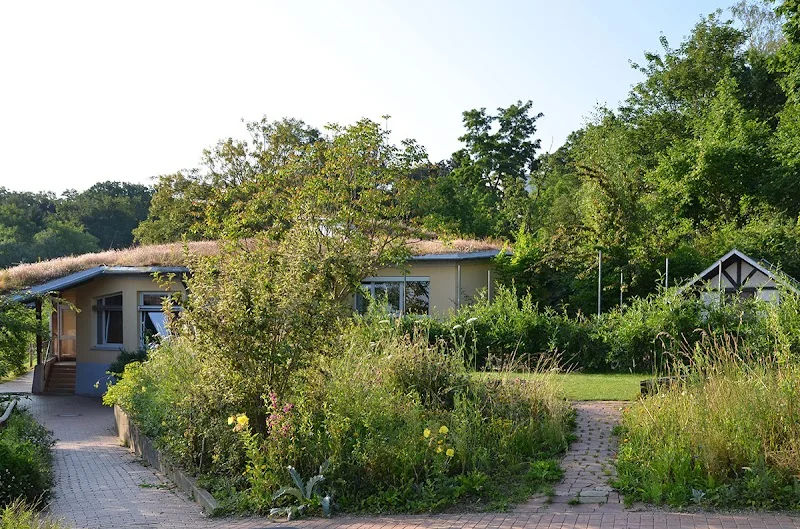
The school grounds of Johannes-Schule Bonn are an important part of its profile. The official walk through the school vividly shows the diversity of buildings and outdoor areas. From the street side, the new buildings house the classes of the middle and upper school, the specialized rooms, the small hall, and the auditorium with a stage. The Wilhelminian schoolhouse today contains administrative rooms, therapy areas, rooms for artistic and craft lessons, as well as home economics and cafeteria kitchen. Additionally, there are the gymnasium, workshops for wood and metal processing, the forge, and the candle-making workshop. The greenhouse, various break areas, the playground for the lower school, seating terraces, and areas for older students are also part of the overall picture. The grounds are situated on a slope, divided with orchards, gardening areas, vegetable and grain beds, as well as play and relaxation zones, thus supporting the connection of movement, rest, and practical experience that the school pedagogically strives for. Water is collected from green roofs in cisterns and used for stream flow, irrigation, and other purposes. This is not only ecologically interesting but also part of the learning culture in which nature and technology are interconnected. ([js-bn.de](https://www.js-bn.de/spaziergang.html))
Even in terms of food and everyday organization, the practical relevance is evident. Since the 2019/20 school year, the school has been cooking for itself. In the newly built school kitchen, a fresh vegetarian lunch is prepared daily, preferably with seasonal and local ingredients, some even from the school garden. For a full-day school, this is more than a practical detail: it is part of the pedagogical image of health, self-sufficiency, and shared culture. In the workshop areas, work is done with wood, metal, forging, and craft tasks; practical projects like the bread and pizza oven, which was created as part of a year-long project, are also included. Such elements make school life visible and explain why the website offers a detailed photo tour. Those looking for photos, atmosphere, and spaces will receive not just individual impressions but a complete picture of the school architecture and learning landscape. Additionally, information about the Martinsbasar, welcome package, and other school festivals can be found on the school website, showing that school life here also means cultural and communal life. Johannes-Schule Bonn thus presents itself as a place where buildings, garden, workshop, and community closely intertwine. ([js-bn.de](https://www.js-bn.de/foerderverein.html))
Photos, Tour, Events, and Contact for Interested Parties
Those who want to get an online impression of Johannes-Schule Bonn should access the official tour of the school. There, not only the buildings are shown but also the outdoor facilities, break areas, greenhouse, workshops, and the paths between the old and new buildings. Especially since many search queries contain the term photos, this area is particularly valuable. The school provides an authentic impression of its character without relying on glossy phrases. In addition, there is a welcome package for new first-grade parents, summarizing information that is important for the interplay between parents and teachers. This shows that the school consciously focuses on relationships and orientation, not just on formally correct registration. The website also contains information on current news, student admissions, job offers, support association, FAQ, and printed materials. Therefore, those who want to delve deeper will find clear pathways through the school's structure. Events such as the Martinsbasar are also visibly integrated, showing that the school year is shaped by community events. This is helpful for interested parties as it conveys a realistic impression of the culture of the institution, not just from the teaching side. ([js-bn.de](https://www.js-bn.de/spaziergang.html))
For contact, the information on the official school and ministry website applies. Johannes-Schule Bonn can be found at Rehfuesstraße 38, 53115 Bonn; the school ministry page also lists the phone number 0228 914340 and the general email address of the school. This is important for inquiries about registration, admission, support needs, or school life. Those wishing to check the admission process will find the relevant documents on the website, such as the registration form and formal responses regarding school places, support needs, and school hours. This gives the school an orderly and accessible appearance. Together with the information on directions, parking, faculty, and school concept, a complete picture emerges: Johannes-Schule Bonn is not an anonymous institution but a clearly profiled Waldorf special school with a high community share, therapeutic addition, and a very visible school grounds. For families in Bonn and the surrounding area looking for a smaller, attentive, and pedagogically well-thought-out school, this combination of facts, images, and structure provides a good basis for decision-making. ([schulministerium.nrw.de](https://www.schulministerium.nrw.de/BiPo/SchuleSuchen/pages/schulsuche/schule_information_seite.xhtml?schulnummer=190214))
Sources:
- Johannes-Schule Bonn - Official Website
- Ministry of School and Education NRW - School Information
- Johannes-Schule Bonn - Walk Through the School
- Johannes-Schule Bonn - Directions and Parking Information
- Johannes-Schule Bonn - Support Association and School Sponsor
- Martinsbasar of Johannes-Schule Bonn - Contact and Directions
Show moreShow less
Johannes-Schule Bonn | Directions & Faculty
The Johannes-Schule Bonn is a special address for families seeking a reliable, therapeutic, and lively learning environment in Bonn. The school is located in Poppelsdorf at Rehfuesstraße 38, at the foot of Venusberg, and combines Waldorf education with individual support, small learning groups, and a full-day concept. As a free Waldorf special school in private sponsorship, it caters to children and adolescents who find it difficult to work in large groups and therefore need special attention. The official school information lists 126 students and the focus areas of emotional and social development, learning, language, and intellectual development. At the same time, the school shows on its website and in its informational materials that learning here means not only lessons but also rhythm, practical work, therapies, community, and a carefully designed environment. Those looking for photos of Johannes-Schule Bonn will find a detailed walk through the premises with many images, buildings, outdoor areas, and workshops on the website. Clear information and helpful orientation can also be found for those searching for faculty, directions, parking, or admission. ([schulministerium.nrw.de](https://www.schulministerium.nrw.de/BiPo/SchuleSuchen/pages/schulsuche/schule_information_seite.xhtml?schulnummer=190214))
History, Profile, and the Special Self-Understanding of Johannes-Schule Bonn
The Johannes-Schule Bonn looks back on a development closely linked to therapeutic pedagogy and Waldorf education. The Association of Free Waldorf Schools names September 1, 1988, as the founding date. The older and newer parts of the school building tell of a longer history: The Wilhelminian schoolhouse was occupied in 1889 by the Protestant primary school Poppelsdorf, and around 100 years later, the Johannes-Schule moved in. Today, the renovated old buildings, new buildings, and functional rooms form a building ensemble that, according to the school, originates from several centuries and is used pedagogically. The Johannes-Schule is a state-approved substitute school in private sponsorship. The school sponsor is the Johannes-Schule Bonn e.V. association, whose members are parents and teachers. The state of NRW largely refinances the core school operations, while buildings, equipment, teaching aids, and therapy areas are funded by the sponsor and other financing elements. This model shapes the school's self-understanding: school is understood as a community task, not as an anonymous institution. The school community works to accompany each child with their strengths and weaknesses in a way that allows for development. In practice, this means: small classes, class teacher principle, close collaboration with parents, structured daily routines, and a lively social framework. The official description emphasizes that the school does not separate but builds class communities in which children can be role models and helpers for each other. This creates a place that offers not only lessons but also relationships, orientation, and development. ([waldorfschule.de](https://www.waldorfschule.de/schule/detail/5053?utm_source=openai))
The pedagogical basic idea is also clearly formulated. The website explains that each child is understood as a physically and emotionally growing individual whose abilities unfold in social contact with the group. This results in a school that focuses not on mass but on relationships. The lessons follow Waldorf pedagogy and combine main lessons, artistic and manual elements, rhythm, repetition, and practical experience. In the upper classes, vocational preparatory content is added, such as agriculture, home economics, crafts, weaving, and internships. At the same time, the principle of individual support remains intact. Particularly important in this context is the therapeutic area, which is not a marginal addition but understood as an integral part of pedagogical thinking. Additionally, the design of the space: bright rooms, health-safe materials, a large property, garden areas, and retreat places. All of this makes the Johannes-Schule Bonn a school that visibly embodies its pedagogical stance in terms of both architecture and organization. This explains why many search queries not only contain the place name but also terms like faculty, photos, directions, parking, or full-day: those looking for the school usually also seek a realistic picture of how learning and living take place there. ([js-bn.de](https://www.js-bn.de/in_aller_kuerze.html))
Admission, School Hours, and Which Children Learn at Johannes-Schule Bonn
A central theme surrounding Johannes-Schule Bonn is admission. The school describes its procedure very transparently and makes it clear that the composition of a class is based on pedagogical criteria. For the first grade, registered children are observed in a playful situation, and parents receive an individual appointment where the child is considered together, and a school consultation is conducted. Whether admission is still possible in the current school year depends, among other things, on the size of the relevant class and the identified support needs. This information is important because it shows that it is not a standardized procedure but a personal and careful decision in the child's interest. The school also explains that it can admit children from the entire spectrum of learning and developmental disorders, particularly in the learning pathway, also in connection with language and emotional and social development, as well as in the intellectual development pathway. A prerequisite is that a special educational support need has been identified within the framework of the North Rhine-Westphalian AO-SF. This means: the school is part of a clearly regulated support system within which tailored support is organized. ([js-bn.de](https://www.js-bn.de/pdf/formalia.pdf))
The school day is also clearly structured yet child-friendly. The Johannes-Schule Bonn operates as a full-day school. The official information page states the school hours: Monday to Wednesday from 8:00 AM to 3:10 PM, including lunch at school, and Thursday and Friday from 8:00 AM to 1:10 PM. This regularity is an important orientation point for many families because it creates reliability and rhythmically structures the day. Additionally, most children come via special school transport, meaning they are picked up and brought back home by small buses. For eligible children, this is usually free of charge. This makes it clear that the school is also organizationally aligned with the needs of its student body. Classes are carefully composed, and the class teacher principle ensures continuity in the early school years. From grade nine onwards, cross-class work is increasingly emphasized, and each class is supported by an upper school accompaniment. The result is a daily teaching routine that does not rely on constant unrest but on trust, repetition, personal bonds, and manageable learning spaces. Therefore, those looking for directions, admission, or full-day at Johannes-Schule Bonn will find not just keywords but a coherent pedagogical and organizational model. ([js-bn.de](https://www.js-bn.de/pdf/formalia.pdf))
Directions, Parking, and Accessibility at Rehfuesstraße
The location of Johannes-Schule Bonn is practical yet somewhat special for visitors. The official address is Rehfuesstraße 38 in 53115 Bonn, thus in Poppelsdorf. For public transport, bus lines 600, 601, 602, and 603 are mentioned, each stopping at Luisenstraße, Marienhospital, or Poppelsdorfer Platz. From there, the school can be reached on foot. The school clearly recommends arriving by public transport or by bicycle, as the parking situation around the premises is typically tight. Those arriving by car should use the parking garage of GFO Kliniken Bonn at St. Marien Hospital according to official guidelines. From there, it is a short walk of about five minutes to the school. An important practical note: there is an absolute no-parking zone in front of the school on Rehfuesstraße, and towing occurs there due to access for emergency vehicles. This is crucial for parents, guests, and delivery services as it avoids misunderstandings and unnecessary stress. The school makes the routes very clear, but it also becomes apparent that spontaneous parking attempts directly in front of the building are not a good idea. ([js-bn.de](https://js-bn.de/pdf/WegbeschrSchule.pdf))
Another special feature is the topographical location. The school campus is situated at the foot of Venusberg and is architecturally designed so that the paths unfold over several levels, stairs, and outdoor areas. The Martinsbasar information point for directions also explicitly states that neither the school building nor the outdoor area is accessible and that there are numerous stairs and no elevator on site. This information is important for anyone arriving with strollers, wheelchairs, or limited mobility as it facilitates planning. At the same time, the official walk through the school shows that the hillside location and the diverse paths are part of the character of the premises. The grounds do not appear as a smooth functional building but as an organically developed school site with various houses, courtyards, gardens, and transitions. Those looking for photos of Johannes-Schule Bonn will discover this mix of historical and new buildings, retreat and movement, green spaces and functional areas. Thus, the directions are not just a route description but also a first impression of the school's special location in Bonn-Poppelsdorf. ([js-bn.de](https://js-bn.de/pdf/WegbeschrSchule.pdf))
Faculty, Self-Administration, and the Weekly Work of the School
A frequently searched term is the faculty of Johannes-Schule Bonn, and here too, the school's special profile is evident. The Johannes-Schule Bonn e.V. association is the school sponsor and is supported by the bodies of the general assembly, board, school management, teaching faculty, advisory board, and mediation circle. Members of the association include parents and staff. This structure makes the school strongly community-oriented and distinguishes it from many hierarchically organized institutions. The school management is responsible for organization and teaching in a comprehensive sense, while the general conference of all teachers meets weekly on Thursdays. There, technical, organizational, and administrative questions are discussed, as well as training, exchange from the classes, and school development work. Additionally, there is a children's conference where individual students are considered by the entire faculty to develop new pedagogical or therapeutic approaches. The advisory board ensures that the work of parents, teachers, and the board can be supported by the entire school community. A mediation circle helps with conflicts within the school community and moderates discussions. This is a fairly differentiated model of self-administration that shows how seriously the school takes the shared responsibility for the child. ([js-bn.de](https://www.js-bn.de/pdf/schulekompakt_extern.pdf))
This community structure is also relevant financially. The Johannes-Schule points out that while the core school operations are financed by the state of NRW to about 90 percent, many tasks must be funded by the school sponsor and the support association. This includes investments in buildings and equipment as well as teaching assistants, therapy areas, volunteer services, school medical support, and teaching materials. For this reason, the parent contributions are tiered according to income, and the support association plays an important balancing role. The support association also supports the further development of the school concept, training, and specific therapies. This financing statement is often crucial for parents as it transparently shows why the school relies on donations, memberships, and sponsorships. At the same time, it carries a pedagogical signal: the school does not want to exclude anyone for economic reasons. The interplay between parents and teachers is thus not just an ideal but a concrete organizational principle. Those searching for faculty or structure quickly recognize that Johannes-Schule Bonn offers not only lessons but a consciously designed community with shared responsibility, conferences, advisory boards, and clear responsibilities. This gives the institution stability and explains why it has been able to develop over decades. ([js-bn.de](https://www.js-bn.de/foerderverein.html))
Lessons, Therapies, and the Practical Year at Johannes-Schule Bonn
The Johannes-Schule Bonn works with a broad range of subjects and learning areas that go far beyond classical teaching. The school concept page mentions, among other things, career orientation, English, eurythmy, gardening, handicrafts, main lessons, home economics, candle making, art, agricultural internships, media studies, music, practical year, school celebrations, sports, gymnastics, and movement pool, therapies, forest internships, weaving, and crafts. This makes it clear that learning here is not only thought of cognitively but also through movement, craftsmanship, art, nature, and rhythm. The main lessons form the daily core and work thematically over several weeks. English, handicrafts, eurythmy, music, and play gymnastics begin as early as the first grade. Later, gardening, crafts, religion, sports, home economics, and art appreciation are added. This is a central difference for parents looking for a school with a stable structure and lively teaching. The school combines academic competence with practical education and social learning. This is particularly true for the upper school, where vocational preparatory and practical subjects form a focus. ([js-bn.de](https://www.js-bn.de/schulkonzept.html))
The therapeutic and support pedagogical orientation is particularly strong. The lessons are complemented by therapies and individual support. Mentioned are physiotherapy, therapeutic eurythmy, rhythmic massage, art therapy, music therapy, individual musical support, speech development, and other measures. In the therapy circle, therapists and teachers work together, and the therapies are medically supervised. This is a central building block for a special needs school, as development is not understood as a purely academic achievement here. Additionally, there is the practical year for students with support needs in the area of intellectual development. It serves to work specifically on the next educational or life phase after school or in a school extension. The school describes this offer as particularly relevant for young adults who need more time for post-school education and training. In sum, a program emerges that aims at practical life, independence, and individual maturation. Therefore, those looking for therapies, practical year, or special needs school at Johannes-Schule Bonn will find a concept that is rich in content, going far beyond mere supervision and carrying a clear pedagogical claim. ([js-bn.de](https://www.js-bn.de/in_aller_kuerze.html))
Buildings, School Garden, Workshops, and Visible School Life
The school grounds of Johannes-Schule Bonn are an important part of its profile. The official walk through the school vividly shows the diversity of buildings and outdoor areas. From the street side, the new buildings house the classes of the middle and upper school, the specialized rooms, the small hall, and the auditorium with a stage. The Wilhelminian schoolhouse today contains administrative rooms, therapy areas, rooms for artistic and craft lessons, as well as home economics and cafeteria kitchen. Additionally, there are the gymnasium, workshops for wood and metal processing, the forge, and the candle-making workshop. The greenhouse, various break areas, the playground for the lower school, seating terraces, and areas for older students are also part of the overall picture. The grounds are situated on a slope, divided with orchards, gardening areas, vegetable and grain beds, as well as play and relaxation zones, thus supporting the connection of movement, rest, and practical experience that the school pedagogically strives for. Water is collected from green roofs in cisterns and used for stream flow, irrigation, and other purposes. This is not only ecologically interesting but also part of the learning culture in which nature and technology are interconnected. ([js-bn.de](https://www.js-bn.de/spaziergang.html))
Even in terms of food and everyday organization, the practical relevance is evident. Since the 2019/20 school year, the school has been cooking for itself. In the newly built school kitchen, a fresh vegetarian lunch is prepared daily, preferably with seasonal and local ingredients, some even from the school garden. For a full-day school, this is more than a practical detail: it is part of the pedagogical image of health, self-sufficiency, and shared culture. In the workshop areas, work is done with wood, metal, forging, and craft tasks; practical projects like the bread and pizza oven, which was created as part of a year-long project, are also included. Such elements make school life visible and explain why the website offers a detailed photo tour. Those looking for photos, atmosphere, and spaces will receive not just individual impressions but a complete picture of the school architecture and learning landscape. Additionally, information about the Martinsbasar, welcome package, and other school festivals can be found on the school website, showing that school life here also means cultural and communal life. Johannes-Schule Bonn thus presents itself as a place where buildings, garden, workshop, and community closely intertwine. ([js-bn.de](https://www.js-bn.de/foerderverein.html))
Photos, Tour, Events, and Contact for Interested Parties
Those who want to get an online impression of Johannes-Schule Bonn should access the official tour of the school. There, not only the buildings are shown but also the outdoor facilities, break areas, greenhouse, workshops, and the paths between the old and new buildings. Especially since many search queries contain the term photos, this area is particularly valuable. The school provides an authentic impression of its character without relying on glossy phrases. In addition, there is a welcome package for new first-grade parents, summarizing information that is important for the interplay between parents and teachers. This shows that the school consciously focuses on relationships and orientation, not just on formally correct registration. The website also contains information on current news, student admissions, job offers, support association, FAQ, and printed materials. Therefore, those who want to delve deeper will find clear pathways through the school's structure. Events such as the Martinsbasar are also visibly integrated, showing that the school year is shaped by community events. This is helpful for interested parties as it conveys a realistic impression of the culture of the institution, not just from the teaching side. ([js-bn.de](https://www.js-bn.de/spaziergang.html))
For contact, the information on the official school and ministry website applies. Johannes-Schule Bonn can be found at Rehfuesstraße 38, 53115 Bonn; the school ministry page also lists the phone number 0228 914340 and the general email address of the school. This is important for inquiries about registration, admission, support needs, or school life. Those wishing to check the admission process will find the relevant documents on the website, such as the registration form and formal responses regarding school places, support needs, and school hours. This gives the school an orderly and accessible appearance. Together with the information on directions, parking, faculty, and school concept, a complete picture emerges: Johannes-Schule Bonn is not an anonymous institution but a clearly profiled Waldorf special school with a high community share, therapeutic addition, and a very visible school grounds. For families in Bonn and the surrounding area looking for a smaller, attentive, and pedagogically well-thought-out school, this combination of facts, images, and structure provides a good basis for decision-making. ([schulministerium.nrw.de](https://www.schulministerium.nrw.de/BiPo/SchuleSuchen/pages/schulsuche/schule_information_seite.xhtml?schulnummer=190214))
Sources:
- Johannes-Schule Bonn - Official Website
- Ministry of School and Education NRW - School Information
- Johannes-Schule Bonn - Walk Through the School
- Johannes-Schule Bonn - Directions and Parking Information
- Johannes-Schule Bonn - Support Association and School Sponsor
- Martinsbasar of Johannes-Schule Bonn - Contact and Directions
Johannes-Schule Bonn | Directions & Faculty
The Johannes-Schule Bonn is a special address for families seeking a reliable, therapeutic, and lively learning environment in Bonn. The school is located in Poppelsdorf at Rehfuesstraße 38, at the foot of Venusberg, and combines Waldorf education with individual support, small learning groups, and a full-day concept. As a free Waldorf special school in private sponsorship, it caters to children and adolescents who find it difficult to work in large groups and therefore need special attention. The official school information lists 126 students and the focus areas of emotional and social development, learning, language, and intellectual development. At the same time, the school shows on its website and in its informational materials that learning here means not only lessons but also rhythm, practical work, therapies, community, and a carefully designed environment. Those looking for photos of Johannes-Schule Bonn will find a detailed walk through the premises with many images, buildings, outdoor areas, and workshops on the website. Clear information and helpful orientation can also be found for those searching for faculty, directions, parking, or admission. ([schulministerium.nrw.de](https://www.schulministerium.nrw.de/BiPo/SchuleSuchen/pages/schulsuche/schule_information_seite.xhtml?schulnummer=190214))
History, Profile, and the Special Self-Understanding of Johannes-Schule Bonn
The Johannes-Schule Bonn looks back on a development closely linked to therapeutic pedagogy and Waldorf education. The Association of Free Waldorf Schools names September 1, 1988, as the founding date. The older and newer parts of the school building tell of a longer history: The Wilhelminian schoolhouse was occupied in 1889 by the Protestant primary school Poppelsdorf, and around 100 years later, the Johannes-Schule moved in. Today, the renovated old buildings, new buildings, and functional rooms form a building ensemble that, according to the school, originates from several centuries and is used pedagogically. The Johannes-Schule is a state-approved substitute school in private sponsorship. The school sponsor is the Johannes-Schule Bonn e.V. association, whose members are parents and teachers. The state of NRW largely refinances the core school operations, while buildings, equipment, teaching aids, and therapy areas are funded by the sponsor and other financing elements. This model shapes the school's self-understanding: school is understood as a community task, not as an anonymous institution. The school community works to accompany each child with their strengths and weaknesses in a way that allows for development. In practice, this means: small classes, class teacher principle, close collaboration with parents, structured daily routines, and a lively social framework. The official description emphasizes that the school does not separate but builds class communities in which children can be role models and helpers for each other. This creates a place that offers not only lessons but also relationships, orientation, and development. ([waldorfschule.de](https://www.waldorfschule.de/schule/detail/5053?utm_source=openai))
The pedagogical basic idea is also clearly formulated. The website explains that each child is understood as a physically and emotionally growing individual whose abilities unfold in social contact with the group. This results in a school that focuses not on mass but on relationships. The lessons follow Waldorf pedagogy and combine main lessons, artistic and manual elements, rhythm, repetition, and practical experience. In the upper classes, vocational preparatory content is added, such as agriculture, home economics, crafts, weaving, and internships. At the same time, the principle of individual support remains intact. Particularly important in this context is the therapeutic area, which is not a marginal addition but understood as an integral part of pedagogical thinking. Additionally, the design of the space: bright rooms, health-safe materials, a large property, garden areas, and retreat places. All of this makes the Johannes-Schule Bonn a school that visibly embodies its pedagogical stance in terms of both architecture and organization. This explains why many search queries not only contain the place name but also terms like faculty, photos, directions, parking, or full-day: those looking for the school usually also seek a realistic picture of how learning and living take place there. ([js-bn.de](https://www.js-bn.de/in_aller_kuerze.html))
Admission, School Hours, and Which Children Learn at Johannes-Schule Bonn
A central theme surrounding Johannes-Schule Bonn is admission. The school describes its procedure very transparently and makes it clear that the composition of a class is based on pedagogical criteria. For the first grade, registered children are observed in a playful situation, and parents receive an individual appointment where the child is considered together, and a school consultation is conducted. Whether admission is still possible in the current school year depends, among other things, on the size of the relevant class and the identified support needs. This information is important because it shows that it is not a standardized procedure but a personal and careful decision in the child's interest. The school also explains that it can admit children from the entire spectrum of learning and developmental disorders, particularly in the learning pathway, also in connection with language and emotional and social development, as well as in the intellectual development pathway. A prerequisite is that a special educational support need has been identified within the framework of the North Rhine-Westphalian AO-SF. This means: the school is part of a clearly regulated support system within which tailored support is organized. ([js-bn.de](https://www.js-bn.de/pdf/formalia.pdf))
The school day is also clearly structured yet child-friendly. The Johannes-Schule Bonn operates as a full-day school. The official information page states the school hours: Monday to Wednesday from 8:00 AM to 3:10 PM, including lunch at school, and Thursday and Friday from 8:00 AM to 1:10 PM. This regularity is an important orientation point for many families because it creates reliability and rhythmically structures the day. Additionally, most children come via special school transport, meaning they are picked up and brought back home by small buses. For eligible children, this is usually free of charge. This makes it clear that the school is also organizationally aligned with the needs of its student body. Classes are carefully composed, and the class teacher principle ensures continuity in the early school years. From grade nine onwards, cross-class work is increasingly emphasized, and each class is supported by an upper school accompaniment. The result is a daily teaching routine that does not rely on constant unrest but on trust, repetition, personal bonds, and manageable learning spaces. Therefore, those looking for directions, admission, or full-day at Johannes-Schule Bonn will find not just keywords but a coherent pedagogical and organizational model. ([js-bn.de](https://www.js-bn.de/pdf/formalia.pdf))
Directions, Parking, and Accessibility at Rehfuesstraße
The location of Johannes-Schule Bonn is practical yet somewhat special for visitors. The official address is Rehfuesstraße 38 in 53115 Bonn, thus in Poppelsdorf. For public transport, bus lines 600, 601, 602, and 603 are mentioned, each stopping at Luisenstraße, Marienhospital, or Poppelsdorfer Platz. From there, the school can be reached on foot. The school clearly recommends arriving by public transport or by bicycle, as the parking situation around the premises is typically tight. Those arriving by car should use the parking garage of GFO Kliniken Bonn at St. Marien Hospital according to official guidelines. From there, it is a short walk of about five minutes to the school. An important practical note: there is an absolute no-parking zone in front of the school on Rehfuesstraße, and towing occurs there due to access for emergency vehicles. This is crucial for parents, guests, and delivery services as it avoids misunderstandings and unnecessary stress. The school makes the routes very clear, but it also becomes apparent that spontaneous parking attempts directly in front of the building are not a good idea. ([js-bn.de](https://js-bn.de/pdf/WegbeschrSchule.pdf))
Another special feature is the topographical location. The school campus is situated at the foot of Venusberg and is architecturally designed so that the paths unfold over several levels, stairs, and outdoor areas. The Martinsbasar information point for directions also explicitly states that neither the school building nor the outdoor area is accessible and that there are numerous stairs and no elevator on site. This information is important for anyone arriving with strollers, wheelchairs, or limited mobility as it facilitates planning. At the same time, the official walk through the school shows that the hillside location and the diverse paths are part of the character of the premises. The grounds do not appear as a smooth functional building but as an organically developed school site with various houses, courtyards, gardens, and transitions. Those looking for photos of Johannes-Schule Bonn will discover this mix of historical and new buildings, retreat and movement, green spaces and functional areas. Thus, the directions are not just a route description but also a first impression of the school's special location in Bonn-Poppelsdorf. ([js-bn.de](https://js-bn.de/pdf/WegbeschrSchule.pdf))
Faculty, Self-Administration, and the Weekly Work of the School
A frequently searched term is the faculty of Johannes-Schule Bonn, and here too, the school's special profile is evident. The Johannes-Schule Bonn e.V. association is the school sponsor and is supported by the bodies of the general assembly, board, school management, teaching faculty, advisory board, and mediation circle. Members of the association include parents and staff. This structure makes the school strongly community-oriented and distinguishes it from many hierarchically organized institutions. The school management is responsible for organization and teaching in a comprehensive sense, while the general conference of all teachers meets weekly on Thursdays. There, technical, organizational, and administrative questions are discussed, as well as training, exchange from the classes, and school development work. Additionally, there is a children's conference where individual students are considered by the entire faculty to develop new pedagogical or therapeutic approaches. The advisory board ensures that the work of parents, teachers, and the board can be supported by the entire school community. A mediation circle helps with conflicts within the school community and moderates discussions. This is a fairly differentiated model of self-administration that shows how seriously the school takes the shared responsibility for the child. ([js-bn.de](https://www.js-bn.de/pdf/schulekompakt_extern.pdf))
This community structure is also relevant financially. The Johannes-Schule points out that while the core school operations are financed by the state of NRW to about 90 percent, many tasks must be funded by the school sponsor and the support association. This includes investments in buildings and equipment as well as teaching assistants, therapy areas, volunteer services, school medical support, and teaching materials. For this reason, the parent contributions are tiered according to income, and the support association plays an important balancing role. The support association also supports the further development of the school concept, training, and specific therapies. This financing statement is often crucial for parents as it transparently shows why the school relies on donations, memberships, and sponsorships. At the same time, it carries a pedagogical signal: the school does not want to exclude anyone for economic reasons. The interplay between parents and teachers is thus not just an ideal but a concrete organizational principle. Those searching for faculty or structure quickly recognize that Johannes-Schule Bonn offers not only lessons but a consciously designed community with shared responsibility, conferences, advisory boards, and clear responsibilities. This gives the institution stability and explains why it has been able to develop over decades. ([js-bn.de](https://www.js-bn.de/foerderverein.html))
Lessons, Therapies, and the Practical Year at Johannes-Schule Bonn
The Johannes-Schule Bonn works with a broad range of subjects and learning areas that go far beyond classical teaching. The school concept page mentions, among other things, career orientation, English, eurythmy, gardening, handicrafts, main lessons, home economics, candle making, art, agricultural internships, media studies, music, practical year, school celebrations, sports, gymnastics, and movement pool, therapies, forest internships, weaving, and crafts. This makes it clear that learning here is not only thought of cognitively but also through movement, craftsmanship, art, nature, and rhythm. The main lessons form the daily core and work thematically over several weeks. English, handicrafts, eurythmy, music, and play gymnastics begin as early as the first grade. Later, gardening, crafts, religion, sports, home economics, and art appreciation are added. This is a central difference for parents looking for a school with a stable structure and lively teaching. The school combines academic competence with practical education and social learning. This is particularly true for the upper school, where vocational preparatory and practical subjects form a focus. ([js-bn.de](https://www.js-bn.de/schulkonzept.html))
The therapeutic and support pedagogical orientation is particularly strong. The lessons are complemented by therapies and individual support. Mentioned are physiotherapy, therapeutic eurythmy, rhythmic massage, art therapy, music therapy, individual musical support, speech development, and other measures. In the therapy circle, therapists and teachers work together, and the therapies are medically supervised. This is a central building block for a special needs school, as development is not understood as a purely academic achievement here. Additionally, there is the practical year for students with support needs in the area of intellectual development. It serves to work specifically on the next educational or life phase after school or in a school extension. The school describes this offer as particularly relevant for young adults who need more time for post-school education and training. In sum, a program emerges that aims at practical life, independence, and individual maturation. Therefore, those looking for therapies, practical year, or special needs school at Johannes-Schule Bonn will find a concept that is rich in content, going far beyond mere supervision and carrying a clear pedagogical claim. ([js-bn.de](https://www.js-bn.de/in_aller_kuerze.html))
Buildings, School Garden, Workshops, and Visible School Life
The school grounds of Johannes-Schule Bonn are an important part of its profile. The official walk through the school vividly shows the diversity of buildings and outdoor areas. From the street side, the new buildings house the classes of the middle and upper school, the specialized rooms, the small hall, and the auditorium with a stage. The Wilhelminian schoolhouse today contains administrative rooms, therapy areas, rooms for artistic and craft lessons, as well as home economics and cafeteria kitchen. Additionally, there are the gymnasium, workshops for wood and metal processing, the forge, and the candle-making workshop. The greenhouse, various break areas, the playground for the lower school, seating terraces, and areas for older students are also part of the overall picture. The grounds are situated on a slope, divided with orchards, gardening areas, vegetable and grain beds, as well as play and relaxation zones, thus supporting the connection of movement, rest, and practical experience that the school pedagogically strives for. Water is collected from green roofs in cisterns and used for stream flow, irrigation, and other purposes. This is not only ecologically interesting but also part of the learning culture in which nature and technology are interconnected. ([js-bn.de](https://www.js-bn.de/spaziergang.html))
Even in terms of food and everyday organization, the practical relevance is evident. Since the 2019/20 school year, the school has been cooking for itself. In the newly built school kitchen, a fresh vegetarian lunch is prepared daily, preferably with seasonal and local ingredients, some even from the school garden. For a full-day school, this is more than a practical detail: it is part of the pedagogical image of health, self-sufficiency, and shared culture. In the workshop areas, work is done with wood, metal, forging, and craft tasks; practical projects like the bread and pizza oven, which was created as part of a year-long project, are also included. Such elements make school life visible and explain why the website offers a detailed photo tour. Those looking for photos, atmosphere, and spaces will receive not just individual impressions but a complete picture of the school architecture and learning landscape. Additionally, information about the Martinsbasar, welcome package, and other school festivals can be found on the school website, showing that school life here also means cultural and communal life. Johannes-Schule Bonn thus presents itself as a place where buildings, garden, workshop, and community closely intertwine. ([js-bn.de](https://www.js-bn.de/foerderverein.html))
Photos, Tour, Events, and Contact for Interested Parties
Those who want to get an online impression of Johannes-Schule Bonn should access the official tour of the school. There, not only the buildings are shown but also the outdoor facilities, break areas, greenhouse, workshops, and the paths between the old and new buildings. Especially since many search queries contain the term photos, this area is particularly valuable. The school provides an authentic impression of its character without relying on glossy phrases. In addition, there is a welcome package for new first-grade parents, summarizing information that is important for the interplay between parents and teachers. This shows that the school consciously focuses on relationships and orientation, not just on formally correct registration. The website also contains information on current news, student admissions, job offers, support association, FAQ, and printed materials. Therefore, those who want to delve deeper will find clear pathways through the school's structure. Events such as the Martinsbasar are also visibly integrated, showing that the school year is shaped by community events. This is helpful for interested parties as it conveys a realistic impression of the culture of the institution, not just from the teaching side. ([js-bn.de](https://www.js-bn.de/spaziergang.html))
For contact, the information on the official school and ministry website applies. Johannes-Schule Bonn can be found at Rehfuesstraße 38, 53115 Bonn; the school ministry page also lists the phone number 0228 914340 and the general email address of the school. This is important for inquiries about registration, admission, support needs, or school life. Those wishing to check the admission process will find the relevant documents on the website, such as the registration form and formal responses regarding school places, support needs, and school hours. This gives the school an orderly and accessible appearance. Together with the information on directions, parking, faculty, and school concept, a complete picture emerges: Johannes-Schule Bonn is not an anonymous institution but a clearly profiled Waldorf special school with a high community share, therapeutic addition, and a very visible school grounds. For families in Bonn and the surrounding area looking for a smaller, attentive, and pedagogically well-thought-out school, this combination of facts, images, and structure provides a good basis for decision-making. ([schulministerium.nrw.de](https://www.schulministerium.nrw.de/BiPo/SchuleSuchen/pages/schulsuche/schule_information_seite.xhtml?schulnummer=190214))
Sources:
- Johannes-Schule Bonn - Official Website
- Ministry of School and Education NRW - School Information
- Johannes-Schule Bonn - Walk Through the School
- Johannes-Schule Bonn - Directions and Parking Information
- Johannes-Schule Bonn - Support Association and School Sponsor
- Martinsbasar of Johannes-Schule Bonn - Contact and Directions
Upcoming Events
No events found
Frequently Asked Questions
Reviews
No reviews found