
Bonn
Poststraße 26, 53111 Bonn, Deutschland
Global Heritage Lab | Exhibitions & Opening Hours
The Global Heritage Lab in Bonn is much more than a classic exhibition venue: it is a transdisciplinary research and exhibition lab of the University of Bonn, anchored in TRA Present Pasts, and understands itself as a space for experimentation, exchange, and new perspectives. Here, Heritage Studies, museum practice, and public communication intersect. The place consciously works with transregional and transcontinental perspectives and incorporates indigenous forms of knowledge as well as diverse voices in the engagement with the past, present, and future. Therefore, visitors to the Global Heritage Lab experience not only exhibits but also a conceptually strong institution that addresses questions of memory, responsibility, and cultural heritage in a contemporary manner. The address in P26 at Poststraße 26 in Bonn's city center makes visiting additionally uncomplicated and easily accessible. ([globalheritagelab.org](https://globalheritagelab.org/?utm_source=openai))
Current Exhibitions and Program at the Global Heritage Lab
A central keyword theme around the Global Heritage Lab is the program. This is where the special strength of the institution lies: it works with exhibition series, public events, and discursive formats that not only show but also encourage critical thinking. This is particularly evident in the exhibition series “Plant Knowledge – Ecologies of Remembering and Acting,” which runs at the Global Heritage Lab of the University of Bonn from March 19, 2026, to March 7, 2027. The kickoff of this series was on display from March 19 to June 7, 2026. The content focuses on historically grown relationships with plants, ecosystems, and bodies of water, as well as new forms of coexistence and knowledge production. The institution thus creates a learning and meeting space at the intersection of art, science, and urban society. ([uni-bonn.de](https://www.uni-bonn.de/en/news/049-2027?utm_source=openai))
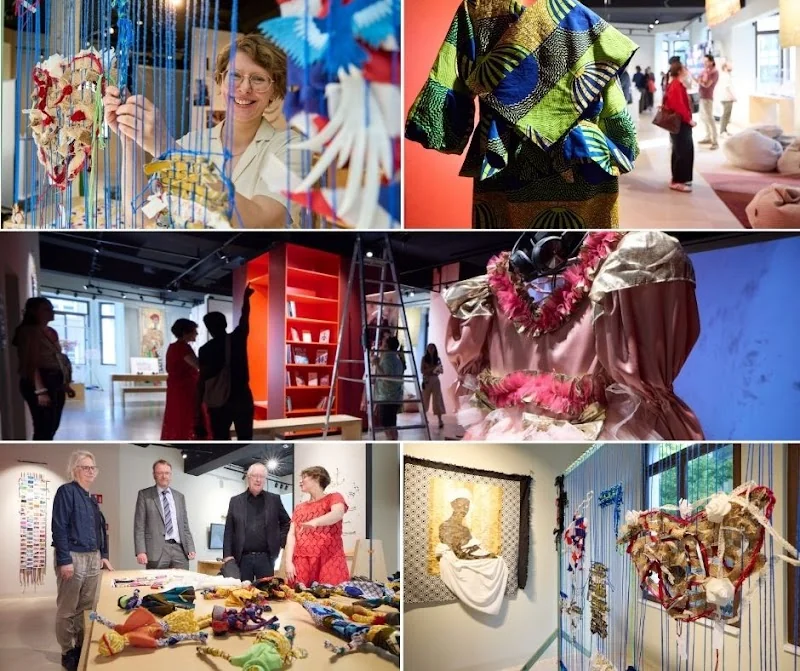
Other formats also demonstrate the breadth of the program. The Global Heritage Lab has already been the venue for exhibitions such as “Dressing Resistance. Fashion and the Heritage of Mission” and “Enmeshed and Entwined - Fabrics of Dependency,” which address themes such as mission, fashion, colonial history, and dependency relations. In addition, there are conferences, panels, workshops, seminars, and public tours, for example, on issues of collective memory, transcultural dialogue, or material knowledge production. For visitors, this means: The Global Heritage Lab is not a place with a rigid permanent program, but a vibrant lab where current research and exhibition practice continuously evolve. This is exactly why many interested parties search for terms like program, exhibition, event, and dates in connection with the institution. ([dependency.uni-bonn.de](https://www.dependency.uni-bonn.de/en/events/exhibition-openings-at-the-global-heritage-lab?utm_source=openai))
The program is also supported by current research and publication impulses. The official website provides information on research related to West African gold trade, new publications, panels on German colonial history, and collaborations with international researchers. This diversity makes the Global Heritage Lab a place where exhibitions are not isolated but embedded in larger scientific and societal debates. Therefore, anyone looking for a cultural offering in Bonn that goes beyond classic museum expectations will find here a format that is equally informative, reflective, and current. ([globalheritagelab.org](https://globalheritagelab.org/?utm_source=openai))
Opening Hours, Admission, and Tours
For practical visit planning, the opening hours of the Global Heritage Lab are particularly important. The exhibition area is open from Wednesday to Sunday from 2 PM to 6 PM. These times are mentioned on the visitor information page of the institution and apply to the publicly accessible exhibition operation in P26. Since the institution regularly works with special formats, construction situations, and changing program phases, it is always worth taking a quick look at the current notices before visiting. Especially in a place that strongly engages with exhibitions and events, such updates are important because dates, opening steps, and closing days can change. ([globalheritagelab.org](https://globalheritagelab.org/information-for-visitors/?utm_source=openai))
The admission is also clearly regulated: Regular admission costs 4.50 euros, reduced 2.50 euros. Admission is free for students of the University of Bonn. This makes the Global Heritage Lab a comparatively low-threshold cultural offering in Bonn's city center, especially for an audience from research, study, urban society, and international guests. In the current information from the University of Bonn regarding P26, this admission price for the museums in the building, which also includes the Global Heritage Lab, is mentioned. Therefore, anyone looking for tickets, prices, or the box office will find a transparent and easily understandable regulation here. ([uni-bonn.de](https://www.uni-bonn.de/de/universitaet/unileben/p26?utm_source=openai))
Guided tours are also possible and are offered not as a rigid standard product but as a flexible visiting option. The team requests that for guided tours, an email be sent to ghlguide@uni-bonn.de. This is practical for groups, educational institutions, and anyone who wants to experience the institution with professional guidance. The visitor information also mentions the general location on the first floor of P26, which makes orientation on-site easier. Especially because the Global Heritage Lab thematically operates between museum, research, and communication, tours are a good way to better access the substantive depth of the place. ([globalheritagelab.org](https://globalheritagelab.org/information-for-visitors/?utm_source=openai))
Access and Parking in Bonn
The location of the Global Heritage Lab is one of its greatest practical advantages. It is located centrally in Bonn's city center at Poststraße 26, 53111 Bonn, in P26 of the University of Bonn. Those arriving by train benefit from the proximity to the main train station: According to the University of Bonn, it is only about a two-minute walk from Bonn Hauptbahnhof. Bus and subway connections are also available via the Bonn Hauptbahnhof station. For visitors from the region, this is a clear plus point, as the way to the institution is short and easy to follow. Especially with search queries like access, train station, or location, it becomes clear that the Global Heritage Lab is not hidden but located right in the midst of urban activity. ([uni-bonn.de](https://www.uni-bonn.de/de/universitaet/unileben/infopunkt-und-unishop/kontakt?utm_source=openai))
Those arriving by car should use the parking garages in the city center, according to the University of Bonn. A direct recommendation for the building itself is therefore not to park on-site but to plan for the inner-city parking garages. This is typical for a central location and helps to plan the visit more realistically. For guests who want to combine several stops in Bonn, the city center access is particularly attractive because the Global Heritage Lab is in close proximity to other university and urban points. In practice, this is more pleasant for many visitors than arriving with long walks or unclear parking searches. ([uni-bonn.de](https://www.uni-bonn.de/de/universitaet/unileben/infopunkt-und-unishop/kontakt?utm_source=openai))
The central location also supports a visit without a car. Those arriving by train can reach the institution very directly, and those already in the city center have only short distances to cover. This results in a rather urban, open visiting character: The Global Heritage Lab is not a remote specialized museum but part of a densely networked urban location. This proximity to the train station, pedestrian paths, and other facilities makes it suitable for spontaneous visits as well as planned appointments. From an SEO analysis perspective, access, train station, and parking are therefore among the most important search topics related to this location. ([uni-bonn.de](https://www.uni-bonn.de/de/universitaet/unileben/infopunkt-und-unishop/kontakt?utm_source=openai))
P26: Location, Building, and Other Facilities
The Global Heritage Lab is part of P26, and this building context is crucial for understanding the place. The University of Bonn describes P26 as a former department store at Poststraße 26, where research, teaching, and the public come together in a central city location. The building houses two museums, the Global Heritage Lab, the university's information point, the Knowledge Lab Uni Bonn, abbreviated KLUB, and Café Luise. This makes the building resemble a curated knowledge house, where different formats do not coexist side by side but converge in close proximity. This makes the location particularly versatile and comprehensible for visitors. ([uni-bonn.de](https://www.uni-bonn.de/de/universitaet/unileben/p26?utm_source=openai))
The University of Bonn also emphasizes that each floor in P26 highlights a different era and sets different focuses. Therefore, visitors can not only experience the Global Heritage Lab but also explore the Egyptian Museum, the Paul-Clemen Museum, and changing exhibitions in KLUB. This structure is remarkable for an inner-city science and culture building because it brings together various knowledge spaces under one roof. The Global Heritage Lab is located on the first floor. For visitors, this is helpful because they can better place the institution: it is not an isolated special area but a component of a larger, carefully designed building. ([uni-bonn.de](https://www.uni-bonn.de/de/universitaet/unileben/p26?utm_source=openai))
In terms of content, P26 is guided by the idea of bringing together knowledge from the past, present, and future. The Global Heritage Lab fits very harmoniously into this: it deals with historical depth, current debates, and future forms of museum and cultural heritage understanding. The institution is thus not only a place for exhibitions but also a place where university research becomes visible and publicly experienceable. For search queries related to the term P26, the location Poststraße 26, or the relationship between museum and science, this classification provides the most important orientation. ([uni-bonn.de](https://www.uni-bonn.de/de/universitaet/unileben/p26?utm_source=openai))
Research, Heritage Studies, and International Perspectives
The professional identity of the Global Heritage Lab is strongly scientifically oriented. Officially, it is described as a central hub for research in the field of Heritage Studies and museum science, and at the same time understood as a transdisciplinary lab. This means: it is not only about collecting or presenting objects but about critical reflections on museums, cultural heritage, and forms of knowledge production. This research approach distinguishes the Global Heritage Lab from many classic exhibition venues. It is a space that experiments, asks questions, and brings different disciplines into conversation. ([globalheritagelab.org](https://globalheritagelab.org/about/?utm_source=openai))
Particularly influential is the international perspective. The website emphasizes transregional and transcontinental perspectives, the inclusion of indigenous knowledge, and diverse, multi-voiced viewpoints. The team works across continents and maintains a community of researchers and practitioners in Africa, the Americas, particularly in Latin America, Europe, and possibly also in Asia and the Pacific region. This is central to the content orientation, as the institution aims to understand heritage not only locally or nationally but in global contexts. This creates a special tension between scientific depth and public accessibility. ([globalheritagelab.org](https://globalheritagelab.org/?utm_source=openai))
The official description also makes it clear that the Global Heritage Lab aims to provide new impulses for the redesign of museums and university collections. In job and project texts, it is described as a research hub as well as an experimental teaching and exhibition space. This clearly indicates that the institution does not merely showcase results but makes processes visible: How is knowledge organized? Who speaks in the museum? What stories are told, and which remain long invisible? This makes the Global Heritage Lab a particularly relevant place in Bonn for visitors interested in Heritage Studies, Critical Museum Studies, or transcultural research. ([uni-bonn.de](https://www.uni-bonn.de/de/universitaet/medien-universitaet/medien-arbeiten-an-der-uni/medien-personalmanagement/pdfs-stellenausschreibungen-wiss.ma/3-2_2024_36.pdf/%40%40download/file/3.2_2024_36.pdf?utm_source=openai))
Planning a Visit: How to Connect the Global Heritage Lab with P26
When planning a visit, one should understand the Global Heritage Lab as part of a larger experiential space. Since other museums, the information point, the Knowledge Lab Uni Bonn, and a café are located in the same building, the stay can be well combined with other stops in the institution. This is a natural conclusion from the structure of P26 and at the same time a practical advantage for all who come from research, cultural interest, or simply out of curiosity. The Global Heritage Lab is thus ideal for people who are interested not only in a single object but in contexts, backgrounds, and curated knowledge spaces. ([uni-bonn.de](https://www.uni-bonn.de/de/universitaet/unileben/p26?utm_source=openai))
Especially because the institution functions publicly, scientifically, and culturally at the same time, a visit is worthwhile for both spontaneous guests and those planning specifically. Those searching for exhibitions, opening hours, programs, or access ultimately seek a place that can be quickly understood while also offering substantive depth. The Global Heritage Lab meets exactly this requirement: short distances in Bonn's city center, clear opening hours, moderate admission, and a profile that goes beyond mere presentation. The combination of urban location and research focus makes the site versatile and connectable. ([uni-bonn.de](https://www.uni-bonn.de/de/universitaet/unileben/infopunkt-und-unishop/kontakt?utm_source=openai))
A visit is particularly meaningful if one is interested in current questions regarding memory, colonial history, plant knowledge, materiality, or museum practices. The programming of the institution shows that here not only the past is preserved but actively questioned. Those wishing to deepen their visit can request a guided tour via email and thus engage with the place in a professional manner. Overall, the Global Heritage Lab is a Bonn location suitable for both educational visits and culturally interested city visits while retaining the character of an open, research-oriented institution. ([globalheritagelab.org](https://globalheritagelab.org/information-for-visitors/?utm_source=openai))
Sources:
Show moreShow less
Global Heritage Lab | Exhibitions & Opening Hours
The Global Heritage Lab in Bonn is much more than a classic exhibition venue: it is a transdisciplinary research and exhibition lab of the University of Bonn, anchored in TRA Present Pasts, and understands itself as a space for experimentation, exchange, and new perspectives. Here, Heritage Studies, museum practice, and public communication intersect. The place consciously works with transregional and transcontinental perspectives and incorporates indigenous forms of knowledge as well as diverse voices in the engagement with the past, present, and future. Therefore, visitors to the Global Heritage Lab experience not only exhibits but also a conceptually strong institution that addresses questions of memory, responsibility, and cultural heritage in a contemporary manner. The address in P26 at Poststraße 26 in Bonn's city center makes visiting additionally uncomplicated and easily accessible. ([globalheritagelab.org](https://globalheritagelab.org/?utm_source=openai))
Current Exhibitions and Program at the Global Heritage Lab
A central keyword theme around the Global Heritage Lab is the program. This is where the special strength of the institution lies: it works with exhibition series, public events, and discursive formats that not only show but also encourage critical thinking. This is particularly evident in the exhibition series “Plant Knowledge – Ecologies of Remembering and Acting,” which runs at the Global Heritage Lab of the University of Bonn from March 19, 2026, to March 7, 2027. The kickoff of this series was on display from March 19 to June 7, 2026. The content focuses on historically grown relationships with plants, ecosystems, and bodies of water, as well as new forms of coexistence and knowledge production. The institution thus creates a learning and meeting space at the intersection of art, science, and urban society. ([uni-bonn.de](https://www.uni-bonn.de/en/news/049-2027?utm_source=openai))
Other formats also demonstrate the breadth of the program. The Global Heritage Lab has already been the venue for exhibitions such as “Dressing Resistance. Fashion and the Heritage of Mission” and “Enmeshed and Entwined - Fabrics of Dependency,” which address themes such as mission, fashion, colonial history, and dependency relations. In addition, there are conferences, panels, workshops, seminars, and public tours, for example, on issues of collective memory, transcultural dialogue, or material knowledge production. For visitors, this means: The Global Heritage Lab is not a place with a rigid permanent program, but a vibrant lab where current research and exhibition practice continuously evolve. This is exactly why many interested parties search for terms like program, exhibition, event, and dates in connection with the institution. ([dependency.uni-bonn.de](https://www.dependency.uni-bonn.de/en/events/exhibition-openings-at-the-global-heritage-lab?utm_source=openai))
The program is also supported by current research and publication impulses. The official website provides information on research related to West African gold trade, new publications, panels on German colonial history, and collaborations with international researchers. This diversity makes the Global Heritage Lab a place where exhibitions are not isolated but embedded in larger scientific and societal debates. Therefore, anyone looking for a cultural offering in Bonn that goes beyond classic museum expectations will find here a format that is equally informative, reflective, and current. ([globalheritagelab.org](https://globalheritagelab.org/?utm_source=openai))
Opening Hours, Admission, and Tours
For practical visit planning, the opening hours of the Global Heritage Lab are particularly important. The exhibition area is open from Wednesday to Sunday from 2 PM to 6 PM. These times are mentioned on the visitor information page of the institution and apply to the publicly accessible exhibition operation in P26. Since the institution regularly works with special formats, construction situations, and changing program phases, it is always worth taking a quick look at the current notices before visiting. Especially in a place that strongly engages with exhibitions and events, such updates are important because dates, opening steps, and closing days can change. ([globalheritagelab.org](https://globalheritagelab.org/information-for-visitors/?utm_source=openai))
The admission is also clearly regulated: Regular admission costs 4.50 euros, reduced 2.50 euros. Admission is free for students of the University of Bonn. This makes the Global Heritage Lab a comparatively low-threshold cultural offering in Bonn's city center, especially for an audience from research, study, urban society, and international guests. In the current information from the University of Bonn regarding P26, this admission price for the museums in the building, which also includes the Global Heritage Lab, is mentioned. Therefore, anyone looking for tickets, prices, or the box office will find a transparent and easily understandable regulation here. ([uni-bonn.de](https://www.uni-bonn.de/de/universitaet/unileben/p26?utm_source=openai))
Guided tours are also possible and are offered not as a rigid standard product but as a flexible visiting option. The team requests that for guided tours, an email be sent to ghlguide@uni-bonn.de. This is practical for groups, educational institutions, and anyone who wants to experience the institution with professional guidance. The visitor information also mentions the general location on the first floor of P26, which makes orientation on-site easier. Especially because the Global Heritage Lab thematically operates between museum, research, and communication, tours are a good way to better access the substantive depth of the place. ([globalheritagelab.org](https://globalheritagelab.org/information-for-visitors/?utm_source=openai))
Access and Parking in Bonn
The location of the Global Heritage Lab is one of its greatest practical advantages. It is located centrally in Bonn's city center at Poststraße 26, 53111 Bonn, in P26 of the University of Bonn. Those arriving by train benefit from the proximity to the main train station: According to the University of Bonn, it is only about a two-minute walk from Bonn Hauptbahnhof. Bus and subway connections are also available via the Bonn Hauptbahnhof station. For visitors from the region, this is a clear plus point, as the way to the institution is short and easy to follow. Especially with search queries like access, train station, or location, it becomes clear that the Global Heritage Lab is not hidden but located right in the midst of urban activity. ([uni-bonn.de](https://www.uni-bonn.de/de/universitaet/unileben/infopunkt-und-unishop/kontakt?utm_source=openai))
Those arriving by car should use the parking garages in the city center, according to the University of Bonn. A direct recommendation for the building itself is therefore not to park on-site but to plan for the inner-city parking garages. This is typical for a central location and helps to plan the visit more realistically. For guests who want to combine several stops in Bonn, the city center access is particularly attractive because the Global Heritage Lab is in close proximity to other university and urban points. In practice, this is more pleasant for many visitors than arriving with long walks or unclear parking searches. ([uni-bonn.de](https://www.uni-bonn.de/de/universitaet/unileben/infopunkt-und-unishop/kontakt?utm_source=openai))
The central location also supports a visit without a car. Those arriving by train can reach the institution very directly, and those already in the city center have only short distances to cover. This results in a rather urban, open visiting character: The Global Heritage Lab is not a remote specialized museum but part of a densely networked urban location. This proximity to the train station, pedestrian paths, and other facilities makes it suitable for spontaneous visits as well as planned appointments. From an SEO analysis perspective, access, train station, and parking are therefore among the most important search topics related to this location. ([uni-bonn.de](https://www.uni-bonn.de/de/universitaet/unileben/infopunkt-und-unishop/kontakt?utm_source=openai))
P26: Location, Building, and Other Facilities
The Global Heritage Lab is part of P26, and this building context is crucial for understanding the place. The University of Bonn describes P26 as a former department store at Poststraße 26, where research, teaching, and the public come together in a central city location. The building houses two museums, the Global Heritage Lab, the university's information point, the Knowledge Lab Uni Bonn, abbreviated KLUB, and Café Luise. This makes the building resemble a curated knowledge house, where different formats do not coexist side by side but converge in close proximity. This makes the location particularly versatile and comprehensible for visitors. ([uni-bonn.de](https://www.uni-bonn.de/de/universitaet/unileben/p26?utm_source=openai))
The University of Bonn also emphasizes that each floor in P26 highlights a different era and sets different focuses. Therefore, visitors can not only experience the Global Heritage Lab but also explore the Egyptian Museum, the Paul-Clemen Museum, and changing exhibitions in KLUB. This structure is remarkable for an inner-city science and culture building because it brings together various knowledge spaces under one roof. The Global Heritage Lab is located on the first floor. For visitors, this is helpful because they can better place the institution: it is not an isolated special area but a component of a larger, carefully designed building. ([uni-bonn.de](https://www.uni-bonn.de/de/universitaet/unileben/p26?utm_source=openai))
In terms of content, P26 is guided by the idea of bringing together knowledge from the past, present, and future. The Global Heritage Lab fits very harmoniously into this: it deals with historical depth, current debates, and future forms of museum and cultural heritage understanding. The institution is thus not only a place for exhibitions but also a place where university research becomes visible and publicly experienceable. For search queries related to the term P26, the location Poststraße 26, or the relationship between museum and science, this classification provides the most important orientation. ([uni-bonn.de](https://www.uni-bonn.de/de/universitaet/unileben/p26?utm_source=openai))
Research, Heritage Studies, and International Perspectives
The professional identity of the Global Heritage Lab is strongly scientifically oriented. Officially, it is described as a central hub for research in the field of Heritage Studies and museum science, and at the same time understood as a transdisciplinary lab. This means: it is not only about collecting or presenting objects but about critical reflections on museums, cultural heritage, and forms of knowledge production. This research approach distinguishes the Global Heritage Lab from many classic exhibition venues. It is a space that experiments, asks questions, and brings different disciplines into conversation. ([globalheritagelab.org](https://globalheritagelab.org/about/?utm_source=openai))
Particularly influential is the international perspective. The website emphasizes transregional and transcontinental perspectives, the inclusion of indigenous knowledge, and diverse, multi-voiced viewpoints. The team works across continents and maintains a community of researchers and practitioners in Africa, the Americas, particularly in Latin America, Europe, and possibly also in Asia and the Pacific region. This is central to the content orientation, as the institution aims to understand heritage not only locally or nationally but in global contexts. This creates a special tension between scientific depth and public accessibility. ([globalheritagelab.org](https://globalheritagelab.org/?utm_source=openai))
The official description also makes it clear that the Global Heritage Lab aims to provide new impulses for the redesign of museums and university collections. In job and project texts, it is described as a research hub as well as an experimental teaching and exhibition space. This clearly indicates that the institution does not merely showcase results but makes processes visible: How is knowledge organized? Who speaks in the museum? What stories are told, and which remain long invisible? This makes the Global Heritage Lab a particularly relevant place in Bonn for visitors interested in Heritage Studies, Critical Museum Studies, or transcultural research. ([uni-bonn.de](https://www.uni-bonn.de/de/universitaet/medien-universitaet/medien-arbeiten-an-der-uni/medien-personalmanagement/pdfs-stellenausschreibungen-wiss.ma/3-2_2024_36.pdf/%40%40download/file/3.2_2024_36.pdf?utm_source=openai))
Planning a Visit: How to Connect the Global Heritage Lab with P26
When planning a visit, one should understand the Global Heritage Lab as part of a larger experiential space. Since other museums, the information point, the Knowledge Lab Uni Bonn, and a café are located in the same building, the stay can be well combined with other stops in the institution. This is a natural conclusion from the structure of P26 and at the same time a practical advantage for all who come from research, cultural interest, or simply out of curiosity. The Global Heritage Lab is thus ideal for people who are interested not only in a single object but in contexts, backgrounds, and curated knowledge spaces. ([uni-bonn.de](https://www.uni-bonn.de/de/universitaet/unileben/p26?utm_source=openai))
Especially because the institution functions publicly, scientifically, and culturally at the same time, a visit is worthwhile for both spontaneous guests and those planning specifically. Those searching for exhibitions, opening hours, programs, or access ultimately seek a place that can be quickly understood while also offering substantive depth. The Global Heritage Lab meets exactly this requirement: short distances in Bonn's city center, clear opening hours, moderate admission, and a profile that goes beyond mere presentation. The combination of urban location and research focus makes the site versatile and connectable. ([uni-bonn.de](https://www.uni-bonn.de/de/universitaet/unileben/infopunkt-und-unishop/kontakt?utm_source=openai))
A visit is particularly meaningful if one is interested in current questions regarding memory, colonial history, plant knowledge, materiality, or museum practices. The programming of the institution shows that here not only the past is preserved but actively questioned. Those wishing to deepen their visit can request a guided tour via email and thus engage with the place in a professional manner. Overall, the Global Heritage Lab is a Bonn location suitable for both educational visits and culturally interested city visits while retaining the character of an open, research-oriented institution. ([globalheritagelab.org](https://globalheritagelab.org/information-for-visitors/?utm_source=openai))
Sources:
Global Heritage Lab | Exhibitions & Opening Hours
The Global Heritage Lab in Bonn is much more than a classic exhibition venue: it is a transdisciplinary research and exhibition lab of the University of Bonn, anchored in TRA Present Pasts, and understands itself as a space for experimentation, exchange, and new perspectives. Here, Heritage Studies, museum practice, and public communication intersect. The place consciously works with transregional and transcontinental perspectives and incorporates indigenous forms of knowledge as well as diverse voices in the engagement with the past, present, and future. Therefore, visitors to the Global Heritage Lab experience not only exhibits but also a conceptually strong institution that addresses questions of memory, responsibility, and cultural heritage in a contemporary manner. The address in P26 at Poststraße 26 in Bonn's city center makes visiting additionally uncomplicated and easily accessible. ([globalheritagelab.org](https://globalheritagelab.org/?utm_source=openai))
Current Exhibitions and Program at the Global Heritage Lab
A central keyword theme around the Global Heritage Lab is the program. This is where the special strength of the institution lies: it works with exhibition series, public events, and discursive formats that not only show but also encourage critical thinking. This is particularly evident in the exhibition series “Plant Knowledge – Ecologies of Remembering and Acting,” which runs at the Global Heritage Lab of the University of Bonn from March 19, 2026, to March 7, 2027. The kickoff of this series was on display from March 19 to June 7, 2026. The content focuses on historically grown relationships with plants, ecosystems, and bodies of water, as well as new forms of coexistence and knowledge production. The institution thus creates a learning and meeting space at the intersection of art, science, and urban society. ([uni-bonn.de](https://www.uni-bonn.de/en/news/049-2027?utm_source=openai))
Other formats also demonstrate the breadth of the program. The Global Heritage Lab has already been the venue for exhibitions such as “Dressing Resistance. Fashion and the Heritage of Mission” and “Enmeshed and Entwined - Fabrics of Dependency,” which address themes such as mission, fashion, colonial history, and dependency relations. In addition, there are conferences, panels, workshops, seminars, and public tours, for example, on issues of collective memory, transcultural dialogue, or material knowledge production. For visitors, this means: The Global Heritage Lab is not a place with a rigid permanent program, but a vibrant lab where current research and exhibition practice continuously evolve. This is exactly why many interested parties search for terms like program, exhibition, event, and dates in connection with the institution. ([dependency.uni-bonn.de](https://www.dependency.uni-bonn.de/en/events/exhibition-openings-at-the-global-heritage-lab?utm_source=openai))
The program is also supported by current research and publication impulses. The official website provides information on research related to West African gold trade, new publications, panels on German colonial history, and collaborations with international researchers. This diversity makes the Global Heritage Lab a place where exhibitions are not isolated but embedded in larger scientific and societal debates. Therefore, anyone looking for a cultural offering in Bonn that goes beyond classic museum expectations will find here a format that is equally informative, reflective, and current. ([globalheritagelab.org](https://globalheritagelab.org/?utm_source=openai))
Opening Hours, Admission, and Tours
For practical visit planning, the opening hours of the Global Heritage Lab are particularly important. The exhibition area is open from Wednesday to Sunday from 2 PM to 6 PM. These times are mentioned on the visitor information page of the institution and apply to the publicly accessible exhibition operation in P26. Since the institution regularly works with special formats, construction situations, and changing program phases, it is always worth taking a quick look at the current notices before visiting. Especially in a place that strongly engages with exhibitions and events, such updates are important because dates, opening steps, and closing days can change. ([globalheritagelab.org](https://globalheritagelab.org/information-for-visitors/?utm_source=openai))
The admission is also clearly regulated: Regular admission costs 4.50 euros, reduced 2.50 euros. Admission is free for students of the University of Bonn. This makes the Global Heritage Lab a comparatively low-threshold cultural offering in Bonn's city center, especially for an audience from research, study, urban society, and international guests. In the current information from the University of Bonn regarding P26, this admission price for the museums in the building, which also includes the Global Heritage Lab, is mentioned. Therefore, anyone looking for tickets, prices, or the box office will find a transparent and easily understandable regulation here. ([uni-bonn.de](https://www.uni-bonn.de/de/universitaet/unileben/p26?utm_source=openai))
Guided tours are also possible and are offered not as a rigid standard product but as a flexible visiting option. The team requests that for guided tours, an email be sent to ghlguide@uni-bonn.de. This is practical for groups, educational institutions, and anyone who wants to experience the institution with professional guidance. The visitor information also mentions the general location on the first floor of P26, which makes orientation on-site easier. Especially because the Global Heritage Lab thematically operates between museum, research, and communication, tours are a good way to better access the substantive depth of the place. ([globalheritagelab.org](https://globalheritagelab.org/information-for-visitors/?utm_source=openai))
Access and Parking in Bonn
The location of the Global Heritage Lab is one of its greatest practical advantages. It is located centrally in Bonn's city center at Poststraße 26, 53111 Bonn, in P26 of the University of Bonn. Those arriving by train benefit from the proximity to the main train station: According to the University of Bonn, it is only about a two-minute walk from Bonn Hauptbahnhof. Bus and subway connections are also available via the Bonn Hauptbahnhof station. For visitors from the region, this is a clear plus point, as the way to the institution is short and easy to follow. Especially with search queries like access, train station, or location, it becomes clear that the Global Heritage Lab is not hidden but located right in the midst of urban activity. ([uni-bonn.de](https://www.uni-bonn.de/de/universitaet/unileben/infopunkt-und-unishop/kontakt?utm_source=openai))
Those arriving by car should use the parking garages in the city center, according to the University of Bonn. A direct recommendation for the building itself is therefore not to park on-site but to plan for the inner-city parking garages. This is typical for a central location and helps to plan the visit more realistically. For guests who want to combine several stops in Bonn, the city center access is particularly attractive because the Global Heritage Lab is in close proximity to other university and urban points. In practice, this is more pleasant for many visitors than arriving with long walks or unclear parking searches. ([uni-bonn.de](https://www.uni-bonn.de/de/universitaet/unileben/infopunkt-und-unishop/kontakt?utm_source=openai))
The central location also supports a visit without a car. Those arriving by train can reach the institution very directly, and those already in the city center have only short distances to cover. This results in a rather urban, open visiting character: The Global Heritage Lab is not a remote specialized museum but part of a densely networked urban location. This proximity to the train station, pedestrian paths, and other facilities makes it suitable for spontaneous visits as well as planned appointments. From an SEO analysis perspective, access, train station, and parking are therefore among the most important search topics related to this location. ([uni-bonn.de](https://www.uni-bonn.de/de/universitaet/unileben/infopunkt-und-unishop/kontakt?utm_source=openai))
P26: Location, Building, and Other Facilities
The Global Heritage Lab is part of P26, and this building context is crucial for understanding the place. The University of Bonn describes P26 as a former department store at Poststraße 26, where research, teaching, and the public come together in a central city location. The building houses two museums, the Global Heritage Lab, the university's information point, the Knowledge Lab Uni Bonn, abbreviated KLUB, and Café Luise. This makes the building resemble a curated knowledge house, where different formats do not coexist side by side but converge in close proximity. This makes the location particularly versatile and comprehensible for visitors. ([uni-bonn.de](https://www.uni-bonn.de/de/universitaet/unileben/p26?utm_source=openai))
The University of Bonn also emphasizes that each floor in P26 highlights a different era and sets different focuses. Therefore, visitors can not only experience the Global Heritage Lab but also explore the Egyptian Museum, the Paul-Clemen Museum, and changing exhibitions in KLUB. This structure is remarkable for an inner-city science and culture building because it brings together various knowledge spaces under one roof. The Global Heritage Lab is located on the first floor. For visitors, this is helpful because they can better place the institution: it is not an isolated special area but a component of a larger, carefully designed building. ([uni-bonn.de](https://www.uni-bonn.de/de/universitaet/unileben/p26?utm_source=openai))
In terms of content, P26 is guided by the idea of bringing together knowledge from the past, present, and future. The Global Heritage Lab fits very harmoniously into this: it deals with historical depth, current debates, and future forms of museum and cultural heritage understanding. The institution is thus not only a place for exhibitions but also a place where university research becomes visible and publicly experienceable. For search queries related to the term P26, the location Poststraße 26, or the relationship between museum and science, this classification provides the most important orientation. ([uni-bonn.de](https://www.uni-bonn.de/de/universitaet/unileben/p26?utm_source=openai))
Research, Heritage Studies, and International Perspectives
The professional identity of the Global Heritage Lab is strongly scientifically oriented. Officially, it is described as a central hub for research in the field of Heritage Studies and museum science, and at the same time understood as a transdisciplinary lab. This means: it is not only about collecting or presenting objects but about critical reflections on museums, cultural heritage, and forms of knowledge production. This research approach distinguishes the Global Heritage Lab from many classic exhibition venues. It is a space that experiments, asks questions, and brings different disciplines into conversation. ([globalheritagelab.org](https://globalheritagelab.org/about/?utm_source=openai))
Particularly influential is the international perspective. The website emphasizes transregional and transcontinental perspectives, the inclusion of indigenous knowledge, and diverse, multi-voiced viewpoints. The team works across continents and maintains a community of researchers and practitioners in Africa, the Americas, particularly in Latin America, Europe, and possibly also in Asia and the Pacific region. This is central to the content orientation, as the institution aims to understand heritage not only locally or nationally but in global contexts. This creates a special tension between scientific depth and public accessibility. ([globalheritagelab.org](https://globalheritagelab.org/?utm_source=openai))
The official description also makes it clear that the Global Heritage Lab aims to provide new impulses for the redesign of museums and university collections. In job and project texts, it is described as a research hub as well as an experimental teaching and exhibition space. This clearly indicates that the institution does not merely showcase results but makes processes visible: How is knowledge organized? Who speaks in the museum? What stories are told, and which remain long invisible? This makes the Global Heritage Lab a particularly relevant place in Bonn for visitors interested in Heritage Studies, Critical Museum Studies, or transcultural research. ([uni-bonn.de](https://www.uni-bonn.de/de/universitaet/medien-universitaet/medien-arbeiten-an-der-uni/medien-personalmanagement/pdfs-stellenausschreibungen-wiss.ma/3-2_2024_36.pdf/%40%40download/file/3.2_2024_36.pdf?utm_source=openai))
Planning a Visit: How to Connect the Global Heritage Lab with P26
When planning a visit, one should understand the Global Heritage Lab as part of a larger experiential space. Since other museums, the information point, the Knowledge Lab Uni Bonn, and a café are located in the same building, the stay can be well combined with other stops in the institution. This is a natural conclusion from the structure of P26 and at the same time a practical advantage for all who come from research, cultural interest, or simply out of curiosity. The Global Heritage Lab is thus ideal for people who are interested not only in a single object but in contexts, backgrounds, and curated knowledge spaces. ([uni-bonn.de](https://www.uni-bonn.de/de/universitaet/unileben/p26?utm_source=openai))
Especially because the institution functions publicly, scientifically, and culturally at the same time, a visit is worthwhile for both spontaneous guests and those planning specifically. Those searching for exhibitions, opening hours, programs, or access ultimately seek a place that can be quickly understood while also offering substantive depth. The Global Heritage Lab meets exactly this requirement: short distances in Bonn's city center, clear opening hours, moderate admission, and a profile that goes beyond mere presentation. The combination of urban location and research focus makes the site versatile and connectable. ([uni-bonn.de](https://www.uni-bonn.de/de/universitaet/unileben/infopunkt-und-unishop/kontakt?utm_source=openai))
A visit is particularly meaningful if one is interested in current questions regarding memory, colonial history, plant knowledge, materiality, or museum practices. The programming of the institution shows that here not only the past is preserved but actively questioned. Those wishing to deepen their visit can request a guided tour via email and thus engage with the place in a professional manner. Overall, the Global Heritage Lab is a Bonn location suitable for both educational visits and culturally interested city visits while retaining the character of an open, research-oriented institution. ([globalheritagelab.org](https://globalheritagelab.org/information-for-visitors/?utm_source=openai))
Sources:
Frequently Asked Questions
Reviews
No reviews found