Bonn
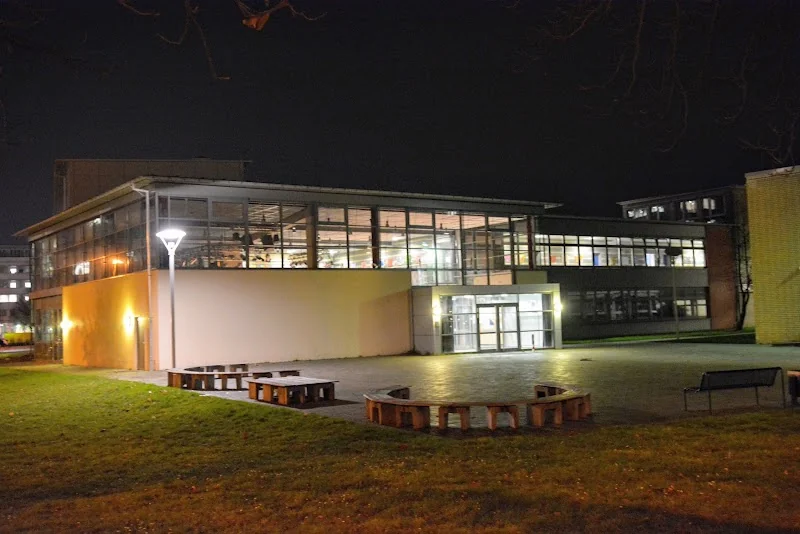
Ollenhauerstraße 5, 53113 Bonn, Deutschland
Friedrich-Ebert-Gymnasium Bonn | Registration & Open House
The Friedrich-Ebert-Gymnasium Bonn is a school with a strong profile, clear external impact, and a very broad offering for different interests and educational paths. Officially, the school describes itself as a gymnasium of the city of Bonn with an international profile; the focus is on the bilingual German-French educational path and the German-English educational path. In addition, there is a wide range of mathematical-scientific, cultural, sports, and social offerings, as well as additional qualifications and certificates that profile the FEG beyond the classical gymnasium path. Those searching for address, map view, photos, reviews, or testimonials usually mean not just a place but especially a reliable first impression. This is exactly the impression the school provides through its website: It not only shows the location at Ollenhauerstraße 5 in Bonn but also how teaching, counseling, transitions, school culture, and internationality interact. This makes the FEG relevant for families interested in registration, for parents looking for the office, and for students wanting to learn about the school management, teachers, new building, or open house. ([feg-bonn.de](https://feg-bonn.de/?utm_source=openai))
Registration and Open House at Friedrich-Ebert-Gymnasium Bonn
For many families, contact with the Friedrich-Ebert-Gymnasium begins not with a general search for reviews but with specific questions about registration and the open house. The official school website is specifically designed for this. The school distinguishes several registration paths: for primary school students wishing to transition to grade 5, for students of secondary level I, and for students of secondary level II. For fourth graders, the school specifies very clearly which documents need to be submitted, including a completed counseling form, copies of reports, the original registration form, a copy of the birth certificate, a passport photo, and proof according to the measles protection law. The documents can be submitted without an appointment at the office or sent by post. This makes it clear that the FEG does not see the entry into the school as a loose contact but as a structured process with clear information pathways. This is often more important for parents than a superficial impression from a map portal. The school communicates these processes transparently so that counseling, registration, and possible follow-up questions fit together smoothly. ([feg-bonn.de](https://feg-bonn.de/b/schulanmeldung/?utm_source=openai))
The open house is also a central topic in search behavior, and the school explicitly addresses this need. According to the official website, the FEG welcomes interested families on Saturday, November 14, 2026, and conducts the day in two rounds. Planned are a plenary event with a presentation of the school by the school management, counseling discussions, thematic rooms, workshops, and exhibitions, as well as a school tour. Content-wise, it becomes very clear here what the FEG stands for: foreign languages, natural sciences, culture, and social learning are not treated in isolation but conveyed as a coherent profile. Particularly helpful is the note that families can explore the school digitally if they cannot attend the open house in person. For search queries like "photos", "maps", or "open house", this is important because the school does not just show a building but opens access to school life. For later introductory and counseling discussions, the website also specifies a period from November 24, 2026, to December 17, 2026. This creates a clear information path from the first impression to the concrete school decision. ([feg-bonn.de](https://feg-bonn.de/b/tag-der-offenen-tuer/?utm_source=openai))
The registration in the upper secondary school is also clearly regulated. The website explains that a transition to secondary level II is generally possible if the access requirements are met, sufficient school places are available, and the desired subject combination can be represented. For students coming from outside North Rhine-Westphalia, the school points out an integration into the gymnasium educational path, which must be applied for through the school supervision. Especially for families searching for "registration", this is an important point: The FEG is not only transparent in the admission to grade 5 but also in later transitions. The school specifies concrete forms, documents, and contact paths for this. This strengthens planning and simultaneously shows that the school does not understand its international and differentiated educational path as just a label but as a pedagogical structure with understandable steps. So, anyone looking for a school in Bonn that visibly organizes admission and counseling will find very concrete information at the FEG instead of general promises. ([feg-bonn.de](https://feg-bonn.de/b/schulanmeldung/?utm_source=openai))
Office, Address, and School Management at FEG Bonn
The search for the office is one of the most common and practical search intentions related to the Friedrich-Ebert-Gymnasium Bonn. The official contact page lists the school at Ollenhauerstraße 5, 53113 Bonn, and designates the office as the central point of contact for inquiries, appointment arrangements, and general concerns. The phone numbers 0228.7775-19 and 0228.7775-20 are also provided. The email address appears as sekretariat@friedrich-ebert-gymnasium.de. Additionally, the school publishes the opening hours during the school year: Monday to Thursday from 7:30 AM to 2:00 PM and 3:00 PM to 3:45 PM, Fridays from 7:30 AM to 1:15 PM. During the holidays, there is limited staffing, with important exceptions during school holidays. For parents searching for address, maps, or office, this is exactly the kind of information that counts in everyday life. The school makes it clear that contact is not abstract but concrete, reachable, and structured. This is particularly relevant for consultations, registrations, requests for discussions, and organizational questions. ([feg-bonn.de](https://feg-bonn.de/b/friedrich-ebert-gymnasium/?utm_source=openai))
Regarding the school management, the school also names clear responsibilities. Frank Langner leads the Friedrich-Ebert-Gymnasium, and Gabriele Josten is his deputy. The website also lists their subjects: Frank Langner teaches social sciences, mathematics, and computer science, while Gabriele Josten teaches mathematics and English. For search queries regarding school management or teachers, this is helpful because the school does not just list names but makes responsibilities visible. Furthermore, the FEG refers to the entire teaching staff, which is transparently presented on the school website. This creates a picture of a school that does not hide contact persons but presents them in the spirit of an open communication culture. Especially in a large school like the FEG, this is important because parents and students do not want to search long for many topics. Whether it is about consultation hours, counseling, enrollment, or later school transitions: The office and the school management form the central interface between organization and pedagogical everyday life. ([feg-bonn.de](https://feg-bonn.de/b/schulleitung/?utm_source=openai))
The school administration itself is also well described. According to the official page, it consists of the office and the janitorial team. Two secretaries, Ms. Bruszies and Ms. Wahls, as well as three janitors who support the school operation organizationally are mentioned. The school also publishes that the office can be found on the 1st floor, room A140. Such information is more than just peripheral data for a gymnasium: It helps with counseling appointments, document submissions, inquiries about school places, and all everyday routes through the building. The FEG shows that administrative accessibility is part of its service culture. Those searching for the office, the address, or the school management will find not only contact details on the website but also an impression of the internal order of the school. This clarity is a real advantage for parents in the registration phase, for students during school transitions, and for visitors on the open house day. ([feg-bonn.de](https://feg-bonn.de/b/schulverwaltung/?utm_source=openai))
International Profile, French and English at Friedrich-Ebert-Gymnasium Bonn
The strongest unique selling point of the Friedrich-Ebert-Gymnasium Bonn is its international profile. On the homepage, the school emphasizes its special focus on interculturality and multilingualism. The bilingual German-French educational path and the German-English educational path are at the center. In addition, the school describes a wide-ranging offer in STEM, culture, sports, and social learning. Particularly striking is the self-presentation as the only school in Germany where students can simultaneously acquire three additional qualifications with the German Abitur: the French Baccalauréat as part of the Abibac, the International Baccalaureate, and the CertiLingua certificate. For search terms like "school of the city of Bonn", "FEG Bonn", or "teachers", this is crucial because the FEG has developed not only teaching but also a very unique educational profile with a clear international orientation. The school positions itself as a place where languages are not an accessory but the core of identity. This is important for families who are consciously looking for a school with a European and global horizon. ([feg-bonn.de](https://feg-bonn.de/?utm_source=openai))
In the French area, this profile becomes particularly visible. The school describes French as the heart of the school profile and refers to several components: the labelFrancEducation of the French Ministry of Foreign Affairs, the bilingual German-French educational path, the German-French double Abitur Abibac, exchange programs with French-speaking partner schools, individual exchanges, the CDI as a student library in French tradition, as well as extensive competitions, excursions, and cultural events. Particularly interesting is the fact that the bilingual branch starts anew each year with three French classes. In the middle school, history is taught bilingually from grade 7 and geography from grade 8. This does not simply create foreign language teaching but a learning path in which perspectives are built in both languages. This is exactly the kind of information users seek when they inquire about profile, photos, or the special character of the school. The FEG shows that internationality is not reduced to individual projects but influences regular teaching. ([feg-bonn.de](https://feg-bonn.de/b/franzoesisch/?utm_source=openai))
The English educational path is also clearly described. The school offers a German-English educational path, in which English is taught for five hours in the first two grades; concurrently, French is anchored for three hours. Additionally, in higher grades, there is the option to choose bilingual subjects in philosophy or history. According to the school website, the school also accompanies its students with exchange programs to Great Britain and other international encounters. For parents searching for reviews, testimonials, or "Friedrich Ebert Gymnasium Bonn teachers", this is a relevant point: The profile of the FEG is not only supported by individual teachers but by a very clear linguistic and European concept. Those learning here receive a path, according to their own school description, that connects linguistic competence, cultural learning, and international compatibility. This makes the school attractive for families thinking beyond classical teaching towards Abibac, IB, or Europe. ([feg-bonn.de](https://feg-bonn.de/b/deutsch-englische-bildungswege/?utm_source=openai))
This international profile also fits the multitude of exchange and travel programs. The school names specific class trips and encounters in the official section "Exchanges and Trips", such as to Aremberg, France, Great Britain, or in Erasmus+ contexts. Such formats are not merely supplements to teaching but contribute to the school profile and strengthen the social development of students. For a school with an international self-understanding, this is significant because languages and encounters do not end in the classroom. This connection of language, exchange, and additional qualification is one reason why the FEG generates attention under search terms like "Friedrich Ebert Gymnasium FEG Bonn" or "school of the city of Bonn". The school presents itself as a learning place with a clear European identity but also with concrete paths and structures. For many families, this mix of excellence, openness, and reliability is the decisive difference. ([feg-bonn.de](https://feg-bonn.de/b/austausche-und-fahrten/?utm_source=openai))
New Building, Cafeteria, and Facilities at Friedrich-Ebert-Gymnasium Bonn
Another frequently searched topic is the new building. The school currently informs about the extension building at the FEG and describes that the shell construction is finished, the roof has been sealed, and windows are being installed throughout the building. Additionally, facade construction was planned to begin in mid-March 2026 to visually integrate the new building more into the school. In another official statement, it is mentioned that the new building is also supposed to include a cafeteria with 100 seats and a kitchen. For search queries about "new building", this is important because here not just a construction project is mentioned but a structural step in the further development of the school grounds. The school explicitly links the new building with the transition from G8 to G9 and with spatial improvements for pedagogical concepts, especially with regard to the lower grades. This makes it understandable that the new building is not intended as an isolated construction measure but as part of long-term school development. ([feg-bonn.de](https://feg-bonn.de/b/erweiterungsneubau-aktueller-stand/?utm_source=openai))
The facilities also include several learning and recreational areas, which are regularly visible on the website. The school works with a pedagogical center that plays a central role in enrollments, events, and the open house. A room plan for the parent-teacher conference also designates rooms, subject areas, and orientation zones, including the PZ, classrooms, specialized rooms, and counseling areas. For families searching for maps or photos, this is relevant because it shows how the school is organized internally. Additionally, the cafeteria, whose pre-orders and menu distributions, according to the school, are managed through the app foove. This is a practical everyday aspect that makes school operations modern and planable. The school shows that it is not only internationally oriented but also well-structured technically and organizationally. Those visiting the premises encounter a school that places great importance on orientation, usability, and transparent room organization. ([feg-bonn.de](https://feg-bonn.de/wp-content/uploads/2025/11/05b_Raumplan-Ausdruck-mit-Gebaeudeskizze.pdf?utm_source=openai))
In terms of digitalization and working methods, the FEG is also clearly positioned. According to an official statement, the upper secondary school has been using a GYOD concept for tablets since the 2025/26 school year, meaning a concept where students use their own devices. The Bonn school authority has stipulated that only iPads are to be used in Bonn schools. For parents and students searching for modern equipment, this is a strong signal: The upper secondary school works not only analogously but with clear digital standards. It fits that the school links various learning and organizational areas through links, downloads, and digital access. In summary, it becomes clear: The new building, the cafeteria, the PZ area, the room plans, and the tablet usage are not individual components but part of a modern school everyday life where spatial development and pedagogical practice belong together. ([feg-bonn.de](https://feg-bonn.de/b/tablets-in-der-oberstufe/?utm_source=openai))
Access, Parking, and Orientation on the School Grounds
The access to Friedrich-Ebert-Gymnasium Bonn is currently particularly relevant because the school itself points out restrictions due to construction activity. On the official page regarding construction measures, it is explained that parts of the school property have been divided to create replacement parking spaces and that the school parking lot is restricted in certain areas. For parents dropping off or picking up their children, it is explicitly pointed out not to approach the parking lot anymore. Additionally, the school advises students to avoid Karl-Marx-Straße, as construction traffic could lead to increased accident risk. For the open house day in 2024, the school also explicitly recommended bicycles or public transport; for arriving by car, parking spaces in the immediate school vicinity are mentioned. So, anyone searching for "maps" or "parking" receives not a vague answer but very concrete hints about a situation that is dynamically changing due to construction work. This is significantly more helpful for visitors in everyday life than general directions. ([feg-bonn.de](https://feg-bonn.de/b/hinweise-zum-beginn-von-baumassnahmen-am-feg/?utm_source=openai))
The address itself is clear and easy to remember: Ollenhauerstraße 5 in 53113 Bonn. This information can be found on the contact page, imprint, and other official documents of the school. For navigation, this is particularly practical because it provides a clear target address that can be used directly in map and navigation services. Additionally, the school regularly refers to its website, the digital open house impression, and the office as a contact point during information events and counseling appointments. For visitors, this means: first the official address, then check the current parking situation, then coordinate with the office if necessary. The school's room plan and the clearly named location of the office on the 1st floor, room A140, also help with orientation within the building. This creates a realistic picture of a large school location that is architecturally in motion but remains very visible organizationally. ([feg-bonn.de](https://feg-bonn.de/b/friedrich-ebert-gymnasium/?utm_source=openai))
Especially important for families is the practical note that some official dates are tightly bundled. At the open house, the school not only names the date but also the period for subsequent introductory and counseling discussions. During enrollment, the school refers to a fixed first day of school and notes that due to the construction site, the school parking lot is currently closed. This means for visitors: Access to the FEG is not complicated, but it should be cross-checked with the current school information. This is exactly why search queries like "address", "maps", and "parking" are so important. The FEG answers them with a mix of clear contact details, current construction notes, and practical recommendations. Those using this information arrive more relaxed and experience the school not just as a building but as a well-organized community with clear processes. ([feg-bonn.de](https://feg-bonn.de/b/einschulung/?utm_source=openai))
History, Size, and School Life at Friedrich-Ebert-Gymnasium Bonn
The history of the Friedrich-Ebert-Gymnasium dates back to 1954. According to the official school history, the school emerged from the Ernst-Moritz-Arndt-Gymnasium and was founded on April 1, 1954, as a municipal new language gymnasium for boys, also known as EMA II. Early on, working groups were established to strengthen the artistic subjects. In later years, a gymnasium, a music-pedagogical branch, a sports field, and further developments were added. The school does not present its history as a mere chronicle but as a developmental path from which changes in pedagogy, profile formation, and school culture can be read. For search queries regarding "Friedrich Ebert Gymnasium Bonn new building" or "school of the city of Bonn", this is relevant because it becomes clear: The FEG is not a short-term educational place but a school with a long tradition and a clear development line. In 1999, the school also received the European Language Seal, which underscores the early and lasting importance of multilingualism. ([feg-bonn.de](https://feg-bonn.de/b/rueckblick-geschichte-der-schule/?utm_source=openai))
Today, the FEG is, according to its own statement, the largest gymnasium in Bonn. The school also describes that usually in every fifth grade, five entry classes are formed: three classes of the bilingual German-French branch and two classes of the German-English educational path. This size is not just a statistical footnote but also explains why topics like office, school management, teachers, registration, and orientation in the building are searched so often. A large school needs good structure, and this is exactly what is reflected on the official pages: clear responsibilities, accessible pathways, counseling systems, room plans, and information about the lower grades. This is particularly important for parents of fourth graders because the transition from primary school to a large gymnasium can quickly seem confusing without good orientation. The FEG meets this need with concrete information about registration, enrollment, and the open house. ([feg-bonn.de](https://feg-bonn.de/b/unterstufe/?utm_source=openai))
School life at the FEG includes not only teaching but also a very broad spectrum of working groups, music, sports, and social engagement. The school website features ensembles and AGs as well as information about sports helpers, school medical service, student rowing club, and other activities. In the sports area, the school uses the gymnasium on the premises for grades 5 and 6, later the 3-fold sports hall Wasserland; swimming lessons take place at Friesi. Additionally, there is an annual sports festival in the stadium and in the sports halls, as well as regular sponsor runs. For many families, these points are particularly relevant when searching for photos, reviews, or testimonials: They want to know not only what the school looks like but how it lives. The FEG answers this question with a school culture that connects movement, internationality, culture, and community. Thus, a search query for an address becomes a comprehensible picture of what the school is like in everyday life. ([feg-bonn.de](https://feg-bonn.de/b/sport/?utm_source=openai))
The lower grades also show how carefully the FEG organizes the entry. The school emphasizes that the new fifth graders should feel welcome and relies on friendly support, clear structures, and trusting collaboration with the parents. For the first school days, teaching is offered in a particularly close framework with the class management, and the enrollment ceremony usually takes place in the school's pedagogical center. Such details are especially valuable for search queries regarding registration, open house, or school of the city of Bonn because they show how the transition is concretely designed. The FEG is thus not only a large and internationally profiled school but also a place that wants to provide orientation and security to its newcomers. This mix of size, clarity, and pedagogical closeness makes the school interesting for many families. ([feg-bonn.de](https://feg-bonn.de/b/unterstufe/?utm_source=openai))
Sources:
Mehr anzeigenWeniger anzeigen
Friedrich-Ebert-Gymnasium Bonn | Registration & Open House
The Friedrich-Ebert-Gymnasium Bonn is a school with a strong profile, clear external impact, and a very broad offering for different interests and educational paths. Officially, the school describes itself as a gymnasium of the city of Bonn with an international profile; the focus is on the bilingual German-French educational path and the German-English educational path. In addition, there is a wide range of mathematical-scientific, cultural, sports, and social offerings, as well as additional qualifications and certificates that profile the FEG beyond the classical gymnasium path. Those searching for address, map view, photos, reviews, or testimonials usually mean not just a place but especially a reliable first impression. This is exactly the impression the school provides through its website: It not only shows the location at Ollenhauerstraße 5 in Bonn but also how teaching, counseling, transitions, school culture, and internationality interact. This makes the FEG relevant for families interested in registration, for parents looking for the office, and for students wanting to learn about the school management, teachers, new building, or open house. ([feg-bonn.de](https://feg-bonn.de/?utm_source=openai))
Registration and Open House at Friedrich-Ebert-Gymnasium Bonn
For many families, contact with the Friedrich-Ebert-Gymnasium begins not with a general search for reviews but with specific questions about registration and the open house. The official school website is specifically designed for this. The school distinguishes several registration paths: for primary school students wishing to transition to grade 5, for students of secondary level I, and for students of secondary level II. For fourth graders, the school specifies very clearly which documents need to be submitted, including a completed counseling form, copies of reports, the original registration form, a copy of the birth certificate, a passport photo, and proof according to the measles protection law. The documents can be submitted without an appointment at the office or sent by post. This makes it clear that the FEG does not see the entry into the school as a loose contact but as a structured process with clear information pathways. This is often more important for parents than a superficial impression from a map portal. The school communicates these processes transparently so that counseling, registration, and possible follow-up questions fit together smoothly. ([feg-bonn.de](https://feg-bonn.de/b/schulanmeldung/?utm_source=openai))
The open house is also a central topic in search behavior, and the school explicitly addresses this need. According to the official website, the FEG welcomes interested families on Saturday, November 14, 2026, and conducts the day in two rounds. Planned are a plenary event with a presentation of the school by the school management, counseling discussions, thematic rooms, workshops, and exhibitions, as well as a school tour. Content-wise, it becomes very clear here what the FEG stands for: foreign languages, natural sciences, culture, and social learning are not treated in isolation but conveyed as a coherent profile. Particularly helpful is the note that families can explore the school digitally if they cannot attend the open house in person. For search queries like "photos", "maps", or "open house", this is important because the school does not just show a building but opens access to school life. For later introductory and counseling discussions, the website also specifies a period from November 24, 2026, to December 17, 2026. This creates a clear information path from the first impression to the concrete school decision. ([feg-bonn.de](https://feg-bonn.de/b/tag-der-offenen-tuer/?utm_source=openai))
The registration in the upper secondary school is also clearly regulated. The website explains that a transition to secondary level II is generally possible if the access requirements are met, sufficient school places are available, and the desired subject combination can be represented. For students coming from outside North Rhine-Westphalia, the school points out an integration into the gymnasium educational path, which must be applied for through the school supervision. Especially for families searching for "registration", this is an important point: The FEG is not only transparent in the admission to grade 5 but also in later transitions. The school specifies concrete forms, documents, and contact paths for this. This strengthens planning and simultaneously shows that the school does not understand its international and differentiated educational path as just a label but as a pedagogical structure with understandable steps. So, anyone looking for a school in Bonn that visibly organizes admission and counseling will find very concrete information at the FEG instead of general promises. ([feg-bonn.de](https://feg-bonn.de/b/schulanmeldung/?utm_source=openai))
Office, Address, and School Management at FEG Bonn
The search for the office is one of the most common and practical search intentions related to the Friedrich-Ebert-Gymnasium Bonn. The official contact page lists the school at Ollenhauerstraße 5, 53113 Bonn, and designates the office as the central point of contact for inquiries, appointment arrangements, and general concerns. The phone numbers 0228.7775-19 and 0228.7775-20 are also provided. The email address appears as sekretariat@friedrich-ebert-gymnasium.de. Additionally, the school publishes the opening hours during the school year: Monday to Thursday from 7:30 AM to 2:00 PM and 3:00 PM to 3:45 PM, Fridays from 7:30 AM to 1:15 PM. During the holidays, there is limited staffing, with important exceptions during school holidays. For parents searching for address, maps, or office, this is exactly the kind of information that counts in everyday life. The school makes it clear that contact is not abstract but concrete, reachable, and structured. This is particularly relevant for consultations, registrations, requests for discussions, and organizational questions. ([feg-bonn.de](https://feg-bonn.de/b/friedrich-ebert-gymnasium/?utm_source=openai))
Regarding the school management, the school also names clear responsibilities. Frank Langner leads the Friedrich-Ebert-Gymnasium, and Gabriele Josten is his deputy. The website also lists their subjects: Frank Langner teaches social sciences, mathematics, and computer science, while Gabriele Josten teaches mathematics and English. For search queries regarding school management or teachers, this is helpful because the school does not just list names but makes responsibilities visible. Furthermore, the FEG refers to the entire teaching staff, which is transparently presented on the school website. This creates a picture of a school that does not hide contact persons but presents them in the spirit of an open communication culture. Especially in a large school like the FEG, this is important because parents and students do not want to search long for many topics. Whether it is about consultation hours, counseling, enrollment, or later school transitions: The office and the school management form the central interface between organization and pedagogical everyday life. ([feg-bonn.de](https://feg-bonn.de/b/schulleitung/?utm_source=openai))
The school administration itself is also well described. According to the official page, it consists of the office and the janitorial team. Two secretaries, Ms. Bruszies and Ms. Wahls, as well as three janitors who support the school operation organizationally are mentioned. The school also publishes that the office can be found on the 1st floor, room A140. Such information is more than just peripheral data for a gymnasium: It helps with counseling appointments, document submissions, inquiries about school places, and all everyday routes through the building. The FEG shows that administrative accessibility is part of its service culture. Those searching for the office, the address, or the school management will find not only contact details on the website but also an impression of the internal order of the school. This clarity is a real advantage for parents in the registration phase, for students during school transitions, and for visitors on the open house day. ([feg-bonn.de](https://feg-bonn.de/b/schulverwaltung/?utm_source=openai))
International Profile, French and English at Friedrich-Ebert-Gymnasium Bonn
The strongest unique selling point of the Friedrich-Ebert-Gymnasium Bonn is its international profile. On the homepage, the school emphasizes its special focus on interculturality and multilingualism. The bilingual German-French educational path and the German-English educational path are at the center. In addition, the school describes a wide-ranging offer in STEM, culture, sports, and social learning. Particularly striking is the self-presentation as the only school in Germany where students can simultaneously acquire three additional qualifications with the German Abitur: the French Baccalauréat as part of the Abibac, the International Baccalaureate, and the CertiLingua certificate. For search terms like "school of the city of Bonn", "FEG Bonn", or "teachers", this is crucial because the FEG has developed not only teaching but also a very unique educational profile with a clear international orientation. The school positions itself as a place where languages are not an accessory but the core of identity. This is important for families who are consciously looking for a school with a European and global horizon. ([feg-bonn.de](https://feg-bonn.de/?utm_source=openai))
In the French area, this profile becomes particularly visible. The school describes French as the heart of the school profile and refers to several components: the labelFrancEducation of the French Ministry of Foreign Affairs, the bilingual German-French educational path, the German-French double Abitur Abibac, exchange programs with French-speaking partner schools, individual exchanges, the CDI as a student library in French tradition, as well as extensive competitions, excursions, and cultural events. Particularly interesting is the fact that the bilingual branch starts anew each year with three French classes. In the middle school, history is taught bilingually from grade 7 and geography from grade 8. This does not simply create foreign language teaching but a learning path in which perspectives are built in both languages. This is exactly the kind of information users seek when they inquire about profile, photos, or the special character of the school. The FEG shows that internationality is not reduced to individual projects but influences regular teaching. ([feg-bonn.de](https://feg-bonn.de/b/franzoesisch/?utm_source=openai))
The English educational path is also clearly described. The school offers a German-English educational path, in which English is taught for five hours in the first two grades; concurrently, French is anchored for three hours. Additionally, in higher grades, there is the option to choose bilingual subjects in philosophy or history. According to the school website, the school also accompanies its students with exchange programs to Great Britain and other international encounters. For parents searching for reviews, testimonials, or "Friedrich Ebert Gymnasium Bonn teachers", this is a relevant point: The profile of the FEG is not only supported by individual teachers but by a very clear linguistic and European concept. Those learning here receive a path, according to their own school description, that connects linguistic competence, cultural learning, and international compatibility. This makes the school attractive for families thinking beyond classical teaching towards Abibac, IB, or Europe. ([feg-bonn.de](https://feg-bonn.de/b/deutsch-englische-bildungswege/?utm_source=openai))
This international profile also fits the multitude of exchange and travel programs. The school names specific class trips and encounters in the official section "Exchanges and Trips", such as to Aremberg, France, Great Britain, or in Erasmus+ contexts. Such formats are not merely supplements to teaching but contribute to the school profile and strengthen the social development of students. For a school with an international self-understanding, this is significant because languages and encounters do not end in the classroom. This connection of language, exchange, and additional qualification is one reason why the FEG generates attention under search terms like "Friedrich Ebert Gymnasium FEG Bonn" or "school of the city of Bonn". The school presents itself as a learning place with a clear European identity but also with concrete paths and structures. For many families, this mix of excellence, openness, and reliability is the decisive difference. ([feg-bonn.de](https://feg-bonn.de/b/austausche-und-fahrten/?utm_source=openai))
New Building, Cafeteria, and Facilities at Friedrich-Ebert-Gymnasium Bonn
Another frequently searched topic is the new building. The school currently informs about the extension building at the FEG and describes that the shell construction is finished, the roof has been sealed, and windows are being installed throughout the building. Additionally, facade construction was planned to begin in mid-March 2026 to visually integrate the new building more into the school. In another official statement, it is mentioned that the new building is also supposed to include a cafeteria with 100 seats and a kitchen. For search queries about "new building", this is important because here not just a construction project is mentioned but a structural step in the further development of the school grounds. The school explicitly links the new building with the transition from G8 to G9 and with spatial improvements for pedagogical concepts, especially with regard to the lower grades. This makes it understandable that the new building is not intended as an isolated construction measure but as part of long-term school development. ([feg-bonn.de](https://feg-bonn.de/b/erweiterungsneubau-aktueller-stand/?utm_source=openai))
The facilities also include several learning and recreational areas, which are regularly visible on the website. The school works with a pedagogical center that plays a central role in enrollments, events, and the open house. A room plan for the parent-teacher conference also designates rooms, subject areas, and orientation zones, including the PZ, classrooms, specialized rooms, and counseling areas. For families searching for maps or photos, this is relevant because it shows how the school is organized internally. Additionally, the cafeteria, whose pre-orders and menu distributions, according to the school, are managed through the app foove. This is a practical everyday aspect that makes school operations modern and planable. The school shows that it is not only internationally oriented but also well-structured technically and organizationally. Those visiting the premises encounter a school that places great importance on orientation, usability, and transparent room organization. ([feg-bonn.de](https://feg-bonn.de/wp-content/uploads/2025/11/05b_Raumplan-Ausdruck-mit-Gebaeudeskizze.pdf?utm_source=openai))
In terms of digitalization and working methods, the FEG is also clearly positioned. According to an official statement, the upper secondary school has been using a GYOD concept for tablets since the 2025/26 school year, meaning a concept where students use their own devices. The Bonn school authority has stipulated that only iPads are to be used in Bonn schools. For parents and students searching for modern equipment, this is a strong signal: The upper secondary school works not only analogously but with clear digital standards. It fits that the school links various learning and organizational areas through links, downloads, and digital access. In summary, it becomes clear: The new building, the cafeteria, the PZ area, the room plans, and the tablet usage are not individual components but part of a modern school everyday life where spatial development and pedagogical practice belong together. ([feg-bonn.de](https://feg-bonn.de/b/tablets-in-der-oberstufe/?utm_source=openai))
Access, Parking, and Orientation on the School Grounds
The access to Friedrich-Ebert-Gymnasium Bonn is currently particularly relevant because the school itself points out restrictions due to construction activity. On the official page regarding construction measures, it is explained that parts of the school property have been divided to create replacement parking spaces and that the school parking lot is restricted in certain areas. For parents dropping off or picking up their children, it is explicitly pointed out not to approach the parking lot anymore. Additionally, the school advises students to avoid Karl-Marx-Straße, as construction traffic could lead to increased accident risk. For the open house day in 2024, the school also explicitly recommended bicycles or public transport; for arriving by car, parking spaces in the immediate school vicinity are mentioned. So, anyone searching for "maps" or "parking" receives not a vague answer but very concrete hints about a situation that is dynamically changing due to construction work. This is significantly more helpful for visitors in everyday life than general directions. ([feg-bonn.de](https://feg-bonn.de/b/hinweise-zum-beginn-von-baumassnahmen-am-feg/?utm_source=openai))
The address itself is clear and easy to remember: Ollenhauerstraße 5 in 53113 Bonn. This information can be found on the contact page, imprint, and other official documents of the school. For navigation, this is particularly practical because it provides a clear target address that can be used directly in map and navigation services. Additionally, the school regularly refers to its website, the digital open house impression, and the office as a contact point during information events and counseling appointments. For visitors, this means: first the official address, then check the current parking situation, then coordinate with the office if necessary. The school's room plan and the clearly named location of the office on the 1st floor, room A140, also help with orientation within the building. This creates a realistic picture of a large school location that is architecturally in motion but remains very visible organizationally. ([feg-bonn.de](https://feg-bonn.de/b/friedrich-ebert-gymnasium/?utm_source=openai))
Especially important for families is the practical note that some official dates are tightly bundled. At the open house, the school not only names the date but also the period for subsequent introductory and counseling discussions. During enrollment, the school refers to a fixed first day of school and notes that due to the construction site, the school parking lot is currently closed. This means for visitors: Access to the FEG is not complicated, but it should be cross-checked with the current school information. This is exactly why search queries like "address", "maps", and "parking" are so important. The FEG answers them with a mix of clear contact details, current construction notes, and practical recommendations. Those using this information arrive more relaxed and experience the school not just as a building but as a well-organized community with clear processes. ([feg-bonn.de](https://feg-bonn.de/b/einschulung/?utm_source=openai))
History, Size, and School Life at Friedrich-Ebert-Gymnasium Bonn
The history of the Friedrich-Ebert-Gymnasium dates back to 1954. According to the official school history, the school emerged from the Ernst-Moritz-Arndt-Gymnasium and was founded on April 1, 1954, as a municipal new language gymnasium for boys, also known as EMA II. Early on, working groups were established to strengthen the artistic subjects. In later years, a gymnasium, a music-pedagogical branch, a sports field, and further developments were added. The school does not present its history as a mere chronicle but as a developmental path from which changes in pedagogy, profile formation, and school culture can be read. For search queries regarding "Friedrich Ebert Gymnasium Bonn new building" or "school of the city of Bonn", this is relevant because it becomes clear: The FEG is not a short-term educational place but a school with a long tradition and a clear development line. In 1999, the school also received the European Language Seal, which underscores the early and lasting importance of multilingualism. ([feg-bonn.de](https://feg-bonn.de/b/rueckblick-geschichte-der-schule/?utm_source=openai))
Today, the FEG is, according to its own statement, the largest gymnasium in Bonn. The school also describes that usually in every fifth grade, five entry classes are formed: three classes of the bilingual German-French branch and two classes of the German-English educational path. This size is not just a statistical footnote but also explains why topics like office, school management, teachers, registration, and orientation in the building are searched so often. A large school needs good structure, and this is exactly what is reflected on the official pages: clear responsibilities, accessible pathways, counseling systems, room plans, and information about the lower grades. This is particularly important for parents of fourth graders because the transition from primary school to a large gymnasium can quickly seem confusing without good orientation. The FEG meets this need with concrete information about registration, enrollment, and the open house. ([feg-bonn.de](https://feg-bonn.de/b/unterstufe/?utm_source=openai))
School life at the FEG includes not only teaching but also a very broad spectrum of working groups, music, sports, and social engagement. The school website features ensembles and AGs as well as information about sports helpers, school medical service, student rowing club, and other activities. In the sports area, the school uses the gymnasium on the premises for grades 5 and 6, later the 3-fold sports hall Wasserland; swimming lessons take place at Friesi. Additionally, there is an annual sports festival in the stadium and in the sports halls, as well as regular sponsor runs. For many families, these points are particularly relevant when searching for photos, reviews, or testimonials: They want to know not only what the school looks like but how it lives. The FEG answers this question with a school culture that connects movement, internationality, culture, and community. Thus, a search query for an address becomes a comprehensible picture of what the school is like in everyday life. ([feg-bonn.de](https://feg-bonn.de/b/sport/?utm_source=openai))
The lower grades also show how carefully the FEG organizes the entry. The school emphasizes that the new fifth graders should feel welcome and relies on friendly support, clear structures, and trusting collaboration with the parents. For the first school days, teaching is offered in a particularly close framework with the class management, and the enrollment ceremony usually takes place in the school's pedagogical center. Such details are especially valuable for search queries regarding registration, open house, or school of the city of Bonn because they show how the transition is concretely designed. The FEG is thus not only a large and internationally profiled school but also a place that wants to provide orientation and security to its newcomers. This mix of size, clarity, and pedagogical closeness makes the school interesting for many families. ([feg-bonn.de](https://feg-bonn.de/b/unterstufe/?utm_source=openai))
Sources:
Friedrich-Ebert-Gymnasium Bonn | Registration & Open House
The Friedrich-Ebert-Gymnasium Bonn is a school with a strong profile, clear external impact, and a very broad offering for different interests and educational paths. Officially, the school describes itself as a gymnasium of the city of Bonn with an international profile; the focus is on the bilingual German-French educational path and the German-English educational path. In addition, there is a wide range of mathematical-scientific, cultural, sports, and social offerings, as well as additional qualifications and certificates that profile the FEG beyond the classical gymnasium path. Those searching for address, map view, photos, reviews, or testimonials usually mean not just a place but especially a reliable first impression. This is exactly the impression the school provides through its website: It not only shows the location at Ollenhauerstraße 5 in Bonn but also how teaching, counseling, transitions, school culture, and internationality interact. This makes the FEG relevant for families interested in registration, for parents looking for the office, and for students wanting to learn about the school management, teachers, new building, or open house. ([feg-bonn.de](https://feg-bonn.de/?utm_source=openai))
Registration and Open House at Friedrich-Ebert-Gymnasium Bonn
For many families, contact with the Friedrich-Ebert-Gymnasium begins not with a general search for reviews but with specific questions about registration and the open house. The official school website is specifically designed for this. The school distinguishes several registration paths: for primary school students wishing to transition to grade 5, for students of secondary level I, and for students of secondary level II. For fourth graders, the school specifies very clearly which documents need to be submitted, including a completed counseling form, copies of reports, the original registration form, a copy of the birth certificate, a passport photo, and proof according to the measles protection law. The documents can be submitted without an appointment at the office or sent by post. This makes it clear that the FEG does not see the entry into the school as a loose contact but as a structured process with clear information pathways. This is often more important for parents than a superficial impression from a map portal. The school communicates these processes transparently so that counseling, registration, and possible follow-up questions fit together smoothly. ([feg-bonn.de](https://feg-bonn.de/b/schulanmeldung/?utm_source=openai))
The open house is also a central topic in search behavior, and the school explicitly addresses this need. According to the official website, the FEG welcomes interested families on Saturday, November 14, 2026, and conducts the day in two rounds. Planned are a plenary event with a presentation of the school by the school management, counseling discussions, thematic rooms, workshops, and exhibitions, as well as a school tour. Content-wise, it becomes very clear here what the FEG stands for: foreign languages, natural sciences, culture, and social learning are not treated in isolation but conveyed as a coherent profile. Particularly helpful is the note that families can explore the school digitally if they cannot attend the open house in person. For search queries like "photos", "maps", or "open house", this is important because the school does not just show a building but opens access to school life. For later introductory and counseling discussions, the website also specifies a period from November 24, 2026, to December 17, 2026. This creates a clear information path from the first impression to the concrete school decision. ([feg-bonn.de](https://feg-bonn.de/b/tag-der-offenen-tuer/?utm_source=openai))
The registration in the upper secondary school is also clearly regulated. The website explains that a transition to secondary level II is generally possible if the access requirements are met, sufficient school places are available, and the desired subject combination can be represented. For students coming from outside North Rhine-Westphalia, the school points out an integration into the gymnasium educational path, which must be applied for through the school supervision. Especially for families searching for "registration", this is an important point: The FEG is not only transparent in the admission to grade 5 but also in later transitions. The school specifies concrete forms, documents, and contact paths for this. This strengthens planning and simultaneously shows that the school does not understand its international and differentiated educational path as just a label but as a pedagogical structure with understandable steps. So, anyone looking for a school in Bonn that visibly organizes admission and counseling will find very concrete information at the FEG instead of general promises. ([feg-bonn.de](https://feg-bonn.de/b/schulanmeldung/?utm_source=openai))
Office, Address, and School Management at FEG Bonn
The search for the office is one of the most common and practical search intentions related to the Friedrich-Ebert-Gymnasium Bonn. The official contact page lists the school at Ollenhauerstraße 5, 53113 Bonn, and designates the office as the central point of contact for inquiries, appointment arrangements, and general concerns. The phone numbers 0228.7775-19 and 0228.7775-20 are also provided. The email address appears as sekretariat@friedrich-ebert-gymnasium.de. Additionally, the school publishes the opening hours during the school year: Monday to Thursday from 7:30 AM to 2:00 PM and 3:00 PM to 3:45 PM, Fridays from 7:30 AM to 1:15 PM. During the holidays, there is limited staffing, with important exceptions during school holidays. For parents searching for address, maps, or office, this is exactly the kind of information that counts in everyday life. The school makes it clear that contact is not abstract but concrete, reachable, and structured. This is particularly relevant for consultations, registrations, requests for discussions, and organizational questions. ([feg-bonn.de](https://feg-bonn.de/b/friedrich-ebert-gymnasium/?utm_source=openai))
Regarding the school management, the school also names clear responsibilities. Frank Langner leads the Friedrich-Ebert-Gymnasium, and Gabriele Josten is his deputy. The website also lists their subjects: Frank Langner teaches social sciences, mathematics, and computer science, while Gabriele Josten teaches mathematics and English. For search queries regarding school management or teachers, this is helpful because the school does not just list names but makes responsibilities visible. Furthermore, the FEG refers to the entire teaching staff, which is transparently presented on the school website. This creates a picture of a school that does not hide contact persons but presents them in the spirit of an open communication culture. Especially in a large school like the FEG, this is important because parents and students do not want to search long for many topics. Whether it is about consultation hours, counseling, enrollment, or later school transitions: The office and the school management form the central interface between organization and pedagogical everyday life. ([feg-bonn.de](https://feg-bonn.de/b/schulleitung/?utm_source=openai))
The school administration itself is also well described. According to the official page, it consists of the office and the janitorial team. Two secretaries, Ms. Bruszies and Ms. Wahls, as well as three janitors who support the school operation organizationally are mentioned. The school also publishes that the office can be found on the 1st floor, room A140. Such information is more than just peripheral data for a gymnasium: It helps with counseling appointments, document submissions, inquiries about school places, and all everyday routes through the building. The FEG shows that administrative accessibility is part of its service culture. Those searching for the office, the address, or the school management will find not only contact details on the website but also an impression of the internal order of the school. This clarity is a real advantage for parents in the registration phase, for students during school transitions, and for visitors on the open house day. ([feg-bonn.de](https://feg-bonn.de/b/schulverwaltung/?utm_source=openai))
International Profile, French and English at Friedrich-Ebert-Gymnasium Bonn
The strongest unique selling point of the Friedrich-Ebert-Gymnasium Bonn is its international profile. On the homepage, the school emphasizes its special focus on interculturality and multilingualism. The bilingual German-French educational path and the German-English educational path are at the center. In addition, the school describes a wide-ranging offer in STEM, culture, sports, and social learning. Particularly striking is the self-presentation as the only school in Germany where students can simultaneously acquire three additional qualifications with the German Abitur: the French Baccalauréat as part of the Abibac, the International Baccalaureate, and the CertiLingua certificate. For search terms like "school of the city of Bonn", "FEG Bonn", or "teachers", this is crucial because the FEG has developed not only teaching but also a very unique educational profile with a clear international orientation. The school positions itself as a place where languages are not an accessory but the core of identity. This is important for families who are consciously looking for a school with a European and global horizon. ([feg-bonn.de](https://feg-bonn.de/?utm_source=openai))
In the French area, this profile becomes particularly visible. The school describes French as the heart of the school profile and refers to several components: the labelFrancEducation of the French Ministry of Foreign Affairs, the bilingual German-French educational path, the German-French double Abitur Abibac, exchange programs with French-speaking partner schools, individual exchanges, the CDI as a student library in French tradition, as well as extensive competitions, excursions, and cultural events. Particularly interesting is the fact that the bilingual branch starts anew each year with three French classes. In the middle school, history is taught bilingually from grade 7 and geography from grade 8. This does not simply create foreign language teaching but a learning path in which perspectives are built in both languages. This is exactly the kind of information users seek when they inquire about profile, photos, or the special character of the school. The FEG shows that internationality is not reduced to individual projects but influences regular teaching. ([feg-bonn.de](https://feg-bonn.de/b/franzoesisch/?utm_source=openai))
The English educational path is also clearly described. The school offers a German-English educational path, in which English is taught for five hours in the first two grades; concurrently, French is anchored for three hours. Additionally, in higher grades, there is the option to choose bilingual subjects in philosophy or history. According to the school website, the school also accompanies its students with exchange programs to Great Britain and other international encounters. For parents searching for reviews, testimonials, or "Friedrich Ebert Gymnasium Bonn teachers", this is a relevant point: The profile of the FEG is not only supported by individual teachers but by a very clear linguistic and European concept. Those learning here receive a path, according to their own school description, that connects linguistic competence, cultural learning, and international compatibility. This makes the school attractive for families thinking beyond classical teaching towards Abibac, IB, or Europe. ([feg-bonn.de](https://feg-bonn.de/b/deutsch-englische-bildungswege/?utm_source=openai))
This international profile also fits the multitude of exchange and travel programs. The school names specific class trips and encounters in the official section "Exchanges and Trips", such as to Aremberg, France, Great Britain, or in Erasmus+ contexts. Such formats are not merely supplements to teaching but contribute to the school profile and strengthen the social development of students. For a school with an international self-understanding, this is significant because languages and encounters do not end in the classroom. This connection of language, exchange, and additional qualification is one reason why the FEG generates attention under search terms like "Friedrich Ebert Gymnasium FEG Bonn" or "school of the city of Bonn". The school presents itself as a learning place with a clear European identity but also with concrete paths and structures. For many families, this mix of excellence, openness, and reliability is the decisive difference. ([feg-bonn.de](https://feg-bonn.de/b/austausche-und-fahrten/?utm_source=openai))
New Building, Cafeteria, and Facilities at Friedrich-Ebert-Gymnasium Bonn
Another frequently searched topic is the new building. The school currently informs about the extension building at the FEG and describes that the shell construction is finished, the roof has been sealed, and windows are being installed throughout the building. Additionally, facade construction was planned to begin in mid-March 2026 to visually integrate the new building more into the school. In another official statement, it is mentioned that the new building is also supposed to include a cafeteria with 100 seats and a kitchen. For search queries about "new building", this is important because here not just a construction project is mentioned but a structural step in the further development of the school grounds. The school explicitly links the new building with the transition from G8 to G9 and with spatial improvements for pedagogical concepts, especially with regard to the lower grades. This makes it understandable that the new building is not intended as an isolated construction measure but as part of long-term school development. ([feg-bonn.de](https://feg-bonn.de/b/erweiterungsneubau-aktueller-stand/?utm_source=openai))
The facilities also include several learning and recreational areas, which are regularly visible on the website. The school works with a pedagogical center that plays a central role in enrollments, events, and the open house. A room plan for the parent-teacher conference also designates rooms, subject areas, and orientation zones, including the PZ, classrooms, specialized rooms, and counseling areas. For families searching for maps or photos, this is relevant because it shows how the school is organized internally. Additionally, the cafeteria, whose pre-orders and menu distributions, according to the school, are managed through the app foove. This is a practical everyday aspect that makes school operations modern and planable. The school shows that it is not only internationally oriented but also well-structured technically and organizationally. Those visiting the premises encounter a school that places great importance on orientation, usability, and transparent room organization. ([feg-bonn.de](https://feg-bonn.de/wp-content/uploads/2025/11/05b_Raumplan-Ausdruck-mit-Gebaeudeskizze.pdf?utm_source=openai))
In terms of digitalization and working methods, the FEG is also clearly positioned. According to an official statement, the upper secondary school has been using a GYOD concept for tablets since the 2025/26 school year, meaning a concept where students use their own devices. The Bonn school authority has stipulated that only iPads are to be used in Bonn schools. For parents and students searching for modern equipment, this is a strong signal: The upper secondary school works not only analogously but with clear digital standards. It fits that the school links various learning and organizational areas through links, downloads, and digital access. In summary, it becomes clear: The new building, the cafeteria, the PZ area, the room plans, and the tablet usage are not individual components but part of a modern school everyday life where spatial development and pedagogical practice belong together. ([feg-bonn.de](https://feg-bonn.de/b/tablets-in-der-oberstufe/?utm_source=openai))
Access, Parking, and Orientation on the School Grounds
The access to Friedrich-Ebert-Gymnasium Bonn is currently particularly relevant because the school itself points out restrictions due to construction activity. On the official page regarding construction measures, it is explained that parts of the school property have been divided to create replacement parking spaces and that the school parking lot is restricted in certain areas. For parents dropping off or picking up their children, it is explicitly pointed out not to approach the parking lot anymore. Additionally, the school advises students to avoid Karl-Marx-Straße, as construction traffic could lead to increased accident risk. For the open house day in 2024, the school also explicitly recommended bicycles or public transport; for arriving by car, parking spaces in the immediate school vicinity are mentioned. So, anyone searching for "maps" or "parking" receives not a vague answer but very concrete hints about a situation that is dynamically changing due to construction work. This is significantly more helpful for visitors in everyday life than general directions. ([feg-bonn.de](https://feg-bonn.de/b/hinweise-zum-beginn-von-baumassnahmen-am-feg/?utm_source=openai))
The address itself is clear and easy to remember: Ollenhauerstraße 5 in 53113 Bonn. This information can be found on the contact page, imprint, and other official documents of the school. For navigation, this is particularly practical because it provides a clear target address that can be used directly in map and navigation services. Additionally, the school regularly refers to its website, the digital open house impression, and the office as a contact point during information events and counseling appointments. For visitors, this means: first the official address, then check the current parking situation, then coordinate with the office if necessary. The school's room plan and the clearly named location of the office on the 1st floor, room A140, also help with orientation within the building. This creates a realistic picture of a large school location that is architecturally in motion but remains very visible organizationally. ([feg-bonn.de](https://feg-bonn.de/b/friedrich-ebert-gymnasium/?utm_source=openai))
Especially important for families is the practical note that some official dates are tightly bundled. At the open house, the school not only names the date but also the period for subsequent introductory and counseling discussions. During enrollment, the school refers to a fixed first day of school and notes that due to the construction site, the school parking lot is currently closed. This means for visitors: Access to the FEG is not complicated, but it should be cross-checked with the current school information. This is exactly why search queries like "address", "maps", and "parking" are so important. The FEG answers them with a mix of clear contact details, current construction notes, and practical recommendations. Those using this information arrive more relaxed and experience the school not just as a building but as a well-organized community with clear processes. ([feg-bonn.de](https://feg-bonn.de/b/einschulung/?utm_source=openai))
History, Size, and School Life at Friedrich-Ebert-Gymnasium Bonn
The history of the Friedrich-Ebert-Gymnasium dates back to 1954. According to the official school history, the school emerged from the Ernst-Moritz-Arndt-Gymnasium and was founded on April 1, 1954, as a municipal new language gymnasium for boys, also known as EMA II. Early on, working groups were established to strengthen the artistic subjects. In later years, a gymnasium, a music-pedagogical branch, a sports field, and further developments were added. The school does not present its history as a mere chronicle but as a developmental path from which changes in pedagogy, profile formation, and school culture can be read. For search queries regarding "Friedrich Ebert Gymnasium Bonn new building" or "school of the city of Bonn", this is relevant because it becomes clear: The FEG is not a short-term educational place but a school with a long tradition and a clear development line. In 1999, the school also received the European Language Seal, which underscores the early and lasting importance of multilingualism. ([feg-bonn.de](https://feg-bonn.de/b/rueckblick-geschichte-der-schule/?utm_source=openai))
Today, the FEG is, according to its own statement, the largest gymnasium in Bonn. The school also describes that usually in every fifth grade, five entry classes are formed: three classes of the bilingual German-French branch and two classes of the German-English educational path. This size is not just a statistical footnote but also explains why topics like office, school management, teachers, registration, and orientation in the building are searched so often. A large school needs good structure, and this is exactly what is reflected on the official pages: clear responsibilities, accessible pathways, counseling systems, room plans, and information about the lower grades. This is particularly important for parents of fourth graders because the transition from primary school to a large gymnasium can quickly seem confusing without good orientation. The FEG meets this need with concrete information about registration, enrollment, and the open house. ([feg-bonn.de](https://feg-bonn.de/b/unterstufe/?utm_source=openai))
School life at the FEG includes not only teaching but also a very broad spectrum of working groups, music, sports, and social engagement. The school website features ensembles and AGs as well as information about sports helpers, school medical service, student rowing club, and other activities. In the sports area, the school uses the gymnasium on the premises for grades 5 and 6, later the 3-fold sports hall Wasserland; swimming lessons take place at Friesi. Additionally, there is an annual sports festival in the stadium and in the sports halls, as well as regular sponsor runs. For many families, these points are particularly relevant when searching for photos, reviews, or testimonials: They want to know not only what the school looks like but how it lives. The FEG answers this question with a school culture that connects movement, internationality, culture, and community. Thus, a search query for an address becomes a comprehensible picture of what the school is like in everyday life. ([feg-bonn.de](https://feg-bonn.de/b/sport/?utm_source=openai))
The lower grades also show how carefully the FEG organizes the entry. The school emphasizes that the new fifth graders should feel welcome and relies on friendly support, clear structures, and trusting collaboration with the parents. For the first school days, teaching is offered in a particularly close framework with the class management, and the enrollment ceremony usually takes place in the school's pedagogical center. Such details are especially valuable for search queries regarding registration, open house, or school of the city of Bonn because they show how the transition is concretely designed. The FEG is thus not only a large and internationally profiled school but also a place that wants to provide orientation and security to its newcomers. This mix of size, clarity, and pedagogical closeness makes the school interesting for many families. ([feg-bonn.de](https://feg-bonn.de/b/unterstufe/?utm_source=openai))
Sources:
Upcoming Events
Open House Day: Friedrich-Ebert-Gymnasium
Insights, counseling, and real school atmosphere at FEG Bonn: On November 14, 2026, the gymnasium opens its doors for families. #Bonn #School
Information Evening: Friedrich-Ebert-Gymnasium
An evening for parents seeking clarity: FEG Bonn showcases its profile, languages, and school life. On 26.11.2026 at 19:30. #Bonn #FEG
Information Day: Friedrich-Ebert-Gymnasium
An evening full of orientation and school atmosphere in Bonn: The FEG showcases its profile, languages, and pathways to the upper secondary school. 02/10/2027, 7:00 PM. #Bonn #FEG
Frequently Asked Questions
Reviews
No reviews found