
Hiroshima
1-chōme-1-10 Ōtemachi, Naka Ward, Hiroshima, 730-0051, Japan
Peace Memorial in Hiroshima | Opening Hours & Admission
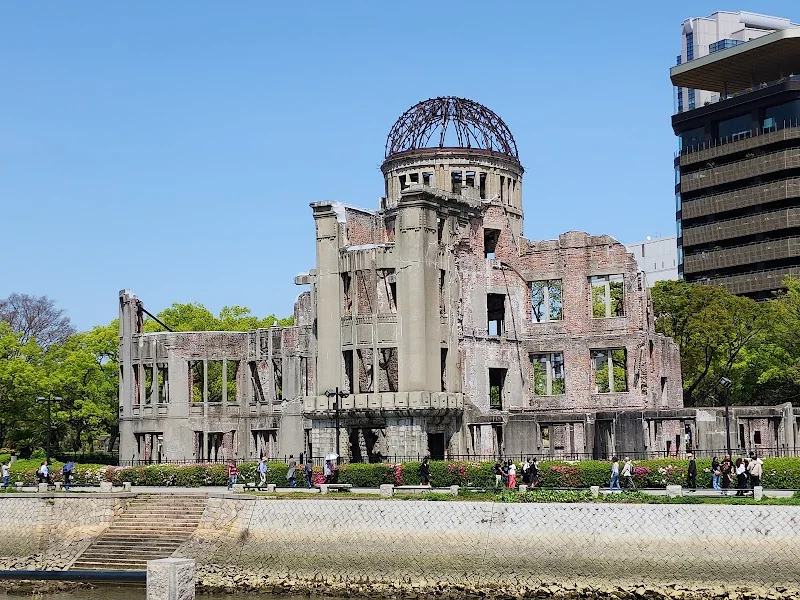
The Peace Memorial in Hiroshima is one of those places that should not just be visited, but consciously experienced. Those searching for this landmark usually mean the Genbaku Dome, the famous ruin in the Hiroshima Peace Memorial Park, which is internationally known as a UNESCO World Heritage Site. The monument today stands as a silent yet extremely powerful symbol of the consequences of war and the idea of lasting peace. Especially because the site is located in the heart of the city yet radiates an almost silent atmosphere, it attracts people from all over the world every year. The official city website emphasizes that visitors may only view the monument from outside the enclosure; this very distance makes the experience so poignant. At the same time, the entire area is easily accessible, well connected to public transport, and closely linked to other memorial sites as a fixed part of the Peace Park. Therefore, those looking for information on opening hours, admission, directions, photos, and reviews are actually seeking a visit that combines historical knowledge, emotional impact, and practical planning. ([whc.unesco.org](https://whc.unesco.org/en/list/775))
Opening Hours, Admission, and Tickets for the Peace Memorial in Hiroshima
When searching for opening hours for the Peace Memorial in Hiroshima, the most important information becomes clear quickly: The monument itself is not a classic indoor museum that one enters at fixed times, but a freely visible outdoor object. The city of Hiroshima explicitly states that the view is only possible from outside the enclosure and that the area behind the fence is not accessible to the public. UNESCO also describes the site as a preserved ruin that is perceived from the outside. This means for visitors practically: There is no admission ticket for the monument itself and no ticket control at the actual monument. Those who wish to see the site can do so as part of a park visit and approach it calmly on-site, without having to plan a classic museum layout with a ticket counter, entrance window, or indoor spaces. This peculiarity may be unfamiliar to many travelers at first, but it is precisely what shapes the character of the place. Instead of an attraction with a time slot, visitors find a public memorial that is permanently present in the urban space. This makes the visit low-threshold and at the same time very dignified, as the site remains freely accessible without losing its memorial character. Therefore, those searching for peace memorial hiroshima opening hours or peace memorial hiroshima admission should plan the visit more like a walk through a memorial park than like a normal ticket attraction. ([city.hiroshima.lg.jp](https://www.city.hiroshima.lg.jp/atomicbomb-peace/1036658/1021107/1035902/1018350.html))
For practical planning, this also means: Daylight is usually the best choice, as the monument is experienced in the outdoor space and the surrounding paths, slopes, and river views appear particularly clear then. Even though the site itself does not require a ticket, a conscious time buffer is worthwhile, as those who quickly photograph the monument miss the actual impact. The official location description and the classification by JNTO show that the Genbaku Dome is part of a larger area that includes several memorial sites. This means: The question of tickets for the Peace Memorial in Hiroshima can be answered with "no tickets needed," but the visit only becomes truly complete through the interplay with the Peace Park. This is also where the strength of the site lies for SEO-related search queries: People want to know not only if they have to pay but also how to meaningfully contextualize the visit. Therefore, visitors should be clearly informed that the monument can be viewed freely from the outside, that no interior visit is planned, and that the visit requires more silent attention than classic entertainment. This honest expectation leads to the best reviews later, as the site is then experienced as it is intended: as a memorial and not as a show. ([city.hiroshima.lg.jp](https://www.city.hiroshima.lg.jp/atomicbomb-peace/1036658/1021107/1035902/1018350.html))
Directions, Parking, and the Best Way to the Genbaku Dome
The journey to the Peace Memorial in Hiroshima is easier for international visitors than many initially suspect. From JR Hiroshima Station, tram lines 2 or 6 go directly to the Genbaku-dome-mae stop; the travel time is about 20 minutes according to city information. Those who prefer to use the bus can go to Kamiya-cho and walk about five to ten minutes further or get off directly at the Genbaku-dome-mae stop. The route from Hiroshima Airport is also well planned: A limousine bus takes travelers to the Hiroshima Bus Center or the Hiroshima Station Shinkansen Entrance, from where they can continue by tram or bus. For SEO search queries like peace memorial hiroshima directions or peace park in hiroshima, this information is particularly relevant because the site is located in the city center and not like a remote monument on the edge of a site. JNTO describes it as part of the centrally located Peace Memorial Park, which can easily be integrated into a city stroll. This is practical for day visitors, cruise travelers, or visitors who explore Hiroshima for just a few hours. ([city.hiroshima.lg.jp](https://www.city.hiroshima.lg.jp/atomicbomb-peace/1036658/1021107/1035902/1018350.html))
When it comes to parking, the situation is much more specific. According to the official city website, there are parking options directly at the Atomic Bomb Dome only for tour buses; additionally, paid parking spaces are available in the vicinity. This means for individual travelers: Those arriving by car should not expect a large, free visitor parking lot directly at the monument. The more sensible strategy is to use one of the municipal parking lots in the nearby area and walk the last meters. For groups with a bus, the large bus parking lot in the Peace Memorial Park is relevant: it is open daily from 8:30 AM to 7:00 PM, is free to use, and has 51 parking spaces, but only as long as free spaces are available. The city also emphasizes that reservations are not possible and that one should leave the area promptly after use. For visitors searching for "peace memorial hiroshima parking," this distinction is crucial: The monument itself is a pedestrian destination, not a classic drive-in location. This priority on quiet accessibility rather than car access fits well with the character of the memorial. Therefore, those who want to plan the visit neatly should best use tram or bus, plan some walking time, and think of nearby parking garages rather than a parking space directly at the monument. ([city.hiroshima.lg.jp](https://www.city.hiroshima.lg.jp/atomicbomb-peace/1036658/1021107/1035902/1018350.html))
Photos, Views, and the Best Perspective in Hiroshima Peace Park
Those searching for peace memorial in hiroshima photos usually mean not just a memory picture but the right perspective on one of Japan's most famous places. It is important to understand here that the appeal of the motif arises from the surroundings: The monument stands in open urban space, but it is consciously viewed from the outside. The city of Hiroshima points out that visitors are not allowed to enter the inner area of the enclosed monument. This means practically that the best photos are taken from the public area, from the edge of the Peace Park, or from the area along the Motoyasu River. JNTO describes the Atomic Bomb Dome as the first structure one sees when visiting the Peace Memorial Park when coming over the river. This gives the motif a clear dramaturgy: first the city, then water, then the ruin as a counterpoint to everything surrounding it. This interplay makes the photo questions so popular because the image works not only historically but also architecturally and atmospherically. ([city.hiroshima.lg.jp](https://www.city.hiroshima.lg.jp/atomicbomb-peace/1036658/1021107/1035902/1018350.html))
The entire Peace Memorial Park is over 122,100 square meters large and contains numerous other memorials, monuments, and buildings, according to JNTO. This means for visitors: One should not reduce the site to just one famous image but rather broaden the view a bit. Those taking photos benefit from including the paths, the open sky, the greenery of the park, and the river line. This creates not only a documentary but also a very calm, almost contemplative photo. This is precisely why many travelers give such strong reviews: The images reflect the atmosphere rather than over-staging it. Since the site is viewed freely from the outside, different angles can be tried without haste. The official location by the water and the embedding in the memorial landscape give the motif depth. Therefore, those wanting to fulfill a search intention like "peace memorial in hiroshima photos" should emphasize in the content that the best perspective does not lie in a spectacular zoom but in a respectful, somewhat distanced shot that considers the ruin, the river, and the Peace Park together. This makes the photos credible, shareable, and visually strong. ([japan.travel](https://www.japan.travel/en/world-heritage/hiroshima-peace-memorial/))
History and Significance of the Peace Memorial in Hiroshima
The history of the Peace Memorial in Hiroshima is the core of any good information page about this site. UNESCO describes the Genbaku Dome as the only structure that stood near the hypocenter of the first atomic bomb on August 6, 1945, and states that it has been preserved in the state directly after the explosion. The city of Hiroshima adds that the building, known as the Hiroshima Prefectural Industrial Promotion Hall, was heavily damaged in the bombing in the mid-20th century and that the people inside the building lost their lives. The attack occurred at 8:15 AM, and the building was only about 160 meters from the hypocenter. These specific dates are important because they show that the monument was not symbolically reconstructed but is an authentic remnant. This fundamentally distinguishes it from many other memorial sites in the world. It is not a reconstruction, not a monument in romanticized form, and not a museum backdrop, but the real ruin of a real building that survived the violence of the atomic weapon. This also explains why it has been classified as a World Heritage Site of such high significance. ([whc.unesco.org](https://whc.unesco.org/en/list/775))
However, the significance of the site lies not only in its destruction but also in its conscious preservation. UNESCO reports that several preservation projects have worked with minimal reinforcements to conserve the ruin in its state. This care shows that the site is not left to decay but is protected as a collective memory. JNTO also places the monument within the idea of an international symbol for nuclear disarmament and lasting world peace. For visitors, this means: Those who view the Peace Memorial in Hiroshima do not simply see an old ruin but a politically and morally charged message. The design language of the site is therefore silent but not neutral. This silence is its strongest tool. The embedding in the Peace Park also contributes to its significance: The monument does not stand isolated but in a landscape of remembrance that makes the historical break after August 6, 1945 visible. For content related to the keyword peace memorial in hiroshima 原爆 ドーム, this connection between the Japanese designation, city history, and global peace symbolism is central. It explains why the site has moved people for decades, fascinated researchers, and left travelers thoughtful. ([whc.unesco.org](https://whc.unesco.org/en/list/775))
The temporal classification is also interesting: The building was erected in 1914 and later became synonymous with Hiroshima itself. UNESCO names the original function as the Hiroshima Prefectural Industrial Promotional Hall, while the city describes how the name Genbaku Dome emerged after the war. This development from an administrative and exhibition building to a peace icon is historically extraordinary. It shows how a place can gain a completely new meaning through extreme historical circumstances. At the same time, authenticity is preserved because the ruin stands at its original location, with original form, material, and surroundings. For SEO planning, this history is particularly valuable because it answers several search intentions simultaneously: history, significance, UNESCO, World Heritage, Hiroshima 1945, and Genbaku Dome. Therefore, anyone building an informative page should not only mention the historical context but use it as a logical foundation for the entire content. The site is important not because it is beautiful but because it is true. And it is precisely from this that its global radiance arises. ([whc.unesco.org](https://whc.unesco.org/en/list/775))
Reviews, Atmosphere, and Why the Place Touches So Deeply
Behind the search terms peace memorial in hiroshima reviews and peace memorial hiroshima opening hours often lies a very human question: What can I really expect there? The answer is simple and honest. With a rating of 4.7 and more than 34,000 reviews, the site signals an extraordinarily high level of approval among visitors. This number is remarkable because the Peace Memorial is not a classic entertainment destination but a place of reflection. It is precisely for this reason that the feedback is so strong: Those who come here are not looking for fun in the usual sense but for impressions that last. The official classification as a memorial, UNESCO World Heritage Site, and symbol for peace explains why the resonance is so great. Visitors do not experience a spectacle but dignity, history, and silence. This makes the reviews credible, as good ratings at such a site usually mean not just comfort but respect, impact, and mental presence. ([whc.unesco.org](https://whc.unesco.org/en/list/775))
For content related to reviews, it is useful to set the expectation correctly: The site is strongest when one takes time, walks slowly, and does not overload the atmosphere with a tight schedule. The high visitor resonance can therefore be read less as tourist enthusiasm in the usual sense but as a sign that the site sustainably touches people. This aligns with the official descriptions, according to which the Genbaku Dome symbolizes the hope for world peace as well as the destructive power of the atomic weapon. Those who understand this tension will evaluate the site differently than a normal tourist attraction. For peace memorial hiroshima admission or tickets for peace memorial in hiroshima, the most important addition is therefore: The value of the visit lies not in purchasing a ticket but in consciously experiencing a memorial site that is freely accessible and impresses precisely through its simplicity. Therefore, anyone reading or writing a review should emphasize the quiet, reflective character. This is the authentic language of this place. Even the best rating arises here not through comfort but through significance. And this explains why so many people would describe the visit as deeply moving, educational, and unforgettable. ([city.hiroshima.lg.jp](https://www.city.hiroshima.lg.jp/atomicbomb-peace/1036658/1021107/1035902/1018350.html))
Hiroshima Peace Park: What is Worthwhile Around the Monument
The Peace Memorial in Hiroshima is just one part of a much larger memorial space. JNTO describes the Peace Memorial Park as a place that includes not only the Atomic Bomb Dome but also the Cenotaph for Atomic Bomb Victims, the Hiroshima Peace Memorial Museum, the Children's Peace Monument, the Atomic Bomb Memorial Mound, and several other memorials. This is precisely why one should not limit the visit to a single photo stop. The park itself is a green island in the center of the city, stretching south of the Dome and covering over 120,000 square meters. This size makes it possible to connect multiple perspectives, themes, and emotional states in a single day: remembrance, education, tranquility, and urban openness. Those searching for peace park hiroshima monument or peace park in hiroshima often seek exactly this mix of orientation and significance. And this is available here in particularly concentrated form. ([japan.travel](https://www.japan.travel/en/world-heritage/hiroshima-peace-memorial/))
The annual character of the park is also relevant. The Peace Memorial Ceremony takes place every year on August 6 in the Peace Memorial Park and attracts numerous visitors who remember the victims and advocate for peace. JNTO points out that the ceremony is open to visitors. For an SEO page, this is important because it does not present the site as a static monument but as a living memorial space with recurring public moments. At the same time, the park shows how strongly Hiroshima has integrated its history into the urban space. Therefore, those who have time beyond the Peace Memorial should not only consider the Dome itself but walk through the entire park, use the paths by the water, and perceive the quiet sightlines between memorial sites. This makes the visit more comprehensive and understandable. From a single motif, it becomes a city landscape of remembrance. And this is precisely where the special strength of Hiroshima Peace Park lies: It not only explains the monument but frames it meaningfully. ([japan.travel](https://www.japan.travel/en/spot/161/?utm_source=openai))
In summary, the Peace Memorial in Hiroshima is a place for all those seeking clear, honest, and historically reliable information. The most important answers are quickly found: There are no tickets for the monument itself, no interior visit, and no classic museum experience. Instead, there is a free outdoor view, very good access by tram and bus, parking primarily for tour buses, and a park that places the monument in a larger cultural context of remembrance. Therefore, anyone researching photos, reviews, directions, or opening hours should always consider the interplay between the monument, park, and city. This is what makes the site unique. It is not loud, not over-staged, and not commercially loaded. It is a quiet piece of world history in the middle of Hiroshima. For visitors, this may be the most important reason why they do not forget this place. ([city.hiroshima.lg.jp](https://www.city.hiroshima.lg.jp/atomicbomb-peace/1036658/1021107/1035902/1018350.html))
Sources:
- UNESCO World Heritage Centre - Hiroshima Peace Memorial (Genbaku Dome)
- City of Hiroshima - Genbaku Dome
- City of Hiroshima - Visiting the Atomic Bomb Dome
- City of Hiroshima - Peace Memorial Park
- City of Hiroshima - Use of Large Bus Parking in Peace Memorial Park
- Travel Japan - Hiroshima Peace Memorial (UNESCO)
Mehr anzeigenWeniger anzeigen
Peace Memorial in Hiroshima | Opening Hours & Admission
The Peace Memorial in Hiroshima is one of those places that should not just be visited, but consciously experienced. Those searching for this landmark usually mean the Genbaku Dome, the famous ruin in the Hiroshima Peace Memorial Park, which is internationally known as a UNESCO World Heritage Site. The monument today stands as a silent yet extremely powerful symbol of the consequences of war and the idea of lasting peace. Especially because the site is located in the heart of the city yet radiates an almost silent atmosphere, it attracts people from all over the world every year. The official city website emphasizes that visitors may only view the monument from outside the enclosure; this very distance makes the experience so poignant. At the same time, the entire area is easily accessible, well connected to public transport, and closely linked to other memorial sites as a fixed part of the Peace Park. Therefore, those looking for information on opening hours, admission, directions, photos, and reviews are actually seeking a visit that combines historical knowledge, emotional impact, and practical planning. ([whc.unesco.org](https://whc.unesco.org/en/list/775))
Opening Hours, Admission, and Tickets for the Peace Memorial in Hiroshima
When searching for opening hours for the Peace Memorial in Hiroshima, the most important information becomes clear quickly: The monument itself is not a classic indoor museum that one enters at fixed times, but a freely visible outdoor object. The city of Hiroshima explicitly states that the view is only possible from outside the enclosure and that the area behind the fence is not accessible to the public. UNESCO also describes the site as a preserved ruin that is perceived from the outside. This means for visitors practically: There is no admission ticket for the monument itself and no ticket control at the actual monument. Those who wish to see the site can do so as part of a park visit and approach it calmly on-site, without having to plan a classic museum layout with a ticket counter, entrance window, or indoor spaces. This peculiarity may be unfamiliar to many travelers at first, but it is precisely what shapes the character of the place. Instead of an attraction with a time slot, visitors find a public memorial that is permanently present in the urban space. This makes the visit low-threshold and at the same time very dignified, as the site remains freely accessible without losing its memorial character. Therefore, those searching for peace memorial hiroshima opening hours or peace memorial hiroshima admission should plan the visit more like a walk through a memorial park than like a normal ticket attraction. ([city.hiroshima.lg.jp](https://www.city.hiroshima.lg.jp/atomicbomb-peace/1036658/1021107/1035902/1018350.html))
For practical planning, this also means: Daylight is usually the best choice, as the monument is experienced in the outdoor space and the surrounding paths, slopes, and river views appear particularly clear then. Even though the site itself does not require a ticket, a conscious time buffer is worthwhile, as those who quickly photograph the monument miss the actual impact. The official location description and the classification by JNTO show that the Genbaku Dome is part of a larger area that includes several memorial sites. This means: The question of tickets for the Peace Memorial in Hiroshima can be answered with "no tickets needed," but the visit only becomes truly complete through the interplay with the Peace Park. This is also where the strength of the site lies for SEO-related search queries: People want to know not only if they have to pay but also how to meaningfully contextualize the visit. Therefore, visitors should be clearly informed that the monument can be viewed freely from the outside, that no interior visit is planned, and that the visit requires more silent attention than classic entertainment. This honest expectation leads to the best reviews later, as the site is then experienced as it is intended: as a memorial and not as a show. ([city.hiroshima.lg.jp](https://www.city.hiroshima.lg.jp/atomicbomb-peace/1036658/1021107/1035902/1018350.html))
Directions, Parking, and the Best Way to the Genbaku Dome
The journey to the Peace Memorial in Hiroshima is easier for international visitors than many initially suspect. From JR Hiroshima Station, tram lines 2 or 6 go directly to the Genbaku-dome-mae stop; the travel time is about 20 minutes according to city information. Those who prefer to use the bus can go to Kamiya-cho and walk about five to ten minutes further or get off directly at the Genbaku-dome-mae stop. The route from Hiroshima Airport is also well planned: A limousine bus takes travelers to the Hiroshima Bus Center or the Hiroshima Station Shinkansen Entrance, from where they can continue by tram or bus. For SEO search queries like peace memorial hiroshima directions or peace park in hiroshima, this information is particularly relevant because the site is located in the city center and not like a remote monument on the edge of a site. JNTO describes it as part of the centrally located Peace Memorial Park, which can easily be integrated into a city stroll. This is practical for day visitors, cruise travelers, or visitors who explore Hiroshima for just a few hours. ([city.hiroshima.lg.jp](https://www.city.hiroshima.lg.jp/atomicbomb-peace/1036658/1021107/1035902/1018350.html))
When it comes to parking, the situation is much more specific. According to the official city website, there are parking options directly at the Atomic Bomb Dome only for tour buses; additionally, paid parking spaces are available in the vicinity. This means for individual travelers: Those arriving by car should not expect a large, free visitor parking lot directly at the monument. The more sensible strategy is to use one of the municipal parking lots in the nearby area and walk the last meters. For groups with a bus, the large bus parking lot in the Peace Memorial Park is relevant: it is open daily from 8:30 AM to 7:00 PM, is free to use, and has 51 parking spaces, but only as long as free spaces are available. The city also emphasizes that reservations are not possible and that one should leave the area promptly after use. For visitors searching for "peace memorial hiroshima parking," this distinction is crucial: The monument itself is a pedestrian destination, not a classic drive-in location. This priority on quiet accessibility rather than car access fits well with the character of the memorial. Therefore, those who want to plan the visit neatly should best use tram or bus, plan some walking time, and think of nearby parking garages rather than a parking space directly at the monument. ([city.hiroshima.lg.jp](https://www.city.hiroshima.lg.jp/atomicbomb-peace/1036658/1021107/1035902/1018350.html))
Photos, Views, and the Best Perspective in Hiroshima Peace Park
Those searching for peace memorial in hiroshima photos usually mean not just a memory picture but the right perspective on one of Japan's most famous places. It is important to understand here that the appeal of the motif arises from the surroundings: The monument stands in open urban space, but it is consciously viewed from the outside. The city of Hiroshima points out that visitors are not allowed to enter the inner area of the enclosed monument. This means practically that the best photos are taken from the public area, from the edge of the Peace Park, or from the area along the Motoyasu River. JNTO describes the Atomic Bomb Dome as the first structure one sees when visiting the Peace Memorial Park when coming over the river. This gives the motif a clear dramaturgy: first the city, then water, then the ruin as a counterpoint to everything surrounding it. This interplay makes the photo questions so popular because the image works not only historically but also architecturally and atmospherically. ([city.hiroshima.lg.jp](https://www.city.hiroshima.lg.jp/atomicbomb-peace/1036658/1021107/1035902/1018350.html))
The entire Peace Memorial Park is over 122,100 square meters large and contains numerous other memorials, monuments, and buildings, according to JNTO. This means for visitors: One should not reduce the site to just one famous image but rather broaden the view a bit. Those taking photos benefit from including the paths, the open sky, the greenery of the park, and the river line. This creates not only a documentary but also a very calm, almost contemplative photo. This is precisely why many travelers give such strong reviews: The images reflect the atmosphere rather than over-staging it. Since the site is viewed freely from the outside, different angles can be tried without haste. The official location by the water and the embedding in the memorial landscape give the motif depth. Therefore, those wanting to fulfill a search intention like "peace memorial in hiroshima photos" should emphasize in the content that the best perspective does not lie in a spectacular zoom but in a respectful, somewhat distanced shot that considers the ruin, the river, and the Peace Park together. This makes the photos credible, shareable, and visually strong. ([japan.travel](https://www.japan.travel/en/world-heritage/hiroshima-peace-memorial/))
History and Significance of the Peace Memorial in Hiroshima
The history of the Peace Memorial in Hiroshima is the core of any good information page about this site. UNESCO describes the Genbaku Dome as the only structure that stood near the hypocenter of the first atomic bomb on August 6, 1945, and states that it has been preserved in the state directly after the explosion. The city of Hiroshima adds that the building, known as the Hiroshima Prefectural Industrial Promotion Hall, was heavily damaged in the bombing in the mid-20th century and that the people inside the building lost their lives. The attack occurred at 8:15 AM, and the building was only about 160 meters from the hypocenter. These specific dates are important because they show that the monument was not symbolically reconstructed but is an authentic remnant. This fundamentally distinguishes it from many other memorial sites in the world. It is not a reconstruction, not a monument in romanticized form, and not a museum backdrop, but the real ruin of a real building that survived the violence of the atomic weapon. This also explains why it has been classified as a World Heritage Site of such high significance. ([whc.unesco.org](https://whc.unesco.org/en/list/775))
However, the significance of the site lies not only in its destruction but also in its conscious preservation. UNESCO reports that several preservation projects have worked with minimal reinforcements to conserve the ruin in its state. This care shows that the site is not left to decay but is protected as a collective memory. JNTO also places the monument within the idea of an international symbol for nuclear disarmament and lasting world peace. For visitors, this means: Those who view the Peace Memorial in Hiroshima do not simply see an old ruin but a politically and morally charged message. The design language of the site is therefore silent but not neutral. This silence is its strongest tool. The embedding in the Peace Park also contributes to its significance: The monument does not stand isolated but in a landscape of remembrance that makes the historical break after August 6, 1945 visible. For content related to the keyword peace memorial in hiroshima 原爆 ドーム, this connection between the Japanese designation, city history, and global peace symbolism is central. It explains why the site has moved people for decades, fascinated researchers, and left travelers thoughtful. ([whc.unesco.org](https://whc.unesco.org/en/list/775))
The temporal classification is also interesting: The building was erected in 1914 and later became synonymous with Hiroshima itself. UNESCO names the original function as the Hiroshima Prefectural Industrial Promotional Hall, while the city describes how the name Genbaku Dome emerged after the war. This development from an administrative and exhibition building to a peace icon is historically extraordinary. It shows how a place can gain a completely new meaning through extreme historical circumstances. At the same time, authenticity is preserved because the ruin stands at its original location, with original form, material, and surroundings. For SEO planning, this history is particularly valuable because it answers several search intentions simultaneously: history, significance, UNESCO, World Heritage, Hiroshima 1945, and Genbaku Dome. Therefore, anyone building an informative page should not only mention the historical context but use it as a logical foundation for the entire content. The site is important not because it is beautiful but because it is true. And it is precisely from this that its global radiance arises. ([whc.unesco.org](https://whc.unesco.org/en/list/775))
Reviews, Atmosphere, and Why the Place Touches So Deeply
Behind the search terms peace memorial in hiroshima reviews and peace memorial hiroshima opening hours often lies a very human question: What can I really expect there? The answer is simple and honest. With a rating of 4.7 and more than 34,000 reviews, the site signals an extraordinarily high level of approval among visitors. This number is remarkable because the Peace Memorial is not a classic entertainment destination but a place of reflection. It is precisely for this reason that the feedback is so strong: Those who come here are not looking for fun in the usual sense but for impressions that last. The official classification as a memorial, UNESCO World Heritage Site, and symbol for peace explains why the resonance is so great. Visitors do not experience a spectacle but dignity, history, and silence. This makes the reviews credible, as good ratings at such a site usually mean not just comfort but respect, impact, and mental presence. ([whc.unesco.org](https://whc.unesco.org/en/list/775))
For content related to reviews, it is useful to set the expectation correctly: The site is strongest when one takes time, walks slowly, and does not overload the atmosphere with a tight schedule. The high visitor resonance can therefore be read less as tourist enthusiasm in the usual sense but as a sign that the site sustainably touches people. This aligns with the official descriptions, according to which the Genbaku Dome symbolizes the hope for world peace as well as the destructive power of the atomic weapon. Those who understand this tension will evaluate the site differently than a normal tourist attraction. For peace memorial hiroshima admission or tickets for peace memorial in hiroshima, the most important addition is therefore: The value of the visit lies not in purchasing a ticket but in consciously experiencing a memorial site that is freely accessible and impresses precisely through its simplicity. Therefore, anyone reading or writing a review should emphasize the quiet, reflective character. This is the authentic language of this place. Even the best rating arises here not through comfort but through significance. And this explains why so many people would describe the visit as deeply moving, educational, and unforgettable. ([city.hiroshima.lg.jp](https://www.city.hiroshima.lg.jp/atomicbomb-peace/1036658/1021107/1035902/1018350.html))
Hiroshima Peace Park: What is Worthwhile Around the Monument
The Peace Memorial in Hiroshima is just one part of a much larger memorial space. JNTO describes the Peace Memorial Park as a place that includes not only the Atomic Bomb Dome but also the Cenotaph for Atomic Bomb Victims, the Hiroshima Peace Memorial Museum, the Children's Peace Monument, the Atomic Bomb Memorial Mound, and several other memorials. This is precisely why one should not limit the visit to a single photo stop. The park itself is a green island in the center of the city, stretching south of the Dome and covering over 120,000 square meters. This size makes it possible to connect multiple perspectives, themes, and emotional states in a single day: remembrance, education, tranquility, and urban openness. Those searching for peace park hiroshima monument or peace park in hiroshima often seek exactly this mix of orientation and significance. And this is available here in particularly concentrated form. ([japan.travel](https://www.japan.travel/en/world-heritage/hiroshima-peace-memorial/))
The annual character of the park is also relevant. The Peace Memorial Ceremony takes place every year on August 6 in the Peace Memorial Park and attracts numerous visitors who remember the victims and advocate for peace. JNTO points out that the ceremony is open to visitors. For an SEO page, this is important because it does not present the site as a static monument but as a living memorial space with recurring public moments. At the same time, the park shows how strongly Hiroshima has integrated its history into the urban space. Therefore, those who have time beyond the Peace Memorial should not only consider the Dome itself but walk through the entire park, use the paths by the water, and perceive the quiet sightlines between memorial sites. This makes the visit more comprehensive and understandable. From a single motif, it becomes a city landscape of remembrance. And this is precisely where the special strength of Hiroshima Peace Park lies: It not only explains the monument but frames it meaningfully. ([japan.travel](https://www.japan.travel/en/spot/161/?utm_source=openai))
In summary, the Peace Memorial in Hiroshima is a place for all those seeking clear, honest, and historically reliable information. The most important answers are quickly found: There are no tickets for the monument itself, no interior visit, and no classic museum experience. Instead, there is a free outdoor view, very good access by tram and bus, parking primarily for tour buses, and a park that places the monument in a larger cultural context of remembrance. Therefore, anyone researching photos, reviews, directions, or opening hours should always consider the interplay between the monument, park, and city. This is what makes the site unique. It is not loud, not over-staged, and not commercially loaded. It is a quiet piece of world history in the middle of Hiroshima. For visitors, this may be the most important reason why they do not forget this place. ([city.hiroshima.lg.jp](https://www.city.hiroshima.lg.jp/atomicbomb-peace/1036658/1021107/1035902/1018350.html))
Sources:
- UNESCO World Heritage Centre - Hiroshima Peace Memorial (Genbaku Dome)
- City of Hiroshima - Genbaku Dome
- City of Hiroshima - Visiting the Atomic Bomb Dome
- City of Hiroshima - Peace Memorial Park
- City of Hiroshima - Use of Large Bus Parking in Peace Memorial Park
- Travel Japan - Hiroshima Peace Memorial (UNESCO)
Peace Memorial in Hiroshima | Opening Hours & Admission
The Peace Memorial in Hiroshima is one of those places that should not just be visited, but consciously experienced. Those searching for this landmark usually mean the Genbaku Dome, the famous ruin in the Hiroshima Peace Memorial Park, which is internationally known as a UNESCO World Heritage Site. The monument today stands as a silent yet extremely powerful symbol of the consequences of war and the idea of lasting peace. Especially because the site is located in the heart of the city yet radiates an almost silent atmosphere, it attracts people from all over the world every year. The official city website emphasizes that visitors may only view the monument from outside the enclosure; this very distance makes the experience so poignant. At the same time, the entire area is easily accessible, well connected to public transport, and closely linked to other memorial sites as a fixed part of the Peace Park. Therefore, those looking for information on opening hours, admission, directions, photos, and reviews are actually seeking a visit that combines historical knowledge, emotional impact, and practical planning. ([whc.unesco.org](https://whc.unesco.org/en/list/775))
Opening Hours, Admission, and Tickets for the Peace Memorial in Hiroshima
When searching for opening hours for the Peace Memorial in Hiroshima, the most important information becomes clear quickly: The monument itself is not a classic indoor museum that one enters at fixed times, but a freely visible outdoor object. The city of Hiroshima explicitly states that the view is only possible from outside the enclosure and that the area behind the fence is not accessible to the public. UNESCO also describes the site as a preserved ruin that is perceived from the outside. This means for visitors practically: There is no admission ticket for the monument itself and no ticket control at the actual monument. Those who wish to see the site can do so as part of a park visit and approach it calmly on-site, without having to plan a classic museum layout with a ticket counter, entrance window, or indoor spaces. This peculiarity may be unfamiliar to many travelers at first, but it is precisely what shapes the character of the place. Instead of an attraction with a time slot, visitors find a public memorial that is permanently present in the urban space. This makes the visit low-threshold and at the same time very dignified, as the site remains freely accessible without losing its memorial character. Therefore, those searching for peace memorial hiroshima opening hours or peace memorial hiroshima admission should plan the visit more like a walk through a memorial park than like a normal ticket attraction. ([city.hiroshima.lg.jp](https://www.city.hiroshima.lg.jp/atomicbomb-peace/1036658/1021107/1035902/1018350.html))
For practical planning, this also means: Daylight is usually the best choice, as the monument is experienced in the outdoor space and the surrounding paths, slopes, and river views appear particularly clear then. Even though the site itself does not require a ticket, a conscious time buffer is worthwhile, as those who quickly photograph the monument miss the actual impact. The official location description and the classification by JNTO show that the Genbaku Dome is part of a larger area that includes several memorial sites. This means: The question of tickets for the Peace Memorial in Hiroshima can be answered with "no tickets needed," but the visit only becomes truly complete through the interplay with the Peace Park. This is also where the strength of the site lies for SEO-related search queries: People want to know not only if they have to pay but also how to meaningfully contextualize the visit. Therefore, visitors should be clearly informed that the monument can be viewed freely from the outside, that no interior visit is planned, and that the visit requires more silent attention than classic entertainment. This honest expectation leads to the best reviews later, as the site is then experienced as it is intended: as a memorial and not as a show. ([city.hiroshima.lg.jp](https://www.city.hiroshima.lg.jp/atomicbomb-peace/1036658/1021107/1035902/1018350.html))
Directions, Parking, and the Best Way to the Genbaku Dome
The journey to the Peace Memorial in Hiroshima is easier for international visitors than many initially suspect. From JR Hiroshima Station, tram lines 2 or 6 go directly to the Genbaku-dome-mae stop; the travel time is about 20 minutes according to city information. Those who prefer to use the bus can go to Kamiya-cho and walk about five to ten minutes further or get off directly at the Genbaku-dome-mae stop. The route from Hiroshima Airport is also well planned: A limousine bus takes travelers to the Hiroshima Bus Center or the Hiroshima Station Shinkansen Entrance, from where they can continue by tram or bus. For SEO search queries like peace memorial hiroshima directions or peace park in hiroshima, this information is particularly relevant because the site is located in the city center and not like a remote monument on the edge of a site. JNTO describes it as part of the centrally located Peace Memorial Park, which can easily be integrated into a city stroll. This is practical for day visitors, cruise travelers, or visitors who explore Hiroshima for just a few hours. ([city.hiroshima.lg.jp](https://www.city.hiroshima.lg.jp/atomicbomb-peace/1036658/1021107/1035902/1018350.html))
When it comes to parking, the situation is much more specific. According to the official city website, there are parking options directly at the Atomic Bomb Dome only for tour buses; additionally, paid parking spaces are available in the vicinity. This means for individual travelers: Those arriving by car should not expect a large, free visitor parking lot directly at the monument. The more sensible strategy is to use one of the municipal parking lots in the nearby area and walk the last meters. For groups with a bus, the large bus parking lot in the Peace Memorial Park is relevant: it is open daily from 8:30 AM to 7:00 PM, is free to use, and has 51 parking spaces, but only as long as free spaces are available. The city also emphasizes that reservations are not possible and that one should leave the area promptly after use. For visitors searching for "peace memorial hiroshima parking," this distinction is crucial: The monument itself is a pedestrian destination, not a classic drive-in location. This priority on quiet accessibility rather than car access fits well with the character of the memorial. Therefore, those who want to plan the visit neatly should best use tram or bus, plan some walking time, and think of nearby parking garages rather than a parking space directly at the monument. ([city.hiroshima.lg.jp](https://www.city.hiroshima.lg.jp/atomicbomb-peace/1036658/1021107/1035902/1018350.html))
Photos, Views, and the Best Perspective in Hiroshima Peace Park
Those searching for peace memorial in hiroshima photos usually mean not just a memory picture but the right perspective on one of Japan's most famous places. It is important to understand here that the appeal of the motif arises from the surroundings: The monument stands in open urban space, but it is consciously viewed from the outside. The city of Hiroshima points out that visitors are not allowed to enter the inner area of the enclosed monument. This means practically that the best photos are taken from the public area, from the edge of the Peace Park, or from the area along the Motoyasu River. JNTO describes the Atomic Bomb Dome as the first structure one sees when visiting the Peace Memorial Park when coming over the river. This gives the motif a clear dramaturgy: first the city, then water, then the ruin as a counterpoint to everything surrounding it. This interplay makes the photo questions so popular because the image works not only historically but also architecturally and atmospherically. ([city.hiroshima.lg.jp](https://www.city.hiroshima.lg.jp/atomicbomb-peace/1036658/1021107/1035902/1018350.html))
The entire Peace Memorial Park is over 122,100 square meters large and contains numerous other memorials, monuments, and buildings, according to JNTO. This means for visitors: One should not reduce the site to just one famous image but rather broaden the view a bit. Those taking photos benefit from including the paths, the open sky, the greenery of the park, and the river line. This creates not only a documentary but also a very calm, almost contemplative photo. This is precisely why many travelers give such strong reviews: The images reflect the atmosphere rather than over-staging it. Since the site is viewed freely from the outside, different angles can be tried without haste. The official location by the water and the embedding in the memorial landscape give the motif depth. Therefore, those wanting to fulfill a search intention like "peace memorial in hiroshima photos" should emphasize in the content that the best perspective does not lie in a spectacular zoom but in a respectful, somewhat distanced shot that considers the ruin, the river, and the Peace Park together. This makes the photos credible, shareable, and visually strong. ([japan.travel](https://www.japan.travel/en/world-heritage/hiroshima-peace-memorial/))
History and Significance of the Peace Memorial in Hiroshima
The history of the Peace Memorial in Hiroshima is the core of any good information page about this site. UNESCO describes the Genbaku Dome as the only structure that stood near the hypocenter of the first atomic bomb on August 6, 1945, and states that it has been preserved in the state directly after the explosion. The city of Hiroshima adds that the building, known as the Hiroshima Prefectural Industrial Promotion Hall, was heavily damaged in the bombing in the mid-20th century and that the people inside the building lost their lives. The attack occurred at 8:15 AM, and the building was only about 160 meters from the hypocenter. These specific dates are important because they show that the monument was not symbolically reconstructed but is an authentic remnant. This fundamentally distinguishes it from many other memorial sites in the world. It is not a reconstruction, not a monument in romanticized form, and not a museum backdrop, but the real ruin of a real building that survived the violence of the atomic weapon. This also explains why it has been classified as a World Heritage Site of such high significance. ([whc.unesco.org](https://whc.unesco.org/en/list/775))
However, the significance of the site lies not only in its destruction but also in its conscious preservation. UNESCO reports that several preservation projects have worked with minimal reinforcements to conserve the ruin in its state. This care shows that the site is not left to decay but is protected as a collective memory. JNTO also places the monument within the idea of an international symbol for nuclear disarmament and lasting world peace. For visitors, this means: Those who view the Peace Memorial in Hiroshima do not simply see an old ruin but a politically and morally charged message. The design language of the site is therefore silent but not neutral. This silence is its strongest tool. The embedding in the Peace Park also contributes to its significance: The monument does not stand isolated but in a landscape of remembrance that makes the historical break after August 6, 1945 visible. For content related to the keyword peace memorial in hiroshima 原爆 ドーム, this connection between the Japanese designation, city history, and global peace symbolism is central. It explains why the site has moved people for decades, fascinated researchers, and left travelers thoughtful. ([whc.unesco.org](https://whc.unesco.org/en/list/775))
The temporal classification is also interesting: The building was erected in 1914 and later became synonymous with Hiroshima itself. UNESCO names the original function as the Hiroshima Prefectural Industrial Promotional Hall, while the city describes how the name Genbaku Dome emerged after the war. This development from an administrative and exhibition building to a peace icon is historically extraordinary. It shows how a place can gain a completely new meaning through extreme historical circumstances. At the same time, authenticity is preserved because the ruin stands at its original location, with original form, material, and surroundings. For SEO planning, this history is particularly valuable because it answers several search intentions simultaneously: history, significance, UNESCO, World Heritage, Hiroshima 1945, and Genbaku Dome. Therefore, anyone building an informative page should not only mention the historical context but use it as a logical foundation for the entire content. The site is important not because it is beautiful but because it is true. And it is precisely from this that its global radiance arises. ([whc.unesco.org](https://whc.unesco.org/en/list/775))
Reviews, Atmosphere, and Why the Place Touches So Deeply
Behind the search terms peace memorial in hiroshima reviews and peace memorial hiroshima opening hours often lies a very human question: What can I really expect there? The answer is simple and honest. With a rating of 4.7 and more than 34,000 reviews, the site signals an extraordinarily high level of approval among visitors. This number is remarkable because the Peace Memorial is not a classic entertainment destination but a place of reflection. It is precisely for this reason that the feedback is so strong: Those who come here are not looking for fun in the usual sense but for impressions that last. The official classification as a memorial, UNESCO World Heritage Site, and symbol for peace explains why the resonance is so great. Visitors do not experience a spectacle but dignity, history, and silence. This makes the reviews credible, as good ratings at such a site usually mean not just comfort but respect, impact, and mental presence. ([whc.unesco.org](https://whc.unesco.org/en/list/775))
For content related to reviews, it is useful to set the expectation correctly: The site is strongest when one takes time, walks slowly, and does not overload the atmosphere with a tight schedule. The high visitor resonance can therefore be read less as tourist enthusiasm in the usual sense but as a sign that the site sustainably touches people. This aligns with the official descriptions, according to which the Genbaku Dome symbolizes the hope for world peace as well as the destructive power of the atomic weapon. Those who understand this tension will evaluate the site differently than a normal tourist attraction. For peace memorial hiroshima admission or tickets for peace memorial in hiroshima, the most important addition is therefore: The value of the visit lies not in purchasing a ticket but in consciously experiencing a memorial site that is freely accessible and impresses precisely through its simplicity. Therefore, anyone reading or writing a review should emphasize the quiet, reflective character. This is the authentic language of this place. Even the best rating arises here not through comfort but through significance. And this explains why so many people would describe the visit as deeply moving, educational, and unforgettable. ([city.hiroshima.lg.jp](https://www.city.hiroshima.lg.jp/atomicbomb-peace/1036658/1021107/1035902/1018350.html))
Hiroshima Peace Park: What is Worthwhile Around the Monument
The Peace Memorial in Hiroshima is just one part of a much larger memorial space. JNTO describes the Peace Memorial Park as a place that includes not only the Atomic Bomb Dome but also the Cenotaph for Atomic Bomb Victims, the Hiroshima Peace Memorial Museum, the Children's Peace Monument, the Atomic Bomb Memorial Mound, and several other memorials. This is precisely why one should not limit the visit to a single photo stop. The park itself is a green island in the center of the city, stretching south of the Dome and covering over 120,000 square meters. This size makes it possible to connect multiple perspectives, themes, and emotional states in a single day: remembrance, education, tranquility, and urban openness. Those searching for peace park hiroshima monument or peace park in hiroshima often seek exactly this mix of orientation and significance. And this is available here in particularly concentrated form. ([japan.travel](https://www.japan.travel/en/world-heritage/hiroshima-peace-memorial/))
The annual character of the park is also relevant. The Peace Memorial Ceremony takes place every year on August 6 in the Peace Memorial Park and attracts numerous visitors who remember the victims and advocate for peace. JNTO points out that the ceremony is open to visitors. For an SEO page, this is important because it does not present the site as a static monument but as a living memorial space with recurring public moments. At the same time, the park shows how strongly Hiroshima has integrated its history into the urban space. Therefore, those who have time beyond the Peace Memorial should not only consider the Dome itself but walk through the entire park, use the paths by the water, and perceive the quiet sightlines between memorial sites. This makes the visit more comprehensive and understandable. From a single motif, it becomes a city landscape of remembrance. And this is precisely where the special strength of Hiroshima Peace Park lies: It not only explains the monument but frames it meaningfully. ([japan.travel](https://www.japan.travel/en/spot/161/?utm_source=openai))
In summary, the Peace Memorial in Hiroshima is a place for all those seeking clear, honest, and historically reliable information. The most important answers are quickly found: There are no tickets for the monument itself, no interior visit, and no classic museum experience. Instead, there is a free outdoor view, very good access by tram and bus, parking primarily for tour buses, and a park that places the monument in a larger cultural context of remembrance. Therefore, anyone researching photos, reviews, directions, or opening hours should always consider the interplay between the monument, park, and city. This is what makes the site unique. It is not loud, not over-staged, and not commercially loaded. It is a quiet piece of world history in the middle of Hiroshima. For visitors, this may be the most important reason why they do not forget this place. ([city.hiroshima.lg.jp](https://www.city.hiroshima.lg.jp/atomicbomb-peace/1036658/1021107/1035902/1018350.html))
Sources:
- UNESCO World Heritage Centre - Hiroshima Peace Memorial (Genbaku Dome)
- City of Hiroshima - Genbaku Dome
- City of Hiroshima - Visiting the Atomic Bomb Dome
- City of Hiroshima - Peace Memorial Park
- City of Hiroshima - Use of Large Bus Parking in Peace Memorial Park
- Travel Japan - Hiroshima Peace Memorial (UNESCO)
Frequently Asked Questions
Reviews
No reviews found