

Bonn
Schillerstraße 12, 53225 Bonn, Deutschland
Eschenhof Bonn | History & Directions
The Eschenhof in Bonn-Vilich is a place where architectural history, district history, and art history overlap in an unusually dense manner. Today, those searching for the address Schillerstraße 12 do not encounter a loud event venue, but rather a historic manor house in the developed town center of Vilich, which has left its mark since the 18th century. Relevant monument and local history sources describe the Eschenhof as an electoral prince's manor house from the mid-18th century, which later became the residence and official seat of mayors and gained new cultural significance in the 20th century, primarily through the Bonn artist Pitt Müller. This very mix is what makes the place appealing: the Eschenhof is not an interchangeable event building, but a developed monument with history, workshop character, and a strong connection to historic Vilich. Today, it is perceived in the context of monument preservation, local memory, and occasional exhibitions, making it equally relevant for SEO inquiries related to history, programs, directions, and visits. ([tag-des-offenen-denkmals.de](https://www.tag-des-offenen-denkmals.de/denkmal/cmes4un2x0000ic047pc5lljk/eschenhof-kurfurstliches-herrenhaus))
History of the Eschenhof in Vilich
The historical classification of the Eschenhof begins with its construction context. The Day of Open Monuments designates the building as an electoral prince's manor house built around 1750. This dating places the Eschenhof in a phase when Vilich already had a long prehistory as a church and lordly influenced place. Bonn.wiki describes the Eschenhof as a manor house from the mid-18th century and explicitly names it at the location Schillerstraße 12. It also becomes evident how closely the building is connected to the municipal history of the district, as from 1857 it was the official seat of Vilich's mayor Johann Ignaz Schnorrenberg, who developed from the secretary of the then mayor to deputy and finally to mayor. In the official monument texts, Friedrich Breuer is also mentioned as another mayor, which shows the Eschenhof as a place of administration and representation for a local ruling class. ([tag-des-offenen-denkmals.de](https://www.tag-des-offenen-denkmals.de/denkmal/cmes4un2x0000ic047pc5lljk/eschenhof-kurfurstliches-herrenhaus))
For the perception of the house, it is important that it does not stand in isolation but is part of a historical town center. KuLaDig describes Vilich as a district of Beuel, whose town center goes back to a Frankish estate. The first written mention of the place Vilich is cited for the year 942, and the historical town center is classified as a cultural landscape with a long development line. This historical depth explains why the Eschenhof must be read not only as a beautiful old house but as part of a developed settlement picture. The monument and history association Bonn-Rechtsrheinisch also links the place to the history of the municipality of Vilich, which was reorganized under Napoleonic administration in 1808 and moved its administrative seat to Beuel in 1896. The Bürgermeister-Stroof-Haus in the same historical neighborhood is described by this association as the first municipal office building in today's right bank Bonn. This creates an important environment in which the Eschenhof appears as a civic and lordly counterpart to the administrative history of the place. ([kuladig.de](https://www.kuladig.de/Objektansicht/O-101969-20140901-2))
The building description itself indicates a longer development. The monument association cites several construction phases for the Bürgermeister-Stroof-Haus, including older rubble stone remains, a core from the early years of the 18th century, and a representative transformation around 1800. Although this detailed description refers to the neighboring Stroof house, it helps in understanding the entire Vilich ensemble: the town center is not a homogeneous new development area but a mosaic of late medieval, baroque, and civic layers. The Eschenhof stands in exactly this tension field. It is not simply a backdrop but a structural witness to how administration, rural estate structure, art, and monument preservation are intertwined in Vilich. Therefore, search queries like Eschenhof history, Eschenhof manor house, Eschenhof monument protection, or historical town center Vilich work particularly well because they target the same historical core. ([denkmalverein-bonn.de](https://www.denkmalverein-bonn.de/projekte_buergermeister_stroof_haus))
Pitt Müller, Art School, and Lighting Manufacturing
The second major significance of the Eschenhof is connected to the Bonn artist Pitt Müller. Sources mention him as a resident and active figure of the house from 1934 to 1955. During this time, he used the Eschenhof not only as a residence but as a creative workspace. The Day of Open Monuments describes him as an artist who also operated an art school here and later a manufactory for modern lighting fixtures. Bonn.wiki adds that his sculptural work included portraits, statues, and torsos, and that he simultaneously manufactured lighting fixtures for private and public buildings. This makes the Eschenhof a place where craftsmanship, product design, and locally anchored production come together. This is central for the search intent around Pitt Müller Eschenhof, art school, and lighting manufacturing, as it refers to a productive workspace rather than a purely museum-like setting. ([tag-des-offenen-denkmals.de](https://www.tag-des-offenen-denkmals.de/denkmal/cmes4un2x0000ic047pc5lljk/eschenhof-kurfurstliches-herrenhaus))
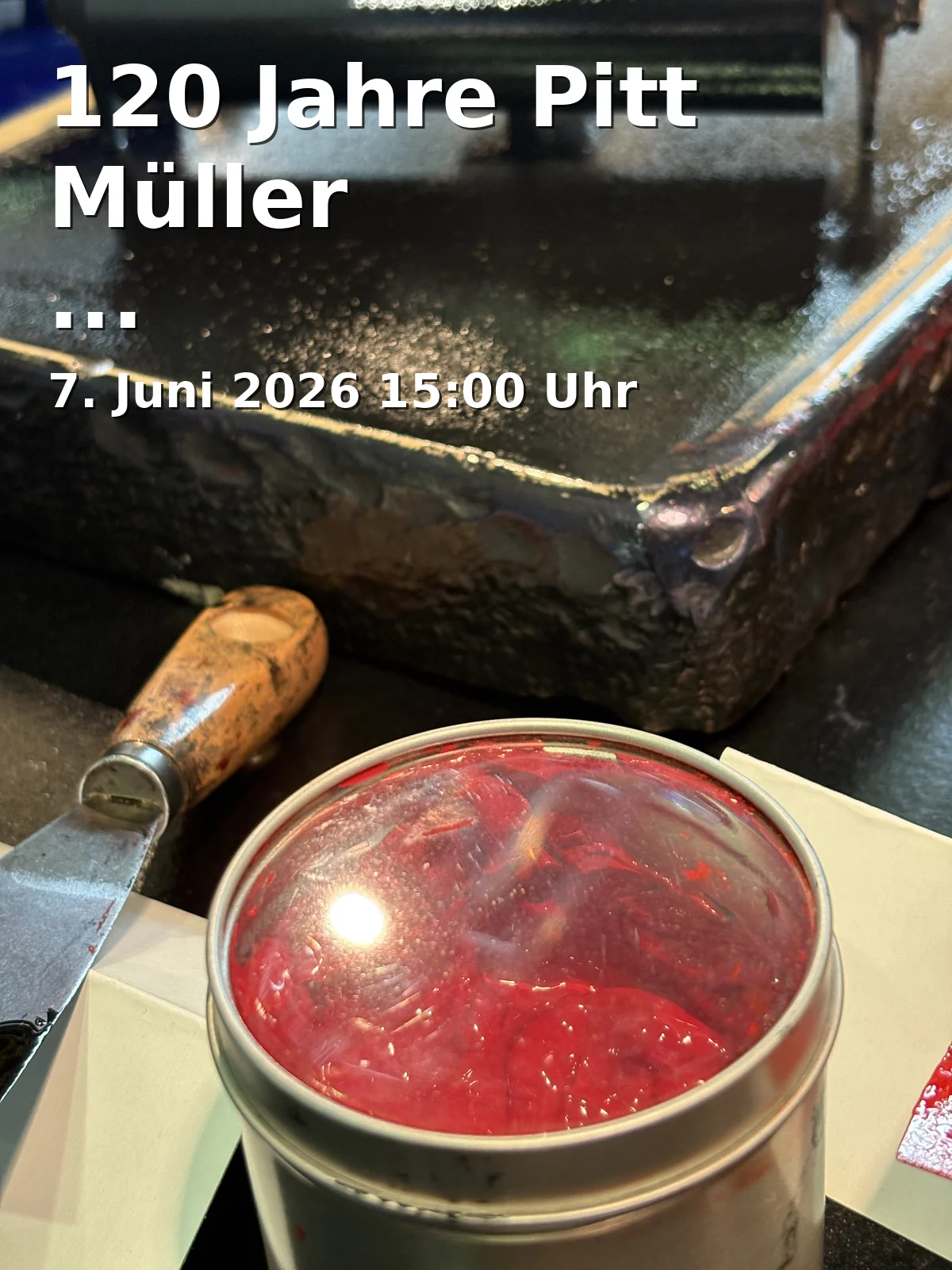
The current relevance of this history is evident in the exhibitions of 2025 and 2026. The city of Bonn announced the exhibition Pitt Müller Art-Craft-Lighting in the event calendar for 2025, which took place in the old workspaces of the artist at the Eschenhof. Newly discovered artworks, craft objects, photos, postcards, and new lighting models from the former Pitt Müller manufacturing were displayed there. The event was free and offered over several dates. The Vilich citizens' association also lists a permanent exhibition under the title Pitt Müller Art-Craft-Lighting at the Eschenhof in the 2026 event calendar. This proves that the place is not only historically interesting but is still used as a space for memory and exhibitions. Therefore, those searching for programs, exhibitions, or Pitt Müller do not end up with an abstract biography but with a place where history remains materially visible. ([bonn.de](https://www.bonn.de/veranstaltungskalender/veranstaltungen/hauptkalender/extern/Ausstellung-120-Jahre-Pitt-Mueller-Kunst-Handwerk-Beleuchtung.php))
Moreover, the supra-regional references to Pitt Müller show that the Eschenhof holds a special position as a workshop address. Bonn.wiki refers to an exhibition on the 120th birthday of the artist and describes that a more comprehensive picture of his estate and activities was compiled there for the first time. This makes the Eschenhof a place of trace-seeking. Particularly interesting is the connection between artisanal production and artistic ambition: Pitt Müller not only worked with clay, metal, or forms but developed lighting fixtures that were used both privately and publicly. Therefore, terms like Pitt Müller Bonn, Eschenhof art school, lighting manufacturing, and exhibitions at the Eschenhof are highly relevant for SEO planning, as they capture the actual ambiguity of the place: a monument that was simultaneously a workshop, residence, and memorial site. ([bonn.wiki](https://bonn.wiki/wiki/Pitt_M%C3%BCller?utm_source=openai))
Location, Directions, and Public Transport to the Eschenhof
The address of the Eschenhof is clearly documented: Schillerstraße 12, 53225 Bonn. The monument is located in Vilich, thus in the right bank Bonn district Beuel. This location is important for visitors because the Eschenhof is not in the city center but in a historically influenced neighborhood with narrower streets, a monument-protected environment, and short distances to other stations of the town center. The Day of Open Monuments page even states that the Eschenhof is a gem somewhat hidden in the historical town center of Vilich. Precisely for this reason, search terms like Eschenhof directions, Eschenhof Bonn, and Eschenhof Vilich are so obvious: many visitors want to know in advance how to find the place and which mode of transportation is sensible. ([tag-des-offenen-denkmals.de](https://www.tag-des-offenen-denkmals.de/denkmal/cmes4un2x0000ic047pc5lljk/eschenhof-kurfurstliches-herrenhaus))
For public transport access, the Vilich stop in the VRS network is the most clearly documented reference point. Lines 66 and 67 stop there, and the VRS page lists the location as Bonn - Vilich-Rheindorf. The Bonn event calendar for the Eschenhof also explicitly links a public transport connection through the regional transport association. For visitors, this is the most reliable public information that can be derived from the found sources. When considering the Eschenhof as a destination in Vilich, public transport access is the obvious solution, as the place is integrated into a strong tram and bus network. Line 66 is also one of the central Bonn axes on the right bank of the Rhine, further improving the accessibility of the district. ([vrs.de](https://www.vrs.de/en/his/haltestelle/de%3A05314%3A65207))
Regarding parking, the found Eschenhof sources do not mention a dedicated visitor parking lot. Therefore, one should plan with the usual caution for historical town centers when driving and check the location in advance. The city of Bonn generally points to numerous parking options in Beuel, but especially in a developed environment like Vilich, it is sensible not to assume generous parking spaces directly in front of the door. For practical visit planning, this results in a simple recommendation: if the appointment is tied to an exhibition or a special opening, one should plan the arrival early with public transport or navigation and allow enough time for the last walk in the town center. This is not a limitation but part of the historical experience, as the Eschenhof is atmospheric precisely because of its embedding in Vilich. ([bonn.de](https://www.bonn.de/themen-entdecken/verkehr-mobilitaet/Autos-parken-in-Bonn.php?loc=en&utm_source=openai))
Visiting, Opening Hours, and Current Program
The Eschenhof is, according to the available sources, not a house with daily published standard opening hours but a monument that becomes accessible mainly through special programs and exhibitions. The page of the monument and history association Bonn-Rechtsrheinisch e.V. currently does not provide further information for the Eschenhof and asks to check back later. This is important for seekers because it explains why searching for Eschenhof opening hours does not yield a classic visitor operation but rather a changing program with special dates. Therefore, anyone wishing to visit the place should always check whether an exhibition, a Day of Open Monuments, or another program point is currently running. ([denkmalverein-bonn.de](https://www.denkmalverein-bonn.de/projekte_eschenhof))
A particularly well-documented program point was the Day of Open Monuments 2025. It was stated that the Eschenhof could be viewed from the outside, and the courtyard could be entered, with visits only possible as part of the program points. In the outbuilding, the former coach house, an exhibition on Pitt Müller was shown. This makes it clear how the place is used: not as a fully open museum but as a monument with controlled access and clear program focuses. Therefore, those searching for visiting, program, or open door should keep an eye on the special openings. This form of use fits well with the character of a historical house that is both a monument and an event venue. ([tag-des-offenen-denkmals.de](https://www.tag-des-offenen-denkmals.de/denkmal/cmes4un2x0000ic047pc5lljk?utm_source=openai))
The current program underscores this dynamism. The Bonn city page listed several dates for the anniversary exhibition Pitt Müller Art-Craft-Lighting in 2025, and the Vilich citizens' association again lists the permanent exhibition at the Eschenhof for 2026. This results in a reliable pattern: the Eschenhof is a place with recurring cultural dates, especially around Pitt Müller and the Vilich memory. For SEO and user inquiries, this is ideal because queries like program 2025, program 2026, exhibition Eschenhof, or Eschenhof opening hours often boil down to the same need: do I want to visit the place now, or are there only specific dates? The answer based on the sources is: mainly special dates, exhibitions, and monument days. ([bonn.de](https://www.bonn.de/veranstaltungskalender/veranstaltungen/hauptkalender/extern/Ausstellung-120-Jahre-Pitt-Mueller-Kunst-Handwerk-Beleuchtung.php))
Historical Town Center Vilich and the Monument Environment
The Eschenhof fully unfolds its effect in connection with historic Vilich. KuLaDig describes the town center as a settlement area with Frankish origins, early medieval church history, and a first written mention from the year 942. In the same representation, Vilich is referred to as the seedbed of today's Bonn-Beuel. This is not only historically interesting but also explains the high monument density in the district. Historical gravestones on the cemetery wall, the collegiate church of St. Peter, old half-timbered houses on Adelheidisstraße, and the neighboring official seats form an ensemble that gives the Eschenhof a strong environment. Therefore, when visiting the place, one experiences not just a single building but a developed historical scene. ([kuladig.de](https://www.kuladig.de/Objektansicht/O-101969-20140901-2))
The monument and history association Bonn-Rechtsrheinisch e.V. emphasizes in its Vilich texts the long municipal development of the place. From the Napoleonic reorganization of 1808, the civil community of Vilich emerged, whose first mayors shaped the place; in 1896, the seat was moved to Beuel. In the further course, Vilich became part of today's Bonn-Beuel district in 1969. These development lines make it understandable why both the Eschenhof and the Bürgermeister-Stroof-Haus, the collegiate church, and other historical places in the same neighborhood are repeatedly mentioned together. For the search for Eschenhof Beuel or historical town center Vilich, this environment is crucial: the building is not to be viewed in isolation but as a building block of a larger monument space. ([kuladig.de](https://www.kuladig.de/Objektansicht/O-101969-20140901-2))
Practically, this means for visitors and for search engine optimization: the Eschenhof appeals not only to people looking for a single building but also to those interested in Bonn district history, monument tours, Pitt Müller, special exhibitions, and historical paths through Vilich. The monument tour Beuel includes the Eschenhof as its own station, showing that the place is actively present in the local cultural memory. Therefore, those who think about the topics of history, directions, programs, and monument protection together quickly recognize why the Eschenhof has a strong semantic proximity to terms like Vilich, Beuel, Pitt Müller, and historical town center. This very connection makes the location particularly valuable for SEO. ([audiotour.denkmalverein-bonn.de](https://audiotour.denkmalverein-bonn.de/audiotour-eschenhof))
Sources:
- Monument and History Association Bonn-Rechtsrheinisch e.V. – Eschenhof and Audiotour ([denkmalverein-bonn.de](https://www.denkmalverein-bonn.de/projekte_eschenhof))
- Day of Open Monuments – Eschenhof Electoral Prince's Manor House ([tag-des-offenen-denkmals.de](https://www.tag-des-offenen-denkmals.de/denkmal/cmes4un2x0000ic047pc5lljk/eschenhof-kurfurstliches-herrenhaus))
- Bonn.wiki – Eschenhof in Vilich and Pitt Müller ([bonn.wiki](https://bonn.wiki/wiki/Eschenhof_in_Vilich))
- KuLaDig – Historical Town Center Vilich ([kuladig.de](https://www.kuladig.de/Objektansicht/O-101969-20140901-2))
- VRS and City of Bonn – Public Transport, Exhibition, and Program Information ([vrs.de](https://www.vrs.de/en/his/haltestelle/de%3A05314%3A65207))
Show moreShow less
Eschenhof Bonn | History & Directions
The Eschenhof in Bonn-Vilich is a place where architectural history, district history, and art history overlap in an unusually dense manner. Today, those searching for the address Schillerstraße 12 do not encounter a loud event venue, but rather a historic manor house in the developed town center of Vilich, which has left its mark since the 18th century. Relevant monument and local history sources describe the Eschenhof as an electoral prince's manor house from the mid-18th century, which later became the residence and official seat of mayors and gained new cultural significance in the 20th century, primarily through the Bonn artist Pitt Müller. This very mix is what makes the place appealing: the Eschenhof is not an interchangeable event building, but a developed monument with history, workshop character, and a strong connection to historic Vilich. Today, it is perceived in the context of monument preservation, local memory, and occasional exhibitions, making it equally relevant for SEO inquiries related to history, programs, directions, and visits. ([tag-des-offenen-denkmals.de](https://www.tag-des-offenen-denkmals.de/denkmal/cmes4un2x0000ic047pc5lljk/eschenhof-kurfurstliches-herrenhaus))
History of the Eschenhof in Vilich
The historical classification of the Eschenhof begins with its construction context. The Day of Open Monuments designates the building as an electoral prince's manor house built around 1750. This dating places the Eschenhof in a phase when Vilich already had a long prehistory as a church and lordly influenced place. Bonn.wiki describes the Eschenhof as a manor house from the mid-18th century and explicitly names it at the location Schillerstraße 12. It also becomes evident how closely the building is connected to the municipal history of the district, as from 1857 it was the official seat of Vilich's mayor Johann Ignaz Schnorrenberg, who developed from the secretary of the then mayor to deputy and finally to mayor. In the official monument texts, Friedrich Breuer is also mentioned as another mayor, which shows the Eschenhof as a place of administration and representation for a local ruling class. ([tag-des-offenen-denkmals.de](https://www.tag-des-offenen-denkmals.de/denkmal/cmes4un2x0000ic047pc5lljk/eschenhof-kurfurstliches-herrenhaus))
For the perception of the house, it is important that it does not stand in isolation but is part of a historical town center. KuLaDig describes Vilich as a district of Beuel, whose town center goes back to a Frankish estate. The first written mention of the place Vilich is cited for the year 942, and the historical town center is classified as a cultural landscape with a long development line. This historical depth explains why the Eschenhof must be read not only as a beautiful old house but as part of a developed settlement picture. The monument and history association Bonn-Rechtsrheinisch also links the place to the history of the municipality of Vilich, which was reorganized under Napoleonic administration in 1808 and moved its administrative seat to Beuel in 1896. The Bürgermeister-Stroof-Haus in the same historical neighborhood is described by this association as the first municipal office building in today's right bank Bonn. This creates an important environment in which the Eschenhof appears as a civic and lordly counterpart to the administrative history of the place. ([kuladig.de](https://www.kuladig.de/Objektansicht/O-101969-20140901-2))
The building description itself indicates a longer development. The monument association cites several construction phases for the Bürgermeister-Stroof-Haus, including older rubble stone remains, a core from the early years of the 18th century, and a representative transformation around 1800. Although this detailed description refers to the neighboring Stroof house, it helps in understanding the entire Vilich ensemble: the town center is not a homogeneous new development area but a mosaic of late medieval, baroque, and civic layers. The Eschenhof stands in exactly this tension field. It is not simply a backdrop but a structural witness to how administration, rural estate structure, art, and monument preservation are intertwined in Vilich. Therefore, search queries like Eschenhof history, Eschenhof manor house, Eschenhof monument protection, or historical town center Vilich work particularly well because they target the same historical core. ([denkmalverein-bonn.de](https://www.denkmalverein-bonn.de/projekte_buergermeister_stroof_haus))
Pitt Müller, Art School, and Lighting Manufacturing
The second major significance of the Eschenhof is connected to the Bonn artist Pitt Müller. Sources mention him as a resident and active figure of the house from 1934 to 1955. During this time, he used the Eschenhof not only as a residence but as a creative workspace. The Day of Open Monuments describes him as an artist who also operated an art school here and later a manufactory for modern lighting fixtures. Bonn.wiki adds that his sculptural work included portraits, statues, and torsos, and that he simultaneously manufactured lighting fixtures for private and public buildings. This makes the Eschenhof a place where craftsmanship, product design, and locally anchored production come together. This is central for the search intent around Pitt Müller Eschenhof, art school, and lighting manufacturing, as it refers to a productive workspace rather than a purely museum-like setting. ([tag-des-offenen-denkmals.de](https://www.tag-des-offenen-denkmals.de/denkmal/cmes4un2x0000ic047pc5lljk/eschenhof-kurfurstliches-herrenhaus))
The current relevance of this history is evident in the exhibitions of 2025 and 2026. The city of Bonn announced the exhibition Pitt Müller Art-Craft-Lighting in the event calendar for 2025, which took place in the old workspaces of the artist at the Eschenhof. Newly discovered artworks, craft objects, photos, postcards, and new lighting models from the former Pitt Müller manufacturing were displayed there. The event was free and offered over several dates. The Vilich citizens' association also lists a permanent exhibition under the title Pitt Müller Art-Craft-Lighting at the Eschenhof in the 2026 event calendar. This proves that the place is not only historically interesting but is still used as a space for memory and exhibitions. Therefore, those searching for programs, exhibitions, or Pitt Müller do not end up with an abstract biography but with a place where history remains materially visible. ([bonn.de](https://www.bonn.de/veranstaltungskalender/veranstaltungen/hauptkalender/extern/Ausstellung-120-Jahre-Pitt-Mueller-Kunst-Handwerk-Beleuchtung.php))
Moreover, the supra-regional references to Pitt Müller show that the Eschenhof holds a special position as a workshop address. Bonn.wiki refers to an exhibition on the 120th birthday of the artist and describes that a more comprehensive picture of his estate and activities was compiled there for the first time. This makes the Eschenhof a place of trace-seeking. Particularly interesting is the connection between artisanal production and artistic ambition: Pitt Müller not only worked with clay, metal, or forms but developed lighting fixtures that were used both privately and publicly. Therefore, terms like Pitt Müller Bonn, Eschenhof art school, lighting manufacturing, and exhibitions at the Eschenhof are highly relevant for SEO planning, as they capture the actual ambiguity of the place: a monument that was simultaneously a workshop, residence, and memorial site. ([bonn.wiki](https://bonn.wiki/wiki/Pitt_M%C3%BCller?utm_source=openai))
Location, Directions, and Public Transport to the Eschenhof
The address of the Eschenhof is clearly documented: Schillerstraße 12, 53225 Bonn. The monument is located in Vilich, thus in the right bank Bonn district Beuel. This location is important for visitors because the Eschenhof is not in the city center but in a historically influenced neighborhood with narrower streets, a monument-protected environment, and short distances to other stations of the town center. The Day of Open Monuments page even states that the Eschenhof is a gem somewhat hidden in the historical town center of Vilich. Precisely for this reason, search terms like Eschenhof directions, Eschenhof Bonn, and Eschenhof Vilich are so obvious: many visitors want to know in advance how to find the place and which mode of transportation is sensible. ([tag-des-offenen-denkmals.de](https://www.tag-des-offenen-denkmals.de/denkmal/cmes4un2x0000ic047pc5lljk/eschenhof-kurfurstliches-herrenhaus))
For public transport access, the Vilich stop in the VRS network is the most clearly documented reference point. Lines 66 and 67 stop there, and the VRS page lists the location as Bonn - Vilich-Rheindorf. The Bonn event calendar for the Eschenhof also explicitly links a public transport connection through the regional transport association. For visitors, this is the most reliable public information that can be derived from the found sources. When considering the Eschenhof as a destination in Vilich, public transport access is the obvious solution, as the place is integrated into a strong tram and bus network. Line 66 is also one of the central Bonn axes on the right bank of the Rhine, further improving the accessibility of the district. ([vrs.de](https://www.vrs.de/en/his/haltestelle/de%3A05314%3A65207))
Regarding parking, the found Eschenhof sources do not mention a dedicated visitor parking lot. Therefore, one should plan with the usual caution for historical town centers when driving and check the location in advance. The city of Bonn generally points to numerous parking options in Beuel, but especially in a developed environment like Vilich, it is sensible not to assume generous parking spaces directly in front of the door. For practical visit planning, this results in a simple recommendation: if the appointment is tied to an exhibition or a special opening, one should plan the arrival early with public transport or navigation and allow enough time for the last walk in the town center. This is not a limitation but part of the historical experience, as the Eschenhof is atmospheric precisely because of its embedding in Vilich. ([bonn.de](https://www.bonn.de/themen-entdecken/verkehr-mobilitaet/Autos-parken-in-Bonn.php?loc=en&utm_source=openai))
Visiting, Opening Hours, and Current Program
The Eschenhof is, according to the available sources, not a house with daily published standard opening hours but a monument that becomes accessible mainly through special programs and exhibitions. The page of the monument and history association Bonn-Rechtsrheinisch e.V. currently does not provide further information for the Eschenhof and asks to check back later. This is important for seekers because it explains why searching for Eschenhof opening hours does not yield a classic visitor operation but rather a changing program with special dates. Therefore, anyone wishing to visit the place should always check whether an exhibition, a Day of Open Monuments, or another program point is currently running. ([denkmalverein-bonn.de](https://www.denkmalverein-bonn.de/projekte_eschenhof))
A particularly well-documented program point was the Day of Open Monuments 2025. It was stated that the Eschenhof could be viewed from the outside, and the courtyard could be entered, with visits only possible as part of the program points. In the outbuilding, the former coach house, an exhibition on Pitt Müller was shown. This makes it clear how the place is used: not as a fully open museum but as a monument with controlled access and clear program focuses. Therefore, those searching for visiting, program, or open door should keep an eye on the special openings. This form of use fits well with the character of a historical house that is both a monument and an event venue. ([tag-des-offenen-denkmals.de](https://www.tag-des-offenen-denkmals.de/denkmal/cmes4un2x0000ic047pc5lljk?utm_source=openai))
The current program underscores this dynamism. The Bonn city page listed several dates for the anniversary exhibition Pitt Müller Art-Craft-Lighting in 2025, and the Vilich citizens' association again lists the permanent exhibition at the Eschenhof for 2026. This results in a reliable pattern: the Eschenhof is a place with recurring cultural dates, especially around Pitt Müller and the Vilich memory. For SEO and user inquiries, this is ideal because queries like program 2025, program 2026, exhibition Eschenhof, or Eschenhof opening hours often boil down to the same need: do I want to visit the place now, or are there only specific dates? The answer based on the sources is: mainly special dates, exhibitions, and monument days. ([bonn.de](https://www.bonn.de/veranstaltungskalender/veranstaltungen/hauptkalender/extern/Ausstellung-120-Jahre-Pitt-Mueller-Kunst-Handwerk-Beleuchtung.php))
Historical Town Center Vilich and the Monument Environment
The Eschenhof fully unfolds its effect in connection with historic Vilich. KuLaDig describes the town center as a settlement area with Frankish origins, early medieval church history, and a first written mention from the year 942. In the same representation, Vilich is referred to as the seedbed of today's Bonn-Beuel. This is not only historically interesting but also explains the high monument density in the district. Historical gravestones on the cemetery wall, the collegiate church of St. Peter, old half-timbered houses on Adelheidisstraße, and the neighboring official seats form an ensemble that gives the Eschenhof a strong environment. Therefore, when visiting the place, one experiences not just a single building but a developed historical scene. ([kuladig.de](https://www.kuladig.de/Objektansicht/O-101969-20140901-2))
The monument and history association Bonn-Rechtsrheinisch e.V. emphasizes in its Vilich texts the long municipal development of the place. From the Napoleonic reorganization of 1808, the civil community of Vilich emerged, whose first mayors shaped the place; in 1896, the seat was moved to Beuel. In the further course, Vilich became part of today's Bonn-Beuel district in 1969. These development lines make it understandable why both the Eschenhof and the Bürgermeister-Stroof-Haus, the collegiate church, and other historical places in the same neighborhood are repeatedly mentioned together. For the search for Eschenhof Beuel or historical town center Vilich, this environment is crucial: the building is not to be viewed in isolation but as a building block of a larger monument space. ([kuladig.de](https://www.kuladig.de/Objektansicht/O-101969-20140901-2))
Practically, this means for visitors and for search engine optimization: the Eschenhof appeals not only to people looking for a single building but also to those interested in Bonn district history, monument tours, Pitt Müller, special exhibitions, and historical paths through Vilich. The monument tour Beuel includes the Eschenhof as its own station, showing that the place is actively present in the local cultural memory. Therefore, those who think about the topics of history, directions, programs, and monument protection together quickly recognize why the Eschenhof has a strong semantic proximity to terms like Vilich, Beuel, Pitt Müller, and historical town center. This very connection makes the location particularly valuable for SEO. ([audiotour.denkmalverein-bonn.de](https://audiotour.denkmalverein-bonn.de/audiotour-eschenhof))
Sources:
- Monument and History Association Bonn-Rechtsrheinisch e.V. – Eschenhof and Audiotour ([denkmalverein-bonn.de](https://www.denkmalverein-bonn.de/projekte_eschenhof))
- Day of Open Monuments – Eschenhof Electoral Prince's Manor House ([tag-des-offenen-denkmals.de](https://www.tag-des-offenen-denkmals.de/denkmal/cmes4un2x0000ic047pc5lljk/eschenhof-kurfurstliches-herrenhaus))
- Bonn.wiki – Eschenhof in Vilich and Pitt Müller ([bonn.wiki](https://bonn.wiki/wiki/Eschenhof_in_Vilich))
- KuLaDig – Historical Town Center Vilich ([kuladig.de](https://www.kuladig.de/Objektansicht/O-101969-20140901-2))
- VRS and City of Bonn – Public Transport, Exhibition, and Program Information ([vrs.de](https://www.vrs.de/en/his/haltestelle/de%3A05314%3A65207))
Eschenhof Bonn | History & Directions
The Eschenhof in Bonn-Vilich is a place where architectural history, district history, and art history overlap in an unusually dense manner. Today, those searching for the address Schillerstraße 12 do not encounter a loud event venue, but rather a historic manor house in the developed town center of Vilich, which has left its mark since the 18th century. Relevant monument and local history sources describe the Eschenhof as an electoral prince's manor house from the mid-18th century, which later became the residence and official seat of mayors and gained new cultural significance in the 20th century, primarily through the Bonn artist Pitt Müller. This very mix is what makes the place appealing: the Eschenhof is not an interchangeable event building, but a developed monument with history, workshop character, and a strong connection to historic Vilich. Today, it is perceived in the context of monument preservation, local memory, and occasional exhibitions, making it equally relevant for SEO inquiries related to history, programs, directions, and visits. ([tag-des-offenen-denkmals.de](https://www.tag-des-offenen-denkmals.de/denkmal/cmes4un2x0000ic047pc5lljk/eschenhof-kurfurstliches-herrenhaus))
History of the Eschenhof in Vilich
The historical classification of the Eschenhof begins with its construction context. The Day of Open Monuments designates the building as an electoral prince's manor house built around 1750. This dating places the Eschenhof in a phase when Vilich already had a long prehistory as a church and lordly influenced place. Bonn.wiki describes the Eschenhof as a manor house from the mid-18th century and explicitly names it at the location Schillerstraße 12. It also becomes evident how closely the building is connected to the municipal history of the district, as from 1857 it was the official seat of Vilich's mayor Johann Ignaz Schnorrenberg, who developed from the secretary of the then mayor to deputy and finally to mayor. In the official monument texts, Friedrich Breuer is also mentioned as another mayor, which shows the Eschenhof as a place of administration and representation for a local ruling class. ([tag-des-offenen-denkmals.de](https://www.tag-des-offenen-denkmals.de/denkmal/cmes4un2x0000ic047pc5lljk/eschenhof-kurfurstliches-herrenhaus))
For the perception of the house, it is important that it does not stand in isolation but is part of a historical town center. KuLaDig describes Vilich as a district of Beuel, whose town center goes back to a Frankish estate. The first written mention of the place Vilich is cited for the year 942, and the historical town center is classified as a cultural landscape with a long development line. This historical depth explains why the Eschenhof must be read not only as a beautiful old house but as part of a developed settlement picture. The monument and history association Bonn-Rechtsrheinisch also links the place to the history of the municipality of Vilich, which was reorganized under Napoleonic administration in 1808 and moved its administrative seat to Beuel in 1896. The Bürgermeister-Stroof-Haus in the same historical neighborhood is described by this association as the first municipal office building in today's right bank Bonn. This creates an important environment in which the Eschenhof appears as a civic and lordly counterpart to the administrative history of the place. ([kuladig.de](https://www.kuladig.de/Objektansicht/O-101969-20140901-2))
The building description itself indicates a longer development. The monument association cites several construction phases for the Bürgermeister-Stroof-Haus, including older rubble stone remains, a core from the early years of the 18th century, and a representative transformation around 1800. Although this detailed description refers to the neighboring Stroof house, it helps in understanding the entire Vilich ensemble: the town center is not a homogeneous new development area but a mosaic of late medieval, baroque, and civic layers. The Eschenhof stands in exactly this tension field. It is not simply a backdrop but a structural witness to how administration, rural estate structure, art, and monument preservation are intertwined in Vilich. Therefore, search queries like Eschenhof history, Eschenhof manor house, Eschenhof monument protection, or historical town center Vilich work particularly well because they target the same historical core. ([denkmalverein-bonn.de](https://www.denkmalverein-bonn.de/projekte_buergermeister_stroof_haus))
Pitt Müller, Art School, and Lighting Manufacturing
The second major significance of the Eschenhof is connected to the Bonn artist Pitt Müller. Sources mention him as a resident and active figure of the house from 1934 to 1955. During this time, he used the Eschenhof not only as a residence but as a creative workspace. The Day of Open Monuments describes him as an artist who also operated an art school here and later a manufactory for modern lighting fixtures. Bonn.wiki adds that his sculptural work included portraits, statues, and torsos, and that he simultaneously manufactured lighting fixtures for private and public buildings. This makes the Eschenhof a place where craftsmanship, product design, and locally anchored production come together. This is central for the search intent around Pitt Müller Eschenhof, art school, and lighting manufacturing, as it refers to a productive workspace rather than a purely museum-like setting. ([tag-des-offenen-denkmals.de](https://www.tag-des-offenen-denkmals.de/denkmal/cmes4un2x0000ic047pc5lljk/eschenhof-kurfurstliches-herrenhaus))
The current relevance of this history is evident in the exhibitions of 2025 and 2026. The city of Bonn announced the exhibition Pitt Müller Art-Craft-Lighting in the event calendar for 2025, which took place in the old workspaces of the artist at the Eschenhof. Newly discovered artworks, craft objects, photos, postcards, and new lighting models from the former Pitt Müller manufacturing were displayed there. The event was free and offered over several dates. The Vilich citizens' association also lists a permanent exhibition under the title Pitt Müller Art-Craft-Lighting at the Eschenhof in the 2026 event calendar. This proves that the place is not only historically interesting but is still used as a space for memory and exhibitions. Therefore, those searching for programs, exhibitions, or Pitt Müller do not end up with an abstract biography but with a place where history remains materially visible. ([bonn.de](https://www.bonn.de/veranstaltungskalender/veranstaltungen/hauptkalender/extern/Ausstellung-120-Jahre-Pitt-Mueller-Kunst-Handwerk-Beleuchtung.php))
Moreover, the supra-regional references to Pitt Müller show that the Eschenhof holds a special position as a workshop address. Bonn.wiki refers to an exhibition on the 120th birthday of the artist and describes that a more comprehensive picture of his estate and activities was compiled there for the first time. This makes the Eschenhof a place of trace-seeking. Particularly interesting is the connection between artisanal production and artistic ambition: Pitt Müller not only worked with clay, metal, or forms but developed lighting fixtures that were used both privately and publicly. Therefore, terms like Pitt Müller Bonn, Eschenhof art school, lighting manufacturing, and exhibitions at the Eschenhof are highly relevant for SEO planning, as they capture the actual ambiguity of the place: a monument that was simultaneously a workshop, residence, and memorial site. ([bonn.wiki](https://bonn.wiki/wiki/Pitt_M%C3%BCller?utm_source=openai))
Location, Directions, and Public Transport to the Eschenhof
The address of the Eschenhof is clearly documented: Schillerstraße 12, 53225 Bonn. The monument is located in Vilich, thus in the right bank Bonn district Beuel. This location is important for visitors because the Eschenhof is not in the city center but in a historically influenced neighborhood with narrower streets, a monument-protected environment, and short distances to other stations of the town center. The Day of Open Monuments page even states that the Eschenhof is a gem somewhat hidden in the historical town center of Vilich. Precisely for this reason, search terms like Eschenhof directions, Eschenhof Bonn, and Eschenhof Vilich are so obvious: many visitors want to know in advance how to find the place and which mode of transportation is sensible. ([tag-des-offenen-denkmals.de](https://www.tag-des-offenen-denkmals.de/denkmal/cmes4un2x0000ic047pc5lljk/eschenhof-kurfurstliches-herrenhaus))
For public transport access, the Vilich stop in the VRS network is the most clearly documented reference point. Lines 66 and 67 stop there, and the VRS page lists the location as Bonn - Vilich-Rheindorf. The Bonn event calendar for the Eschenhof also explicitly links a public transport connection through the regional transport association. For visitors, this is the most reliable public information that can be derived from the found sources. When considering the Eschenhof as a destination in Vilich, public transport access is the obvious solution, as the place is integrated into a strong tram and bus network. Line 66 is also one of the central Bonn axes on the right bank of the Rhine, further improving the accessibility of the district. ([vrs.de](https://www.vrs.de/en/his/haltestelle/de%3A05314%3A65207))
Regarding parking, the found Eschenhof sources do not mention a dedicated visitor parking lot. Therefore, one should plan with the usual caution for historical town centers when driving and check the location in advance. The city of Bonn generally points to numerous parking options in Beuel, but especially in a developed environment like Vilich, it is sensible not to assume generous parking spaces directly in front of the door. For practical visit planning, this results in a simple recommendation: if the appointment is tied to an exhibition or a special opening, one should plan the arrival early with public transport or navigation and allow enough time for the last walk in the town center. This is not a limitation but part of the historical experience, as the Eschenhof is atmospheric precisely because of its embedding in Vilich. ([bonn.de](https://www.bonn.de/themen-entdecken/verkehr-mobilitaet/Autos-parken-in-Bonn.php?loc=en&utm_source=openai))
Visiting, Opening Hours, and Current Program
The Eschenhof is, according to the available sources, not a house with daily published standard opening hours but a monument that becomes accessible mainly through special programs and exhibitions. The page of the monument and history association Bonn-Rechtsrheinisch e.V. currently does not provide further information for the Eschenhof and asks to check back later. This is important for seekers because it explains why searching for Eschenhof opening hours does not yield a classic visitor operation but rather a changing program with special dates. Therefore, anyone wishing to visit the place should always check whether an exhibition, a Day of Open Monuments, or another program point is currently running. ([denkmalverein-bonn.de](https://www.denkmalverein-bonn.de/projekte_eschenhof))
A particularly well-documented program point was the Day of Open Monuments 2025. It was stated that the Eschenhof could be viewed from the outside, and the courtyard could be entered, with visits only possible as part of the program points. In the outbuilding, the former coach house, an exhibition on Pitt Müller was shown. This makes it clear how the place is used: not as a fully open museum but as a monument with controlled access and clear program focuses. Therefore, those searching for visiting, program, or open door should keep an eye on the special openings. This form of use fits well with the character of a historical house that is both a monument and an event venue. ([tag-des-offenen-denkmals.de](https://www.tag-des-offenen-denkmals.de/denkmal/cmes4un2x0000ic047pc5lljk?utm_source=openai))
The current program underscores this dynamism. The Bonn city page listed several dates for the anniversary exhibition Pitt Müller Art-Craft-Lighting in 2025, and the Vilich citizens' association again lists the permanent exhibition at the Eschenhof for 2026. This results in a reliable pattern: the Eschenhof is a place with recurring cultural dates, especially around Pitt Müller and the Vilich memory. For SEO and user inquiries, this is ideal because queries like program 2025, program 2026, exhibition Eschenhof, or Eschenhof opening hours often boil down to the same need: do I want to visit the place now, or are there only specific dates? The answer based on the sources is: mainly special dates, exhibitions, and monument days. ([bonn.de](https://www.bonn.de/veranstaltungskalender/veranstaltungen/hauptkalender/extern/Ausstellung-120-Jahre-Pitt-Mueller-Kunst-Handwerk-Beleuchtung.php))
Historical Town Center Vilich and the Monument Environment
The Eschenhof fully unfolds its effect in connection with historic Vilich. KuLaDig describes the town center as a settlement area with Frankish origins, early medieval church history, and a first written mention from the year 942. In the same representation, Vilich is referred to as the seedbed of today's Bonn-Beuel. This is not only historically interesting but also explains the high monument density in the district. Historical gravestones on the cemetery wall, the collegiate church of St. Peter, old half-timbered houses on Adelheidisstraße, and the neighboring official seats form an ensemble that gives the Eschenhof a strong environment. Therefore, when visiting the place, one experiences not just a single building but a developed historical scene. ([kuladig.de](https://www.kuladig.de/Objektansicht/O-101969-20140901-2))
The monument and history association Bonn-Rechtsrheinisch e.V. emphasizes in its Vilich texts the long municipal development of the place. From the Napoleonic reorganization of 1808, the civil community of Vilich emerged, whose first mayors shaped the place; in 1896, the seat was moved to Beuel. In the further course, Vilich became part of today's Bonn-Beuel district in 1969. These development lines make it understandable why both the Eschenhof and the Bürgermeister-Stroof-Haus, the collegiate church, and other historical places in the same neighborhood are repeatedly mentioned together. For the search for Eschenhof Beuel or historical town center Vilich, this environment is crucial: the building is not to be viewed in isolation but as a building block of a larger monument space. ([kuladig.de](https://www.kuladig.de/Objektansicht/O-101969-20140901-2))
Practically, this means for visitors and for search engine optimization: the Eschenhof appeals not only to people looking for a single building but also to those interested in Bonn district history, monument tours, Pitt Müller, special exhibitions, and historical paths through Vilich. The monument tour Beuel includes the Eschenhof as its own station, showing that the place is actively present in the local cultural memory. Therefore, those who think about the topics of history, directions, programs, and monument protection together quickly recognize why the Eschenhof has a strong semantic proximity to terms like Vilich, Beuel, Pitt Müller, and historical town center. This very connection makes the location particularly valuable for SEO. ([audiotour.denkmalverein-bonn.de](https://audiotour.denkmalverein-bonn.de/audiotour-eschenhof))
Sources:
- Monument and History Association Bonn-Rechtsrheinisch e.V. – Eschenhof and Audiotour ([denkmalverein-bonn.de](https://www.denkmalverein-bonn.de/projekte_eschenhof))
- Day of Open Monuments – Eschenhof Electoral Prince's Manor House ([tag-des-offenen-denkmals.de](https://www.tag-des-offenen-denkmals.de/denkmal/cmes4un2x0000ic047pc5lljk/eschenhof-kurfurstliches-herrenhaus))
- Bonn.wiki – Eschenhof in Vilich and Pitt Müller ([bonn.wiki](https://bonn.wiki/wiki/Eschenhof_in_Vilich))
- KuLaDig – Historical Town Center Vilich ([kuladig.de](https://www.kuladig.de/Objektansicht/O-101969-20140901-2))
- VRS and City of Bonn – Public Transport, Exhibition, and Program Information ([vrs.de](https://www.vrs.de/en/his/haltestelle/de%3A05314%3A65207))
Frequently Asked Questions
Reviews
No reviews found