

Rüngsdorfer Str. 43, Bonn-Bad Godesberg
Erlöserkirche, Rüngsdorfer Str. 43, 53173 Bonn, Germany
Redeemer Church Bonn-Bad Godesberg | Services & Directions
The Redeemer Church in Bonn-Bad Godesberg is not only a prominent sacred building on the edge of the villa district but also the historical center of a very vibrant community landscape. The Redeemer Church community comprises around 2,300 members in two districts, extending from the center of Bad Godesberg east of the railway line to the Rhine; this includes mainly the villa district, Rüngsdorf, and parts of Plittersdorf. Those searching for Redeemer Church Bonn usually want quick answers to practical questions: Where is the church located exactly, when are services held, how does access work, where can one park, and which rooms are available for music, community, and events? This is precisely where the strength of this place lies. The Redeemer Church is the oldest of the large Protestant churches in Bad Godesberg, a brick building completed in 1880 with a long history and vibrant present. In addition to the church space, there is now a new community center, a historic community hall, and additional rooms for groups, families, church music, and encounters. Thus, the Redeemer Church is not only a place of worship but a house where tradition, social closeness, and cultural life are meaningfully connected. ([erloeserkirchengemeinde.de](https://www.erloeserkirchengemeinde.de/aktuell/info/?utm_source=openai))
Services, Concerts, and Open Church
The most important search intention surrounding the Redeemer Church clearly concerns the services. The official page states that services are usually held on Sundays at 10:00 AM. The congregation follows a remarkable monthly structure: On the first Sunday of the month, a baptism service is usually the focus, on the second Sunday often communion, on the third Sunday a thematic emphasis service, and on the fourth Sunday a church music service featuring a Bach cantata, motet, or other musical highlights. From September to March, there is also a Musical Vespers on the third Saturday of the month at 6:00 PM. This mix of liturgy, music, and thematic design makes the Redeemer Church particularly interesting for people who are not just looking for any appointment but want to experience a regular yet varied community life. Even on holidays, the offerings are dense: On Christmas Eve, on Christmas days, at Easter, on Ascension Day, on Reformation Day, and on the Day of Prayer and Repentance, there are special forms, often with musical elements or family connections. For families, children, and community groups, the Redeemer Church is also closely linked to the community center, so that children's and family services do not take place in isolation but are embedded in a larger context. ([erloeserkirchengemeinde.de](https://www.erloeserkirchengemeinde.de/gemeindeleben/gottesdienste/))
Those searching for Redeemer Church events, Redeemer Church concerts, or Redeemer Church open church will also find very concrete answers here. The community describes its concert and church music profile as known beyond the borders of the community. This fits well with the long musical tradition of the house, as the church is regularly used for cantata services, vespers, and other church music formats. Additionally, there is the Open Church: on Fridays from 4 to 5 PM, the Redeemer Church remains open for quiet visitors, even during school holidays. This time is intentionally not meant as pure visiting time but as an invitation to pause, to pray, to light a candle, and to find peace in the midst of everyday life. The fact that organ music often plays during this time further enhances the special atmosphere inside. The church coffee after the service is also part of the profile of the place, as is the connection to groups and encounter formats in the community center. So, for those looking for not just a fixed appointment but a lively community concept, the Redeemer Church offers a mix of regularity, musical quality, and open access. ([erloeserkirchengemeinde.de](https://www.erloeserkirchengemeinde.de/gemeindeleben/offene-kirche/?utm_source=openai))
Directions to the Redeemer Church and Parking in Bad Godesberg
The directions to the Redeemer Church are easy to follow thanks to the official route description. The church is located at the corner of Rüngsdorfer Straße and Friedrichallee in 53173 Bonn. Those arriving by public transport can reach the location via Bonn-Bad Godesberg station; from there, the community's signs lead along Rüngsdorfer Straße to the traffic light intersection where the church becomes visible. The U-Bahn or city rail lines 16 and 63, which run to Bad Godesberg station, are also mentioned in the event details. This is especially helpful for visitors coming from Cologne or other parts of the Rhineland who need clear orientation. The official travel notice also indicates that the church is located at the intersection of Rüngsdorfer Straße and Friedrichallee, making it very well anchored in the Bad Godesberg street scene. This location makes the place easily accessible for services, concerts, and community events. ([erloeserkirchengemeinde.de](https://www.erloeserkirchengemeinde.de/sonstiges/anreise/))
For parking, one detail is particularly important: The official route description to the community house and historic community hall explicitly points out a large parking lot on Habsburger Straße around the corner. Although this notice primarily concerns the building complex around the old community house, it can practically be applied to the entire Redeemer Church visit, as the church, community center, and historic hall are in close proximity to each other. Therefore, those arriving by car should plan to park in the vicinity of Habsburger Straße and allow a few minutes to walk to Rüngsdorfer Straße. The paths are short, the area is clearly structured, and orientation is easy even without local knowledge. Furthermore, the community describes its location as leading through Bad Godesberg's main axes and the train station area, which facilitates accessibility both from the city and from outside. This is a significant advantage, especially for concerts, larger services, or events in the historic community hall. Thus, the journey is not only functional but also well-planned, making the visit to the Redeemer Church overall much less stressful. ([erloeserkirchengemeinde.de](https://www.erloeserkirchengemeinde.de/sonstiges/anreise/))
History of the Redeemer Church since 1880
The history of the Redeemer Church is closely linked to the growth of Protestant life in Bad Godesberg. Before the current building was constructed, the young congregation gathered in the private chapel built by Baron von Rigal on Kurfürstenstraße. When Julius Axenfeld took over the pastorate in 1870, the congregation had just over 100 members; by the end of his term, it had grown to around 2,000 members. This made a new church building necessary. After lengthy considerations, a plot of land was acquired in 1876/77 in the district of Rüngsdorf, then in open fields between the city of Godesberg and the village of Rüngsdorf. Axenfeld advocated for this location, although the choice was not undisputed. In just two years of construction, the new Protestant church was built, for which the Marburg government architect Hermann Cuno provided the building plans and architect Louis Pampel was responsible for the implementation. The church was ceremonially consecrated on July 1, 1880. From today's perspective, it is remarkable how clearly the building reflects its era: externally, a two-story brick hall building with a protruding tower and three-sided apse, flanked by single-story sacristy buildings; in its form language, clearly influenced by neo-Romanesque style. ([erloeserkirchengemeinde.de](https://www.erloeserkirchengemeinde.de/einrichtungen/erl%C3%B6serkirche/historisches-zur-kirche/?utm_source=openai))
The further course of the building history is also interesting because it shows that the Redeemer Church is not a frozen monument but a church space that has been developed multiple times. The galleries were only added in 1892 and altered in height in 1930; later entrance forecourts were also added. Inside, there is a rather classicist strictness with a flat wooden ceiling structure, which is divided by the triumphal arch leading to the semi-circular apse. The congregation remembers various interior changes, including major renovations in the 20th century. Today, the church has only been called the Redeemer Church since 1953. Particularly important for the perception of the house is also the organ: In the historical representation of the community, a sonorous Schuke/Potsdam organ from 1969 is mentioned. Together with the restored architectural elements, this development shows that the Redeemer Church has renewed itself repeatedly over more than a century without losing its historical character. This makes it particularly exciting for those interested in church history, architecture, and community development. ([erloeserkirchengemeinde.de](https://www.erloeserkirchengemeinde.de/einrichtungen/erl%C3%B6serkirche/historisches-zur-kirche/?utm_source=openai))
Community Center Redeemer Church and the Rooms of Encounter
An important part of today's search for Redeemer Church Bonn concerns not only the church itself but also the community center directly next to it. The Redeemer Church community center at Friedrichallee 20 replaced the former Axenfeldhaus at Habsburgerstraße 9 in 2020. The community explicitly describes this new building as an advantage because the church and community center are now located directly next to each other. This makes it easier to connect services and celebrations, groups can quickly switch to the church, and office hours, the church coffee situation, as well as work with confirmands benefit from the proximity. Especially in a church community that regularly works with families, children, youth, and older members, this spatial connection is very valuable. The new building not only brings practical paths but also a significant qualitative improvement for community life. The community also emphasizes that the old center was outdated in many respects, while the new building opens up new possibilities for events, catering, and group work. This includes the fact that the church garden behind the church can be used as a place of encounter and is even planned for open-air services in the future. ([erloeserkirchengemeinde.de](https://www.erloeserkirchengemeinde.de/einrichtungen/gemeindezentrum-erl%C3%B6serkirche/))
The rooms around the Redeemer Church are therefore much more than just ancillary spaces. The community center is the actual home of the community for many groups and circles, including the community office, confirmand work, library, and youth work. Additionally, there is the historic community hall at Kronprinzenstraße 31, which has been deliberately preserved in many plans and is still to be used for concerts, forums, celebrations, and the choir. The room in the old rectory next to the church also plays a role, for example, for children's services or church coffee. This combination of church, community center, historic hall, and other meeting points explains why so many different search queries target this place: visitors are not only looking for a worship space but a whole ensemble of various uses. For families with children, for volunteers, for youth work groups, or for people simply looking for an open place, a very versatile space for encounter is created. The Redeemer Church is thus not only a house of worship but a consciously designed community center in a broader sense that closely connects religious, social, and cultural life in Bad Godesberg. ([erloeserkirchengemeinde.de](https://www.erloeserkirchengemeinde.de/einrichtungen/?utm_source=openai))
Historic Community Hall, Organ, and Interior
The Historic Community Hall is one of the most important special rooms in the Redeemer ensemble. It was built in 1903/1904 in the heart of the Godesberg villa district and was reopened after extensive renovation and modernization in 2007. The community describes it as a place where historical atmosphere, good facilities, and personal service come together. Notably, the authentic furnishings from 1904 have been lovingly restored: ceiling beams, parquet floor, stage, stucco work, and sash windows still form the basic image of the hall. At the same time, technical aspects have been modernized, including heating and ventilation systems, sound and thermal insulation, acoustics, and lighting. Professional audio and video technology as well as a modern kitchen have also been added. As a result, the hall is now equally suitable for concerts, celebrations, and conferences. Therefore, those searching for Redeemer Church hall, Historic Community Hall, or Redeemer Church event will encounter a space that meaningfully combines historical dignity and contemporary usability. ([erloeserkirchengemeinde.de](https://www.erloeserkirchengemeinde.de/einrichtungen-orte/historischer-gemeindesaal/))
The church space itself has also been noticeably further developed in recent years. The community reports that the interior, including lighting and parts of the microphone system, has been renewed. Headphones for hearing-impaired visitors and continuous cushions on the gallery have also been added. Such details may seem small at first glance but are important for practice as they show that the Redeemer Church is not only historically preserved but also made usable in a contemporary way. The church space thus remains open and pleasant for services, devotions, musical formats, and quiet visits. Additionally, the community explicitly refers to the special interplay of place, light, and music in its presentation: the open church invites lingering, often accompanied by organ music, and the renovated rooms in the surroundings support an atmospheric overall picture. This makes the Redeemer Church a very impressive place, especially for concert visitors, people interested in sacred architecture, and guests who want to consciously experience the space. It shows how a historic church building can be maintained, supplemented, and embedded in a modern community structure over decades without losing its character. ([erloeserkirchengemeinde.de](https://www.erloeserkirchengemeinde.de/einrichtungen/erl%C3%B6serkirche/?utm_source=openai))
Sources:
- Redeemer Church Community Bad Godesberg - History of the Redeemer Church
- Redeemer Church Community Bad Godesberg - Redeemer Church
- Redeemer Church Community Bad Godesberg - Directions
- Redeemer Church Community Bad Godesberg - Historic Community Hall
- Redeemer Church Community Bad Godesberg - Community Center Redeemer Church
- Redeemer Church Community Bad Godesberg - Services
- Redeemer Church Community Bad Godesberg - Our Community
Show moreShow less
Redeemer Church Bonn-Bad Godesberg | Services & Directions
The Redeemer Church in Bonn-Bad Godesberg is not only a prominent sacred building on the edge of the villa district but also the historical center of a very vibrant community landscape. The Redeemer Church community comprises around 2,300 members in two districts, extending from the center of Bad Godesberg east of the railway line to the Rhine; this includes mainly the villa district, Rüngsdorf, and parts of Plittersdorf. Those searching for Redeemer Church Bonn usually want quick answers to practical questions: Where is the church located exactly, when are services held, how does access work, where can one park, and which rooms are available for music, community, and events? This is precisely where the strength of this place lies. The Redeemer Church is the oldest of the large Protestant churches in Bad Godesberg, a brick building completed in 1880 with a long history and vibrant present. In addition to the church space, there is now a new community center, a historic community hall, and additional rooms for groups, families, church music, and encounters. Thus, the Redeemer Church is not only a place of worship but a house where tradition, social closeness, and cultural life are meaningfully connected. ([erloeserkirchengemeinde.de](https://www.erloeserkirchengemeinde.de/aktuell/info/?utm_source=openai))
Services, Concerts, and Open Church
The most important search intention surrounding the Redeemer Church clearly concerns the services. The official page states that services are usually held on Sundays at 10:00 AM. The congregation follows a remarkable monthly structure: On the first Sunday of the month, a baptism service is usually the focus, on the second Sunday often communion, on the third Sunday a thematic emphasis service, and on the fourth Sunday a church music service featuring a Bach cantata, motet, or other musical highlights. From September to March, there is also a Musical Vespers on the third Saturday of the month at 6:00 PM. This mix of liturgy, music, and thematic design makes the Redeemer Church particularly interesting for people who are not just looking for any appointment but want to experience a regular yet varied community life. Even on holidays, the offerings are dense: On Christmas Eve, on Christmas days, at Easter, on Ascension Day, on Reformation Day, and on the Day of Prayer and Repentance, there are special forms, often with musical elements or family connections. For families, children, and community groups, the Redeemer Church is also closely linked to the community center, so that children's and family services do not take place in isolation but are embedded in a larger context. ([erloeserkirchengemeinde.de](https://www.erloeserkirchengemeinde.de/gemeindeleben/gottesdienste/))
Those searching for Redeemer Church events, Redeemer Church concerts, or Redeemer Church open church will also find very concrete answers here. The community describes its concert and church music profile as known beyond the borders of the community. This fits well with the long musical tradition of the house, as the church is regularly used for cantata services, vespers, and other church music formats. Additionally, there is the Open Church: on Fridays from 4 to 5 PM, the Redeemer Church remains open for quiet visitors, even during school holidays. This time is intentionally not meant as pure visiting time but as an invitation to pause, to pray, to light a candle, and to find peace in the midst of everyday life. The fact that organ music often plays during this time further enhances the special atmosphere inside. The church coffee after the service is also part of the profile of the place, as is the connection to groups and encounter formats in the community center. So, for those looking for not just a fixed appointment but a lively community concept, the Redeemer Church offers a mix of regularity, musical quality, and open access. ([erloeserkirchengemeinde.de](https://www.erloeserkirchengemeinde.de/gemeindeleben/offene-kirche/?utm_source=openai))
Directions to the Redeemer Church and Parking in Bad Godesberg
The directions to the Redeemer Church are easy to follow thanks to the official route description. The church is located at the corner of Rüngsdorfer Straße and Friedrichallee in 53173 Bonn. Those arriving by public transport can reach the location via Bonn-Bad Godesberg station; from there, the community's signs lead along Rüngsdorfer Straße to the traffic light intersection where the church becomes visible. The U-Bahn or city rail lines 16 and 63, which run to Bad Godesberg station, are also mentioned in the event details. This is especially helpful for visitors coming from Cologne or other parts of the Rhineland who need clear orientation. The official travel notice also indicates that the church is located at the intersection of Rüngsdorfer Straße and Friedrichallee, making it very well anchored in the Bad Godesberg street scene. This location makes the place easily accessible for services, concerts, and community events. ([erloeserkirchengemeinde.de](https://www.erloeserkirchengemeinde.de/sonstiges/anreise/))
For parking, one detail is particularly important: The official route description to the community house and historic community hall explicitly points out a large parking lot on Habsburger Straße around the corner. Although this notice primarily concerns the building complex around the old community house, it can practically be applied to the entire Redeemer Church visit, as the church, community center, and historic hall are in close proximity to each other. Therefore, those arriving by car should plan to park in the vicinity of Habsburger Straße and allow a few minutes to walk to Rüngsdorfer Straße. The paths are short, the area is clearly structured, and orientation is easy even without local knowledge. Furthermore, the community describes its location as leading through Bad Godesberg's main axes and the train station area, which facilitates accessibility both from the city and from outside. This is a significant advantage, especially for concerts, larger services, or events in the historic community hall. Thus, the journey is not only functional but also well-planned, making the visit to the Redeemer Church overall much less stressful. ([erloeserkirchengemeinde.de](https://www.erloeserkirchengemeinde.de/sonstiges/anreise/))
History of the Redeemer Church since 1880
The history of the Redeemer Church is closely linked to the growth of Protestant life in Bad Godesberg. Before the current building was constructed, the young congregation gathered in the private chapel built by Baron von Rigal on Kurfürstenstraße. When Julius Axenfeld took over the pastorate in 1870, the congregation had just over 100 members; by the end of his term, it had grown to around 2,000 members. This made a new church building necessary. After lengthy considerations, a plot of land was acquired in 1876/77 in the district of Rüngsdorf, then in open fields between the city of Godesberg and the village of Rüngsdorf. Axenfeld advocated for this location, although the choice was not undisputed. In just two years of construction, the new Protestant church was built, for which the Marburg government architect Hermann Cuno provided the building plans and architect Louis Pampel was responsible for the implementation. The church was ceremonially consecrated on July 1, 1880. From today's perspective, it is remarkable how clearly the building reflects its era: externally, a two-story brick hall building with a protruding tower and three-sided apse, flanked by single-story sacristy buildings; in its form language, clearly influenced by neo-Romanesque style. ([erloeserkirchengemeinde.de](https://www.erloeserkirchengemeinde.de/einrichtungen/erl%C3%B6serkirche/historisches-zur-kirche/?utm_source=openai))
The further course of the building history is also interesting because it shows that the Redeemer Church is not a frozen monument but a church space that has been developed multiple times. The galleries were only added in 1892 and altered in height in 1930; later entrance forecourts were also added. Inside, there is a rather classicist strictness with a flat wooden ceiling structure, which is divided by the triumphal arch leading to the semi-circular apse. The congregation remembers various interior changes, including major renovations in the 20th century. Today, the church has only been called the Redeemer Church since 1953. Particularly important for the perception of the house is also the organ: In the historical representation of the community, a sonorous Schuke/Potsdam organ from 1969 is mentioned. Together with the restored architectural elements, this development shows that the Redeemer Church has renewed itself repeatedly over more than a century without losing its historical character. This makes it particularly exciting for those interested in church history, architecture, and community development. ([erloeserkirchengemeinde.de](https://www.erloeserkirchengemeinde.de/einrichtungen/erl%C3%B6serkirche/historisches-zur-kirche/?utm_source=openai))
Community Center Redeemer Church and the Rooms of Encounter
An important part of today's search for Redeemer Church Bonn concerns not only the church itself but also the community center directly next to it. The Redeemer Church community center at Friedrichallee 20 replaced the former Axenfeldhaus at Habsburgerstraße 9 in 2020. The community explicitly describes this new building as an advantage because the church and community center are now located directly next to each other. This makes it easier to connect services and celebrations, groups can quickly switch to the church, and office hours, the church coffee situation, as well as work with confirmands benefit from the proximity. Especially in a church community that regularly works with families, children, youth, and older members, this spatial connection is very valuable. The new building not only brings practical paths but also a significant qualitative improvement for community life. The community also emphasizes that the old center was outdated in many respects, while the new building opens up new possibilities for events, catering, and group work. This includes the fact that the church garden behind the church can be used as a place of encounter and is even planned for open-air services in the future. ([erloeserkirchengemeinde.de](https://www.erloeserkirchengemeinde.de/einrichtungen/gemeindezentrum-erl%C3%B6serkirche/))
The rooms around the Redeemer Church are therefore much more than just ancillary spaces. The community center is the actual home of the community for many groups and circles, including the community office, confirmand work, library, and youth work. Additionally, there is the historic community hall at Kronprinzenstraße 31, which has been deliberately preserved in many plans and is still to be used for concerts, forums, celebrations, and the choir. The room in the old rectory next to the church also plays a role, for example, for children's services or church coffee. This combination of church, community center, historic hall, and other meeting points explains why so many different search queries target this place: visitors are not only looking for a worship space but a whole ensemble of various uses. For families with children, for volunteers, for youth work groups, or for people simply looking for an open place, a very versatile space for encounter is created. The Redeemer Church is thus not only a house of worship but a consciously designed community center in a broader sense that closely connects religious, social, and cultural life in Bad Godesberg. ([erloeserkirchengemeinde.de](https://www.erloeserkirchengemeinde.de/einrichtungen/?utm_source=openai))
Historic Community Hall, Organ, and Interior
The Historic Community Hall is one of the most important special rooms in the Redeemer ensemble. It was built in 1903/1904 in the heart of the Godesberg villa district and was reopened after extensive renovation and modernization in 2007. The community describes it as a place where historical atmosphere, good facilities, and personal service come together. Notably, the authentic furnishings from 1904 have been lovingly restored: ceiling beams, parquet floor, stage, stucco work, and sash windows still form the basic image of the hall. At the same time, technical aspects have been modernized, including heating and ventilation systems, sound and thermal insulation, acoustics, and lighting. Professional audio and video technology as well as a modern kitchen have also been added. As a result, the hall is now equally suitable for concerts, celebrations, and conferences. Therefore, those searching for Redeemer Church hall, Historic Community Hall, or Redeemer Church event will encounter a space that meaningfully combines historical dignity and contemporary usability. ([erloeserkirchengemeinde.de](https://www.erloeserkirchengemeinde.de/einrichtungen-orte/historischer-gemeindesaal/))
The church space itself has also been noticeably further developed in recent years. The community reports that the interior, including lighting and parts of the microphone system, has been renewed. Headphones for hearing-impaired visitors and continuous cushions on the gallery have also been added. Such details may seem small at first glance but are important for practice as they show that the Redeemer Church is not only historically preserved but also made usable in a contemporary way. The church space thus remains open and pleasant for services, devotions, musical formats, and quiet visits. Additionally, the community explicitly refers to the special interplay of place, light, and music in its presentation: the open church invites lingering, often accompanied by organ music, and the renovated rooms in the surroundings support an atmospheric overall picture. This makes the Redeemer Church a very impressive place, especially for concert visitors, people interested in sacred architecture, and guests who want to consciously experience the space. It shows how a historic church building can be maintained, supplemented, and embedded in a modern community structure over decades without losing its character. ([erloeserkirchengemeinde.de](https://www.erloeserkirchengemeinde.de/einrichtungen/erl%C3%B6serkirche/?utm_source=openai))
Sources:
- Redeemer Church Community Bad Godesberg - History of the Redeemer Church
- Redeemer Church Community Bad Godesberg - Redeemer Church
- Redeemer Church Community Bad Godesberg - Directions
- Redeemer Church Community Bad Godesberg - Historic Community Hall
- Redeemer Church Community Bad Godesberg - Community Center Redeemer Church
- Redeemer Church Community Bad Godesberg - Services
- Redeemer Church Community Bad Godesberg - Our Community
Redeemer Church Bonn-Bad Godesberg | Services & Directions
The Redeemer Church in Bonn-Bad Godesberg is not only a prominent sacred building on the edge of the villa district but also the historical center of a very vibrant community landscape. The Redeemer Church community comprises around 2,300 members in two districts, extending from the center of Bad Godesberg east of the railway line to the Rhine; this includes mainly the villa district, Rüngsdorf, and parts of Plittersdorf. Those searching for Redeemer Church Bonn usually want quick answers to practical questions: Where is the church located exactly, when are services held, how does access work, where can one park, and which rooms are available for music, community, and events? This is precisely where the strength of this place lies. The Redeemer Church is the oldest of the large Protestant churches in Bad Godesberg, a brick building completed in 1880 with a long history and vibrant present. In addition to the church space, there is now a new community center, a historic community hall, and additional rooms for groups, families, church music, and encounters. Thus, the Redeemer Church is not only a place of worship but a house where tradition, social closeness, and cultural life are meaningfully connected. ([erloeserkirchengemeinde.de](https://www.erloeserkirchengemeinde.de/aktuell/info/?utm_source=openai))
Services, Concerts, and Open Church
The most important search intention surrounding the Redeemer Church clearly concerns the services. The official page states that services are usually held on Sundays at 10:00 AM. The congregation follows a remarkable monthly structure: On the first Sunday of the month, a baptism service is usually the focus, on the second Sunday often communion, on the third Sunday a thematic emphasis service, and on the fourth Sunday a church music service featuring a Bach cantata, motet, or other musical highlights. From September to March, there is also a Musical Vespers on the third Saturday of the month at 6:00 PM. This mix of liturgy, music, and thematic design makes the Redeemer Church particularly interesting for people who are not just looking for any appointment but want to experience a regular yet varied community life. Even on holidays, the offerings are dense: On Christmas Eve, on Christmas days, at Easter, on Ascension Day, on Reformation Day, and on the Day of Prayer and Repentance, there are special forms, often with musical elements or family connections. For families, children, and community groups, the Redeemer Church is also closely linked to the community center, so that children's and family services do not take place in isolation but are embedded in a larger context. ([erloeserkirchengemeinde.de](https://www.erloeserkirchengemeinde.de/gemeindeleben/gottesdienste/))
Those searching for Redeemer Church events, Redeemer Church concerts, or Redeemer Church open church will also find very concrete answers here. The community describes its concert and church music profile as known beyond the borders of the community. This fits well with the long musical tradition of the house, as the church is regularly used for cantata services, vespers, and other church music formats. Additionally, there is the Open Church: on Fridays from 4 to 5 PM, the Redeemer Church remains open for quiet visitors, even during school holidays. This time is intentionally not meant as pure visiting time but as an invitation to pause, to pray, to light a candle, and to find peace in the midst of everyday life. The fact that organ music often plays during this time further enhances the special atmosphere inside. The church coffee after the service is also part of the profile of the place, as is the connection to groups and encounter formats in the community center. So, for those looking for not just a fixed appointment but a lively community concept, the Redeemer Church offers a mix of regularity, musical quality, and open access. ([erloeserkirchengemeinde.de](https://www.erloeserkirchengemeinde.de/gemeindeleben/offene-kirche/?utm_source=openai))
Directions to the Redeemer Church and Parking in Bad Godesberg
The directions to the Redeemer Church are easy to follow thanks to the official route description. The church is located at the corner of Rüngsdorfer Straße and Friedrichallee in 53173 Bonn. Those arriving by public transport can reach the location via Bonn-Bad Godesberg station; from there, the community's signs lead along Rüngsdorfer Straße to the traffic light intersection where the church becomes visible. The U-Bahn or city rail lines 16 and 63, which run to Bad Godesberg station, are also mentioned in the event details. This is especially helpful for visitors coming from Cologne or other parts of the Rhineland who need clear orientation. The official travel notice also indicates that the church is located at the intersection of Rüngsdorfer Straße and Friedrichallee, making it very well anchored in the Bad Godesberg street scene. This location makes the place easily accessible for services, concerts, and community events. ([erloeserkirchengemeinde.de](https://www.erloeserkirchengemeinde.de/sonstiges/anreise/))
For parking, one detail is particularly important: The official route description to the community house and historic community hall explicitly points out a large parking lot on Habsburger Straße around the corner. Although this notice primarily concerns the building complex around the old community house, it can practically be applied to the entire Redeemer Church visit, as the church, community center, and historic hall are in close proximity to each other. Therefore, those arriving by car should plan to park in the vicinity of Habsburger Straße and allow a few minutes to walk to Rüngsdorfer Straße. The paths are short, the area is clearly structured, and orientation is easy even without local knowledge. Furthermore, the community describes its location as leading through Bad Godesberg's main axes and the train station area, which facilitates accessibility both from the city and from outside. This is a significant advantage, especially for concerts, larger services, or events in the historic community hall. Thus, the journey is not only functional but also well-planned, making the visit to the Redeemer Church overall much less stressful. ([erloeserkirchengemeinde.de](https://www.erloeserkirchengemeinde.de/sonstiges/anreise/))
History of the Redeemer Church since 1880
The history of the Redeemer Church is closely linked to the growth of Protestant life in Bad Godesberg. Before the current building was constructed, the young congregation gathered in the private chapel built by Baron von Rigal on Kurfürstenstraße. When Julius Axenfeld took over the pastorate in 1870, the congregation had just over 100 members; by the end of his term, it had grown to around 2,000 members. This made a new church building necessary. After lengthy considerations, a plot of land was acquired in 1876/77 in the district of Rüngsdorf, then in open fields between the city of Godesberg and the village of Rüngsdorf. Axenfeld advocated for this location, although the choice was not undisputed. In just two years of construction, the new Protestant church was built, for which the Marburg government architect Hermann Cuno provided the building plans and architect Louis Pampel was responsible for the implementation. The church was ceremonially consecrated on July 1, 1880. From today's perspective, it is remarkable how clearly the building reflects its era: externally, a two-story brick hall building with a protruding tower and three-sided apse, flanked by single-story sacristy buildings; in its form language, clearly influenced by neo-Romanesque style. ([erloeserkirchengemeinde.de](https://www.erloeserkirchengemeinde.de/einrichtungen/erl%C3%B6serkirche/historisches-zur-kirche/?utm_source=openai))
The further course of the building history is also interesting because it shows that the Redeemer Church is not a frozen monument but a church space that has been developed multiple times. The galleries were only added in 1892 and altered in height in 1930; later entrance forecourts were also added. Inside, there is a rather classicist strictness with a flat wooden ceiling structure, which is divided by the triumphal arch leading to the semi-circular apse. The congregation remembers various interior changes, including major renovations in the 20th century. Today, the church has only been called the Redeemer Church since 1953. Particularly important for the perception of the house is also the organ: In the historical representation of the community, a sonorous Schuke/Potsdam organ from 1969 is mentioned. Together with the restored architectural elements, this development shows that the Redeemer Church has renewed itself repeatedly over more than a century without losing its historical character. This makes it particularly exciting for those interested in church history, architecture, and community development. ([erloeserkirchengemeinde.de](https://www.erloeserkirchengemeinde.de/einrichtungen/erl%C3%B6serkirche/historisches-zur-kirche/?utm_source=openai))
Community Center Redeemer Church and the Rooms of Encounter
An important part of today's search for Redeemer Church Bonn concerns not only the church itself but also the community center directly next to it. The Redeemer Church community center at Friedrichallee 20 replaced the former Axenfeldhaus at Habsburgerstraße 9 in 2020. The community explicitly describes this new building as an advantage because the church and community center are now located directly next to each other. This makes it easier to connect services and celebrations, groups can quickly switch to the church, and office hours, the church coffee situation, as well as work with confirmands benefit from the proximity. Especially in a church community that regularly works with families, children, youth, and older members, this spatial connection is very valuable. The new building not only brings practical paths but also a significant qualitative improvement for community life. The community also emphasizes that the old center was outdated in many respects, while the new building opens up new possibilities for events, catering, and group work. This includes the fact that the church garden behind the church can be used as a place of encounter and is even planned for open-air services in the future. ([erloeserkirchengemeinde.de](https://www.erloeserkirchengemeinde.de/einrichtungen/gemeindezentrum-erl%C3%B6serkirche/))
The rooms around the Redeemer Church are therefore much more than just ancillary spaces. The community center is the actual home of the community for many groups and circles, including the community office, confirmand work, library, and youth work. Additionally, there is the historic community hall at Kronprinzenstraße 31, which has been deliberately preserved in many plans and is still to be used for concerts, forums, celebrations, and the choir. The room in the old rectory next to the church also plays a role, for example, for children's services or church coffee. This combination of church, community center, historic hall, and other meeting points explains why so many different search queries target this place: visitors are not only looking for a worship space but a whole ensemble of various uses. For families with children, for volunteers, for youth work groups, or for people simply looking for an open place, a very versatile space for encounter is created. The Redeemer Church is thus not only a house of worship but a consciously designed community center in a broader sense that closely connects religious, social, and cultural life in Bad Godesberg. ([erloeserkirchengemeinde.de](https://www.erloeserkirchengemeinde.de/einrichtungen/?utm_source=openai))
Historic Community Hall, Organ, and Interior
The Historic Community Hall is one of the most important special rooms in the Redeemer ensemble. It was built in 1903/1904 in the heart of the Godesberg villa district and was reopened after extensive renovation and modernization in 2007. The community describes it as a place where historical atmosphere, good facilities, and personal service come together. Notably, the authentic furnishings from 1904 have been lovingly restored: ceiling beams, parquet floor, stage, stucco work, and sash windows still form the basic image of the hall. At the same time, technical aspects have been modernized, including heating and ventilation systems, sound and thermal insulation, acoustics, and lighting. Professional audio and video technology as well as a modern kitchen have also been added. As a result, the hall is now equally suitable for concerts, celebrations, and conferences. Therefore, those searching for Redeemer Church hall, Historic Community Hall, or Redeemer Church event will encounter a space that meaningfully combines historical dignity and contemporary usability. ([erloeserkirchengemeinde.de](https://www.erloeserkirchengemeinde.de/einrichtungen-orte/historischer-gemeindesaal/))
The church space itself has also been noticeably further developed in recent years. The community reports that the interior, including lighting and parts of the microphone system, has been renewed. Headphones for hearing-impaired visitors and continuous cushions on the gallery have also been added. Such details may seem small at first glance but are important for practice as they show that the Redeemer Church is not only historically preserved but also made usable in a contemporary way. The church space thus remains open and pleasant for services, devotions, musical formats, and quiet visits. Additionally, the community explicitly refers to the special interplay of place, light, and music in its presentation: the open church invites lingering, often accompanied by organ music, and the renovated rooms in the surroundings support an atmospheric overall picture. This makes the Redeemer Church a very impressive place, especially for concert visitors, people interested in sacred architecture, and guests who want to consciously experience the space. It shows how a historic church building can be maintained, supplemented, and embedded in a modern community structure over decades without losing its character. ([erloeserkirchengemeinde.de](https://www.erloeserkirchengemeinde.de/einrichtungen/erl%C3%B6serkirche/?utm_source=openai))
Sources:
- Redeemer Church Community Bad Godesberg - History of the Redeemer Church
- Redeemer Church Community Bad Godesberg - Redeemer Church
- Redeemer Church Community Bad Godesberg - Directions
- Redeemer Church Community Bad Godesberg - Historic Community Hall
- Redeemer Church Community Bad Godesberg - Community Center Redeemer Church
- Redeemer Church Community Bad Godesberg - Services
- Redeemer Church Community Bad Godesberg - Our Community
Upcoming Events
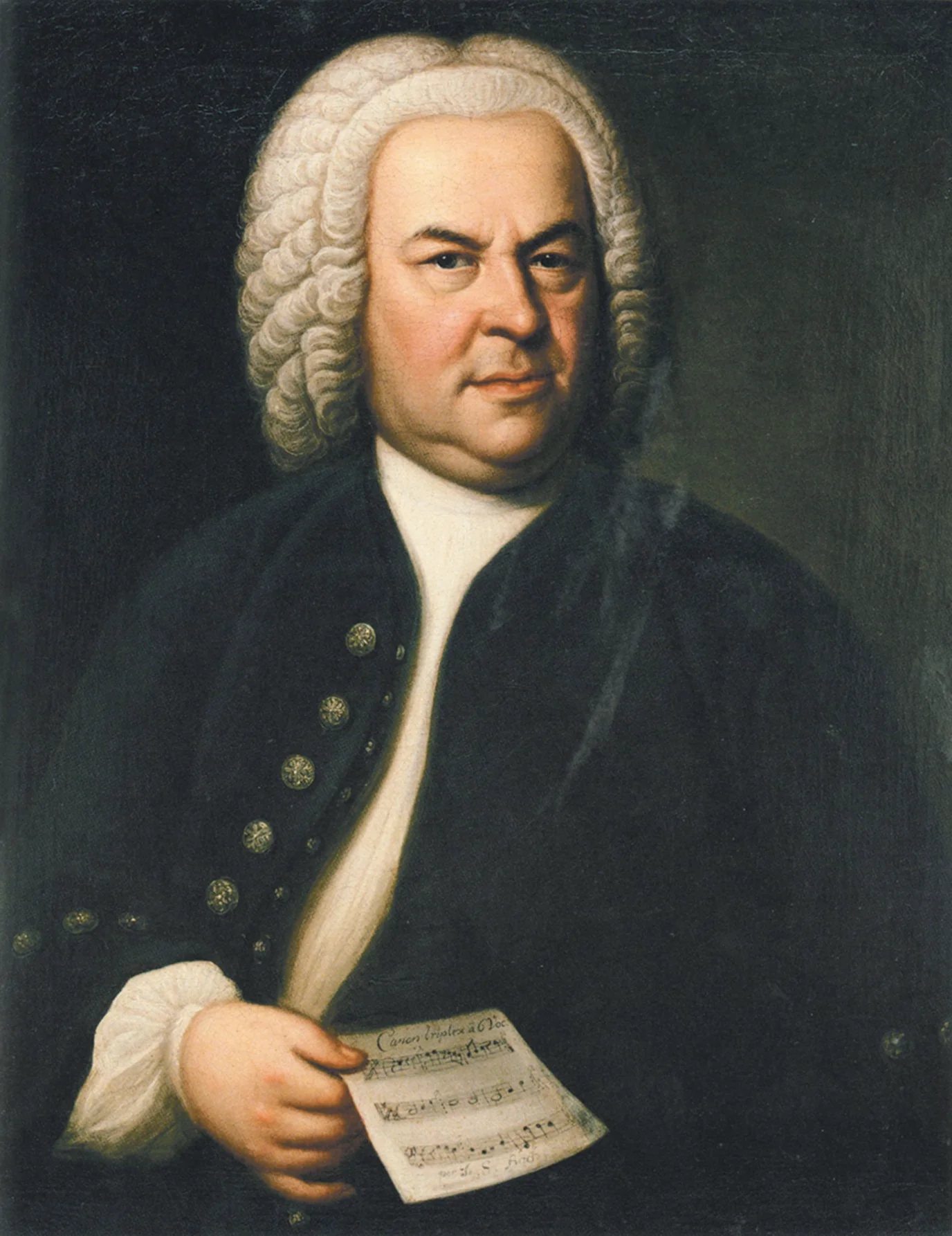
Joh. S. Bach: A Sincere Heart, BWV 24 - Cantata Service
A special Bach morning in Bonn: Cantata service with spiritual music, preaching, and community at the Erlöserkirche. Free admission, full of depth. #Bach #Service
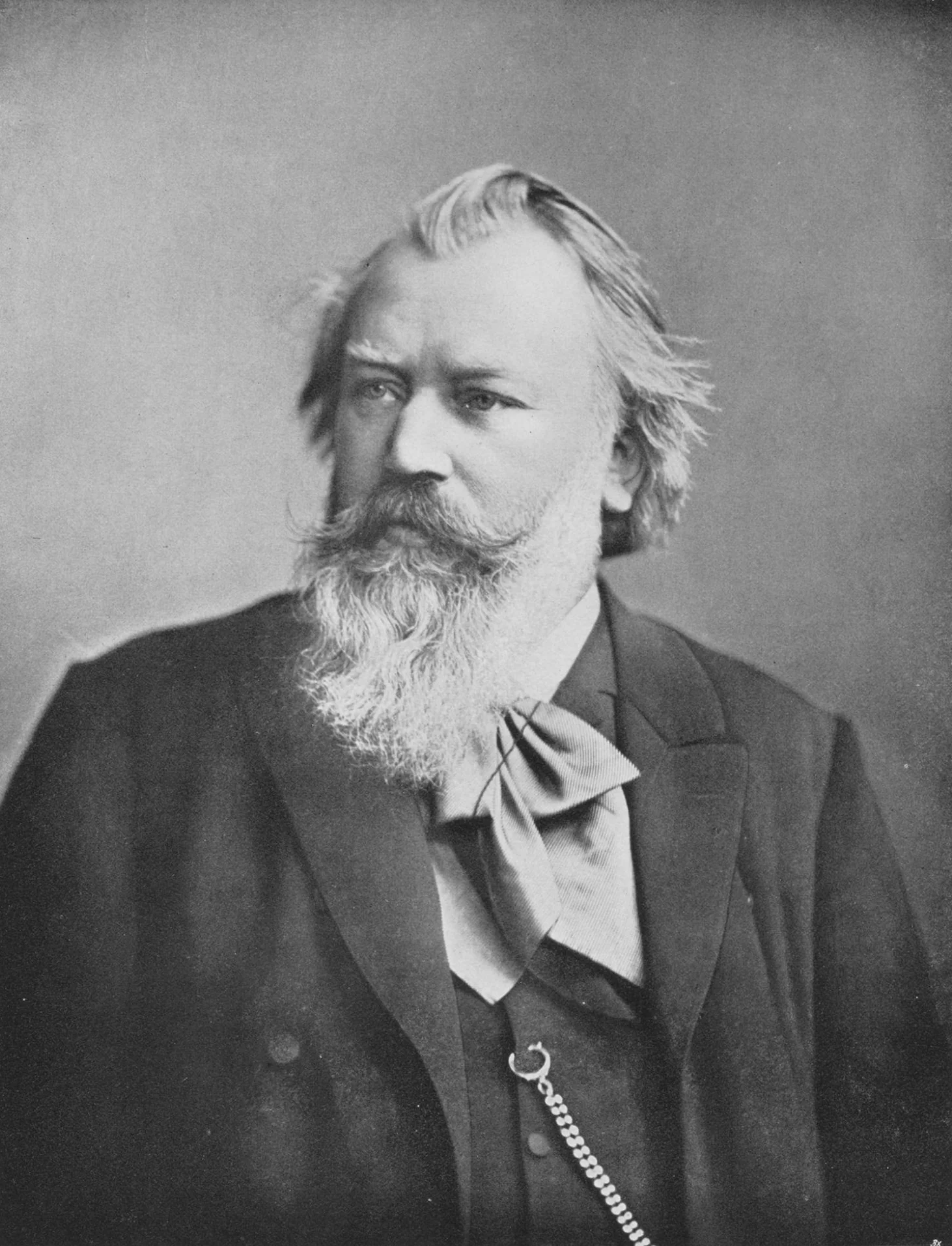
A German Requiem / Four Serious Songs in Bonn
An evening full of Brahms in Bonn: The Erlöserkirche becomes a stage for sound, comfort, and great emotions. Be there live! #Brahms #Bonn
Christmas Oratorio: Cantatas I, IV-VI, BWV 248
A festive Bach evening in Bonn: The Christmas Oratorio fills the Erlöser Church with brilliance, warmth, and great music. 12.12.2026, 25/20 Euro. #Bach #Bonn #Advent
Frequently Asked Questions
Reviews
No reviews found