
Bonn
Brunnenallee 33, 53173 Bonn, Deutschland
Draitschbrunnen | Opening Hours & Parking
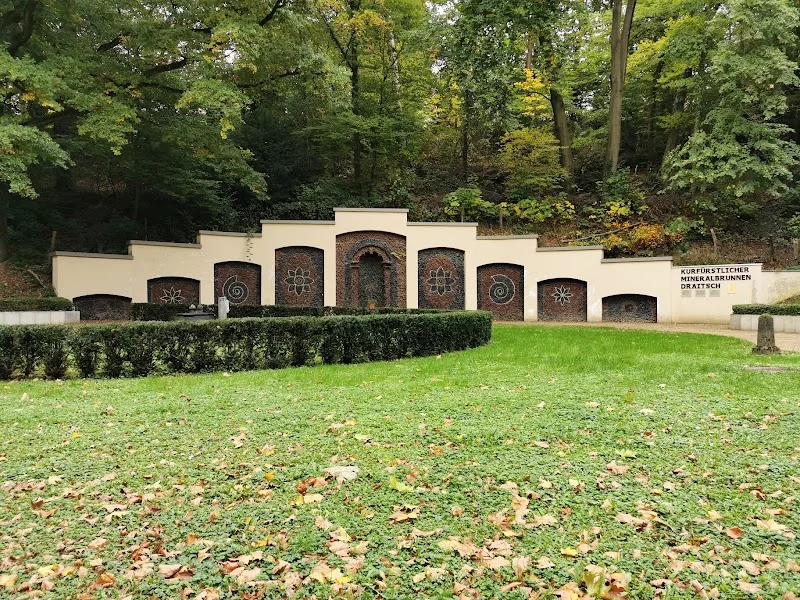
The Draitschbrunnen is one of the most prominent historical healing water addresses in Bonn-Bad Godesberg. At Brunnenallee 33, spa history meets an active drinking pavilion, where the Draitsch spring and the Kurfürsten spring are served. The official site describes the place as operated by Helmut Fiehl and his team; this makes it a vibrant piece of Bad Godesberg's everyday culture and not just a monument address. For visitors, the location is particularly attractive because the fountain fits into the axis of Redoute, spa district, and city center, thus bundling a lot of Bonn history in a small space. So, if you are looking for opening hours, parking, healing water, or photos, you will not find a classic event location here, but rather a traditional health and excursion destination with a clear local reference and real recognition value. ([draitschbrunnen.de](https://www.draitschbrunnen.de/))
Opening Hours, Prices, and What Visitors Can Expect On-Site
If you want to visit the Draitschbrunnen, you mainly need one thing: a little planning, but no complicated preparation. The current opening hours are Monday to Friday from 1:30 PM to 6:00 PM and Saturdays from 9:00 AM to 2:00 PM. Sunday and other times are not listed on the official site, so it makes sense to coordinate your arrival with these fixed time slots. On-site, the visit is uncomplicated: you can taste the healing waters, bring clean containers for filling, and if needed, buy glass bottles directly at the Draitschbrunnen. The current price per started liter of healing water is 50 cents. This is an important point for many guests because the place thus functions not only as a historical stopping point but also as a very practical drinking water and takeaway location. You can reach the Draitschbrunnen by phone at (0228) 363617 if you have questions about times or the process. The visit feels particularly pleasant because it remains practical: no museum ticket, no large cash procedure, but a small, functioning place with regional tradition. Anyone wanting to experience the atmosphere should take a few minutes to not only taste the water but also to calmly perceive the pavilion, the signage, and the surroundings. This way, a short stop quickly becomes a small insight into Bad Godesberg's spa history. ([draitschbrunnen.de](https://www.draitschbrunnen.de/))
Parking and Directions to the Draitschbrunnen in Bonn-Bad Godesberg
The approach to the Draitschbrunnen is pleasant for visitors because the place fits well into the developed cityscape of Bad Godesberg. There are parking spaces available at the Draitschbrunnen, which makes the visit significantly easier for drivers. Those on foot should initially follow the Redoutenweg to Elisabethstraße, go up a staircase to Redoutenpark, and then walk about 250 meters along Brunnenallee to the Draitschbrunnen. This brief description shows that the place is very closely connected to the historical spa district. The tourist city map of the federal city of Bonn also lists the Draitschbrunnen as point 5 in the Bad Godesberg overview next to the town hall, city park, La Redoute, and theater square. This is important because the fountain does not appear as an isolated point but as part of a compact route through a historically shaped district. Another Bonn tour describes that visitors, as part of a guided tour, first experience the spa park with the former electoral buildings and then continue to the Draitsch spring before heading up to Godesburg. This makes it clear that the Draitschbrunnen is also very well embedded for walks and city tours. So, whether arriving by train, car, or on foot, you will not find a remote special place here, but a well-accessible station in the center of Bad Godesberg that can easily be integrated into a day trip. ([bad-godesberg.info](https://bad-godesberg.info/seheswuerigkeiten/draitschbrunnen))
The History of the Draitschbrunnen Since Elector Max Franz
The history of the Draitschbrunnen is closely linked to the development of Bad Godesberg from an electoral spa town. According to official history, the appreciation of the spring may date back to Roman times, but the place gained supra-regional significance especially under Elector Max Franz of Habsburg-Lorraine. He was inspired by the scientific assessment of the mineral water by Prof. Dr. Ferdinand Wurzer to reframe the spring and establish a spa facility. In 1790, Max Franz established the bathing operation in Godesberg; at the same time, spa facilities such as the Redoute, walking paths, and a court theater were created. This shows that the Draitschbrunnen was never just a simple spring but was from the beginning part of a larger spa concept. Before World War I, the water was exported, awarded at several world exhibitions, and even appreciated as a table drink of the English court. In 1864, the municipality of Godesberg purchased the spring from the state and had a staircase built to the spring site. In 1871, the Stahlbrunnen-AG, a consortium of Godesberg citizens, acquired the fountain, expanded the facility, and built a mineral bath with a spa house on Brunnenallee. In 1926, the Godesberger Mineral Spring was recognized as a non-profit; at the same time, Godesberg became Bad Godesberg, which officially strengthened the spa identity. In 1939, the city of Bad Godesberg sold the operating facilities for the water trade, while the shared use of the mineral spring and water trade remained leased. The wooden fountain hall built from 1902 to 1904 was demolished in 1950 and replaced by a glass drinking pavilion with a promenade; its inauguration in 1952 marked the beginning of spa operations in a new form. In 1972, the spa house on Brunnenallee was demolished to create a new manufacturing facility, which had to close again in June 1990. Since May 1974, Helmut and Eveline Fiehl have been the tenants of the Draitschbrunnen; after the then-drinking pavilion had to give way in 1977 due to the expansion of the neighboring manufacturing facility, the couple built the current site with the Draitschbrunnen pavilion at their own expense. This sequence makes it clear how resilient and adaptable the place has remained over more than two centuries. ([draitschbrunnen.de](https://www.draitschbrunnen.de/historie/))
Draitsch Spring and Kurfürsten Spring: Healing Water with Tradition
The Draitschbrunnen is today interesting not only because of its name but especially because of the two healing waters served there. The official site emphasizes that visitors can taste the Draitsch spring and the Kurfürsten spring and should bring clean containers for filling. Additionally, there is the option to buy glass bottles directly on-site. Thus, the water is not only a historical symbol but a product that is actually used in everyday life. Particularly exciting is the connection of the two springs: The Kurfürsten spring was drilled in 1962 in the city park, and its water is pumped directly from the Kurpark to the pavilion via a pipeline. This makes the Draitschbrunnen to this day a hub between different parts of the Bad Godesberg spa district. The historical significance of the water is also evident from the reference to the scientific examination by Ferdinand Wurzer, who attributed a special, highly mineral and sparkling quality to the water. In the local presentation, the health perspective also plays a role: the water is said to positively affect complaints of the stomach, gallbladder, and liver and help with stress-related issues. For the contextual classification, it is important to understand such statements as part of the regional healing water tradition. This is precisely the character of the Draitschbrunnen: it connects historical spa culture, a functioning drinking pavilion, and the idea of perceiving water not only as a thirst quencher but also as a cultural asset. Therefore, anyone visiting the place does not experience an abstract fountain facility but a vibrant continuation of an old bathing tradition that is still directly visible in today's Bonn. ([draitschbrunnen.de](https://www.draitschbrunnen.de/))
The Bad Godesberg Spa District Around Redoute, Town Hall, and City Park
The Draitschbrunnen unfolds its effect particularly strongly in interplay with its surroundings. In the Bad Godesberg spa district, several historical and cultural places come together in a small space: the Redoute, the town hall, the city park, the theater square, and Godesburg are so close together that a circular walk almost automatically results. The Redoute was built around 1790, initially serving as a venue for balls and concerts, later also as a gaming casino, then as a spa house, and finally as a venue for concerts, weddings, and other occasions. The city park, on the other hand, was designed as an English landscape garden, planted with valuable and partly exotic trees, and expanded over decades. In 1962, the Kurfürsten spring was also drilled there, whose water comes from a depth of 200 meters and is still occasionally served in the Kurpark pavilion. This means that the Draitschbrunnen does not stand alone but is part of a whole network of spa historical places that complement each other. The Bonn city tour B4 leads visitors from the spa park with the former electoral buildings further to the Draitsch spring and then up to the historic Godesburg, the northernmost hill castle at the gateway to the Romantic Rhine. The city marketing also emphasizes that the path from Redoutenpark along Brunnenallee to the springs is just a short walk. This creates a very pleasant mix of history, green space, architecture, and movement for visitors. This combination is precisely what makes the Draitschbrunnen appealing: it is not an isolated point on the map but a key location in the entire Bad Godesberg spa district. Those who are here understand more quickly why Bad Godesberg was long perceived as a spa and later as a diplomatic city and why the district has preserved its own character to this day. ([bad-godesberg.info](https://bad-godesberg.info/seheswuerigkeiten/draitschbrunnen))
Photos and Atmosphere: Why the Draitschbrunnen Appears So Special
The keyword photos fits very well with the Draitschbrunnen because the place appears small at first glance but reveals many historical layers at second glance. The official website offers a photo gallery, and this is indeed useful: the pavilion on Brunnenallee, the historical embedding in the spa district, and the proximity to Redoute, city park, and other sights create an ensemble that can be visually well narrated. Unlike a large event hall, it is not about hall size or stage program here, but about atmosphere, authenticity, and a clearly readable local history. For photos, the Draitschbrunnen is particularly interesting because it appears both everyday and significant: people come to fill or taste water and stand at a place whose history dates back to the late 18th century. This combination of utility and tradition is what makes it appealing. Those who look at pictures in advance understand better how compact the site is and how closely the fountain remains connected to Brunnenallee. In practice, this means that the Draitschbrunnen is less suitable as a backdrop for large productions but rather as an authentic stop on a historical route through Bad Godesberg. Precisely for this reason, many visitors look for photos, opening hours, and location information at the same time. They want to know what the place looks like, when it is accessible, and how it is embedded in the surroundings. The Draitschbrunnen meets all these expectations because it is not an artificially created showcase but a piece of Bad Godesberg that has grown over generations, keeping its history visible and usable. ([draitschbrunnen.de](https://www.draitschbrunnen.de/draitsch-und-kurf%C3%BCrstenquelle/))
Sources:
Mehr anzeigenWeniger anzeigen
Draitschbrunnen | Opening Hours & Parking
The Draitschbrunnen is one of the most prominent historical healing water addresses in Bonn-Bad Godesberg. At Brunnenallee 33, spa history meets an active drinking pavilion, where the Draitsch spring and the Kurfürsten spring are served. The official site describes the place as operated by Helmut Fiehl and his team; this makes it a vibrant piece of Bad Godesberg's everyday culture and not just a monument address. For visitors, the location is particularly attractive because the fountain fits into the axis of Redoute, spa district, and city center, thus bundling a lot of Bonn history in a small space. So, if you are looking for opening hours, parking, healing water, or photos, you will not find a classic event location here, but rather a traditional health and excursion destination with a clear local reference and real recognition value. ([draitschbrunnen.de](https://www.draitschbrunnen.de/))
Opening Hours, Prices, and What Visitors Can Expect On-Site
If you want to visit the Draitschbrunnen, you mainly need one thing: a little planning, but no complicated preparation. The current opening hours are Monday to Friday from 1:30 PM to 6:00 PM and Saturdays from 9:00 AM to 2:00 PM. Sunday and other times are not listed on the official site, so it makes sense to coordinate your arrival with these fixed time slots. On-site, the visit is uncomplicated: you can taste the healing waters, bring clean containers for filling, and if needed, buy glass bottles directly at the Draitschbrunnen. The current price per started liter of healing water is 50 cents. This is an important point for many guests because the place thus functions not only as a historical stopping point but also as a very practical drinking water and takeaway location. You can reach the Draitschbrunnen by phone at (0228) 363617 if you have questions about times or the process. The visit feels particularly pleasant because it remains practical: no museum ticket, no large cash procedure, but a small, functioning place with regional tradition. Anyone wanting to experience the atmosphere should take a few minutes to not only taste the water but also to calmly perceive the pavilion, the signage, and the surroundings. This way, a short stop quickly becomes a small insight into Bad Godesberg's spa history. ([draitschbrunnen.de](https://www.draitschbrunnen.de/))
Parking and Directions to the Draitschbrunnen in Bonn-Bad Godesberg
The approach to the Draitschbrunnen is pleasant for visitors because the place fits well into the developed cityscape of Bad Godesberg. There are parking spaces available at the Draitschbrunnen, which makes the visit significantly easier for drivers. Those on foot should initially follow the Redoutenweg to Elisabethstraße, go up a staircase to Redoutenpark, and then walk about 250 meters along Brunnenallee to the Draitschbrunnen. This brief description shows that the place is very closely connected to the historical spa district. The tourist city map of the federal city of Bonn also lists the Draitschbrunnen as point 5 in the Bad Godesberg overview next to the town hall, city park, La Redoute, and theater square. This is important because the fountain does not appear as an isolated point but as part of a compact route through a historically shaped district. Another Bonn tour describes that visitors, as part of a guided tour, first experience the spa park with the former electoral buildings and then continue to the Draitsch spring before heading up to Godesburg. This makes it clear that the Draitschbrunnen is also very well embedded for walks and city tours. So, whether arriving by train, car, or on foot, you will not find a remote special place here, but a well-accessible station in the center of Bad Godesberg that can easily be integrated into a day trip. ([bad-godesberg.info](https://bad-godesberg.info/seheswuerigkeiten/draitschbrunnen))
The History of the Draitschbrunnen Since Elector Max Franz
The history of the Draitschbrunnen is closely linked to the development of Bad Godesberg from an electoral spa town. According to official history, the appreciation of the spring may date back to Roman times, but the place gained supra-regional significance especially under Elector Max Franz of Habsburg-Lorraine. He was inspired by the scientific assessment of the mineral water by Prof. Dr. Ferdinand Wurzer to reframe the spring and establish a spa facility. In 1790, Max Franz established the bathing operation in Godesberg; at the same time, spa facilities such as the Redoute, walking paths, and a court theater were created. This shows that the Draitschbrunnen was never just a simple spring but was from the beginning part of a larger spa concept. Before World War I, the water was exported, awarded at several world exhibitions, and even appreciated as a table drink of the English court. In 1864, the municipality of Godesberg purchased the spring from the state and had a staircase built to the spring site. In 1871, the Stahlbrunnen-AG, a consortium of Godesberg citizens, acquired the fountain, expanded the facility, and built a mineral bath with a spa house on Brunnenallee. In 1926, the Godesberger Mineral Spring was recognized as a non-profit; at the same time, Godesberg became Bad Godesberg, which officially strengthened the spa identity. In 1939, the city of Bad Godesberg sold the operating facilities for the water trade, while the shared use of the mineral spring and water trade remained leased. The wooden fountain hall built from 1902 to 1904 was demolished in 1950 and replaced by a glass drinking pavilion with a promenade; its inauguration in 1952 marked the beginning of spa operations in a new form. In 1972, the spa house on Brunnenallee was demolished to create a new manufacturing facility, which had to close again in June 1990. Since May 1974, Helmut and Eveline Fiehl have been the tenants of the Draitschbrunnen; after the then-drinking pavilion had to give way in 1977 due to the expansion of the neighboring manufacturing facility, the couple built the current site with the Draitschbrunnen pavilion at their own expense. This sequence makes it clear how resilient and adaptable the place has remained over more than two centuries. ([draitschbrunnen.de](https://www.draitschbrunnen.de/historie/))
Draitsch Spring and Kurfürsten Spring: Healing Water with Tradition
The Draitschbrunnen is today interesting not only because of its name but especially because of the two healing waters served there. The official site emphasizes that visitors can taste the Draitsch spring and the Kurfürsten spring and should bring clean containers for filling. Additionally, there is the option to buy glass bottles directly on-site. Thus, the water is not only a historical symbol but a product that is actually used in everyday life. Particularly exciting is the connection of the two springs: The Kurfürsten spring was drilled in 1962 in the city park, and its water is pumped directly from the Kurpark to the pavilion via a pipeline. This makes the Draitschbrunnen to this day a hub between different parts of the Bad Godesberg spa district. The historical significance of the water is also evident from the reference to the scientific examination by Ferdinand Wurzer, who attributed a special, highly mineral and sparkling quality to the water. In the local presentation, the health perspective also plays a role: the water is said to positively affect complaints of the stomach, gallbladder, and liver and help with stress-related issues. For the contextual classification, it is important to understand such statements as part of the regional healing water tradition. This is precisely the character of the Draitschbrunnen: it connects historical spa culture, a functioning drinking pavilion, and the idea of perceiving water not only as a thirst quencher but also as a cultural asset. Therefore, anyone visiting the place does not experience an abstract fountain facility but a vibrant continuation of an old bathing tradition that is still directly visible in today's Bonn. ([draitschbrunnen.de](https://www.draitschbrunnen.de/))
The Bad Godesberg Spa District Around Redoute, Town Hall, and City Park
The Draitschbrunnen unfolds its effect particularly strongly in interplay with its surroundings. In the Bad Godesberg spa district, several historical and cultural places come together in a small space: the Redoute, the town hall, the city park, the theater square, and Godesburg are so close together that a circular walk almost automatically results. The Redoute was built around 1790, initially serving as a venue for balls and concerts, later also as a gaming casino, then as a spa house, and finally as a venue for concerts, weddings, and other occasions. The city park, on the other hand, was designed as an English landscape garden, planted with valuable and partly exotic trees, and expanded over decades. In 1962, the Kurfürsten spring was also drilled there, whose water comes from a depth of 200 meters and is still occasionally served in the Kurpark pavilion. This means that the Draitschbrunnen does not stand alone but is part of a whole network of spa historical places that complement each other. The Bonn city tour B4 leads visitors from the spa park with the former electoral buildings further to the Draitsch spring and then up to the historic Godesburg, the northernmost hill castle at the gateway to the Romantic Rhine. The city marketing also emphasizes that the path from Redoutenpark along Brunnenallee to the springs is just a short walk. This creates a very pleasant mix of history, green space, architecture, and movement for visitors. This combination is precisely what makes the Draitschbrunnen appealing: it is not an isolated point on the map but a key location in the entire Bad Godesberg spa district. Those who are here understand more quickly why Bad Godesberg was long perceived as a spa and later as a diplomatic city and why the district has preserved its own character to this day. ([bad-godesberg.info](https://bad-godesberg.info/seheswuerigkeiten/draitschbrunnen))
Photos and Atmosphere: Why the Draitschbrunnen Appears So Special
The keyword photos fits very well with the Draitschbrunnen because the place appears small at first glance but reveals many historical layers at second glance. The official website offers a photo gallery, and this is indeed useful: the pavilion on Brunnenallee, the historical embedding in the spa district, and the proximity to Redoute, city park, and other sights create an ensemble that can be visually well narrated. Unlike a large event hall, it is not about hall size or stage program here, but about atmosphere, authenticity, and a clearly readable local history. For photos, the Draitschbrunnen is particularly interesting because it appears both everyday and significant: people come to fill or taste water and stand at a place whose history dates back to the late 18th century. This combination of utility and tradition is what makes it appealing. Those who look at pictures in advance understand better how compact the site is and how closely the fountain remains connected to Brunnenallee. In practice, this means that the Draitschbrunnen is less suitable as a backdrop for large productions but rather as an authentic stop on a historical route through Bad Godesberg. Precisely for this reason, many visitors look for photos, opening hours, and location information at the same time. They want to know what the place looks like, when it is accessible, and how it is embedded in the surroundings. The Draitschbrunnen meets all these expectations because it is not an artificially created showcase but a piece of Bad Godesberg that has grown over generations, keeping its history visible and usable. ([draitschbrunnen.de](https://www.draitschbrunnen.de/draitsch-und-kurf%C3%BCrstenquelle/))
Sources:
Draitschbrunnen | Opening Hours & Parking
The Draitschbrunnen is one of the most prominent historical healing water addresses in Bonn-Bad Godesberg. At Brunnenallee 33, spa history meets an active drinking pavilion, where the Draitsch spring and the Kurfürsten spring are served. The official site describes the place as operated by Helmut Fiehl and his team; this makes it a vibrant piece of Bad Godesberg's everyday culture and not just a monument address. For visitors, the location is particularly attractive because the fountain fits into the axis of Redoute, spa district, and city center, thus bundling a lot of Bonn history in a small space. So, if you are looking for opening hours, parking, healing water, or photos, you will not find a classic event location here, but rather a traditional health and excursion destination with a clear local reference and real recognition value. ([draitschbrunnen.de](https://www.draitschbrunnen.de/))
Opening Hours, Prices, and What Visitors Can Expect On-Site
If you want to visit the Draitschbrunnen, you mainly need one thing: a little planning, but no complicated preparation. The current opening hours are Monday to Friday from 1:30 PM to 6:00 PM and Saturdays from 9:00 AM to 2:00 PM. Sunday and other times are not listed on the official site, so it makes sense to coordinate your arrival with these fixed time slots. On-site, the visit is uncomplicated: you can taste the healing waters, bring clean containers for filling, and if needed, buy glass bottles directly at the Draitschbrunnen. The current price per started liter of healing water is 50 cents. This is an important point for many guests because the place thus functions not only as a historical stopping point but also as a very practical drinking water and takeaway location. You can reach the Draitschbrunnen by phone at (0228) 363617 if you have questions about times or the process. The visit feels particularly pleasant because it remains practical: no museum ticket, no large cash procedure, but a small, functioning place with regional tradition. Anyone wanting to experience the atmosphere should take a few minutes to not only taste the water but also to calmly perceive the pavilion, the signage, and the surroundings. This way, a short stop quickly becomes a small insight into Bad Godesberg's spa history. ([draitschbrunnen.de](https://www.draitschbrunnen.de/))
Parking and Directions to the Draitschbrunnen in Bonn-Bad Godesberg
The approach to the Draitschbrunnen is pleasant for visitors because the place fits well into the developed cityscape of Bad Godesberg. There are parking spaces available at the Draitschbrunnen, which makes the visit significantly easier for drivers. Those on foot should initially follow the Redoutenweg to Elisabethstraße, go up a staircase to Redoutenpark, and then walk about 250 meters along Brunnenallee to the Draitschbrunnen. This brief description shows that the place is very closely connected to the historical spa district. The tourist city map of the federal city of Bonn also lists the Draitschbrunnen as point 5 in the Bad Godesberg overview next to the town hall, city park, La Redoute, and theater square. This is important because the fountain does not appear as an isolated point but as part of a compact route through a historically shaped district. Another Bonn tour describes that visitors, as part of a guided tour, first experience the spa park with the former electoral buildings and then continue to the Draitsch spring before heading up to Godesburg. This makes it clear that the Draitschbrunnen is also very well embedded for walks and city tours. So, whether arriving by train, car, or on foot, you will not find a remote special place here, but a well-accessible station in the center of Bad Godesberg that can easily be integrated into a day trip. ([bad-godesberg.info](https://bad-godesberg.info/seheswuerigkeiten/draitschbrunnen))
The History of the Draitschbrunnen Since Elector Max Franz
The history of the Draitschbrunnen is closely linked to the development of Bad Godesberg from an electoral spa town. According to official history, the appreciation of the spring may date back to Roman times, but the place gained supra-regional significance especially under Elector Max Franz of Habsburg-Lorraine. He was inspired by the scientific assessment of the mineral water by Prof. Dr. Ferdinand Wurzer to reframe the spring and establish a spa facility. In 1790, Max Franz established the bathing operation in Godesberg; at the same time, spa facilities such as the Redoute, walking paths, and a court theater were created. This shows that the Draitschbrunnen was never just a simple spring but was from the beginning part of a larger spa concept. Before World War I, the water was exported, awarded at several world exhibitions, and even appreciated as a table drink of the English court. In 1864, the municipality of Godesberg purchased the spring from the state and had a staircase built to the spring site. In 1871, the Stahlbrunnen-AG, a consortium of Godesberg citizens, acquired the fountain, expanded the facility, and built a mineral bath with a spa house on Brunnenallee. In 1926, the Godesberger Mineral Spring was recognized as a non-profit; at the same time, Godesberg became Bad Godesberg, which officially strengthened the spa identity. In 1939, the city of Bad Godesberg sold the operating facilities for the water trade, while the shared use of the mineral spring and water trade remained leased. The wooden fountain hall built from 1902 to 1904 was demolished in 1950 and replaced by a glass drinking pavilion with a promenade; its inauguration in 1952 marked the beginning of spa operations in a new form. In 1972, the spa house on Brunnenallee was demolished to create a new manufacturing facility, which had to close again in June 1990. Since May 1974, Helmut and Eveline Fiehl have been the tenants of the Draitschbrunnen; after the then-drinking pavilion had to give way in 1977 due to the expansion of the neighboring manufacturing facility, the couple built the current site with the Draitschbrunnen pavilion at their own expense. This sequence makes it clear how resilient and adaptable the place has remained over more than two centuries. ([draitschbrunnen.de](https://www.draitschbrunnen.de/historie/))
Draitsch Spring and Kurfürsten Spring: Healing Water with Tradition
The Draitschbrunnen is today interesting not only because of its name but especially because of the two healing waters served there. The official site emphasizes that visitors can taste the Draitsch spring and the Kurfürsten spring and should bring clean containers for filling. Additionally, there is the option to buy glass bottles directly on-site. Thus, the water is not only a historical symbol but a product that is actually used in everyday life. Particularly exciting is the connection of the two springs: The Kurfürsten spring was drilled in 1962 in the city park, and its water is pumped directly from the Kurpark to the pavilion via a pipeline. This makes the Draitschbrunnen to this day a hub between different parts of the Bad Godesberg spa district. The historical significance of the water is also evident from the reference to the scientific examination by Ferdinand Wurzer, who attributed a special, highly mineral and sparkling quality to the water. In the local presentation, the health perspective also plays a role: the water is said to positively affect complaints of the stomach, gallbladder, and liver and help with stress-related issues. For the contextual classification, it is important to understand such statements as part of the regional healing water tradition. This is precisely the character of the Draitschbrunnen: it connects historical spa culture, a functioning drinking pavilion, and the idea of perceiving water not only as a thirst quencher but also as a cultural asset. Therefore, anyone visiting the place does not experience an abstract fountain facility but a vibrant continuation of an old bathing tradition that is still directly visible in today's Bonn. ([draitschbrunnen.de](https://www.draitschbrunnen.de/))
The Bad Godesberg Spa District Around Redoute, Town Hall, and City Park
The Draitschbrunnen unfolds its effect particularly strongly in interplay with its surroundings. In the Bad Godesberg spa district, several historical and cultural places come together in a small space: the Redoute, the town hall, the city park, the theater square, and Godesburg are so close together that a circular walk almost automatically results. The Redoute was built around 1790, initially serving as a venue for balls and concerts, later also as a gaming casino, then as a spa house, and finally as a venue for concerts, weddings, and other occasions. The city park, on the other hand, was designed as an English landscape garden, planted with valuable and partly exotic trees, and expanded over decades. In 1962, the Kurfürsten spring was also drilled there, whose water comes from a depth of 200 meters and is still occasionally served in the Kurpark pavilion. This means that the Draitschbrunnen does not stand alone but is part of a whole network of spa historical places that complement each other. The Bonn city tour B4 leads visitors from the spa park with the former electoral buildings further to the Draitsch spring and then up to the historic Godesburg, the northernmost hill castle at the gateway to the Romantic Rhine. The city marketing also emphasizes that the path from Redoutenpark along Brunnenallee to the springs is just a short walk. This creates a very pleasant mix of history, green space, architecture, and movement for visitors. This combination is precisely what makes the Draitschbrunnen appealing: it is not an isolated point on the map but a key location in the entire Bad Godesberg spa district. Those who are here understand more quickly why Bad Godesberg was long perceived as a spa and later as a diplomatic city and why the district has preserved its own character to this day. ([bad-godesberg.info](https://bad-godesberg.info/seheswuerigkeiten/draitschbrunnen))
Photos and Atmosphere: Why the Draitschbrunnen Appears So Special
The keyword photos fits very well with the Draitschbrunnen because the place appears small at first glance but reveals many historical layers at second glance. The official website offers a photo gallery, and this is indeed useful: the pavilion on Brunnenallee, the historical embedding in the spa district, and the proximity to Redoute, city park, and other sights create an ensemble that can be visually well narrated. Unlike a large event hall, it is not about hall size or stage program here, but about atmosphere, authenticity, and a clearly readable local history. For photos, the Draitschbrunnen is particularly interesting because it appears both everyday and significant: people come to fill or taste water and stand at a place whose history dates back to the late 18th century. This combination of utility and tradition is what makes it appealing. Those who look at pictures in advance understand better how compact the site is and how closely the fountain remains connected to Brunnenallee. In practice, this means that the Draitschbrunnen is less suitable as a backdrop for large productions but rather as an authentic stop on a historical route through Bad Godesberg. Precisely for this reason, many visitors look for photos, opening hours, and location information at the same time. They want to know what the place looks like, when it is accessible, and how it is embedded in the surroundings. The Draitschbrunnen meets all these expectations because it is not an artificially created showcase but a piece of Bad Godesberg that has grown over generations, keeping its history visible and usable. ([draitschbrunnen.de](https://www.draitschbrunnen.de/draitsch-und-kurf%C3%BCrstenquelle/))
Sources:
Frequently Asked Questions
Reviews
No reviews found