
Bonn
Weinbergweg 34, 53227 Bonn-Beuel, Deutschland
Burg Limperich | History & Access
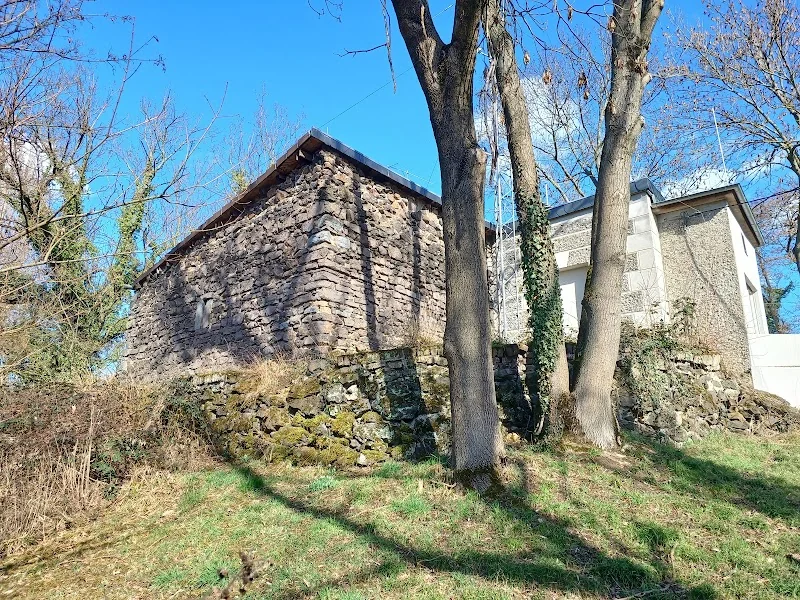
Burg Limperich is one of those places in Bonn that may seem inconspicuous at first glance but reveals a remarkable density of history, usage, and local identity upon closer inspection. The site at Weinbergweg 34 in Bonn-Beuel is located on the Finkenberg above an old arm of the Rhine, thus situated in a landscape closely tied to the history of Bonn on the right bank of the Rhine. Today, it is primarily known as a historical ruin and as the clubhouse of the Bonn amateur radio operators, bringing together two very different worlds in a single location: medieval architectural structure on one hand and lived club and technology history on the other. This combination makes the castle particularly interesting for inquiries related to Burg Limperich Bonn, history, access, parking, and opening hours. Those seeking information here usually want to know not only where the castle is located but also whether it can be entered, how access works, and why this place is culturally relevant to Bonn. The most important answers are clearly laid out in the sources of the monument and history association and the Bonn amateur radio operators: historical substance, club use for decades, regular club evenings, and a location that makes the site more of a monument with a special function than a classic event location. ([denkmalverein-bonn.de](https://www.denkmalverein-bonn.de/projekte-burg-limperich))
History of Burg Limperich
The historical classification of Burg Limperich is more exciting than a brief designation as a ruin would suggest. The monument and history association describes the site as a modest medieval fortification on the southern terrace of the Finkenberg, dating back to the 11th century; thus, it would be one of the earliest structures in the region and the oldest castle in the Bonn city area. At the same time, the Bonn amateur radio operators mention older parts from the 13th century. For a careful description, it is sensible not to pit these sources against each other but to openly state that the dating in the secondary transmission varies. What is certain is that the site was first mentioned in 1285 as the possession and seat of the Lords of Limperich. Later, among others, the knights from Drachenfels as well as the Berg noble family of Nesselrode and the Cologne merchant family Foveaux were associated with the site. This sequence shows that Burg Limperich was not just a local name but a historical place of ownership and rule with changing functions. The monument association also points out that the destruction likely occurred in 1689 during the Palatine War of Succession, followed by reconstructions in half-timbering and a gable roof. Historical drawings from the 18th century make this state visible and simultaneously show the proximity to the Mylendonker Baroque court and Bonn. ([denkmalverein-bonn.de](https://www.denkmalverein-bonn.de/projekte-burg-limperich))
For today's visitors, it is particularly important that while Burg Limperich has medieval roots, its later history is equally formative. In the 19th century, the upper floors of the tower house were gradually lost, and during the basalt stone extraction period between about 1850 and 1930, the castle served as an office for a quarry company. Around 1900, a separate extension was created for this purpose, which, according to the monument association, is not under monument protection. These layers make the site interesting precisely because it does not appear as a preserved museum object but as a place where different epochs overlap: medieval fortification architecture, early modern destruction, industrial interim use, and modern club history. The current character as a ruin also explains why Burg Limperich often appears in search engines in connection with monument, history, and Finkenberg. Therefore, those searching for Burg Limperich history will not find just a simple founding narrative but a long sequence of use, reconstruction, loss, and preservation. The fact that the site is doubly protected as a monument, both as an archaeological site and as a building, further underscores its significance for Bonn's city history. ([denkmalverein-bonn.de](https://www.denkmalverein-bonn.de/projekte-burg-limperich))
Access, Address, and Parking at Burg Limperich
The practical side of Burg Limperich begins with the address: Weinbergweg 34, 53227 Bonn-Beuel-Limperich. This is not a thoroughfare but, according to the club's website, a residential street, which already indicates a rather quiet location and a limited access situation. Those arriving by car should follow the Bonn A59 according to the directions of the amateur radio operators: via the Bonn-Beuel motorway interchange, continuing towards Königswinter, exiting at Bonn-Beuel-Pützchen, then onto Siegburger Straße and later onto Königswinterer Straße. In the district of Limperich, the road finally turns left into Finkenbergweg and after about 100 meters steeply uphill to Weinbergweg, which ends in a dead end. At this point, the parking question becomes important, and here the information is pleasantly clear: parking spaces are available on the grounds of the clubhouse. This is a significant practical advantage for a historical site because one does not have to search for parking space in a wide area but arrives directly at the destination. At the same time, one should understand the access as narrow and locally limited, as the road intentionally ends at the grounds and is not designed as a general traffic axis. ([amateurfunk-bonn.de](https://amateurfunk-bonn.de/igbf-e-v/anfahrt/))
Burg Limperich is also accessible by public transport. The club's website recommends tram line 62 to the Limperich stop; from there, it is a short walk along Finkenbergstraße to Weinbergweg. This combination of city train and a short walk is particularly useful for visitors who want to experience the place not just functionally but also as a city walk. Especially since the castle is located on the edge of a slope, the path there already conveys an impression of the topography of Bonn-Beuel. Therefore, for SEO and user inquiries, the search terms access, parking, and address are particularly relevant, as the location is not a place with a large visitor parking garage or a central city location, but a historically grown site in a residential environment. Anyone planning an event, a club evening, or a monument day should therefore check the journey in advance and rather use the clear, local structure than hope spontaneously that the place is easily findable. The good news is: the official access assistance is simple, the address is clear, and parking on the property saves additional trips. This reliability makes Burg Limperich more practical for interested parties than one would initially suspect of a castle ruin. ([amateurfunk-bonn.de](https://amateurfunk-bonn.de/igbf-e-v/anfahrt/))
Clubhouse and Amateur Radio at Burg Limperich
Burg Limperich is today not only a monument but also a vibrant club location. The interest group of Bonn amateur radio operators for the promotion of international understanding and goodwill, short IGBF, uses the property as a clubhouse. The association describes itself as non-profit, has around 150 members, and points out that over 10,000 radio connections are made annually with stations in almost a hundred countries. This number is interesting because it does not present the castle as merely a historical object but as a technical and social hub with international reach. The association operates various modes, from Morse telegraphy to single sideband and data transmission to satellite radio and television. For the content surrounding Burg Limperich amateur radio, this is a central point: it is not about decoration but about an active use that connects the monument with current club life. The castle is thus a place where history is not museum-like frozen but continues to work in the everyday life of a specialized club. This is precisely what distinguishes it from many other castle ruins in the Rhineland, which are only perceived as a backdrop. ([amateurfunk-bonn.de](https://amateurfunk-bonn.de/igbf-e-v/))
The temporal use by amateur radio operators also has its own history. The monument association writes that since 1967 private amateur radio operators have been operating their clubhouse there; the IGBF itself states usage since 1964. For an accurate representation, one should therefore say: Since the 1960s, Burg Limperich has been closely linked to Bonn amateur radio. This historical continuity explains why the site is today perceived not only as a ruin but also as a point of identification for a technical community. According to the association's website, club evenings take place every Friday from 7 p.m., and the castle is an open house for radio enthusiasts and interested parties on these evenings, especially for guests from all over the world. This is central for inquiries about opening hours and events because the usage logic is not identical to that of a theater or hall operation. Instead of ticket sales and mass programming, encounters, technical practice, and club life are in the foreground. Therefore, those interested in the site will not find a classic event location here but a traditional club site with a professional profile, international exchange, and an unusual historical context. This connection of monument and technology is one of the reasons why the castle has special significance for Bonn. ([amateurfunk-bonn.de](https://amateurfunk-bonn.de/igbf-e-v/))
Visitation, Open Monument Day, and Accessibility
At Burg Limperich, the question of public accessibility is particularly important because the answer does not end with a simple yes or no. The monument association explicitly points out that the entire site is enclosed by a solid fence and access for the public outside of special occasions is not possible. This means: Those who approach the castle in everyday life do not encounter a constantly open visitor site. At the same time, the club's information shows that on club evenings on Fridays from 7 p.m., an open house exists for interested parties. This results in a form of use that lies somewhere between clubhouse, monument, and event location. For visitors, this means that the castle should not be visited spontaneously like a regular museum but rather within the framework of club evenings, monument days, or announced special dates. This special role makes the castle particularly relevant in inquiries surrounding opening hours and visitation. Therefore, anyone wishing to see or understand the site should check in advance whether a public event is taking place or whether a visit only makes sense by prior arrangement. ([denkmalverein-bonn.de](https://www.denkmalverein-bonn.de/projekte-burg-limperich))
The opening to the public is particularly evident on Open Monument Day. For 2019, the Bonn program lists Burg Limperich as a location open from 10 a.m. to 5 p.m., with tours available as needed by club members of the IGBF and demonstrations of amateur radio. The club's retrospective also confirms that on Open Monument Day, the clubhouse is regularly opened for an interested audience. For seekers, this is therefore the most important opportunity to get to know the site better without relying on regular club dates. The connection of monument preservation and club presentation fits well with the history of the building: a historical core, a later extension, active technical use, and occasional opening for the general public. Especially on these days, Burg Limperich becomes tangible as a place where local history, civic engagement, and technical interest come together. Therefore, anyone planning a visit should not expect a permanent tourist infrastructure but a special, yet well-organized offer. This is what makes the charm of the place: not accessible at all times, but particularly authentic and close to its actual users during appropriate dates. ([bonn.de](https://www.bonn.de/medien-global/amt-61/Tag_des_offenen_Denkmals_2018_2.pdf?utm_source=openai))
Location on Finkenberg and Special Features for Bonn
The location of Burg Limperich is one of its strongest features. The monument association describes it as situated on the southern terrace of the Finkenberg above an old arm of the Rhine. This is not only a geographical indication but also an explanation of why the site was historically sensible and still possesses its own atmosphere today. The Finkenberg is not a prominent city hill with tourist overemphasis but a place with layers of landscape, history, and later use. The castle sits in this landscape like a witness of earlier rule and protection functions, but also as part of a later economic and club history. The historical drawing from the 18th century, which the monument association shows, makes this special location very vivid: In the field of view are the castle, the Mylendonker Baroque court in the valley, and Bonn in the background. This image conveys exactly why Burg Limperich is more to the city of Bonn than just a gone building. It is a point where the topography of Bonn on the right bank of the Rhine connects with the historical settlement and usage history. ([denkmalverein-bonn.de](https://www.denkmalverein-bonn.de/projekte-burg-limperich))
The monument preservation and cultural significance is also remarkable. The association emphasizes that the site is doubly protected as a monument, namely as an archaeological site and as a building monument. In addition, the modern use keeps the historical site alive and simultaneously protects it because it generates regular maintenance and attention. Since the use by amateur radio operators, according to the association's representation, a symbiosis of club work and preservation of the monument has developed. This is a valuable special case for Bonn because here no large, publicly marketed event object is operated, but a historical site with a clear local function. For people searching for Burg Limperich Bonn, Finkenberg, monument, or amateur radio, this creates a very specific profile: archaeologically and historically interesting, practically well accessible via access and parking, but only limitedly accessible in everyday life. This mixture of proximity and exclusivity makes the location attractive. It is neither a purely romantic ruin nor a pure technical address but a Bonn cultural site with real biographical depth. Understanding Burg Limperich also means understanding a piece of right bank city history: the connection of landscape, ownership history, club life, and monument protection at a single, small, but remarkably dense location. ([denkmalverein-bonn.de](https://www.denkmalverein-bonn.de/projekte-burg-limperich))
Sources:
Mehr anzeigenWeniger anzeigen
Burg Limperich | History & Access
Burg Limperich is one of those places in Bonn that may seem inconspicuous at first glance but reveals a remarkable density of history, usage, and local identity upon closer inspection. The site at Weinbergweg 34 in Bonn-Beuel is located on the Finkenberg above an old arm of the Rhine, thus situated in a landscape closely tied to the history of Bonn on the right bank of the Rhine. Today, it is primarily known as a historical ruin and as the clubhouse of the Bonn amateur radio operators, bringing together two very different worlds in a single location: medieval architectural structure on one hand and lived club and technology history on the other. This combination makes the castle particularly interesting for inquiries related to Burg Limperich Bonn, history, access, parking, and opening hours. Those seeking information here usually want to know not only where the castle is located but also whether it can be entered, how access works, and why this place is culturally relevant to Bonn. The most important answers are clearly laid out in the sources of the monument and history association and the Bonn amateur radio operators: historical substance, club use for decades, regular club evenings, and a location that makes the site more of a monument with a special function than a classic event location. ([denkmalverein-bonn.de](https://www.denkmalverein-bonn.de/projekte-burg-limperich))
History of Burg Limperich
The historical classification of Burg Limperich is more exciting than a brief designation as a ruin would suggest. The monument and history association describes the site as a modest medieval fortification on the southern terrace of the Finkenberg, dating back to the 11th century; thus, it would be one of the earliest structures in the region and the oldest castle in the Bonn city area. At the same time, the Bonn amateur radio operators mention older parts from the 13th century. For a careful description, it is sensible not to pit these sources against each other but to openly state that the dating in the secondary transmission varies. What is certain is that the site was first mentioned in 1285 as the possession and seat of the Lords of Limperich. Later, among others, the knights from Drachenfels as well as the Berg noble family of Nesselrode and the Cologne merchant family Foveaux were associated with the site. This sequence shows that Burg Limperich was not just a local name but a historical place of ownership and rule with changing functions. The monument association also points out that the destruction likely occurred in 1689 during the Palatine War of Succession, followed by reconstructions in half-timbering and a gable roof. Historical drawings from the 18th century make this state visible and simultaneously show the proximity to the Mylendonker Baroque court and Bonn. ([denkmalverein-bonn.de](https://www.denkmalverein-bonn.de/projekte-burg-limperich))
For today's visitors, it is particularly important that while Burg Limperich has medieval roots, its later history is equally formative. In the 19th century, the upper floors of the tower house were gradually lost, and during the basalt stone extraction period between about 1850 and 1930, the castle served as an office for a quarry company. Around 1900, a separate extension was created for this purpose, which, according to the monument association, is not under monument protection. These layers make the site interesting precisely because it does not appear as a preserved museum object but as a place where different epochs overlap: medieval fortification architecture, early modern destruction, industrial interim use, and modern club history. The current character as a ruin also explains why Burg Limperich often appears in search engines in connection with monument, history, and Finkenberg. Therefore, those searching for Burg Limperich history will not find just a simple founding narrative but a long sequence of use, reconstruction, loss, and preservation. The fact that the site is doubly protected as a monument, both as an archaeological site and as a building, further underscores its significance for Bonn's city history. ([denkmalverein-bonn.de](https://www.denkmalverein-bonn.de/projekte-burg-limperich))
Access, Address, and Parking at Burg Limperich
The practical side of Burg Limperich begins with the address: Weinbergweg 34, 53227 Bonn-Beuel-Limperich. This is not a thoroughfare but, according to the club's website, a residential street, which already indicates a rather quiet location and a limited access situation. Those arriving by car should follow the Bonn A59 according to the directions of the amateur radio operators: via the Bonn-Beuel motorway interchange, continuing towards Königswinter, exiting at Bonn-Beuel-Pützchen, then onto Siegburger Straße and later onto Königswinterer Straße. In the district of Limperich, the road finally turns left into Finkenbergweg and after about 100 meters steeply uphill to Weinbergweg, which ends in a dead end. At this point, the parking question becomes important, and here the information is pleasantly clear: parking spaces are available on the grounds of the clubhouse. This is a significant practical advantage for a historical site because one does not have to search for parking space in a wide area but arrives directly at the destination. At the same time, one should understand the access as narrow and locally limited, as the road intentionally ends at the grounds and is not designed as a general traffic axis. ([amateurfunk-bonn.de](https://amateurfunk-bonn.de/igbf-e-v/anfahrt/))
Burg Limperich is also accessible by public transport. The club's website recommends tram line 62 to the Limperich stop; from there, it is a short walk along Finkenbergstraße to Weinbergweg. This combination of city train and a short walk is particularly useful for visitors who want to experience the place not just functionally but also as a city walk. Especially since the castle is located on the edge of a slope, the path there already conveys an impression of the topography of Bonn-Beuel. Therefore, for SEO and user inquiries, the search terms access, parking, and address are particularly relevant, as the location is not a place with a large visitor parking garage or a central city location, but a historically grown site in a residential environment. Anyone planning an event, a club evening, or a monument day should therefore check the journey in advance and rather use the clear, local structure than hope spontaneously that the place is easily findable. The good news is: the official access assistance is simple, the address is clear, and parking on the property saves additional trips. This reliability makes Burg Limperich more practical for interested parties than one would initially suspect of a castle ruin. ([amateurfunk-bonn.de](https://amateurfunk-bonn.de/igbf-e-v/anfahrt/))
Clubhouse and Amateur Radio at Burg Limperich
Burg Limperich is today not only a monument but also a vibrant club location. The interest group of Bonn amateur radio operators for the promotion of international understanding and goodwill, short IGBF, uses the property as a clubhouse. The association describes itself as non-profit, has around 150 members, and points out that over 10,000 radio connections are made annually with stations in almost a hundred countries. This number is interesting because it does not present the castle as merely a historical object but as a technical and social hub with international reach. The association operates various modes, from Morse telegraphy to single sideband and data transmission to satellite radio and television. For the content surrounding Burg Limperich amateur radio, this is a central point: it is not about decoration but about an active use that connects the monument with current club life. The castle is thus a place where history is not museum-like frozen but continues to work in the everyday life of a specialized club. This is precisely what distinguishes it from many other castle ruins in the Rhineland, which are only perceived as a backdrop. ([amateurfunk-bonn.de](https://amateurfunk-bonn.de/igbf-e-v/))
The temporal use by amateur radio operators also has its own history. The monument association writes that since 1967 private amateur radio operators have been operating their clubhouse there; the IGBF itself states usage since 1964. For an accurate representation, one should therefore say: Since the 1960s, Burg Limperich has been closely linked to Bonn amateur radio. This historical continuity explains why the site is today perceived not only as a ruin but also as a point of identification for a technical community. According to the association's website, club evenings take place every Friday from 7 p.m., and the castle is an open house for radio enthusiasts and interested parties on these evenings, especially for guests from all over the world. This is central for inquiries about opening hours and events because the usage logic is not identical to that of a theater or hall operation. Instead of ticket sales and mass programming, encounters, technical practice, and club life are in the foreground. Therefore, those interested in the site will not find a classic event location here but a traditional club site with a professional profile, international exchange, and an unusual historical context. This connection of monument and technology is one of the reasons why the castle has special significance for Bonn. ([amateurfunk-bonn.de](https://amateurfunk-bonn.de/igbf-e-v/))
Visitation, Open Monument Day, and Accessibility
At Burg Limperich, the question of public accessibility is particularly important because the answer does not end with a simple yes or no. The monument association explicitly points out that the entire site is enclosed by a solid fence and access for the public outside of special occasions is not possible. This means: Those who approach the castle in everyday life do not encounter a constantly open visitor site. At the same time, the club's information shows that on club evenings on Fridays from 7 p.m., an open house exists for interested parties. This results in a form of use that lies somewhere between clubhouse, monument, and event location. For visitors, this means that the castle should not be visited spontaneously like a regular museum but rather within the framework of club evenings, monument days, or announced special dates. This special role makes the castle particularly relevant in inquiries surrounding opening hours and visitation. Therefore, anyone wishing to see or understand the site should check in advance whether a public event is taking place or whether a visit only makes sense by prior arrangement. ([denkmalverein-bonn.de](https://www.denkmalverein-bonn.de/projekte-burg-limperich))
The opening to the public is particularly evident on Open Monument Day. For 2019, the Bonn program lists Burg Limperich as a location open from 10 a.m. to 5 p.m., with tours available as needed by club members of the IGBF and demonstrations of amateur radio. The club's retrospective also confirms that on Open Monument Day, the clubhouse is regularly opened for an interested audience. For seekers, this is therefore the most important opportunity to get to know the site better without relying on regular club dates. The connection of monument preservation and club presentation fits well with the history of the building: a historical core, a later extension, active technical use, and occasional opening for the general public. Especially on these days, Burg Limperich becomes tangible as a place where local history, civic engagement, and technical interest come together. Therefore, anyone planning a visit should not expect a permanent tourist infrastructure but a special, yet well-organized offer. This is what makes the charm of the place: not accessible at all times, but particularly authentic and close to its actual users during appropriate dates. ([bonn.de](https://www.bonn.de/medien-global/amt-61/Tag_des_offenen_Denkmals_2018_2.pdf?utm_source=openai))
Location on Finkenberg and Special Features for Bonn
The location of Burg Limperich is one of its strongest features. The monument association describes it as situated on the southern terrace of the Finkenberg above an old arm of the Rhine. This is not only a geographical indication but also an explanation of why the site was historically sensible and still possesses its own atmosphere today. The Finkenberg is not a prominent city hill with tourist overemphasis but a place with layers of landscape, history, and later use. The castle sits in this landscape like a witness of earlier rule and protection functions, but also as part of a later economic and club history. The historical drawing from the 18th century, which the monument association shows, makes this special location very vivid: In the field of view are the castle, the Mylendonker Baroque court in the valley, and Bonn in the background. This image conveys exactly why Burg Limperich is more to the city of Bonn than just a gone building. It is a point where the topography of Bonn on the right bank of the Rhine connects with the historical settlement and usage history. ([denkmalverein-bonn.de](https://www.denkmalverein-bonn.de/projekte-burg-limperich))
The monument preservation and cultural significance is also remarkable. The association emphasizes that the site is doubly protected as a monument, namely as an archaeological site and as a building monument. In addition, the modern use keeps the historical site alive and simultaneously protects it because it generates regular maintenance and attention. Since the use by amateur radio operators, according to the association's representation, a symbiosis of club work and preservation of the monument has developed. This is a valuable special case for Bonn because here no large, publicly marketed event object is operated, but a historical site with a clear local function. For people searching for Burg Limperich Bonn, Finkenberg, monument, or amateur radio, this creates a very specific profile: archaeologically and historically interesting, practically well accessible via access and parking, but only limitedly accessible in everyday life. This mixture of proximity and exclusivity makes the location attractive. It is neither a purely romantic ruin nor a pure technical address but a Bonn cultural site with real biographical depth. Understanding Burg Limperich also means understanding a piece of right bank city history: the connection of landscape, ownership history, club life, and monument protection at a single, small, but remarkably dense location. ([denkmalverein-bonn.de](https://www.denkmalverein-bonn.de/projekte-burg-limperich))
Sources:
Burg Limperich | History & Access
Burg Limperich is one of those places in Bonn that may seem inconspicuous at first glance but reveals a remarkable density of history, usage, and local identity upon closer inspection. The site at Weinbergweg 34 in Bonn-Beuel is located on the Finkenberg above an old arm of the Rhine, thus situated in a landscape closely tied to the history of Bonn on the right bank of the Rhine. Today, it is primarily known as a historical ruin and as the clubhouse of the Bonn amateur radio operators, bringing together two very different worlds in a single location: medieval architectural structure on one hand and lived club and technology history on the other. This combination makes the castle particularly interesting for inquiries related to Burg Limperich Bonn, history, access, parking, and opening hours. Those seeking information here usually want to know not only where the castle is located but also whether it can be entered, how access works, and why this place is culturally relevant to Bonn. The most important answers are clearly laid out in the sources of the monument and history association and the Bonn amateur radio operators: historical substance, club use for decades, regular club evenings, and a location that makes the site more of a monument with a special function than a classic event location. ([denkmalverein-bonn.de](https://www.denkmalverein-bonn.de/projekte-burg-limperich))
History of Burg Limperich
The historical classification of Burg Limperich is more exciting than a brief designation as a ruin would suggest. The monument and history association describes the site as a modest medieval fortification on the southern terrace of the Finkenberg, dating back to the 11th century; thus, it would be one of the earliest structures in the region and the oldest castle in the Bonn city area. At the same time, the Bonn amateur radio operators mention older parts from the 13th century. For a careful description, it is sensible not to pit these sources against each other but to openly state that the dating in the secondary transmission varies. What is certain is that the site was first mentioned in 1285 as the possession and seat of the Lords of Limperich. Later, among others, the knights from Drachenfels as well as the Berg noble family of Nesselrode and the Cologne merchant family Foveaux were associated with the site. This sequence shows that Burg Limperich was not just a local name but a historical place of ownership and rule with changing functions. The monument association also points out that the destruction likely occurred in 1689 during the Palatine War of Succession, followed by reconstructions in half-timbering and a gable roof. Historical drawings from the 18th century make this state visible and simultaneously show the proximity to the Mylendonker Baroque court and Bonn. ([denkmalverein-bonn.de](https://www.denkmalverein-bonn.de/projekte-burg-limperich))
For today's visitors, it is particularly important that while Burg Limperich has medieval roots, its later history is equally formative. In the 19th century, the upper floors of the tower house were gradually lost, and during the basalt stone extraction period between about 1850 and 1930, the castle served as an office for a quarry company. Around 1900, a separate extension was created for this purpose, which, according to the monument association, is not under monument protection. These layers make the site interesting precisely because it does not appear as a preserved museum object but as a place where different epochs overlap: medieval fortification architecture, early modern destruction, industrial interim use, and modern club history. The current character as a ruin also explains why Burg Limperich often appears in search engines in connection with monument, history, and Finkenberg. Therefore, those searching for Burg Limperich history will not find just a simple founding narrative but a long sequence of use, reconstruction, loss, and preservation. The fact that the site is doubly protected as a monument, both as an archaeological site and as a building, further underscores its significance for Bonn's city history. ([denkmalverein-bonn.de](https://www.denkmalverein-bonn.de/projekte-burg-limperich))
Access, Address, and Parking at Burg Limperich
The practical side of Burg Limperich begins with the address: Weinbergweg 34, 53227 Bonn-Beuel-Limperich. This is not a thoroughfare but, according to the club's website, a residential street, which already indicates a rather quiet location and a limited access situation. Those arriving by car should follow the Bonn A59 according to the directions of the amateur radio operators: via the Bonn-Beuel motorway interchange, continuing towards Königswinter, exiting at Bonn-Beuel-Pützchen, then onto Siegburger Straße and later onto Königswinterer Straße. In the district of Limperich, the road finally turns left into Finkenbergweg and after about 100 meters steeply uphill to Weinbergweg, which ends in a dead end. At this point, the parking question becomes important, and here the information is pleasantly clear: parking spaces are available on the grounds of the clubhouse. This is a significant practical advantage for a historical site because one does not have to search for parking space in a wide area but arrives directly at the destination. At the same time, one should understand the access as narrow and locally limited, as the road intentionally ends at the grounds and is not designed as a general traffic axis. ([amateurfunk-bonn.de](https://amateurfunk-bonn.de/igbf-e-v/anfahrt/))
Burg Limperich is also accessible by public transport. The club's website recommends tram line 62 to the Limperich stop; from there, it is a short walk along Finkenbergstraße to Weinbergweg. This combination of city train and a short walk is particularly useful for visitors who want to experience the place not just functionally but also as a city walk. Especially since the castle is located on the edge of a slope, the path there already conveys an impression of the topography of Bonn-Beuel. Therefore, for SEO and user inquiries, the search terms access, parking, and address are particularly relevant, as the location is not a place with a large visitor parking garage or a central city location, but a historically grown site in a residential environment. Anyone planning an event, a club evening, or a monument day should therefore check the journey in advance and rather use the clear, local structure than hope spontaneously that the place is easily findable. The good news is: the official access assistance is simple, the address is clear, and parking on the property saves additional trips. This reliability makes Burg Limperich more practical for interested parties than one would initially suspect of a castle ruin. ([amateurfunk-bonn.de](https://amateurfunk-bonn.de/igbf-e-v/anfahrt/))
Clubhouse and Amateur Radio at Burg Limperich
Burg Limperich is today not only a monument but also a vibrant club location. The interest group of Bonn amateur radio operators for the promotion of international understanding and goodwill, short IGBF, uses the property as a clubhouse. The association describes itself as non-profit, has around 150 members, and points out that over 10,000 radio connections are made annually with stations in almost a hundred countries. This number is interesting because it does not present the castle as merely a historical object but as a technical and social hub with international reach. The association operates various modes, from Morse telegraphy to single sideband and data transmission to satellite radio and television. For the content surrounding Burg Limperich amateur radio, this is a central point: it is not about decoration but about an active use that connects the monument with current club life. The castle is thus a place where history is not museum-like frozen but continues to work in the everyday life of a specialized club. This is precisely what distinguishes it from many other castle ruins in the Rhineland, which are only perceived as a backdrop. ([amateurfunk-bonn.de](https://amateurfunk-bonn.de/igbf-e-v/))
The temporal use by amateur radio operators also has its own history. The monument association writes that since 1967 private amateur radio operators have been operating their clubhouse there; the IGBF itself states usage since 1964. For an accurate representation, one should therefore say: Since the 1960s, Burg Limperich has been closely linked to Bonn amateur radio. This historical continuity explains why the site is today perceived not only as a ruin but also as a point of identification for a technical community. According to the association's website, club evenings take place every Friday from 7 p.m., and the castle is an open house for radio enthusiasts and interested parties on these evenings, especially for guests from all over the world. This is central for inquiries about opening hours and events because the usage logic is not identical to that of a theater or hall operation. Instead of ticket sales and mass programming, encounters, technical practice, and club life are in the foreground. Therefore, those interested in the site will not find a classic event location here but a traditional club site with a professional profile, international exchange, and an unusual historical context. This connection of monument and technology is one of the reasons why the castle has special significance for Bonn. ([amateurfunk-bonn.de](https://amateurfunk-bonn.de/igbf-e-v/))
Visitation, Open Monument Day, and Accessibility
At Burg Limperich, the question of public accessibility is particularly important because the answer does not end with a simple yes or no. The monument association explicitly points out that the entire site is enclosed by a solid fence and access for the public outside of special occasions is not possible. This means: Those who approach the castle in everyday life do not encounter a constantly open visitor site. At the same time, the club's information shows that on club evenings on Fridays from 7 p.m., an open house exists for interested parties. This results in a form of use that lies somewhere between clubhouse, monument, and event location. For visitors, this means that the castle should not be visited spontaneously like a regular museum but rather within the framework of club evenings, monument days, or announced special dates. This special role makes the castle particularly relevant in inquiries surrounding opening hours and visitation. Therefore, anyone wishing to see or understand the site should check in advance whether a public event is taking place or whether a visit only makes sense by prior arrangement. ([denkmalverein-bonn.de](https://www.denkmalverein-bonn.de/projekte-burg-limperich))
The opening to the public is particularly evident on Open Monument Day. For 2019, the Bonn program lists Burg Limperich as a location open from 10 a.m. to 5 p.m., with tours available as needed by club members of the IGBF and demonstrations of amateur radio. The club's retrospective also confirms that on Open Monument Day, the clubhouse is regularly opened for an interested audience. For seekers, this is therefore the most important opportunity to get to know the site better without relying on regular club dates. The connection of monument preservation and club presentation fits well with the history of the building: a historical core, a later extension, active technical use, and occasional opening for the general public. Especially on these days, Burg Limperich becomes tangible as a place where local history, civic engagement, and technical interest come together. Therefore, anyone planning a visit should not expect a permanent tourist infrastructure but a special, yet well-organized offer. This is what makes the charm of the place: not accessible at all times, but particularly authentic and close to its actual users during appropriate dates. ([bonn.de](https://www.bonn.de/medien-global/amt-61/Tag_des_offenen_Denkmals_2018_2.pdf?utm_source=openai))
Location on Finkenberg and Special Features for Bonn
The location of Burg Limperich is one of its strongest features. The monument association describes it as situated on the southern terrace of the Finkenberg above an old arm of the Rhine. This is not only a geographical indication but also an explanation of why the site was historically sensible and still possesses its own atmosphere today. The Finkenberg is not a prominent city hill with tourist overemphasis but a place with layers of landscape, history, and later use. The castle sits in this landscape like a witness of earlier rule and protection functions, but also as part of a later economic and club history. The historical drawing from the 18th century, which the monument association shows, makes this special location very vivid: In the field of view are the castle, the Mylendonker Baroque court in the valley, and Bonn in the background. This image conveys exactly why Burg Limperich is more to the city of Bonn than just a gone building. It is a point where the topography of Bonn on the right bank of the Rhine connects with the historical settlement and usage history. ([denkmalverein-bonn.de](https://www.denkmalverein-bonn.de/projekte-burg-limperich))
The monument preservation and cultural significance is also remarkable. The association emphasizes that the site is doubly protected as a monument, namely as an archaeological site and as a building monument. In addition, the modern use keeps the historical site alive and simultaneously protects it because it generates regular maintenance and attention. Since the use by amateur radio operators, according to the association's representation, a symbiosis of club work and preservation of the monument has developed. This is a valuable special case for Bonn because here no large, publicly marketed event object is operated, but a historical site with a clear local function. For people searching for Burg Limperich Bonn, Finkenberg, monument, or amateur radio, this creates a very specific profile: archaeologically and historically interesting, practically well accessible via access and parking, but only limitedly accessible in everyday life. This mixture of proximity and exclusivity makes the location attractive. It is neither a purely romantic ruin nor a pure technical address but a Bonn cultural site with real biographical depth. Understanding Burg Limperich also means understanding a piece of right bank city history: the connection of landscape, ownership history, club life, and monument protection at a single, small, but remarkably dense location. ([denkmalverein-bonn.de](https://www.denkmalverein-bonn.de/projekte-burg-limperich))
Sources:

Frequently Asked Questions
Reviews
No reviews found