
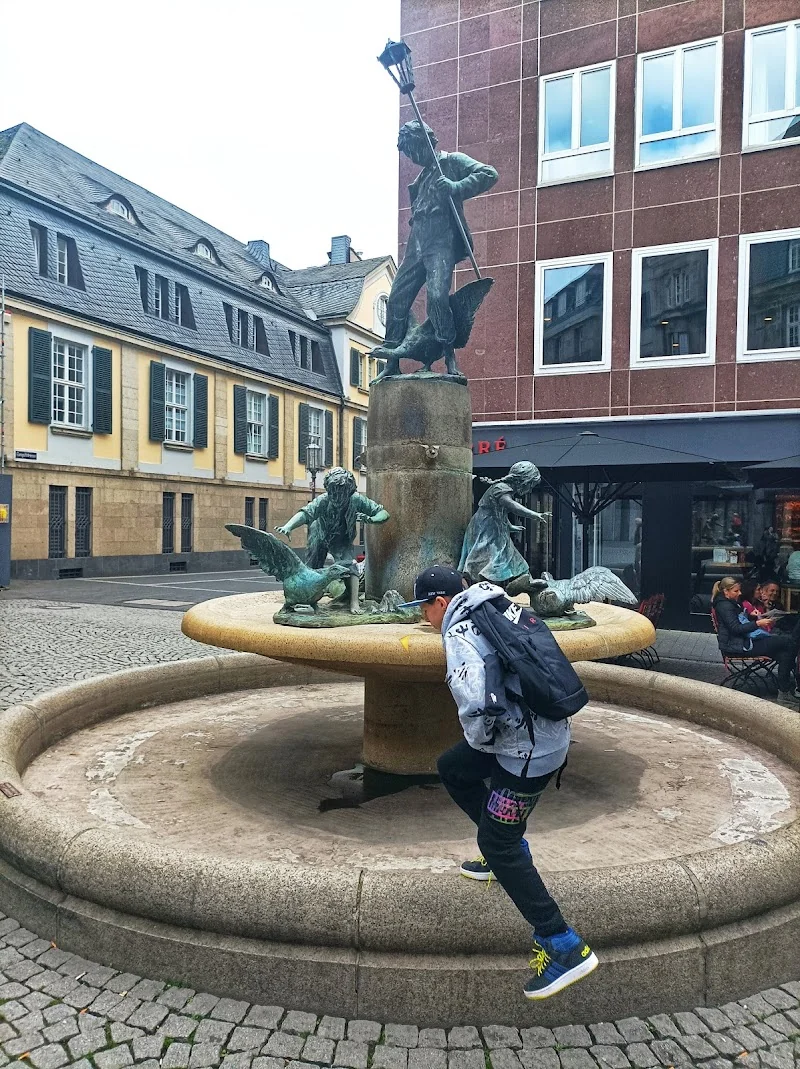
Bonn-Zentrum, Bonn
Bonn-Zentrum, 53 Bonn, Germany
Bonn-Center | Parking & Shopping
Bonn-Center is not just a point on the map, but the dense urban core of Bonn, where shopping, working, culture, and everyday life come together in a compact space. The city describes the Bonn city center as a central hub of the Bonn/Rhein-Sieg/Ahrweiler region with around 135,000 square meters of retail space. City Marketing Bonn also sees it as a location for living, business, culture, work, and housing. This is exactly what makes the search for Bonn-Center so versatile: Those who want to park look for a garage; those who want to shop look for the pedestrian zone; those who want to eat or drink coffee orient themselves to the squares and passages; those who want to live or stay overnight use the central location as a starting point for short distances. For visitors, commuters, and residents, the center is therefore an urban mixed-use area with many meeting points, high foot traffic, and a dense mix of trade, gastronomy, and culture. ([bonn.de](https://www.bonn.de/themen-entdecken/wirtschaft-wissenschaft/citymanagement-und-bezirkszentren-ies/bonn-innenstadt.php?utm_source=openai))
Parking in Bonn-Center: Parking garages, spaces, and occupancy
Parking in Bonn-Center is planned, not random. The city center flyer mentions around 4,000 parking spaces in parking garages and underground garages and refers to a parking guidance system that shows available capacities. Bonn City Parking GmbH consolidates central garages such as Beethoven Parking Garage, Friedensplatz Garage, Market Garage, Münsterplatz Garage, and Stadthaus Garage. This mix is important for everyday city life because the journey from the parking space to the destination often takes only a few minutes. Those who do larger shopping or are traveling with children benefit from this, as do guests who do not want to search long in the street space. For search queries like Bonn-Center parking or Bonn-Center parking garage, it is therefore crucial whether the destination is more towards the market, Münsterplatz, university, Friedensplatz, or the southern city. The structure is designed so that different destinations in the city center are not dependent on a single entrance but can be reached via several nodes. ([bonn-city.de](https://www.bonn-city.de/files/2025/07/Viele-Wege-fuehren-nach-Bonn.pdf?utm_source=openai))
Particularly helpful is that central garages are not only available but also usable in everyday life. The Beethovenfest page for the Bonn city center mentions the Market Garage on Stockenstraße and the University Underground Garage on Regina-Pacis-Weg as 24/7 opened options with elevators. This makes the center suitable for spontaneous visits in the evening, for cultural events, or for a quick stroll between shopping and restaurants. For example, those driving to the market square, Münsterplatz, the university peak, or towards the opera can choose the parking space not only by distance but also by the desired walking distance. The City Marketing perspective also adds that occupancy can be tracked via the parking garage app. This is particularly useful when one is not just looking for any parking space but a suitable starting point for a planned city day with shopping, lunch, errands, and return. ([beethovenfest.de](https://www.beethovenfest.de/en/locations/bonn-city-centre/17?utm_source=openai))
Route to Bonn-Center: Access by car, train, and bus
The route to Bonn-Center is clearly distributed across several axes. The city center flyer describes the city as easily accessible from all directions and names the main routes as connections via B9 and B56 as well as access via A565 and A562. From the west, the A565 leads directly towards the city center via the B56, from the north and east, the A565 is a main connection, and from the south, one can also reach the city directly via A562 and B9. For people searching for Bonn-Center route or Bonn-Center access, this is important because the city center does not have an isolated location but can be quickly reached from several expressways. The flyer also mentions that it can be only about two kilometers from the highway to a parking garage in the center. So, those who consciously drive get an inner-city destination that can be reached via a few nodes and does not have to be searched through long residential areas. ([bonn-city.de](https://www.bonn-city.de/files/2025/07/Viele-Wege-fuehren-nach-Bonn.pdf?utm_source=openai))
Even with buses and trains, the city center is closely linked. The Beethovenfest page for the Bonn city center mentions stops like Markt, Markt/Universität, and Brüdergasse/Bertha-von-Suttner-Platz/Beethovenhaus, and the main train station is located near many central addresses just a few minutes' walk away. For the city feeling, this is a great advantage: Those who come without a car usually walk between the market, Münsterplatz, theater, university area, and shopping passages. The location page also highlights that the area is accessible for wheelchair users and has a barrier-free toilet. This makes Bonn-Center a well-connected destination not only for drivers but also for public transport users, pedestrians, and guests with mobility impairments. Especially in a densely located city center, this combination of road access, rail access, and walkability is a significant location advantage because it clearly simplifies the everyday question of the best route. ([beethovenfest.de](https://www.beethovenfest.de/en/locations/bonn-city-centre/17?utm_source=openai))
Shopping, Restaurants, and Cafés in Bonn-Center
When it comes to shopping, the strength of Bonn-Center becomes particularly clear. The city estimates the retail space of the city center at around 135,000 square meters and describes the city as a central hub of the region. The most important prime locations include Poststraße, Remigiusstraße, Sternstraße, and Wenzelgasse; Friedrichstraße is highlighted as the newest pedestrian zone area with high-quality specialized retail. This means that visitors not only find many stores but also a very compact shopping landscape with short distances, where large brands, traditional houses, and small specialists stand side by side. Those searching for Bonn-Center shopping will therefore not find a single mall but an urban network of shops, passages, and pedestrian axes that stretches across several central streets. This structure makes the city center attractive for quick errands as well as for an extended stroll on the weekend. ([bonn.de](https://www.bonn.de/themen-entdecken/wirtschaft-wissenschaft/citymanagement-und-bezirkszentren-ies/bonn-innenstadt.php?utm_source=openai))
This is visibly evident at many addresses. BonnCity lists large and smaller providers in the city center, such as SINN at Münsterplatz with around 10,000 square meters, Fielmann on Remigiusstraße, Dancker the optician on Sternstraße, T-Punkt on Remigiusstraße, Maas Natur on Bonngasse, VOMFASS on Friedrichstraße, and the BONN SHOP on Heinrich-Sauer-Straße. Additionally, there are gastronomy and enjoyment addresses like Elefant, Midi Wine Bistro & Café, or Tacos Bonn. The Münster Apotheke at Münsterplatz is also part of today's cityscape. For search intentions like Bonn-Center restaurant, Bonn-Center café, Bonn-Center eat, or Bonn-Center pharmacy, this mix is crucial: The city center is not just a shopping place but a versatile everyday space with supply, enjoyment, and service offerings. Those who are out and about here can switch between fashion, optics, delicacies, travel advice, and a coffee in between without having to take long distances or detours. ([bonn.de](https://www.bonn.de/mitglieder/sinn?utm_source=openai))
The city center becomes particularly lively at the squares and in the promenades. The Beethovenfest page describes Bonn city center as predominantly a pedestrian zone with numerous restaurants, cafés, bookstores, and shopping offers. This mix ensures that a visit does not end after the purchase but often continues with a break in the square, a coffee at the window, or a dinner nearby. For the SEO logic behind Bonn-Center café and Bonn-Center restaurant, this is a clear advantage: The city center functions as a daily destination for strolls, lunch breaks, and evening programs at the same time. Additionally, the central location keeps the frequency high and the distances between the individual providers short. This creates search and stay patterns that range from spontaneous meetings to consciously planned city visits, making Bonn-Center particularly flexible in everyday life. ([beethovenfest.de](https://www.beethovenfest.de/en/locations/bonn-city-centre/17?utm_source=openai))
Hotels, Living, and Everyday Life in Bonn-Center
The city center is also relevant as a place to live and stay. City Marketing Bonn explicitly describes the city center as a location for living, business, culture, work, and housing. This makes Bonn-Center interesting not only for day visitors but also for people looking for an apartment, a central flat, or a hotel within walking distance to trade and culture. The good accessibility, dense supply, and short distances make the city center a practical address for longer stays. A vivid example is the TUI ReiseCenter on Wesselstraße, located between the bus station and the university, diagonally across from the Bonn Minster and just a few minutes' walk from the main train station. This shows how centrally the area is organized and why search terms like Bonn-Center hotel or Bonn-Center apartment for rent fit thematically well there. Those looking for an inner-city quarter do not think of a quiet outskirts but of a place where mobility, supply, and urban density come together. ([bonn-city.de](https://www.bonn-city.de/?utm_source=openai))
For visitors planning an overnight stay, the combination of location and urban density is particularly attractive. Those living or sleeping in the center usually reach restaurants, cafés, events, and shops without additional travel. There are also many advantages for everyday life in this location: Service providers, travel agencies, opticians, and other specialized shops are present in the urban space, making the area a functional hub. Bonn-Center is thus less a pure tourist spot but rather a multifunctional city center area where one can work, shop, eat, run errands, and experience culture in between. Especially for people looking for an apartment in the city, this mix of residential location and everyday function is important because it explains the value of a central address beyond pure location factors. ([bonn-city.de](https://www.bonn-city.de/mitglieder/dancker-der-optiker/?utm_source=openai))
Postal Code, Orientation, and Important Addresses in Bonn-Center
When it comes to postal codes, looking at the specific city center addresses helps. Bonn-Center is primarily addressed with 53111 and 53113 Bonn in practice; many of the central shops, restaurants, squares, and parking garages are located in these two areas. This can be seen, for example, at Marktplatz, Münsterplatz, Wesselstraße, Remigiusstraße, Sternstraße, Poststraße, or Stockenstraße. So, if you are searching for Bonn-Center postal code, you should not expect just a single value but understand the city center as a cohesive area with several important streets and entry points. For navigation, deliveries, parking garage selection, and meeting points, it is therefore sensible to always mention the exact street or the well-known square in addition to the keyword Bonn-Center. This is particularly useful when planning only a short stay and not wanting to search for house numbers or access points on-site. ([bonn.de](https://www.bonn.de/themen-entdecken/wirtschaft-wissenschaft/citymanagement-und-bezirkszentren-ies/bonn-innenstadt.php?utm_source=openai))
History, Beethoven, and Special Places in the City Center
Bonn-Center is historically and culturally strongly influenced. The Beethovenfest page mentions the Beethoven House as the birthplace of the composer, which now serves as a museum, and also refers to the Beethoven statue in the immediate vicinity. Also part of the cityscape are the theater with opera and stages as well as the Electoral Palace with its extensive courtyard garden, which is now used by the University of Bonn. Therefore, when walking through the city, one does not just move through a shopping area but through a historically charged city center where science, music, and urban history lie closely together. The special feature is precisely that these places can be reached within a few minutes on foot and can be connected during a walk. For the search for Bonn-Center, this is an important factor because the city center thus becomes a real destination for experiences and not just an address. ([beethovenfest.de](https://www.beethovenfest.de/en/locations/bonn-city-centre/17?utm_source=openai))
Events also make the city center visible. The Beethovenfest regularly uses Münsterplatz as a stage, and the city reports large opening weekends with thousands of people in the city center area. City Marketing Bonn also stages the city with actions like BonnLeuchtet, where the city center appears in special light in the evenings. Such events show why Bonn-Center is equally relevant for search terms like shopping, restaurant, hotel, parking, and route: The city is not just a shopping place but a place for culture, encounters, and urban life. Those who visit Bonn-Center often experience several levels at once - from the historical backdrop to the market visit to a concert or festival evening. This gives the city center a special depth that makes it significantly more varied compared to purely functional shopping zones. ([bonn.de](https://bonn.de/pressemitteilungen/september-2024/rund-10.000-menschen-feiern-eroeffnungswochenende-des-beethovenfests.php?utm_source=openai))
In summary, Bonn-Center is a classic city center area with many search occasions that complement each other. Those who want to park orient themselves to the parking garages and the parking guidance system. Those arriving use the highway axes or public transport. Those shopping or dining focus on the pedestrian zone, the passages, and the prime locations. Those who stay longer benefit from the central living, cultural, and service function of the city center. Thus, Bonn-Center is a place where visitors not only reach a destination but discover a whole range of possibilities in a compact space. This mix of mobility, trade, culture, and everyday life makes the city center one of the most versatile search and stay locations in the city. ([bonn-city.de](https://www.bonn-city.de/files/2025/07/Viele-Wege-fuehren-nach-Bonn.pdf?utm_source=openai))
Sources:
Show moreShow less
Bonn-Center | Parking & Shopping
Bonn-Center is not just a point on the map, but the dense urban core of Bonn, where shopping, working, culture, and everyday life come together in a compact space. The city describes the Bonn city center as a central hub of the Bonn/Rhein-Sieg/Ahrweiler region with around 135,000 square meters of retail space. City Marketing Bonn also sees it as a location for living, business, culture, work, and housing. This is exactly what makes the search for Bonn-Center so versatile: Those who want to park look for a garage; those who want to shop look for the pedestrian zone; those who want to eat or drink coffee orient themselves to the squares and passages; those who want to live or stay overnight use the central location as a starting point for short distances. For visitors, commuters, and residents, the center is therefore an urban mixed-use area with many meeting points, high foot traffic, and a dense mix of trade, gastronomy, and culture. ([bonn.de](https://www.bonn.de/themen-entdecken/wirtschaft-wissenschaft/citymanagement-und-bezirkszentren-ies/bonn-innenstadt.php?utm_source=openai))
Parking in Bonn-Center: Parking garages, spaces, and occupancy
Parking in Bonn-Center is planned, not random. The city center flyer mentions around 4,000 parking spaces in parking garages and underground garages and refers to a parking guidance system that shows available capacities. Bonn City Parking GmbH consolidates central garages such as Beethoven Parking Garage, Friedensplatz Garage, Market Garage, Münsterplatz Garage, and Stadthaus Garage. This mix is important for everyday city life because the journey from the parking space to the destination often takes only a few minutes. Those who do larger shopping or are traveling with children benefit from this, as do guests who do not want to search long in the street space. For search queries like Bonn-Center parking or Bonn-Center parking garage, it is therefore crucial whether the destination is more towards the market, Münsterplatz, university, Friedensplatz, or the southern city. The structure is designed so that different destinations in the city center are not dependent on a single entrance but can be reached via several nodes. ([bonn-city.de](https://www.bonn-city.de/files/2025/07/Viele-Wege-fuehren-nach-Bonn.pdf?utm_source=openai))
Particularly helpful is that central garages are not only available but also usable in everyday life. The Beethovenfest page for the Bonn city center mentions the Market Garage on Stockenstraße and the University Underground Garage on Regina-Pacis-Weg as 24/7 opened options with elevators. This makes the center suitable for spontaneous visits in the evening, for cultural events, or for a quick stroll between shopping and restaurants. For example, those driving to the market square, Münsterplatz, the university peak, or towards the opera can choose the parking space not only by distance but also by the desired walking distance. The City Marketing perspective also adds that occupancy can be tracked via the parking garage app. This is particularly useful when one is not just looking for any parking space but a suitable starting point for a planned city day with shopping, lunch, errands, and return. ([beethovenfest.de](https://www.beethovenfest.de/en/locations/bonn-city-centre/17?utm_source=openai))
Route to Bonn-Center: Access by car, train, and bus
The route to Bonn-Center is clearly distributed across several axes. The city center flyer describes the city as easily accessible from all directions and names the main routes as connections via B9 and B56 as well as access via A565 and A562. From the west, the A565 leads directly towards the city center via the B56, from the north and east, the A565 is a main connection, and from the south, one can also reach the city directly via A562 and B9. For people searching for Bonn-Center route or Bonn-Center access, this is important because the city center does not have an isolated location but can be quickly reached from several expressways. The flyer also mentions that it can be only about two kilometers from the highway to a parking garage in the center. So, those who consciously drive get an inner-city destination that can be reached via a few nodes and does not have to be searched through long residential areas. ([bonn-city.de](https://www.bonn-city.de/files/2025/07/Viele-Wege-fuehren-nach-Bonn.pdf?utm_source=openai))
Even with buses and trains, the city center is closely linked. The Beethovenfest page for the Bonn city center mentions stops like Markt, Markt/Universität, and Brüdergasse/Bertha-von-Suttner-Platz/Beethovenhaus, and the main train station is located near many central addresses just a few minutes' walk away. For the city feeling, this is a great advantage: Those who come without a car usually walk between the market, Münsterplatz, theater, university area, and shopping passages. The location page also highlights that the area is accessible for wheelchair users and has a barrier-free toilet. This makes Bonn-Center a well-connected destination not only for drivers but also for public transport users, pedestrians, and guests with mobility impairments. Especially in a densely located city center, this combination of road access, rail access, and walkability is a significant location advantage because it clearly simplifies the everyday question of the best route. ([beethovenfest.de](https://www.beethovenfest.de/en/locations/bonn-city-centre/17?utm_source=openai))
Shopping, Restaurants, and Cafés in Bonn-Center
When it comes to shopping, the strength of Bonn-Center becomes particularly clear. The city estimates the retail space of the city center at around 135,000 square meters and describes the city as a central hub of the region. The most important prime locations include Poststraße, Remigiusstraße, Sternstraße, and Wenzelgasse; Friedrichstraße is highlighted as the newest pedestrian zone area with high-quality specialized retail. This means that visitors not only find many stores but also a very compact shopping landscape with short distances, where large brands, traditional houses, and small specialists stand side by side. Those searching for Bonn-Center shopping will therefore not find a single mall but an urban network of shops, passages, and pedestrian axes that stretches across several central streets. This structure makes the city center attractive for quick errands as well as for an extended stroll on the weekend. ([bonn.de](https://www.bonn.de/themen-entdecken/wirtschaft-wissenschaft/citymanagement-und-bezirkszentren-ies/bonn-innenstadt.php?utm_source=openai))
This is visibly evident at many addresses. BonnCity lists large and smaller providers in the city center, such as SINN at Münsterplatz with around 10,000 square meters, Fielmann on Remigiusstraße, Dancker the optician on Sternstraße, T-Punkt on Remigiusstraße, Maas Natur on Bonngasse, VOMFASS on Friedrichstraße, and the BONN SHOP on Heinrich-Sauer-Straße. Additionally, there are gastronomy and enjoyment addresses like Elefant, Midi Wine Bistro & Café, or Tacos Bonn. The Münster Apotheke at Münsterplatz is also part of today's cityscape. For search intentions like Bonn-Center restaurant, Bonn-Center café, Bonn-Center eat, or Bonn-Center pharmacy, this mix is crucial: The city center is not just a shopping place but a versatile everyday space with supply, enjoyment, and service offerings. Those who are out and about here can switch between fashion, optics, delicacies, travel advice, and a coffee in between without having to take long distances or detours. ([bonn.de](https://www.bonn.de/mitglieder/sinn?utm_source=openai))
The city center becomes particularly lively at the squares and in the promenades. The Beethovenfest page describes Bonn city center as predominantly a pedestrian zone with numerous restaurants, cafés, bookstores, and shopping offers. This mix ensures that a visit does not end after the purchase but often continues with a break in the square, a coffee at the window, or a dinner nearby. For the SEO logic behind Bonn-Center café and Bonn-Center restaurant, this is a clear advantage: The city center functions as a daily destination for strolls, lunch breaks, and evening programs at the same time. Additionally, the central location keeps the frequency high and the distances between the individual providers short. This creates search and stay patterns that range from spontaneous meetings to consciously planned city visits, making Bonn-Center particularly flexible in everyday life. ([beethovenfest.de](https://www.beethovenfest.de/en/locations/bonn-city-centre/17?utm_source=openai))
Hotels, Living, and Everyday Life in Bonn-Center
The city center is also relevant as a place to live and stay. City Marketing Bonn explicitly describes the city center as a location for living, business, culture, work, and housing. This makes Bonn-Center interesting not only for day visitors but also for people looking for an apartment, a central flat, or a hotel within walking distance to trade and culture. The good accessibility, dense supply, and short distances make the city center a practical address for longer stays. A vivid example is the TUI ReiseCenter on Wesselstraße, located between the bus station and the university, diagonally across from the Bonn Minster and just a few minutes' walk from the main train station. This shows how centrally the area is organized and why search terms like Bonn-Center hotel or Bonn-Center apartment for rent fit thematically well there. Those looking for an inner-city quarter do not think of a quiet outskirts but of a place where mobility, supply, and urban density come together. ([bonn-city.de](https://www.bonn-city.de/?utm_source=openai))
For visitors planning an overnight stay, the combination of location and urban density is particularly attractive. Those living or sleeping in the center usually reach restaurants, cafés, events, and shops without additional travel. There are also many advantages for everyday life in this location: Service providers, travel agencies, opticians, and other specialized shops are present in the urban space, making the area a functional hub. Bonn-Center is thus less a pure tourist spot but rather a multifunctional city center area where one can work, shop, eat, run errands, and experience culture in between. Especially for people looking for an apartment in the city, this mix of residential location and everyday function is important because it explains the value of a central address beyond pure location factors. ([bonn-city.de](https://www.bonn-city.de/mitglieder/dancker-der-optiker/?utm_source=openai))
Postal Code, Orientation, and Important Addresses in Bonn-Center
When it comes to postal codes, looking at the specific city center addresses helps. Bonn-Center is primarily addressed with 53111 and 53113 Bonn in practice; many of the central shops, restaurants, squares, and parking garages are located in these two areas. This can be seen, for example, at Marktplatz, Münsterplatz, Wesselstraße, Remigiusstraße, Sternstraße, Poststraße, or Stockenstraße. So, if you are searching for Bonn-Center postal code, you should not expect just a single value but understand the city center as a cohesive area with several important streets and entry points. For navigation, deliveries, parking garage selection, and meeting points, it is therefore sensible to always mention the exact street or the well-known square in addition to the keyword Bonn-Center. This is particularly useful when planning only a short stay and not wanting to search for house numbers or access points on-site. ([bonn.de](https://www.bonn.de/themen-entdecken/wirtschaft-wissenschaft/citymanagement-und-bezirkszentren-ies/bonn-innenstadt.php?utm_source=openai))
History, Beethoven, and Special Places in the City Center
Bonn-Center is historically and culturally strongly influenced. The Beethovenfest page mentions the Beethoven House as the birthplace of the composer, which now serves as a museum, and also refers to the Beethoven statue in the immediate vicinity. Also part of the cityscape are the theater with opera and stages as well as the Electoral Palace with its extensive courtyard garden, which is now used by the University of Bonn. Therefore, when walking through the city, one does not just move through a shopping area but through a historically charged city center where science, music, and urban history lie closely together. The special feature is precisely that these places can be reached within a few minutes on foot and can be connected during a walk. For the search for Bonn-Center, this is an important factor because the city center thus becomes a real destination for experiences and not just an address. ([beethovenfest.de](https://www.beethovenfest.de/en/locations/bonn-city-centre/17?utm_source=openai))
Events also make the city center visible. The Beethovenfest regularly uses Münsterplatz as a stage, and the city reports large opening weekends with thousands of people in the city center area. City Marketing Bonn also stages the city with actions like BonnLeuchtet, where the city center appears in special light in the evenings. Such events show why Bonn-Center is equally relevant for search terms like shopping, restaurant, hotel, parking, and route: The city is not just a shopping place but a place for culture, encounters, and urban life. Those who visit Bonn-Center often experience several levels at once - from the historical backdrop to the market visit to a concert or festival evening. This gives the city center a special depth that makes it significantly more varied compared to purely functional shopping zones. ([bonn.de](https://bonn.de/pressemitteilungen/september-2024/rund-10.000-menschen-feiern-eroeffnungswochenende-des-beethovenfests.php?utm_source=openai))
In summary, Bonn-Center is a classic city center area with many search occasions that complement each other. Those who want to park orient themselves to the parking garages and the parking guidance system. Those arriving use the highway axes or public transport. Those shopping or dining focus on the pedestrian zone, the passages, and the prime locations. Those who stay longer benefit from the central living, cultural, and service function of the city center. Thus, Bonn-Center is a place where visitors not only reach a destination but discover a whole range of possibilities in a compact space. This mix of mobility, trade, culture, and everyday life makes the city center one of the most versatile search and stay locations in the city. ([bonn-city.de](https://www.bonn-city.de/files/2025/07/Viele-Wege-fuehren-nach-Bonn.pdf?utm_source=openai))
Sources:
Bonn-Center | Parking & Shopping
Bonn-Center is not just a point on the map, but the dense urban core of Bonn, where shopping, working, culture, and everyday life come together in a compact space. The city describes the Bonn city center as a central hub of the Bonn/Rhein-Sieg/Ahrweiler region with around 135,000 square meters of retail space. City Marketing Bonn also sees it as a location for living, business, culture, work, and housing. This is exactly what makes the search for Bonn-Center so versatile: Those who want to park look for a garage; those who want to shop look for the pedestrian zone; those who want to eat or drink coffee orient themselves to the squares and passages; those who want to live or stay overnight use the central location as a starting point for short distances. For visitors, commuters, and residents, the center is therefore an urban mixed-use area with many meeting points, high foot traffic, and a dense mix of trade, gastronomy, and culture. ([bonn.de](https://www.bonn.de/themen-entdecken/wirtschaft-wissenschaft/citymanagement-und-bezirkszentren-ies/bonn-innenstadt.php?utm_source=openai))
Parking in Bonn-Center: Parking garages, spaces, and occupancy
Parking in Bonn-Center is planned, not random. The city center flyer mentions around 4,000 parking spaces in parking garages and underground garages and refers to a parking guidance system that shows available capacities. Bonn City Parking GmbH consolidates central garages such as Beethoven Parking Garage, Friedensplatz Garage, Market Garage, Münsterplatz Garage, and Stadthaus Garage. This mix is important for everyday city life because the journey from the parking space to the destination often takes only a few minutes. Those who do larger shopping or are traveling with children benefit from this, as do guests who do not want to search long in the street space. For search queries like Bonn-Center parking or Bonn-Center parking garage, it is therefore crucial whether the destination is more towards the market, Münsterplatz, university, Friedensplatz, or the southern city. The structure is designed so that different destinations in the city center are not dependent on a single entrance but can be reached via several nodes. ([bonn-city.de](https://www.bonn-city.de/files/2025/07/Viele-Wege-fuehren-nach-Bonn.pdf?utm_source=openai))
Particularly helpful is that central garages are not only available but also usable in everyday life. The Beethovenfest page for the Bonn city center mentions the Market Garage on Stockenstraße and the University Underground Garage on Regina-Pacis-Weg as 24/7 opened options with elevators. This makes the center suitable for spontaneous visits in the evening, for cultural events, or for a quick stroll between shopping and restaurants. For example, those driving to the market square, Münsterplatz, the university peak, or towards the opera can choose the parking space not only by distance but also by the desired walking distance. The City Marketing perspective also adds that occupancy can be tracked via the parking garage app. This is particularly useful when one is not just looking for any parking space but a suitable starting point for a planned city day with shopping, lunch, errands, and return. ([beethovenfest.de](https://www.beethovenfest.de/en/locations/bonn-city-centre/17?utm_source=openai))
Route to Bonn-Center: Access by car, train, and bus
The route to Bonn-Center is clearly distributed across several axes. The city center flyer describes the city as easily accessible from all directions and names the main routes as connections via B9 and B56 as well as access via A565 and A562. From the west, the A565 leads directly towards the city center via the B56, from the north and east, the A565 is a main connection, and from the south, one can also reach the city directly via A562 and B9. For people searching for Bonn-Center route or Bonn-Center access, this is important because the city center does not have an isolated location but can be quickly reached from several expressways. The flyer also mentions that it can be only about two kilometers from the highway to a parking garage in the center. So, those who consciously drive get an inner-city destination that can be reached via a few nodes and does not have to be searched through long residential areas. ([bonn-city.de](https://www.bonn-city.de/files/2025/07/Viele-Wege-fuehren-nach-Bonn.pdf?utm_source=openai))
Even with buses and trains, the city center is closely linked. The Beethovenfest page for the Bonn city center mentions stops like Markt, Markt/Universität, and Brüdergasse/Bertha-von-Suttner-Platz/Beethovenhaus, and the main train station is located near many central addresses just a few minutes' walk away. For the city feeling, this is a great advantage: Those who come without a car usually walk between the market, Münsterplatz, theater, university area, and shopping passages. The location page also highlights that the area is accessible for wheelchair users and has a barrier-free toilet. This makes Bonn-Center a well-connected destination not only for drivers but also for public transport users, pedestrians, and guests with mobility impairments. Especially in a densely located city center, this combination of road access, rail access, and walkability is a significant location advantage because it clearly simplifies the everyday question of the best route. ([beethovenfest.de](https://www.beethovenfest.de/en/locations/bonn-city-centre/17?utm_source=openai))
Shopping, Restaurants, and Cafés in Bonn-Center
When it comes to shopping, the strength of Bonn-Center becomes particularly clear. The city estimates the retail space of the city center at around 135,000 square meters and describes the city as a central hub of the region. The most important prime locations include Poststraße, Remigiusstraße, Sternstraße, and Wenzelgasse; Friedrichstraße is highlighted as the newest pedestrian zone area with high-quality specialized retail. This means that visitors not only find many stores but also a very compact shopping landscape with short distances, where large brands, traditional houses, and small specialists stand side by side. Those searching for Bonn-Center shopping will therefore not find a single mall but an urban network of shops, passages, and pedestrian axes that stretches across several central streets. This structure makes the city center attractive for quick errands as well as for an extended stroll on the weekend. ([bonn.de](https://www.bonn.de/themen-entdecken/wirtschaft-wissenschaft/citymanagement-und-bezirkszentren-ies/bonn-innenstadt.php?utm_source=openai))
This is visibly evident at many addresses. BonnCity lists large and smaller providers in the city center, such as SINN at Münsterplatz with around 10,000 square meters, Fielmann on Remigiusstraße, Dancker the optician on Sternstraße, T-Punkt on Remigiusstraße, Maas Natur on Bonngasse, VOMFASS on Friedrichstraße, and the BONN SHOP on Heinrich-Sauer-Straße. Additionally, there are gastronomy and enjoyment addresses like Elefant, Midi Wine Bistro & Café, or Tacos Bonn. The Münster Apotheke at Münsterplatz is also part of today's cityscape. For search intentions like Bonn-Center restaurant, Bonn-Center café, Bonn-Center eat, or Bonn-Center pharmacy, this mix is crucial: The city center is not just a shopping place but a versatile everyday space with supply, enjoyment, and service offerings. Those who are out and about here can switch between fashion, optics, delicacies, travel advice, and a coffee in between without having to take long distances or detours. ([bonn.de](https://www.bonn.de/mitglieder/sinn?utm_source=openai))
The city center becomes particularly lively at the squares and in the promenades. The Beethovenfest page describes Bonn city center as predominantly a pedestrian zone with numerous restaurants, cafés, bookstores, and shopping offers. This mix ensures that a visit does not end after the purchase but often continues with a break in the square, a coffee at the window, or a dinner nearby. For the SEO logic behind Bonn-Center café and Bonn-Center restaurant, this is a clear advantage: The city center functions as a daily destination for strolls, lunch breaks, and evening programs at the same time. Additionally, the central location keeps the frequency high and the distances between the individual providers short. This creates search and stay patterns that range from spontaneous meetings to consciously planned city visits, making Bonn-Center particularly flexible in everyday life. ([beethovenfest.de](https://www.beethovenfest.de/en/locations/bonn-city-centre/17?utm_source=openai))
Hotels, Living, and Everyday Life in Bonn-Center
The city center is also relevant as a place to live and stay. City Marketing Bonn explicitly describes the city center as a location for living, business, culture, work, and housing. This makes Bonn-Center interesting not only for day visitors but also for people looking for an apartment, a central flat, or a hotel within walking distance to trade and culture. The good accessibility, dense supply, and short distances make the city center a practical address for longer stays. A vivid example is the TUI ReiseCenter on Wesselstraße, located between the bus station and the university, diagonally across from the Bonn Minster and just a few minutes' walk from the main train station. This shows how centrally the area is organized and why search terms like Bonn-Center hotel or Bonn-Center apartment for rent fit thematically well there. Those looking for an inner-city quarter do not think of a quiet outskirts but of a place where mobility, supply, and urban density come together. ([bonn-city.de](https://www.bonn-city.de/?utm_source=openai))
For visitors planning an overnight stay, the combination of location and urban density is particularly attractive. Those living or sleeping in the center usually reach restaurants, cafés, events, and shops without additional travel. There are also many advantages for everyday life in this location: Service providers, travel agencies, opticians, and other specialized shops are present in the urban space, making the area a functional hub. Bonn-Center is thus less a pure tourist spot but rather a multifunctional city center area where one can work, shop, eat, run errands, and experience culture in between. Especially for people looking for an apartment in the city, this mix of residential location and everyday function is important because it explains the value of a central address beyond pure location factors. ([bonn-city.de](https://www.bonn-city.de/mitglieder/dancker-der-optiker/?utm_source=openai))
Postal Code, Orientation, and Important Addresses in Bonn-Center
When it comes to postal codes, looking at the specific city center addresses helps. Bonn-Center is primarily addressed with 53111 and 53113 Bonn in practice; many of the central shops, restaurants, squares, and parking garages are located in these two areas. This can be seen, for example, at Marktplatz, Münsterplatz, Wesselstraße, Remigiusstraße, Sternstraße, Poststraße, or Stockenstraße. So, if you are searching for Bonn-Center postal code, you should not expect just a single value but understand the city center as a cohesive area with several important streets and entry points. For navigation, deliveries, parking garage selection, and meeting points, it is therefore sensible to always mention the exact street or the well-known square in addition to the keyword Bonn-Center. This is particularly useful when planning only a short stay and not wanting to search for house numbers or access points on-site. ([bonn.de](https://www.bonn.de/themen-entdecken/wirtschaft-wissenschaft/citymanagement-und-bezirkszentren-ies/bonn-innenstadt.php?utm_source=openai))
History, Beethoven, and Special Places in the City Center
Bonn-Center is historically and culturally strongly influenced. The Beethovenfest page mentions the Beethoven House as the birthplace of the composer, which now serves as a museum, and also refers to the Beethoven statue in the immediate vicinity. Also part of the cityscape are the theater with opera and stages as well as the Electoral Palace with its extensive courtyard garden, which is now used by the University of Bonn. Therefore, when walking through the city, one does not just move through a shopping area but through a historically charged city center where science, music, and urban history lie closely together. The special feature is precisely that these places can be reached within a few minutes on foot and can be connected during a walk. For the search for Bonn-Center, this is an important factor because the city center thus becomes a real destination for experiences and not just an address. ([beethovenfest.de](https://www.beethovenfest.de/en/locations/bonn-city-centre/17?utm_source=openai))
Events also make the city center visible. The Beethovenfest regularly uses Münsterplatz as a stage, and the city reports large opening weekends with thousands of people in the city center area. City Marketing Bonn also stages the city with actions like BonnLeuchtet, where the city center appears in special light in the evenings. Such events show why Bonn-Center is equally relevant for search terms like shopping, restaurant, hotel, parking, and route: The city is not just a shopping place but a place for culture, encounters, and urban life. Those who visit Bonn-Center often experience several levels at once - from the historical backdrop to the market visit to a concert or festival evening. This gives the city center a special depth that makes it significantly more varied compared to purely functional shopping zones. ([bonn.de](https://bonn.de/pressemitteilungen/september-2024/rund-10.000-menschen-feiern-eroeffnungswochenende-des-beethovenfests.php?utm_source=openai))
In summary, Bonn-Center is a classic city center area with many search occasions that complement each other. Those who want to park orient themselves to the parking garages and the parking guidance system. Those arriving use the highway axes or public transport. Those shopping or dining focus on the pedestrian zone, the passages, and the prime locations. Those who stay longer benefit from the central living, cultural, and service function of the city center. Thus, Bonn-Center is a place where visitors not only reach a destination but discover a whole range of possibilities in a compact space. This mix of mobility, trade, culture, and everyday life makes the city center one of the most versatile search and stay locations in the city. ([bonn-city.de](https://www.bonn-city.de/files/2025/07/Viele-Wege-fuehren-nach-Bonn.pdf?utm_source=openai))
Sources:
Upcoming Events
No events found
Frequently Asked Questions
Reviews
No reviews found