
Bonn
53115 Bonn, Deutschland
Bonn Clemens-August-Platz | Access & Parking
The Clemens-August-Platz in Bonn-Poppelsdorf is not an isolated place, but a clearly defined urban building block between residential areas, university proximity, public transport, and the well-known Clemens-August-Straße. Those who search here usually mean not just a point on the map, but a well-accessible place in the western part of Bonn, where everyday life, short distances, and the special Poppelsdorf mix of science, supply, and urban life meet. The square is located in the immediate vicinity of the Poppelsdorf campus of the University of Bonn and near the Botanical Gardens. This makes it equally interesting for residents, students, visitors, and people with practical errands. The stop of the same name is integrated into the VRS network and facilitates access without a car. At the same time, the surroundings are shaped by a long history that dates back to Elector Clemens August and is reflected in the name of the square and the neighboring street. ([vrs.de](https://www.vrs.de/his/haltestelle/de%3A05314%3A62457))
Location and Orientation at Clemens-August-Platz
The Clemens-August-Platz is located in Bonn-Poppelsdorf at the end of Clemens-August-Straße. This location is particularly helpful for orientation because the square serves as a visible conclusion to one of the most important routes in the district. Those coming from the city center or main train station enter an area that is clearly characterized by the university and scientific nature of Bonn. According to the University of Bonn, the Poppelsdorf campus is a centrally located area of over 15 hectares, where numerous new buildings for research and teaching have been constructed. In this environment, the square gains practical significance as an urban interface between traffic, supply, and footpaths. The Botanical Gardens and Poppelsdorf Castle are also important landmarks in the wider neighborhood. Therefore, the square can be well understood as an address in everyday life: not as a pure tourist hotspot, but as a usable reference point in the densely utilized Poppelsdorf. ([uni-bonn.de](https://www.uni-bonn.de/de/universitaet/ueber-die-uni/standorte))
For spatial orientation, it is also important that the entire area is closely connected to Poppelsdorfer Allee and the scientific infrastructure of the university. The Botanical Gardens indicate that they can be reached from Bonn main station via Poppelsdorfer Allee in about 15 minutes on foot. This shows how close Clemens-August-Platz is to one of Bonn's main corridors between the city center and Poppelsdorf. At the same time, the surroundings are not only academic but also practically everyday: In the immediate street environment, there are shops, service providers, and gastronomic offerings alongside stops, footpaths, and campus structures. Therefore, those searching for Clemens-August-Platz Bonn are often looking for a place where they can quickly find their way, transfer, or combine errands with a walk. This mix of accessibility and neighborhood proximity makes the square so relevant. ([botgart.uni-bonn.de](https://www.botgart.uni-bonn.de/en/your-visit/how_to_find_us))
Public Transport, Stop, and Direct Access
The most important practical information for visitors is the Clemens-August-Platz stop. On the VRS website, it is explicitly listed as a stop in Bonn-Poppelsdorf, and the served lines are visible there. According to VRS, the lines 601, 602, 603, 632, and N5 operate here. This is particularly valuable for access because the square is thus directly integrated into the regional public transport network. Those with appointments in the district, heading to the Poppelsdorf campus, or simply wanting to reach the area around Clemens-August-Straße can rely on public transport. The stop forms a clear anchor point and is therefore particularly relevant for search queries like bus clemens august platz or clemens august platz access. In practice, this means: The square is not only accessible by car or on foot but also very well connected via public transport. ([vrs.de](https://www.vrs.de/his/haltestelle/de%3A05314%3A62457))
The footpaths in the vicinity are also pleasantly short. The Botanical Gardens of the University of Bonn indicate the route from Bonn main station via Poppelsdorfer Allee, which can be covered in about 15 minutes on foot. This makes it clear that the entire space between the station, city center, and Poppelsdorf is compactly built. The University of Bonn also refers to good connections within the city area for the Poppelsdorf campus, which further enhances the district. For visitors, this means: Those arriving at Clemens-August-Platz typically do not have a long final stretch ahead of them. The stop is a very direct entry point into the district. Especially for those looking for the best ways without a car, the square is therefore a sensible reference point. This is especially true when moving between the campus, the Botanical Garden, and Clemens-August-Straße. ([botgart.uni-bonn.de](https://www.botgart.uni-bonn.de/en/your-visit/how_to_find_us))
Parking, Bicycles, and Campus Mobility
When it comes to parking, realism is required around Clemens-August-Platz. The Botanical Gardens explicitly point out that no private parking spaces are offered for guests and that there are only a limited number of public parking spaces in the neighborhood. At the same time, it is recommended to arrive by public transport. This is a clear signal for all those searching for parking clemens august platz: The best solution here is usually not to drive directly to the door, but to plan good public transport or footpaths. The University of Bonn also describes its parking areas on campus as managed and subject to fees. So there are options for visitors and relatives, but they are not to be understood as casual short-term parking, but as an organized part of campus traffic. Therefore, a mix of bus, footpath, and bicycle is often the most relaxed option for everyday life at Clemens-August-Platz. ([botgart.uni-bonn.de](https://www.botgart.uni-bonn.de/en/your-visit/how_to_find_us))
Especially for the university-adjacent part of Poppelsdorf, mobility is generally more focused on short distances than on large parking areas. The University of Bonn emphasizes that numerous buildings for research and teaching have been established on the Poppelsdorf campus and that there is a strong concentration of uses taking place there. Additionally, the mobility page points out that behind the auditorium center at the Poppelsdorf campus, there is a bicycle garage of the University of Bonn. For cyclists, this is a practical detail, as it shows that the environment is not only geared towards cars but also towards environmentally friendly everyday traffic. Therefore, those heading to appointments, the university, or the gardens from Clemens-August-Platz benefit from infrastructure that prefers short distances. This fits the character of the district: compact, close to the city, and well usable in everyday life. ([uni-bonn.de](https://www.uni-bonn.de/de/universitaet/ueber-die-uni/standorte))
Clemens-August-Straße, Caritas, and Pharmacy Nearby
Clemens-August-Straße is almost as important for the perception of the square as the square itself. Bonn.wiki describes it as a street in the district of Poppelsdorf, which runs between Am Botanischen Garten or Meckenheimer Allee and Clemens-August-Platz. At the same time, it is referred to as Poppelsdorfer Meile, where many cafés, pubs, and restaurants have settled. This explains why search queries like clemens august platz bonn restaurant or bonn clemens august straße are so frequent: The environment is lively, dense, and close to everyday life. Those moving around the square not only find traffic and campus but also gastronomic offerings for a break, a meeting, or a quick coffee in between. This mix of supply and urban life makes the area around Clemens-August-Platz particularly interesting for people who want to not just pass through the district but truly utilize it. ([bonn.wiki](https://bonn.wiki/wiki/Clemens-August-Stra%C3%9Fe))
Social and medical services are also recorded in the vicinity. The telephone directory lists the LTZ workshop, Caritas with the address Clemens-August-Platz 11c in 53115 Bonn. Thus, the square is not only a reference point for routes and public transport but also a real address anchor for facilities in the neighborhood. Additionally, a regional entry mentions the Sebastian Pharmacy as a nearby pharmacy about 220 meters away. This is particularly helpful for search queries like pharmacy clemens august platz bonn, as it highlights a concrete supply aspect. Together, this creates the image of a square that not only looks good on a map but also truly supports everyday life on site: with care, medical supply, gastronomy, and a clear urban planning integration into the Poppelsdorf environment. ([adresse.dastelefonbuch.de](https://adresse.dastelefonbuch.de/Bonn/1-Sozialstationen-LTZ-Werkstatt-Caritas-Bonn-Clemens-August-Platz.html))
History of the Name and Historical Traffic Role
The name Clemens-August-Platz is historically well comprehensible. The Botanical Gardens of the University of Bonn explain in their street name history that Elector Clemens August was Archbishop of Cologne and Elector of the Holy Roman Empire from 1723 to 1761 and resided in Bonn. He had the pleasure palace Clemensruh in Poppelsdorf and the associated garden filled with courtly splendor and life; as a connection from his residence to the palace, he had Poppelsdorfer Allee planted. This connection explains the strong symbolic and spatial proximity between the square, street, palace, and avenue. The name is therefore not randomly chosen but refers to the baroque Bonn history and a time when Poppelsdorf was closely connected to the electoral residence. This is interesting for visitors because it makes the square not only practically but also historically readable. ([botgart.uni-bonn.de](https://www.botgart.uni-bonn.de/de/ueber-uns/gartengeschichte/wegenamen))
The square also played a role in traffic history. The Westbahn history on Wikipedia mentions that a tram line to Poppelsdorf already led to Clemens-August-Platz in 1907. Later sources on Bonn's trolleybus history show that trolleybus lines also had an end or turning point here. This makes the square a place with a long traffic tradition, where the change in mobility in Bonn can be well read: from the tram to the trolleybus to the current bus network. Therefore, those visiting the square today stand at a point that has been important in Bonn's traffic space for over a century. This historical continuity is a real plus for an address like Clemens-August-Platz Bonn, as it shows that today's use as a stop and neighborhood place is based on a very old infrastructure history. ([de.wikipedia.org](https://de.wikipedia.org/wiki/Westbahn_%28Bonn%29?utm_source=openai))
Campus Poppelsdorf, Botanical Garden, and Family Environment
Clemens-August-Platz greatly benefits from its proximity to the Poppelsdorf campus. The University of Bonn describes the campus as an area of over 15 hectares, which was previously used by the Agricultural Faculty as experimental fields and today serves as a centrally located campus with numerous new buildings for research and teaching. This is crucial for the area around the square because it creates a strong mix of students, staff, research, and urban everyday life. Therefore, those searching for Bonn Clemens-August-Platz are not moving in a peripheral area but in a zone with high usage density and a clear function for the city. Especially in conjunction with Clemens-August-Straße, the stops, and the scientific institutions, a district emerges that is lively and well-connected during the day. The square is particularly useful for short distances, meeting points, and connections between different parts of Bonn. ([uni-bonn.de](https://www.uni-bonn.de/de/universitaet/ueber-die-uni/standorte))
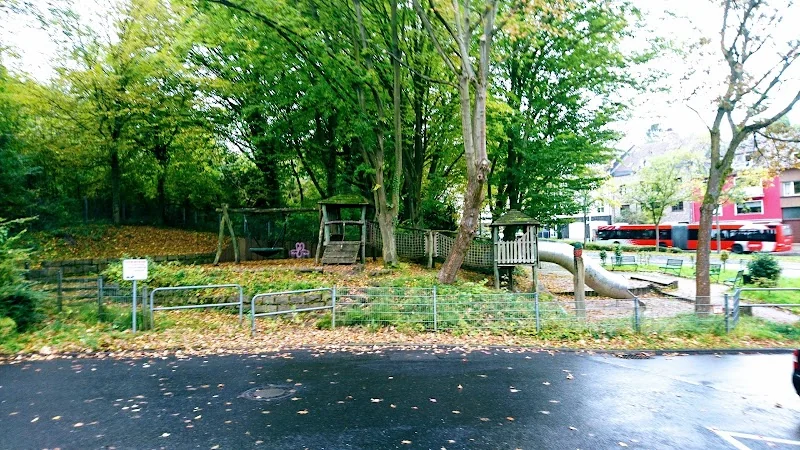
There is also a small, interesting addition for visitors with children in the vicinity. The playground meeting describes a small playground at Clemens-August-Platz, which is located a few meters away from the heavily trafficked Clemens-August-Straße, partially on a slope, fenced, and equipped with shade and benches. This makes the area usable not only for quick transit but also for short stays with families. Together with the nearby Botanical Garden, the short distances in the district, and the good public transport connections, an urban environment emerges that can offer more than just traffic. Those looking for a place with practical infrastructure, university proximity, and everyday offerings will find a very compact Bonn location at Clemens-August-Platz. This mix of functional urban location, history, and local supply is the reason why the square remains relevant for many different search intentions. ([spielplatztreff.de](https://www.spielplatztreff.de/spielplatz/clemens-august-platz-in-bonn_203))
Sources:
Mehr anzeigenWeniger anzeigen
Bonn Clemens-August-Platz | Access & Parking
The Clemens-August-Platz in Bonn-Poppelsdorf is not an isolated place, but a clearly defined urban building block between residential areas, university proximity, public transport, and the well-known Clemens-August-Straße. Those who search here usually mean not just a point on the map, but a well-accessible place in the western part of Bonn, where everyday life, short distances, and the special Poppelsdorf mix of science, supply, and urban life meet. The square is located in the immediate vicinity of the Poppelsdorf campus of the University of Bonn and near the Botanical Gardens. This makes it equally interesting for residents, students, visitors, and people with practical errands. The stop of the same name is integrated into the VRS network and facilitates access without a car. At the same time, the surroundings are shaped by a long history that dates back to Elector Clemens August and is reflected in the name of the square and the neighboring street. ([vrs.de](https://www.vrs.de/his/haltestelle/de%3A05314%3A62457))
Location and Orientation at Clemens-August-Platz
The Clemens-August-Platz is located in Bonn-Poppelsdorf at the end of Clemens-August-Straße. This location is particularly helpful for orientation because the square serves as a visible conclusion to one of the most important routes in the district. Those coming from the city center or main train station enter an area that is clearly characterized by the university and scientific nature of Bonn. According to the University of Bonn, the Poppelsdorf campus is a centrally located area of over 15 hectares, where numerous new buildings for research and teaching have been constructed. In this environment, the square gains practical significance as an urban interface between traffic, supply, and footpaths. The Botanical Gardens and Poppelsdorf Castle are also important landmarks in the wider neighborhood. Therefore, the square can be well understood as an address in everyday life: not as a pure tourist hotspot, but as a usable reference point in the densely utilized Poppelsdorf. ([uni-bonn.de](https://www.uni-bonn.de/de/universitaet/ueber-die-uni/standorte))
For spatial orientation, it is also important that the entire area is closely connected to Poppelsdorfer Allee and the scientific infrastructure of the university. The Botanical Gardens indicate that they can be reached from Bonn main station via Poppelsdorfer Allee in about 15 minutes on foot. This shows how close Clemens-August-Platz is to one of Bonn's main corridors between the city center and Poppelsdorf. At the same time, the surroundings are not only academic but also practically everyday: In the immediate street environment, there are shops, service providers, and gastronomic offerings alongside stops, footpaths, and campus structures. Therefore, those searching for Clemens-August-Platz Bonn are often looking for a place where they can quickly find their way, transfer, or combine errands with a walk. This mix of accessibility and neighborhood proximity makes the square so relevant. ([botgart.uni-bonn.de](https://www.botgart.uni-bonn.de/en/your-visit/how_to_find_us))
Public Transport, Stop, and Direct Access
The most important practical information for visitors is the Clemens-August-Platz stop. On the VRS website, it is explicitly listed as a stop in Bonn-Poppelsdorf, and the served lines are visible there. According to VRS, the lines 601, 602, 603, 632, and N5 operate here. This is particularly valuable for access because the square is thus directly integrated into the regional public transport network. Those with appointments in the district, heading to the Poppelsdorf campus, or simply wanting to reach the area around Clemens-August-Straße can rely on public transport. The stop forms a clear anchor point and is therefore particularly relevant for search queries like bus clemens august platz or clemens august platz access. In practice, this means: The square is not only accessible by car or on foot but also very well connected via public transport. ([vrs.de](https://www.vrs.de/his/haltestelle/de%3A05314%3A62457))
The footpaths in the vicinity are also pleasantly short. The Botanical Gardens of the University of Bonn indicate the route from Bonn main station via Poppelsdorfer Allee, which can be covered in about 15 minutes on foot. This makes it clear that the entire space between the station, city center, and Poppelsdorf is compactly built. The University of Bonn also refers to good connections within the city area for the Poppelsdorf campus, which further enhances the district. For visitors, this means: Those arriving at Clemens-August-Platz typically do not have a long final stretch ahead of them. The stop is a very direct entry point into the district. Especially for those looking for the best ways without a car, the square is therefore a sensible reference point. This is especially true when moving between the campus, the Botanical Garden, and Clemens-August-Straße. ([botgart.uni-bonn.de](https://www.botgart.uni-bonn.de/en/your-visit/how_to_find_us))
Parking, Bicycles, and Campus Mobility
When it comes to parking, realism is required around Clemens-August-Platz. The Botanical Gardens explicitly point out that no private parking spaces are offered for guests and that there are only a limited number of public parking spaces in the neighborhood. At the same time, it is recommended to arrive by public transport. This is a clear signal for all those searching for parking clemens august platz: The best solution here is usually not to drive directly to the door, but to plan good public transport or footpaths. The University of Bonn also describes its parking areas on campus as managed and subject to fees. So there are options for visitors and relatives, but they are not to be understood as casual short-term parking, but as an organized part of campus traffic. Therefore, a mix of bus, footpath, and bicycle is often the most relaxed option for everyday life at Clemens-August-Platz. ([botgart.uni-bonn.de](https://www.botgart.uni-bonn.de/en/your-visit/how_to_find_us))
Especially for the university-adjacent part of Poppelsdorf, mobility is generally more focused on short distances than on large parking areas. The University of Bonn emphasizes that numerous buildings for research and teaching have been established on the Poppelsdorf campus and that there is a strong concentration of uses taking place there. Additionally, the mobility page points out that behind the auditorium center at the Poppelsdorf campus, there is a bicycle garage of the University of Bonn. For cyclists, this is a practical detail, as it shows that the environment is not only geared towards cars but also towards environmentally friendly everyday traffic. Therefore, those heading to appointments, the university, or the gardens from Clemens-August-Platz benefit from infrastructure that prefers short distances. This fits the character of the district: compact, close to the city, and well usable in everyday life. ([uni-bonn.de](https://www.uni-bonn.de/de/universitaet/ueber-die-uni/standorte))
Clemens-August-Straße, Caritas, and Pharmacy Nearby
Clemens-August-Straße is almost as important for the perception of the square as the square itself. Bonn.wiki describes it as a street in the district of Poppelsdorf, which runs between Am Botanischen Garten or Meckenheimer Allee and Clemens-August-Platz. At the same time, it is referred to as Poppelsdorfer Meile, where many cafés, pubs, and restaurants have settled. This explains why search queries like clemens august platz bonn restaurant or bonn clemens august straße are so frequent: The environment is lively, dense, and close to everyday life. Those moving around the square not only find traffic and campus but also gastronomic offerings for a break, a meeting, or a quick coffee in between. This mix of supply and urban life makes the area around Clemens-August-Platz particularly interesting for people who want to not just pass through the district but truly utilize it. ([bonn.wiki](https://bonn.wiki/wiki/Clemens-August-Stra%C3%9Fe))
Social and medical services are also recorded in the vicinity. The telephone directory lists the LTZ workshop, Caritas with the address Clemens-August-Platz 11c in 53115 Bonn. Thus, the square is not only a reference point for routes and public transport but also a real address anchor for facilities in the neighborhood. Additionally, a regional entry mentions the Sebastian Pharmacy as a nearby pharmacy about 220 meters away. This is particularly helpful for search queries like pharmacy clemens august platz bonn, as it highlights a concrete supply aspect. Together, this creates the image of a square that not only looks good on a map but also truly supports everyday life on site: with care, medical supply, gastronomy, and a clear urban planning integration into the Poppelsdorf environment. ([adresse.dastelefonbuch.de](https://adresse.dastelefonbuch.de/Bonn/1-Sozialstationen-LTZ-Werkstatt-Caritas-Bonn-Clemens-August-Platz.html))
History of the Name and Historical Traffic Role
The name Clemens-August-Platz is historically well comprehensible. The Botanical Gardens of the University of Bonn explain in their street name history that Elector Clemens August was Archbishop of Cologne and Elector of the Holy Roman Empire from 1723 to 1761 and resided in Bonn. He had the pleasure palace Clemensruh in Poppelsdorf and the associated garden filled with courtly splendor and life; as a connection from his residence to the palace, he had Poppelsdorfer Allee planted. This connection explains the strong symbolic and spatial proximity between the square, street, palace, and avenue. The name is therefore not randomly chosen but refers to the baroque Bonn history and a time when Poppelsdorf was closely connected to the electoral residence. This is interesting for visitors because it makes the square not only practically but also historically readable. ([botgart.uni-bonn.de](https://www.botgart.uni-bonn.de/de/ueber-uns/gartengeschichte/wegenamen))
The square also played a role in traffic history. The Westbahn history on Wikipedia mentions that a tram line to Poppelsdorf already led to Clemens-August-Platz in 1907. Later sources on Bonn's trolleybus history show that trolleybus lines also had an end or turning point here. This makes the square a place with a long traffic tradition, where the change in mobility in Bonn can be well read: from the tram to the trolleybus to the current bus network. Therefore, those visiting the square today stand at a point that has been important in Bonn's traffic space for over a century. This historical continuity is a real plus for an address like Clemens-August-Platz Bonn, as it shows that today's use as a stop and neighborhood place is based on a very old infrastructure history. ([de.wikipedia.org](https://de.wikipedia.org/wiki/Westbahn_%28Bonn%29?utm_source=openai))
Campus Poppelsdorf, Botanical Garden, and Family Environment
Clemens-August-Platz greatly benefits from its proximity to the Poppelsdorf campus. The University of Bonn describes the campus as an area of over 15 hectares, which was previously used by the Agricultural Faculty as experimental fields and today serves as a centrally located campus with numerous new buildings for research and teaching. This is crucial for the area around the square because it creates a strong mix of students, staff, research, and urban everyday life. Therefore, those searching for Bonn Clemens-August-Platz are not moving in a peripheral area but in a zone with high usage density and a clear function for the city. Especially in conjunction with Clemens-August-Straße, the stops, and the scientific institutions, a district emerges that is lively and well-connected during the day. The square is particularly useful for short distances, meeting points, and connections between different parts of Bonn. ([uni-bonn.de](https://www.uni-bonn.de/de/universitaet/ueber-die-uni/standorte))
There is also a small, interesting addition for visitors with children in the vicinity. The playground meeting describes a small playground at Clemens-August-Platz, which is located a few meters away from the heavily trafficked Clemens-August-Straße, partially on a slope, fenced, and equipped with shade and benches. This makes the area usable not only for quick transit but also for short stays with families. Together with the nearby Botanical Garden, the short distances in the district, and the good public transport connections, an urban environment emerges that can offer more than just traffic. Those looking for a place with practical infrastructure, university proximity, and everyday offerings will find a very compact Bonn location at Clemens-August-Platz. This mix of functional urban location, history, and local supply is the reason why the square remains relevant for many different search intentions. ([spielplatztreff.de](https://www.spielplatztreff.de/spielplatz/clemens-august-platz-in-bonn_203))
Sources:
Bonn Clemens-August-Platz | Access & Parking
The Clemens-August-Platz in Bonn-Poppelsdorf is not an isolated place, but a clearly defined urban building block between residential areas, university proximity, public transport, and the well-known Clemens-August-Straße. Those who search here usually mean not just a point on the map, but a well-accessible place in the western part of Bonn, where everyday life, short distances, and the special Poppelsdorf mix of science, supply, and urban life meet. The square is located in the immediate vicinity of the Poppelsdorf campus of the University of Bonn and near the Botanical Gardens. This makes it equally interesting for residents, students, visitors, and people with practical errands. The stop of the same name is integrated into the VRS network and facilitates access without a car. At the same time, the surroundings are shaped by a long history that dates back to Elector Clemens August and is reflected in the name of the square and the neighboring street. ([vrs.de](https://www.vrs.de/his/haltestelle/de%3A05314%3A62457))
Location and Orientation at Clemens-August-Platz
The Clemens-August-Platz is located in Bonn-Poppelsdorf at the end of Clemens-August-Straße. This location is particularly helpful for orientation because the square serves as a visible conclusion to one of the most important routes in the district. Those coming from the city center or main train station enter an area that is clearly characterized by the university and scientific nature of Bonn. According to the University of Bonn, the Poppelsdorf campus is a centrally located area of over 15 hectares, where numerous new buildings for research and teaching have been constructed. In this environment, the square gains practical significance as an urban interface between traffic, supply, and footpaths. The Botanical Gardens and Poppelsdorf Castle are also important landmarks in the wider neighborhood. Therefore, the square can be well understood as an address in everyday life: not as a pure tourist hotspot, but as a usable reference point in the densely utilized Poppelsdorf. ([uni-bonn.de](https://www.uni-bonn.de/de/universitaet/ueber-die-uni/standorte))
For spatial orientation, it is also important that the entire area is closely connected to Poppelsdorfer Allee and the scientific infrastructure of the university. The Botanical Gardens indicate that they can be reached from Bonn main station via Poppelsdorfer Allee in about 15 minutes on foot. This shows how close Clemens-August-Platz is to one of Bonn's main corridors between the city center and Poppelsdorf. At the same time, the surroundings are not only academic but also practically everyday: In the immediate street environment, there are shops, service providers, and gastronomic offerings alongside stops, footpaths, and campus structures. Therefore, those searching for Clemens-August-Platz Bonn are often looking for a place where they can quickly find their way, transfer, or combine errands with a walk. This mix of accessibility and neighborhood proximity makes the square so relevant. ([botgart.uni-bonn.de](https://www.botgart.uni-bonn.de/en/your-visit/how_to_find_us))
Public Transport, Stop, and Direct Access
The most important practical information for visitors is the Clemens-August-Platz stop. On the VRS website, it is explicitly listed as a stop in Bonn-Poppelsdorf, and the served lines are visible there. According to VRS, the lines 601, 602, 603, 632, and N5 operate here. This is particularly valuable for access because the square is thus directly integrated into the regional public transport network. Those with appointments in the district, heading to the Poppelsdorf campus, or simply wanting to reach the area around Clemens-August-Straße can rely on public transport. The stop forms a clear anchor point and is therefore particularly relevant for search queries like bus clemens august platz or clemens august platz access. In practice, this means: The square is not only accessible by car or on foot but also very well connected via public transport. ([vrs.de](https://www.vrs.de/his/haltestelle/de%3A05314%3A62457))
The footpaths in the vicinity are also pleasantly short. The Botanical Gardens of the University of Bonn indicate the route from Bonn main station via Poppelsdorfer Allee, which can be covered in about 15 minutes on foot. This makes it clear that the entire space between the station, city center, and Poppelsdorf is compactly built. The University of Bonn also refers to good connections within the city area for the Poppelsdorf campus, which further enhances the district. For visitors, this means: Those arriving at Clemens-August-Platz typically do not have a long final stretch ahead of them. The stop is a very direct entry point into the district. Especially for those looking for the best ways without a car, the square is therefore a sensible reference point. This is especially true when moving between the campus, the Botanical Garden, and Clemens-August-Straße. ([botgart.uni-bonn.de](https://www.botgart.uni-bonn.de/en/your-visit/how_to_find_us))
Parking, Bicycles, and Campus Mobility
When it comes to parking, realism is required around Clemens-August-Platz. The Botanical Gardens explicitly point out that no private parking spaces are offered for guests and that there are only a limited number of public parking spaces in the neighborhood. At the same time, it is recommended to arrive by public transport. This is a clear signal for all those searching for parking clemens august platz: The best solution here is usually not to drive directly to the door, but to plan good public transport or footpaths. The University of Bonn also describes its parking areas on campus as managed and subject to fees. So there are options for visitors and relatives, but they are not to be understood as casual short-term parking, but as an organized part of campus traffic. Therefore, a mix of bus, footpath, and bicycle is often the most relaxed option for everyday life at Clemens-August-Platz. ([botgart.uni-bonn.de](https://www.botgart.uni-bonn.de/en/your-visit/how_to_find_us))
Especially for the university-adjacent part of Poppelsdorf, mobility is generally more focused on short distances than on large parking areas. The University of Bonn emphasizes that numerous buildings for research and teaching have been established on the Poppelsdorf campus and that there is a strong concentration of uses taking place there. Additionally, the mobility page points out that behind the auditorium center at the Poppelsdorf campus, there is a bicycle garage of the University of Bonn. For cyclists, this is a practical detail, as it shows that the environment is not only geared towards cars but also towards environmentally friendly everyday traffic. Therefore, those heading to appointments, the university, or the gardens from Clemens-August-Platz benefit from infrastructure that prefers short distances. This fits the character of the district: compact, close to the city, and well usable in everyday life. ([uni-bonn.de](https://www.uni-bonn.de/de/universitaet/ueber-die-uni/standorte))
Clemens-August-Straße, Caritas, and Pharmacy Nearby
Clemens-August-Straße is almost as important for the perception of the square as the square itself. Bonn.wiki describes it as a street in the district of Poppelsdorf, which runs between Am Botanischen Garten or Meckenheimer Allee and Clemens-August-Platz. At the same time, it is referred to as Poppelsdorfer Meile, where many cafés, pubs, and restaurants have settled. This explains why search queries like clemens august platz bonn restaurant or bonn clemens august straße are so frequent: The environment is lively, dense, and close to everyday life. Those moving around the square not only find traffic and campus but also gastronomic offerings for a break, a meeting, or a quick coffee in between. This mix of supply and urban life makes the area around Clemens-August-Platz particularly interesting for people who want to not just pass through the district but truly utilize it. ([bonn.wiki](https://bonn.wiki/wiki/Clemens-August-Stra%C3%9Fe))
Social and medical services are also recorded in the vicinity. The telephone directory lists the LTZ workshop, Caritas with the address Clemens-August-Platz 11c in 53115 Bonn. Thus, the square is not only a reference point for routes and public transport but also a real address anchor for facilities in the neighborhood. Additionally, a regional entry mentions the Sebastian Pharmacy as a nearby pharmacy about 220 meters away. This is particularly helpful for search queries like pharmacy clemens august platz bonn, as it highlights a concrete supply aspect. Together, this creates the image of a square that not only looks good on a map but also truly supports everyday life on site: with care, medical supply, gastronomy, and a clear urban planning integration into the Poppelsdorf environment. ([adresse.dastelefonbuch.de](https://adresse.dastelefonbuch.de/Bonn/1-Sozialstationen-LTZ-Werkstatt-Caritas-Bonn-Clemens-August-Platz.html))
History of the Name and Historical Traffic Role
The name Clemens-August-Platz is historically well comprehensible. The Botanical Gardens of the University of Bonn explain in their street name history that Elector Clemens August was Archbishop of Cologne and Elector of the Holy Roman Empire from 1723 to 1761 and resided in Bonn. He had the pleasure palace Clemensruh in Poppelsdorf and the associated garden filled with courtly splendor and life; as a connection from his residence to the palace, he had Poppelsdorfer Allee planted. This connection explains the strong symbolic and spatial proximity between the square, street, palace, and avenue. The name is therefore not randomly chosen but refers to the baroque Bonn history and a time when Poppelsdorf was closely connected to the electoral residence. This is interesting for visitors because it makes the square not only practically but also historically readable. ([botgart.uni-bonn.de](https://www.botgart.uni-bonn.de/de/ueber-uns/gartengeschichte/wegenamen))
The square also played a role in traffic history. The Westbahn history on Wikipedia mentions that a tram line to Poppelsdorf already led to Clemens-August-Platz in 1907. Later sources on Bonn's trolleybus history show that trolleybus lines also had an end or turning point here. This makes the square a place with a long traffic tradition, where the change in mobility in Bonn can be well read: from the tram to the trolleybus to the current bus network. Therefore, those visiting the square today stand at a point that has been important in Bonn's traffic space for over a century. This historical continuity is a real plus for an address like Clemens-August-Platz Bonn, as it shows that today's use as a stop and neighborhood place is based on a very old infrastructure history. ([de.wikipedia.org](https://de.wikipedia.org/wiki/Westbahn_%28Bonn%29?utm_source=openai))
Campus Poppelsdorf, Botanical Garden, and Family Environment
Clemens-August-Platz greatly benefits from its proximity to the Poppelsdorf campus. The University of Bonn describes the campus as an area of over 15 hectares, which was previously used by the Agricultural Faculty as experimental fields and today serves as a centrally located campus with numerous new buildings for research and teaching. This is crucial for the area around the square because it creates a strong mix of students, staff, research, and urban everyday life. Therefore, those searching for Bonn Clemens-August-Platz are not moving in a peripheral area but in a zone with high usage density and a clear function for the city. Especially in conjunction with Clemens-August-Straße, the stops, and the scientific institutions, a district emerges that is lively and well-connected during the day. The square is particularly useful for short distances, meeting points, and connections between different parts of Bonn. ([uni-bonn.de](https://www.uni-bonn.de/de/universitaet/ueber-die-uni/standorte))
There is also a small, interesting addition for visitors with children in the vicinity. The playground meeting describes a small playground at Clemens-August-Platz, which is located a few meters away from the heavily trafficked Clemens-August-Straße, partially on a slope, fenced, and equipped with shade and benches. This makes the area usable not only for quick transit but also for short stays with families. Together with the nearby Botanical Garden, the short distances in the district, and the good public transport connections, an urban environment emerges that can offer more than just traffic. Those looking for a place with practical infrastructure, university proximity, and everyday offerings will find a very compact Bonn location at Clemens-August-Platz. This mix of functional urban location, history, and local supply is the reason why the square remains relevant for many different search intentions. ([spielplatztreff.de](https://www.spielplatztreff.de/spielplatz/clemens-august-platz-in-bonn_203))
Sources:

Frequently Asked Questions
Reviews
No reviews found