
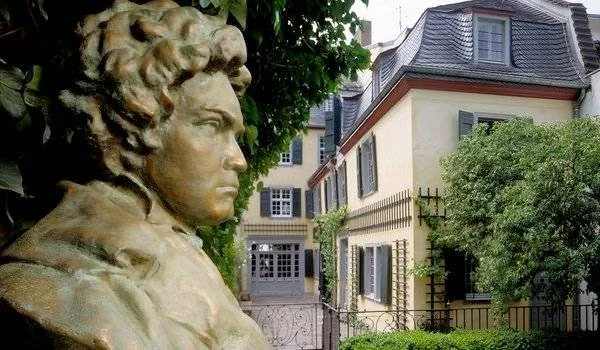
Bonn
Bonngasse 22-24, 53111 Bonn, Deutschland
Beethoven-Haus Bonn | Tickets & Opening Hours
Beethoven-Haus Bonn is much more than a classic museum: it is the birthplace, a place of remembrance, a research center, a concert venue, and a cultural landmark with international appeal. The house is one of the most visited musician museums in the world, attracting over 100,000 visitors each year. Those who come here not only experience the history of one of the most important composers in music history but also a vibrant ensemble of museum, library, publishing house, archive, and chamber music hall. This connection between historical substance and active cultural work is what makes the house particularly appealing. Visitors find a place where Beethoven's world, his work, and his impact become visible in a very immediate way. At the same time, the Beethoven-Haus is a very practical destination: tickets can be easily planned, tours are available in many languages, concerts are regularly part of the program, and there are special formats for families. This makes the house suitable for music lovers as well as school classes, tourists, cultural travelers, and Bonn visitors who want to experience an intense and well-organized visit. ([beethoven.de](https://www.beethoven.de/en/about-us%23history))
Tickets, Admission, and Booking
The ticket question for the museum visit is quickly clarified, but especially for such a popular house, careful planning is worthwhile. The regular admission prices are 15 euros for adults and 10 euros for children; additionally, there are reduced rates for individuals as well as for groups and families. Tickets can be obtained directly at the Beethoven-Haus at Bonngasse 21 opposite the museum entrance or online through the house's booking options, with online booking available until the day before the visit. This is particularly helpful for travelers who want to plan their Bonn route in advance or prefer to arrive with a fixed time slot on busy days. There is also a separate ticketing process for concerts in the chamber music hall, allowing for separate or combined planning of museum visits and concert evenings. This is practical because the Beethoven-Haus is not just an exhibition venue but also a lively event location with its own calendar. So, those looking for tickets for exhibitions, concerts, or both will find various clearly structured purchasing options in one place. ([beethoven.de](https://www.beethoven.de/en/museum))
For SEO and visitor intent, these booking details are crucial, as the search intent behind terms like tickets, admission, or events usually focuses on quick availability and easy orientation. The Beethoven-Haus meets these expectations well: the ticket counter is close to the entrance, online booking is straightforward, and the visiting logic is clear. Those who only want to see the museum can directly connect the opening hours and admission with their arrival; those who additionally want to book a concert or a tour also receive fixed structures for that. It is particularly noteworthy that the museum area has increasingly focused on experience and emotional engagement since the expanded exhibition format was introduced in 2019. This makes purchasing a ticket not just a necessity but an entry into a very richly narrated Beethoven visit. For families, groups, and cultural day visitors, this is ideal because it allows for precise planning of the stay in advance, leaving more time on-site for the actual tour. ([beethoven.de](https://www.beethoven.de/en/museum))
Opening Hours, Arrival, and Parking
The museum's opening hours are clearly and visitor-friendly regulated: the exhibitions are open from Wednesday to Monday from 10 AM to 6 PM. On Tuesdays, the museum is only open for pre-registered groups. The house is closed on New Year's Day, Women's Carnival Day, Rose Monday, from December 24 to 26, and on New Year's Eve. This makes the Beethoven-Haus well-suited for classic day visits, weekend trips, and group programs, but it requires a bit more attention to planning during holidays and carnival times. It is also practical for visitors that the museum shop has the same basic opening hours, making the location not just a museum experience but also a service experience. It should also be noted that the museum rooms are not air-conditioned and that the historic building has architectural features such as low ceiling beams, varying floor levels, and unusual step distances. Those traveling with children, older companions, or a lot of luggage should consider this when planning their time and choosing footwear. ([beethoven.de](https://www.beethoven.de/en/museum))
The location is also a strong plus point. The Beethoven-Haus is located in the center of Bonn at the edge of the pedestrian zone and not far from the Rhine. From the main train station, it takes just a few minutes to walk to Bonngasse, making the visit very uncomplicated. Additionally, trams and buses run to the nearby stop Bertha-von-Suttner-Platz/Beethoven-Haus, where there are also taxi stands. For drivers, the nearest municipal parking garages are Stiftsgarage, Marktgarage, and Friedensplatzgarage. This combination of central location, public transport access, and central parking options makes the house attractive for visitor groups, individual travelers, and day guests alike. Those who do not want to spend a long time orienting themselves in Bonn can plan their arrival very purposefully and begin their actual stay relaxed. Especially for cultural travelers, the location is ideal because the Beethoven-Haus can be easily combined with a stroll through the city center, a café visit, or further stops along the banks of the Rhine. ([beethoven.de](https://www.beethoven.de/en/museum))
Chamber Music Hall, Concerts, and Events
The Hermann J. Abs Chamber Music Hall is one of the most important arguments for understanding the Beethoven-Haus not only as a museum but also as a concert venue. The hall was opened in 1989, is known for its excellent acoustics, and is considered one of the most successful of its kind in Europe. The 199 seats are arranged in six ascending semicircles around the stage, creating an intimate and focused concert atmosphere. This makes the hall particularly suitable for chamber music, song recitals, lectures, readings, and festive events. The Beethoven-Haus explicitly emphasizes that the hall has developed into an important place for concerts, conferences, and special celebrations since its opening. The special effect also arises from the fact that the concert hall is closely connected with the other areas of the ensemble: museum, collection, research, and music practice directly interact here. So, those searching for the keyword concerts will find not just an occasional event but a permanent, curated musical life with high content quality. ([beethoven.de](https://www.beethoven.de/de/kammermusiksaal))
It is also important for visitors that concert tickets are available through several channels: via the webshop, through the event calendar of the Beethoven-Haus, in the museum shop, at well-known advance booking points, through Eventim, and by phone. This shows that the chamber music hall is not just a background space but an actively used stage with its own ticket and seasonal operations. The official site also refers to an annual program for the period from July 2025 to June 2026, which underscores the planable, seasonal character of the house. For search queries like events, schedule, or concert evening, this is particularly relevant because the Beethoven-Haus structures its concert work throughout the year and does not just rely on individual dates. Additionally, shorter concerts for visitors take place in the museum's music room. So, those seeking an intense musical experience will find multiple levels of musical encounters at the Beethoven-Haus Bonn: the museum, the chamber music, and the event-related. This variety ensures that the house plays a lively role in Bonn's cultural life, both historically and currently. ([beethoven.de](https://www.beethoven.de/de/kammermusiksaal))
Guided Tours, Children, and Family Offers
Guided tours are among the strongest service offerings of the Beethoven-Haus and are particularly valuable for visitors who want to not only look at the place but also understand its content. A tour usually lasts about an hour and can be booked in many languages: German, English, French, Italian, Dutch, Polish, Russian, Spanish, Turkish, Ukrainian, Japanese, and Chinese. This is a significant advantage for international guests, as the museum visit thus goes far beyond a mere tour. The pricing structure is also transparent: adult groups pay 80 euros plus museum admission, schools pay 5 euros per student, kindergarten groups pay 35 euros; additionally, there are special formats for families, people with special needs, and tours outside of opening hours. Depending on the format, thematic variants are added, such as with treasure chambers, readings, concerts, or specific special offers. For search queries related to tours or group visits, this is a strong signal, as the house offers not only standard routes but also differentiated mediation formats with clear conditions. This structure is particularly attractive for school groups and cultural excursions because it connects educational content with an iconic location. ([beethoven.de](https://www.beethoven.de/en/g/details-und-preise))
The Beethoven-Haus is also unusually well-equipped for children and families. Each season, several concerts for children and families take place in the chamber music hall, along with a free multimedia guide for children, a museum suitcase, and formats like Nights in the Museum for brave children aged seven and older. The house also organizes children's birthday parties with puzzles, treasure hunts, creative elements, music, and age-appropriate programming. Special guided tours and creative follow-ups are also offered for school classes, which explore Beethoven, his time, and his music in a playful way. It is particularly interesting that the house does not only rely on pure entertainment but on a pedagogical mix of discovery, listening, participation, and understanding. This makes the Beethoven-Haus Bonn a location that does not feel dry or overwhelming even with children but deliberately creates experiences. So, those looking for child-friendly cultural offerings, family concerts, or a museum visit with added value will find here not only a beautiful building but a well-thought-out mediation concept that covers different age groups and playfully facilitates access to Beethoven. ([beethoven.de](https://www.beethoven.de/de/g/programme-kinder-und-familien?utm_source=openai))
History, Collection, and Exhibition Experience
The historical depth of the Beethoven-Haus is at the core of its appeal. Ludwig van Beethoven was born in December 1770 in the house at Bonngasse 20; the building is one of the few preserved Bonn bourgeois houses from the 18th century. Its baroque stone facade was built over an older vaulted cellar from the 12th or 13th century. Inside, a compact residential house with kitchen, living, and sleeping areas can be visited today in twelve rooms. This spatial density makes the tour so impressive: one is not standing in an abstract memorial but in a historically tangible living environment that vividly illustrates Beethoven's early years. The museum emphasizes that visitors experience historical atmosphere in the courtyard situation and in the building itself while simultaneously gaining a modern, emotional access to Beethoven as an artist and human being. Additionally, there is the history of the Beethoven-Haus association, which was founded in 1889 and has since developed the house into a leading Beethoven center. Important collection and concert activities emerged shortly after its founding; in 1890, the first major chamber music festival was held, and in 1893, the museum was opened. Thus, the Beethoven-Haus is not only a place of remembrance but also an early institutionally established cultural project. ([beethoven.de](https://www.beethoven.de/en/museum))
The collection is as remarkable as the house itself. The Beethoven-Haus possesses the world's most significant and largest Beethoven collection. Early acquisitions included important originals such as Beethoven's last piano as well as the original manuscript of the Moonlight Sonata and the Pastoral Symphony. Today, the collection includes manuscripts, letters, images, busts, medals, musical instruments, furniture, and personal items, complemented by the holdings of the library. A particularly symbolic aspect is the secure storage of the collection in a vault area under the stage of the chamber music hall, which makes the close connection between research, preservation, and concert practice visible. The fact that the museum has offered an expanded permanent exhibition with a treasure chamber, music room, and area for special exhibitions since 2019 makes the visit even more attractive. Visitors encounter not only objects but a carefully narrated Beethoven world in which originals, context, and staging interweave. So, those searching for history, collection, or exhibition experience will find a place at the Beethoven-Haus Bonn that combines biographical authenticity with museum quality and scientific substance. ([beethoven.de](https://www.beethoven.de/en/museum))
Shop, Media Guide, and Practical Visiting Tips
The complete visit experience at the Beethoven-Haus also includes the shop, which goes far beyond a small souvenir sale. It offers more than 1000 books and items related to Beethoven and music, including publications from the Beethoven-Haus, urtext editions, a selection of CDs, and other music media. The shop is located at Bonngasse 18 or 21 in the immediate vicinity of the museum and is open from Wednesday to Monday from 10 AM to 6 PM, closed on Tuesdays. This is practical because the museum and shop can be well connected in terms of timing, allowing visitors to find additional literature, gift ideas, or recordings on-site if needed. For visitors planning their trip to Bonn purposefully, this is also interesting because the shop is not just an additional sale but a genuine content extension of the house. Those who want to delve deeper into Beethoven can meaningfully complement their museum visit with a book, an edition, or a recording. ([beethoven.de](https://www.beethoven.de/en/s/shop-start))
The Beethoven-Haus is also well-prepared digitally and organizationally. For individual visitors, there is a smartphone app in several languages, as well as a children’s version and inclusive versions for blind and visually impaired people, in easy language and sign language. Free loan devices are available in the museum shop depending on availability. The house also points out helpful safety and visiting tips: stairs and passages must remain clear, group tours are conducted exclusively by in-house staff, and the historic building requires special attention due to its structure. This aligns with the practical note that the museum rooms are not air-conditioned. So, those who want to visit comfortably should bring light luggage, good footwear, and some time. Especially in a house that combines historical heritage and modern mediation, careful planning pays off. For search terms like photos, shop, or practical tips, it is important to know that the Beethoven-Haus not only offers beautiful rooms but is also very functionally organized. This facilitates the visit for families, older guests, international tourists, and music-interested individual visitors alike. ([internet.beethoven.de](https://internet.beethoven.de/pdf-web/Besucherordnung_2024-11_01_eng.pdf))
Sources:
Show moreShow less
Beethoven-Haus Bonn | Tickets & Opening Hours
Beethoven-Haus Bonn is much more than a classic museum: it is the birthplace, a place of remembrance, a research center, a concert venue, and a cultural landmark with international appeal. The house is one of the most visited musician museums in the world, attracting over 100,000 visitors each year. Those who come here not only experience the history of one of the most important composers in music history but also a vibrant ensemble of museum, library, publishing house, archive, and chamber music hall. This connection between historical substance and active cultural work is what makes the house particularly appealing. Visitors find a place where Beethoven's world, his work, and his impact become visible in a very immediate way. At the same time, the Beethoven-Haus is a very practical destination: tickets can be easily planned, tours are available in many languages, concerts are regularly part of the program, and there are special formats for families. This makes the house suitable for music lovers as well as school classes, tourists, cultural travelers, and Bonn visitors who want to experience an intense and well-organized visit. ([beethoven.de](https://www.beethoven.de/en/about-us%23history))
Tickets, Admission, and Booking
The ticket question for the museum visit is quickly clarified, but especially for such a popular house, careful planning is worthwhile. The regular admission prices are 15 euros for adults and 10 euros for children; additionally, there are reduced rates for individuals as well as for groups and families. Tickets can be obtained directly at the Beethoven-Haus at Bonngasse 21 opposite the museum entrance or online through the house's booking options, with online booking available until the day before the visit. This is particularly helpful for travelers who want to plan their Bonn route in advance or prefer to arrive with a fixed time slot on busy days. There is also a separate ticketing process for concerts in the chamber music hall, allowing for separate or combined planning of museum visits and concert evenings. This is practical because the Beethoven-Haus is not just an exhibition venue but also a lively event location with its own calendar. So, those looking for tickets for exhibitions, concerts, or both will find various clearly structured purchasing options in one place. ([beethoven.de](https://www.beethoven.de/en/museum))
For SEO and visitor intent, these booking details are crucial, as the search intent behind terms like tickets, admission, or events usually focuses on quick availability and easy orientation. The Beethoven-Haus meets these expectations well: the ticket counter is close to the entrance, online booking is straightforward, and the visiting logic is clear. Those who only want to see the museum can directly connect the opening hours and admission with their arrival; those who additionally want to book a concert or a tour also receive fixed structures for that. It is particularly noteworthy that the museum area has increasingly focused on experience and emotional engagement since the expanded exhibition format was introduced in 2019. This makes purchasing a ticket not just a necessity but an entry into a very richly narrated Beethoven visit. For families, groups, and cultural day visitors, this is ideal because it allows for precise planning of the stay in advance, leaving more time on-site for the actual tour. ([beethoven.de](https://www.beethoven.de/en/museum))
Opening Hours, Arrival, and Parking
The museum's opening hours are clearly and visitor-friendly regulated: the exhibitions are open from Wednesday to Monday from 10 AM to 6 PM. On Tuesdays, the museum is only open for pre-registered groups. The house is closed on New Year's Day, Women's Carnival Day, Rose Monday, from December 24 to 26, and on New Year's Eve. This makes the Beethoven-Haus well-suited for classic day visits, weekend trips, and group programs, but it requires a bit more attention to planning during holidays and carnival times. It is also practical for visitors that the museum shop has the same basic opening hours, making the location not just a museum experience but also a service experience. It should also be noted that the museum rooms are not air-conditioned and that the historic building has architectural features such as low ceiling beams, varying floor levels, and unusual step distances. Those traveling with children, older companions, or a lot of luggage should consider this when planning their time and choosing footwear. ([beethoven.de](https://www.beethoven.de/en/museum))
The location is also a strong plus point. The Beethoven-Haus is located in the center of Bonn at the edge of the pedestrian zone and not far from the Rhine. From the main train station, it takes just a few minutes to walk to Bonngasse, making the visit very uncomplicated. Additionally, trams and buses run to the nearby stop Bertha-von-Suttner-Platz/Beethoven-Haus, where there are also taxi stands. For drivers, the nearest municipal parking garages are Stiftsgarage, Marktgarage, and Friedensplatzgarage. This combination of central location, public transport access, and central parking options makes the house attractive for visitor groups, individual travelers, and day guests alike. Those who do not want to spend a long time orienting themselves in Bonn can plan their arrival very purposefully and begin their actual stay relaxed. Especially for cultural travelers, the location is ideal because the Beethoven-Haus can be easily combined with a stroll through the city center, a café visit, or further stops along the banks of the Rhine. ([beethoven.de](https://www.beethoven.de/en/museum))
Chamber Music Hall, Concerts, and Events
The Hermann J. Abs Chamber Music Hall is one of the most important arguments for understanding the Beethoven-Haus not only as a museum but also as a concert venue. The hall was opened in 1989, is known for its excellent acoustics, and is considered one of the most successful of its kind in Europe. The 199 seats are arranged in six ascending semicircles around the stage, creating an intimate and focused concert atmosphere. This makes the hall particularly suitable for chamber music, song recitals, lectures, readings, and festive events. The Beethoven-Haus explicitly emphasizes that the hall has developed into an important place for concerts, conferences, and special celebrations since its opening. The special effect also arises from the fact that the concert hall is closely connected with the other areas of the ensemble: museum, collection, research, and music practice directly interact here. So, those searching for the keyword concerts will find not just an occasional event but a permanent, curated musical life with high content quality. ([beethoven.de](https://www.beethoven.de/de/kammermusiksaal))
It is also important for visitors that concert tickets are available through several channels: via the webshop, through the event calendar of the Beethoven-Haus, in the museum shop, at well-known advance booking points, through Eventim, and by phone. This shows that the chamber music hall is not just a background space but an actively used stage with its own ticket and seasonal operations. The official site also refers to an annual program for the period from July 2025 to June 2026, which underscores the planable, seasonal character of the house. For search queries like events, schedule, or concert evening, this is particularly relevant because the Beethoven-Haus structures its concert work throughout the year and does not just rely on individual dates. Additionally, shorter concerts for visitors take place in the museum's music room. So, those seeking an intense musical experience will find multiple levels of musical encounters at the Beethoven-Haus Bonn: the museum, the chamber music, and the event-related. This variety ensures that the house plays a lively role in Bonn's cultural life, both historically and currently. ([beethoven.de](https://www.beethoven.de/de/kammermusiksaal))
Guided Tours, Children, and Family Offers
Guided tours are among the strongest service offerings of the Beethoven-Haus and are particularly valuable for visitors who want to not only look at the place but also understand its content. A tour usually lasts about an hour and can be booked in many languages: German, English, French, Italian, Dutch, Polish, Russian, Spanish, Turkish, Ukrainian, Japanese, and Chinese. This is a significant advantage for international guests, as the museum visit thus goes far beyond a mere tour. The pricing structure is also transparent: adult groups pay 80 euros plus museum admission, schools pay 5 euros per student, kindergarten groups pay 35 euros; additionally, there are special formats for families, people with special needs, and tours outside of opening hours. Depending on the format, thematic variants are added, such as with treasure chambers, readings, concerts, or specific special offers. For search queries related to tours or group visits, this is a strong signal, as the house offers not only standard routes but also differentiated mediation formats with clear conditions. This structure is particularly attractive for school groups and cultural excursions because it connects educational content with an iconic location. ([beethoven.de](https://www.beethoven.de/en/g/details-und-preise))
The Beethoven-Haus is also unusually well-equipped for children and families. Each season, several concerts for children and families take place in the chamber music hall, along with a free multimedia guide for children, a museum suitcase, and formats like Nights in the Museum for brave children aged seven and older. The house also organizes children's birthday parties with puzzles, treasure hunts, creative elements, music, and age-appropriate programming. Special guided tours and creative follow-ups are also offered for school classes, which explore Beethoven, his time, and his music in a playful way. It is particularly interesting that the house does not only rely on pure entertainment but on a pedagogical mix of discovery, listening, participation, and understanding. This makes the Beethoven-Haus Bonn a location that does not feel dry or overwhelming even with children but deliberately creates experiences. So, those looking for child-friendly cultural offerings, family concerts, or a museum visit with added value will find here not only a beautiful building but a well-thought-out mediation concept that covers different age groups and playfully facilitates access to Beethoven. ([beethoven.de](https://www.beethoven.de/de/g/programme-kinder-und-familien?utm_source=openai))
History, Collection, and Exhibition Experience
The historical depth of the Beethoven-Haus is at the core of its appeal. Ludwig van Beethoven was born in December 1770 in the house at Bonngasse 20; the building is one of the few preserved Bonn bourgeois houses from the 18th century. Its baroque stone facade was built over an older vaulted cellar from the 12th or 13th century. Inside, a compact residential house with kitchen, living, and sleeping areas can be visited today in twelve rooms. This spatial density makes the tour so impressive: one is not standing in an abstract memorial but in a historically tangible living environment that vividly illustrates Beethoven's early years. The museum emphasizes that visitors experience historical atmosphere in the courtyard situation and in the building itself while simultaneously gaining a modern, emotional access to Beethoven as an artist and human being. Additionally, there is the history of the Beethoven-Haus association, which was founded in 1889 and has since developed the house into a leading Beethoven center. Important collection and concert activities emerged shortly after its founding; in 1890, the first major chamber music festival was held, and in 1893, the museum was opened. Thus, the Beethoven-Haus is not only a place of remembrance but also an early institutionally established cultural project. ([beethoven.de](https://www.beethoven.de/en/museum))
The collection is as remarkable as the house itself. The Beethoven-Haus possesses the world's most significant and largest Beethoven collection. Early acquisitions included important originals such as Beethoven's last piano as well as the original manuscript of the Moonlight Sonata and the Pastoral Symphony. Today, the collection includes manuscripts, letters, images, busts, medals, musical instruments, furniture, and personal items, complemented by the holdings of the library. A particularly symbolic aspect is the secure storage of the collection in a vault area under the stage of the chamber music hall, which makes the close connection between research, preservation, and concert practice visible. The fact that the museum has offered an expanded permanent exhibition with a treasure chamber, music room, and area for special exhibitions since 2019 makes the visit even more attractive. Visitors encounter not only objects but a carefully narrated Beethoven world in which originals, context, and staging interweave. So, those searching for history, collection, or exhibition experience will find a place at the Beethoven-Haus Bonn that combines biographical authenticity with museum quality and scientific substance. ([beethoven.de](https://www.beethoven.de/en/museum))
Shop, Media Guide, and Practical Visiting Tips
The complete visit experience at the Beethoven-Haus also includes the shop, which goes far beyond a small souvenir sale. It offers more than 1000 books and items related to Beethoven and music, including publications from the Beethoven-Haus, urtext editions, a selection of CDs, and other music media. The shop is located at Bonngasse 18 or 21 in the immediate vicinity of the museum and is open from Wednesday to Monday from 10 AM to 6 PM, closed on Tuesdays. This is practical because the museum and shop can be well connected in terms of timing, allowing visitors to find additional literature, gift ideas, or recordings on-site if needed. For visitors planning their trip to Bonn purposefully, this is also interesting because the shop is not just an additional sale but a genuine content extension of the house. Those who want to delve deeper into Beethoven can meaningfully complement their museum visit with a book, an edition, or a recording. ([beethoven.de](https://www.beethoven.de/en/s/shop-start))
The Beethoven-Haus is also well-prepared digitally and organizationally. For individual visitors, there is a smartphone app in several languages, as well as a children’s version and inclusive versions for blind and visually impaired people, in easy language and sign language. Free loan devices are available in the museum shop depending on availability. The house also points out helpful safety and visiting tips: stairs and passages must remain clear, group tours are conducted exclusively by in-house staff, and the historic building requires special attention due to its structure. This aligns with the practical note that the museum rooms are not air-conditioned. So, those who want to visit comfortably should bring light luggage, good footwear, and some time. Especially in a house that combines historical heritage and modern mediation, careful planning pays off. For search terms like photos, shop, or practical tips, it is important to know that the Beethoven-Haus not only offers beautiful rooms but is also very functionally organized. This facilitates the visit for families, older guests, international tourists, and music-interested individual visitors alike. ([internet.beethoven.de](https://internet.beethoven.de/pdf-web/Besucherordnung_2024-11_01_eng.pdf))
Sources:
Beethoven-Haus Bonn | Tickets & Opening Hours
Beethoven-Haus Bonn is much more than a classic museum: it is the birthplace, a place of remembrance, a research center, a concert venue, and a cultural landmark with international appeal. The house is one of the most visited musician museums in the world, attracting over 100,000 visitors each year. Those who come here not only experience the history of one of the most important composers in music history but also a vibrant ensemble of museum, library, publishing house, archive, and chamber music hall. This connection between historical substance and active cultural work is what makes the house particularly appealing. Visitors find a place where Beethoven's world, his work, and his impact become visible in a very immediate way. At the same time, the Beethoven-Haus is a very practical destination: tickets can be easily planned, tours are available in many languages, concerts are regularly part of the program, and there are special formats for families. This makes the house suitable for music lovers as well as school classes, tourists, cultural travelers, and Bonn visitors who want to experience an intense and well-organized visit. ([beethoven.de](https://www.beethoven.de/en/about-us%23history))
Tickets, Admission, and Booking
The ticket question for the museum visit is quickly clarified, but especially for such a popular house, careful planning is worthwhile. The regular admission prices are 15 euros for adults and 10 euros for children; additionally, there are reduced rates for individuals as well as for groups and families. Tickets can be obtained directly at the Beethoven-Haus at Bonngasse 21 opposite the museum entrance or online through the house's booking options, with online booking available until the day before the visit. This is particularly helpful for travelers who want to plan their Bonn route in advance or prefer to arrive with a fixed time slot on busy days. There is also a separate ticketing process for concerts in the chamber music hall, allowing for separate or combined planning of museum visits and concert evenings. This is practical because the Beethoven-Haus is not just an exhibition venue but also a lively event location with its own calendar. So, those looking for tickets for exhibitions, concerts, or both will find various clearly structured purchasing options in one place. ([beethoven.de](https://www.beethoven.de/en/museum))
For SEO and visitor intent, these booking details are crucial, as the search intent behind terms like tickets, admission, or events usually focuses on quick availability and easy orientation. The Beethoven-Haus meets these expectations well: the ticket counter is close to the entrance, online booking is straightforward, and the visiting logic is clear. Those who only want to see the museum can directly connect the opening hours and admission with their arrival; those who additionally want to book a concert or a tour also receive fixed structures for that. It is particularly noteworthy that the museum area has increasingly focused on experience and emotional engagement since the expanded exhibition format was introduced in 2019. This makes purchasing a ticket not just a necessity but an entry into a very richly narrated Beethoven visit. For families, groups, and cultural day visitors, this is ideal because it allows for precise planning of the stay in advance, leaving more time on-site for the actual tour. ([beethoven.de](https://www.beethoven.de/en/museum))
Opening Hours, Arrival, and Parking
The museum's opening hours are clearly and visitor-friendly regulated: the exhibitions are open from Wednesday to Monday from 10 AM to 6 PM. On Tuesdays, the museum is only open for pre-registered groups. The house is closed on New Year's Day, Women's Carnival Day, Rose Monday, from December 24 to 26, and on New Year's Eve. This makes the Beethoven-Haus well-suited for classic day visits, weekend trips, and group programs, but it requires a bit more attention to planning during holidays and carnival times. It is also practical for visitors that the museum shop has the same basic opening hours, making the location not just a museum experience but also a service experience. It should also be noted that the museum rooms are not air-conditioned and that the historic building has architectural features such as low ceiling beams, varying floor levels, and unusual step distances. Those traveling with children, older companions, or a lot of luggage should consider this when planning their time and choosing footwear. ([beethoven.de](https://www.beethoven.de/en/museum))
The location is also a strong plus point. The Beethoven-Haus is located in the center of Bonn at the edge of the pedestrian zone and not far from the Rhine. From the main train station, it takes just a few minutes to walk to Bonngasse, making the visit very uncomplicated. Additionally, trams and buses run to the nearby stop Bertha-von-Suttner-Platz/Beethoven-Haus, where there are also taxi stands. For drivers, the nearest municipal parking garages are Stiftsgarage, Marktgarage, and Friedensplatzgarage. This combination of central location, public transport access, and central parking options makes the house attractive for visitor groups, individual travelers, and day guests alike. Those who do not want to spend a long time orienting themselves in Bonn can plan their arrival very purposefully and begin their actual stay relaxed. Especially for cultural travelers, the location is ideal because the Beethoven-Haus can be easily combined with a stroll through the city center, a café visit, or further stops along the banks of the Rhine. ([beethoven.de](https://www.beethoven.de/en/museum))
Chamber Music Hall, Concerts, and Events
The Hermann J. Abs Chamber Music Hall is one of the most important arguments for understanding the Beethoven-Haus not only as a museum but also as a concert venue. The hall was opened in 1989, is known for its excellent acoustics, and is considered one of the most successful of its kind in Europe. The 199 seats are arranged in six ascending semicircles around the stage, creating an intimate and focused concert atmosphere. This makes the hall particularly suitable for chamber music, song recitals, lectures, readings, and festive events. The Beethoven-Haus explicitly emphasizes that the hall has developed into an important place for concerts, conferences, and special celebrations since its opening. The special effect also arises from the fact that the concert hall is closely connected with the other areas of the ensemble: museum, collection, research, and music practice directly interact here. So, those searching for the keyword concerts will find not just an occasional event but a permanent, curated musical life with high content quality. ([beethoven.de](https://www.beethoven.de/de/kammermusiksaal))
It is also important for visitors that concert tickets are available through several channels: via the webshop, through the event calendar of the Beethoven-Haus, in the museum shop, at well-known advance booking points, through Eventim, and by phone. This shows that the chamber music hall is not just a background space but an actively used stage with its own ticket and seasonal operations. The official site also refers to an annual program for the period from July 2025 to June 2026, which underscores the planable, seasonal character of the house. For search queries like events, schedule, or concert evening, this is particularly relevant because the Beethoven-Haus structures its concert work throughout the year and does not just rely on individual dates. Additionally, shorter concerts for visitors take place in the museum's music room. So, those seeking an intense musical experience will find multiple levels of musical encounters at the Beethoven-Haus Bonn: the museum, the chamber music, and the event-related. This variety ensures that the house plays a lively role in Bonn's cultural life, both historically and currently. ([beethoven.de](https://www.beethoven.de/de/kammermusiksaal))
Guided Tours, Children, and Family Offers
Guided tours are among the strongest service offerings of the Beethoven-Haus and are particularly valuable for visitors who want to not only look at the place but also understand its content. A tour usually lasts about an hour and can be booked in many languages: German, English, French, Italian, Dutch, Polish, Russian, Spanish, Turkish, Ukrainian, Japanese, and Chinese. This is a significant advantage for international guests, as the museum visit thus goes far beyond a mere tour. The pricing structure is also transparent: adult groups pay 80 euros plus museum admission, schools pay 5 euros per student, kindergarten groups pay 35 euros; additionally, there are special formats for families, people with special needs, and tours outside of opening hours. Depending on the format, thematic variants are added, such as with treasure chambers, readings, concerts, or specific special offers. For search queries related to tours or group visits, this is a strong signal, as the house offers not only standard routes but also differentiated mediation formats with clear conditions. This structure is particularly attractive for school groups and cultural excursions because it connects educational content with an iconic location. ([beethoven.de](https://www.beethoven.de/en/g/details-und-preise))
The Beethoven-Haus is also unusually well-equipped for children and families. Each season, several concerts for children and families take place in the chamber music hall, along with a free multimedia guide for children, a museum suitcase, and formats like Nights in the Museum for brave children aged seven and older. The house also organizes children's birthday parties with puzzles, treasure hunts, creative elements, music, and age-appropriate programming. Special guided tours and creative follow-ups are also offered for school classes, which explore Beethoven, his time, and his music in a playful way. It is particularly interesting that the house does not only rely on pure entertainment but on a pedagogical mix of discovery, listening, participation, and understanding. This makes the Beethoven-Haus Bonn a location that does not feel dry or overwhelming even with children but deliberately creates experiences. So, those looking for child-friendly cultural offerings, family concerts, or a museum visit with added value will find here not only a beautiful building but a well-thought-out mediation concept that covers different age groups and playfully facilitates access to Beethoven. ([beethoven.de](https://www.beethoven.de/de/g/programme-kinder-und-familien?utm_source=openai))
History, Collection, and Exhibition Experience
The historical depth of the Beethoven-Haus is at the core of its appeal. Ludwig van Beethoven was born in December 1770 in the house at Bonngasse 20; the building is one of the few preserved Bonn bourgeois houses from the 18th century. Its baroque stone facade was built over an older vaulted cellar from the 12th or 13th century. Inside, a compact residential house with kitchen, living, and sleeping areas can be visited today in twelve rooms. This spatial density makes the tour so impressive: one is not standing in an abstract memorial but in a historically tangible living environment that vividly illustrates Beethoven's early years. The museum emphasizes that visitors experience historical atmosphere in the courtyard situation and in the building itself while simultaneously gaining a modern, emotional access to Beethoven as an artist and human being. Additionally, there is the history of the Beethoven-Haus association, which was founded in 1889 and has since developed the house into a leading Beethoven center. Important collection and concert activities emerged shortly after its founding; in 1890, the first major chamber music festival was held, and in 1893, the museum was opened. Thus, the Beethoven-Haus is not only a place of remembrance but also an early institutionally established cultural project. ([beethoven.de](https://www.beethoven.de/en/museum))
The collection is as remarkable as the house itself. The Beethoven-Haus possesses the world's most significant and largest Beethoven collection. Early acquisitions included important originals such as Beethoven's last piano as well as the original manuscript of the Moonlight Sonata and the Pastoral Symphony. Today, the collection includes manuscripts, letters, images, busts, medals, musical instruments, furniture, and personal items, complemented by the holdings of the library. A particularly symbolic aspect is the secure storage of the collection in a vault area under the stage of the chamber music hall, which makes the close connection between research, preservation, and concert practice visible. The fact that the museum has offered an expanded permanent exhibition with a treasure chamber, music room, and area for special exhibitions since 2019 makes the visit even more attractive. Visitors encounter not only objects but a carefully narrated Beethoven world in which originals, context, and staging interweave. So, those searching for history, collection, or exhibition experience will find a place at the Beethoven-Haus Bonn that combines biographical authenticity with museum quality and scientific substance. ([beethoven.de](https://www.beethoven.de/en/museum))
Shop, Media Guide, and Practical Visiting Tips
The complete visit experience at the Beethoven-Haus also includes the shop, which goes far beyond a small souvenir sale. It offers more than 1000 books and items related to Beethoven and music, including publications from the Beethoven-Haus, urtext editions, a selection of CDs, and other music media. The shop is located at Bonngasse 18 or 21 in the immediate vicinity of the museum and is open from Wednesday to Monday from 10 AM to 6 PM, closed on Tuesdays. This is practical because the museum and shop can be well connected in terms of timing, allowing visitors to find additional literature, gift ideas, or recordings on-site if needed. For visitors planning their trip to Bonn purposefully, this is also interesting because the shop is not just an additional sale but a genuine content extension of the house. Those who want to delve deeper into Beethoven can meaningfully complement their museum visit with a book, an edition, or a recording. ([beethoven.de](https://www.beethoven.de/en/s/shop-start))
The Beethoven-Haus is also well-prepared digitally and organizationally. For individual visitors, there is a smartphone app in several languages, as well as a children’s version and inclusive versions for blind and visually impaired people, in easy language and sign language. Free loan devices are available in the museum shop depending on availability. The house also points out helpful safety and visiting tips: stairs and passages must remain clear, group tours are conducted exclusively by in-house staff, and the historic building requires special attention due to its structure. This aligns with the practical note that the museum rooms are not air-conditioned. So, those who want to visit comfortably should bring light luggage, good footwear, and some time. Especially in a house that combines historical heritage and modern mediation, careful planning pays off. For search terms like photos, shop, or practical tips, it is important to know that the Beethoven-Haus not only offers beautiful rooms but is also very functionally organized. This facilitates the visit for families, older guests, international tourists, and music-interested individual visitors alike. ([internet.beethoven.de](https://internet.beethoven.de/pdf-web/Besucherordnung_2024-11_01_eng.pdf))
Sources:
Upcoming Events
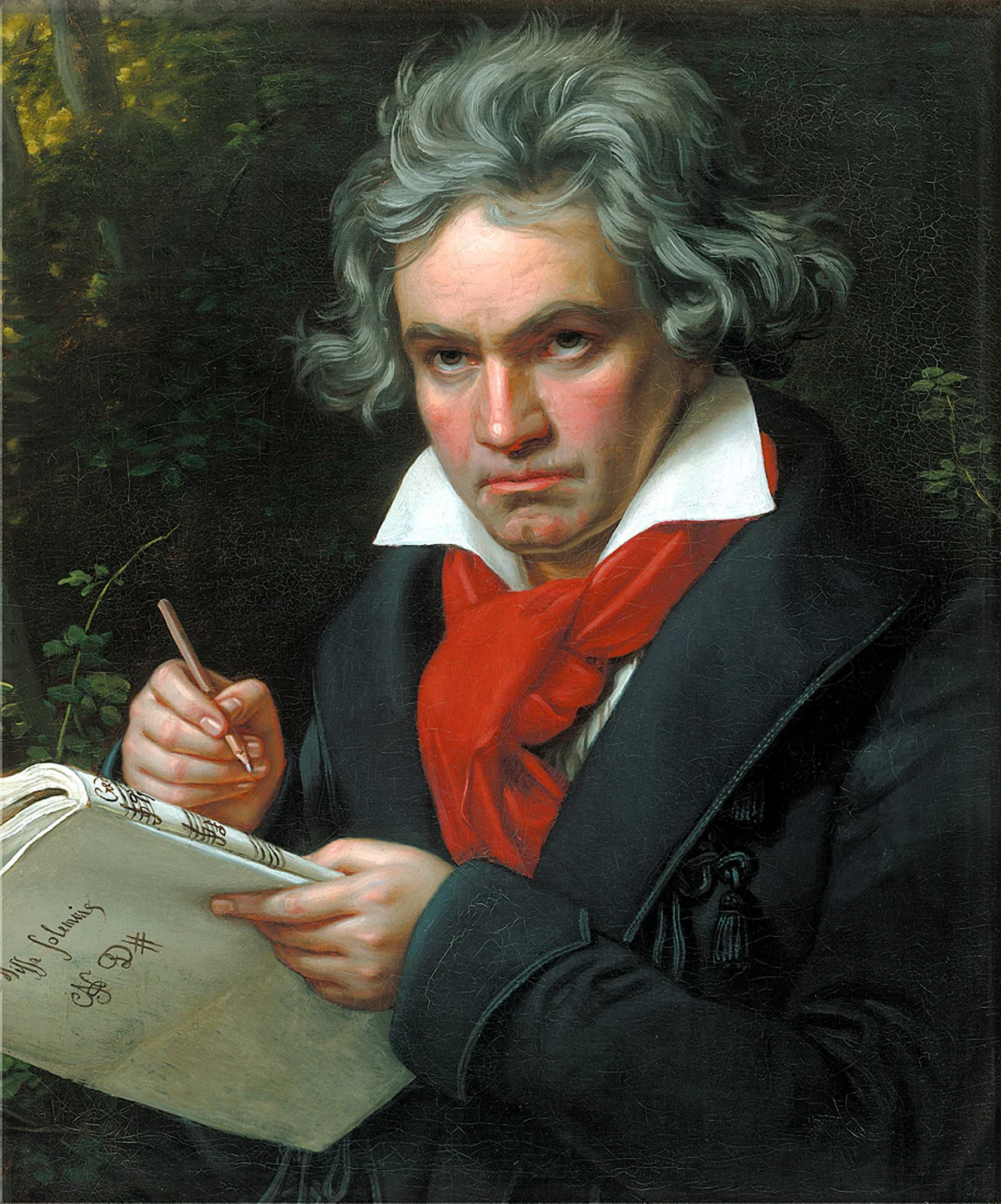
Special Exhibition: Relationships - Beethoven and the Brentano Family
Beethoven up close: At the Beethoven House Bonn, music history meets letters, relationships, and romanticism. From 04.15 to 07.27.2026. #Beethoven #Bonn
Horn Evening with Hanxuan Liang - Beethoven meets Gershwin
A special chamber music evening in Bonn: Hanxuan Liang connects Beethoven with Gershwin and great sound color. 06.27.2026, tickets from 35 euros. #Bonn #Classical
Relational Patterns – Beethoven and the Brentano Family
Discover Beethoven's close connections with the Brentano family in a special exhibition at the Beethoven House Bonn.
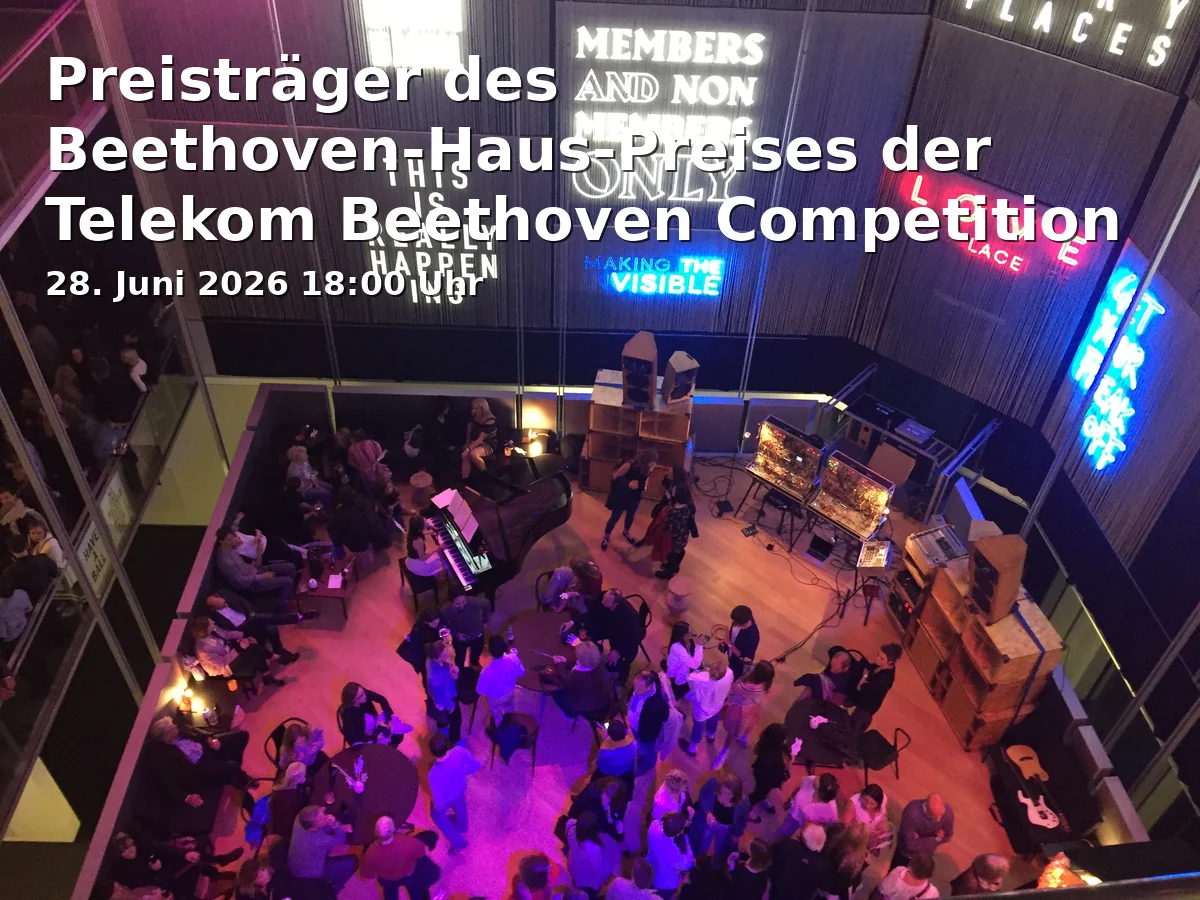
Prize Winners of the Beethoven-Haus Prize at the Telekom Beethoven Competition 2025
A special Beethoven evening in Bonn: prize winners, sound culture, and great intimacy in the Chamber Music Hall. Experience it live now! #Bonn #Beethoven
Monday Concert 4 - Beethoven Orchestra Bonn
Monday Concert 4 - Beethoven Orchestra Bonn
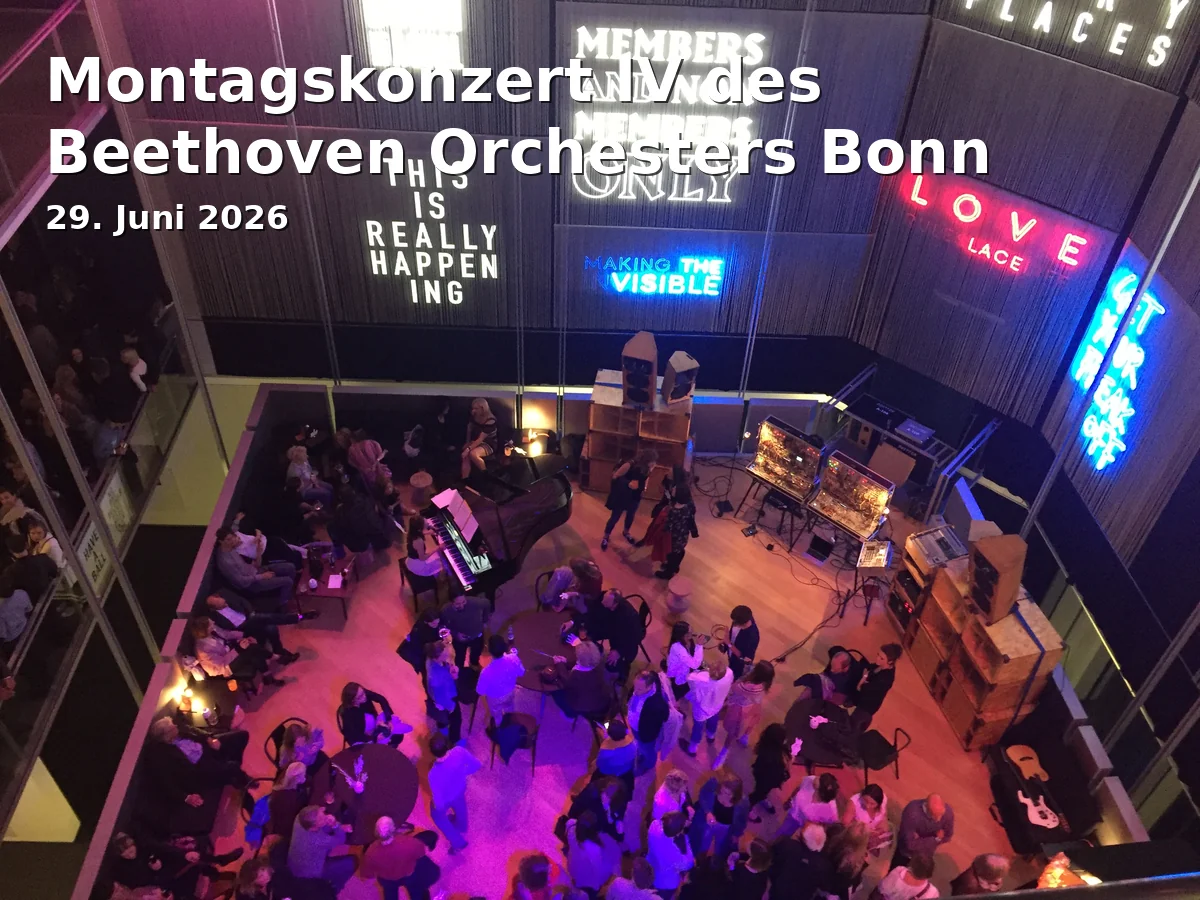
Monday Concert IV of the Beethoven Orchestra Bonn
Dive into the world of classical music with the Beethoven Orchestra Bonn at the historic Beethoven House.
Resonant Connections - Beethoven and the Brentano Family
Discover the fascinating relationship between Beethoven and the Brentano family in the new exhibition at the Beethoven House Bonn.
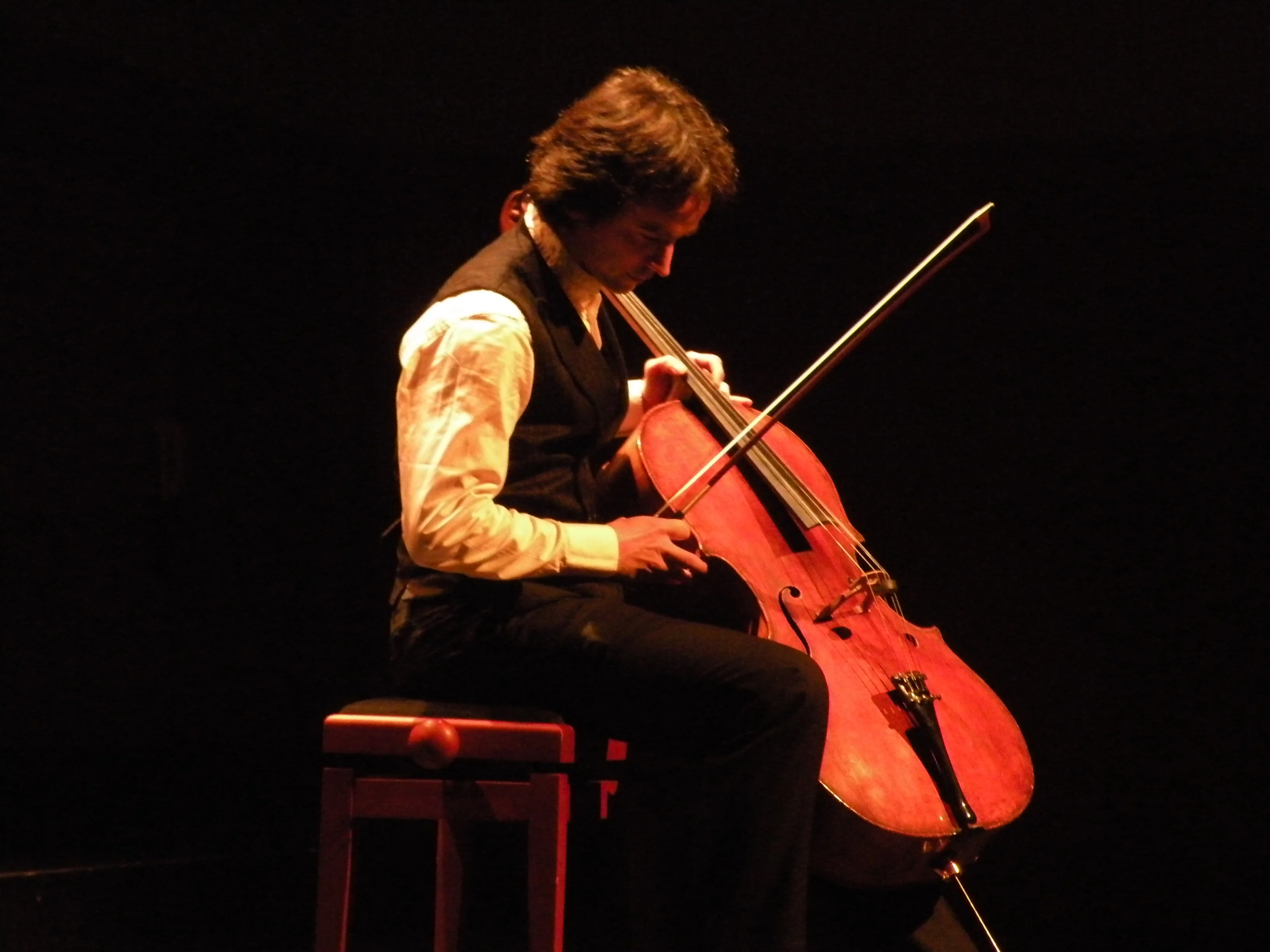
Beethovenfest 2026: Jean-Guihen Queyras
An evening full of intensity at the Beethoven House Bonn: Jean-Guihen Queyras performs at the Beethovenfest 2026. September 8, 19:30, tickets from 29 Euros. #Beethovenfest #Bonn
Frequently Asked Questions
Reviews
Arwa Al Saber
7. February 2026
Visiting Beethoven House in Bonn was a deeply moving experience for me. The moment I stepped inside, I felt an unexpected wave of emotion. I’ve always loved Beethoven’s music, and as someone who plays one of his symphonies, being in the very place where he was born felt incredibly personal. Walking through the rooms, seeing his belongings, manuscripts, and learning more about his life made his music feel even more alive and human. It wasn’t just a home visit; it felt like stepping into the story behind the melodies I’ve played and listened to for years.
Federico Ciocca
23. January 2026
An interesting visit to explore the most important moments of the famous German composer life. The visit is well structured: it is possible to download an app available for iOS and Android that contains an audio-guide, available on various languages. The house has narrow stairs and low ceilings, so you have to pay a bit of attention. You will be able to see the original instruments that were played by Beethoven, some of the musical sheets of his compositions, copies of the letters that he wrote to friends and family members over the course of the years. You can purchase the ticket online through the official website, or in the office located on front of the house. You are obliged to store bags in their locker room.
Sara Hemmati
1. January 2026
I visited Beethoven’s birthplace in Bonn and truly enjoyed the experience. Walking through the house where he was born felt intimate and inspiring, as if his presence still lingered in the rooms. The exhibits, manuscripts, and instruments tell the story of his life and struggles in a quiet, respectful way. It was a meaningful visit that connected music, history, and emotion all in one place.
Cihan E.
17. November 2025
In my opinion, it’s a calm yet impressive stop that you should definitely make time for in the city. This house-museum, where Ludwig van Beethoven was born, is not just an ordinary place where you walk through a few rooms; it offers a well-curated exhibition that neatly tells the story of the composer’s life, his era and his music. During your visit, you can take a short breather in the courtyard and then complete the experience by listening to his works in the music room.
Ledia
27. November 2025
This place tells not only about Beethoven's life story, but also his struggles, his creative process, and his resistance to illness. There are 3 level floors and some rooms. The display of the objects are interesting. And they also have link to explain everything there. You can buy the ticket at the store infront of the house. It's about €14 per person. And you have to put you bags in the locker inside the store with €1 or €2 deposit.