
Bonn
Auf dem Hügel 71, 53121 Bonn, Deutschland
Argelander Institute for Astronomy 🔭 | Bonn & Directions
The Argelander Institute for Astronomy in Bonn is much more than an academic site with a well-known address at Auf dem Hügel 71. It is a central place of Bonn's astronomy, where research, teaching, public science communication, and the long history of astronomical work in Bonn come together. The institute belongs to the University of Bonn and is part of the Department of Physics and Astronomy; its research groups cover a wide range from the astrophysics of individual stars to cosmology. At the same time, the location has remained visible in the public life of the city through lectures, visitor formats, and collaborations with the Bonn Planetarium. It is precisely this connection of science, history, and accessibility that makes the site so exciting for visitors, students, and astronomy enthusiasts. Those searching for the Argelander Institute for Astronomy Bonn, Argelander Institute for Astronomy, or directions to AIfA are truly looking for a place where modern research and Bonn's astronomy tradition are closely intertwined. ([aifa.uni-bonn.de](https://www.aifa.uni-bonn.de//en/institute/institute?utm_source=openai))
Contact and Directions to the Argelander Institute for Astronomy
The official address is Auf dem Hügel 71, 53121 Bonn. For arrival by car, the institute's website recommends different routes via the A565 depending on the direction: From Cologne, the way leads via the Bonn-Endenich exit, then via Hermann-Wandersleb-Ring and finally to Auf dem Hügel street, before turning onto Am Bleichgraben and looking for a free parking space. From Koblenz, the Bonn-Lengsdorf exit is mentioned; here too, the journey ends on the streets Auf dem Hügel and Am Bleichgraben. The website states pragmatically: One should look for a free parking space, not a reserved visitor parking space, which can be important for guests at events. Therefore, an early arrival is sensible, especially when a lecture, observation, or public event is taking place. The official contact page also lists the phone number and email of the administration, so visits, questions, and organizational concerns can be clarified directly. ([astro.uni-bonn.de](https://astro.uni-bonn.de/de/institut/kontakt-und-anfahrt?utm_source=openai))
The institute is also easily accessible by public transport. According to the official directions, bus lines 610 and 611 run from Bonn Central Station to the Immenburgpark stop. The travel time is indicated as about 10 to 20 minutes, and from the drop-off point, it is only about two minutes on foot to the institute. Those arriving by train in Bonn thus have a simple connection to the research location in the western part of the city. The page also mentions taxi and airport scenarios: A taxi ride from Bonn Hbf takes about 10 to 15 minutes and costs approximately 10 euros; for arrivals via Frankfurt or Cologne/Bonn, the institute also describes specific transfers and train steps. Especially for public lectures or evening events, this level of detail is helpful because it makes the location easily planable even without a car. For search queries like Argelander Institute for Astronomy Bonn, contact and directions, or parking at the hill, this information is the most important practical information. ([astro.uni-bonn.de](https://astro.uni-bonn.de/de/institut/kontakt-und-anfahrt?utm_source=openai))
History of Bonn Astronomy and the Foundation of AIfA
The history of the site is closely linked to Bonn's astronomy of the 19th and 20th centuries. The official history page mentions F. W. A. Argelander as a central figure, whose work shaped the Bonn Photometric Catalog, research on variable stars, and the determination of the first stellar distances. The name of the institute is therefore not chosen decoratively but commemorates a person who gave Bonn international astronomical significance. Another historical milestone was the acquisition of the Bonn double refractor by Karl Friedrich Küstner in 1899, which significantly expanded the university's observatory in the wake of new photographic technology. Such milestones show that today's Argelander Institute did not emerge as an isolated new building but evolved from a long development that connected scientific observation, technical innovation, and university teaching. For those seeking the history of Bonn astronomy, this is precisely where the core of fascination lies: Bonn is not only a modern research site but also a traditional astronomical location with its own profile. ([astro.uni-bonn.de](https://www.astro.uni-bonn.de/en/public/bonn_astronomie?utm_source=openai))
After World War II, this history was further developed. Sources name Friedrich Eberhard Becker as a formative personality who advanced Bonn's astronomy with the founding of the Hoher List Observatory in Daun-Eifel and the radio astronomical outstation Stockert. This phase also includes the founding of the Institute for Astrophysics and Extraterrestrial Research in 1964. Another important step was the move of Bonn's astronomers into the shared institute building on the hill in Bonn-Endenich in 1973. The actual merger into the Argelander Institute for Astronomy finally took place in 2006 when the three areas of the observatory, radio astronomical institute, and institute for astrophysics and extraterrestrial research were combined into one institute. This history of emergence explains why the AIfA today embodies both historical depth, radio astronomical competence, and modern astrophysics. Understanding the development of the site also clarifies why the name Argelander Institute in Bonn is so closely associated with tradition, change, and scientific continuity. ([astro.uni-bonn.de](https://www.astro.uni-bonn.de/de/offentlichkeit/geschichte-der-bonner-astronomie?utm_source=openai))
Research, Teaching, and International Collaborations
The Argelander Institute for Astronomy is part of the Department of Physics and Astronomy at the University of Bonn and describes its work as research and teaching across a spectrum from stars to cosmology. The institute's website mentions both theoretical and observational research groups, and the range extends from radio and X-ray astronomy to gravitational lenses and cosmology to dark matter, interstellar medium, and star development. Thus, the AIfA is not a single subject laboratory but a scientific platform for many subfields of astrophysics. The website also emphasizes the international orientation of the institute: researchers from more than 25 countries are represented, and of the approximately 130 employees, nearly half are scientists. The remainder consists of doctoral candidates, master's students, and non-scientific staff. This structure is also relevant for search terms like University of Bonn Astronomy, AIfA, or Astronomy Research because it shows that the site is equally a place for teaching, work, and research. ([astro.uni-bonn.de](https://www.astro.uni-bonn.de/en/institute/institute?utm_source=openai))
The institute is particularly strong due to its collaborations with major observatories and research networks. Proximity to the Max Planck Institute for Radio Astronomy in the neighboring building plays an important role as it facilitates access to the 100-meter radio telescope in Effelsberg. Furthermore, the institute's website mentions international projects and instruments such as ALMA, Euclid, eROSITA, JVLA, IRAM with 30 meters, APEX, and SOFIA. The ALMA connections are particularly noteworthy for Bonn: The ALMA Regional Center at AIfA supports researchers from across Europe in efficiently utilizing the observatory's potential. Additionally, the University of Bonn refers to a modern computer area for theoretical investigations. This mix of large telescopes, data analysis, modeling, and collaborations makes the AIfA a location that not only has regional significance but is also integrated into global astronomy networks. Therefore, those searching for the Argelander Institute for Astronomy will find in Bonn a place where international top research is truly visible and tangible. ([astro.uni-bonn.de](https://www.astro.uni-bonn.de/en/institute/institute?utm_source=openai))
Telescopes, Roof Instruments, and Practical Training
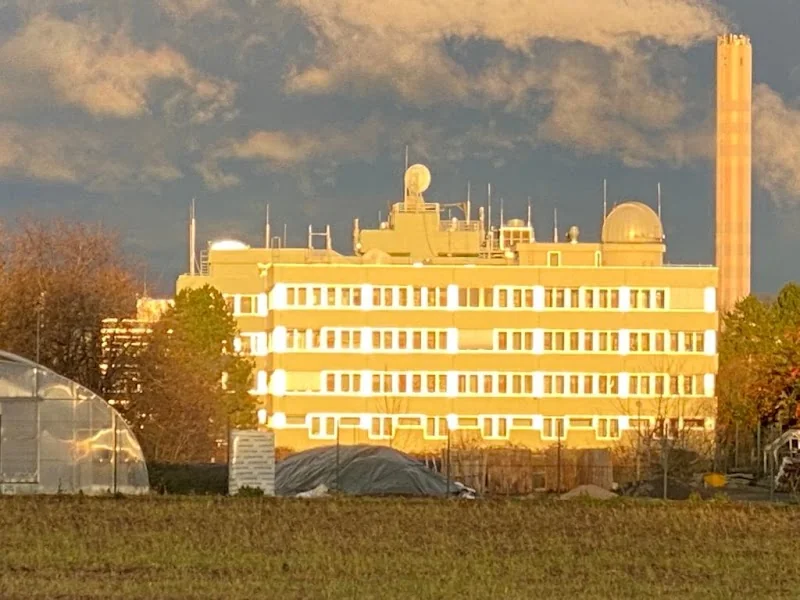
A particularly characteristic feature of the Argelander Institute for Astronomy is the equipment on the roof and the close connection between research and practical training. The institute's presentation mentions a 50-centimeter telescope on the roof that is used for teaching and is also made accessible to the public when it comes to accessing the night sky. Additionally, the teaching pages mention a 35-centimeter optical telescope, a 3.2-meter radio telescope, and a three-element radio interferometer. For students, this is not just illustrative material but part of concrete internships and exercises. One example is the experiment on stellar spectroscopy, where the DADOS spectrograph is used at the optical telescope. This clearly shows that the AIfA not only talks about astronomy but also teaches, measures, and makes astronomy experientially tangible. For visitors searching for telescopes in Bonn or astronomy in Bonn, the institute is therefore a place where scientific infrastructure is immediately present. ([astro.uni-bonn.de](https://www.astro.uni-bonn.de/en/institute/institute?utm_source=openai))
The technical equipment is meaningfully complemented by public use. The institute's website describes that the rooftop telescope is also made available to the public in collaboration with local associations and educational institutions to facilitate access to the night sky for people with general interest. Additionally, the collection of historical sky images from the AIfA, which reportedly includes around 15,000 photographic images, is intended to be conveyed through guided tours and lecture events. This expands the scientific character of the site through a clear educational mandate. Thus, the institute is not only a workplace for researchers but also a learning place for students and a gateway for the local community. Especially in Bonn-Endenich, where the building on the hill is visibly embedded in the district, a special mix of infrastructure, research, and public engagement is created. Those searching for a place where rooftop telescopes, radio interferometers, and the history of science come together will find an exceptionally dense astronomical location at the Argelander Institute. ([astro.uni-bonn.de](https://www.astro.uni-bonn.de/en/institute/institute?utm_source=openai))
Bonn's Night Sky and Public Events
The public perception of the AIfA is strongly shaped by event series such as Bonn's Night Sky. The Bonn Planetarium describes this series as a joint event with the observatory of the Argelander Institute and the Max Planck Institute for Radio Astronomy. Between November and March, it runs under the title Bonn's Night Sky, and between March and October under the title Bonn's Summer Sky. The events take place publicly in the lecture hall of the Argelander Institute at Auf dem Hügel 71, usually at 7:00 PM, and no registration is required. If the weather permits, an observation with telescopes follows, partly in front of the building, partly on the roof of the institute. Some dates alternatively offer guided tours of the institute museum. This mix of lectures, observations, and direct encounters with researchers makes the location particularly attractive for people who want to see not just a building but experience astronomy. For search queries like Bonn's Night Sky Argelander Institute or public events Bonn, this is one of the most important meeting points in the city. ([volkssternwarte-bonn.de](https://www.volkssternwarte-bonn.de/wordpress/bonner-sternenhimmel/?utm_source=openai))
Larger outreach formats are also visible at the AIfA. The official event page for Astronomy Day 2026 describes a joint offering from the Argelander Institute, the Max Planck Institute for Radio Astronomy, and the Bonn Planetarium with lectures, live observations with the 100-meter Effelsberg radio telescope, a children's craft area, an astronomy quiz with prizes, and discussions with researchers. All of this takes place directly at the location Auf dem Hügel 71 and is accessible without reservation according to the event entry. Such formats show that the AIfA does not consider public science a marginal topic but a fixed part of its role in Bonn. This is precisely why the location is also interesting for families, school groups, students, and amateur astronomers. The connection of research, observation, and personal explanation on site is a real added value that makes Bonn visible as a city of astronomy. Those looking for a location that offers knowledge, experience, and real scientific proximity will find here a particularly credible profile. ([astro.uni-bonn.de](https://www.astro.uni-bonn.de/en/news-events/events/astro-day-26?utm_source=openai))
Offers for Schools, Youth, and Scientific Public
The Argelander Institute also sees itself as a place for youth promotion and scientific education. The page for schools describes that the institute offers research internships for students in addition to public relations work. Furthermore, the AIfA has been collaborating with other institutions on campus since early 2024, including the PUNCH4NFDI Particle World project and the Max Planck Institute for Radio Astronomy, to expand internships and insights for young people. This is important for the site as it shows that astronomy in Bonn is not only addressed to students and established researchers but also consciously reaches out to the youth. This creates an environment where first research experiences become possible, and scientific questions do not remain abstract. Those searching for AIfA, University of Bonn Astronomy, or Astronomy Bonn for schools will find a well-established educational offering. ([astro.uni-bonn.de](https://www.astro.uni-bonn.de/en/public/for_schools?utm_source=openai))
Particularly valuable for the scientific public is the combination of guided tours, lectures, and image archives. The collection of historical sky images with around 15,000 photographs is presented as a conscious offering to the public, and the AIfA pages mention guided tours and lecture events as ways to make this material accessible. This makes the institute a kind of interface between scientific memory and current research. For Bonn, this is of great value because the city not only presents modern telescopes and research data but also keeps its own astronomical history visible. Those interested in long-term developments experience at the AIfA not only the present but also continuity. This mix of past, education, outreach, and research gives the Argelander Institute for Astronomy its special relevance in the cityscape of Bonn and in German astronomy overall. ([astro.uni-bonn.de](https://astro.uni-bonn.de/de/offentlichkeit/angebote-fuer-die-allgemeinheit?utm_source=openai))
Sources:
- Argelander Institute for Astronomy - Institute
- Argelander Institute for Astronomy - Contact and Directions
- Argelander Institute for Astronomy - History of Bonn Astronomy
- Argelander Institute for Astronomy - Telescopes
- Bonn Planetarium - Bonn's Night Sky
- Argelander Institute for Astronomy - Astronomy Day 2026
Mehr anzeigenWeniger anzeigen
Argelander Institute for Astronomy 🔭 | Bonn & Directions
The Argelander Institute for Astronomy in Bonn is much more than an academic site with a well-known address at Auf dem Hügel 71. It is a central place of Bonn's astronomy, where research, teaching, public science communication, and the long history of astronomical work in Bonn come together. The institute belongs to the University of Bonn and is part of the Department of Physics and Astronomy; its research groups cover a wide range from the astrophysics of individual stars to cosmology. At the same time, the location has remained visible in the public life of the city through lectures, visitor formats, and collaborations with the Bonn Planetarium. It is precisely this connection of science, history, and accessibility that makes the site so exciting for visitors, students, and astronomy enthusiasts. Those searching for the Argelander Institute for Astronomy Bonn, Argelander Institute for Astronomy, or directions to AIfA are truly looking for a place where modern research and Bonn's astronomy tradition are closely intertwined. ([aifa.uni-bonn.de](https://www.aifa.uni-bonn.de//en/institute/institute?utm_source=openai))
Contact and Directions to the Argelander Institute for Astronomy
The official address is Auf dem Hügel 71, 53121 Bonn. For arrival by car, the institute's website recommends different routes via the A565 depending on the direction: From Cologne, the way leads via the Bonn-Endenich exit, then via Hermann-Wandersleb-Ring and finally to Auf dem Hügel street, before turning onto Am Bleichgraben and looking for a free parking space. From Koblenz, the Bonn-Lengsdorf exit is mentioned; here too, the journey ends on the streets Auf dem Hügel and Am Bleichgraben. The website states pragmatically: One should look for a free parking space, not a reserved visitor parking space, which can be important for guests at events. Therefore, an early arrival is sensible, especially when a lecture, observation, or public event is taking place. The official contact page also lists the phone number and email of the administration, so visits, questions, and organizational concerns can be clarified directly. ([astro.uni-bonn.de](https://astro.uni-bonn.de/de/institut/kontakt-und-anfahrt?utm_source=openai))
The institute is also easily accessible by public transport. According to the official directions, bus lines 610 and 611 run from Bonn Central Station to the Immenburgpark stop. The travel time is indicated as about 10 to 20 minutes, and from the drop-off point, it is only about two minutes on foot to the institute. Those arriving by train in Bonn thus have a simple connection to the research location in the western part of the city. The page also mentions taxi and airport scenarios: A taxi ride from Bonn Hbf takes about 10 to 15 minutes and costs approximately 10 euros; for arrivals via Frankfurt or Cologne/Bonn, the institute also describes specific transfers and train steps. Especially for public lectures or evening events, this level of detail is helpful because it makes the location easily planable even without a car. For search queries like Argelander Institute for Astronomy Bonn, contact and directions, or parking at the hill, this information is the most important practical information. ([astro.uni-bonn.de](https://astro.uni-bonn.de/de/institut/kontakt-und-anfahrt?utm_source=openai))
History of Bonn Astronomy and the Foundation of AIfA
The history of the site is closely linked to Bonn's astronomy of the 19th and 20th centuries. The official history page mentions F. W. A. Argelander as a central figure, whose work shaped the Bonn Photometric Catalog, research on variable stars, and the determination of the first stellar distances. The name of the institute is therefore not chosen decoratively but commemorates a person who gave Bonn international astronomical significance. Another historical milestone was the acquisition of the Bonn double refractor by Karl Friedrich Küstner in 1899, which significantly expanded the university's observatory in the wake of new photographic technology. Such milestones show that today's Argelander Institute did not emerge as an isolated new building but evolved from a long development that connected scientific observation, technical innovation, and university teaching. For those seeking the history of Bonn astronomy, this is precisely where the core of fascination lies: Bonn is not only a modern research site but also a traditional astronomical location with its own profile. ([astro.uni-bonn.de](https://www.astro.uni-bonn.de/en/public/bonn_astronomie?utm_source=openai))
After World War II, this history was further developed. Sources name Friedrich Eberhard Becker as a formative personality who advanced Bonn's astronomy with the founding of the Hoher List Observatory in Daun-Eifel and the radio astronomical outstation Stockert. This phase also includes the founding of the Institute for Astrophysics and Extraterrestrial Research in 1964. Another important step was the move of Bonn's astronomers into the shared institute building on the hill in Bonn-Endenich in 1973. The actual merger into the Argelander Institute for Astronomy finally took place in 2006 when the three areas of the observatory, radio astronomical institute, and institute for astrophysics and extraterrestrial research were combined into one institute. This history of emergence explains why the AIfA today embodies both historical depth, radio astronomical competence, and modern astrophysics. Understanding the development of the site also clarifies why the name Argelander Institute in Bonn is so closely associated with tradition, change, and scientific continuity. ([astro.uni-bonn.de](https://www.astro.uni-bonn.de/de/offentlichkeit/geschichte-der-bonner-astronomie?utm_source=openai))
Research, Teaching, and International Collaborations
The Argelander Institute for Astronomy is part of the Department of Physics and Astronomy at the University of Bonn and describes its work as research and teaching across a spectrum from stars to cosmology. The institute's website mentions both theoretical and observational research groups, and the range extends from radio and X-ray astronomy to gravitational lenses and cosmology to dark matter, interstellar medium, and star development. Thus, the AIfA is not a single subject laboratory but a scientific platform for many subfields of astrophysics. The website also emphasizes the international orientation of the institute: researchers from more than 25 countries are represented, and of the approximately 130 employees, nearly half are scientists. The remainder consists of doctoral candidates, master's students, and non-scientific staff. This structure is also relevant for search terms like University of Bonn Astronomy, AIfA, or Astronomy Research because it shows that the site is equally a place for teaching, work, and research. ([astro.uni-bonn.de](https://www.astro.uni-bonn.de/en/institute/institute?utm_source=openai))
The institute is particularly strong due to its collaborations with major observatories and research networks. Proximity to the Max Planck Institute for Radio Astronomy in the neighboring building plays an important role as it facilitates access to the 100-meter radio telescope in Effelsberg. Furthermore, the institute's website mentions international projects and instruments such as ALMA, Euclid, eROSITA, JVLA, IRAM with 30 meters, APEX, and SOFIA. The ALMA connections are particularly noteworthy for Bonn: The ALMA Regional Center at AIfA supports researchers from across Europe in efficiently utilizing the observatory's potential. Additionally, the University of Bonn refers to a modern computer area for theoretical investigations. This mix of large telescopes, data analysis, modeling, and collaborations makes the AIfA a location that not only has regional significance but is also integrated into global astronomy networks. Therefore, those searching for the Argelander Institute for Astronomy will find in Bonn a place where international top research is truly visible and tangible. ([astro.uni-bonn.de](https://www.astro.uni-bonn.de/en/institute/institute?utm_source=openai))
Telescopes, Roof Instruments, and Practical Training
A particularly characteristic feature of the Argelander Institute for Astronomy is the equipment on the roof and the close connection between research and practical training. The institute's presentation mentions a 50-centimeter telescope on the roof that is used for teaching and is also made accessible to the public when it comes to accessing the night sky. Additionally, the teaching pages mention a 35-centimeter optical telescope, a 3.2-meter radio telescope, and a three-element radio interferometer. For students, this is not just illustrative material but part of concrete internships and exercises. One example is the experiment on stellar spectroscopy, where the DADOS spectrograph is used at the optical telescope. This clearly shows that the AIfA not only talks about astronomy but also teaches, measures, and makes astronomy experientially tangible. For visitors searching for telescopes in Bonn or astronomy in Bonn, the institute is therefore a place where scientific infrastructure is immediately present. ([astro.uni-bonn.de](https://www.astro.uni-bonn.de/en/institute/institute?utm_source=openai))
The technical equipment is meaningfully complemented by public use. The institute's website describes that the rooftop telescope is also made available to the public in collaboration with local associations and educational institutions to facilitate access to the night sky for people with general interest. Additionally, the collection of historical sky images from the AIfA, which reportedly includes around 15,000 photographic images, is intended to be conveyed through guided tours and lecture events. This expands the scientific character of the site through a clear educational mandate. Thus, the institute is not only a workplace for researchers but also a learning place for students and a gateway for the local community. Especially in Bonn-Endenich, where the building on the hill is visibly embedded in the district, a special mix of infrastructure, research, and public engagement is created. Those searching for a place where rooftop telescopes, radio interferometers, and the history of science come together will find an exceptionally dense astronomical location at the Argelander Institute. ([astro.uni-bonn.de](https://www.astro.uni-bonn.de/en/institute/institute?utm_source=openai))
Bonn's Night Sky and Public Events
The public perception of the AIfA is strongly shaped by event series such as Bonn's Night Sky. The Bonn Planetarium describes this series as a joint event with the observatory of the Argelander Institute and the Max Planck Institute for Radio Astronomy. Between November and March, it runs under the title Bonn's Night Sky, and between March and October under the title Bonn's Summer Sky. The events take place publicly in the lecture hall of the Argelander Institute at Auf dem Hügel 71, usually at 7:00 PM, and no registration is required. If the weather permits, an observation with telescopes follows, partly in front of the building, partly on the roof of the institute. Some dates alternatively offer guided tours of the institute museum. This mix of lectures, observations, and direct encounters with researchers makes the location particularly attractive for people who want to see not just a building but experience astronomy. For search queries like Bonn's Night Sky Argelander Institute or public events Bonn, this is one of the most important meeting points in the city. ([volkssternwarte-bonn.de](https://www.volkssternwarte-bonn.de/wordpress/bonner-sternenhimmel/?utm_source=openai))
Larger outreach formats are also visible at the AIfA. The official event page for Astronomy Day 2026 describes a joint offering from the Argelander Institute, the Max Planck Institute for Radio Astronomy, and the Bonn Planetarium with lectures, live observations with the 100-meter Effelsberg radio telescope, a children's craft area, an astronomy quiz with prizes, and discussions with researchers. All of this takes place directly at the location Auf dem Hügel 71 and is accessible without reservation according to the event entry. Such formats show that the AIfA does not consider public science a marginal topic but a fixed part of its role in Bonn. This is precisely why the location is also interesting for families, school groups, students, and amateur astronomers. The connection of research, observation, and personal explanation on site is a real added value that makes Bonn visible as a city of astronomy. Those looking for a location that offers knowledge, experience, and real scientific proximity will find here a particularly credible profile. ([astro.uni-bonn.de](https://www.astro.uni-bonn.de/en/news-events/events/astro-day-26?utm_source=openai))
Offers for Schools, Youth, and Scientific Public
The Argelander Institute also sees itself as a place for youth promotion and scientific education. The page for schools describes that the institute offers research internships for students in addition to public relations work. Furthermore, the AIfA has been collaborating with other institutions on campus since early 2024, including the PUNCH4NFDI Particle World project and the Max Planck Institute for Radio Astronomy, to expand internships and insights for young people. This is important for the site as it shows that astronomy in Bonn is not only addressed to students and established researchers but also consciously reaches out to the youth. This creates an environment where first research experiences become possible, and scientific questions do not remain abstract. Those searching for AIfA, University of Bonn Astronomy, or Astronomy Bonn for schools will find a well-established educational offering. ([astro.uni-bonn.de](https://www.astro.uni-bonn.de/en/public/for_schools?utm_source=openai))
Particularly valuable for the scientific public is the combination of guided tours, lectures, and image archives. The collection of historical sky images with around 15,000 photographs is presented as a conscious offering to the public, and the AIfA pages mention guided tours and lecture events as ways to make this material accessible. This makes the institute a kind of interface between scientific memory and current research. For Bonn, this is of great value because the city not only presents modern telescopes and research data but also keeps its own astronomical history visible. Those interested in long-term developments experience at the AIfA not only the present but also continuity. This mix of past, education, outreach, and research gives the Argelander Institute for Astronomy its special relevance in the cityscape of Bonn and in German astronomy overall. ([astro.uni-bonn.de](https://astro.uni-bonn.de/de/offentlichkeit/angebote-fuer-die-allgemeinheit?utm_source=openai))
Sources:
- Argelander Institute for Astronomy - Institute
- Argelander Institute for Astronomy - Contact and Directions
- Argelander Institute for Astronomy - History of Bonn Astronomy
- Argelander Institute for Astronomy - Telescopes
- Bonn Planetarium - Bonn's Night Sky
- Argelander Institute for Astronomy - Astronomy Day 2026
Argelander Institute for Astronomy 🔭 | Bonn & Directions
The Argelander Institute for Astronomy in Bonn is much more than an academic site with a well-known address at Auf dem Hügel 71. It is a central place of Bonn's astronomy, where research, teaching, public science communication, and the long history of astronomical work in Bonn come together. The institute belongs to the University of Bonn and is part of the Department of Physics and Astronomy; its research groups cover a wide range from the astrophysics of individual stars to cosmology. At the same time, the location has remained visible in the public life of the city through lectures, visitor formats, and collaborations with the Bonn Planetarium. It is precisely this connection of science, history, and accessibility that makes the site so exciting for visitors, students, and astronomy enthusiasts. Those searching for the Argelander Institute for Astronomy Bonn, Argelander Institute for Astronomy, or directions to AIfA are truly looking for a place where modern research and Bonn's astronomy tradition are closely intertwined. ([aifa.uni-bonn.de](https://www.aifa.uni-bonn.de//en/institute/institute?utm_source=openai))
Contact and Directions to the Argelander Institute for Astronomy
The official address is Auf dem Hügel 71, 53121 Bonn. For arrival by car, the institute's website recommends different routes via the A565 depending on the direction: From Cologne, the way leads via the Bonn-Endenich exit, then via Hermann-Wandersleb-Ring and finally to Auf dem Hügel street, before turning onto Am Bleichgraben and looking for a free parking space. From Koblenz, the Bonn-Lengsdorf exit is mentioned; here too, the journey ends on the streets Auf dem Hügel and Am Bleichgraben. The website states pragmatically: One should look for a free parking space, not a reserved visitor parking space, which can be important for guests at events. Therefore, an early arrival is sensible, especially when a lecture, observation, or public event is taking place. The official contact page also lists the phone number and email of the administration, so visits, questions, and organizational concerns can be clarified directly. ([astro.uni-bonn.de](https://astro.uni-bonn.de/de/institut/kontakt-und-anfahrt?utm_source=openai))
The institute is also easily accessible by public transport. According to the official directions, bus lines 610 and 611 run from Bonn Central Station to the Immenburgpark stop. The travel time is indicated as about 10 to 20 minutes, and from the drop-off point, it is only about two minutes on foot to the institute. Those arriving by train in Bonn thus have a simple connection to the research location in the western part of the city. The page also mentions taxi and airport scenarios: A taxi ride from Bonn Hbf takes about 10 to 15 minutes and costs approximately 10 euros; for arrivals via Frankfurt or Cologne/Bonn, the institute also describes specific transfers and train steps. Especially for public lectures or evening events, this level of detail is helpful because it makes the location easily planable even without a car. For search queries like Argelander Institute for Astronomy Bonn, contact and directions, or parking at the hill, this information is the most important practical information. ([astro.uni-bonn.de](https://astro.uni-bonn.de/de/institut/kontakt-und-anfahrt?utm_source=openai))
History of Bonn Astronomy and the Foundation of AIfA
The history of the site is closely linked to Bonn's astronomy of the 19th and 20th centuries. The official history page mentions F. W. A. Argelander as a central figure, whose work shaped the Bonn Photometric Catalog, research on variable stars, and the determination of the first stellar distances. The name of the institute is therefore not chosen decoratively but commemorates a person who gave Bonn international astronomical significance. Another historical milestone was the acquisition of the Bonn double refractor by Karl Friedrich Küstner in 1899, which significantly expanded the university's observatory in the wake of new photographic technology. Such milestones show that today's Argelander Institute did not emerge as an isolated new building but evolved from a long development that connected scientific observation, technical innovation, and university teaching. For those seeking the history of Bonn astronomy, this is precisely where the core of fascination lies: Bonn is not only a modern research site but also a traditional astronomical location with its own profile. ([astro.uni-bonn.de](https://www.astro.uni-bonn.de/en/public/bonn_astronomie?utm_source=openai))
After World War II, this history was further developed. Sources name Friedrich Eberhard Becker as a formative personality who advanced Bonn's astronomy with the founding of the Hoher List Observatory in Daun-Eifel and the radio astronomical outstation Stockert. This phase also includes the founding of the Institute for Astrophysics and Extraterrestrial Research in 1964. Another important step was the move of Bonn's astronomers into the shared institute building on the hill in Bonn-Endenich in 1973. The actual merger into the Argelander Institute for Astronomy finally took place in 2006 when the three areas of the observatory, radio astronomical institute, and institute for astrophysics and extraterrestrial research were combined into one institute. This history of emergence explains why the AIfA today embodies both historical depth, radio astronomical competence, and modern astrophysics. Understanding the development of the site also clarifies why the name Argelander Institute in Bonn is so closely associated with tradition, change, and scientific continuity. ([astro.uni-bonn.de](https://www.astro.uni-bonn.de/de/offentlichkeit/geschichte-der-bonner-astronomie?utm_source=openai))
Research, Teaching, and International Collaborations
The Argelander Institute for Astronomy is part of the Department of Physics and Astronomy at the University of Bonn and describes its work as research and teaching across a spectrum from stars to cosmology. The institute's website mentions both theoretical and observational research groups, and the range extends from radio and X-ray astronomy to gravitational lenses and cosmology to dark matter, interstellar medium, and star development. Thus, the AIfA is not a single subject laboratory but a scientific platform for many subfields of astrophysics. The website also emphasizes the international orientation of the institute: researchers from more than 25 countries are represented, and of the approximately 130 employees, nearly half are scientists. The remainder consists of doctoral candidates, master's students, and non-scientific staff. This structure is also relevant for search terms like University of Bonn Astronomy, AIfA, or Astronomy Research because it shows that the site is equally a place for teaching, work, and research. ([astro.uni-bonn.de](https://www.astro.uni-bonn.de/en/institute/institute?utm_source=openai))
The institute is particularly strong due to its collaborations with major observatories and research networks. Proximity to the Max Planck Institute for Radio Astronomy in the neighboring building plays an important role as it facilitates access to the 100-meter radio telescope in Effelsberg. Furthermore, the institute's website mentions international projects and instruments such as ALMA, Euclid, eROSITA, JVLA, IRAM with 30 meters, APEX, and SOFIA. The ALMA connections are particularly noteworthy for Bonn: The ALMA Regional Center at AIfA supports researchers from across Europe in efficiently utilizing the observatory's potential. Additionally, the University of Bonn refers to a modern computer area for theoretical investigations. This mix of large telescopes, data analysis, modeling, and collaborations makes the AIfA a location that not only has regional significance but is also integrated into global astronomy networks. Therefore, those searching for the Argelander Institute for Astronomy will find in Bonn a place where international top research is truly visible and tangible. ([astro.uni-bonn.de](https://www.astro.uni-bonn.de/en/institute/institute?utm_source=openai))
Telescopes, Roof Instruments, and Practical Training
A particularly characteristic feature of the Argelander Institute for Astronomy is the equipment on the roof and the close connection between research and practical training. The institute's presentation mentions a 50-centimeter telescope on the roof that is used for teaching and is also made accessible to the public when it comes to accessing the night sky. Additionally, the teaching pages mention a 35-centimeter optical telescope, a 3.2-meter radio telescope, and a three-element radio interferometer. For students, this is not just illustrative material but part of concrete internships and exercises. One example is the experiment on stellar spectroscopy, where the DADOS spectrograph is used at the optical telescope. This clearly shows that the AIfA not only talks about astronomy but also teaches, measures, and makes astronomy experientially tangible. For visitors searching for telescopes in Bonn or astronomy in Bonn, the institute is therefore a place where scientific infrastructure is immediately present. ([astro.uni-bonn.de](https://www.astro.uni-bonn.de/en/institute/institute?utm_source=openai))
The technical equipment is meaningfully complemented by public use. The institute's website describes that the rooftop telescope is also made available to the public in collaboration with local associations and educational institutions to facilitate access to the night sky for people with general interest. Additionally, the collection of historical sky images from the AIfA, which reportedly includes around 15,000 photographic images, is intended to be conveyed through guided tours and lecture events. This expands the scientific character of the site through a clear educational mandate. Thus, the institute is not only a workplace for researchers but also a learning place for students and a gateway for the local community. Especially in Bonn-Endenich, where the building on the hill is visibly embedded in the district, a special mix of infrastructure, research, and public engagement is created. Those searching for a place where rooftop telescopes, radio interferometers, and the history of science come together will find an exceptionally dense astronomical location at the Argelander Institute. ([astro.uni-bonn.de](https://www.astro.uni-bonn.de/en/institute/institute?utm_source=openai))
Bonn's Night Sky and Public Events
The public perception of the AIfA is strongly shaped by event series such as Bonn's Night Sky. The Bonn Planetarium describes this series as a joint event with the observatory of the Argelander Institute and the Max Planck Institute for Radio Astronomy. Between November and March, it runs under the title Bonn's Night Sky, and between March and October under the title Bonn's Summer Sky. The events take place publicly in the lecture hall of the Argelander Institute at Auf dem Hügel 71, usually at 7:00 PM, and no registration is required. If the weather permits, an observation with telescopes follows, partly in front of the building, partly on the roof of the institute. Some dates alternatively offer guided tours of the institute museum. This mix of lectures, observations, and direct encounters with researchers makes the location particularly attractive for people who want to see not just a building but experience astronomy. For search queries like Bonn's Night Sky Argelander Institute or public events Bonn, this is one of the most important meeting points in the city. ([volkssternwarte-bonn.de](https://www.volkssternwarte-bonn.de/wordpress/bonner-sternenhimmel/?utm_source=openai))
Larger outreach formats are also visible at the AIfA. The official event page for Astronomy Day 2026 describes a joint offering from the Argelander Institute, the Max Planck Institute for Radio Astronomy, and the Bonn Planetarium with lectures, live observations with the 100-meter Effelsberg radio telescope, a children's craft area, an astronomy quiz with prizes, and discussions with researchers. All of this takes place directly at the location Auf dem Hügel 71 and is accessible without reservation according to the event entry. Such formats show that the AIfA does not consider public science a marginal topic but a fixed part of its role in Bonn. This is precisely why the location is also interesting for families, school groups, students, and amateur astronomers. The connection of research, observation, and personal explanation on site is a real added value that makes Bonn visible as a city of astronomy. Those looking for a location that offers knowledge, experience, and real scientific proximity will find here a particularly credible profile. ([astro.uni-bonn.de](https://www.astro.uni-bonn.de/en/news-events/events/astro-day-26?utm_source=openai))
Offers for Schools, Youth, and Scientific Public
The Argelander Institute also sees itself as a place for youth promotion and scientific education. The page for schools describes that the institute offers research internships for students in addition to public relations work. Furthermore, the AIfA has been collaborating with other institutions on campus since early 2024, including the PUNCH4NFDI Particle World project and the Max Planck Institute for Radio Astronomy, to expand internships and insights for young people. This is important for the site as it shows that astronomy in Bonn is not only addressed to students and established researchers but also consciously reaches out to the youth. This creates an environment where first research experiences become possible, and scientific questions do not remain abstract. Those searching for AIfA, University of Bonn Astronomy, or Astronomy Bonn for schools will find a well-established educational offering. ([astro.uni-bonn.de](https://www.astro.uni-bonn.de/en/public/for_schools?utm_source=openai))
Particularly valuable for the scientific public is the combination of guided tours, lectures, and image archives. The collection of historical sky images with around 15,000 photographs is presented as a conscious offering to the public, and the AIfA pages mention guided tours and lecture events as ways to make this material accessible. This makes the institute a kind of interface between scientific memory and current research. For Bonn, this is of great value because the city not only presents modern telescopes and research data but also keeps its own astronomical history visible. Those interested in long-term developments experience at the AIfA not only the present but also continuity. This mix of past, education, outreach, and research gives the Argelander Institute for Astronomy its special relevance in the cityscape of Bonn and in German astronomy overall. ([astro.uni-bonn.de](https://astro.uni-bonn.de/de/offentlichkeit/angebote-fuer-die-allgemeinheit?utm_source=openai))
Sources:
- Argelander Institute for Astronomy - Institute
- Argelander Institute for Astronomy - Contact and Directions
- Argelander Institute for Astronomy - History of Bonn Astronomy
- Argelander Institute for Astronomy - Telescopes
- Bonn Planetarium - Bonn's Night Sky
- Argelander Institute for Astronomy - Astronomy Day 2026

Frequently Asked Questions
Reviews
No reviews found