
Bonn
Heerstraße 30, 53111 Bonn, Deutschland
Amnesty International, District Bonn-Koblenz | Contact & Groups
Amnesty International, District Bonn-Koblenz, is the regional contact point for human rights engagement between Bonn and Koblenz. The official website of the district makes it clear that groups are coordinated here, actions are prepared, and volunteers are networked together. The address Heerstr. 30 in 53111 Bonn, fixed office hours, an email address, and the role as a regional representation make the location an important starting point for anyone looking for Amnesty Bonn, Amnesty Bonn-Mitte, or a local contact for human rights work. At the same time, the site shows that the district sees itself not just as an office, but as an organizer, initiator, and meeting point for group work, public actions, and participation. ([amnesty-bonn.de](https://amnesty-bonn.de/))
Contact, Address, and Office Hours in the District Bonn-Koblenz
Those wishing to reach the District Bonn-Koblenz will find a clear and practical contact basis on the official pages. The address Heerstr. 30, 53111 Bonn, the phone number 0228-9 65 31 91, and the email address mail@amnesty-bonn.de are mentioned. Additionally, the contact page specifies concrete office hours: Wednesdays from 19:00 to 20:00 and every 4th Tuesday of the month from 18:00 to 19:00. This is particularly helpful for visitors, as the pages not only provide a general indication of the district but actually create a reliable organizational access. The location is thus not a classic event venue with large operations, but a working and coordination office primarily used for inquiries, group work, and exchange around Amnesty activities. ([amnesty.de](https://www.amnesty.de/mitmachen/gruppe-finden/bezirk-bonn-koblenz))
It is also practically important that the district transparently names its meeting points. The participation page states that the district assembly meets at the Amnesty district office at Heerstr. 30 and that these meetings take place approximately every three months. At the same time, it emphasizes that the meetings are not public and are aimed at members from the Amnesty groups in the district. For official communication, the district is very clearly set up: address, phone, and email are published, as well as regular office hours and the function of the office as a place for internal coordination. Those looking for parking spaces, a hall plan, or a classic location for the public quickly realize that different priorities apply here: the district is primarily an organizational center for human rights work. Therefore, contact, accessibility, and coordination are at the forefront on the official pages, not an event operation with seating arrangements or ticket sales. ([amnesty-bonn.de](https://amnesty-bonn.de/mitmachen/))
Which groups work in the District Bonn-Koblenz?
The District Bonn-Koblenz thrives on its group structure. The official groups page presents several local groups between Bonn and Koblenz that work on various Amnesty topics. These include, among others, Bonn-Mitte, City Group Bonn, Bad-Godesberg, Asylum Group Bonn, Bonn-Endenich, University Group Bonn, Youth Group Bonn, Bad Honnef, Neuwied, and Koblenz. The website thus makes it visible that Amnesty in this region is not reduced to a single office, but functions as a network of volunteer groups. Some groups are directly anchored in the district office at Heerstr. 30, while others meet at different locations in Bonn or in the surrounding cities. This mix of central coordination and decentralized engagement is a core feature of the district. ([amnesty-bonn.de](https://amnesty-bonn.de/gruppen/))
Substantively, the range of work is also broad. The groups deal with various human rights issues, politically persecuted individuals, asylum, youth and university work, and classic public relations work. The official participation page describes this work as a mix of political human rights work, school visits, actions, and informational work. It also points out that there are both general groups and special groups for youth or students, as well as an asylum group in the district. This is important for SEO relevance because search queries such as Amnesty Bonn Mitte, groups, participation, youth group, or asylum target not just an office but an entire regional structure. The District Bonn-Koblenz is therefore a relevant hub for all those who not only want to be informed but also want to become active themselves. ([amnesty-bonn.de](https://amnesty-bonn.de/gruppen/))
Notably, the current communication of the website is also significant. The groups page indicates that group meetings are currently only taking place virtually, but still names the regular weekdays and times when the individual groups usually meet. For Bonn-Mitte, for example, the second and fourth Tuesday of the month at 19:30 in the district office is mentioned, for the City Group Bonn the second Monday of the month at 19:30 also in the district office, for the University Group Bonn every two weeks on Wednesdays at 20:00, and for the Youth Group Bonn every Monday at 16:00 in the district office. These details clearly show how strongly the office on Heerstraße serves as the organizational home for the Bonn groups. Therefore, those searching for Amnesty Bonn-Mitte or City Group Bonn are not looking for some abstract organization, but for concrete, regularly structured group work with fixed time slots and a locally anchored address. ([amnesty-bonn.de](https://amnesty-bonn.de/gruppen/))
Getting Involved with Amnesty Bonn: Volunteering, Urgent Actions, and Donations
Those looking for Amnesty Bonn, participation, or volunteering will find a very open understanding of involvement on the official district page. The page explains that one can directly participate in Urgent Actions, described as the fastest and most effective way to protect people in acute danger. At the same time, people are invited to work in an Amnesty group, to establish new groups, or to participate as individual members in actions. The crucial point is: there are no special requirements. Primarily, interest in human rights and the willingness to engage voluntarily are mentioned. This openness makes the district particularly relevant for search queries like amnesty bonn mitte, participate amnesty bonn, or volunteer amnesty bonn, because here not only is information provided, but people are actually invited to participate. ([amnesty-bonn.de](https://amnesty-bonn.de/mitmachen/))
The range of participation is large according to the official page. It ranges from classic work on political prisoners and specific topics to school visits and various forms of public relations actions. This is typical for Amnesty: local work is not limited to a single form of engagement but combines research, informational work, visibility in public space, and direct support for people in danger. The page explicitly mentions youth groups, university groups, and an asylum group that supports asylum seekers. Additionally, individual members can participate, support actions, and strengthen the work through donations or regular contributions. This is not only important organizationally but also for local visibility: a district that offers so many forms of participation is interesting for people who want to not only be informed but also engage concretely. ([amnesty-bonn.de](https://amnesty-bonn.de/mitmachen/))
The internal structure of the district is also transparent. According to the participation page, the district team is elected once a year during the members' meeting in July, and a district assembly takes place approximately every three months. These meetings are not public but are aimed at members from the groups in the district. For interested parties, this means: there are not only regular group meetings but also a clearly organized regional level where work is bundled and coordinated. Those wishing to establish a new group receive support according to the district's own statement. This is where the practical value of the location Heerstraße 30 lies: it is not just a postal address but an operational center where engagement is translated into local structures. For many search queries regarding Amnesty Bonn, Bonn-Koblenz, or contact, this is the decisive point. ([amnesty-bonn.de](https://amnesty-bonn.de/mitmachen/))
Actions, Information Stands, and Public Events in Bonn
The public activities of the District Bonn-Koblenz show how visible Amnesty actually is in Bonn. The website documents various actions, including vigils, lectures, exhibitions, information stands, actions for Human Rights Day, a letter marathon, and participation in events in the city. Examples include an information stand at Bottlerplatz for the International Day Against the Death Penalty, participation in Beethovens Bunte on Münsterplatz, a lecture on asylum policy at the House of Education, a vigil at the Bonn marketplace, and a letter marathon at the Amnesty office at Heerstr. 30. This range is SEO-relevant because those searching for Bonn, dates, actions, or programs want to know whether the address is a lively place of political and social activity. This is indeed the case. ([amnesty-bonn.de](https://amnesty-bonn.de/))
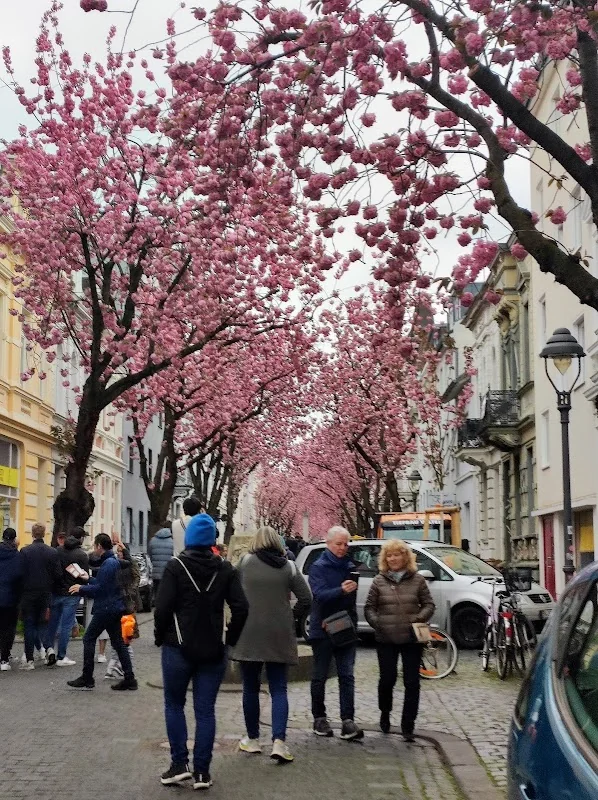
The City Group Bonn also shows a very active, creative working method on its official page. There, actions range from information stands and demonstrations to exhibitions and pub quizzes. Additionally, the group is working on an individual case from Cuba and advocates for the release of politically imprisoned individuals. This concrete case work is a good example of how Amnesty connects local attention with international human rights work. In the latest posts from the City Group, there are actions at the Bonn marketplace as part of Together for Democracy, a presentation at the EUnited workshop in Bonn, a presence at the Old Town flea market during cherry blossom season, an information stand before a performance at the theater in the ballroom, a film evening in a vacant space as a meeting place, and a stand at the Christmas market at Holzlarer Mühle. For a user searching for current Bonn dates, events, or programs, this is a clear signal: something is continuously happening here. ([stadtgruppe.amnesty-bonn.de](https://stadtgruppe.amnesty-bonn.de/))
The public is therefore not a side show but part of the location profile. Amnesty Bonn-Koblenz uses the space in Bonn not only for administration and coordination but also as a starting point for visible human rights work in the urban space. The website mentions not only large action days but also smaller, regularly recurring formats such as information stands or public discussions. This mix makes the address on Heerstraße an anchor point for people who encounter Amnesty actions in Bonn or want to learn about dates. In sum, a picture emerges of a district that is strongly locally anchored but works with international motivation. This is as important for search queries regarding events, actions, or dates as it is for pure contact searches. ([amnesty-bonn.de](https://amnesty-bonn.de/))
Bonn-Mitte and the City Group Bonn: Meetings at the District Office
When people search for Amnesty Bonn-Mitte, they usually mean a very concrete group within the district. The official groups page names fixed meeting times for Bonn-Mitte: every second and fourth Tuesday of the month at 19:30 in the district office, Heerstr. 30, 53111 Bonn. The City Group Bonn also meets regularly in the same office, specifically every second Monday of the month at 19:30. These dates are important because they show that Heerstraße is not just an administrative seat but a real meeting point for active groups. For search queries like amnesty bonn mitte, amnesty international bonn mitte, or amnesty bonn, this connection of name, group, and address is crucial. The office thus becomes the physical reference point of a lively local structure. ([amnesty-bonn.de](https://amnesty-bonn.de/gruppen/))
The City Group Bonn describes its work particularly vividly. It invites interested parties to learn about the group, its events, and its work, and mentions a wide range of formats: information stands, demonstrations, exhibitions, and pub quizzes. Currently, the group is handling an individual case from Cuba and thereby draws attention to the situation of politically imprisoned individuals. The homepage also features current and past actions that show how continuously and publicly the group works. This is particularly important for local discoverability: those searching for Bonn, human rights, demonstrations, or Bonn-Mitte find not just an office but an active group with thematic focus, events, and contacts. The City Group Bonn is thus a good example of how regional Amnesty work in Bonn becomes concrete and regularly visible. ([stadtgruppe.amnesty-bonn.de](https://stadtgruppe.amnesty-bonn.de/))
Other Bonn groups also complement this picture. The University Group Bonn meets every two weeks on Wednesdays at 20:00 in the district office, the Youth Group Bonn every Monday at 16:00 there as well, and the Asylum Group Bonn is marked as inactive but is still listed on the groups page. Together with Bonn-Endenich and Bad-Godesberg, a dense Bonn network emerges, where different target groups, topics, and forms of work can be found. This is valuable for SEO because the search intent often does not target just a single address but the question: Where can I find Amnesty in Bonn, what groups are there, and how can I get involved? The answers lie exactly in these regularly maintained groups and contact pages. ([amnesty-bonn.de](https://amnesty-bonn.de/gruppen/))
What Amnesty International Stands For and Why the District is Important
The Bonn district is part of a much larger movement. Amnesty International describes itself as the world's largest movement advocating for human rights. The organization is independent of governments, parties, ideologies, economic interests, and religions and finances its human rights work solely from donations and membership fees according to its official representation. In Germany, more than 208,000 people are engaged, and there are around 500 groups nationwide, including youth, university, country, regional, and thematic coordination groups. These figures show that the District Bonn-Koblenz does not operate in isolation but is embedded in a large, democratically organized volunteer structure. For search queries regarding Amnesty Bonn or Amnesty International Bonn, this is important because local work only becomes truly understandable in the context of this larger movement. ([amnesty.de](https://www.amnesty.de/amnesty-international-deutschland))
The official movement describes its work as an interplay of uncovering, informing, acting, and changing. This is well reflected in the District Bonn-Koblenz: There are information pages, group structures, public actions, vigils, lectures, exhibitions, and direct support forms such as Urgent Actions. Additionally, the regional coordination is explicitly named as a task of the district itself. This creates a dual role: on one hand, the district is a local contact point in Bonn, and on the other hand, part of an international network that is active in over 150 countries and has more than ten million supporters. For people searching for a serious, engaged, and well-organized human rights structure in Bonn, this is a strong signal. The address on Heerstraße thus stands not only for an office but for a concrete translation of global human rights work into local practice. ([amnesty-bonn.de](https://amnesty-bonn.de/))
Historically, this classification is also important. Amnesty International was founded in Germany in 1961, received the Nobel Peace Prize in 1977, and is guided by the Universal Declaration of Human Rights. These foundations also shape the regional work in Bonn-Koblenz. The district sees itself as a regional representation and coordination point, not as an event hall or classic cultural venue. This is precisely why terms like contact, groups, participation, office hours, actions, and dates are so crucial for search engine optimization. Those searching for this location are fundamentally looking for an active human rights platform on site. This makes the District Bonn-Koblenz a clear, credible, and substantively strong location for visitors who want to inform themselves, network, or engage. ([amnesty.de](https://www.amnesty.de/amnesty-international-deutschland))
Sources:
Mehr anzeigenWeniger anzeigen
Amnesty International, District Bonn-Koblenz | Contact & Groups
Amnesty International, District Bonn-Koblenz, is the regional contact point for human rights engagement between Bonn and Koblenz. The official website of the district makes it clear that groups are coordinated here, actions are prepared, and volunteers are networked together. The address Heerstr. 30 in 53111 Bonn, fixed office hours, an email address, and the role as a regional representation make the location an important starting point for anyone looking for Amnesty Bonn, Amnesty Bonn-Mitte, or a local contact for human rights work. At the same time, the site shows that the district sees itself not just as an office, but as an organizer, initiator, and meeting point for group work, public actions, and participation. ([amnesty-bonn.de](https://amnesty-bonn.de/))
Contact, Address, and Office Hours in the District Bonn-Koblenz
Those wishing to reach the District Bonn-Koblenz will find a clear and practical contact basis on the official pages. The address Heerstr. 30, 53111 Bonn, the phone number 0228-9 65 31 91, and the email address mail@amnesty-bonn.de are mentioned. Additionally, the contact page specifies concrete office hours: Wednesdays from 19:00 to 20:00 and every 4th Tuesday of the month from 18:00 to 19:00. This is particularly helpful for visitors, as the pages not only provide a general indication of the district but actually create a reliable organizational access. The location is thus not a classic event venue with large operations, but a working and coordination office primarily used for inquiries, group work, and exchange around Amnesty activities. ([amnesty.de](https://www.amnesty.de/mitmachen/gruppe-finden/bezirk-bonn-koblenz))
It is also practically important that the district transparently names its meeting points. The participation page states that the district assembly meets at the Amnesty district office at Heerstr. 30 and that these meetings take place approximately every three months. At the same time, it emphasizes that the meetings are not public and are aimed at members from the Amnesty groups in the district. For official communication, the district is very clearly set up: address, phone, and email are published, as well as regular office hours and the function of the office as a place for internal coordination. Those looking for parking spaces, a hall plan, or a classic location for the public quickly realize that different priorities apply here: the district is primarily an organizational center for human rights work. Therefore, contact, accessibility, and coordination are at the forefront on the official pages, not an event operation with seating arrangements or ticket sales. ([amnesty-bonn.de](https://amnesty-bonn.de/mitmachen/))
Which groups work in the District Bonn-Koblenz?
The District Bonn-Koblenz thrives on its group structure. The official groups page presents several local groups between Bonn and Koblenz that work on various Amnesty topics. These include, among others, Bonn-Mitte, City Group Bonn, Bad-Godesberg, Asylum Group Bonn, Bonn-Endenich, University Group Bonn, Youth Group Bonn, Bad Honnef, Neuwied, and Koblenz. The website thus makes it visible that Amnesty in this region is not reduced to a single office, but functions as a network of volunteer groups. Some groups are directly anchored in the district office at Heerstr. 30, while others meet at different locations in Bonn or in the surrounding cities. This mix of central coordination and decentralized engagement is a core feature of the district. ([amnesty-bonn.de](https://amnesty-bonn.de/gruppen/))
Substantively, the range of work is also broad. The groups deal with various human rights issues, politically persecuted individuals, asylum, youth and university work, and classic public relations work. The official participation page describes this work as a mix of political human rights work, school visits, actions, and informational work. It also points out that there are both general groups and special groups for youth or students, as well as an asylum group in the district. This is important for SEO relevance because search queries such as Amnesty Bonn Mitte, groups, participation, youth group, or asylum target not just an office but an entire regional structure. The District Bonn-Koblenz is therefore a relevant hub for all those who not only want to be informed but also want to become active themselves. ([amnesty-bonn.de](https://amnesty-bonn.de/gruppen/))
Notably, the current communication of the website is also significant. The groups page indicates that group meetings are currently only taking place virtually, but still names the regular weekdays and times when the individual groups usually meet. For Bonn-Mitte, for example, the second and fourth Tuesday of the month at 19:30 in the district office is mentioned, for the City Group Bonn the second Monday of the month at 19:30 also in the district office, for the University Group Bonn every two weeks on Wednesdays at 20:00, and for the Youth Group Bonn every Monday at 16:00 in the district office. These details clearly show how strongly the office on Heerstraße serves as the organizational home for the Bonn groups. Therefore, those searching for Amnesty Bonn-Mitte or City Group Bonn are not looking for some abstract organization, but for concrete, regularly structured group work with fixed time slots and a locally anchored address. ([amnesty-bonn.de](https://amnesty-bonn.de/gruppen/))
Getting Involved with Amnesty Bonn: Volunteering, Urgent Actions, and Donations
Those looking for Amnesty Bonn, participation, or volunteering will find a very open understanding of involvement on the official district page. The page explains that one can directly participate in Urgent Actions, described as the fastest and most effective way to protect people in acute danger. At the same time, people are invited to work in an Amnesty group, to establish new groups, or to participate as individual members in actions. The crucial point is: there are no special requirements. Primarily, interest in human rights and the willingness to engage voluntarily are mentioned. This openness makes the district particularly relevant for search queries like amnesty bonn mitte, participate amnesty bonn, or volunteer amnesty bonn, because here not only is information provided, but people are actually invited to participate. ([amnesty-bonn.de](https://amnesty-bonn.de/mitmachen/))
The range of participation is large according to the official page. It ranges from classic work on political prisoners and specific topics to school visits and various forms of public relations actions. This is typical for Amnesty: local work is not limited to a single form of engagement but combines research, informational work, visibility in public space, and direct support for people in danger. The page explicitly mentions youth groups, university groups, and an asylum group that supports asylum seekers. Additionally, individual members can participate, support actions, and strengthen the work through donations or regular contributions. This is not only important organizationally but also for local visibility: a district that offers so many forms of participation is interesting for people who want to not only be informed but also engage concretely. ([amnesty-bonn.de](https://amnesty-bonn.de/mitmachen/))
The internal structure of the district is also transparent. According to the participation page, the district team is elected once a year during the members' meeting in July, and a district assembly takes place approximately every three months. These meetings are not public but are aimed at members from the groups in the district. For interested parties, this means: there are not only regular group meetings but also a clearly organized regional level where work is bundled and coordinated. Those wishing to establish a new group receive support according to the district's own statement. This is where the practical value of the location Heerstraße 30 lies: it is not just a postal address but an operational center where engagement is translated into local structures. For many search queries regarding Amnesty Bonn, Bonn-Koblenz, or contact, this is the decisive point. ([amnesty-bonn.de](https://amnesty-bonn.de/mitmachen/))
Actions, Information Stands, and Public Events in Bonn
The public activities of the District Bonn-Koblenz show how visible Amnesty actually is in Bonn. The website documents various actions, including vigils, lectures, exhibitions, information stands, actions for Human Rights Day, a letter marathon, and participation in events in the city. Examples include an information stand at Bottlerplatz for the International Day Against the Death Penalty, participation in Beethovens Bunte on Münsterplatz, a lecture on asylum policy at the House of Education, a vigil at the Bonn marketplace, and a letter marathon at the Amnesty office at Heerstr. 30. This range is SEO-relevant because those searching for Bonn, dates, actions, or programs want to know whether the address is a lively place of political and social activity. This is indeed the case. ([amnesty-bonn.de](https://amnesty-bonn.de/))
The City Group Bonn also shows a very active, creative working method on its official page. There, actions range from information stands and demonstrations to exhibitions and pub quizzes. Additionally, the group is working on an individual case from Cuba and advocates for the release of politically imprisoned individuals. This concrete case work is a good example of how Amnesty connects local attention with international human rights work. In the latest posts from the City Group, there are actions at the Bonn marketplace as part of Together for Democracy, a presentation at the EUnited workshop in Bonn, a presence at the Old Town flea market during cherry blossom season, an information stand before a performance at the theater in the ballroom, a film evening in a vacant space as a meeting place, and a stand at the Christmas market at Holzlarer Mühle. For a user searching for current Bonn dates, events, or programs, this is a clear signal: something is continuously happening here. ([stadtgruppe.amnesty-bonn.de](https://stadtgruppe.amnesty-bonn.de/))
The public is therefore not a side show but part of the location profile. Amnesty Bonn-Koblenz uses the space in Bonn not only for administration and coordination but also as a starting point for visible human rights work in the urban space. The website mentions not only large action days but also smaller, regularly recurring formats such as information stands or public discussions. This mix makes the address on Heerstraße an anchor point for people who encounter Amnesty actions in Bonn or want to learn about dates. In sum, a picture emerges of a district that is strongly locally anchored but works with international motivation. This is as important for search queries regarding events, actions, or dates as it is for pure contact searches. ([amnesty-bonn.de](https://amnesty-bonn.de/))
Bonn-Mitte and the City Group Bonn: Meetings at the District Office
When people search for Amnesty Bonn-Mitte, they usually mean a very concrete group within the district. The official groups page names fixed meeting times for Bonn-Mitte: every second and fourth Tuesday of the month at 19:30 in the district office, Heerstr. 30, 53111 Bonn. The City Group Bonn also meets regularly in the same office, specifically every second Monday of the month at 19:30. These dates are important because they show that Heerstraße is not just an administrative seat but a real meeting point for active groups. For search queries like amnesty bonn mitte, amnesty international bonn mitte, or amnesty bonn, this connection of name, group, and address is crucial. The office thus becomes the physical reference point of a lively local structure. ([amnesty-bonn.de](https://amnesty-bonn.de/gruppen/))
The City Group Bonn describes its work particularly vividly. It invites interested parties to learn about the group, its events, and its work, and mentions a wide range of formats: information stands, demonstrations, exhibitions, and pub quizzes. Currently, the group is handling an individual case from Cuba and thereby draws attention to the situation of politically imprisoned individuals. The homepage also features current and past actions that show how continuously and publicly the group works. This is particularly important for local discoverability: those searching for Bonn, human rights, demonstrations, or Bonn-Mitte find not just an office but an active group with thematic focus, events, and contacts. The City Group Bonn is thus a good example of how regional Amnesty work in Bonn becomes concrete and regularly visible. ([stadtgruppe.amnesty-bonn.de](https://stadtgruppe.amnesty-bonn.de/))
Other Bonn groups also complement this picture. The University Group Bonn meets every two weeks on Wednesdays at 20:00 in the district office, the Youth Group Bonn every Monday at 16:00 there as well, and the Asylum Group Bonn is marked as inactive but is still listed on the groups page. Together with Bonn-Endenich and Bad-Godesberg, a dense Bonn network emerges, where different target groups, topics, and forms of work can be found. This is valuable for SEO because the search intent often does not target just a single address but the question: Where can I find Amnesty in Bonn, what groups are there, and how can I get involved? The answers lie exactly in these regularly maintained groups and contact pages. ([amnesty-bonn.de](https://amnesty-bonn.de/gruppen/))
What Amnesty International Stands For and Why the District is Important
The Bonn district is part of a much larger movement. Amnesty International describes itself as the world's largest movement advocating for human rights. The organization is independent of governments, parties, ideologies, economic interests, and religions and finances its human rights work solely from donations and membership fees according to its official representation. In Germany, more than 208,000 people are engaged, and there are around 500 groups nationwide, including youth, university, country, regional, and thematic coordination groups. These figures show that the District Bonn-Koblenz does not operate in isolation but is embedded in a large, democratically organized volunteer structure. For search queries regarding Amnesty Bonn or Amnesty International Bonn, this is important because local work only becomes truly understandable in the context of this larger movement. ([amnesty.de](https://www.amnesty.de/amnesty-international-deutschland))
The official movement describes its work as an interplay of uncovering, informing, acting, and changing. This is well reflected in the District Bonn-Koblenz: There are information pages, group structures, public actions, vigils, lectures, exhibitions, and direct support forms such as Urgent Actions. Additionally, the regional coordination is explicitly named as a task of the district itself. This creates a dual role: on one hand, the district is a local contact point in Bonn, and on the other hand, part of an international network that is active in over 150 countries and has more than ten million supporters. For people searching for a serious, engaged, and well-organized human rights structure in Bonn, this is a strong signal. The address on Heerstraße thus stands not only for an office but for a concrete translation of global human rights work into local practice. ([amnesty-bonn.de](https://amnesty-bonn.de/))
Historically, this classification is also important. Amnesty International was founded in Germany in 1961, received the Nobel Peace Prize in 1977, and is guided by the Universal Declaration of Human Rights. These foundations also shape the regional work in Bonn-Koblenz. The district sees itself as a regional representation and coordination point, not as an event hall or classic cultural venue. This is precisely why terms like contact, groups, participation, office hours, actions, and dates are so crucial for search engine optimization. Those searching for this location are fundamentally looking for an active human rights platform on site. This makes the District Bonn-Koblenz a clear, credible, and substantively strong location for visitors who want to inform themselves, network, or engage. ([amnesty.de](https://www.amnesty.de/amnesty-international-deutschland))
Sources:
Amnesty International, District Bonn-Koblenz | Contact & Groups
Amnesty International, District Bonn-Koblenz, is the regional contact point for human rights engagement between Bonn and Koblenz. The official website of the district makes it clear that groups are coordinated here, actions are prepared, and volunteers are networked together. The address Heerstr. 30 in 53111 Bonn, fixed office hours, an email address, and the role as a regional representation make the location an important starting point for anyone looking for Amnesty Bonn, Amnesty Bonn-Mitte, or a local contact for human rights work. At the same time, the site shows that the district sees itself not just as an office, but as an organizer, initiator, and meeting point for group work, public actions, and participation. ([amnesty-bonn.de](https://amnesty-bonn.de/))
Contact, Address, and Office Hours in the District Bonn-Koblenz
Those wishing to reach the District Bonn-Koblenz will find a clear and practical contact basis on the official pages. The address Heerstr. 30, 53111 Bonn, the phone number 0228-9 65 31 91, and the email address mail@amnesty-bonn.de are mentioned. Additionally, the contact page specifies concrete office hours: Wednesdays from 19:00 to 20:00 and every 4th Tuesday of the month from 18:00 to 19:00. This is particularly helpful for visitors, as the pages not only provide a general indication of the district but actually create a reliable organizational access. The location is thus not a classic event venue with large operations, but a working and coordination office primarily used for inquiries, group work, and exchange around Amnesty activities. ([amnesty.de](https://www.amnesty.de/mitmachen/gruppe-finden/bezirk-bonn-koblenz))
It is also practically important that the district transparently names its meeting points. The participation page states that the district assembly meets at the Amnesty district office at Heerstr. 30 and that these meetings take place approximately every three months. At the same time, it emphasizes that the meetings are not public and are aimed at members from the Amnesty groups in the district. For official communication, the district is very clearly set up: address, phone, and email are published, as well as regular office hours and the function of the office as a place for internal coordination. Those looking for parking spaces, a hall plan, or a classic location for the public quickly realize that different priorities apply here: the district is primarily an organizational center for human rights work. Therefore, contact, accessibility, and coordination are at the forefront on the official pages, not an event operation with seating arrangements or ticket sales. ([amnesty-bonn.de](https://amnesty-bonn.de/mitmachen/))
Which groups work in the District Bonn-Koblenz?
The District Bonn-Koblenz thrives on its group structure. The official groups page presents several local groups between Bonn and Koblenz that work on various Amnesty topics. These include, among others, Bonn-Mitte, City Group Bonn, Bad-Godesberg, Asylum Group Bonn, Bonn-Endenich, University Group Bonn, Youth Group Bonn, Bad Honnef, Neuwied, and Koblenz. The website thus makes it visible that Amnesty in this region is not reduced to a single office, but functions as a network of volunteer groups. Some groups are directly anchored in the district office at Heerstr. 30, while others meet at different locations in Bonn or in the surrounding cities. This mix of central coordination and decentralized engagement is a core feature of the district. ([amnesty-bonn.de](https://amnesty-bonn.de/gruppen/))
Substantively, the range of work is also broad. The groups deal with various human rights issues, politically persecuted individuals, asylum, youth and university work, and classic public relations work. The official participation page describes this work as a mix of political human rights work, school visits, actions, and informational work. It also points out that there are both general groups and special groups for youth or students, as well as an asylum group in the district. This is important for SEO relevance because search queries such as Amnesty Bonn Mitte, groups, participation, youth group, or asylum target not just an office but an entire regional structure. The District Bonn-Koblenz is therefore a relevant hub for all those who not only want to be informed but also want to become active themselves. ([amnesty-bonn.de](https://amnesty-bonn.de/gruppen/))
Notably, the current communication of the website is also significant. The groups page indicates that group meetings are currently only taking place virtually, but still names the regular weekdays and times when the individual groups usually meet. For Bonn-Mitte, for example, the second and fourth Tuesday of the month at 19:30 in the district office is mentioned, for the City Group Bonn the second Monday of the month at 19:30 also in the district office, for the University Group Bonn every two weeks on Wednesdays at 20:00, and for the Youth Group Bonn every Monday at 16:00 in the district office. These details clearly show how strongly the office on Heerstraße serves as the organizational home for the Bonn groups. Therefore, those searching for Amnesty Bonn-Mitte or City Group Bonn are not looking for some abstract organization, but for concrete, regularly structured group work with fixed time slots and a locally anchored address. ([amnesty-bonn.de](https://amnesty-bonn.de/gruppen/))
Getting Involved with Amnesty Bonn: Volunteering, Urgent Actions, and Donations
Those looking for Amnesty Bonn, participation, or volunteering will find a very open understanding of involvement on the official district page. The page explains that one can directly participate in Urgent Actions, described as the fastest and most effective way to protect people in acute danger. At the same time, people are invited to work in an Amnesty group, to establish new groups, or to participate as individual members in actions. The crucial point is: there are no special requirements. Primarily, interest in human rights and the willingness to engage voluntarily are mentioned. This openness makes the district particularly relevant for search queries like amnesty bonn mitte, participate amnesty bonn, or volunteer amnesty bonn, because here not only is information provided, but people are actually invited to participate. ([amnesty-bonn.de](https://amnesty-bonn.de/mitmachen/))
The range of participation is large according to the official page. It ranges from classic work on political prisoners and specific topics to school visits and various forms of public relations actions. This is typical for Amnesty: local work is not limited to a single form of engagement but combines research, informational work, visibility in public space, and direct support for people in danger. The page explicitly mentions youth groups, university groups, and an asylum group that supports asylum seekers. Additionally, individual members can participate, support actions, and strengthen the work through donations or regular contributions. This is not only important organizationally but also for local visibility: a district that offers so many forms of participation is interesting for people who want to not only be informed but also engage concretely. ([amnesty-bonn.de](https://amnesty-bonn.de/mitmachen/))
The internal structure of the district is also transparent. According to the participation page, the district team is elected once a year during the members' meeting in July, and a district assembly takes place approximately every three months. These meetings are not public but are aimed at members from the groups in the district. For interested parties, this means: there are not only regular group meetings but also a clearly organized regional level where work is bundled and coordinated. Those wishing to establish a new group receive support according to the district's own statement. This is where the practical value of the location Heerstraße 30 lies: it is not just a postal address but an operational center where engagement is translated into local structures. For many search queries regarding Amnesty Bonn, Bonn-Koblenz, or contact, this is the decisive point. ([amnesty-bonn.de](https://amnesty-bonn.de/mitmachen/))
Actions, Information Stands, and Public Events in Bonn
The public activities of the District Bonn-Koblenz show how visible Amnesty actually is in Bonn. The website documents various actions, including vigils, lectures, exhibitions, information stands, actions for Human Rights Day, a letter marathon, and participation in events in the city. Examples include an information stand at Bottlerplatz for the International Day Against the Death Penalty, participation in Beethovens Bunte on Münsterplatz, a lecture on asylum policy at the House of Education, a vigil at the Bonn marketplace, and a letter marathon at the Amnesty office at Heerstr. 30. This range is SEO-relevant because those searching for Bonn, dates, actions, or programs want to know whether the address is a lively place of political and social activity. This is indeed the case. ([amnesty-bonn.de](https://amnesty-bonn.de/))
The City Group Bonn also shows a very active, creative working method on its official page. There, actions range from information stands and demonstrations to exhibitions and pub quizzes. Additionally, the group is working on an individual case from Cuba and advocates for the release of politically imprisoned individuals. This concrete case work is a good example of how Amnesty connects local attention with international human rights work. In the latest posts from the City Group, there are actions at the Bonn marketplace as part of Together for Democracy, a presentation at the EUnited workshop in Bonn, a presence at the Old Town flea market during cherry blossom season, an information stand before a performance at the theater in the ballroom, a film evening in a vacant space as a meeting place, and a stand at the Christmas market at Holzlarer Mühle. For a user searching for current Bonn dates, events, or programs, this is a clear signal: something is continuously happening here. ([stadtgruppe.amnesty-bonn.de](https://stadtgruppe.amnesty-bonn.de/))
The public is therefore not a side show but part of the location profile. Amnesty Bonn-Koblenz uses the space in Bonn not only for administration and coordination but also as a starting point for visible human rights work in the urban space. The website mentions not only large action days but also smaller, regularly recurring formats such as information stands or public discussions. This mix makes the address on Heerstraße an anchor point for people who encounter Amnesty actions in Bonn or want to learn about dates. In sum, a picture emerges of a district that is strongly locally anchored but works with international motivation. This is as important for search queries regarding events, actions, or dates as it is for pure contact searches. ([amnesty-bonn.de](https://amnesty-bonn.de/))
Bonn-Mitte and the City Group Bonn: Meetings at the District Office
When people search for Amnesty Bonn-Mitte, they usually mean a very concrete group within the district. The official groups page names fixed meeting times for Bonn-Mitte: every second and fourth Tuesday of the month at 19:30 in the district office, Heerstr. 30, 53111 Bonn. The City Group Bonn also meets regularly in the same office, specifically every second Monday of the month at 19:30. These dates are important because they show that Heerstraße is not just an administrative seat but a real meeting point for active groups. For search queries like amnesty bonn mitte, amnesty international bonn mitte, or amnesty bonn, this connection of name, group, and address is crucial. The office thus becomes the physical reference point of a lively local structure. ([amnesty-bonn.de](https://amnesty-bonn.de/gruppen/))
The City Group Bonn describes its work particularly vividly. It invites interested parties to learn about the group, its events, and its work, and mentions a wide range of formats: information stands, demonstrations, exhibitions, and pub quizzes. Currently, the group is handling an individual case from Cuba and thereby draws attention to the situation of politically imprisoned individuals. The homepage also features current and past actions that show how continuously and publicly the group works. This is particularly important for local discoverability: those searching for Bonn, human rights, demonstrations, or Bonn-Mitte find not just an office but an active group with thematic focus, events, and contacts. The City Group Bonn is thus a good example of how regional Amnesty work in Bonn becomes concrete and regularly visible. ([stadtgruppe.amnesty-bonn.de](https://stadtgruppe.amnesty-bonn.de/))
Other Bonn groups also complement this picture. The University Group Bonn meets every two weeks on Wednesdays at 20:00 in the district office, the Youth Group Bonn every Monday at 16:00 there as well, and the Asylum Group Bonn is marked as inactive but is still listed on the groups page. Together with Bonn-Endenich and Bad-Godesberg, a dense Bonn network emerges, where different target groups, topics, and forms of work can be found. This is valuable for SEO because the search intent often does not target just a single address but the question: Where can I find Amnesty in Bonn, what groups are there, and how can I get involved? The answers lie exactly in these regularly maintained groups and contact pages. ([amnesty-bonn.de](https://amnesty-bonn.de/gruppen/))
What Amnesty International Stands For and Why the District is Important
The Bonn district is part of a much larger movement. Amnesty International describes itself as the world's largest movement advocating for human rights. The organization is independent of governments, parties, ideologies, economic interests, and religions and finances its human rights work solely from donations and membership fees according to its official representation. In Germany, more than 208,000 people are engaged, and there are around 500 groups nationwide, including youth, university, country, regional, and thematic coordination groups. These figures show that the District Bonn-Koblenz does not operate in isolation but is embedded in a large, democratically organized volunteer structure. For search queries regarding Amnesty Bonn or Amnesty International Bonn, this is important because local work only becomes truly understandable in the context of this larger movement. ([amnesty.de](https://www.amnesty.de/amnesty-international-deutschland))
The official movement describes its work as an interplay of uncovering, informing, acting, and changing. This is well reflected in the District Bonn-Koblenz: There are information pages, group structures, public actions, vigils, lectures, exhibitions, and direct support forms such as Urgent Actions. Additionally, the regional coordination is explicitly named as a task of the district itself. This creates a dual role: on one hand, the district is a local contact point in Bonn, and on the other hand, part of an international network that is active in over 150 countries and has more than ten million supporters. For people searching for a serious, engaged, and well-organized human rights structure in Bonn, this is a strong signal. The address on Heerstraße thus stands not only for an office but for a concrete translation of global human rights work into local practice. ([amnesty-bonn.de](https://amnesty-bonn.de/))
Historically, this classification is also important. Amnesty International was founded in Germany in 1961, received the Nobel Peace Prize in 1977, and is guided by the Universal Declaration of Human Rights. These foundations also shape the regional work in Bonn-Koblenz. The district sees itself as a regional representation and coordination point, not as an event hall or classic cultural venue. This is precisely why terms like contact, groups, participation, office hours, actions, and dates are so crucial for search engine optimization. Those searching for this location are fundamentally looking for an active human rights platform on site. This makes the District Bonn-Koblenz a clear, credible, and substantively strong location for visitors who want to inform themselves, network, or engage. ([amnesty.de](https://www.amnesty.de/amnesty-international-deutschland))
Sources:
Frequently Asked Questions
Reviews
No reviews found