
Trude Herr
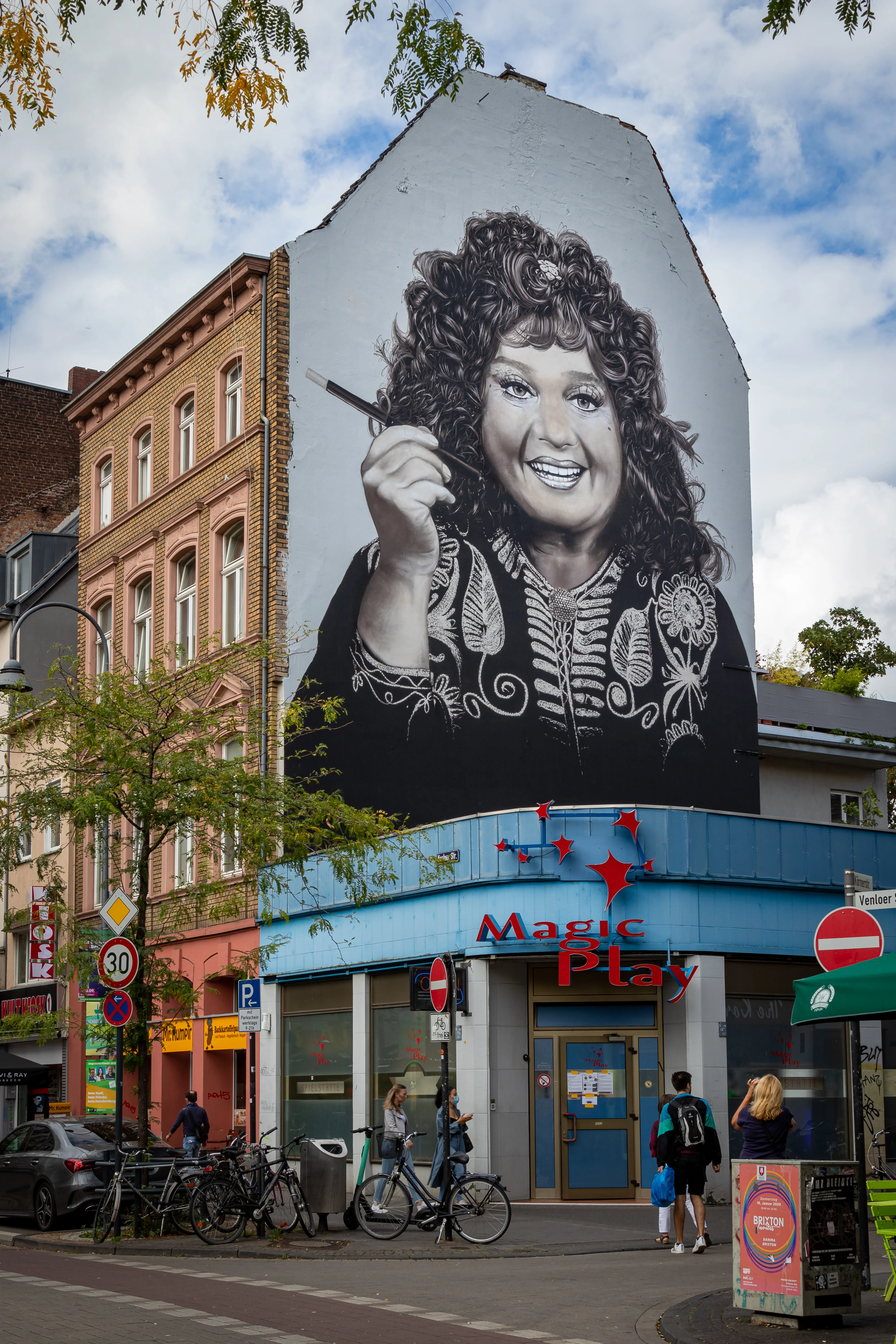
Image from Wikipedia
Image from Wikipedia
Trude Herr – Cologne Charm, Schlager Temperament and a Stage Full of Individuality
A Cologne Exceptional Artist Between Folk Theater, Schlager, and Uncompromising Presence
Trude Herr was one of the defining figures in German entertainment and music history. Born on May 4, 1927, in Cologne and passed away in 1991 in Lauris near Aix-en-Provence, she blended acting, singing, cabaret, and theater direction into a distinct artistic personality. Equally present in High German and Cologne dialect, she represented humor, directness, and a stage presence that extended far beyond the classic Schlager genre. ([rheinische-geschichte.lvr.de](https://www.rheinische-geschichte.lvr.de/Persoenlichkeiten/trude-herr/DE-2086/lido/57c82d8f42ab75.72668780))
Early Years: Cologne, War Experiences and the Shaping of a Strong Character
Trude Herr grew up in Cologne-Kalk and Cologne-Mülheim, experiencing a childhood marked by poverty, political upheaval, and the burdens of the Nazi era. Her father was persecuted and imprisoned due to his membership in the KPD; the family lived in difficult conditions for a long time. These experiences shaped not only her perspective but also the mixture of down-to-earthiness and resilience that later determined her roles, her lyrics, and her public persona. ([rheinische-geschichte.lvr.de](https://www.rheinische-geschichte.lvr.de/Persoenlichkeiten/trude-herr/DE-2086/lido/57c82d8f42ab75.72668780))
After finishing school, she initially worked in a bakery and later completed training in the commercial sector. However, her life path soon shifted toward the stage: after the war, she found a job in Cologne and approached the theater milieu, which would soon become her true home. The fact that she did not come from a conventional acting background gave her performance an unpretentious directness that became her trademark. ([rheinische-geschichte.lvr.de](https://www.rheinische-geschichte.lvr.de/Persoenlichkeiten/trude-herr/DE-2086/lido/57c82d8f42ab75.72668780))
The Way to the Stage: From Cologne Folk Theater to Berlin Cabaret
Her theater career began in 1946 with a traveling stage in Aachen, before she appeared in supporting roles at the Millowitsch Theater starting in 1948. In 1949, she co-founded the Cologne Lustspielbühne with Gustl Schellhardt, an early testament to her entrepreneurial courage and creative spirit. These initial steps reveal an artist who not only acted but actively shaped stage spaces and later developed her music career from the same self-understanding. ([ksta.de](https://www.ksta.de/150aus150/150-aus-150-trude-herr-war-eine-ikone-des-koelner-theaters-1310319?utm_source=openai))
In the late 1950s, she was discovered by Willi Schaeffers, the head of the cabaret Tingel-Tangel, and engaged in Berlin in 1958. There, she sharpened her profile as a comedic performer and singer before making the leap to nationwide recognition. The combination of Cologne dialect, cheeky performance style, and musical sensitivity made her a character who functioned equally well in carnival, theater, and film. ([universal-music.de](https://www.universal-music.de/trude-herr/biografie))
Breakthrough in Schlager: "Ich will keine Schokolade" and the Rise to Cultural Icon
Trude Herr's real breakthrough came in 1960 with "Ich will keine Schokolade," a German adaptation of "Percolator, Percolator." The song became a million-seller, making her an instant presence in the German Schlager scene. Other songs such as "Morgens bin ich immer müde," "In der Spelunke Zur alten Unke," or "Weil ich so sexy bin" solidified her image as a humorous, self-assured interpreter with high recognizability. ([universal-music.de](https://www.universal-music.de/trude-herr/biografie))
It is noteworthy that her career was not based on a flawless pop image but on character. Universal Music describes her as the Cologne comedian on duty, a cult figure of Cologne's carnival, and a star who rose from the local scene to the top tier of German Schlager. This journey from the regional stage to nationwide fame makes Trude Herr an important figure in the post-war German-speaking entertainment culture. ([universal-music.de](https://www.universal-music.de/trude-herr/biografie))
Film Career and Public Impact: Between Light Comedy and Screen Star
Alongside her music career, Trude Herr became a staple of German light comedy films. She starred alongside Heinz Erhardt, Conny Froboess, Vivi Bach, Freddy Quinn, Harald Juhnke, and other stars of the time. Her film appearances significantly boosted her popularity, even though they sometimes did not fully align with the then-prevailing "wholesome" tone. ([www1.wdr.de](https://www1.wdr.de/stichtag/stichtag6614.html))
The music and film culture of the 1960s benefited from her unique blend of wit, individuality, and physical comedy. Bear Family emphasizes that her film roles made her widely known across the country, although her broad artistic talent was often not fully utilized. This highlights an important point in her reception: Trude Herr was not only a favorite with audiences but an artist with a much broader range than was often acknowledged by the entertainment system of that time. ([bear-family.de](https://www.bear-family.de/herr-trude/))
Discography: Classics, Late Works, and Enduring Songs
Key milestones in her discography include the early to mid-1960s. Besides "Ich will keine Schokolade," other well-known titles include "Quatschkopp-Marsch," "Morgens bin ich immer müde," "Niemals geht man so ganz," "Ich sage, was ich meine," and "Ich bin eine Frau von Format." AllMusic documents a repertoire ranging from humorous Schlager to chanson-like numbers, as well as later re-releases and compilations. ([allmusic.com](https://www.allmusic.com/artist/trude-herr-mn0000541026))
Particularly important for her later reception is "Niemals geht man so ganz," which she performed in 1987 together with Wolfgang Niedecken and Tommy Engel. The title reached number 20 on the German charts in August 1987 and became a kind of musical legacy. It encapsulates her entire artistry: the Cologne identity, emotional authenticity, and the ability to transform a farewell song into a collective moment of remembrance. ([www1.wdr.de](https://www1.wdr.de/stichtag/stichtag6614.html))
Style, Voice, and Artistic Signature
Trude Herr's style was never aimed at smooth perfection but focused on impact, timing, and personality. Her voice had a distinctive quality, her articulation was precise, and her interpretations thrived on a charming tension between comedy and self-assertion. In the Schlager genre, this meant not only singing but telling, sharpening, and performing. ([universal-music.de](https://www.universal-music.de/trude-herr/biografie))
Her work as a theater director underscores this artistic autonomy. In 1977, she opened her own folk theater in Cologne and worked there for years as director, producer, author, director, costume designer, singer, and lead actress. This versatility demonstrates a rare form of authorship in German-language entertainment theater: Trude Herr possessed not only stage presence but also control over her artistic environment. ([universal-music.de](https://www.universal-music.de/trude-herr/biografie))
Cultural Influence: Cologne Identity, Female Self-Determination, and Lasting Impact
Trude Herr became a symbolic figure of a Cologne culture that combines humor, dialect, folk theater, and musical lightness. At the same time, she broke the limiting image of the "ulknudel," which had been attributed to her for years. Her career stands for female independence in a male-dominated entertainment industry and for the courage to pursue one's own way, even against expectations. ([universal-music.de](https://www.universal-music.de/trude-herr/biografie))
Her influence extends to later generations of musicians who continue to carry Cologne themes, dialects, and emotional directness. The fact that "Niemals geht man so ganz" still functions as a farewell and remembrance song today attests to the lasting cultural reach of her work. Her posthumous presence in compilations and re-releases also shows: Trude Herr remains a significant figure in German music and theater history. ([allmusic.com](https://www.allmusic.com/artist/trude-herr-mn0000541026))
Current Projects and Releases
As a deceased artist, Trude Herr has no current projects, tours, or new studio releases scheduled for 2024 or 2025. Today, her presence in music culture primarily arises from re-releases, compilations, broadcasts, remembrance formats, and the ongoing reception of her most famous songs. Thus, her work continues to live not through new productions but through the strength of her repertoire. ([allmusic.com](https://www.allmusic.com/artist/trude-herr-mn0000541026))
Conclusion: Why Trude Herr Continues to Fascinate
Trude Herr is captivating because she was more than just a Schlager singer: she was a formative stage storyteller, a clever self-presenter, and a woman who generated national impact from her regional roots. Her songs carry humor, character, and emotionality; her biography narrates a story of rise, individuality, and artistic independence. Anyone wanting to understand German-speaking entertainment culture cannot overlook Trude Herr. A live experience is no longer possible today, but her performances, films, and songs remain a strong document of a time when personality mattered more than perfection. ([universal-music.de](https://www.universal-music.de/trude-herr/biografie))
Official Channels of Trude Herr:
- Instagram: No official profile found
- Facebook: No official profile found
- YouTube: No official profile found
- Spotify: No official profile found
- TikTok: No official profile found
Sources:
- Universal Music – Trude Herr | Biography ([universal-music.de](https://www.universal-music.de/trude-herr/biografie))
- WDR – May 4, 1927: Trude Herr is born ([www1.wdr.de](https://www1.wdr.de/stichtag/stichtag6614.html))
- Portal Rheinische Geschichte – Trude Herr ([rheinische-geschichte.lvr.de](https://www.rheinische-geschichte.lvr.de/Persoenlichkeiten/trude-herr/DE-2086/lido/57c82d8f42ab75.72668780))
- AllMusic – Trude Herr: Biography, Discography, Albums & Reviews ([allmusic.com](https://www.allmusic.com/artist/trude-herr-mn0000541026))
- Bear Family – Trude Herr ([bear-family.de](https://www.bear-family.de/herr-trude/))
- Wikipedia – Trude Herr ([de.wikipedia.org](https://de.wikipedia.org/wiki/Trude_Herr?utm_source=openai))