
Miles Davis
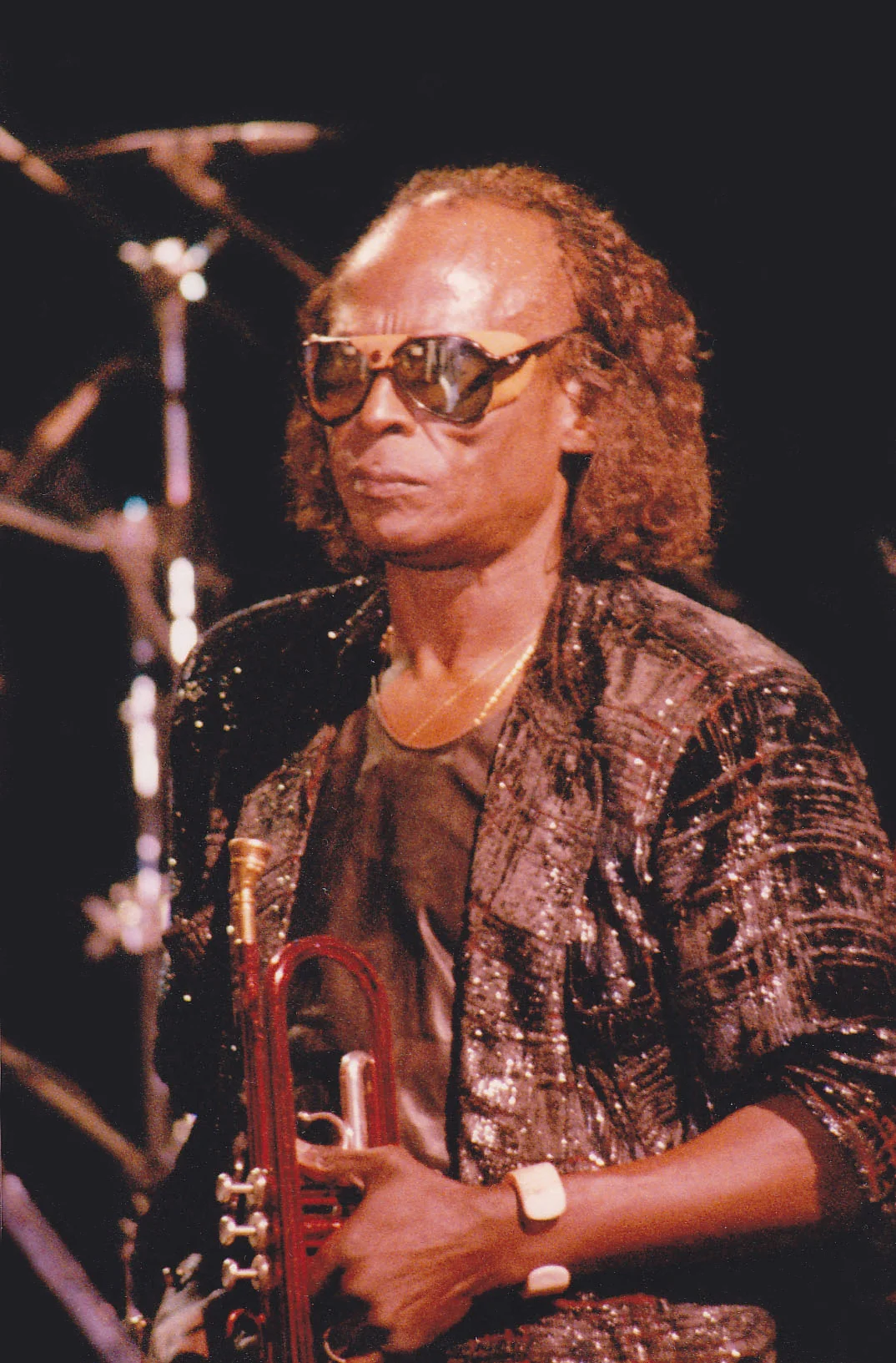
Image from Wikipedia
Image from Wikipedia
Miles Davis – The Eternal Innovator of Jazz
An Artist Biography of Revolution, Elegance, and Radical Reinvention
Miles Dewey Davis III was born on May 26, 1926, in Alton, Illinois, and died on September 28, 1991, in Santa Monica, California. He shaped the jazz of the 20th century like few other musicians: as a trumpeter, flugelhorn player, composer, and bandleader, but above all as an artistic visionary who continually reinvented the language of the genre. The official representation from the Miles Davis estate describes him as one of the most innovative, influential, and celebrated figures in music history. ([milesdavis.com](https://www.milesdavis.com/?utm_source=openai))
His career began in the milieu of the bebop revolution, yet Davis never settled in one aesthetic. From being a young sideman to Charlie Parker, he became a style-defining soloist, later the architect of Cool Jazz, Hard Bop, modal jazz, and jazz-rock. This constant movement is what makes his music career so extraordinary: Miles Davis represented not just one chapter of jazz history, but several. ([britannica.com](https://www.britannica.com/biography/Miles-Davis?utm_source=openai))
From Bebop Sideman to Independent Style Shaper
Davis left his first significant mark as a partner to Charlie Parker. In this phase, he sharpened his tone, which later became his trademark: controlled, lyrical, often played with a mute, always precise rather than excessively demonstrative. Early on, it was evident that he was more than a virtuosic instrumentalist. He understood arrangement, timing, and instrumentation as strategic tools to shape entire bands sonically. ([britannica.com](https://www.britannica.com/biography/Miles-Davis?utm_source=openai))
With the early recordings of the nonet and later with Birth of the Cool, Davis set up an aesthetic counterpoint to the frantic bebop. The music opened jazz to a cooler, chamber-music-like balance, finely tuned sound colors, and a new form of transparency. This not only shifted the playing style but also the entire listener's expectation of modern improvised music. ([milesdavis.com](https://www.milesdavis.com/news/shore-fire-media-named-pr-agency-of-record-for-the-miles-davis-estate-ahead-of-2026-centennial/?utm_source=openai))
Kind of Blue and the Invention of the Modern Jazz Moment
With Kind of Blue, Miles Davis achieved a cultural landmark in 1959 that extends far beyond jazz. The album is considered one of the most famous works in music history and is highlighted by both the official Miles Davis milieu and reputable reference works. Its impact lies not only in its timeless beauty of sound but also in its reduction to modal structures that provided improvisation with a new openness. ([britannica.com](https://www.britannica.com/biography/Miles-Davis?utm_source=openai))
The lineup featuring John Coltrane, Cannonball Adderley, Bill Evans, Paul Chambers, and Jimmy Cobb made the album a peak of collective inspiration. Particularly Davis’s ability to guide strong personalities into a cohesive sound became a core part of his myth. Many musicians found in his band not just a job but a springboard to their own greatness. ([en.wikipedia.org](https://en.wikipedia.org/wiki/Miles_Davis?utm_source=openai))
The Second Great Quintet and the Art of Open Form Thinking
In the 1960s, Davis shifted his focus once again. With Wayne Shorter, Herbie Hancock, Ron Carter, and Tony Williams, he developed a band that renewed jazz from within. The official website describes the sessions of the Plugged Nickel material as a moment when the ensemble deconstructed familiar pieces live, thinking radically new thoughts. Here, Davis’ true authority is revealed: He did not just let musicians accompany but let them shape together. ([milesdavis.com](https://www.milesdavis.com/?utm_source=openai))
Albums like E.S.P. and Miles Smiles represent an aesthetic of open form thinking, where composition, improvisation, and interaction merge. Davis moved away from static harmony toward an elastic ensemble sound that draws its energy from tension, friction, and sudden calm. This phase influenced generations of jazz musicians who recognized it as a school of risk. ([en.wikipedia.org](https://en.wikipedia.org/wiki/Miles_Davis?utm_source=openai))
The Electric Years, Fusion, and the Break with Expectations
At the end of the 1960s, Davis took perhaps the boldest step of his career: turning to electric instruments, rock grooves, and open studio forms. In a Silent Way and especially Bitches Brew made it clear that jazz did not have to exist as a museum form but as a living, self-overwriting practice. The official Miles Davis catalog highlights these Electric Years as a core chapter. ([milesdavis.com](https://www.milesdavis.com/?utm_source=openai))
With this development, Davis became a key figure in jazz-rock and fusion. The music gained rhythmic force, studio texture, and dramatic openness. At the same time, he remained commercially successful without softening his risks – a rare balancing act that stabilized his authority for decades. ([en.wikipedia.org](https://en.wikipedia.org/wiki/Miles_Davis?utm_source=openai))
Discography, Classics, and Critical Reception
The discography of Miles Davis reads like a history of jazz in stages: Birth of the Cool, Kind of Blue, Sketches of Spain, In a Silent Way, Bitches Brew, and later Tutu mark just some of the waypoints. The official estate communication even describes Kind of Blue as the best-selling jazz album of all time. These works form the core of a discography that has become a reference catalog both historically and aesthetically. ([milesdavis.com](https://www.milesdavis.com/news/shore-fire-media-named-pr-agency-of-record-for-the-miles-davis-estate-ahead-of-2026-centennial/?utm_source=openai))
The critical reception has remained impressively consistent over decades. According to official materials and music press, Davis is regarded as one of the most sampled artists of the present and a Grammy and Hall of Fame giant with lasting cultural impact. His albums are understood not only as classics but as benchmarks for modern listening. ([milesdavis.com](https://www.milesdavis.com/news/shore-fire-media-named-pr-agency-of-record-for-the-miles-davis-estate-ahead-of-2026-centennial/?utm_source=openai))
Awards, Influence, and Musical Legacy
Miles Davis received eight Grammy Awards, a Grammy Lifetime Achievement Award, and was inducted into the Grammy Hall of Fame with eleven recordings. Additionally, he was inducted into the Rock & Roll Hall of Fame and received stars on the Hollywood Walk of Fame and the St. Louis Walk of Fame. These honors document that his influence reaches far beyond the jazz scene. ([milesdavis.com](https://www.milesdavis.com/news/shore-fire-media-named-pr-agency-of-record-for-the-miles-davis-estate-ahead-of-2026-centennial/?utm_source=openai))
His cultural influence extends into fashion, film, visual arts, and pop aesthetics. The official site notes that Miles Davis continually pushed the boundaries of creative expression. This is what makes his authority so unique: He was not only a historical figure but a permanent catalyst for modern improvisation and stylistic self-determination. ([milesdavis.com](https://www.milesdavis.com/?utm_source=openai))
Current Projects, Reissues, and the Centennial 2026
Even decades after his death, Miles Davis remains present. The official website lists 2024 and 2026 releases and anniversary activities, including Birth of the Blue with a release date in 2024, as well as Miles In France 1963 & 64 – The Miles Davis Quintet: The Bootleg Series. For 2026, official news documents the Miles-Davis-100 logo, worldwide centennial activities, and new projects like The Voice of Miles: A Symphonic Celebration. ([milesdavis.com](https://www.milesdavis.com/music/releases/?utm_source=openai))
Additionally, there are more centennial-related announcements, including international tributes, SFJAZZ activities, and the announcement of Miles & Juliette in the official communication from the estate. These releases show that Davis is not only managed as a catalog artist but as a living cultural brand with ongoing relevance. Even in 2026, his name remains a driving force for curated re-releases, programs, and artistic reinterpretations. ([milesdavis.com](https://www.milesdavis.com/news/sfjazz-jazz-minute-on-miles-davis-centennial-connections-to-sf-bay-area/?utm_source=openai))
Official Channels of Miles Davis:
- Instagram: https://www.instagram.com/milesdavis/
- Facebook: https://www.facebook.com/MilesDavis
- YouTube: https://www.youtube.com/channel/UC1ZS17c0DlqUjsXZK3K_bgA
- Spotify: https://open.spotify.com/artist/0kbYTNQb4Pb1rPbbaF0pT4
- TikTok: No official profile found
Voices of the Fans
The reactions on the official channels clearly show that Miles Davis is still regarded as a benchmark for innovation, elegance, and musical courage. In the comments and responses surrounding the current centennial activities, his ability to continually redefine jazz while keeping it emotionally accessible is celebrated. This blend of intellectual boldness and timeless atmosphere keeps his fan base strong across generations. ([milesdavis.com](https://www.milesdavis.com/?utm_source=openai))
Conclusion: Why Miles Davis Still Captivates Today
Miles Davis remains exciting because he was not only a great trumpeter but a director of musical change. His career tells tales of stylistic breaks, masterpieces, and bold new beginnings, characterized by sonic discipline and radical openness. Anyone wanting to understand how modern jazz has developed cannot overlook him. ([britannica.com](https://www.britannica.com/biography/Miles-Davis?utm_source=openai))
Anyone who can experience Miles Davis live – whether in a tribute, a reinterpretation, or a curated centennial program – will not just experience music but history in motion. His art demands attention, rewards intense listening, and feels remarkably present even decades later. This is where his greatness lies: Miles Davis remains an artist whose sound continues to resonate forward. ([milesdavis.com](https://www.milesdavis.com/news/the-miles-davis-estate-and-park-avenue-artists-announce-the-voice-of-miles-a-symphonic-celebration-premiering-at-national-sawdust/?utm_source=openai))
Sources:
- Miles Davis Official Site - Official Website
- Miles Davis Official Site - Miles Davis Estate Unveils Miles Davis 100 Logo Ahead of Historic Centennial Celebration
- Miles Davis Official Site - The Voice of Miles: A Symphonic Celebration
- Miles Davis Official Site - SFJAZZ / Jazz Minute on Miles Davis Centennial
- Miles Davis Official Site - Releases
- Miles Davis Official Site - Birth of the Blue
- Britannica - Miles Davis Biography
- Wikipedia - Miles Davis
- Facebook - Miles Davis
- Instagram - Miles Davis
- YouTube - Miles Davis
- Spotify - Miles Davis