
Markus (Evangelist)
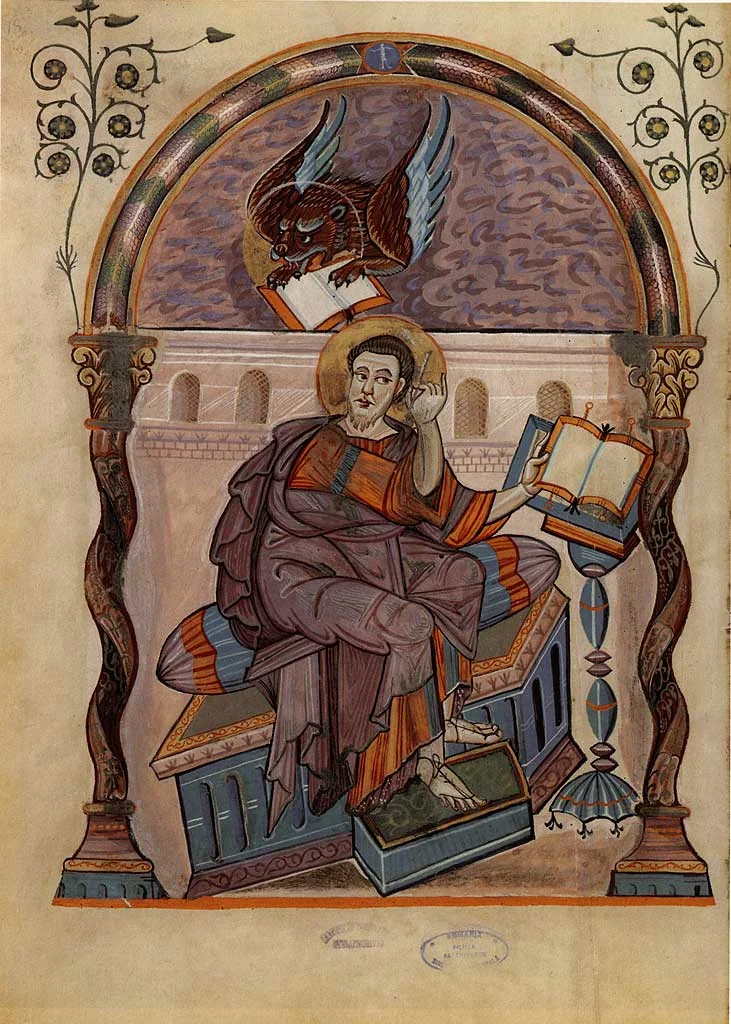
Image from Wikipedia
Image from Wikipedia
Markus (Evangelist) – The Traditional Author of the Oldest Gospel and Its Symbolic Power
One of the Most Influential Figures in Christian Tradition
Markus, venerated in early church tradition as the Evangelist of the probably oldest Gospel, is among the most influential figures in the history of Christian literature and piety. The name itself does not appear in the text of the Gospel; rather, it is a later attribution from tradition that identifies the author from the early church. In scholarly literature, the author is therefore referred to as "Markus," without this automatically presupposing a historically verified biography of Markus. ([de.wikipedia.org](https://de.wikipedia.org/wiki/Markus_%28Evangelist%29?utm_source=openai))
Biographical Context and Tradition
The origin of the figure of Markus is closely tied to the formation of early Christian tradition. According to church tradition, he was a witness and interpreter of the apostolic age, whose activity is primarily located in the vicinity of Peter and the development of the Gospel of Markus. The Vatican describes him as a figure from whom traditional knowledge derives from the Acts of the Apostles and early testimonies; some traditions also connect him with Johannes Markus. ([vaticanstate.va](https://www.vaticanstate.va/en/state-and-government/general-informations/saint-of-the-day/1806-april-25-saint-mark-the-evangelist.html?utm_source=openai))
It is important to exercise scholarly caution: "Markus" is a Roman, not a Jewish name, and the designation of the Evangelist is a convention of early church reception. This historical tension of his figure lies precisely here: Markus is at once a literary authority, a church memory, and a symbol of an early, anonymous writing culture. This ambiguity continues to make him equally interesting for theology, exegesis, and church history today. ([de.wikipedia.org](https://de.wikipedia.org/wiki/Markus_%28Evangelist%29?utm_source=openai))
The Gospel as a Formative Text of the Early Church
The Gospel attributed to Markus occupies a key position because it is often considered the oldest of the canonical Gospels in research. In Christian tradition, it was early associated with Peter's preaching and read as an independent, concise account of Jesus' ministry. Thus, Markus became a voice of origin: concise, focused, narratively condensed, and directed towards the essential. ([de.wikipedia.org](https://de.wikipedia.org/wiki/Markus_%28Evangelist%29?utm_source=openai))
The literary effect of the Gospel of Markus lies precisely in its directness. It is considered shorter and more succinct than the other canonical Gospels and unfolds its drama with high narrative intensity. In church and academic reception, this form was often described as powerful, immediate, and theologically pointed. ([encyclopedia.com](https://www.encyclopedia.com/history/encyclopedias-almanacs-transcripts-and-maps/st-mark?utm_source=openai))
Symbolism: The Markus Lion as a Visual Identifier
The best-known symbol of the Evangelist Markus is the Markus lion. In Christian iconography, the lion is associated with Markus, particularly because of the desert and voice motifs at the beginning of the Gospel. The lion thus represents strength, vigilance, and the penetrating voice of the word of God. ([vaticanstate.va](https://www.vaticanstate.va/en/state-and-government/general-informations/saint-of-the-day/1806-april-25-saint-mark-the-evangelist.html?utm_source=openai))
This symbolic language continues to shape art and cultural history to this day. The Markus lion became not only an attribute of the Evangelist but also an emblematic sign of Venetian identity. Thus, religious tradition, visual art, and city culture intertwine to create a powerful memory image that reaches far beyond the church context. ([encyclopedia.com](https://www.encyclopedia.com/history/encyclopedias-almanacs-transcripts-and-maps/st-mark?utm_source=openai))
Historical Impact and Church Veneration
Markus was remembered in church tradition not only as an author but also as a saint. The veneration is closely linked to the belief that his writing preserves the public testimony of faith in concentrated form. From this perspective, Markus stands for the transition from oral proclamation to canonical textual form. ([vaticanstate.va](https://www.vaticanstate.va/en/state-and-government/general-informations/saint-of-the-day/1806-april-25-saint-mark-the-evangelist.html?utm_source=openai))
The Markus tradition had a particularly strong impact on the Christian visual world. Numerous representations show the Evangelist with a book or in writing posture, emphasizing his role as author and transmitter. The iconography transforms an originally anonymous text into a personalized figure that connects faith, education, and memory. ([en.wikipedia.org](https://en.wikipedia.org/wiki/Mark_the_Evangelist?utm_source=openai))
Cultural Influence from Antiquity to the Present
The significance of Markus extends deep into cultural history. His name stands for one of the central texts of Christianity, and his symbolic figure is associated with one of the most enduring image traditions in Europe. In liturgy, art history, and religious education, Markus remains a reference point when discussing the formation of the New Testament and the early development of Christian identity. ([vaticanstate.va](https://www.vaticanstate.va/en/state-and-government/general-informations/saint-of-the-day/1806-april-25-saint-mark-the-evangelist.html?utm_source=openai))
Modern research continues to engage with questions regarding the author, context of origin, and transmission path of the Gospel. Precisely because the Evangelist himself remains anonymous in the text, his historical figure remains open to interpretation. This openness is part of his enduring appeal: Markus is at once a concrete figure of tradition and a symbol of the power of early Christian storytelling. ([de.wikipedia.org](https://de.wikipedia.org/wiki/Markus_%28Evangelist%29?utm_source=openai))
Context for Readers Discovering Markus for the First Time
Those who read or observe Markus encounter not a loud legend, but a dense, tradition-rich figure at the threshold of text, faith, and image. It is this very density that makes him intriguing: he stands for origin, interpretation, and memory in a form that still resonates culturally today. His impact does not derive from a spectacular biography in the modern sense but from the authority of a text and the power of its symbolism. ([vaticanstate.va](https://www.vaticanstate.va/en/state-and-government/general-informations/saint-of-the-day/1806-april-25-saint-mark-the-evangelist.html?utm_source=openai))
Thus, Markus remains a fascinating figure for all who wish to understand religious literature, early Christian history, and iconographic traditions. His significance lies in the combination of linguistic precision, church tradition, and visual radiance. Engaging with the Evangelist reveals one of the most defining names in the history of Christian culture. ([vaticanstate.va](https://www.vaticanstate.va/en/state-and-government/general-informations/saint-of-the-day/1806-april-25-saint-mark-the-evangelist.html?utm_source=openai))
Conclusion: Why Markus Continues to Fascinate Today
Markus fascinates because his figure lives in the tension between historical uncertainty and cultural certainty. The Evangelist represents the origin of a narrative tradition that has profoundly shaped Christianity and a symbol that continues to connect art and theology. Encountering Markus means confronting the early foundation of a global tradition – concentrated, powerful, and of lasting impact. ([vaticanstate.va](https://www.vaticanstate.va/en/state-and-government/general-informations/saint-of-the-day/1806-april-25-saint-mark-the-evangelist.html?utm_source=openai))
His significance is particularly striking in the interplay of text, symbol, and memory. Therefore, a renewed reading of the Gospel of Markus is just as worthwhile as exploring his iconographic tradition. Markus remains a name that embodies cultural history. ([de.wikipedia.org](https://de.wikipedia.org/wiki/Markus_%28Evangelist%29?utm_source=openai))
Official Channels of Markus (Evangelist):
- Instagram: no official profile found
- Facebook: no official profile found
- YouTube: no official profile found
- Spotify: no official profile found
- TikTok: no official profile found
Sources:
- Wikipedia – Markus (Evangelist) ([de.wikipedia.org](https://de.wikipedia.org/wiki/Markus_%28Evangelist%29?utm_source=openai))
- Vatican State – April 25: Saint Mark the Evangelist ([vaticanstate.va](https://www.vaticanstate.va/en/state-and-government/general-informations/saint-of-the-day/1806-april-25-saint-mark-the-evangelist.html?utm_source=openai))
- Britannica / Encyclopedia.com – Saint Mark / Mark the Evangelist ([encyclopedia.com](https://www.encyclopedia.com/history/encyclopedias-almanacs-transcripts-and-maps/st-mark?utm_source=openai))
- Getty CONA – Mark the Evangelist Iconography Record ([getty.edu](https://www.getty.edu/cona/CONAIconographyRecord.aspx?iconid=901000495&utm_source=openai))
- Wikipedia – Mark the Evangelist ([en.wikipedia.org](https://en.wikipedia.org/wiki/Mark_the_Evangelist?utm_source=openai))
- Wikipedia: Image and Text Source ([de.wikipedia.org](https://de.wikipedia.org/wiki/Markus_%28Evangelist%29?utm_source=openai))