
Markus (Evangelist)
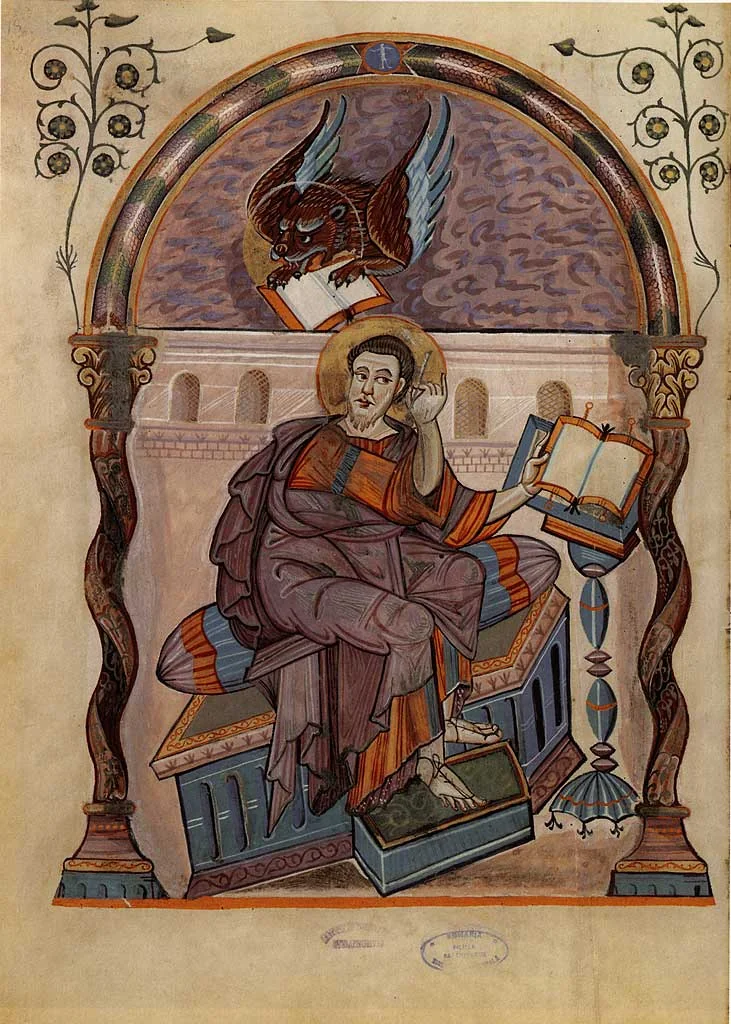
Image from Wikipedia
Image from Wikipedia
Markus (Evangelist): The Narrator of the Oldest Gospel and a Shaping Voice of Early Christianity
An Evangelist Between Tradition, Literature, and Spiritual Power
Markus is regarded in early church tradition as the name of the author of the probably oldest Gospel of the New Testament. The evangelist does not name himself in the text; hence, the designation "Markus" is a later convention and not a confirmed self-identification. This very mixture of historical tradition, literary independence, and theological strength makes the Markus text fascinating to this day. ([de.wikipedia.org](https://de.wikipedia.org/wiki/Markus_%28Evangelist%29?utm_source=openai))
When viewing Markus as an "artistic figure," one does not encounter a stage star in the modern sense, but rather a formative author in the history of Christian literature. His work shapes the narrative rhythm, dramaturgy, and imagery of an entire canon of faith; in addition, the symbol of the Markus lion has made his cultural presence visible over centuries. As an evangelical storyteller, Markus stands for condensation, pace, and a distinctive, sometimes rough linguistic energy. ([de.wikipedia.org](https://de.wikipedia.org/wiki/Markus_%28Evangelist%29?utm_source=openai))
Biographical Framework: A Name of Tradition, No Established Portrait
The historical biography of the evangelist remains only indirectly comprehensible. In Christian tradition, Markus is connected with Johannes Markus mentioned in the Acts of the Apostles and in letters; at the same time, scholarly sources emphasize that this attribution is not provable and the identity of the author remains open. What is certain is primarily that the name "Markus" itself is Roman and not Jewish, which makes the ancient world of names and the cultural mixture of early Christianity visible. ([de.wikipedia.org](https://de.wikipedia.org/wiki/Markus_%28Evangelist%29?utm_source=openai))
Traditionally, Markus has been read as a close companion of Peter, whose memories he recorded in writing. Papias of Hierapolis is an important early Christian voice in this regard; at the same time, modern research shows caution because the source situation does not allow for a definitive reconstruction. It is precisely in this tension between ecclesiastical tradition and historical criticism that the enduring significance of the evangelist as a figure of cultural memory lies. ([britannica.com](https://www.britannica.com/biography/Saint-Mark-the-Evangelist?utm_source=openai))
The Gospel of Mark: Concise, Direct, and of Great Narrative Tension
The Gospel of Mark is the second of the four canonical gospels, but according to current research, it is probably the earliest in its composition. It belongs to the Synoptics and is characterized by a clear, concentrated narrative style that arranges events with high tension and strong forward momentum. This literary economy almost acts like a tight, dramaturgically precise cut in the story of Jesus. ([britannica.com](https://www.britannica.com/topic/Gospel-According-to-Mark?utm_source=openai))
Britannica highlights that the language of the Gospel of Mark is marked by Latinisms, Aramaisms, and a comparatively raw, unadorned tone. This is precisely where its literary distinctiveness lies: Markus tells not ornamentally, but urgently, unvarnished, and with an immediate presence that continues to captivate readers today. The narrative also builds tension through mystery, misunderstandings, and gradual revelation. ([britannica.com](https://www.britannica.com/topic/biblical-literature/The-Synoptic-Gospels?utm_source=openai))
Career and Impact: From the Early Church to World Literature
The actual "career" of Markus lies not in a biographically documented path but in the impact history of his text. The Gospel of Mark became the foundation for later synoptic narratives and profoundly shaped the Christian understanding of Jesus. The fact that Matthew and Luke use Mark as a source in key parts underscores the status of this text as a literary and theological starting point. ([en.wikipedia.org](https://en.wikipedia.org/wiki/Gospel?utm_source=openai))
The historical dating also points to enormous relevance: Many researchers place the work around or after the destruction of the Jerusalem Temple in 70. Thus, a text emerges from an era of religious upheaval, political tensions, and newly formed identity searches, which explains the urgency of the Markan narrative. Markus writes not from a distance but from a present of upheaval. ([britannica.com](https://www.britannica.com/topic/biblical-literature/The-Gospel-According-to-Mark-unique-structure?utm_source=openai))
Style and Composition: The Gospel as Dense Dramaturgy
Markus works with a compressed dramaturgy that favors quick scene changes, brief dialogues, and strong contrasts. The text presents Jesus as an active, healing, and simultaneously misunderstood figure, while the circles of disciples and antagonists sharpen the lines of conflict. This composition generates a narrative movement that can almost be read as a literary crescendo. ([britannica.com](https://www.britannica.com/topic/biblical-literature/The-Gospel-According-to-Mark-unique-structure?utm_source=openai))
Particularly striking is the mixture of closeness and mystery. Markus shows wonders, announcements of suffering, and conflicts, without resolving everything immediately; this creates a tension that aims not at spectacle but at interpretation. The famous laconicism of the text is not a shortcoming but its artistic profile: condensed, clear, and theologically focused. ([britannica.com](https://www.britannica.com/topic/biblical-literature/The-Synoptic-Gospels?utm_source=openai))
Discography in the Broad Sense: No Album Catalog, but a Canonical Masterwork
In the classical music journalism sense, Markus has no discography. His "artistic masterwork" is the Gospel of Mark itself, which occupies a central position in the Christian canon as the earliest gospel. When speaking of body of work, it is this text that acts like a key piece: short, concise, and essential for the reception of the entire Jesus tradition. ([britannica.com](https://www.britannica.com/topic/Gospel-According-to-Mark?utm_source=openai))
The later church tradition has continually reinforced the text through interpretation, liturgy, and visual symbolism. The figure of the Markus lion, especially in Christian iconography and in the symbolism of Venice, has made the evangelist a culturally recognizable figure far beyond the theological core. Thus, an anonymous author became a lasting cultural signature. ([en.wikipedia.org](https://en.wikipedia.org/wiki/Lion_of_Saint_Mark?utm_source=openai))
Critical Reception: Between Historical Skepticism and Lasting Authority
Modern research approaches the attribution to the evangelist Markus with caution. While tradition maintains the author figure, the sources do not allow for a secure identification of the author; at the same time, the traditional connection with Peter is part of the early Christian reception history. This dual perspective—historically critical and ecclesiastically traditional—shapes the scientific and cultural perception of the text to this day. ([de.wikipedia.org](https://de.wikipedia.org/wiki/Markus_%28Evangelist%29?utm_source=openai))
Content-wise, many commentators appreciate the Gospel of Mark as particularly close to the conflicting reality of the early Jesus movement. The narrative of the suffering, misunderstood, yet powerful Christ has had an intense impact, as it does not smooth religious experience but dramatizes it. It is precisely this honesty that makes Markus a lasting reference for theology, literary studies, and cultural history. ([britannica.com](https://www.britannica.com/topic/biblical-literature/The-Gospel-According-to-Mark-unique-structure?utm_source=openai))
Cultural Influence: The Lion, the Liturgy, and the Power of the Image
Markus is not just a name but a symbolic system. The Markus lion, as a sign of the evangelist, has inscribed itself deeply into European iconography and is particularly associated with the city of Venice. Thus, the influence of the evangelist extends far beyond the text: it shapes architecture, visual art, liturgy, and ecclesiastical identity. ([en.wikipedia.org](https://en.wikipedia.org/wiki/Lion_of_Saint_Mark?utm_source=openai))
Theologically, Markus has also left a lasting imprint. The gospel, from the beginning focused on movement, conflict, and condensation, has decisively shaped the perception of Jesus as a suffering and simultaneously authoritative character painter in the canon. His narrative style is thus not only historically significant but also aesthetically influential: it shows how powerfully religious literature can be composed. ([britannica.com](https://www.britannica.com/topic/Gospel-According-to-Mark?utm_source=openai))
Conclusion: Why Markus Continues to Fascinate Today
Markus remains intriguing because his work uniquely combines anonymity and power of impact, brevity and depth, tradition and research. The Gospel of Mark reads like a concentrated, tension-filled key work of cultural history: direct, compelling, and full of inner dynamics. Encountering Markus means encountering an author whose influence extends far beyond theology and resonates in visual arts, literature, and collective memory. ([britannica.com](https://www.britannica.com/topic/Gospel-According-to-Mark?utm_source=openai))
For this reason, it is worth reading Markus not only as a church-historical figure but as a great storyteller of human history. His text demands attention, interpretation, and emotional presence—and therein lies its enduring power. Anyone wanting to understand the intellectual stage of early Christianity should experience Markus up close. ([en.wikipedia.org](https://en.wikipedia.org/wiki/Gospel?utm_source=openai))
Official Channels of Markus (Evangelist):
- Instagram: no official profile found
- Facebook: no official profile found
- YouTube: no official profile found
- Spotify: no official profile found
- TikTok: no official profile found
Sources:
- Wikipedia – Markus (Evangelist) ([de.wikipedia.org](https://de.wikipedia.org/wiki/Markus_%28Evangelist%29?utm_source=openai))
- Encyclopaedia Britannica – Gospel According to Mark ([britannica.com](https://www.britannica.com/topic/Gospel-According-to-Mark?utm_source=openai))
- Encyclopaedia Britannica – The Synoptic Gospels ([britannica.com](https://www.britannica.com/topic/biblical-literature/The-Synoptic-Gospels?utm_source=openai))
- Encyclopaedia Britannica – The Gospel According to Mark: unique structure ([britannica.com](https://www.britannica.com/topic/biblical-literature/The-Gospel-According-to-Mark-unique-structure?utm_source=openai))
- Encyclopaedia Britannica – Saint Mark the Evangelist ([britannica.com](https://www.britannica.com/biography/Saint-Mark-the-Evangelist?utm_source=openai))
- Encyclopedia.com – Gospel According To Mark ([encyclopedia.com](https://www.encyclopedia.com/religion/encyclopedias-almanacs-transcripts-and-maps/mark-gospel-according?utm_source=openai))
- Encyclopedia.com – St. Mark ([encyclopedia.com](https://www.encyclopedia.com/history/encyclopedias-almanacs-transcripts-and-maps/st-mark?utm_source=openai))
- Wikipedia: Image and text source