
Jovanotti
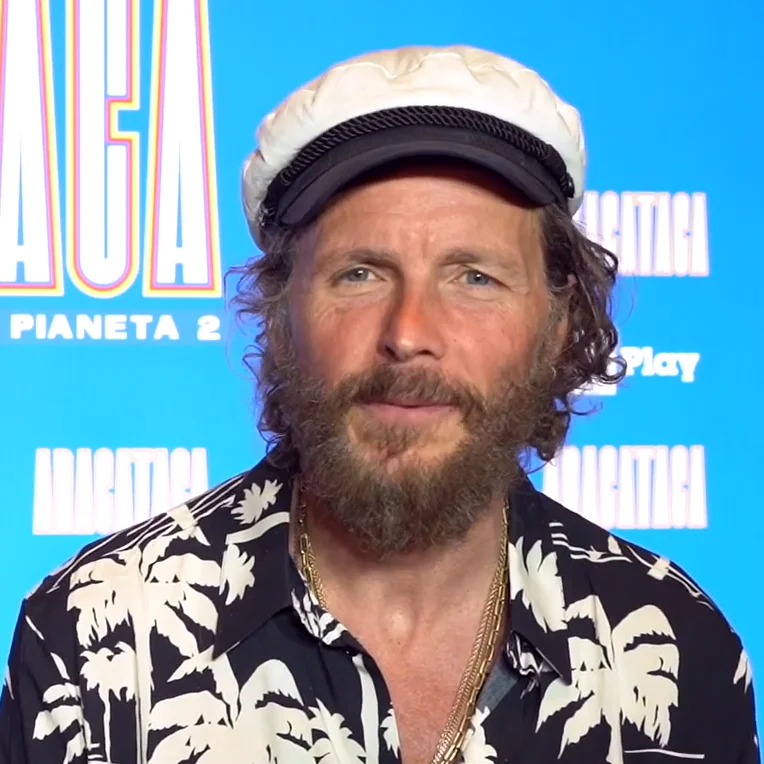
Image from Wikipedia
Image from Wikipedia
Jovanotti – The Italian Pop Architect Between Rap, Singer-Songwriter Tradition and Boundless Stage Energy
An Artist Who Continually Rewrites Italian Pop History
Lorenzo Cherubini, better known as Jovanotti, is one of the most influential voices in Italian music since the late 1980s. Born on September 27, 1966, in Rome, he transformed from a youthful radio and dancefloor phenomenon into one of his country's most significant cantautori. His musical career merges pop, rap, funk, singer-songwriter tradition, and danceable production into a distinctive signature. ([en.wikipedia.org](https://en.wikipedia.org/wiki/Jovanotti))
Biography: From Roman Beginnings to a National Phenomenon
Jovanotti's artistic identity was formed early in a phase when Italian pop music was seeking new forms of expression. The name "Jovanotti" is derived from “giovanotti,” meaning "young men," and emerged from an initially misprinted stage name that stuck. This coincidence became a trademark now instantly associated with modernity, energy, and urbanity. ([en.wikipedia.org](https://en.wikipedia.org/wiki/Jovanotti))
His breakthrough began with early singles like "Walking" and especially "Gimme Five," which topped the Italian singles chart in 1988. The debut album Jovanotti for President sold over 400,000 copies in Italy and turned the young performer into a mass star. Even at that stage, he combined club culture, rap influence, and catchy pop drama into a style that felt refreshing in the Italian mainstream. ([en.wikipedia.org](https://en.wikipedia.org/wiki/Jovanotti_discography))
Career: From Party Rapper to Serious Songwriter
In his early years, Jovanotti symbolized tempo, wit, and youthful friction. With albums like La mia moto and Giovani Jovanotti, he solidified his presence before artistically expanding in the 1990s. By the time of Una tribù che balla and Lorenzo 1992, he moved closer to the cantautore format without losing his rhythmic directness. ([en.wikipedia.org](https://en.wikipedia.org/wiki/Jovanotti_discography))
The real maturation process became evident in the late 1990s and 2000s, as Jovanotti perfected the balance between pop accessibility and songwriting depth. Albums such as Lorenzo 1997 - L'albero, Lorenzo 1999 - Capo Horn, Lorenzo 2002 - Il quinto mondo, Buon sangue, and Safari showcase an artistic development towards broader arrangements, stronger lyrical imagery, and an international collaboration culture. His music became increasingly open, mature, and stylistically varied. ([en.wikipedia.org](https://en.wikipedia.org/wiki/Jovanotti))
Beyond the studio, Jovanotti remained prominent as a host, performer, and cultural figure. He was active on television at times, worked on documentary formats, and appeared as a special guest at the Sanremo Music Festival in 2025. For 2026, his official site lists the Jova Summer Party dates, further emphasizing his reputation as a mass-appeal live artist. ([en.wikipedia.org](https://en.wikipedia.org/wiki/Jovanotti))
Musical Development: Between Rap, Pop, Funk, and Cantautorato
Jovanotti's musical development does not follow a linear box but rather a constant expansion. From the early Italo-dance and rap context emerged a multifaceted pop production where groove, melodic clarity, and lyrical intimacy converge. His songs often exhibit a strong affinity for hooklines, yet the production also plays with dynamic breaks, percussive energy, and carefully constructed choruses. ([en.wikipedia.org](https://en.wikipedia.org/wiki/Jovanotti_discography))
Notably, his sense of collaboration is remarkable. Jovanotti has worked with Ben Harper, Michael Franti & Spearhead, Mousse T., Gianna Nannini, Pino Daniele, Negramaro, Luciano Ligabue, and Piero Pelù. These connections illustrate how open he is to different musical scenes – from rock and singer-songwriter traditions to internationally oriented pop and soul production. ([en.wikipedia.org](https://en.wikipedia.org/wiki/Jovanotti_discography))
Discography: A Vast Body of Work with Chart-Topping Highlights
Jovanotti's discography includes 18 studio albums, numerous live and compilation titles, and 82 singles by English counting; the German discography page even lists 99 singles and highlights that he has sold over 4.3 million records, with more than 4.2 million sold in Italy alone. His most successful releases include Ora, heralded as the strongest studio album, as well as early commercial successes like Jovanotti for President and La mia moto. ([en.wikipedia.org](https://en.wikipedia.org/wiki/Jovanotti_discography))
His studio albums simultaneously tell the story of an artist who has continually repositioned himself: from Jovanotti for President to Lorenzo 1994, Capo Horn, and Safari to Oh, Vita!, Il disco del Sole, and Il corpo umano – vol. 1 from 2025. This chronology reveals how Jovanotti perceives pop music not as a snapshot but as a long-term career with aesthetic development. ([en.wikipedia.org](https://en.wikipedia.org/wiki/Jovanotti))
Hits, Charts, and Critical Reception
Some of Jovanotti's significant hits include "Gimme Five," "Tutto l'amore che ho," "A te," "L'ombelico del mondo," "Bella," "Baciami ancora," and "Il mio nome è mai più." He has reached number-one positions multiple times in Italy, and his career has been accompanied by chart successes, gold certifications, and broad radio presence. Thus, he belongs to the few Italian artists who can maintain commercial success and pop authority over decades. ([en.wikipedia.org](https://en.wikipedia.org/wiki/Jovanotti_discography))
Critical reception has not always been uniformly positive. Early works, in particular, received sharp evaluations but nevertheless grew into commercial successes. Later albums like Safari and Ora received accolades, including the Musica e Dischi Critics’ Prize; additionally, "Il mio nome è mai più," in collaboration with Ligabue and Piero Pelù, won both Song and Video of the Year at the Premio Italiano della Musica. This underscores Jovanotti's ability to make an impact even in more serious, socially charged repertoires. ([en.wikipedia.org](https://en.wikipedia.org/wiki/Jovanotti))
Cultural Influence: More Than Pop, More Than Rap
Jovanotti shaped a new conception of what Italian pop music can look like when it merges urban impulses, global references, and the legacy of the singer-songwriter. His work for other artists as a writer and adapter shows additional authority: he has written and adapted songs for Jarabe de Palo, Miguel Bosé, Zucchero, Adriano Celentano, Giorgia, and Irene Grandi. Thus, he has acted not only as an interpreter but also as a productive part of the Italian music system. ([en.wikipedia.org](https://en.wikipedia.org/wiki/Jovanotti_discography))
His commitment to social issues also forms part of his profile. Sources describe him as a committed pacifist who has worked with organizations like Make Poverty History, Amnesty International, and the Global Call to Action Against Poverty. This stance enhances his image as an artist who not only entertains but also shapes public life and addresses themes beyond mere pop consumption. ([en.wikipedia.org](https://en.wikipedia.org/wiki/Jovanotti))
Current Projects and Releases
For 2025, the discography lists Il corpo umano – vol. 1 as the new studio album. At the same time, Jovanotti remains highly active live: the official site announces the Jova Summer Party 2026 with dates in Olbia, Montesilvano, Barletta, Catanzaro, Palermo, Napoli, and Rome. This indicates that his career is not frozen in hindsight but continues to thrive on tour energy, event culture, and closeness to the audience. ([en.wikipedia.org](https://en.wikipedia.org/wiki/Jovanotti))
Conclusion: Why Jovanotti Continues to Captivate
Jovanotti remains exciting because he has not only accompanied Italian pop history but actively reshaped it. His music career combines tempo, intelligence, mainstream sensibility, and artistic development in a form that has become rare. Anyone wanting to understand how a club phenomenon can evolve into a cross-generational stage artist will find in Jovanotti a prime example. ([en.wikipedia.org](https://en.wikipedia.org/wiki/Jovanotti))
Especially live, his full authority unfolds: the mix of rhythm, charisma, audience closeness, and a keen sense of arrangements. Jovanotti is not merely a hit maker but a performer with cultural resonance and genuine long-term value. Experiencing him on stage means witnessing Italian pop culture in motion. ([soleluna.com](https://www.soleluna.com/))
Official Channels of Jovanotti:
- Instagram: https://www.instagram.com/lorenzojova/
- Facebook: https://www.facebook.com/lorenzo.jovanotti.cherubini
- YouTube: https://www.youtube.com/jovanotti
- Spotify: No official profile found
- TikTok: https://www.tiktok.com/@lorenzojova
Sources:
- Soleluna - Official Website / Tour Dates
- YouTube - Lorenzo Jovanotti Cherubini
- Instagram - Lorenzo Jovanotti Cherubini
- Facebook - Lorenzo Jovanotti Cherubini
- TikTok - Lorenzo Jovanotti Cherubini
- Wikipedia - Jovanotti
- Wikipedia - Jovanotti Discography
- Wikipedia - Jovanotti/Diskografie
- Rockol - Jovanotti