
John Hay
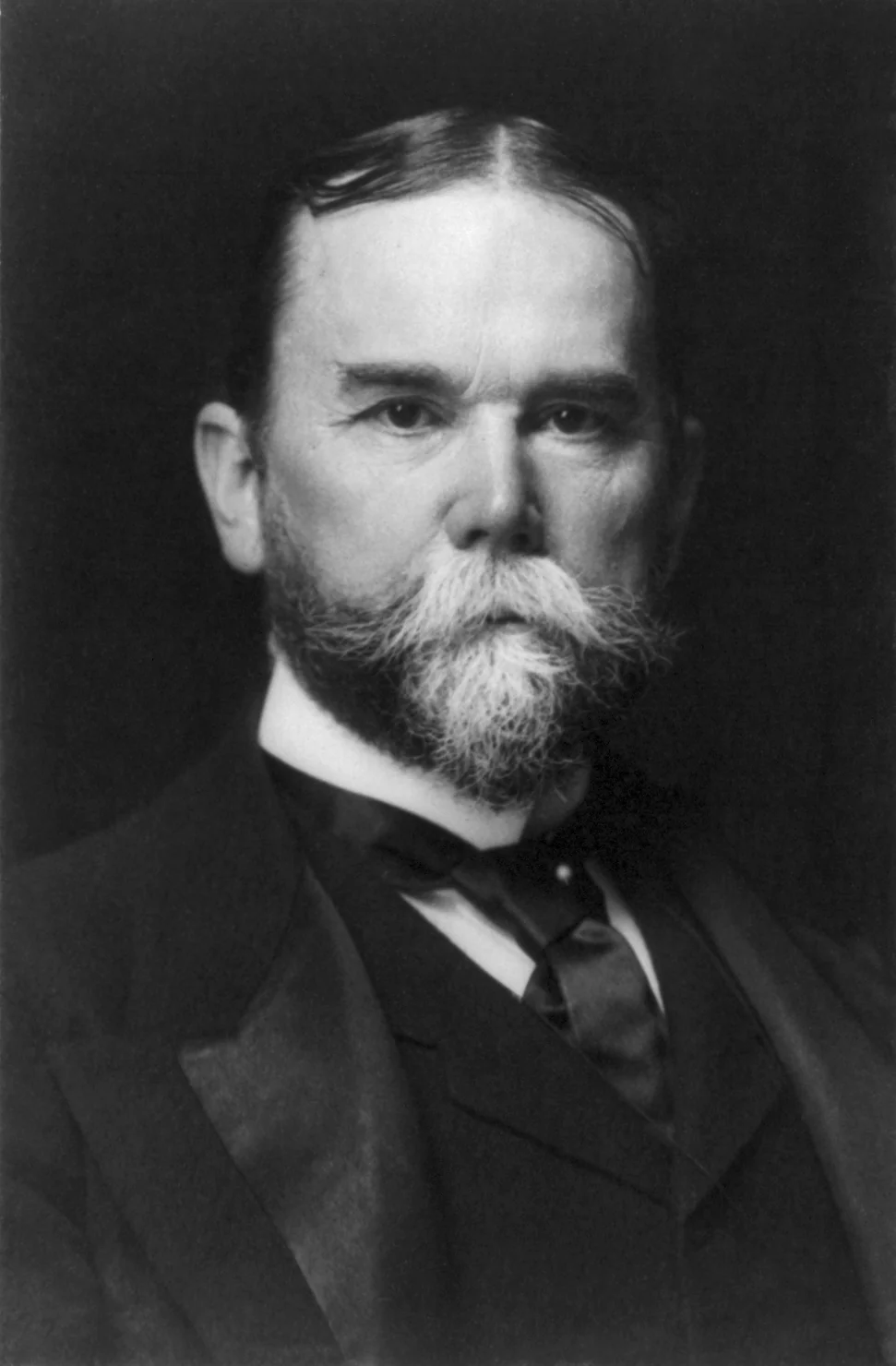
Image from Wikipedia
Image from Wikipedia
John Milton Hay – The Statesman Who Shaped Lincoln's Legacy
Influential Secretary of State, Lincoln Biographer, and Shaping Voice of American Diplomacy
John Milton Hay was one of the most prominent American statesmen of the late 19th and early 20th centuries. Born on October 8, 1838, in Salem, Indiana, he evolved from a young lawyer and private secretary to Abraham Lincoln into an influential diplomat, journalist, author, and eventually the 37th Secretary of State of the United States. His career uniquely intertwined political power, literary work, and foreign policy strategy. ([history.state.gov](https://history.state.gov//departmenthistory/people/hay-john-milton?utm_source=openai))
Early Years and Education: From Law Studies to Proximity to Abraham Lincoln
Hay grew up in an environment shaped by education, politics, and engagement with the issue of slavery. He initially studied at Illinois State College and later at Brown University, where he graduated in 1858, and then read law in his uncle's office in Springfield, Illinois. There he came into close contact with Abraham Lincoln, worked on his campaign, and was appointed as one of his private secretaries in the White House after Lincoln's electoral victory. ([history.state.gov](https://history.state.gov//departmenthistory/people/hay-john-milton?utm_source=openai))
This early phase significantly shaped Hay's subsequent life. As a close confidant of Lincoln's, he moved within the political center of the Civil War era and became an observer and shaper of historical decisions. The combination of legal training, political instinct, and literary talent quickly made him an exceptional figure within the federal government. ([history.state.gov](https://history.state.gov//departmenthistory/people/hay-john-milton?utm_source=openai))
Career Beginnings during the Civil War: Secretary, Chronicler, and Eye-Witness
During the American Civil War, Hay served as Lincoln's private secretary and worked closely with the President. He shared workspace and living quarters in the White House with John George Nicolay, another close aide, and was involved daily in the workings of the presidential administration. This proximity gave him a unique insight into Lincoln's leadership style, political tact, and the strains of war. ([history.state.gov](https://history.state.gov//departmenthistory/people/hay-john-milton?utm_source=openai))
After the war, Hay continued his career in diplomatic service, holding various posts in Paris, Vienna, and Madrid. His path thus led from direct wartime observation to European diplomacy, which significantly broadened his perspective on international politics. Even then, he combined practical government experience with the ambition to process historical events in literary form. ([history.state.gov](https://history.state.gov//departmenthistory/people/hay-john-milton?utm_source=openai))
Literary Work and Lincoln Biography: A Historical Grand Project
John Hay was not only a politician but also an author with literary ambition. Together with John George Nicolay, he authored a ten-volume biography of Abraham Lincoln, which left a lasting imprint of the assassinated president on American historiography. This work made Hay a key figure in Lincoln's reception and a chronicler whose perspective was considered authoritative for a long time. ([history.state.gov](https://history.state.gov//departmenthistory/people/hay-john-milton?utm_source=openai))
The connection between politics and journalism is one of the most noteworthy aspects of his career. Hay also wrote poetry and other literary works, sharpening his profile as a versatile intellectual. This dual role of political practice and literary reflection granted him an authority that extended far beyond mere government work. ([nps.gov](https://www.nps.gov/people/john-hay-1.htm?utm_source=openai))
Rise to Secretary of State: Diplomacy at the Highest Level
In 1897, President William McKinley appointed Hay as the United States Ambassador to Great Britain before appointing him Secretary of State in 1898. He held this office until his death on July 1, 1905, initially under McKinley and later under Theodore Roosevelt. As such, Hay belonged to the small group of foreign policymakers who actively shaped America's transition to a global power. ([history.state.gov](https://history.state.gov//departmenthistory/people/hay-john-milton?utm_source=openai))
As Secretary of State, Hay had a significant influence on U.S. foreign policy after the Spanish-American War. He was seen as a proponent of the Open Door Policy, which aimed to strengthen trade with China, and played a central role during a phase in which the United States was redefining its global position. His tenure combined diplomacy, strategic foresight, and the attempt to firmly establish American interests internationally. ([history.state.gov](https://history.state.gov//departmenthistory/people/hay-john-milton?utm_source=openai))
Political Style and Historical Influence
Hay's significance lies not only in his offices but also in how he connected political power, literary observation, and diplomatic action. He was an official who mastered the language of politics, but equally a man of the pen who documented and interpreted the events of his time. In this combination of analysis and practice lies his special rank in American history. ([history.state.gov](https://history.state.gov//departmenthistory/people/hay-john-milton?utm_source=openai))
His career spanned from Lincoln's White House to the helm of the State Department, a career of remarkable duration and scope. Hay navigated through several presidencies and political eras while always remaining a discreet but impactful figure. The fact that he died as the sitting Secretary of State underscores the continuity and commitment of his public career. ([history.state.gov](https://history.state.gov//departmenthistory/people/hay-john-milton?utm_source=openai))
Discography and Musical Reception: Not Applicable, but Literarily Significant
In the classical sense, John Milton Hay has no discography as he was not a musician. However, his literary production remains central to a cultural-historical examination, especially the Lincoln biography, which is regarded as one of the most influential historical grand projects of its time. Those searching for his "creative catalog" will not find it in albums or singles, but in political writings, diplomatic texts, and literary works. ([history.state.gov](https://history.state.gov//departmenthistory/people/hay-john-milton?utm_source=openai))
His work continues to resonate today, especially through historiography and the interpretation of the Lincoln myth. His collaboration with Nicolay is seen as a milestone in political biography because it shaped the image of a president that influenced generations of readers and historians. In this sense, Hay possesses a cultural resonance that can be compared to the impact of formative artists: not through sound, but through narrative influence. ([history.state.gov](https://history.state.gov//departmenthistory/people/hay-john-milton?utm_source=openai))
Legacy and Cultural Significance
John Milton Hay remains a key figure between the Civil War, the Reconstruction era, and the Age of American Imperialism. His career demonstrates how closely intertwined journalism, literature, and government practice could be in the 19th century. He represents a form of public service that combines intellectual depth, linguistic awareness, and political action. ([history.state.gov](https://history.state.gov//departmenthistory/people/hay-john-milton?utm_source=openai))
His historical significance derives from three levels: from his proximity to Lincoln, from his influence on American foreign policy, and from his role as a biographer and chronicler. It is precisely this tripartite function that makes him a figure who continues to fascinate researchers, historians, and readers today. Those interested in American history, diplomacy, and political literature will find John Hay to be one of the most compelling statesmen of his era. ([history.state.gov](https://history.state.gov//departmenthistory/people/hay-john-milton?utm_source=openai))
Conclusion: Why John Milton Hay Remains Relevant Today
John Milton Hay uniquely combines political power with intellectual authority. His work as Lincoln's secretary, diplomat, Secretary of State, and biographer illustrates a career of extraordinary range and historical substance. It is this blend of close proximity to centers of power and literary prowess that makes him so worth reading even today and so important for understanding American history. ([history.state.gov](https://history.state.gov//departmenthistory/people/hay-john-milton?utm_source=openai))
Anyone seeking to understand the development of the U.S. at the turn of the 20th century cannot overlook Hay. His legacy is worthy of reading, historical contextualization, and comparison with the great voices of his time. A visit to his biography not only offers political perspectives but also a glimpse into the power of the written word at the center of power. ([history.state.gov](https://history.state.gov//departmenthistory/people/hay-john-milton?utm_source=openai))
Official Channels of John Hay:
- Instagram: No official profile found
- Facebook: No official profile found
- YouTube: No official profile found
- Spotify: No official profile found
- TikTok: No official profile found