
Elmar Lehnen
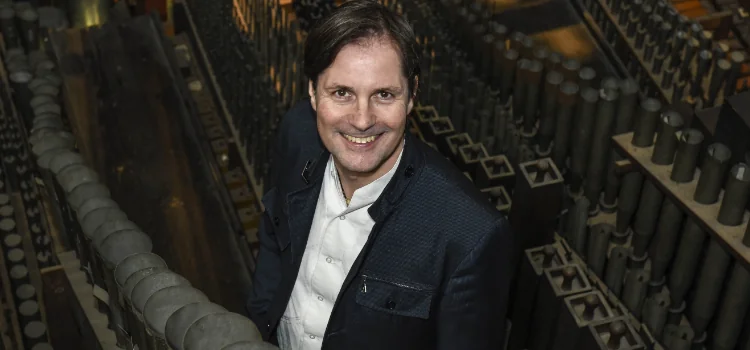
Image from Wikipedia
Image from Wikipedia
Elmar Lehnen: The Organist Who Brings the Marian Basilica in Kevelaer to Life
A Church Musician Between Liturgical Depth, Concert Art, and Sonorous Radiance
Elmar Lehnen, born in 1965 in Hinsbeck on the Lower Rhine, is one of the defining church musicians of his generation. As the basilica organist at the Marian Basilica in Kevelaer, he combines liturgical practice, artistic authority, and a distinctive stage presence at the organ. His work represents a musical career in which spiritual tradition, improvisational artistry, and concert format come together in a compelling way. ([de.wikipedia.org](https://de.wikipedia.org/wiki/Elmar_Lehnen))
Lehnen's profile is that of a musician who perceives the organ not merely as a liturgical accompaniment but as a colorful sound universe. Press reviews and event announcements describe him as a virtuoso organist, an original improviser, and a master of an instrument that becomes the "Queen of Instruments" in Kevelaer. It is precisely this blend of expertise, emotional impact, and regional anchoring that makes him intriguing to both music lovers and search engines alike. ([orgelbauverein-kevelaer.de](https://orgelbauverein-kevelaer.de/wp-content/uploads/2024/03/Die-beruehmte-Seifert-Orgel-in-Kevelaer-wurde-komplett-umgebaut.pdf))
Biographical Roots: From Hinsbeck to Aachen, Paris, and Kevelaer
Lehnen's musical journey began early with piano lessons, but it was through his music teacher that he was introduced to the church organ and ultimately to Wolfgang Seifen, who became a pivotal role model. He completed his training at the Church Music School St. Gregorius-Haus in Aachen; later, he taught organ and choral conducting there as part of the C-training program. Further studies took him to the Schola Cantorum in Paris with Jean-Paul Imbert, where he graduated in 2001 with distinction in the "diplome de concert." ([de.wikipedia.org](https://de.wikipedia.org/wiki/Elmar_Lehnen))
Before his appointment in Kevelaer, Lehnen gathered important practical experience as the cantor of the St. Anna parish in Mönchengladbach-Windberg. There, he founded the concert series "Windberger Geistliche Konzerte" and established himself as an artistic director with a keen sense for program dramaturgy and the mediation of church music. In 1997, he was a prizewinner at the first international organ competition in Korschenbroich – an early testament to his technical sovereignty and musical independence. ([de.wikipedia.org](https://de.wikipedia.org/wiki/Elmar_Lehnen))
The Step to the Great Seifert Organ: Kevelaer as an Artistic Center
In October 2000, Elmar Lehnen was appointed basilica organist of the Pontifical Marian Basilica in Kevelaer, succeeding Wolfgang Seifen. Since then, he has shaped the daily solemn liturgy at this pilgrimage site while also being responsible for the prestigious basilica concerts, which receive attention far beyond the region. The combination of spiritual mission and international concert activity forms the core of his artistic identity. ([de.wikipedia.org](https://de.wikipedia.org/wiki/Elmar_Lehnen))
For Lehnen, Kevelaer is not just a workplace, but an acoustic home. The Marian Basilica, with its grand Seifert organ, provides an instrument that demands and simultaneously enables significant sonic range. The fact that Lehnen not only accompanies liturgy but also utilizes the organ as a concert instrument, teaching space, and improvisational laboratory sets him apart from purely church musicians. ([de.wikipedia.org](https://de.wikipedia.org/wiki/Elmar_Lehnen))
Choral Conducting, Ensembles, and Church Musical Design
From 2008 until January 2012, Lehnen was also the choral director of the St. Marien community. In this role, he led choirs, string orchestras, and wind ensembles, broadening his profile from an organist to a comprehensively thinking church musician. This position shows that his artistic development occurred not only at the organ but also in the responsible design of entire musical structures. ([de.wikipedia.org](https://de.wikipedia.org/wiki/Elmar_Lehnen))
His collaboration with the second basilica organist Paul Lammers and various vocal and instrumental ensembles is also part of his realm of influence. In church practice, it is about more than just repertoire maintenance: Lehnen shapes soundscapes that connect liturgy, space, and community. His work thrives on precise registration, stylistic flexibility, and a pronounced sense of musical balance. ([de.wikipedia.org](https://de.wikipedia.org/wiki/Elmar_Lehnen))
Discography: From Sacred Sound Art to Cross-Border Improvisation
Elmar Lehnen's discography documents an artist who has consistently expanded the classical organ repertoire with experimental and dialogical formats. Notable releases include “Gegrüßet seist du, Königin – Marienklänge aus Kevelaer” with Stefanie Brijoux and the children's choir of the Marian Basilica, “Hört der Engel helle Lieder,” the DVD “Bauet Orgeln mit Liebe und Sorgfalt,” “Ajoutez la trompette!” with International Brass, “Salve regina: Klangbilder marianischer Choräle,” and “Requiem” and “Seven” with Hansjörg Fink. These recordings showcase an artistic signature that straddles sacred tradition, sonic opulence, and improvisational freedom. ([de.wikipedia.org](https://de.wikipedia.org/wiki/Elmar_Lehnen))
Particularly influential is his collaboration with trombonist Hansjörg Fink. Audite describes “Requiem” as an unusual journey between improvisation and traditional requiem chorales, where liturgical depth meets jazzy liveliness. “Seven” expands this concept with seven fragments on creation myths and connects jazz elements, composed music, and orchestral sound research with the grand romantic organ of Kevelaer. ([audite.de](https://audite.de/en/product/SACD/92660-requiem_for_trombone_and_organ.html?utm_source=openai))
Style and Interpretation: An Improviser with a Sense for Architecture and Emotion
Lehnen's style is shaped by romantic organ aesthetics as well as the art of free improvisation. Reviews highlight that he combines virtuosity with a playful spirit, and perceives the immense sound variety of the Kevelaer Seifert organ not as a mere mass, but as a differentiated color system. This thinking in sound colors, layers, and dynamic transitions reveals a musician who does not merely play but organizes architecturally. ([orgelbauverein-kevelaer.de](https://orgelbauverein-kevelaer.de/wp-content/uploads/2024/03/Die-beruehmte-Seifert-Orgel-in-Kevelaer-wurde-komplett-umgebaut.pdf))
The emotional dimension is also central. Lehnen himself describes how moved he is by tears of emotion in the audience when familiar songs resonate in the basilica. This statement underscores how closely musical precision, pastoral responsibility, and immediate effect interplay in his work. His organ playing aims not for distance but for resonance – in the space, during services, and in the listening experience. ([kirche-und-leben.de](https://www.kirche-und-leben.de/artikel/top-thema-kirchenmusik-bistum-muenster-elmar-lehnen-organist-gewaltige-basilika-orgel-kevelaer))
Cultural Influence: Kevelaer as a Resonant Place with Impact
Lehnen's work is inextricably linked to the cultural identity of Kevelaer. The basilica serves as a pilgrimage site, concert venue, and sonic business card for a city where church music has been publicly recognized for decades. Lehnen not only organizes programs but also shapes a sound image that reaches pilgrims, concert audiences, and the professional community alike. ([de.wikipedia.org](https://de.wikipedia.org/wiki/Elmar_Lehnen))
The restoration and tonal realignment of the basilica organ also made his expertise visible. Reports from 2024 describe how Lehnen made the restored instrument audible in full sonic splendor after years of work, directly engaging with issues of intonation, register balance, and auditory perception. This is church music at the highest level: technical precision, historical consciousness, and artistic responsibility in one person. ([orgelbauverein-kevelaer.de](https://orgelbauverein-kevelaer.de/wp-content/uploads/2024/03/Kevelaer_-Restaurierte-Basilika-Orgel-ist-jetzt-gestimmt.pdf))
Current Projects and Public Presence
In the years 2025 and 2026, Lehnen will remain active, especially in the vicinity of Kevelaer and in collaborations with Hansjörg Fink. Official event pages announce a guided organ tour in the Marian Basilica for January 10, 2026, during which Lehnen will provide insights into his work and the history of the Seifert organ. Additionally, Audite leads the project “Vitraux” with Hansjörg Fink and Elmar Lehnen for March 2026, confirming his ongoing activity as a performing artist. ([kevelaer-marketing.de](https://kevelaer-marketing.de/event/gaestefuehrung-die-koenigin-der-instrumente/?utm_source=openai))
The relevance of his current work is also apparent as church and cultural journalistic media once again placed him at the center in January 2026. Reports emphasize his closeness to people, his ability to respond musically in the moment, and the enduring artistic energy after more than 25 years at the basilica. This makes him a personality whose musical career does not dwell in the past but continually opens new sonic spaces. ([kirche-und-leben.de](https://www.kirche-und-leben.de/artikel/top-thema-kirchenmusik-bistum-muenster-elmar-lehnen-organist-gewaltige-basilika-orgel-kevelaer?utm_source=openai))
Conclusion: An Organist with Charisma, Depth, and Profile
Elmar Lehnen represents a rare combination of church musical discipline, improvisational imagination, and emotional immediacy. He is not just a steward of an organ position but an artistic creator who has made the Marian Basilica in Kevelaer a vibrant musical site. Those seeking church music with substance, sound culture, and spiritual presence will find in him an outstanding representative of his field. ([de.wikipedia.org](https://de.wikipedia.org/wiki/Elmar_Lehnen))
What remains exciting about Elmar Lehnen is primarily his ability to intertwine tradition and the present. His recordings, liturgical work, and concert practice display a musician who understands the organ as a universal means of expression. Experiencing him live means entering a sonic space where technique, faith, and art become an impressive whole. ([audite.de](https://audite.de/en/product/SACD/92660-requiem_for_trombone_and_organ.html))
Official Channels of Elmar Lehnen:
- Instagram: no official profile found
- Facebook: no official profile found
- YouTube: no official profile found
- Spotify: no official profile found
- TikTok: no official profile found
Sources:
- Wikipedia: Elmar Lehnen
- Basilikamusik Kevelaer - Impressum
- Kirche-und-Leben.de - Elmar Lehnen: The Organist of the Grand Basilica Organ of Kevelaer
- Kevelaer Marketing - Guided Tour: The Queen of Instruments
- Kevelaer Marketing - Organ tour as a musical experience
- Kevelaerer Blatt - Creating a Unique Sound World
- Audite - Elmar Lehnen (Organ)
- Audite - Requiem for trombone and organ
- Audite - ajoutez la trompette!
- Audite - Seven
- Organ Building Association Kevelaer - Restored Basilica Organ is Now Tuned
- Organ Building Association Kevelaer - The Famous Seifert Organ in Kevelaer has been Completely Renovated