
Daniel Stabrawa
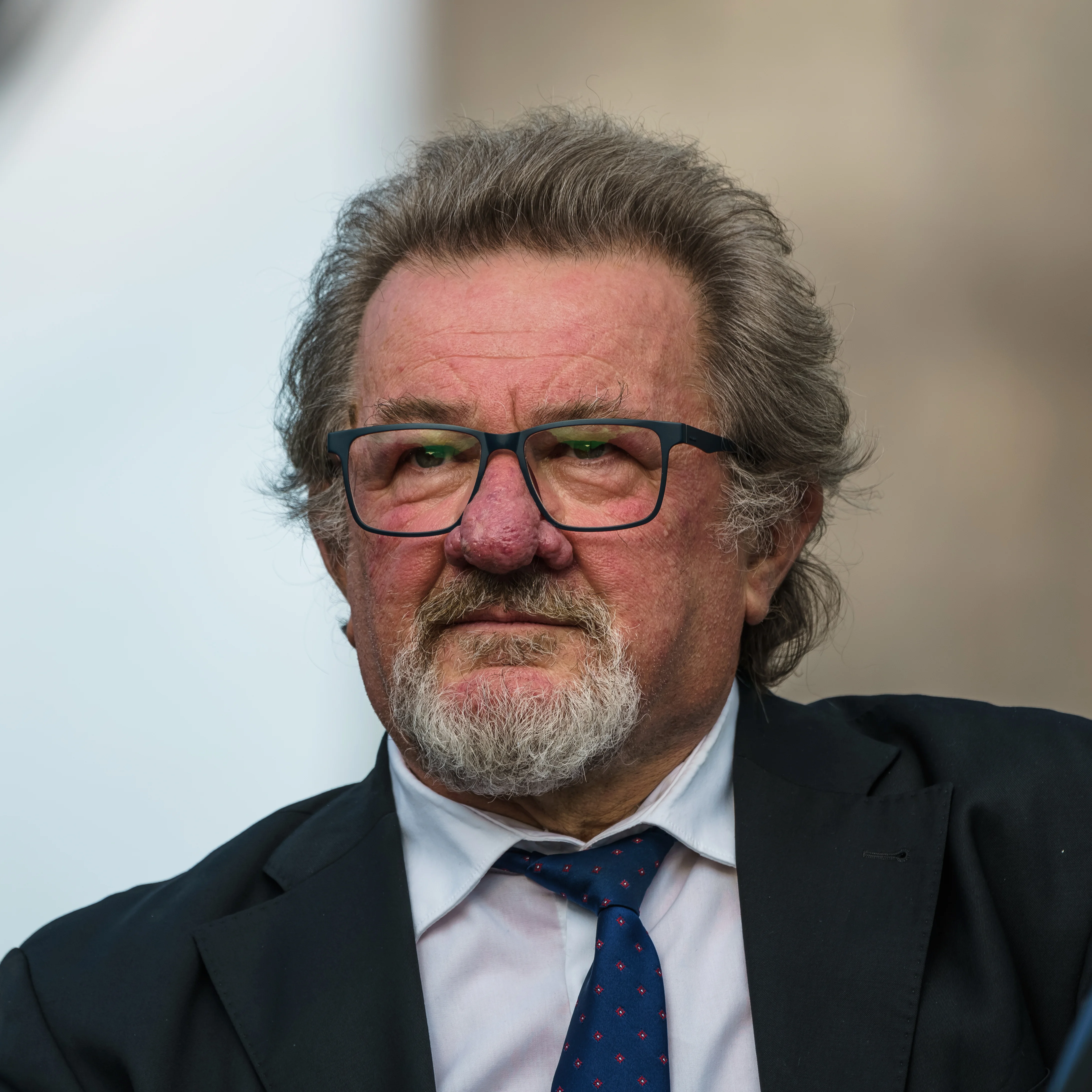
Image from Wikipedia
Image from Wikipedia
Daniel Stabrawa: The Elegant Sound Architect Among Berlin Philharmonic, Chamber Music, and Conducting
A Polish Violinist of Global Format
Daniel Stabrawa, born on August 23, 1955, in Krakow, is considered one of the most prominent Polish violinists of his generation. His career combines orchestral tradition, chamber music, solo culture, and conducting into an artist portrait that clearly stands out in the European music scene. His decades-long role with the Berlin Philharmonic, whose sound language he helped shape over many years, has been particularly influential. ([tagesspiegel.de](https://www.tagesspiegel.de/kultur/zusammen-sind-wir-ein-korper-5069629.html))
Stabrawa's career exemplifies discipline, stylistic sovereignty, and musical authority. He embodies the type of musician who not only interprets but also shapes sound culture: as concertmaster, as the first violinist of an internationally renowned quartet, as a conductor, and as a mentor. His development demonstrates how consistent work on technique, repertoire, and ensemble spirit can form an extraordinary musical career. ([tagesspiegel.de](https://www.tagesspiegel.de/kultur/zusammen-sind-wir-ein-korper-5069629.html))
Early Influences in Krakow and the Path to Berlin
Stabrawa began playing the violin at the age of seven and studied in Krakow with Zbigniew Szlezer at the music academy. This early training laid the foundation for a career characterized by precision and a sense of tonal responsibility. In 1979, he became the concertmaster of the Polish Radio Symphony Orchestra in Krakow, marking a significant career step into a professional top position. ([en.wikipedia.org](https://en.wikipedia.org/wiki/Daniel_Stabrawa?utm_source=openai))
In 1983, he joined the first violins of the Berlin Philharmonic, and in 1986 he ascended to concertmaster under Herbert von Karajan. This position allowed him to play a key role in one of the world's most famous orchestras, succeeding Michel Schwalbé. He held this position until his retirement in 2021, thereby shaping an entire era of the Philharmonic's sound for over 37 years. ([tagesspiegel.de](https://www.tagesspiegel.de/kultur/zusammen-sind-wir-ein-korper-5069629.html))
The Berlin Philharmonic as Artistic Home
At the Berlin Philharmonic, Stabrawa became not only the concertmaster but also a constant presence in the orchestra's musical identity. His work involved close collaboration with Herbert von Karajan, Claudio Abbado, Sir Simon Rattle, and Kirill Petrenko, thus working with four stylistically very different chief conductors. This underlines his ability to fit into various interpretative schools while maintaining his artistic signature. ([detmolder-kammerorchester.de](https://www.detmolder-kammerorchester.de/download/DKO_Spielzeitheft-2025_26_final_komp.pdf))
Later, the Berlin Philharmonic honored his contributions with a tribute in the Digital Concert Hall. That an orchestra dedicates such attention to a long-serving concertmaster indicates his significance far beyond the internal hierarchy. Stabrawa represented continuity, leadership, and a palpable sense of responsibility within the ensemble. ([digitalconcerthall.com](https://www.digitalconcerthall.com/de/artist/348))
Chamber Music with Format: The Philharmonia Quartet Berlin
In 1985, Stabrawa, along with colleagues from the Berlin Philharmonic, founded the Philharmonia Quartet Berlin, which quickly earned an excellent international reputation. As primarius, he shaped the quartet's sound and contributed to a repertoire that now includes over a hundred works. For him, chamber music was never a minor subject but a central expression of his musical identity. ([en.wikipedia.org](https://en.wikipedia.org/wiki/Daniel_Stabrawa))
Notably, the quartet diligently developed cyclic performances of Schumann, Brahms, and Beethoven and also dedicated itself to the string quartets of Szymanowski. The ensemble received the German Record Critics' Award twice, as well as the ECHO Klassik. These accolades mark not only artistic excellence but also a high level of interpretive relevance. ([musica.fondazionemilano.eu](https://musica.fondazionemilano.eu/docenti/daniel-stabrawa))
Soloist, Repertoire Extender, and Musical Ambassador
Stabrawa has never seen himself solely as an orchestral functionary but also as a soloist and repertoire mediator. A significant aspect of his career is his performance of Karol Szymanowski's 1st Violin Concerto with the Berlin Philharmonic, which, according to an educational institution, made him the first artist to bring this music into a Western context. Thus, he became a cultural ambassador for Polish music, connecting national tradition with an international audience. ([musica.fondazionemilano.eu](https://musica.fondazionemilano.eu/docenti/daniel-stabrawa))
Among his artistic partners were Nigel Kennedy, Albrecht Mayer, Yefim Bronfman, Murray Perahia, Emmanuel Ax, and Rafał Blechacz. He recorded the double concertos of Vivaldi and Bach with Nigel Kennedy; these recordings are also found in his discography and document his closeness to historically influenced repertoire while showcasing modern virtuosity and orchestral presence. Such collaborations reveal the broad range of Stabrawa's musicality. ([musica.fondazionemilano.eu](https://musica.fondazionemilano.eu/docenti/daniel-stabrawa))
From the Stand to the Conductor's Podium
Since 1994, Stabrawa has also emerged as a conductor. According to a professional institution, he served as chief conductor of the Capella Bydgostiensis in Bydgoszcz for nine years and recorded numerous works there, including compositions with oboist Albrecht Mayer. The switch to leading the orchestra expanded his artistic profile with perspectives on form, balance, and orchestral architecture. ([musica.fondazionemilano.eu](https://musica.fondazionemilano.eu/docenti/daniel-stabrawa))
In conducting, the same blend of precision and musical empathy that defines his violin playing is evident. Particularly in Mozart concertos, which he often performed both as a conductor and soloist, it becomes clear how deeply his understanding of structure and sound balance is developed. This dual role requires a high degree of overview, stylistic sensibility, and instrumental confidence. ([musica.fondazionemilano.eu](https://musica.fondazionemilano.eu/docenti/daniel-stabrawa))
Musical Style: Sound, Control, and Stage Presence
A Tagesspiegel interview describes Stabrawa as a musician who views the violin as a partner and works on it daily. He speaks of the necessity of keeping technique sharp, maintaining finger form, and creating a kind of tonal unity with the instrument. This perspective on the violin reveals not only craftsmanship discipline but also a deep understanding of the instrument's lively character. ([tagesspiegel.de](https://www.tagesspiegel.de/kultur/zusammen-sind-wir-ein-korper-5069629.html))
His concept of sound projection is particularly important. Stabrawa emphasizes the power of the instrument and its ability to reach a large audience while also valuing nuances, pianissimo, and delicacy. This results in a style that intertwines expression and authority rather than opposing them. This quality is at the core of his artistic development. ([tagesspiegel.de](https://www.tagesspiegel.de/kultur/zusammen-sind-wir-ein-korper-5069629.html))
Later Career, Teaching, and Artistic Responsibility
Since the 2022/2023 season, Daniel Stabrawa has been the Artistic Director of the Detmold Chamber Orchestra. The institution highlights that after 37 years as concertmaster of the Berlin Philharmonic, he is passing on his experience to the next generation of orchestral musicians. This marks a shift in his focus from daily top positions in the orchestra to curatorial, pedagogical, and shaping work. ([detmolder-kammerorchester.de](https://www.detmolder-kammerorchester.de/download/DKO_Spielzeitheft-2025_26_final_komp.pdf))
As a lecturer, mentor, and juror, he remains active. He conveys the value of instrumental playing in masterclasses and competitions, connecting technique, style, and musical attitude—all essential components of a sustainable career. This form of authority arises not merely from titles but from decades of stage experience. ([musica.fondazionemilano.eu](https://musica.fondazionemilano.eu/docenti/daniel-stabrawa))
Discography and Critical Reception
The recorded performances showcase Stabrawa in central positions within the classical repertoire. Notable recordings include Bach's Double Concerto for Two Violins with Nigel Kennedy and the Vivaldi recordings The Vivaldi Album Vol. 1 and Vol. 2, as well as Les quatre saisons - Concertos pour deux violons, RV 511 & RV 522. These releases clearly position him within the realm of high-caliber classical production with international reach. ([en.wikipedia.org](https://en.wikipedia.org/wiki/Daniel_Stabrawa))
Additionally, he has recorded romantic and concertante literature, including romantic oboe concertos conducted by him with Albrecht Mayer. The critical reception, reflected in awards such as the German Record Critics' Award and the ECHO Klassik, confirms the quality of this work. Stabrawa's discography thus documents not quantity but relevance, repertoire awareness, and artistic precision. ([musica.fondazionemilano.eu](https://musica.fondazionemilano.eu/docenti/daniel-stabrawa))
Cultural Influence and Musical Legacy
Stabrawa's significance extends far beyond individual concerts. He has become a formative figure of orchestral sound in Berlin, bringing Polish music to international concert halls and integrating solo playing, chamber music, and conducting into a coherent whole. This versatility makes him an important representative of those musical biographies where virtuosity, institution, and cultural mediation intersect. ([musica.fondazionemilano.eu](https://musica.fondazionemilano.eu/docenti/daniel-stabrawa))
His influence is also evident in the preservation of repertoire and the passing on of experience. Whether in the Philharmonia Quartet Berlin, at the Berlin Philharmonic or in the Detmold Chamber Orchestra: Stabrawa represents a style that combines historical depth with contemporary energy. This is what makes his artistic persona still engaging today. ([musica.fondazionemilano.eu](https://musica.fondazionemilano.eu/docenti/daniel-stabrawa))
Conclusion: An Artist Who Writes Sound History
Daniel Stabrawa is among those musicians whose impact goes beyond a single triumph, unfolding in decades of consistent creative strength. His biography tells the story of the development of a Polish violinist into an internationally recognized concertmaster, chamber musician, conductor, and mentor. Experiencing him means encountering not just an outstanding instrumentalist but a musician who shapes sound, attitude, and tradition into a convincing unity. ([tagesspiegel.de](https://www.tagesspiegel.de/kultur/zusammen-sind-wir-ein-korper-5069629.html))
This quality is most evident in live performances: the stage presence, the experience, the tension between precision and expression. Daniel Stabrawa remains exciting because he does not merely manage classical music but keeps it vibrant. To hear him on stage means to listen to a master of ensemble sound and musical responsibility in complete concentration. ([tagesspiegel.de](https://www.tagesspiegel.de/kultur/zusammen-sind-wir-ein-korper-5069629.html))
Official Channels of Daniel Stabrawa:
- Instagram: No official profile found
- Facebook: No official profile found
- YouTube: No official profile found
- Spotify: No official profile found
- TikTok: No official profile found
Sources:
- Wikipedia - Daniel Stabrawa
- Wikipedia - Daniel Stabrawa (English version)
- Tagesspiegel - Concertmaster of the Berlin Philharmonic: "Together, we are one body"
- Civica Scuola di Musica Claudio Abbado - Daniel Stabrawa
- Detmold Chamber Orchestra - Season Program 2025/26
- Berlin Philharmonic - Concert on February 28, 2026
- Berlin Philharmonic Digital Concert Hall - Daniel Stabrawa
- Spotify - Bach: Concerto for Two Violins in D Minor, BWV 1043: I. Vivace
- Spotify - Vivaldi: Concerto for Two Violins in D Major, RV 511: I. Allegro molto
- Wikipedia: Image and text source
Upcoming Events
YouthClassicFestival 2026